


readwithpride.com
Look, when someone tells you there's nothing new under the sun when it comes to queer history, just point them toward Benedetta Carlini. This seventeenth-century Italian abbess was out here having mystical visions, running a convent like a boss, and carrying on a passionate love affair with another nun, all while the Catholic Church was watching. Her story is equal parts scandal, romance, and religious drama, and honestly? It deserves way more attention than it gets.
Born Blessed, Destined for the Veil
Benedetta Carlini entered the world on January 20, 1590, in the tiny mountain village of Vellano, Italy. Her birth was traumatic, both she and her mother nearly died during delivery. In a moment of desperate prayer, her father made a vow: if they both survived, he'd dedicate his daughter to God. They lived, and Benedetta's fate was sealed before she could even walk.
Her name literally means "blessed," which feels almost like her parents were manifesting her future as a spiritual superstar. At just nine years old, she was placed in the newly established Theatine convent in Pescia. For context, that's an age when most kids today are still figuring out multiplication tables, but Benedetta was beginning a life behind convent walls.
Visions, Stigmata, and Rising Through the Ranks
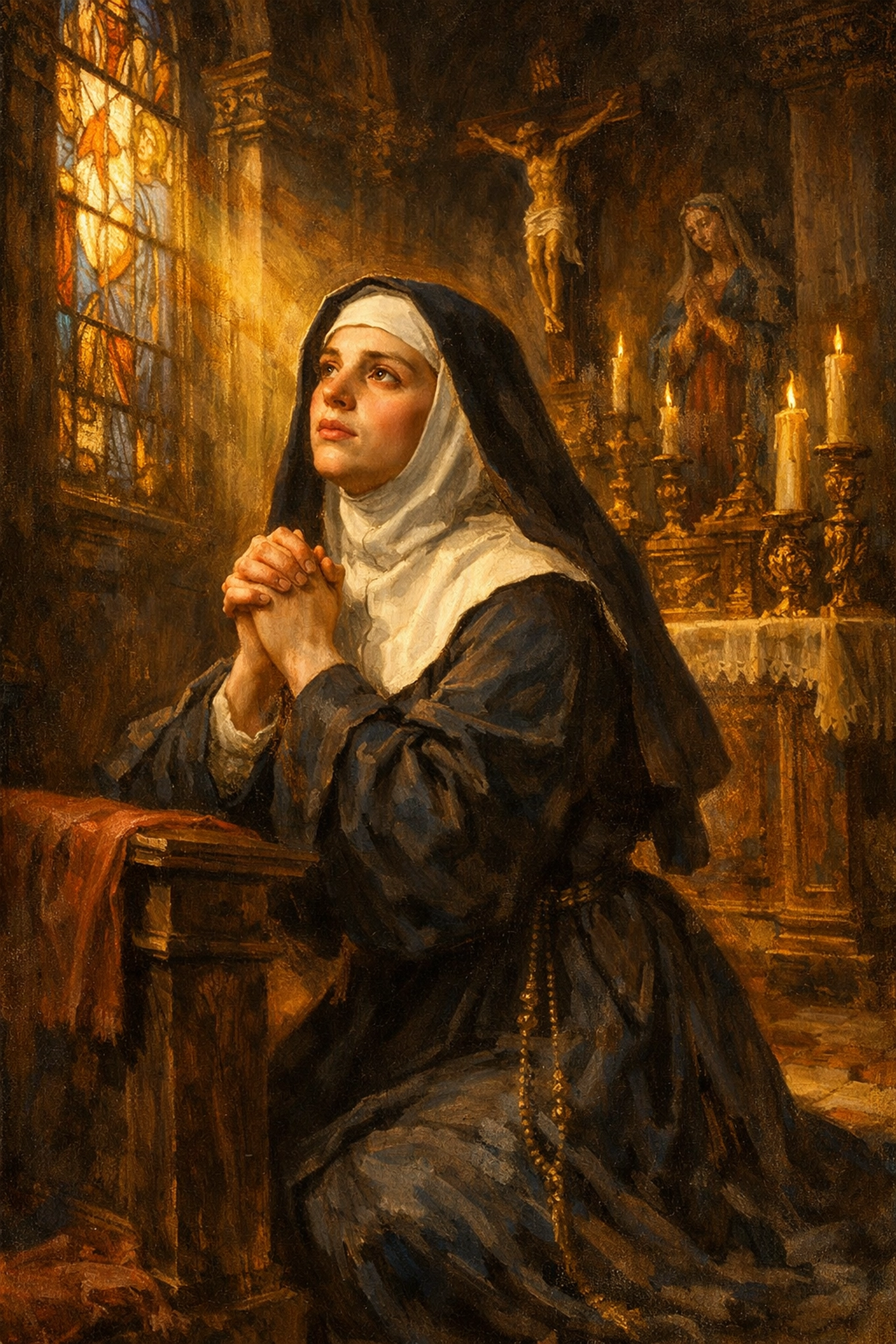
Fast forward to 1613. Benedetta was twenty-three and started experiencing religious visions that she reported to her superiors. In that era, mystical experiences could either make you a saint or get you burned at the stake, so it was always a gamble. But Benedetta's visions were convincing enough that people started paying attention.
The real showstopper came in 1619 during Lent, when Benedetta claimed that Jesus himself appeared to her. Shortly after, stigmata, those holy wounds matching Christ's crucifixion, allegedly appeared on her hands, feet, and side. Her companion nun, Bartolomea Crivelli, confirmed witnessing this miraculous event. Between these spiritual experiences and her excellent management of the convent's resources (particularly their profitable silk works), Benedetta was elected abbess at just thirty years old.
As abbess, she did things that were pretty radical for women at the time. She delivered sermons within the convent walls while the other nuns scourged themselves with whips in penitence. Her visions became increasingly elaborate, she claimed to exchange hearts with Christ and even described herself as Christ's bride. It was dramatic, it was powerful, and it was working.
Enter Bartolomea: The Angel Called Splenditello
Here's where things get really interesting. Bartolomea Crivelli wasn't just Benedetta's companion and witness to her miracles. They shared something much deeper, much more intimate, and ultimately much more dangerous in the eyes of the Church.
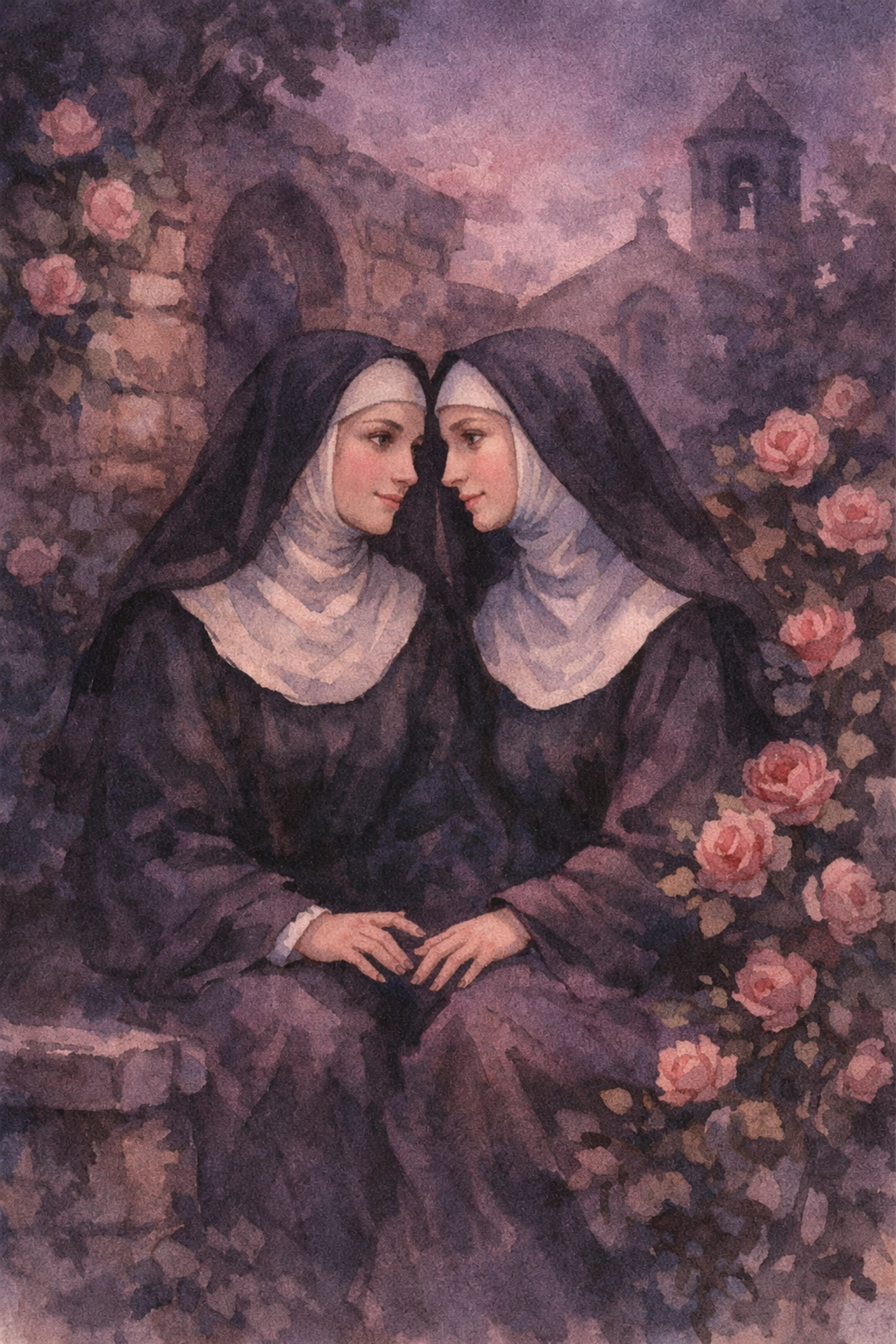
According to later testimony, Benedetta claimed that at night she would transform into a beautiful angel named Splenditello. In this form, she and Bartolomea made "passionate and frequent love." Now, whether Benedetta genuinely believed in this angelic transformation or whether it was a way to reconcile her desires with her religious identity, we'll never know for certain. But what we do know is that their relationship was physical, emotional, and sustained.
This wasn't just a fleeting moment or a single indiscretion. This was a full-blown love affair happening right under the nose of one of the most powerful religious institutions in the world. The irony? Benedetta was simultaneously presenting herself as the holiest woman in the convent, having direct conversations with Christ while engaging in what the Church considered deeply sinful behavior.
The Facade Cracks
Nothing stays secret forever, especially not in a convent where everyone's watching everyone else. Investigations began in 1619 and continued through 1623. As examiners dug deeper, Benedetta's carefully constructed spiritual persona started to crumble.
The stigmata? Faked. Those miraculous wounds that had helped elevate her to abbess were revealed as self-inflicted. The flirtation with a priest came to light. And most damningly, Bartolomea's testimony exposed their sexual relationship in detail. Additionally, despite Benedetta's public displays of holy fasting and refusing meat, she'd been sneaking salami in secret. Even her piety around food was performance.

The papal examiners noted something fascinating in their investigation: by the time they issued their final report on November 5, 1623, all traces of Benedetta's stigmata had vanished, along with her visions and apparitions. Convenient timing, or genuine spiritual abandonment? The Church certainly had its theories.
Demonic Possession or Authentic Desire?
When confronted with the evidence, Benedetta made a claim that was both self-preserving and heartbreaking: she said everything had occurred under demonic influence and wasn't her own will. This defense: blaming the devil for desires that didn't fit within acceptable bounds: was a common survival strategy for people accused of sexual transgressions in that era.
But here's the thing: we'll never truly know what Benedetta believed in her heart. Did she genuinely think she was possessed? Was she experiencing what we might now recognize as dissociative states or elaborate fantasies? Or was she simply a queer woman in an impossible situation, trying to reconcile her authentic desires with the suffocating religious expectations of her time?
What we can say is that her feelings for Bartolomea were real enough that she risked everything: her position, her reputation, her freedom: to express them.
Thirty-Five Years Behind Walls Within Walls
The verdict was swift and merciless. Benedetta was removed as abbess and charged with possession. She spent the remaining thirty-five years of her life in solitary confinement within the convent until her death on August 7, 1661. That's three and a half decades alone with her thoughts, her memories, and perhaps her regrets.
Bartolomea, interestingly, escaped punishment. The official reasoning was that she claimed to be an unwilling participant. Whether that was true or simply the smart play for survival, we don't know. It's entirely possible she loved Benedetta but wasn't willing to sacrifice her freedom for that love. It's also possible the Church simply couldn't fathom two women as equal agents in a sexual relationship, so they cast Bartolomea as the victim.
Why This Story Matters Now
Reading about Benedetta Carlini in 2026, it's easy to see her as a queer icon: a woman who dared to love another woman despite impossible odds. And she is that. But she's also a reminder of the complexity of queer history, especially when it intersects with religion, power, and survival.

Benedetta's story doesn't have a happy ending. She doesn't get to ride off into the sunset with Bartolomea. She doesn't get vindication or recognition. She gets thirty-five years of isolation and an unmarked place in history that's only been excavated by historians like Judith Brown, whose book "Immodest Acts" brought Benedetta's story back to light.
But the fact that Benedetta loved, desired, and acted on those desires: even in the most restrictive environment imaginable: tells us something important about queer resilience. Her story proves that LGBTQ+ people have always existed, even in spaces that tried their hardest to erase us.
The Legacy of Immodest Acts
When you dive into queer historical fiction and LGBTQ+ literature, you'll find countless stories of people who found ways to love authentically despite societies that told them not to. Benedetta's story might be centuries old, but it resonates with anyone who's ever had to hide who they love or reconcile their identity with external expectations.
Her tale reminds us why visibility matters, why documentation matters, and why spaces like Read With Pride exist: to ensure these stories don't get buried again. Whether you're into MM romance books, gay historical fiction, or simply want to understand the long, complicated history of queer love, stories like Benedetta's provide essential context.
So here's to Benedetta Carlini: abbess, visionary, faker of stigmata, eater of secret salami, and lover of women. She was messy, complicated, and undeniably human. Exactly the kind of queer ancestor we should remember.
Follow Read With Pride on Facebook, Instagram, and X (Twitter) for more untold stories from queer history.
#LGBTQHistory #QueerHistory #BenedettaCarlini #LesbianHistory #ConventSecrets #HistoricalLGBTQ #ReadWithPride #QueerLove #MMRomance #LGBTQBooks #QueerFiction #GayRomanceBooks #HistoricalRomance #QueerVisibility #LGBTQStories #RenaissanceHistory

Leave a Reply
You must be logged in to post a comment.