

readwithpride.com
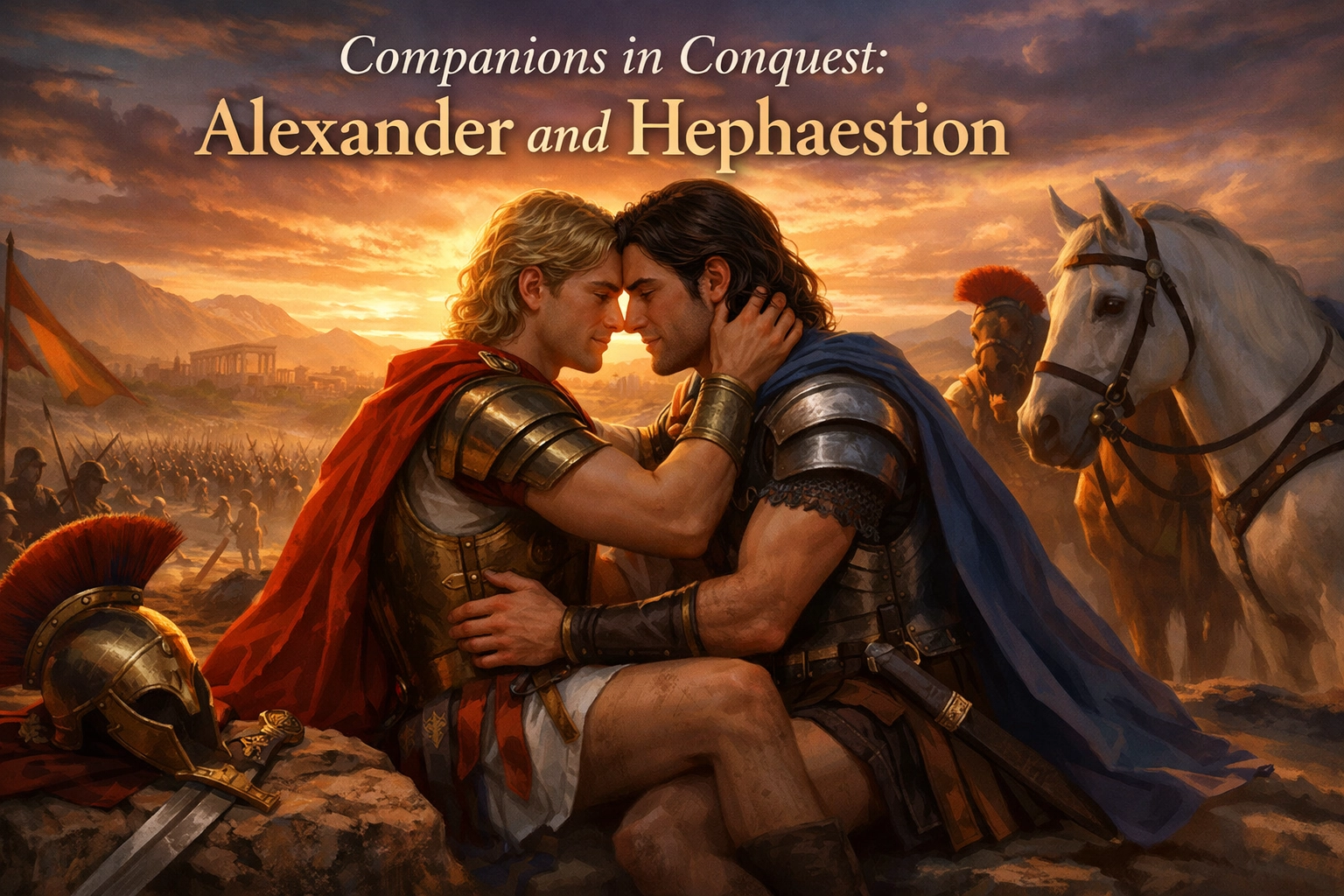
Long before modern debates about love and labels, two men stood side by side and changed the world. Alexander the Great and Hephaestion weren't just king and general, they were partners in every sense that mattered. Their story has survived over 2,300 years, whispered through history books and carved into monuments, a testament to a bond so profound that even death couldn't silence it.
The Partnership That Conquered an Empire
Alexander inherited a kingdom. Hephaestion helped him build a legend.
From the moment Alexander ascended to the Macedonian throne at age 20, Hephaestion was there. Not as a mere follower, but as his right hand, literally and figuratively. He rose from Alexander's personal bodyguard to command the elite Companion cavalry, one of the highest military positions in the ancient world. This wasn't nepotism. Hephaestion earned every promotion through tactical brilliance and unwavering loyalty.
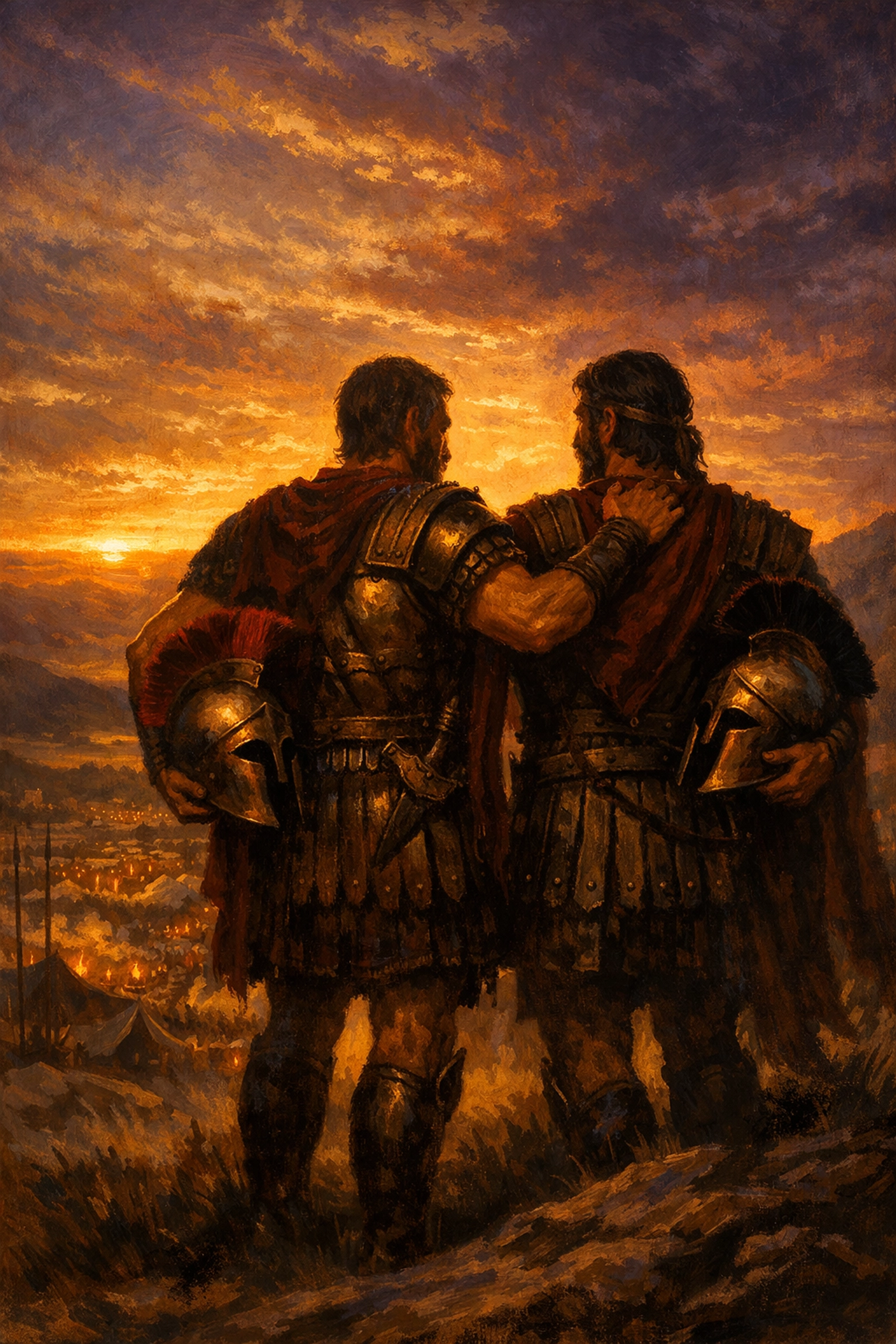
When Alexander needed to divide his forces for critical operations, he consistently chose Hephaestion to lead the other half. That's trust you can't fake on a battlefield. After the brutal siege of Tyre, Alexander handed him command of the fleet. When they needed to cross the treacherous Hydaspes River to face King Porus, Alexander selected Hephaestion's cavalry regiment alongside his own, a move that required absolute coordination and mutual understanding under life-or-death pressure.
Hephaestion oversaw diplomatic missions, engineered river crossings, conducted sieges, and founded new cities across conquered territories. He was the only person Alexander allowed to read his private correspondence. The only one who truly understood the king's grand vision of uniting East and West. While other generals grumbled about Alexander's controversial policy of integrating Persian and Greek cultures, Hephaestion championed it, even when it made him unpopular with fellow Macedonians.
More Than Brothers, Different Than Lovers
Here's where it gets complicated, and fascinating.
Ancient sources don't use the typical Greek terms for male lovers (erastes and eromenos) when describing Alexander and Hephaestion. They consistently call them close friends, companions, the deepest of confidants. But anyone who's read between the lines of historical texts knows that labels rarely capture the full truth of human connection, especially across millennia of cultural translation.
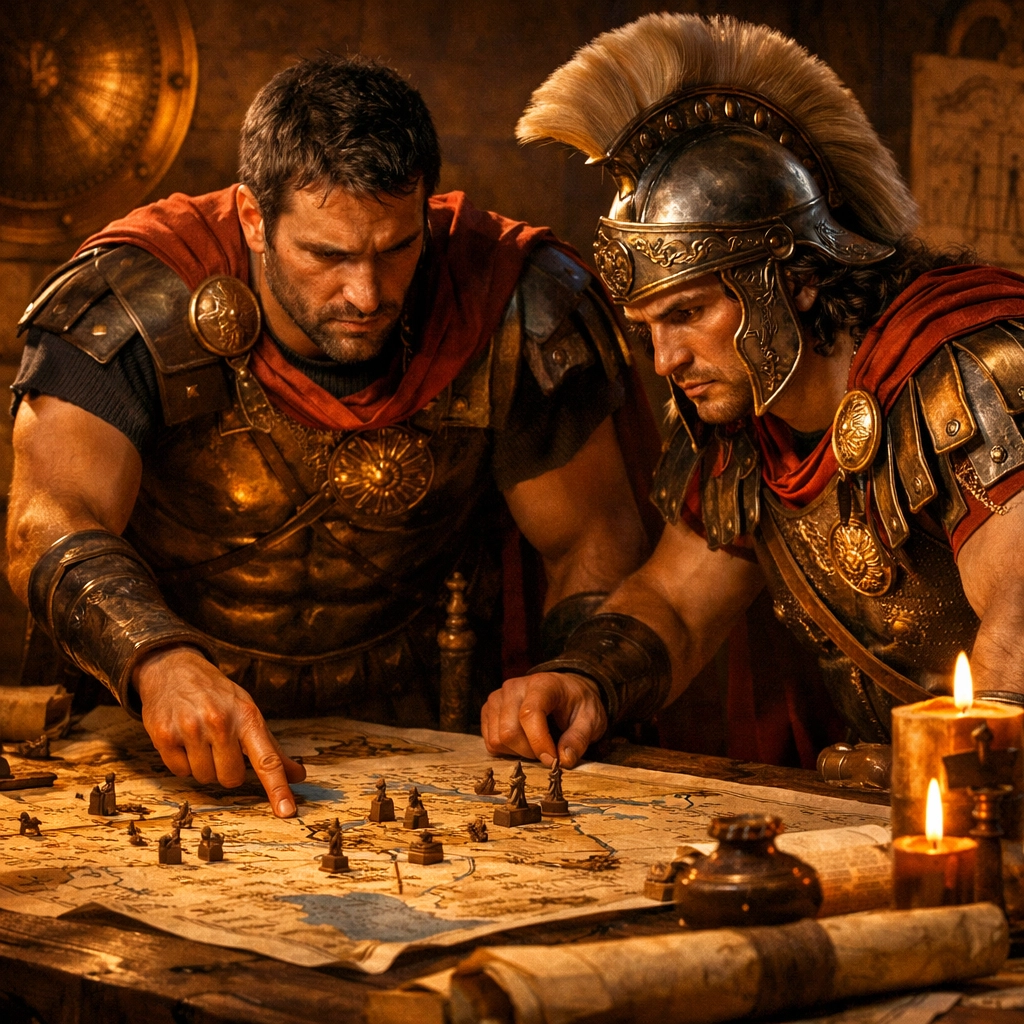
What we do know: their bond was extraordinary by any standard. Alexander explicitly compared their relationship to that of Achilles and Patroclus, the mythological heroes from Homer's Iliad. This wasn't a casual reference. In fourth-century Greece, Achilles and Patroclus were widely understood to have been lovers. Alexander identified with Achilles. Hephaestion took the role of Patroclus. They visited the tomb of Achilles together at Troy, laying wreaths in a ritual that felt like both homage and declaration.
Some historians believe the circumstantial evidence points clearly to a romantic and physical relationship. Others argue it was a profound friendship with possibly unrequited romantic elements from Alexander's side. The truth? We'll never know for certain, and maybe that ambiguity is the point. What remains undeniable is that Hephaestion held a place in Alexander's life that no wife, no other general, no family member could touch.
When Death Came Calling
In 324 BCE, after a fever, Hephaestion died. He was about 32 years old.
Alexander's reaction wasn't that of a king losing a general. It was the complete unraveling of a man who'd lost his anchor. He refused food and water for days. He ordered the crucifixion of Hephaestion's doctor. He cut his hair in mourning, a gesture reserved for the closest family. He had the sacred fire at the Temple of Ahura Mazda extinguished, an honor usually reserved for the death of a Persian king.
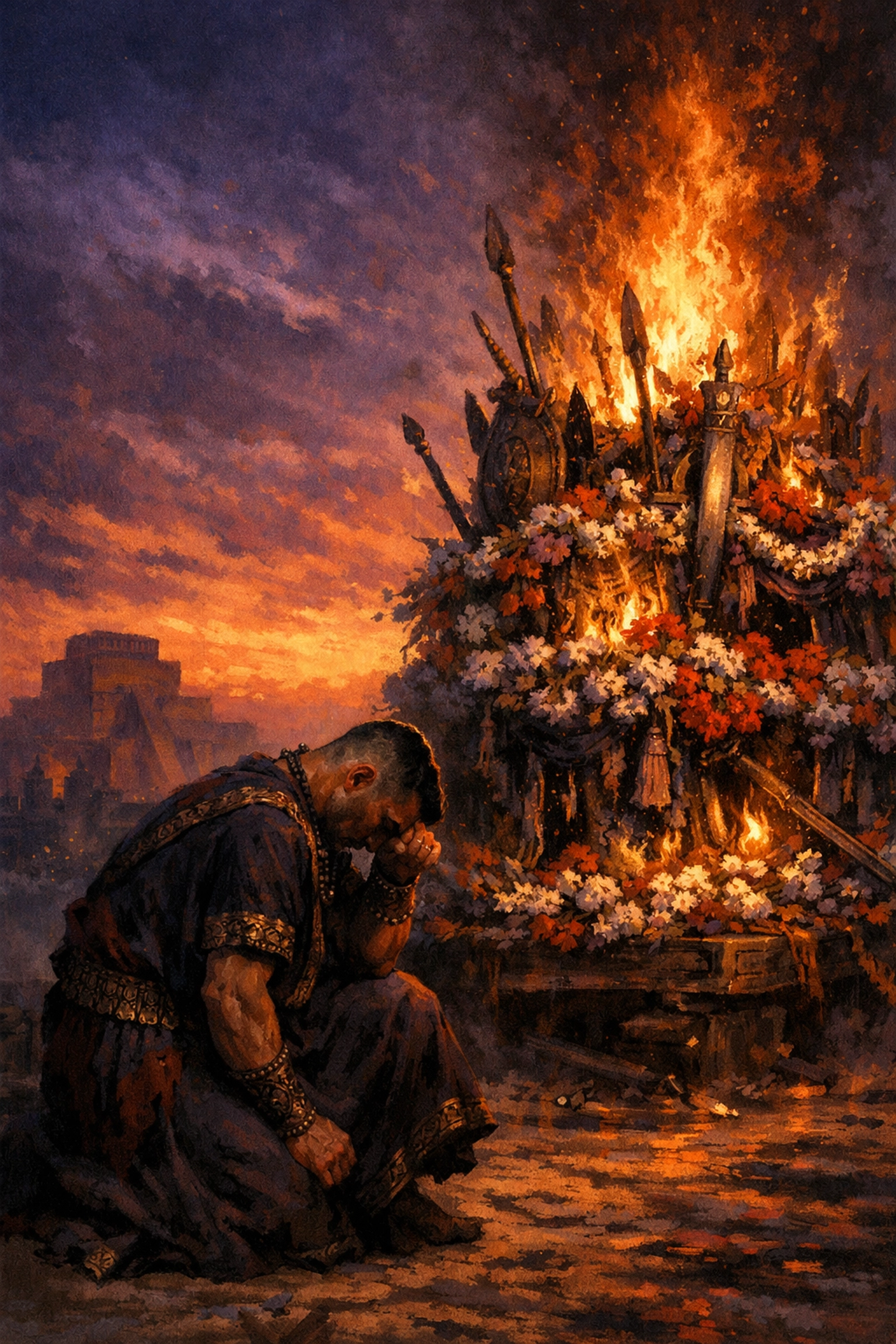
But Alexander wasn't finished. He sent messengers to consult the Oracle of Ammon in Egypt, seeking permission to worship Hephaestion as a god. He ordered every city in the empire to build monuments in Hephaestion's honor. He commissioned a funeral pyre in Babylon that allegedly cost 10,000 talents, the equivalent of billions in today's currency. He demanded that flutes never be played again until the oracle gave its verdict on Hephaestion's divine status.
Some ancient writers criticized this extravagant grief. But anyone who's lost someone who felt like the other half of their soul understands it perfectly. Alexander wasn't just mourning a friend. He was mourning the person who made sense of his world, who shared his dreams, who knew him completely.
Alexander himself would die less than a year later, at 32. Some say he never recovered from the loss. That the fire that drove him to conquer the known world died with Hephaestion.
Why This Story Still Matters
Fast forward over two millennia. We're still talking about Alexander and Hephaestion because their story transcends the usual historical narrative of battles and borders. It's a reminder that LGBTQ+ love and partnership have always existed, even when, or especially when, the historical record tries to sanitize it into something more "acceptable."
The debate over whether they were lovers, best friends, or something without a modern equivalent misses the larger truth: they loved each other profoundly, and that love shaped history. It's part of why we at Read with Pride believe these stories matter. Not just as academic curiosities, but as mirrors showing us that our relationships, our bonds, our ways of loving have ancient and honorable precedents.
Their partnership also challenges the notion that masculine military leadership can't coexist with emotional intimacy. Alexander conquered half the known world while maintaining a relationship of deep vulnerability and mutual support with Hephaestion. Strength and tenderness. Strategy and emotion. They contained multitudes.
The Legacy Lives On
You can visit Alexander's supposed tomb (though its exact location remains debated). You can trace his path through Turkey, Egypt, Iraq, Iran, Afghanistan, and into India. But the monuments to his relationship with Hephaestion are mostly gone, destroyed by time, conquest, and yes: probably intentional erasure by those uncomfortable with their bond.
What remains is in the texts, in the academic debates, and in the hearts of people who recognize their own experiences in this ancient story. Whether you see them as lovers, soulmates, or the deepest of friends, their connection speaks to something fundamental about human bonds that transcend categories.
For those of us who love MM romance books and gay historical fiction, Alexander and Hephaestion are the original slow-burn epic. Childhood friends to battle partners to inseparable companions: it's every trope wrapped in actual history. The loyalty, the shared vision, the devotion that survived campaign after grueling campaign, the grief that shook an empire.
Their story reminds us that love between men: in whatever form it takes: has been powerful enough to change the course of civilizations. That's worth remembering, celebrating, and passing on.
Want more stories about LGBTQ+ history and modern MM romance that explores these timeless bonds? Follow us on Facebook, Instagram, and X for daily updates. Discover your next great read at readwithpride.com.
#ReadWithPride #AlexanderTheGreat #LGBTQHistory #MMRomance #GayHistoricalRomance #QueerHistory #AncientLove #GayRomanceBooks #LGBTQLiterature #HistoricalGayRomance #MMBooks #GayFiction #QueerLove #LGBTQBooks #GayLoveStories #PrideReading #2026Books #MMHistoricalRomance

Leave a Reply
You must be logged in to post a comment.