

readwithpride.com
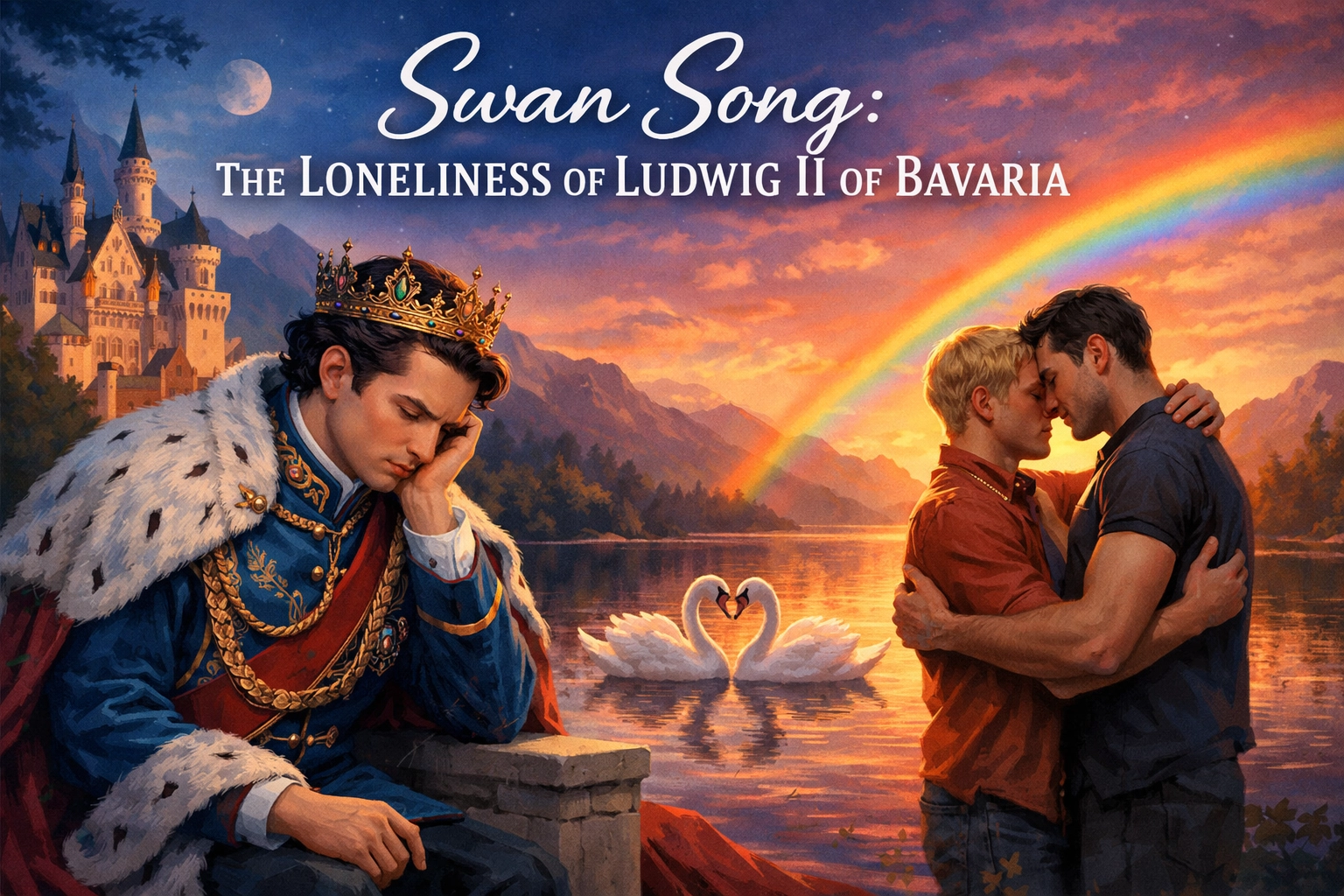
There's something haunting about a king who builds fairytale castles but can't find his own happy ending. Ludwig II of Bavaria, the "Mad King," the "Swan King," the "Fairytale King", spent his life creating architectural masterpieces while drowning in isolation that no amount of turrets or gold leaf could cure. His story isn't just about unrequited love or tragic romance. It's about what happens when you're born into a world that won't let you be who you are.
The Boy Who Became King Too Soon
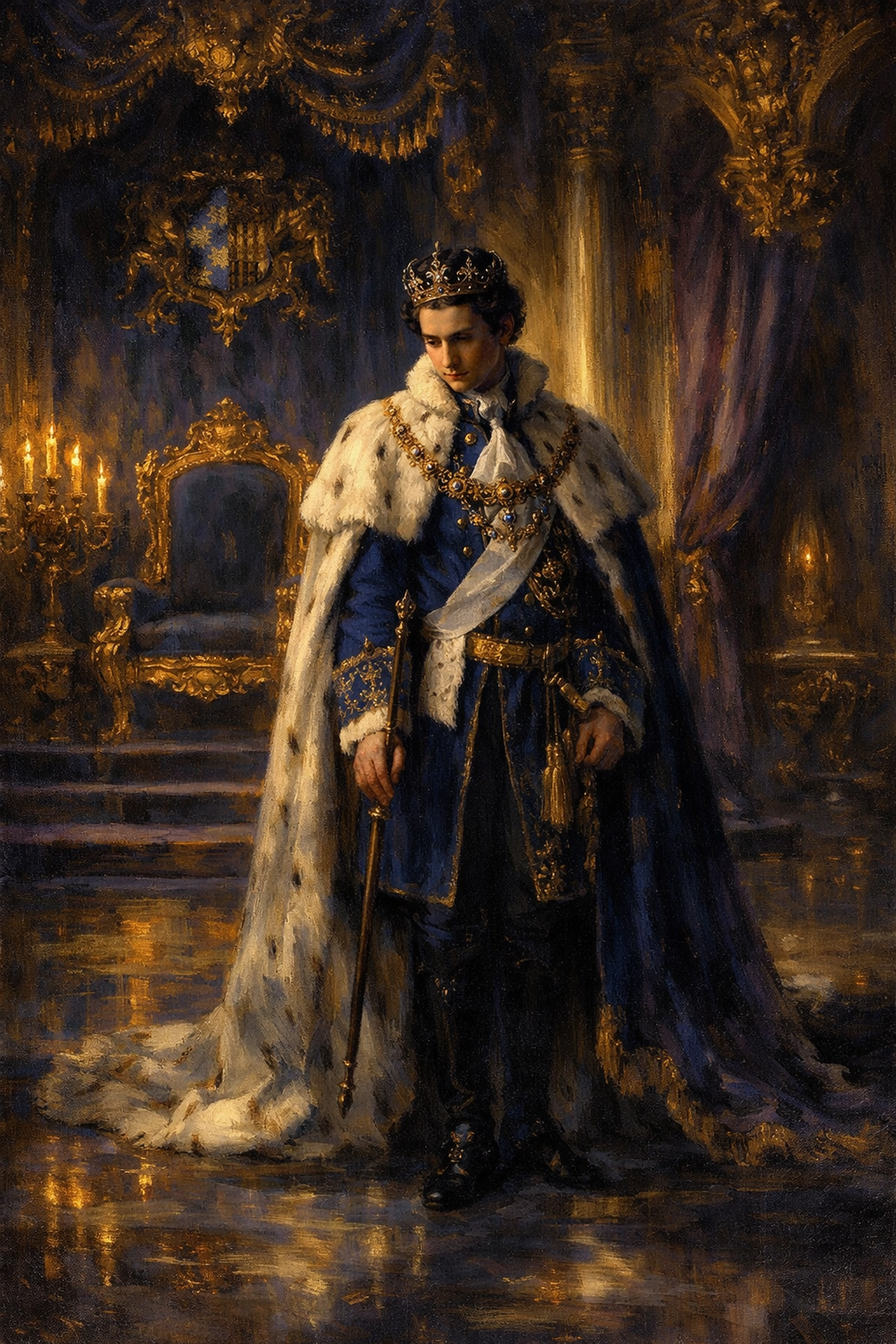
Picture this: You're eighteen years old, thrust onto a throne you weren't prepared for, surrounded by politicians who expect you to play a game you never learned the rules to. That was Ludwig in 1864. He grew up isolated from his parents, separated from normalcy, and trained for… well, not much, really. "I became king much too early," he'd later admit. "I had not learned enough."
But here's the thing: Ludwig wasn't interested in learning statecraft or military strategy. His heart belonged to art, music, and beauty. And to men. Particularly one man who would shape his entire existence: composer Richard Wagner.
The Wagner Obsession
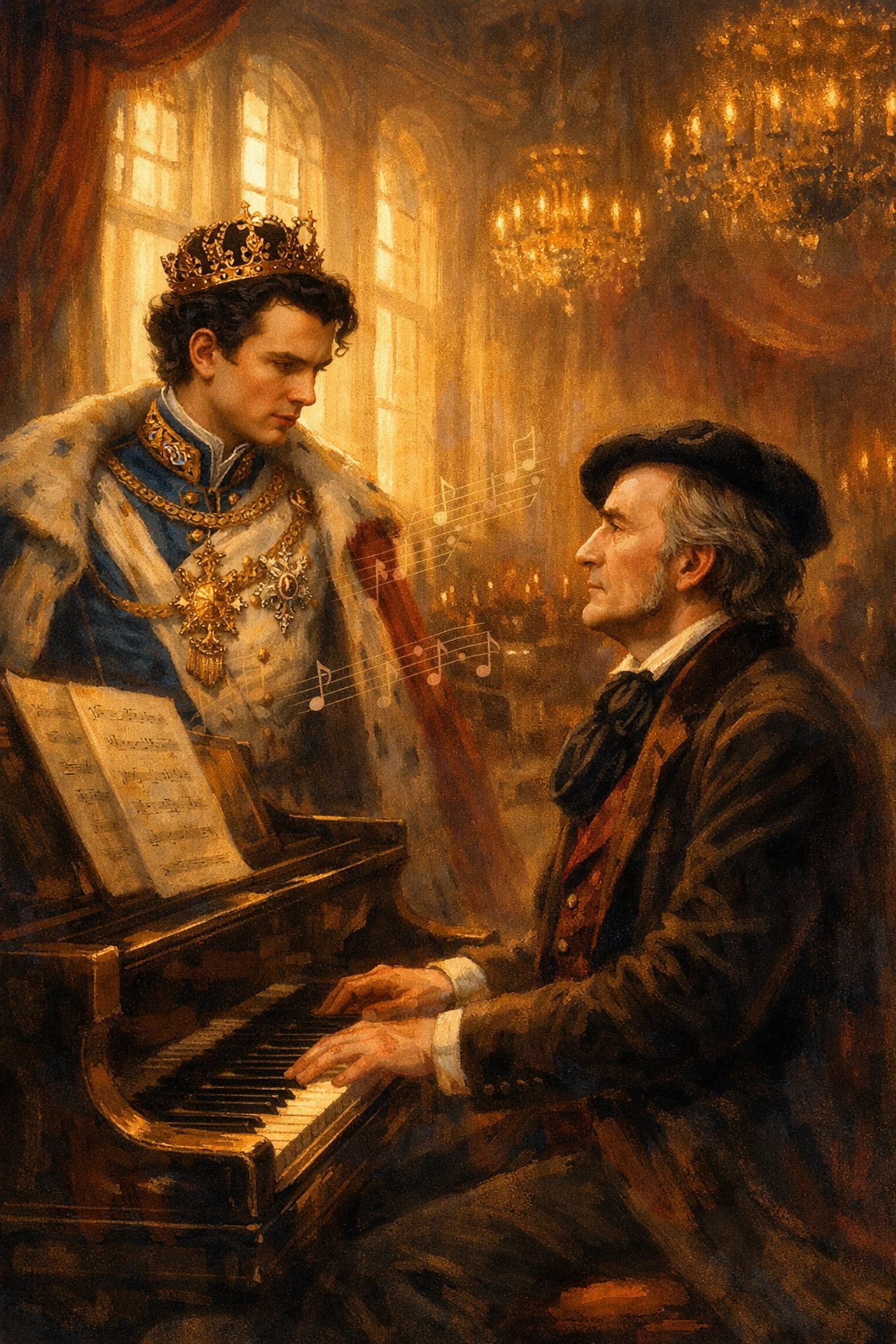
When Ludwig discovered Wagner's music, it wasn't just appreciation: it was obsession, devotion, possibly love. The young king became Wagner's patron, pouring Bavaria's treasury into funding the composer's ambitious projects. He built Wagner a theater in Bayreuth. He paid his debts. He gave him everything.
Wagner, for his part, took everything Ludwig offered and then some. Was it mutual affection? Hard to say. Wagner was married, significantly older, and primarily interested in what Ludwig's royal purse could provide for his art. But for Ludwig, this relationship represented something he couldn't find anywhere else: connection, however one-sided it might have been.
Their letters reveal a complex dynamic. Ludwig wrote with passion that went beyond mere patronage. Wagner responded with gratitude laced with manipulation. When political pressure forced Ludwig to send Wagner away from Munich in 1865, the king was devastated. He'd lost his closest companion, the one person who seemed to understand his artistic soul.
The Life No One Talks About
Let's be honest about what historians have danced around for over a century: Ludwig II was almost certainly gay or at the very least, queer in a time and place where such things were absolutely unthinkable for royalty. His engagement to Duchess Sophie in Bavaria was postponed repeatedly before being canceled altogether. He called the wedding date "the dreadful moment" and actively avoided it until the engagement collapsed.
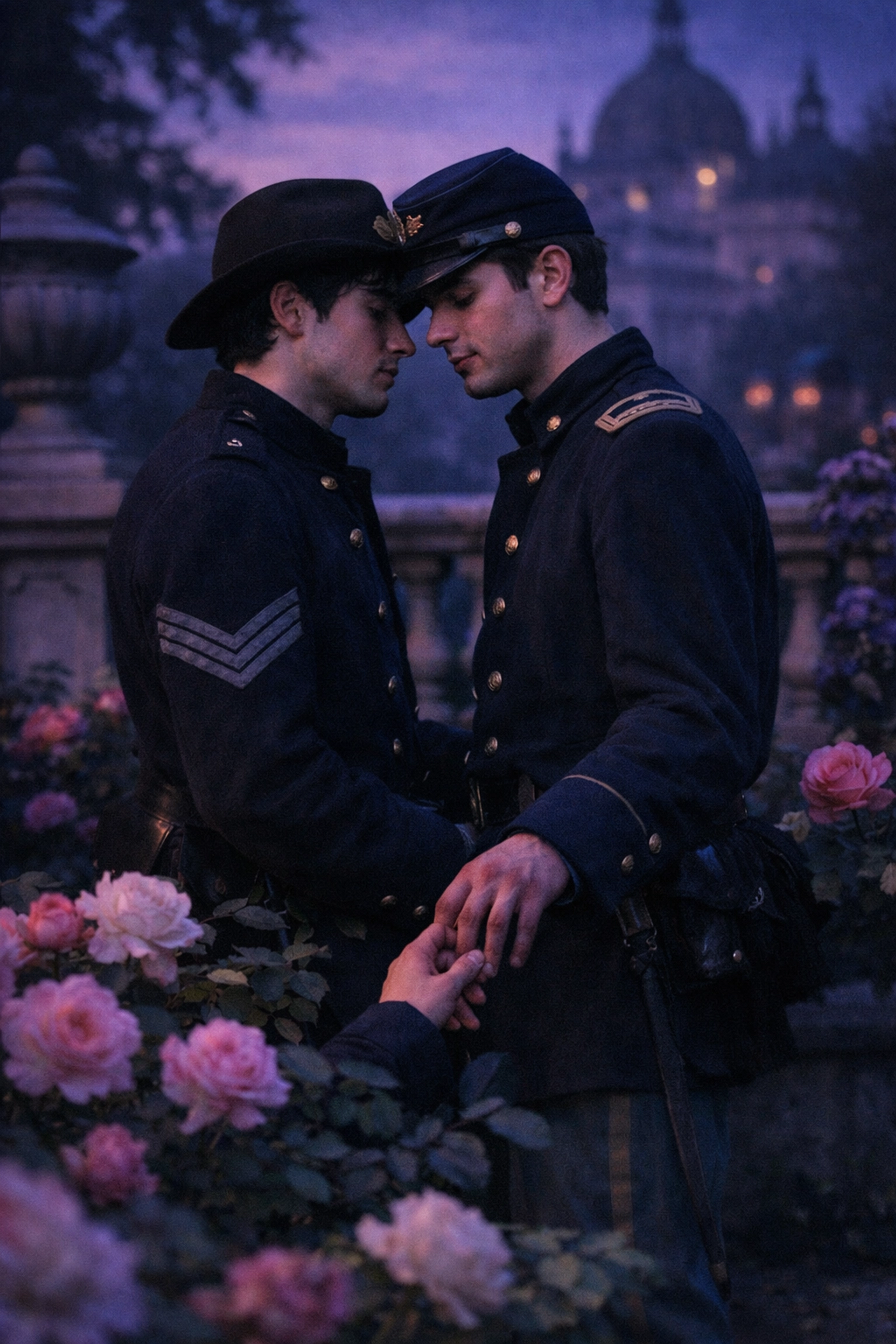
Instead, Ludwig surrounded himself with young male attendants and servants. He developed intense relationships with his equerries and aides. One of his closest companions was his cousin and aide-de-camp, Prince Paul of Thurn and Taxis, with whom he exchanged passionate letters. After Paul married, Ludwig was reportedly heartbroken: another loss in a lifetime full of them.
The historical record shows a pattern: Ludwig formed deep emotional bonds with men while showing no interest in women romantically. In the repressive atmosphere of 19th-century Bavaria, where same-sex relationships could destroy a person's life: let alone a king's reign: Ludwig had to hide who he was. The isolation this created wasn't just emotional; it was existential.
Building Castles, Hiding Hearts
When reality became unbearable, Ludwig retreated into fantasy. Neuschwanstein Castle, that iconic fairytale fortress that now defines Bavaria's tourist industry, was his escape: a world where he could be anyone but himself. He poured his kingdom's wealth into creating perfect, impossible spaces: Linderhof Palace with its elaborate grottoes, Herrenchiemsee designed to rival Versailles.
These weren't just architectural projects. They were acts of desperate creation by someone trying to build a reality he could actually live in. Ludwig worked at night, sleeping during the day, further separating himself from the court and society that felt alien to him. He'd take sleigh rides through the mountains at midnight, host dinners where he'd eat alone at elaborate tables set for imaginary guests, and lose himself in theatrical productions staged solely for his viewing.
The more he withdrew, the more his ministers worried. The more they worried, the more he retreated. It was a vicious cycle of isolation that ended only one way.
The Political Nightmare
Ludwig's fantasy world collided brutally with reality in 1866 when Bavaria found itself on the losing side of the Austro-Prussian War. Suddenly, his kingdom was reduced to little more than a puppet state of Prussia. Ludwig, who'd inherited Bavarian independence, became essentially a vassal to his Prussian uncle. The humiliation was complete.
Rather than face this new political reality, Ludwig dove deeper into his architectural dreams and his nocturnal existence. The castles became more elaborate, the debts mounted higher, and the government's patience wore thinner. They couldn't understand that for Ludwig, these projects weren't vanity: they were survival.
The Final Betrayal
In June 1886, Ludwig's ministers had had enough. They declared him insane: not based on examination, but on compiled reports of his "eccentric" behavior. The diagnosis was convenient: remove the king who was bankrupting Bavaria with his castle-building and living according to his own rules.
On June 12, Ludwig was taken into custody at Neuschwanstein and imprisoned in Berg Palace on Lake Starnberg. The next day, June 13, he went for a walk along the lake shore with Dr. Bernhard von Gudden, the psychiatrist who had declared him insane without ever examining him.
Neither man returned alive.
Their bodies were found in the shallow waters of the lake. The official story claimed suicide, but it made little sense. Ludwig was a strong swimmer. The water was shallow. Von Gudden had defensive wounds. To this day, no one knows exactly what happened on that shore, but one thing is certain: Ludwig's isolation ended in mystery, violence, and death.
A Legacy of Loneliness
Here's what gets me about Ludwig's story: he had everything a person could want materially: wealth, power, the ability to create anything he imagined: but he couldn't have the one thing he needed most. He couldn't be himself. He couldn't love openly. He couldn't exist as a gay or queer man in a world that demanded he marry, produce heirs, and conform.
So he built castles as monuments to his isolation, fell in love with men he couldn't fully have, and ultimately died alone in cold water with all his secrets.
Today, millions visit Neuschwanstein Castle every year, marveling at its beauty without knowing the loneliness that built it. Ludwig's architectural legacy is celebrated worldwide: Disney's castle is based on Neuschwanstein: but his personal story remains sanitized, straightened, made safe for mass consumption.
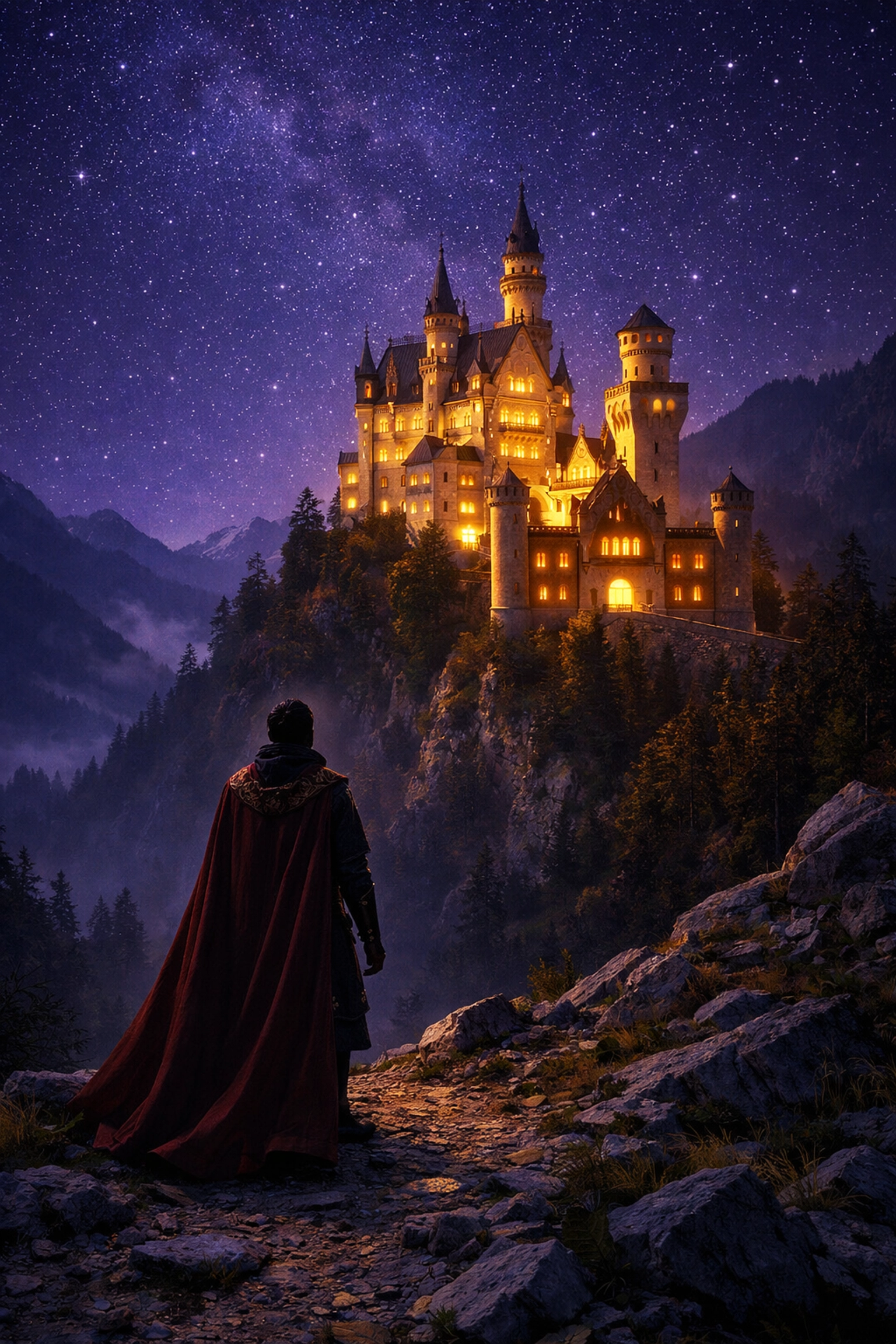
At Read with Pride, we believe in telling the full stories of LGBTQ+ historical figures, not the edited versions. Ludwig II deserves to be remembered not just as the "Mad King" or the "Fairytale King," but as a queer man who lived in impossible circumstances, who loved deeply if often unrequitedly, and whose isolation was as much about societal rejection as personal choice.
His swan song wasn't just about madness or eccentricity. It was about the unbearable weight of being forced to hide who you are, even when you have the power to build castles.
Sometimes the most beautiful facades hide the deepest loneliness. And sometimes, the kings who seem to have everything are actually the ones with nothing at all.
Want to explore more untold LGBTQ+ stories from history? Follow us on Instagram, Facebook, and X for daily insights into queer history, and check out our collection of MM romance books that celebrate love in all its forms: past and present.
#LudwigII #QueerHistory #LGBTQHistory #ReadWithPride #GayHistory #MMRomance #HistoricalLGBTQ #BavarianKing #Neuschwanstein #QueerKings #GayRomance #LGBTQBooks #HiddenHistory #SwanKing #QueerRoyalty #GayHistoricalRomance #MMBooks #LGBTQPride #UntoldStories

Leave a Reply
You must be logged in to post a comment.