

readwithpride.com
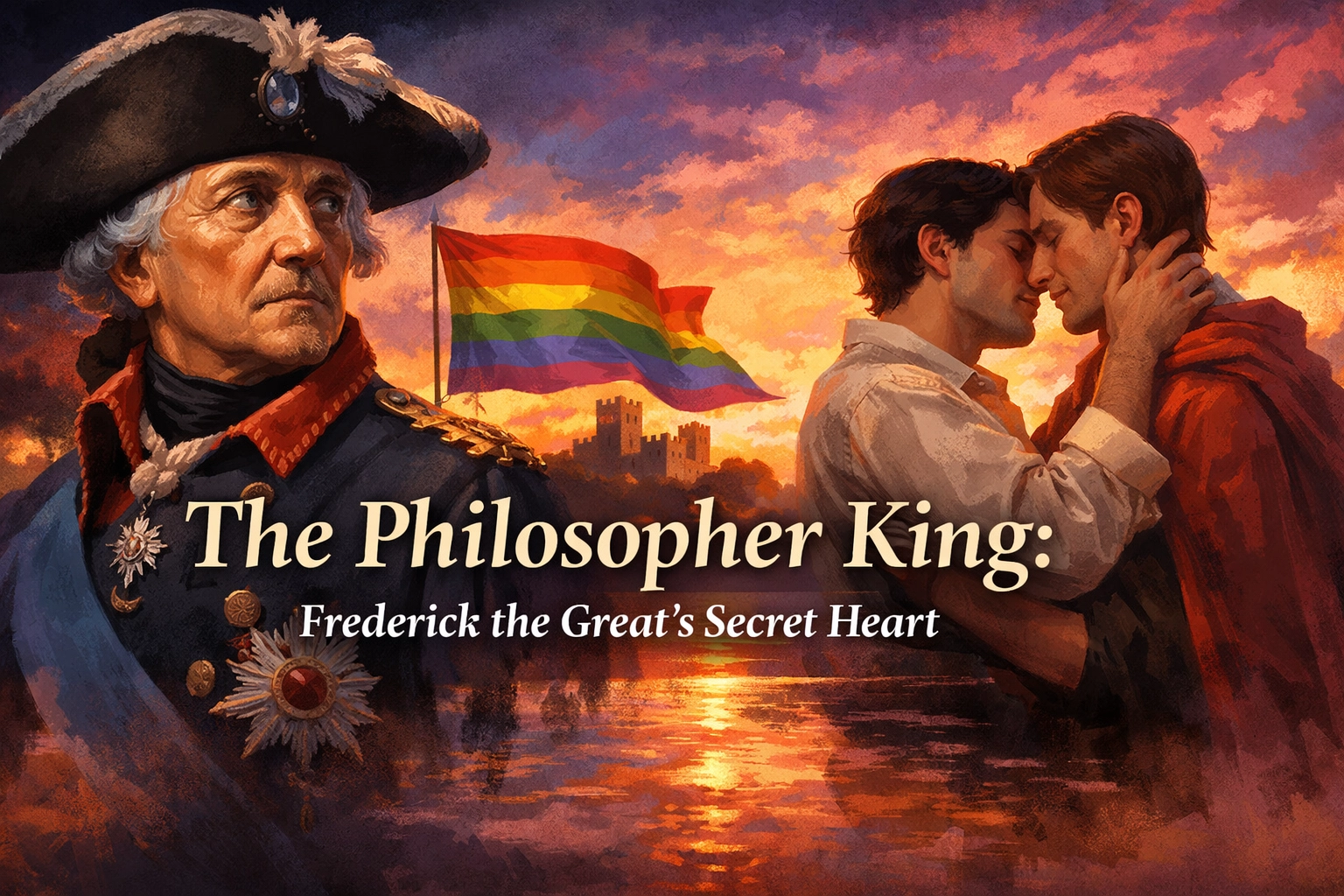
When we think of 18th-century Prussian royalty, we usually imagine stuffy portraits, military campaigns, and powdered wigs. But beneath the crown of Frederick the Great: one of history's most formidable rulers: beat a heart that yearned for something his father's court would never allow: the freedom to love whom he chose.
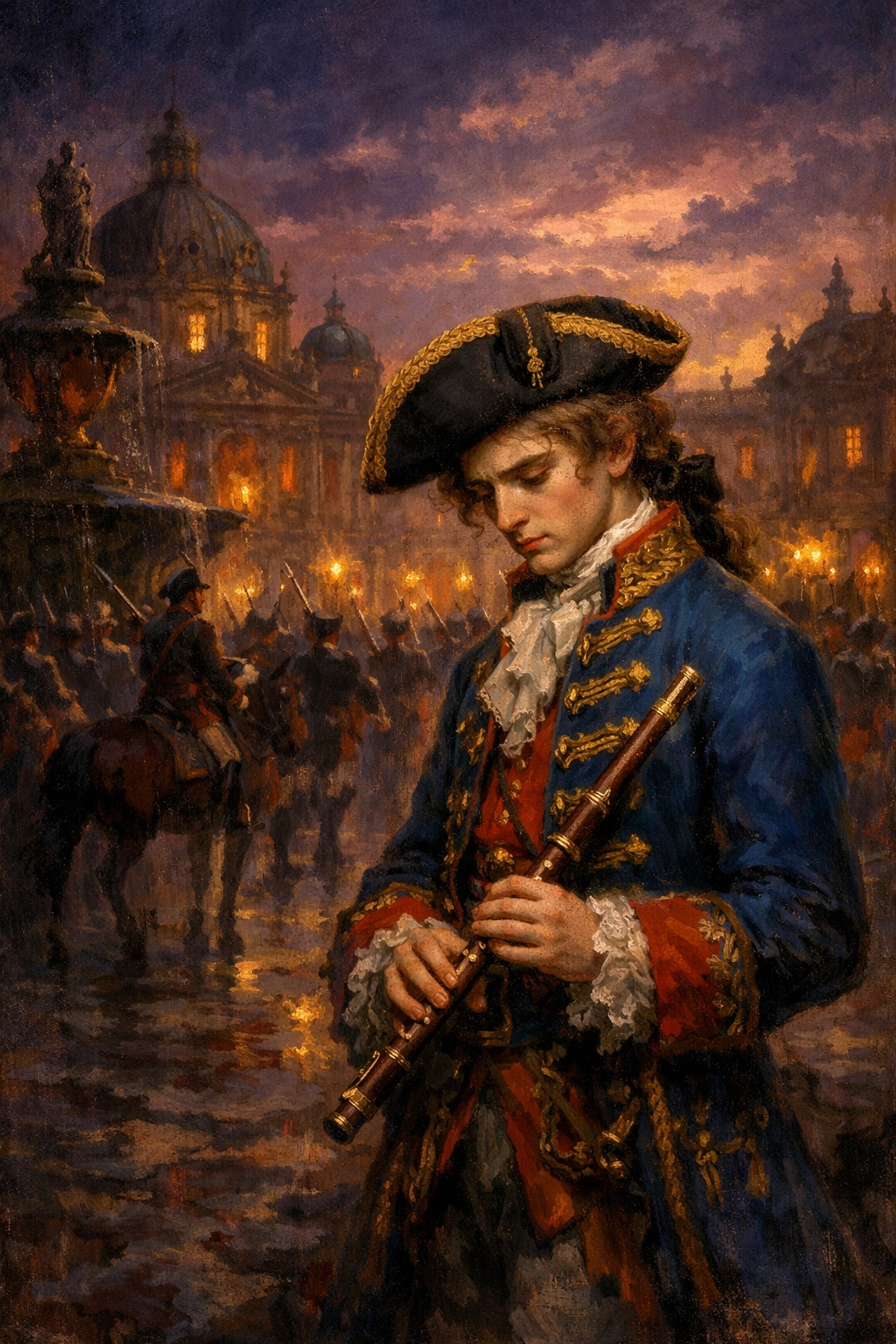
Long before Frederick became "the Great," he was just Fritz: a sensitive prince who preferred playing the flute to military drills, reading French philosophy to Prussian battle strategies, and most controversially, spending time with a handsome young officer named Hans Hermann von Katte.
The Boy Who Didn't Want to Be King
Growing up in the Prussian court was like living in a gilded cage with a drill sergeant for a zookeeper. Frederick's father, King Frederick William I, was obsessed with building the perfect military machine. He collected tall soldiers like some people collect stamps, and he expected his son to embody everything masculine and martial about Prussian values.
But young Frederick? He wanted to read Voltaire, compose music, and surround himself with artists and intellectuals. The clash between father and son was inevitable: and brutal. Frederick William beat his son publicly, humiliated him in front of the court, and did everything possible to crush what he saw as effeminate weakness.
In this oppressive environment, Frederick found solace in friendship. Enter Hans Hermann von Katte.
A Friendship That Changed Everything
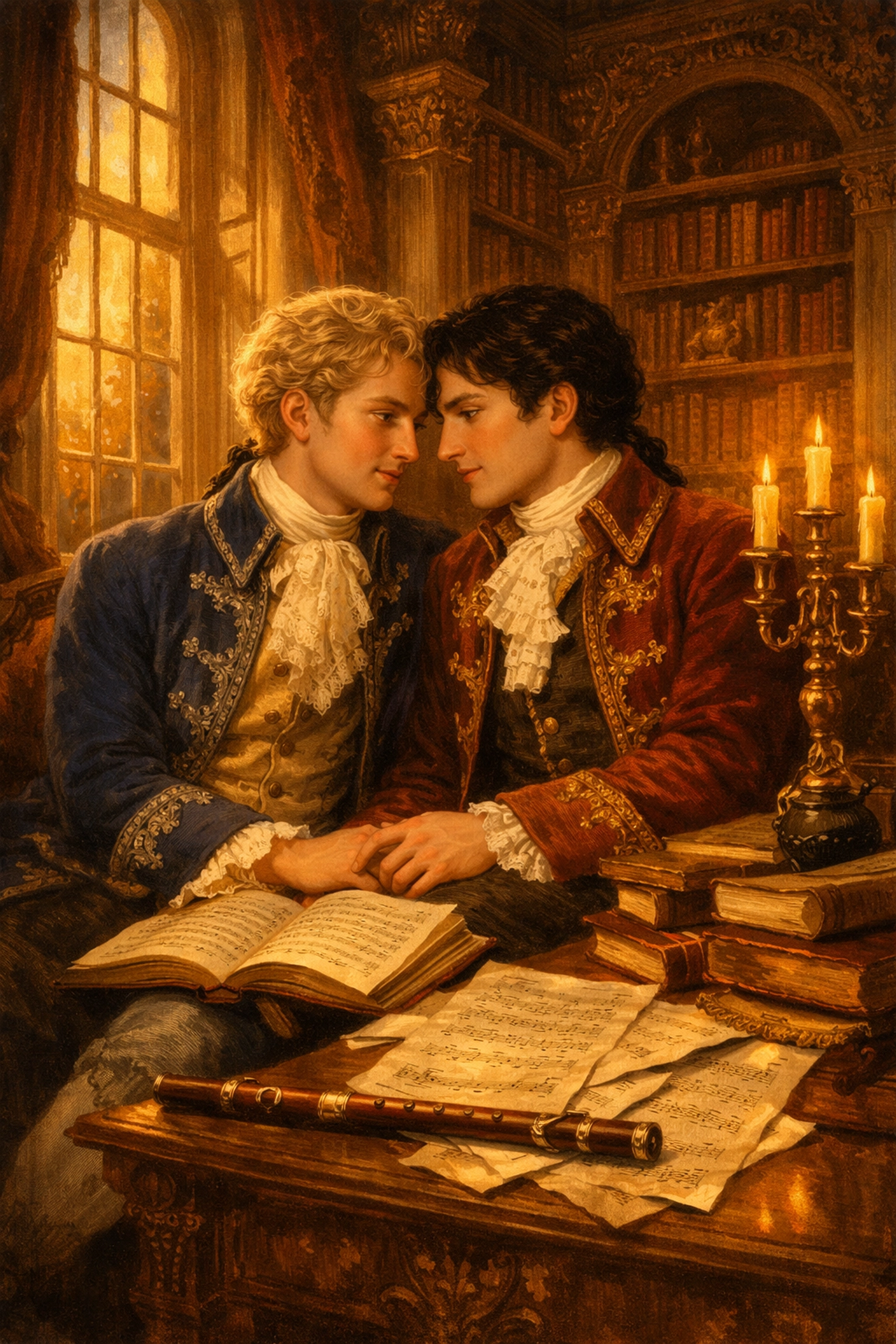
Hans Hermann von Katte wasn't just another courtier. He was intelligent, cultured, and shared Frederick's passion for literature, music, and philosophy. Contemporary accounts describe him as handsome and charming: exactly the kind of companion the young prince craved in his father's militaristic nightmare of a court.
The two young men became inseparable. They studied together, made music together, and dreamed together of a life beyond the suffocating walls of the Prussian palace. Their bond was intense, passionate, and: by 18th-century standards: dangerous.
Whether their relationship was romantic in the physical sense remains debated by historians. But the emotional intensity? That's undeniable. In letters and accounts from the period, Frederick's devotion to Katte reads like something straight out of a gay romance novel: the kind you might find at readwithpride.com, actually.
The Escape Plan That Destroyed Everything
By 1730, eighteen-year-old Frederick had had enough. He hatched a desperate plan to escape Prussia with Katte, flee to England or France, and finally live freely. They'd leave behind the military drills, the abuse, the rigid expectations: everything.
But palace walls have ears, and escape plans have a way of unraveling.
Frederick William discovered the plot just before the young men could flee. His rage was apocalyptic. He had both Frederick and Katte arrested and charged with desertion: a crime punishable by death in the Prussian military.
The king sentenced his own son to death, though he eventually commuted it to imprisonment. But Katte? Katte had no such reprieve.
The Execution That Haunted a King
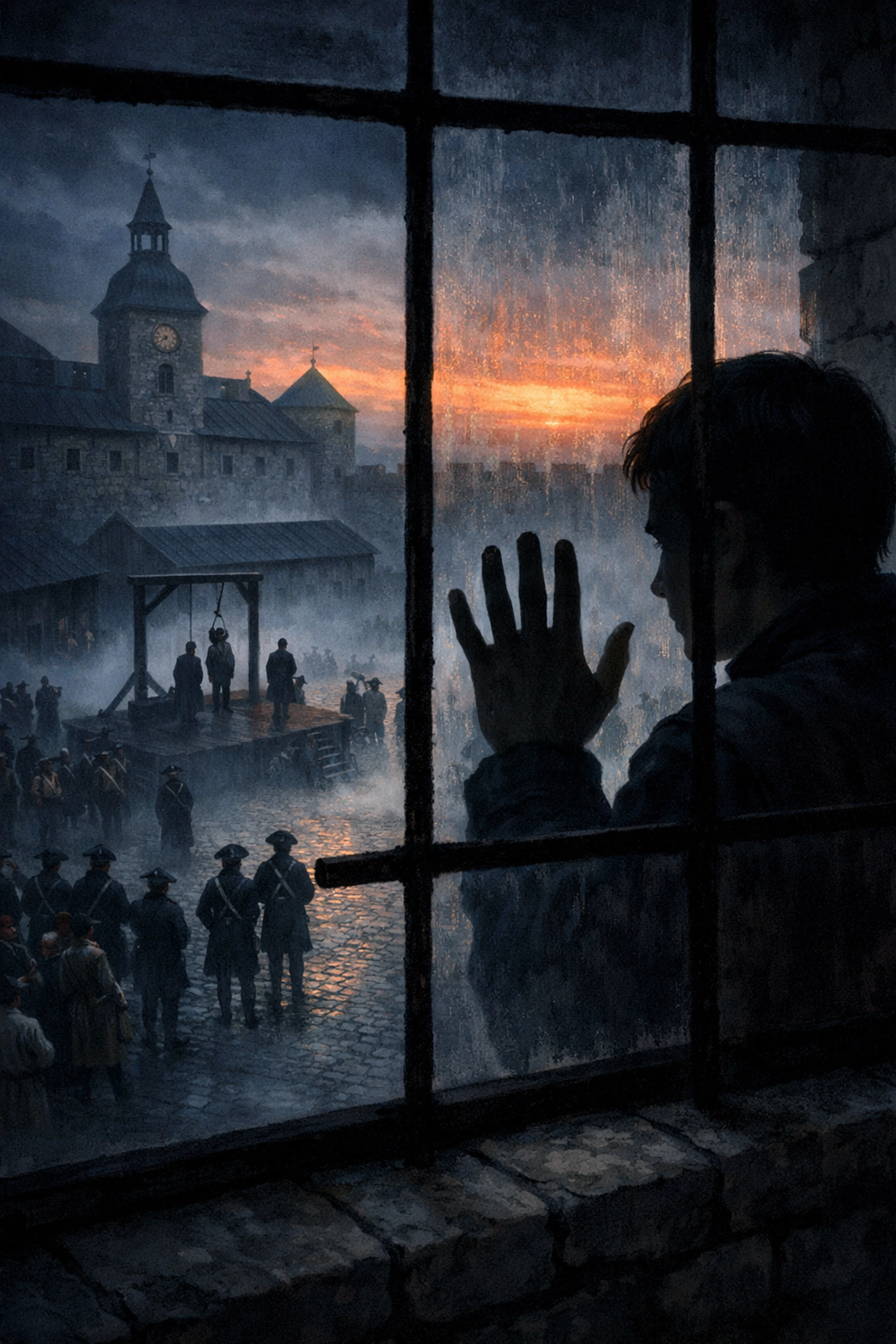
On November 6, 1730, Hans Hermann von Katte was beheaded at the fortress of Küstrin. Frederick William ordered his son to watch from his prison cell window.
The scene that unfolded was heartbreaking. As Katte was led to his execution, he saw Frederick at the window. According to witnesses, Katte called out, asking for forgiveness. Frederick shouted back: in French, naturally: "Mon cher Katte, je vous demande mille pardons!" (My dear Katte, I ask your forgiveness a thousand times!)
Katte's final words before the executioner's blade fell? "La mort est douce pour un si aimable prince." Death is sweet for so amiable a prince.
Try reading that without feeling something in your chest. This is the stuff of tragic MM romance: the forced proximity, the impossible situation, the lover who dies while the other watches helplessly. It's the kind of heartbreak that changes you forever.
And change Frederick it did.
The Philosopher Who Never Loved Again
After Katte's execution, Frederick retreated into philosophy and duty. He married Elisabeth Christine of Brunswick-Bevern as his father demanded, but it was a marriage in name only. Historical accounts suggest they barely spoke after the wedding, and Frederick spent most of his life at his palace of Sanssouci, literally "without care": surrounded by male companions, philosophers, and his beloved dogs.
He filled Sanssouci with statues of Marcus Aurelius and other Stoic philosophers, perhaps seeking in ancient wisdom the emotional armor he needed to survive. He corresponded extensively with Voltaire, pursuing intellectual intimacy where romantic connection had been violently denied to him.
Frederick embraced Stoic philosophy: the idea that virtue lies in accepting fate with dignity and controlling what you can control. Some historians argue this was genuine enlightenment. Others, like Kevin Kennedy, suggest it was sophisticated image management: a way to rationalize the person he'd become after losing the person he loved most.
When Frederick became king in 1740, he did modernize Prussia. He promoted religious tolerance, reformed the judiciary, and advanced education. But he also became a ruthless military strategist, expanding Prussian territory through calculated warfare. The sensitive boy who'd loved music and literature had transformed into a pragmatic, sometimes cruel ruler.
Was this who Frederick always would have become? Or did Katte's death kill something essential in him: the part that believed in romantic ideals and living authentically?
Reading Between History's Lines
Here's what makes Frederick the Great's story so compelling for queer readers: it's a reminder that LGBTQ+ history isn't just about pride parades and marriage equality. It's also about the countless lives lived in coded language, tragic separations, and loves that couldn't speak their names.
We'll never know exactly what Frederick and Katte were to each other. The 18th century didn't have our vocabulary for describing relationships. But we can read the emotional truth in Frederick's lifelong bachelorhood, his retreat to Sanssouci with male companions, and most powerfully, in those desperate words shouted from a prison window.
"Mon cher Katte": my dear Katte. Not "my friend." Not "my companion." My dear Katte.

The philosopher king spent the rest of his life surrounding himself with Stoic wisdom about accepting fate and controlling emotions. But you can't philosophize away grief. You can't reason yourself out of heartbreak. And you can't rule an empire without remembering the person you lost before you ever got the crown.
Frederick the Great conquered much of Europe, but he never conquered the ghost of that November morning in 1730.
Why This Story Still Matters
When we talk about gay historical romance or MM fiction, we're often drawn to stories where love triumphs against the odds. But sometimes the most important stories are the tragedies: the reminders of what our community has endured when society demanded we hide, conform, or die.
Frederick and Katte's story resonates because it's achingly familiar. The fear of a disapproving parent. The desperate desire to escape and just be yourself. The impossible choice between duty and love. The devastating loss that reshapes your entire life.
These themes run through so much of contemporary gay romance because they're rooted in real history. Every enemies-to-lovers story, every forced proximity narrative, every tale of forbidden love: they're echoing tragedies like Frederick and Katte's.
The difference is that today, we can give these stories happy endings. We can imagine worlds where love wins, where young men don't watch their lovers executed, where being different doesn't mean choosing between who you love and who you're supposed to be.
That's the power of LGBTQ+ fiction: it lets us rewrite history's cruelest chapters.
So the next time you pick up an MM romance novel about a prince who falls for the wrong person, or a historical gay fiction story about forbidden love, remember Frederick and Katte. Remember that these aren't just fantasies. They're healing. They're justice. They're the happy endings history denied to too many of our own.
Discover more stories of queer history and powerful LGBTQ+ love stories at readwithpride.com. Follow us for daily content celebrating authentic queer voices and experiences.
Follow Read with Pride:
- Facebook: facebook.com/profile.php?id=61586883027069
- Instagram: @read.withpride
- Twitter/X: @Read_With_Pride
#ReadWithPride #GayHistory #MMRomance #LGBTQHistory #FrederickTheGreat #QueerHistory #GayRomanceBooks #HistoricalGayRomance #LGBTQBooks #GayFiction #MMHistoricalRomance #QueerLoveStories #GayLiterature #PrideReading #LGBTQFiction #GayBookClub #GayNovels #MMBooks #QueerReading #GayRomanceNovels

Leave a Reply
You must be logged in to post a comment.