

readwithpride.com
When we talk about LGBTQ+ history, we often focus on the modern era, Stonewall, Pride parades, marriage equality. But queer love stories have existed for millennia, even in the most unlikely places. Like, say, the British monarchy in the early 1700s.
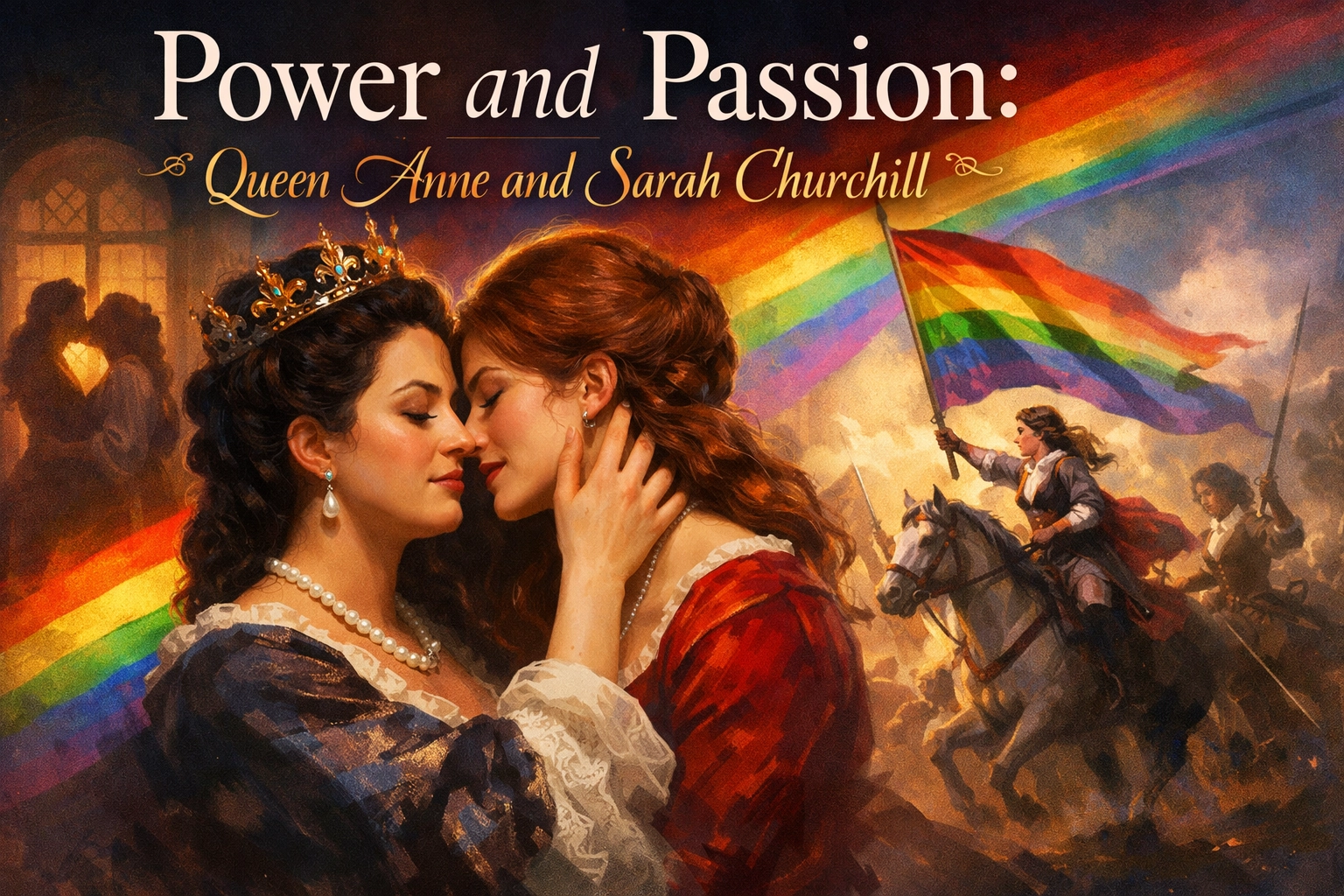
The relationship between Queen Anne of Great Britain and Sarah Churchill, Duchess of Marlborough, is one of history's most fascinating examples of power, passion, and political intrigue. Their bond was intense, intimate, and ultimately explosive, a royal love affair (or was it?) that shaped the course of British politics and left historians debating for centuries.
So grab your tea (this is British history, after all), and let's dive into one of the most compelling relationships in royal history.
Mrs. Morley and Mrs. Freeman: A Love Story Begins
Around 1675, two young women from vastly different stations formed an unlikely friendship. Anne was a princess, shy, reserved, and what one might generously call "drab." Sarah Jennings (later Churchill) was outspoken, vivacious, and absolutely fearless. Where Anne was quiet, Sarah commanded the room. It was a classic case of opposites attracting.
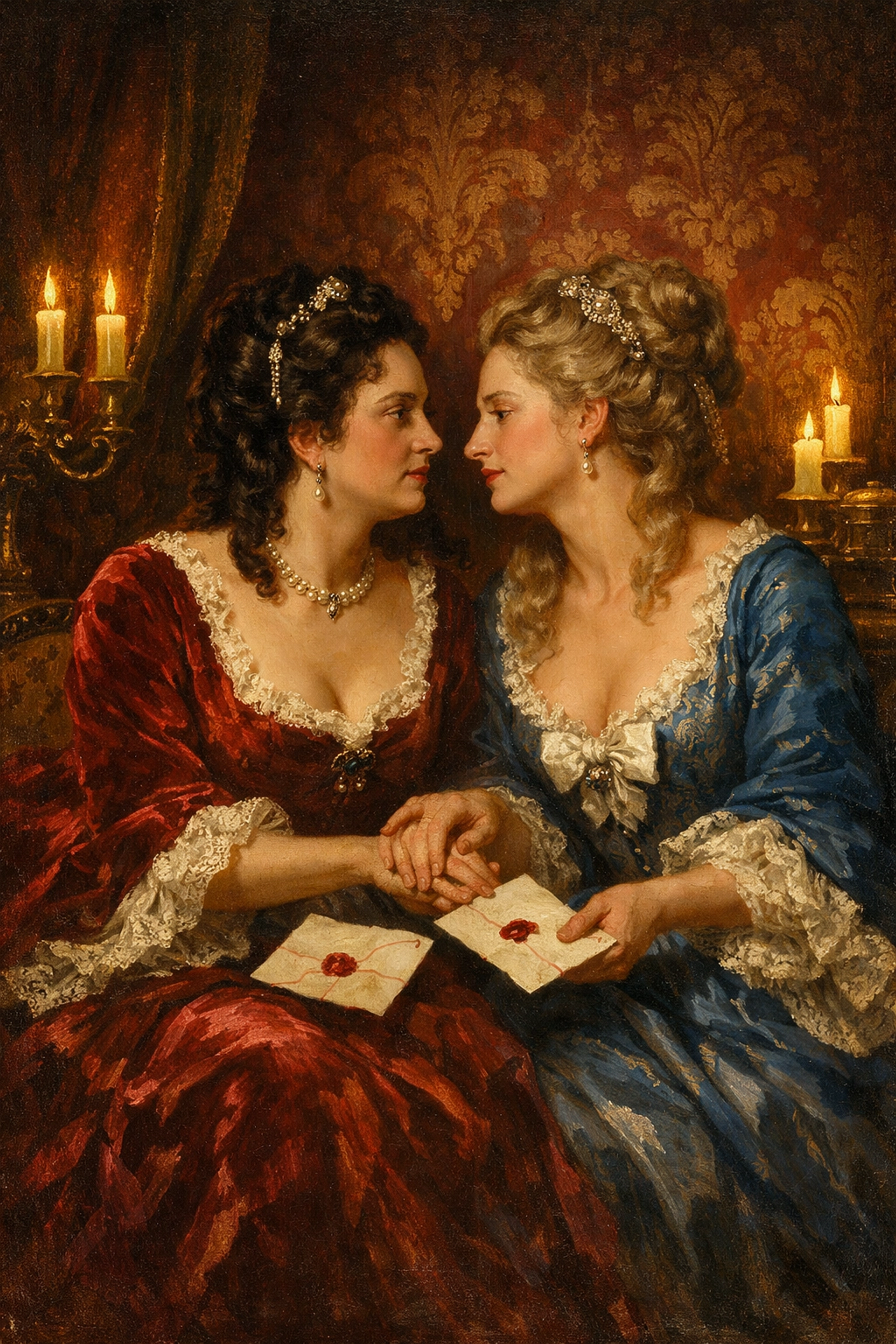
But this wasn't just any friendship. Their letters to each other were filled with what historians describe as "beautiful, highly devotional language of love." To escape the constraints of their different social positions, they created secret identities: Anne became "Mrs. Morley" and Sarah became "Mrs. Freeman." The names were carefully chosen, they wanted to be equals, at least in their private world.
Now, before anyone jumps in with "but women were just more affectionate back then," let's be clear: yes, elaborate expressions of love between female friends were common in the 17th and 18th centuries. But even by those standards, Anne and Sarah's correspondence was described as "extremely intimate." We're talking about a level of devotion that went beyond typical friendship, even for that era.
When Anne ascended to the throne in 1702, she immediately granted Sarah three of the most prestigious positions in the royal household: Keeper of the Privy Purse, Groom of the Stole, and Lady of the Bedchamber. Translation? Sarah had complete access to the Queen's finances, her wardrobe, and her private chambers. She was, essentially, the second most powerful woman in England.
Power, Politics, and Pillow Talk
Sarah didn't just enjoy her proximity to the Queen, she weaponized it. She used her influence to advance her husband's military career, and John Churchill rose to become the 1st Duke of Marlborough, one of Britain's greatest military commanders. Was it his brilliance alone? Partially. But Sarah's "ambitious nature" certainly didn't hurt.
The most scandalous moment came when Churchill was imprisoned in the Tower of London following political intrigue. Anne did something almost unthinkable: she defied court expectations and maintained her friendship with Sarah, effectively protecting her from complete social disgrace. A queen doesn't risk her reputation for just any friend.
But here's where things get complicated. Sarah was a devoted Whig, she believed in parliamentary power, mercantile growth, and limiting the monarchy's authority. Anne, on the other hand, leaned Tory, favoring a stronger crown and more traditional governance. At first, their political differences seemed manageable. Love conquers all, right?
Wrong. Sarah had a habit of telling the Queen exactly what she thought, with zero filter. Early in their relationship, Anne found Sarah's bluntness refreshing, a relief from the usual courtly obsequiousness. But as the years went by and Sarah became more forceful with her political opinions, that frankness started feeling less like honesty and more like harassment.
Enter the Other Woman
Every epic love story needs a villain (or is she a hero? Perspective matters). Enter Abigail Masham, Sarah's own distant cousin whom Sarah herself had introduced to court. Big mistake. Huge.
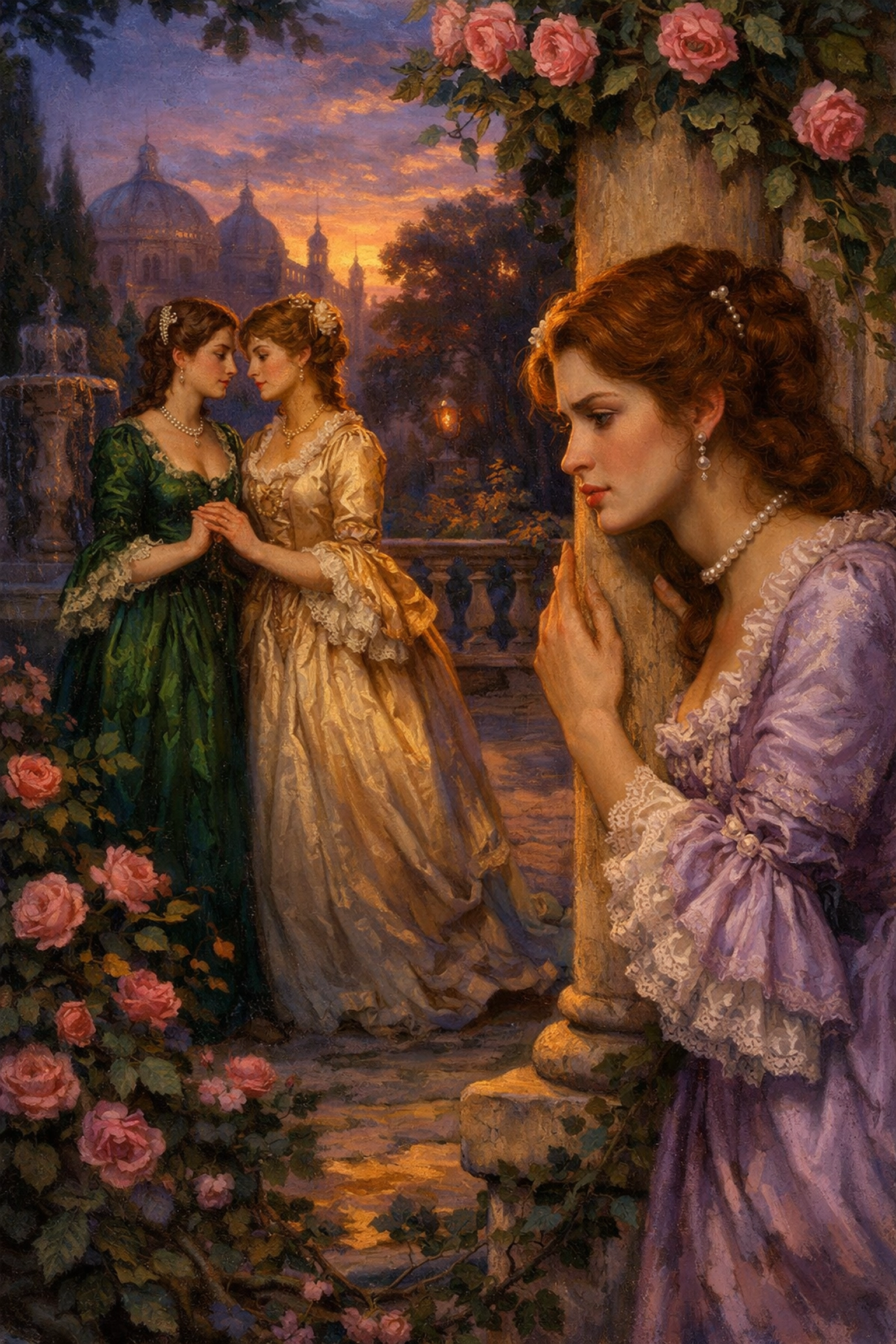
While Sarah was often absent from court, managing her estates and scheming politically, Abigail was there, offering the Queen kindness, compassion, and most importantly, silence. When Anne was bedridden with gout (a painful condition she suffered from frequently), it was Abigail who sat with her, not Sarah.
Sarah eventually discovered that Abigail had "replaced her as the Queen's favourite." The betrayal cut deep. But Sarah, never one to go down quietly, decided to fight back in the most dramatic way possible: she wrote to Queen Anne suggesting that the Queen had developed a "strange and unaccountable" passion for Abigail.
Yes, you read that right. Sarah essentially accused the Queen of being in a lesbian relationship with Abigail. Whether this was Sarah projecting her own feelings, trying to shame the Queen into returning to her, or genuinely believing something romantic was happening, we'll never know. But it was a bold, desperate move: and it backfired spectacularly.
The Final Confrontation: Good Friday, 1710
After months of avoided meetings and unanswered letters, Sarah forced her way into Queen Anne's private chambers at Kensington Palace on Good Friday, 1710. Imagine the scene: the former favourite, desperate and furious, confronting the Queen who had once loved her.
According to Sarah's own memoirs, Anne remained "calm and collected" throughout the encounter. When Sarah made emotional appeals, the Queen simply replied, "You may put it into writing" and "You desired no answer and I shall give you none."
Then Sarah played her final card: she threatened to publish their intimate letters as blackmail if Anne didn't reconcile with her. Let that sink in. Sarah threatened to expose their private correspondence: letters filled with devotional language and intimate confessions: to the public.
Anne didn't budge. The relationship was over.
What This Means for LGBTQ+ History
Was Queen Anne's relationship with Sarah Churchill sexual? We'll probably never know for certain. Historical evidence of same-sex relationships is notoriously difficult to interpret, especially when it comes to women (whose romantic friendships were often dismissed as "just gal pals" by historians).
But what we do know is this: their relationship was intensely intimate, emotionally charged, and powerful enough to influence British politics for decades. Whether you call it a romance, a passionate friendship, or something in between, Anne and Sarah's bond matters. It reminds us that queer love stories: or stories that look an awful lot like queer love: have always existed, even in the most traditional, conservative institutions.
For readers searching for gay romance novels and LGBTQ+ fiction, real historical stories like these provide rich inspiration. The tension, the power dynamics, the forbidden nature of their connection: these are all elements we see in the best MM romance books today.
The Aftermath
Sarah lived until 1744, becoming one of the richest women in England but also one of the most isolated. She fell out with most of her children and friends, and her later writings came across as "unforgiving and spiteful." She spent her final decades trying to justify and vindicate herself, but the question remained: had she truly loved Anne, or had she simply loved the power that came with being the Queen's favourite?
Anne died much earlier, in 1714, having never fully reconciled with Sarah. One has to wonder if she ever regretted ending things, or if Abigail's gentler presence was ultimately what she needed.
Read With Pride
History is full of stories like Anne and Sarah's: relationships that defy easy categorization, love that exists in grey areas, and passion that shapes empires. At Read with Pride, we celebrate all forms of queer storytelling, from historical romances to contemporary MM romance books that echo these age-old dynamics.
Whether you're into enemies-to-lovers MM romance (which Anne and Sarah definitely became), forced proximity stories (when you're literally the Queen's bedchamber attendant, you can't get much closer), or slow-burn historical romance, these real-life relationships prove that truth really can be stranger: and more compelling: than fiction.
Follow us for more LGBTQ+ history and the best gay romance novels:
- Facebook: Read with Pride
- Instagram: @read.withpride
- X/Twitter: @Read_With_Pride
- Website: readwithpride.com
#LGBTQHistory #QueerHistory #MMRomance #GayRomanceBooks #QueenAnne #RoyalHistory #WLWHistory #LesbianHistory #HistoricalRomance #ReadWithPride #LGBTQBooks #QueerLit #2026Books #GayBooks #LGBTQFiction #QueerAuthors #GayLoveStories #HistoricalLGBTQ #BritishHistory #RoyalRomance

Leave a Reply
You must be logged in to post a comment.