

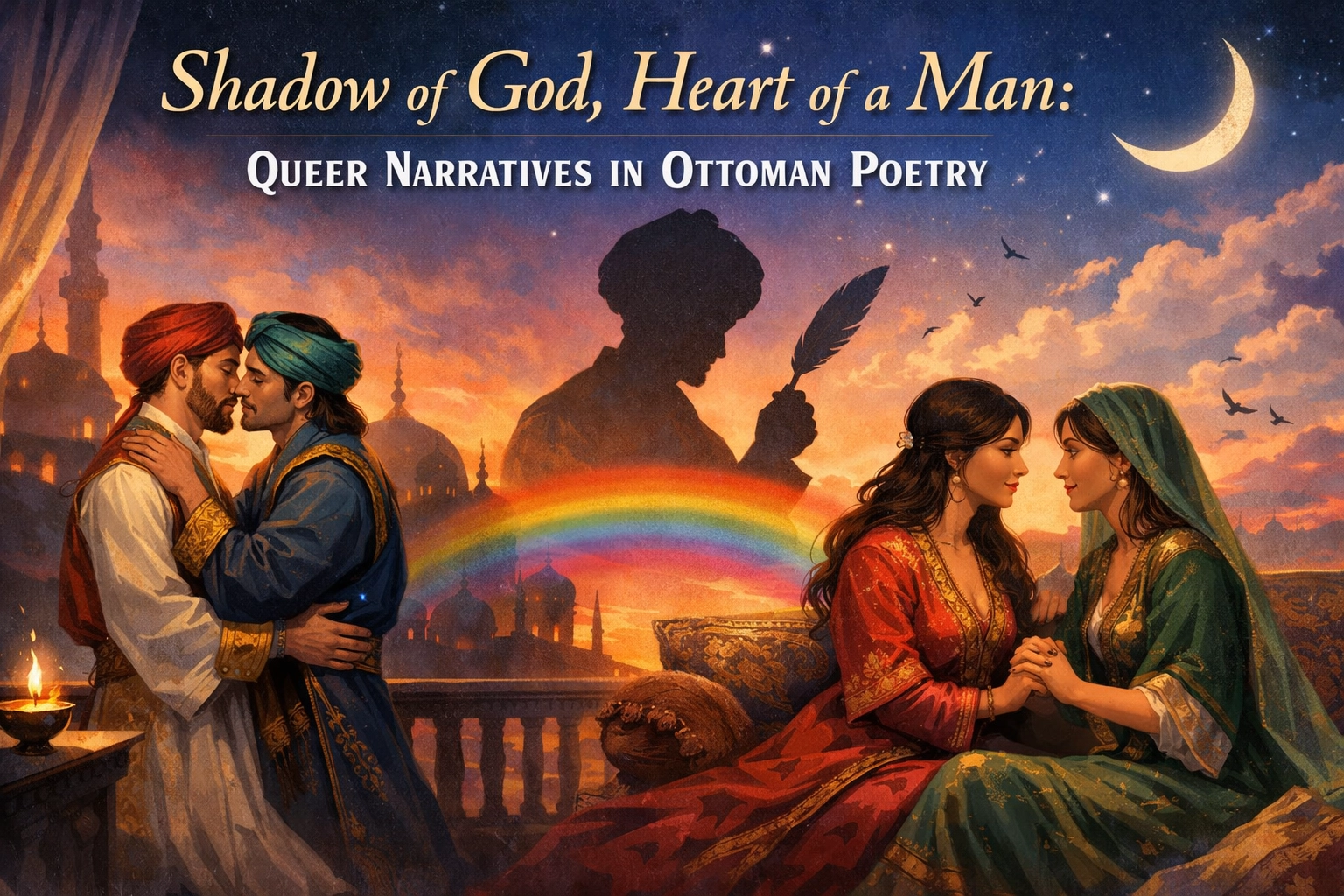
readwithpride.com
Behind the towering walls of Topkapi Palace and within the ink-stained pages of elaborate manuscripts, Ottoman sultans and their courtiers were writing some of the most passionate homoerotic poetry the world has ever seen. While the West was busy condemning same-sex love, the Ottoman Empire was celebrating it in verse, song, and artistic expression. These weren't just whispered secrets: they were published, celebrated, and considered the height of literary sophistication.
If you think gay romance novels are a modern invention, think again. The Ottomans were centuries ahead of the curve.
The Divan: Where Desire Met Divine
The Divan was a collection of poems, typically organized alphabetically by rhyme scheme, that represented an Ottoman poet's complete works. These weren't casual journal entries: they were meticulously crafted literary achievements that often contained hundreds or even thousands of verses. And many of them? Absolutely dripping with desire for beautiful young men.
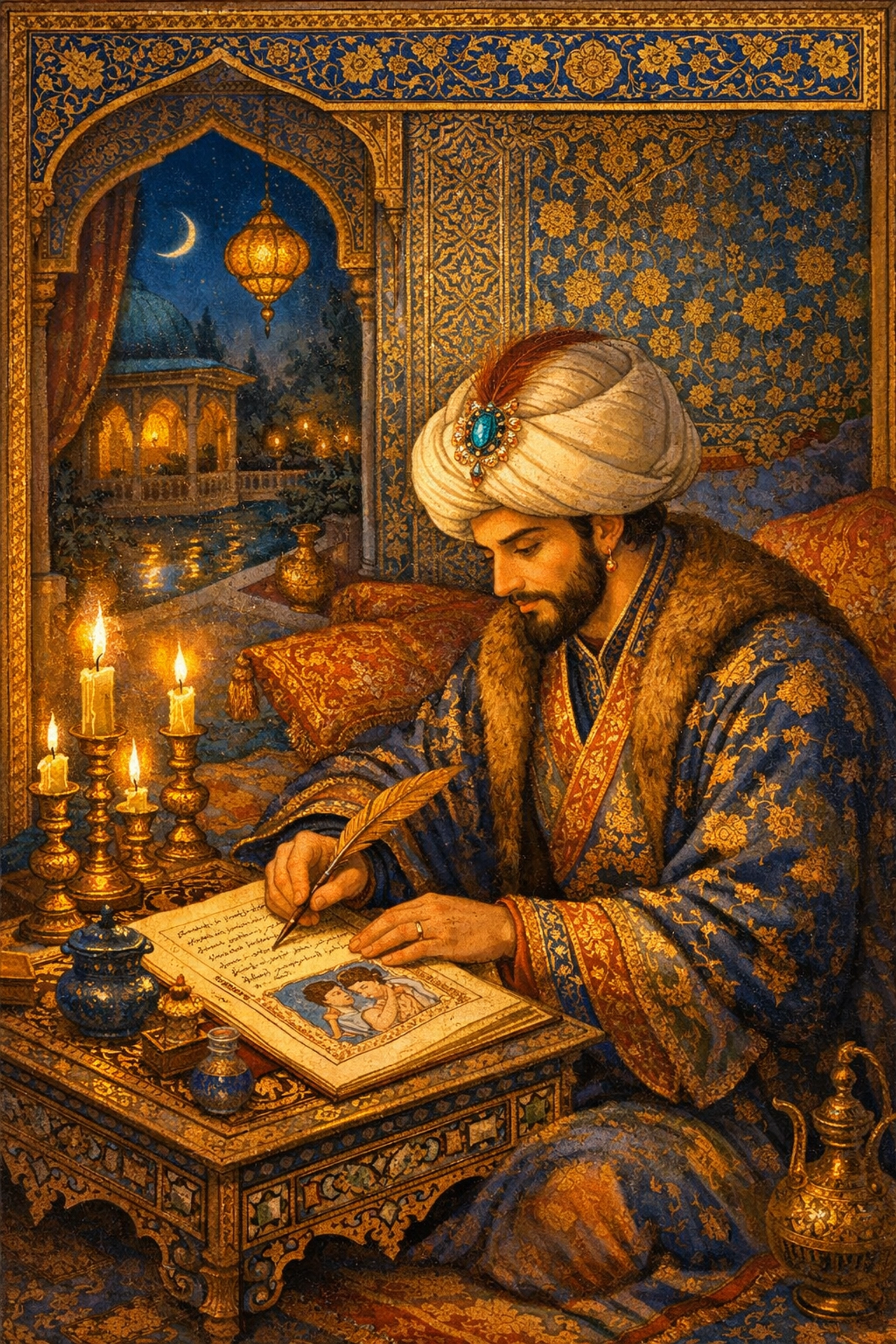
What made Ottoman poetry so revolutionary wasn't just that it acknowledged male-male desire: it elevated it to an art form. Poets didn't hide their affections behind coded language or apologetic metaphors. They openly declared their love, their longing, their absolute devastation at being separated from their beloveds. The gazelle, a specific poetic form within Divan literature, became the ultimate vehicle for expressing transgressive love that defied social conventions.
The poet positioned himself as a "rebel lover": someone willing to abandon reputation, social standing, and courtly propriety for the sake of passionate love. Sound familiar, MM romance fans? The Ottomans invented the "love against all odds" trope centuries before we started buying it on Amazon.
More Than Pretty Boys: The Complexity of Ottoman Male Love
Here's where it gets interesting. Western scholars love to reduce Ottoman homoerotic poetry to obsession with adolescent boys, but that's a massive oversimplification. Ottoman poets wrote about diverse male beloveds: from fellow soldiers to spiritual companions to lifelong partners. The beloved wasn't just an object of lust; he was a mirror reflecting both earthly beauty and divine perfection.
This is where Ottoman poetry gets deliciously complex. The same poem celebrating a beloved's beauty might simultaneously be expressing devotion to God, loyalty to the sultan, or philosophical contemplation of existence itself. Love for a beautiful man wasn't seen as separate from spiritual enlightenment: it was a pathway to it.
Think of it as the ultimate slow-burn romance where physical attraction leads to transcendent spiritual connection. The best gay romance books today still use this formula, whether they know they're channeling Ottoman poetry or not.
Sultans with Quills: When Power Meets Passion
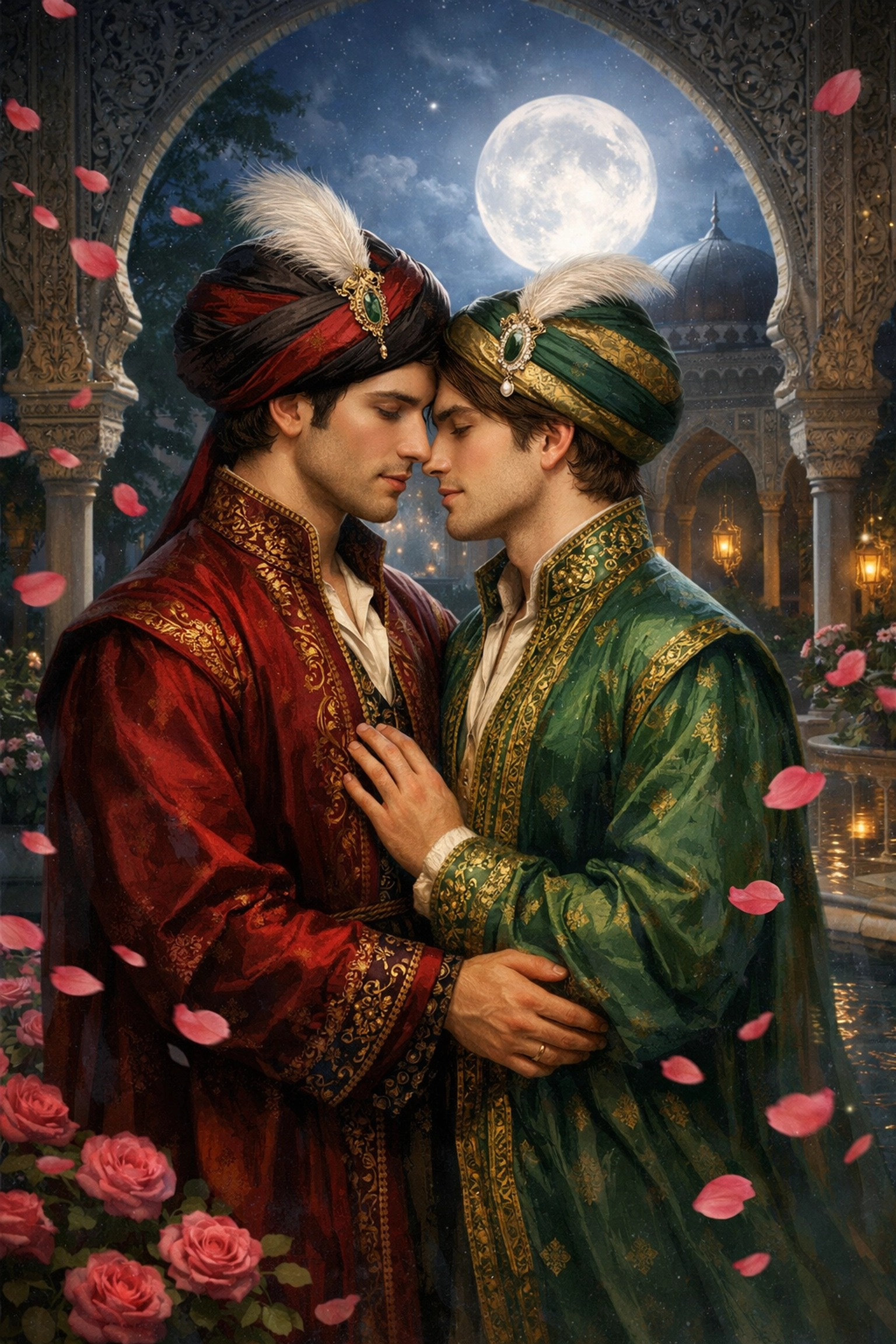
Several Ottoman sultans were accomplished poets who openly explored same-sex themes in their work. They didn't need to hide behind pseudonyms or fear exposure. They were literally the most powerful people in their empire, and they chose to use that platform to write love poetry to men.
These weren't closeted monarchs sneaking around: they were celebrated artists whose romantic verses were memorized, recited in coffeehouses, and set to music. The sultan's love poems became popular songs that ordinary people sang in the streets. Imagine if world leaders today published steamy MM romance under their own names and everyone thought it was perfectly normal. That was Ottoman court culture.
The palace walls witnessed relationships that would make contemporary LGBTQ+ fiction look tame. Young men brought into the palace: pages, soldiers, favorites: formed complex emotional and physical relationships with sultans and high-ranking officials. These weren't always exploitative dynamics either; many poems speak of genuine affection, jealousy, heartbreak, and lifelong devotion.
The Language of Longing
Ottoman poets developed an entire vocabulary for queer desire. The beloved's face was compared to the full moon. His down-covered cheeks were gardens of delight. His cruel indifference was simultaneously torture and ecstasy. The lover declared himself a willing slave to beauty, destroyed by separation, drunk on the wine of love.
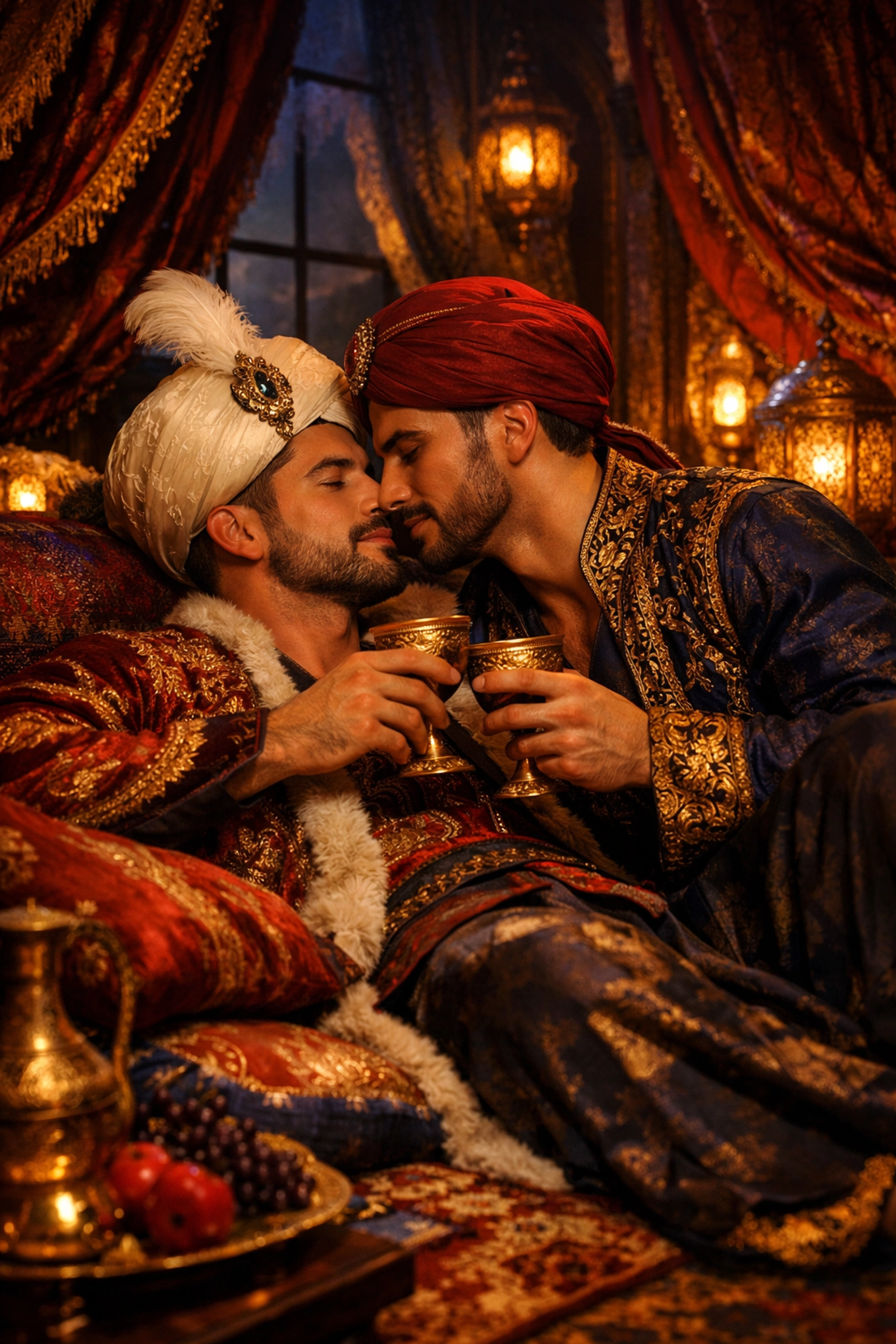
These metaphors became so standardized that they formed their own language: one that every educated Ottoman would immediately recognize and understand. When a poet wrote about serving wine to a beautiful cupbearer, everyone knew exactly what kind of intoxication he was actually describing.
But here's what makes this poetry so powerful: it wasn't just florid metaphor. These poets were describing real emotions, real relationships, real desire. The conventions gave them a framework, but the feelings underneath were utterly genuine. Reading these poems today, you can still feel the heat, the longing, the desperate need for connection.
It's the same reason we devour contemporary gay fiction: because authentic emotional truth transcends centuries and cultures. Love is love, whether it's written in Ottoman Turkish on illuminated manuscript or published as an ebook in 2026.
When Women Wrote the Beloved
While Ottoman homoerotic poetry was predominantly a male domain, female poets also participated in this literary tradition. Mihri Hatun, one of the most famous female Ottoman poets, wrote verses addressing a female beloved from a masculine perspective. Scholars debate whether she was adopting a conventional poetic voice or expressing her own same-sex desire.
Either way, she was writing queer love poetry in the 15th century, and people were reading it, copying it, and preserving it. That's remarkable. Female same-sex desire was far more hidden in Ottoman society than male relationships, but it still found expression in literature, often through deliberately ambiguous language that could be read multiple ways.
These women poets navigated a much trickier landscape than their male counterparts, but they still managed to create space for queer narratives within the strict conventions of Divan literature.
The Western Gaze: When Love Became Shame
Here's where the story takes a darker turn. As Ottoman society increasingly came under Western influence in the 19th century, European attitudes toward same-sex desire began seeping in. What had been celebrated as the highest form of literary and spiritual expression suddenly became something shameful, something to hide.
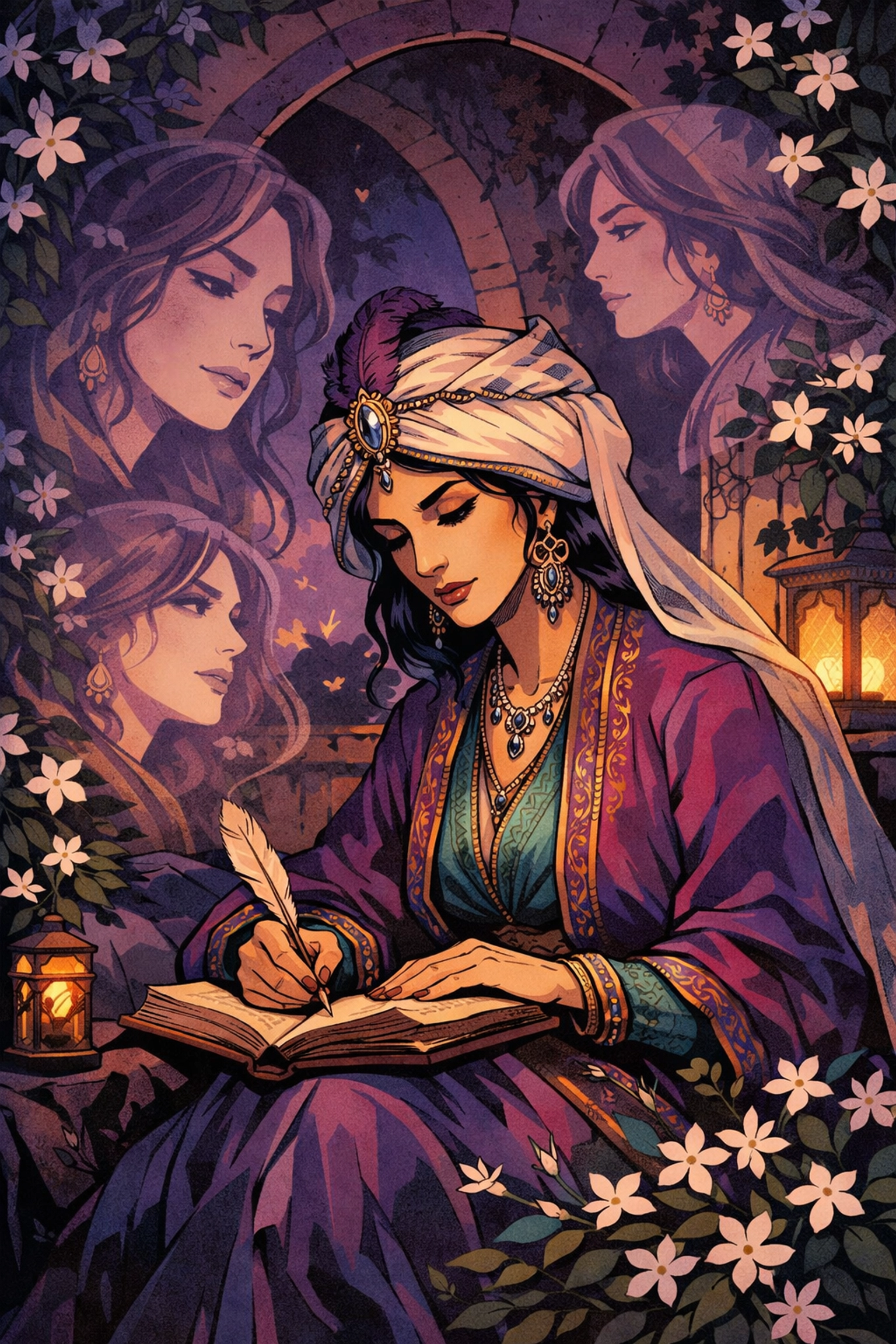
Western observers, deeply uncomfortable with Ottoman sexual openness, reframed homoerotic poetry as evidence of "Eastern depravity." They stripped away the spiritual dimensions and reduced complex emotional relationships to crude stereotypes. The rich tradition of queer Ottoman poetry was deliberately misinterpreted and dismissed.
By the early 20th century, as the Ottoman Empire collapsed and modern Turkey emerged, this entire literary tradition was being actively suppressed and rewritten. Homoerotic verses were left out of anthologies. Poems were reinterpreted to make beloved male figures into women. A centuries-long celebration of same-sex love was erased from mainstream cultural memory.
Sound familiar? It's the same pattern of queer erasure that happened across cultures worldwide. But here's the thing about poetry: it survives. Those manuscripts still exist. Scholars are rediscovering them. And we're finally telling the real story again.
Reading Ottoman Poetry Today
What can contemporary readers: especially those who love MM romance and gay fiction: take from Ottoman poetry? Everything.
These poems remind us that queer love isn't a Western invention or a modern phenomenon. It's been celebrated, explored, and elevated to high art across cultures for millennia. The Ottoman Divan tradition shows us that same-sex desire can be simultaneously physical and spiritual, passionate and philosophical, transgressive and culturally central.
When you read the best gay romance books today: the ones that make you feel seen, the ones that explore love in all its complexity: you're participating in a literary tradition that stretches back through centuries. Those Ottoman poets writing by candlelight in palace chambers? They were your literary ancestors.
Preserving Queer History
At readwithpride.com, we believe in celebrating LGBTQ+ stories across all cultures and eras. The Ottoman Divan tradition deserves its place alongside contemporary MM romance novels and queer fiction as part of our rich literary heritage. These weren't just poems: they were acts of visibility, declarations of desire, and celebrations of love that refused to be hidden.
Every time you pick up a gay romance book, you're continuing what those Ottoman poets started: insisting that queer love deserves to be told, celebrated, and remembered. Whether it's a sultan writing gazelles in 16th-century Istanbul or an indie author publishing MM romance in 2026, the impulse is the same: to make our love visible, to create art from our desire, to refuse erasure.
The Ottomans understood something profound: love between men isn't just acceptable; it's beautiful, transcendent, and worthy of the finest poetry. Five hundred years later, we're still learning that lesson.
Discover more LGBTQ+ stories and romance at readwithpride.com
Follow us on Facebook | Instagram | X/Twitter
#ReadWithPride #MMRomance #GayRomanceBooks #LGBTQHistory #OttomanPoetry #QueerHistory #GayFiction #HistoricalLGBTQ #MMRomanceBooks #GayLiterature #QueerPoetry #LGBTQFiction #GayBooks #LGBTQEbooks #QueerNarratives #GayHistoricalRomance #LGBTQPride #GayLoveStories

Leave a Reply
You must be logged in to post a comment.