

readwithpride.com
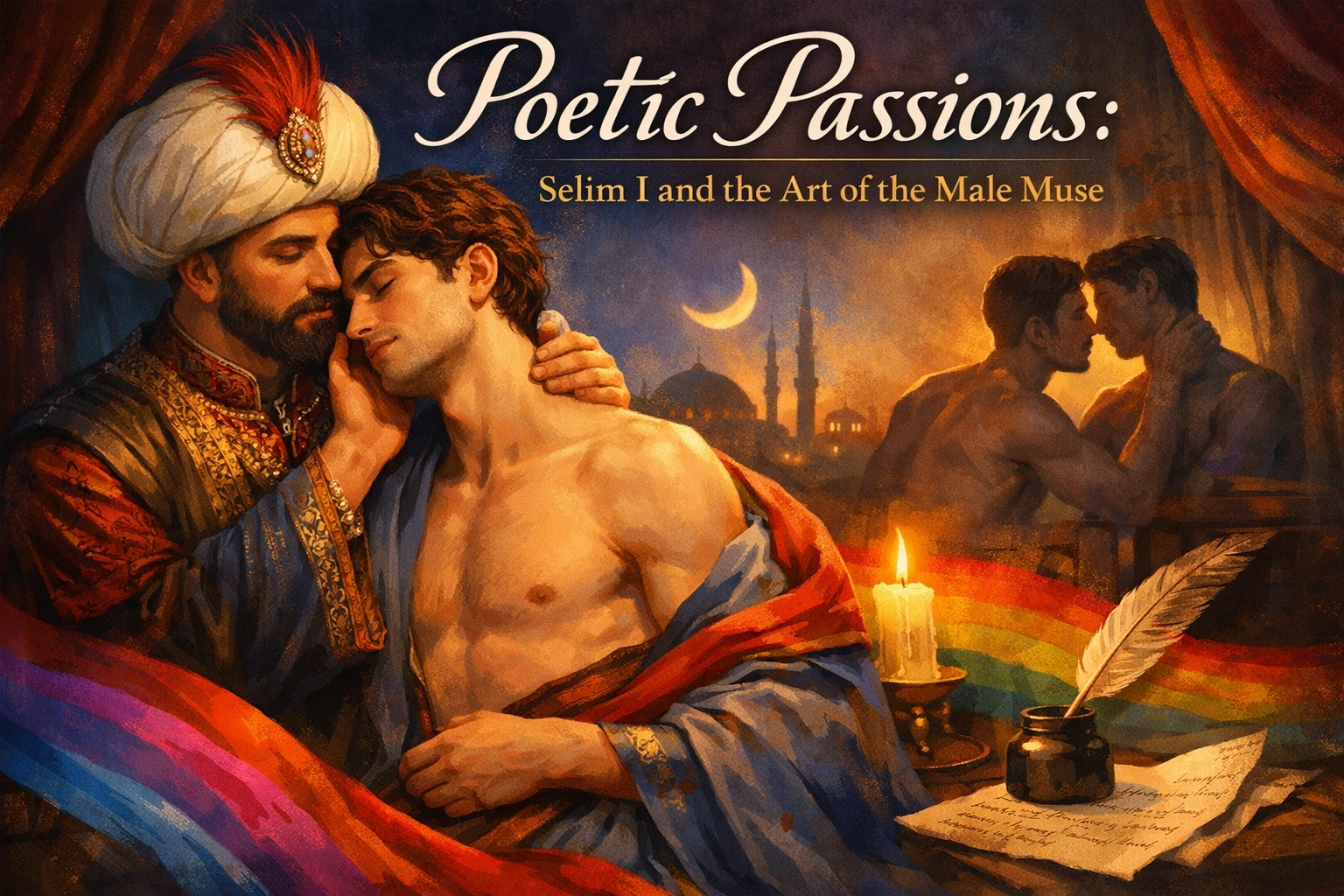
When we think of Ottoman sultans, we usually picture military campaigns, palace intrigue, and ruthless power plays. But behind the towering walls of Topkapi Palace, some of history's most fearsome rulers were also creating some of the most beautiful: and revealing: poetry ever written. Sultan Selim I, known to history as "Selim the Grim" for his military prowess, had a softer side that he expressed through verses celebrating male beauty, longing, and desire.
Welcome to a world where poetry was the language of forbidden passion, and where one of the most powerful men in the world used his pen to explore feelings that official histories tried to erase.
The Poet Behind the Sword
Selim I ruled the Ottoman Empire from 1512 to 1520, expanding its borders dramatically through military conquest. He was fierce, calculating, and absolutely terrifying to his enemies. But he was also something else entirely: a talented, sensitive poet who wrote under the pen name Mahlas Selimi.
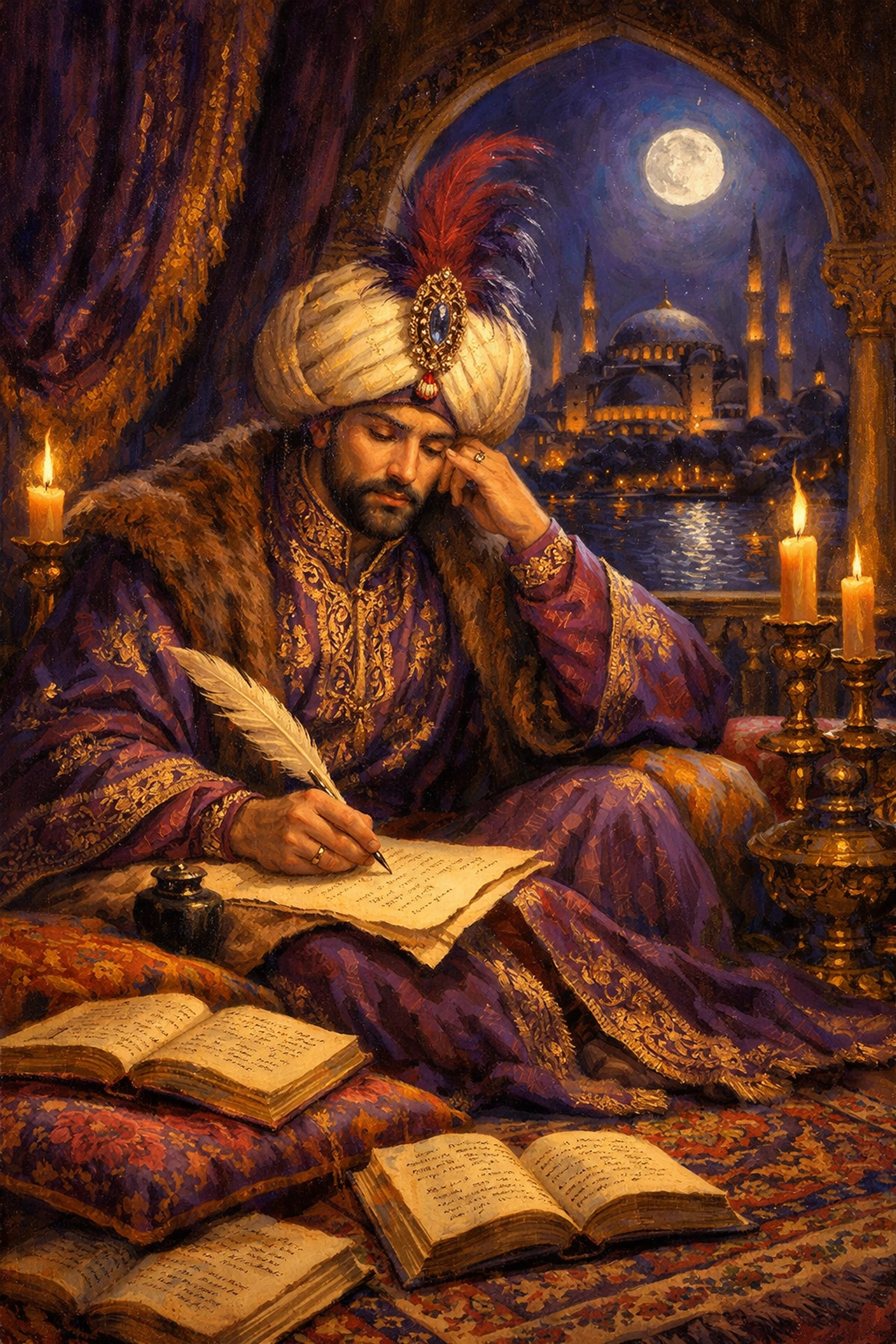
This wasn't just a casual hobby. Selim was seriously skilled, composing in both Turkish and Persian: the two literary languages of his court. The Ottoman critic Latifî, writing just decades after Selim's death, noted that the sultan was "very fond of speaking Persian," the language traditionally associated with romance, mysticism, and yes, expressions of homoerotic love in classical Islamic literature.
Collections of his Persian poetry survive to this day, and they're characterized by what scholars describe as "powerful language with deep meaning and artistic style." Translation: this man knew how to write about desire in ways that would make your heart race.
The Tradition of the Beautiful Youth
To understand Selim's poetry, we need to talk about the shahid, literally "witness" in Persian, but referring to a beautiful youth whose beauty was seen as a reflection of divine perfection. This wasn't just metaphor. In Ottoman court culture, the appreciation and even pursuit of young men was an accepted part of elite life, particularly within palace walls where segregation from women was strict.
Persian and Ottoman poetry had developed an entire vocabulary around male beauty: the beloved's face was the moon, his eyebrows were bows, his eyelashes were arrows that wounded the heart of the lover. The downy hair on his cheeks was a spiritual test. His cruel indifference was part of the game of love.
This wasn't coded language that needed deciphering. Everyone knew exactly what these poems meant. The question was never if a sultan or courtier admired male beauty: it was how eloquently he could express it.
Writing What He Felt
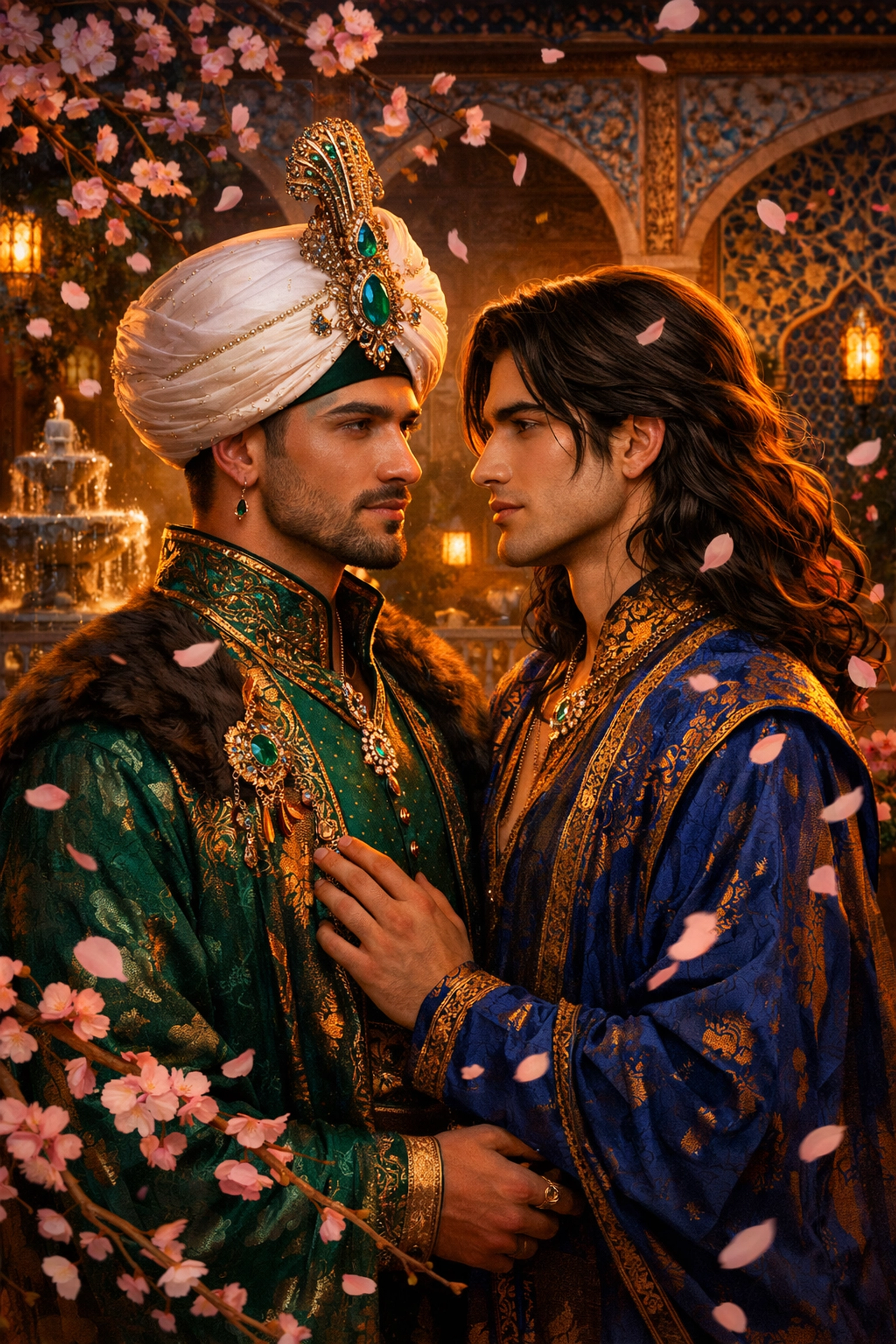
Selim's poems frequently explored themes of love and longing, using the classical Persian forms that were considered the height of literary sophistication. One of his most celebrated verses captures that spiritual dimension: "When in crucible of Love Divine, like gold, that melted I."
This is the language of transformation through desire: the idea that longing for beauty (whether earthly or divine, and often the lines blurred) fundamentally changes the lover. It's intense, it's passionate, and it's the kind of vulnerability we rarely associate with powerful rulers.
But Selim wasn't just playing with literary conventions. His poetry suggests genuine feeling, genuine attraction, genuine longing. These weren't abstract exercises: they were expressions of lived experience, written by a man who had access to some of the most beautiful young men in the empire, many of them serving in his court and his private chambers.
The palace system itself facilitated these relationships. Young men from across the empire were brought to serve the sultan, trained in various arts, and some became intimate companions. The line between service, companionship, and romance was deliberately blurred, creating a hothouse atmosphere where beauty, power, and desire intertwined.
The Pride of a Poet
Here's where it gets really interesting: Selim took his poetic reputation very seriously. When Shah Ismail of Persia: his greatest rival: insulted his prose, suggesting it was written by "an unqualified writer on drugs," Selim was so enraged that he ordered the Persian envoy who delivered the insult to be executed.
Think about that for a moment. This was a man who conquered lands and commanded armies, but what really got under his skin was someone mocking his writing skills. That tells you how important this literary identity was to him: not just as a hobby, but as a fundamental part of who he understood himself to be.
Poetry wasn't separate from power in the Ottoman court. It was another form of mastery, another way to demonstrate superiority. And for Selim, being able to express desire and beauty in perfect Persian verse was just as important as military victories.
Love Behind Palace Walls
The Ottoman palace was a world unto itself, with its own rules, hierarchies, and possibilities. Within those high walls, away from the outside world's gaze, relationships flourished that would have been impossible elsewhere. The harem system: which included not just women but also the enderûn, the palace school for boys: created spaces where intimacy could develop.
Young pages served the sultan directly, learning everything from calligraphy to military arts. They were chosen for their beauty as well as their abilities. Some became trusted advisors, military commanders, or provincial governors. Others became something more personal, though official records maintained careful silence on such matters.
But poetry didn't need to be silent. In verse, Selim and poets like him could express what couldn't be stated directly in chronicles or official documents. The poems became a kind of historical testimony, preserving feelings and experiences that would otherwise have been lost.
A Legacy in Verse
What makes Selim's poetry so valuable today isn't just its literary merit: though it has that in abundance. It's what it tells us about the complexity of historical sexuality, about how desire has always found ways to express itself even in the most rigidly controlled societies.
Reading these poems now, as part of the LGBTQ+ community seeking our history, we can see our ancestors in these verses. Not exactly the same: the Ottoman understanding of sexuality was quite different from modern LGBTQ+ identities: but recognizably kin. Men who loved men, who wrote about that love, who built lives and relationships that mattered to them.
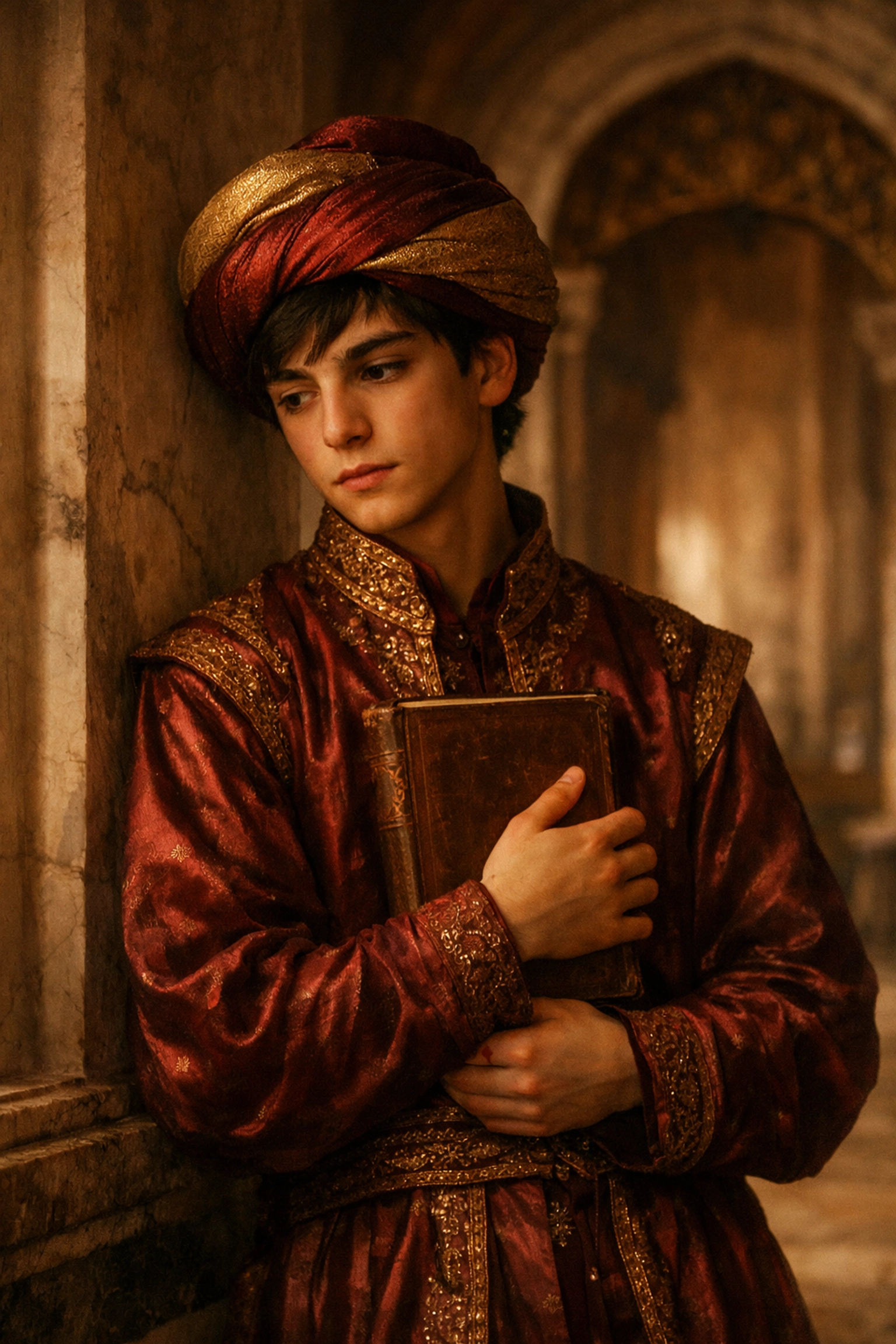
The fact that Selim was bilingual in his poetic expression is particularly significant. He moved fluidly between Turkish and Persian, between different poetic traditions, finding in each one new ways to articulate desire and beauty. It suggests a sophistication about emotion and expression that challenges simplistic narratives about "repressive" historical periods.
Why This Matters
Stories like Selim's are crucial for the gay romance and LGBTQ+ fiction communities because they remind us that our history is deeper, richer, and more complex than we're often told. When you're reading MM romance books or exploring queer fiction, you're participating in a tradition that goes back centuries: to sultans writing love poetry in moonlit palace gardens, to desires expressed in metaphor and verse.
At Read with Pride, we believe in recovering these stories, in understanding the full spectrum of how same-sex love and desire have been experienced throughout history. Whether you're into gay historical romance or just curious about LGBTQ+ literature that explores real historical contexts, these stories matter.
They tell us that even in times and places that seem impossibly distant, people felt what we feel. They loved, they longed, they wrote poetry at three in the morning because someone's beauty kept them awake. They were human in all the complicated, messy, beautiful ways we are human.
Selim I died in 1520, but his poems survive. That feels appropriate somehow: that what endures isn't just his military conquests, but his vulnerable expressions of beauty and desire. The warrior who was also a lover, the conqueror who also melted like gold in the crucible of love.
Want to explore more stories of hidden history and forbidden love? Follow us on Facebook, Instagram, and X for daily doses of LGBTQ+ content that celebrates love in all its forms across history. Check out our collection of gay romance novels and MM fiction at readwithpride.com.
#ReadWithPride #OttomanHistory #LGBTQHistory #GayRomance #MMRomance #QueerHistory #HistoricalLGBTQ #GayBooks #LGBTQFiction #QueerLiterature #GayHistoricalRomance #LGBTQBooks2026 #GayLoveStories #MMRomanceBooks #QueerReading #GayLiterature #LGBTQPride #HistoricalQueerStories #SultanSelim #OttomanPoetry

Leave a Reply
You must be logged in to post a comment.