

readwithpride.com
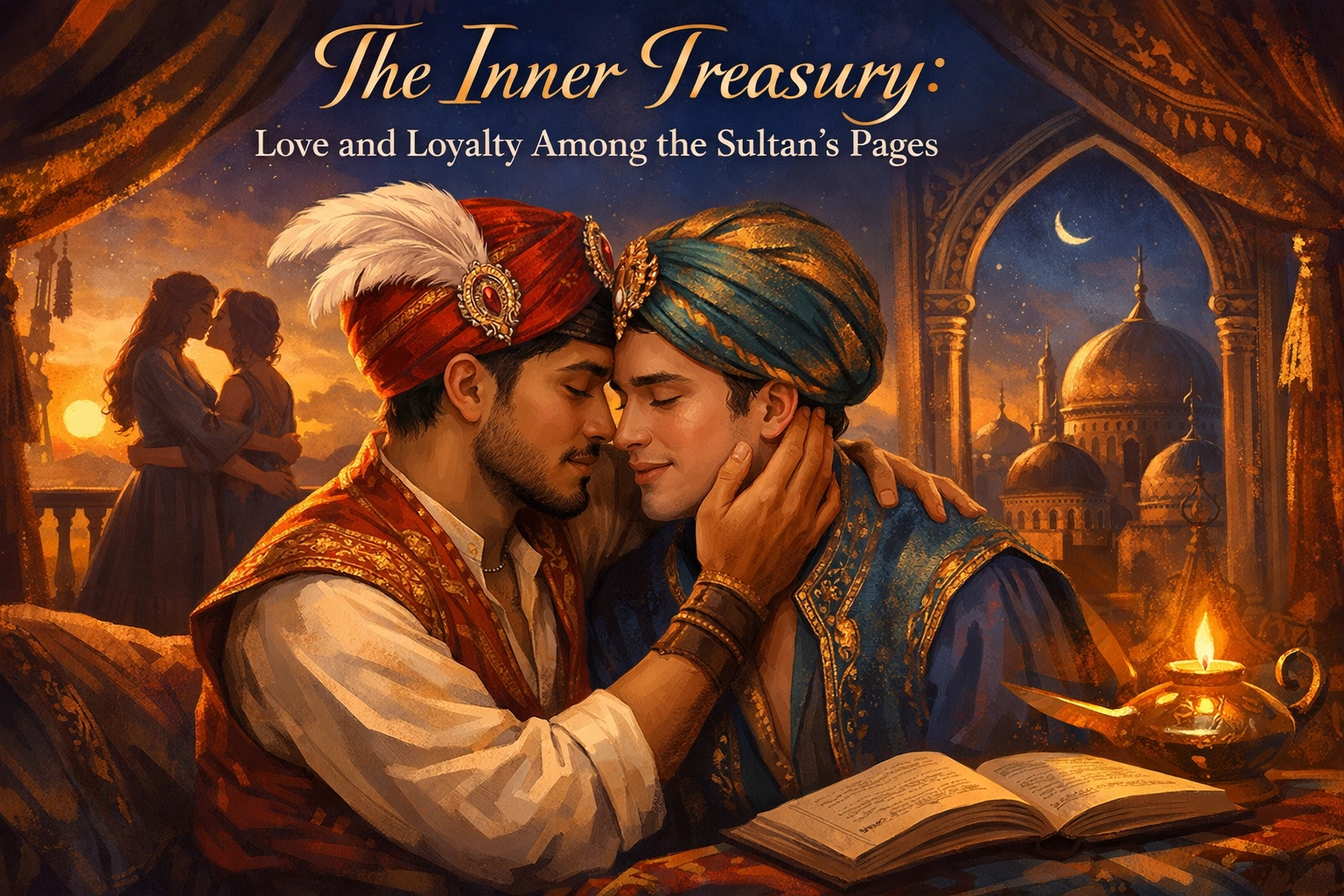
Behind the gilded gates of Topkapi Palace, beyond the sultans and their harems that dominate popular imagination, another world thrived in shadow and splendor. This was the realm of the Inner Service, where young men, handsome, intelligent, and carefully selected, lived, trained, and formed bonds that would shape empires. Their stories, whispered through centuries, reveal a complex tapestry of devotion, ambition, and love that modern gay romance novels barely scratch the surface of.
The pages of the Ottoman court weren't just servants. They were the empire's future, governors, generals, and grand viziers in training. But during their formative years within the palace walls, they were something else entirely: young men living in an all-male world where loyalty, beauty, and intimacy intertwined in ways the outside world could never witness.
The Selection: Beauty as Currency
The Ottoman system of recruiting palace pages was meticulous and revealing. Christian boys, typically between ages eight and fifteen, were selected through the devshirme system based on intelligence, physical beauty, and potential. Yes, beauty mattered. Historical records don't shy away from this detail, the most attractive boys were destined for the Inner Service, closest to the sultan himself.
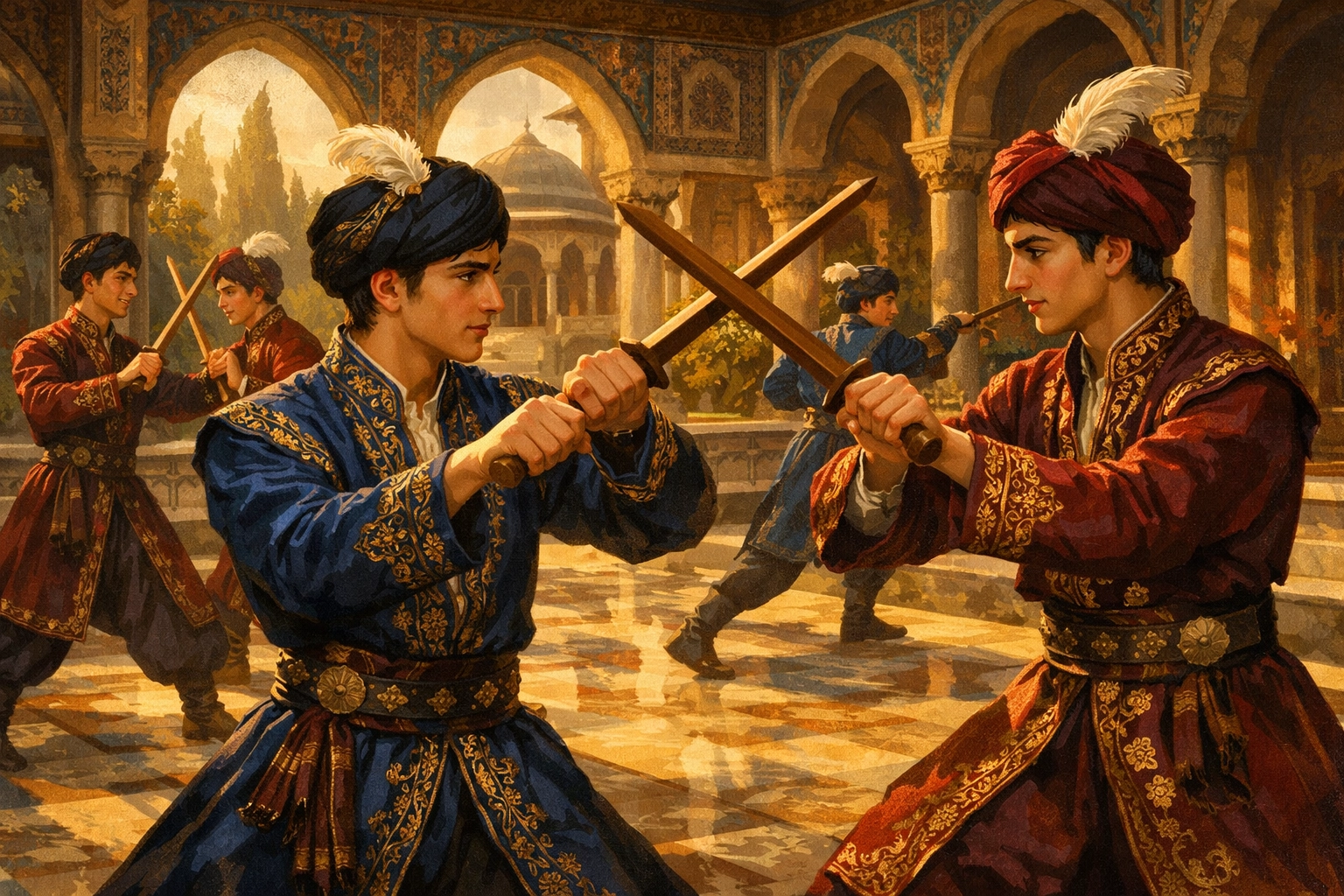
These young men entered a world of strict hierarchy and intense education. They learned languages, martial arts, music, poetry, and the intricate arts of statecraft. But they also learned something the official histories often gloss over: how to navigate desire, affection, and loyalty in a closed world where women were absent and male bonds became everything.
The palace pages weren't just roommates or classmates. They were odabashi (chamber leaders) and their devoted followers, mentors and pupils, companions who shared beds in the dormitories of the Third Court. Ottoman miniatures and court records describe these arrangements matter-of-factly, as if everyone understood what went unspoken.
The Third Court: Where Hearts and Ambitions Collided
Within the Third Court of Topkapi, the pages lived in specific chambers, the Privy Chamber, the Treasury, the Campaign Hall, and the Larder. Each served a function, but all shared something crucial: they were spaces where young men spent years together, isolated from the outside world, their entire existence revolving around each other and their sultan.
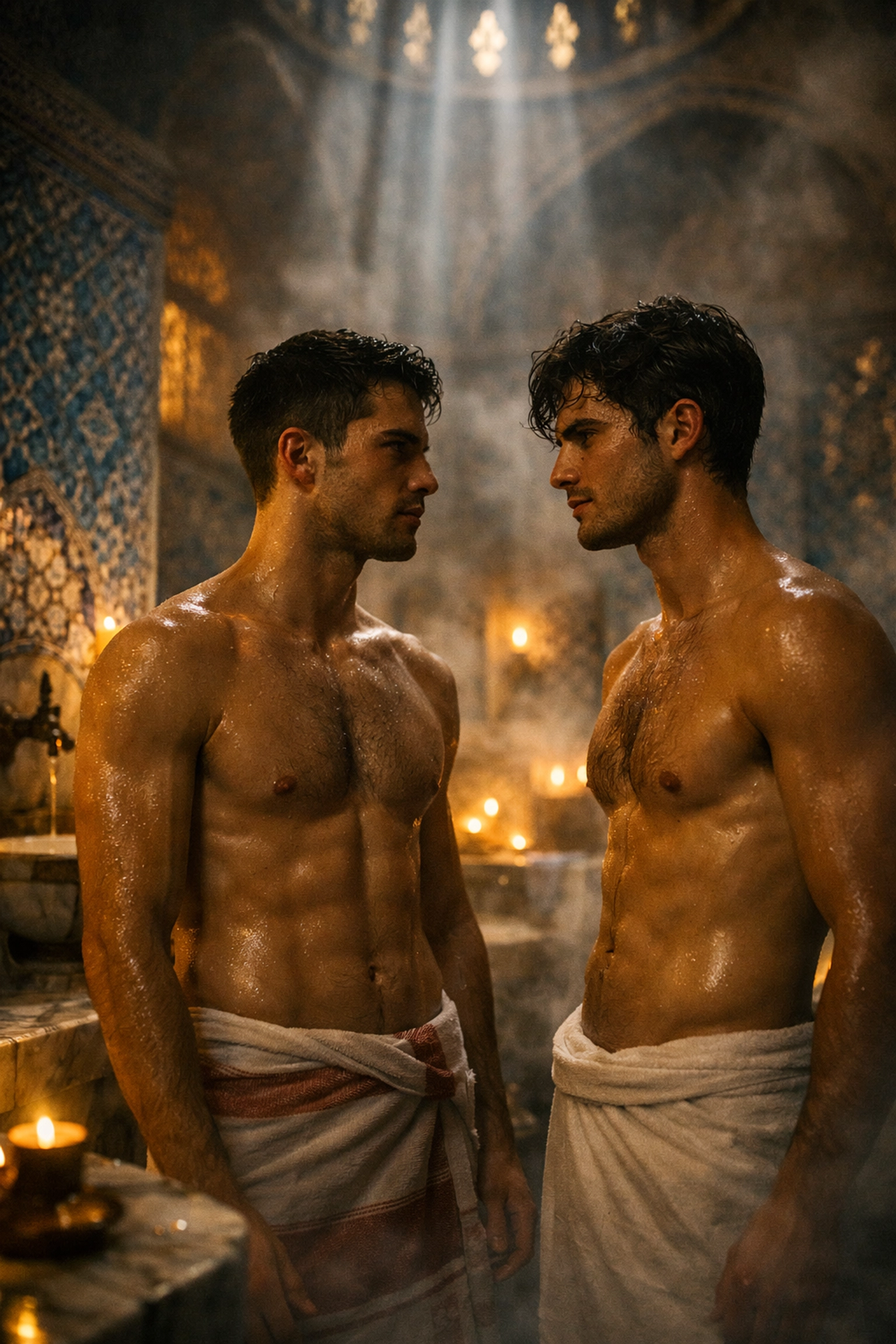
The pages bathed together in the palace hammams, trained together in martial exercises, and competed for advancement. They also formed intense emotional attachments. Contemporary accounts by palace insiders describe favorites (gözde), the phenomenon of jealousy when a page caught the sultan's eye, and the poetry exchanged between pages that dripped with longing barely disguised as friendship.
Ottoman poetry from this era is filled with imagery that modern readers would recognize instantly from MM romance books. The "beautiful boy" (mahbub) appears constantly in verses written by sultans, grand viziers, and court poets, many of whom had themselves been pages. These weren't metaphors. The Ottoman court culture openly acknowledged that beauty in young men could inspire profound devotion, even if the exact nature of these relationships remained tastefully veiled in public discourse.
Masters and Favorites: Power and Intimacy
Several sultans are well-documented for their attachments to specific pages. Mehmed the Conqueror, who took Constantinople and built much of Topkapi itself, was devoted to a youth named Radu the Handsome (yes, that was his actual epithet). Suleiman the Magnificent had his Ibrahim Pasha, who rose from the Inner Service to become grand vizier: a meteoric rise that sparked endless speculation about the nature of their bond.
These weren't scandalous secrets. They were open knowledge, recorded by palace historians and foreign ambassadors alike. The Venetian bailo (ambassador) wrote extensively about Ottoman customs, noting with fascination how sultans could elevate a beloved page to the highest positions in the empire. What European courts whispered about in shame, the Ottoman palace treated with sophisticated discretion.
The pages themselves left traces of their own stories. Some poetry survives, written in Persian or Ottoman Turkish, that speaks of separation anxiety when a companion was promoted and sent to govern a distant province. Letters between former pages, now powerful men scattered across the empire, reveal inside jokes, shared memories, and affection that time and distance couldn't erase.
This wasn't the modern concept of being openly gay: that framework didn't exist. But it was something: a culturally specific space where male beauty was celebrated, where intense same-sex bonds were expected and even cultivated, and where the line between mentorship, friendship, and something deeper blurred into irrelevance.
The Education of Desire
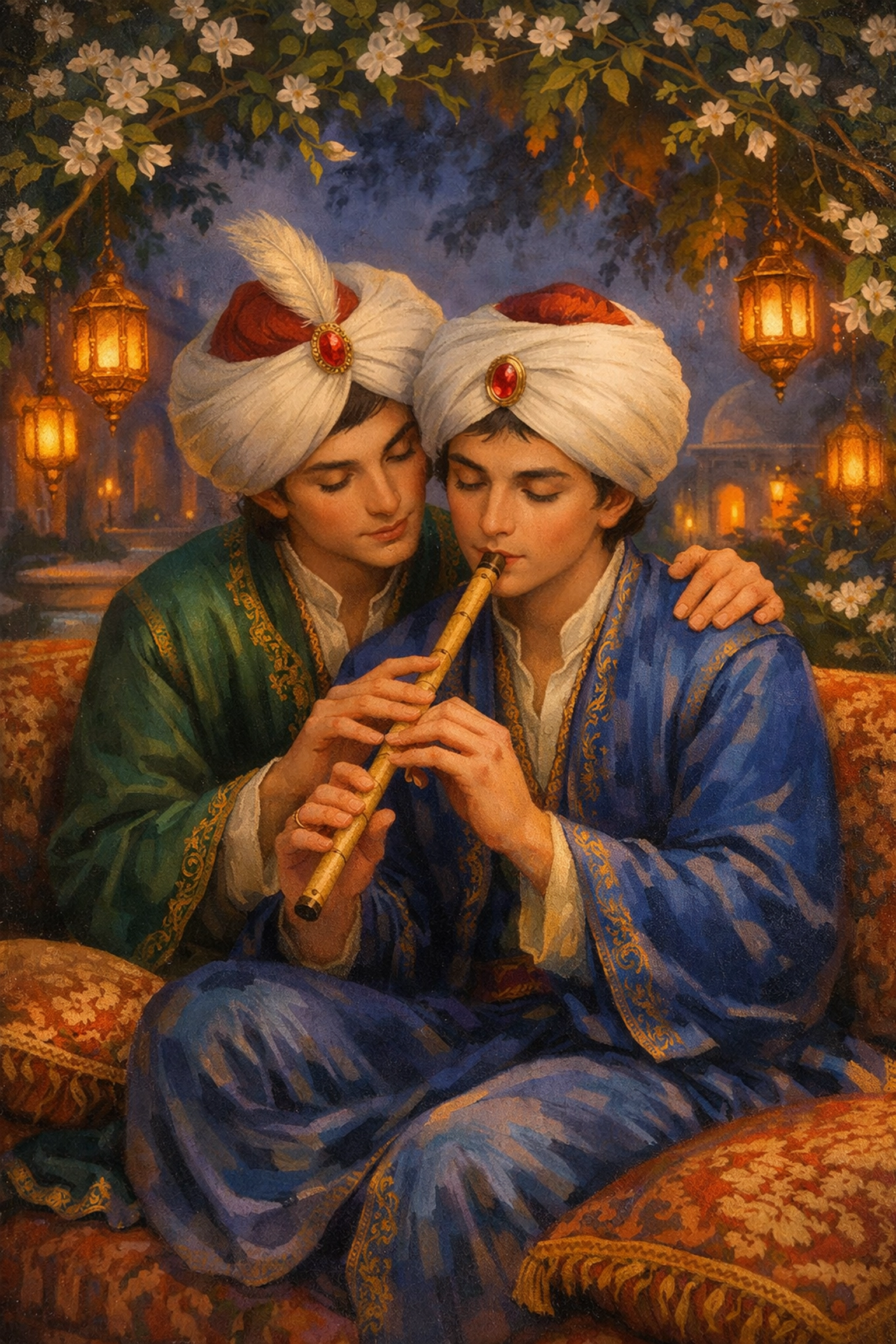
The pages' education included more than statecraft. They learned music: the ney flute and the oud: and how to compose poetry following strict forms that often dealt with love and longing. They studied Persian classics like the Divan of Hafez, where homoerotic themes are woven throughout. The greatest Ottoman poets, many former pages themselves, wrote ghazals to beautiful youths that modern scholars awkwardly try to reframe as "spiritual."
But there's nothing spiritual about lines describing a beloved's lips like rubies or comparing separation from a handsome companion to death itself. If these poems appeared in gay romance novels today, readers would know exactly what they meant. The Ottoman courtiers who wrote them knew too.
The palace hammam deserves special mention. This wasn't just where pages bathed: it was where they spent hours together, where hierarchies momentarily softened in steam and water, where bodies were on display and admiration wasn't just permitted but expected. Foreign observers noted the Ottoman appreciation for male beauty with a mixture of fascination and discomfort, recognizing something their own cultures claimed not to see.
Legacy Behind Locked Doors
The stories of these palace pages matter for modern LGBTQ+ literature and historical understanding. They reveal that same-sex desire, affection, and intimacy have always existed, even if expressed through different cultural frameworks. The bonds formed in Topkapi's Inner Service weren't aberrations or exceptions: they were features of the system.
When we read gay historical romance today, we're often looking for ourselves in the past, hungry for evidence that we've always been here. The Ottoman palace pages offer that evidence in abundance. They loved, competed for affection, formed lifelong bonds, and sometimes broke hearts: all within a rigid hierarchy that simultaneously enabled and constrained their desires.
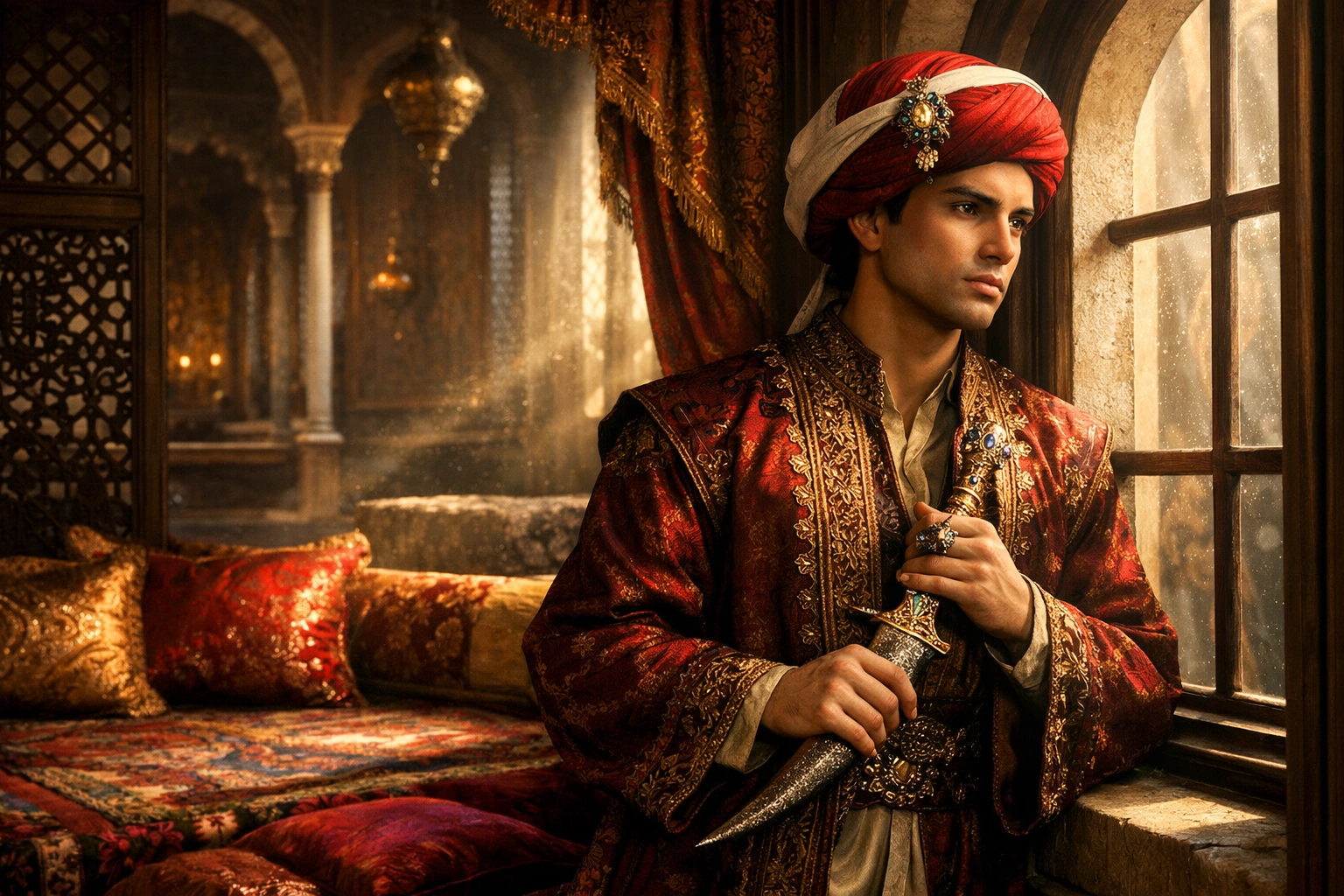
The palace archives contain thousands of documents about promotions, assignments, and the daily workings of the Inner Service. Between those official lines, if you know how to read them, are hints of the human stories: the page who requested to serve in the same province as his former chamber-mate, the jealous quarrel that required the sultan's intervention, the gift of a jeweled dagger that meant more than its monetary value.
These weren't just historical footnotes. They were lives lived fully, in a world we can barely imagine but desperately want to understand. For those of us who love MM fiction and queer historical stories, the Ottoman palace pages represent something precious: proof that our stories are older than we're taught, more diverse than we imagined, and more human than the sanitized histories suggest.
The Inner Treasury wasn't just where the sultan's jewels were kept. It was where young men's hearts were kept too: locked away behind palace walls, but no less real for their confinement. Their legacy survives in poetry, in architectural traces, in the gaps and silences of official histories, and in our continued fascination with the bonds they formed.
Because love, in whatever form it takes, always leaves traces. Even behind locked doors. Even across centuries. Even when the world tried not to see.
Discover more LGBTQ+ historical stories and MM romance books at Read with Pride. Follow us on Facebook, Instagram, and X/Twitter for daily updates on gay fiction, queer literature, and the hidden histories that shaped our community.
#ReadWithPride #MMRomance #GayHistoricalRomance #OttomanHistory #LGBTQBooks #GayFiction #QueerHistory #MMHistoricalRomance #GayRomanceBooks #LGBTQLiterature #HistoricalMMRomance #GayLoveStories #QueerFiction #MMBooks #GayNovels

Leave a Reply
You must be logged in to post a comment.