


readwithpride.com
The North Sea stretched endlessly before them, gray waves crashing against the longship's hull as foam sprayed across the deck. Somewhere beyond the horizon lay lands unknown, riches untold, and the kind of glory that turned mortal men into legends. But for Halvard, the ship's navigator, the greatest treasure aboard wasn't gold or silver: it was the man standing at the prow, wind whipping through his long hair, eyes scanning the waters ahead.
His chieftain. His sworn brother. His secret.
When the Sea Kept Their Secrets
Viking culture gets a lot of airtime in modern media, but what doesn't make it into most history books is the complex reality of same-sex relationships among Norse seafarers. These weren't the prudish societies we sometimes imagine when we think of medieval Europe. Viking culture had its own codes, its own understanding of masculinity, and its own way of looking at love between men: though it was rarely simple or straightforward.
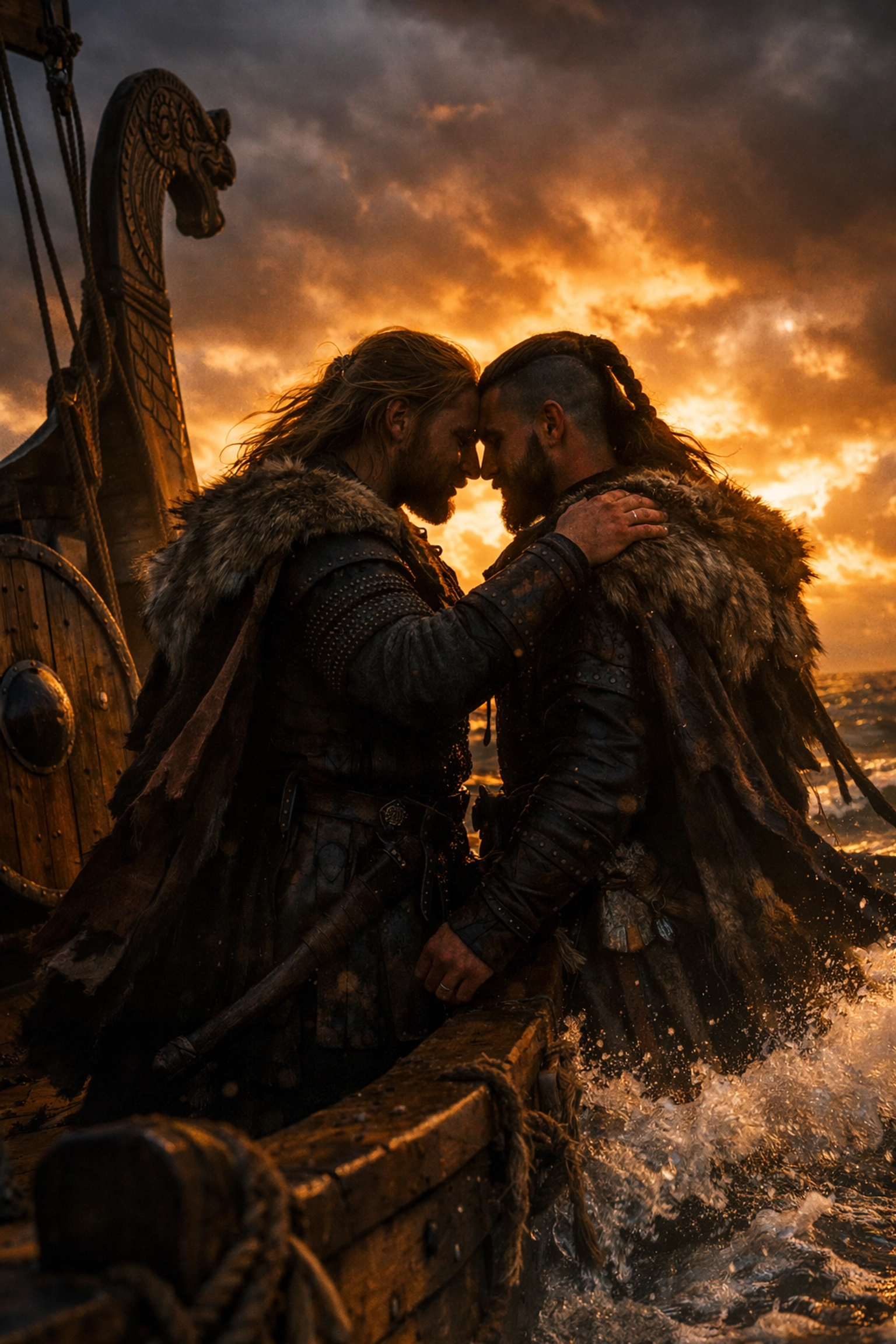
The relationship between a chieftain and his trusted navigator would have been one of profound intimacy by necessity. On voyages that could last months, where the wrong reading of the stars could mean death for everyone aboard, trust wasn't just important: it was everything. When you're sailing into unknown waters with nothing but celestial navigation and instinct, you'd better believe the bond between the man steering and the man leading runs deeper than brotherhood.
Historical records from sagas and legal texts show that Vikings distinguished between active and passive roles in same-sex relationships, with different social implications for each. But what gets lost in that clinical description is the reality: men who lived, fought, raided, and survived together. Men who shared sleeping quarters in the cramped belly of a longship, who kept each other warm through North Atlantic storms, who celebrated victories and mourned losses side by side.
The Navigator's Art
Halvard would have been invaluable to his chieftain: not just as a skilled navigator, but as someone who understood the responsibility of holding other men's lives in his hands. Viking navigation was an art form that combined observations of sun, stars, wave patterns, bird behavior, and even the color of the water. It required intense concentration, deep knowledge passed down through generations, and an almost mystical connection to the sea itself.
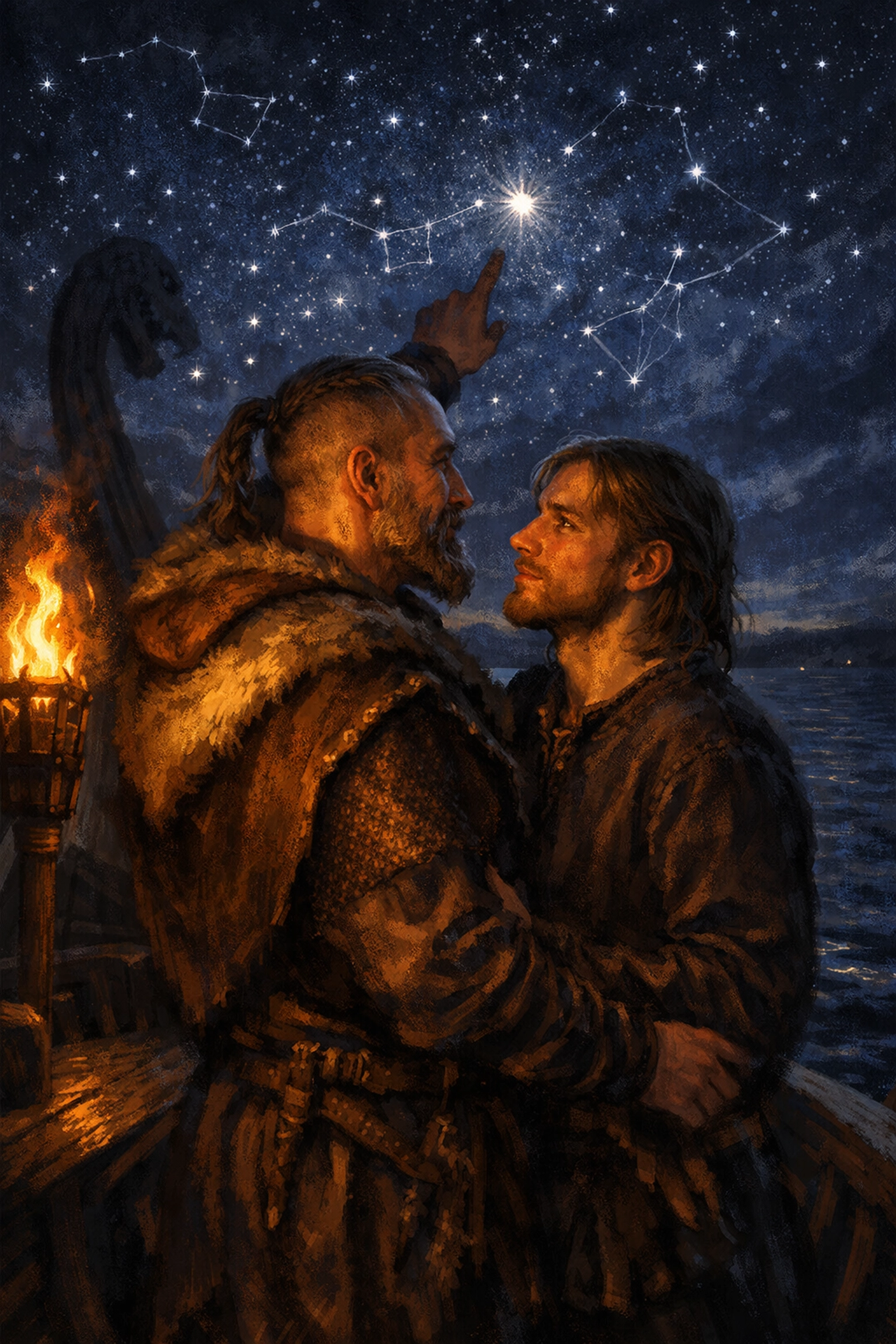
Imagine the quiet moments when everyone else slept, when the navigator would stand at the stern with his chieftain, pointing out constellations, explaining how the waves told stories about distant shores. These were moments of vulnerability in a culture that prized strength above almost everything else. To share knowledge was to share power. To trust someone with the course was to trust them with your life and the lives of your crew.
The MM romance of Viking seafaring wasn't about stolen kisses in flower gardens: it was forged in salt spray and blood, in the shared understanding that tomorrow might never come, that this voyage could be their last. It was in the way a hand steadied another on a tilting deck, the way eyes met across a campfire on a foreign shore, the way two men could communicate entire conversations in a glance when words would betray them to the crew.
The Weight of Leadership
For a chieftain, maintaining authority meant walking a razor's edge. Viking society valued prowess in battle, success in raiding, and the ability to lead men to glory and riches. Any perceived weakness could mean challenge, mutiny, or worse. Yet this same culture that demanded such rigid displays of masculinity also had a more nuanced understanding of male relationships than we often give it credit for.
The sagas tell us of sworn brothers, blood brothers, men who formed bonds so deep that they were considered sacred. Some of these relationships were undoubtedly romantic and sexual, though the surviving texts use coded language and euphemisms that scholars still debate. What we know for certain is that these bonds were recognized, acknowledged, and in many cases, celebrated: as long as they didn't threaten the social order.
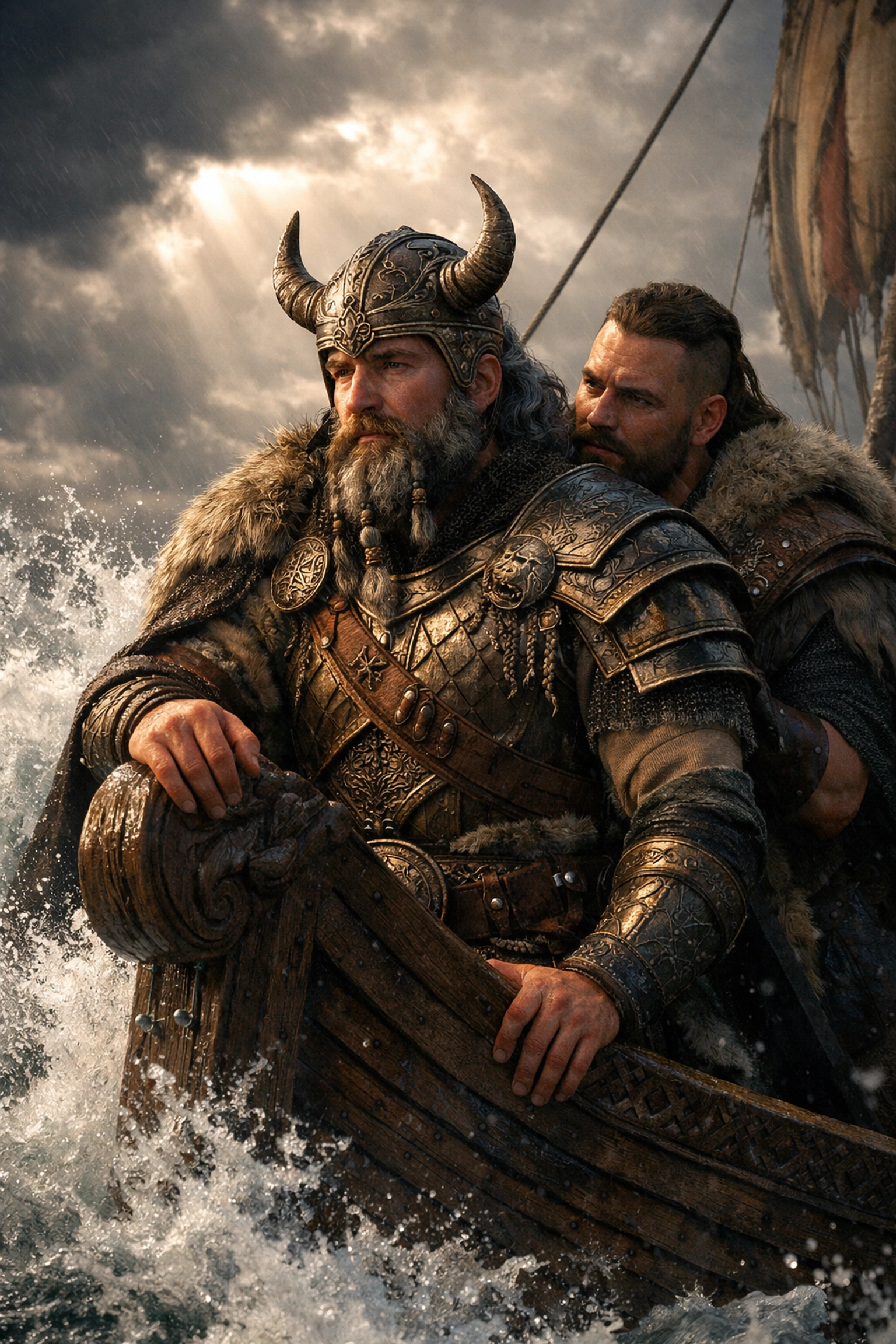
A chieftain who trusted his navigator with everything: his secrets, his doubts, his fears about the voyage ahead: would have been both stronger and more vulnerable for it. In the close quarters of a longship, where privacy was almost non-existent, any relationship had to be conducted with extreme discretion. Yet the very nature of their roles would have necessitated constant proximity, private consultations, shared decision-making that excluded others.
When Land Was Just a Memory
The longer a voyage lasted, the more the normal rules of society faded into the background. Out there on the open water, with nothing but sky and sea in every direction, the world aboard the ship became its own reality. Hierarchies remained, but they shifted. Survival mattered more than social niceties. The bonds between men intensified.
This is where gay romance novels set in Viking times often capture something true: the way that isolation and danger can strip away pretense, can make two people see each other clearly, perhaps for the first time. When death is a constant companion, when each day might be your last, the question becomes not "what will people think?" but "what matters most?"
For a navigator and his chief, what mattered was getting the crew home alive. What mattered was the mission succeeding. But somewhere in the midst of that desperate pragmatism, there was also room for stolen moments: a touch that lasted too long, words spoken too softly for others to hear, the comfort of another body when the night grew cold and the stars offered no answers.
The Return Home
If they survived: if the navigator's calculations proved true and the chieftain's leadership held: they would eventually return home. To wives, perhaps. To families and responsibilities. To a society that would celebrate their success while never asking too closely about what happened during those long months at sea.
Viking culture had a concept called "what happens on the waves, stays on the waves," though they didn't phrase it quite that way. The understanding was that seafaring life operated under different rules, and wise people didn't pry too deeply into the bonds formed aboard ships. This allowed for a kind of flexibility, a space where relationships that might be questioned on land could exist without scrutiny on the water.
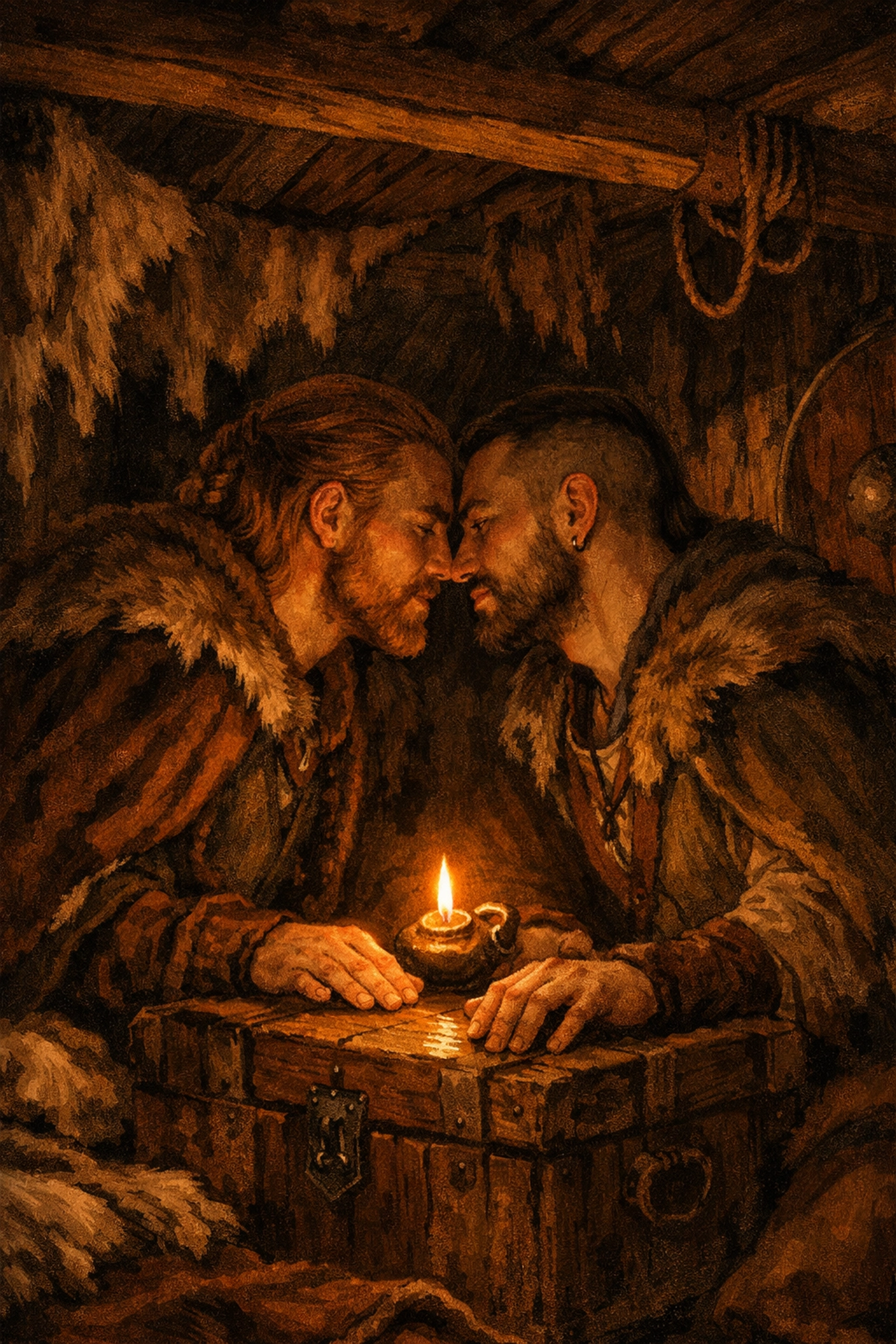
But returning home also meant the end of that freedom, that closeness. It meant resuming roles that might not leave room for the intimacy they'd shared. It meant becoming chieftain and navigator again, instead of simply two men who'd sailed to the edge of the world together.
Why These Stories Matter Now
When we explore LGBTQ+ fiction set in historical periods like the Viking Age, we're not just indulging in fantasy: we're reclaiming stories that have always existed but were erased, coded, or ignored by mainstream histories. The men who loved men while sailing Viking longships were real. Their relationships were real. Their struggles to reconcile their feelings with their culture's expectations were real.
Reading these stories, whether in gay historical romance novels or researching the historical record itself, connects us to a queer past that's often rendered invisible. It reminds us that LGBTQ+ people have always existed, in every culture, in every time period: including among history's most renowned warriors and explorers.
At Read with Pride, we believe in telling these stories authentically, in honoring both the historical reality and the emotional truth of same-sex relationships throughout history. The navigator and his chief might be historical fiction, but the love, loyalty, and longing they represent are as old as the sea itself.
The next time you see a Viking longship in a museum or depicted in media, remember: some of the greatest love stories of the medieval world were written on those wooden decks, carried on North Atlantic winds, preserved in the hearts of men who had no words for what they felt but felt it all the same.
Discover more LGBTQ+ historical fiction and MM romance at readwithpride.com
Follow us for more stories that matter:
- Facebook: Read With Pride
- Instagram: @read.withpride
- X/Twitter: @Read_With_Pride
#ReadWithPride #MMRomance #GayRomance #VikingRomance #LGBTQFiction #HistoricalRomance #GayHistoricalRomance #QueerFiction #MMHistoricalRomance #GayBooks #LGBTQBooks #GayLoveStories #NorseMythology #VikingHistory #QueerHistory #GayNovels #MMBooks

Leave a Reply
You must be logged in to post a comment.