

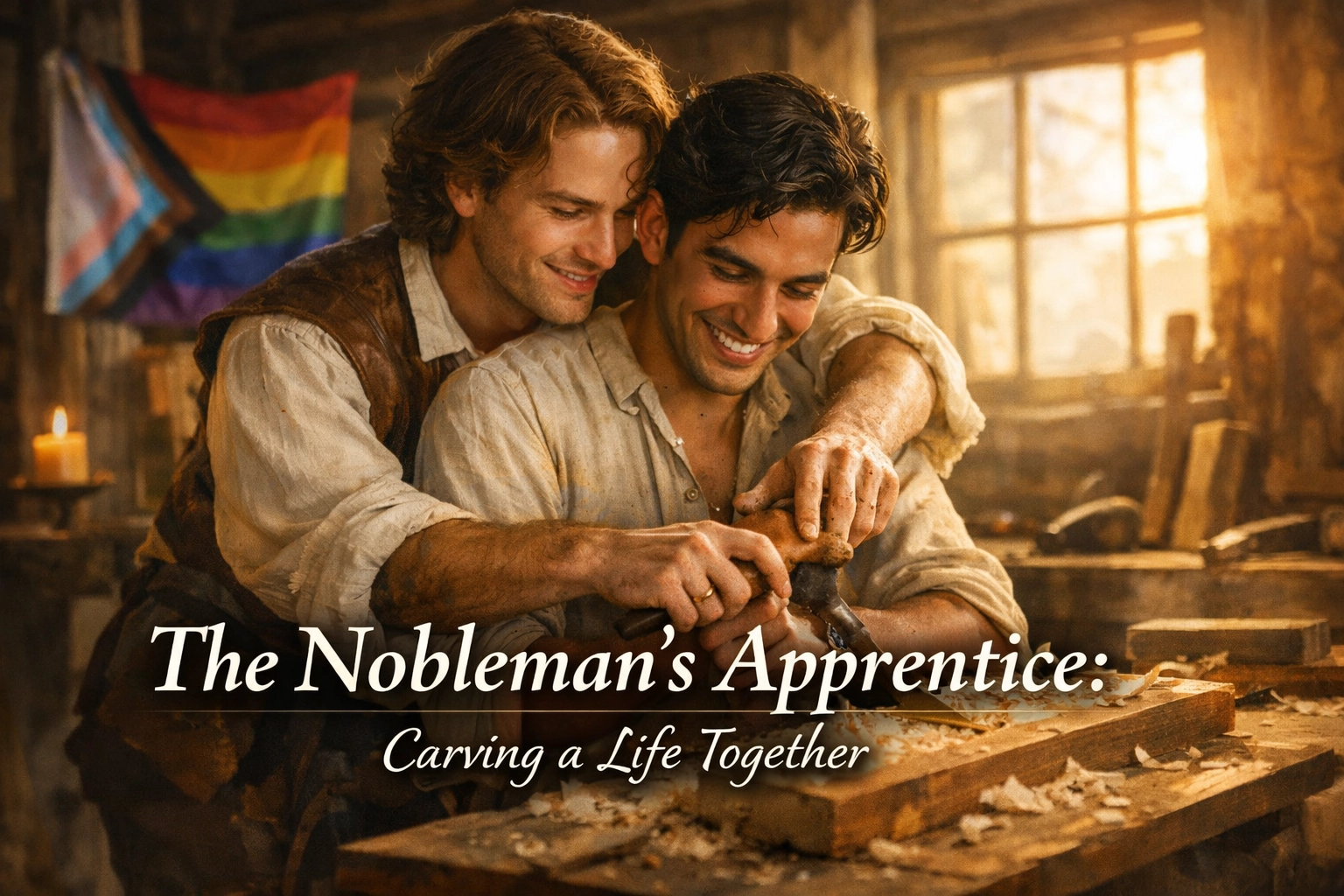
readwithpride.com
Florence, 1487. The city of marble and magnificence, where the Medici family ruled and art flourished like wildflowers after spring rain. But beneath the gilded facades and grand piazzas, love didn't always follow the rules of society: especially when it bloomed between two men from completely different worlds.
This is the story of Alessandro di Rossi, a nobleman with pockets deeper than the Arno River, and Marco, a sculptor's apprentice whose hands were permanently stained with marble dust and whose entire worldly possessions could fit in a single leather bag.
When Worlds Collide in a Workshop
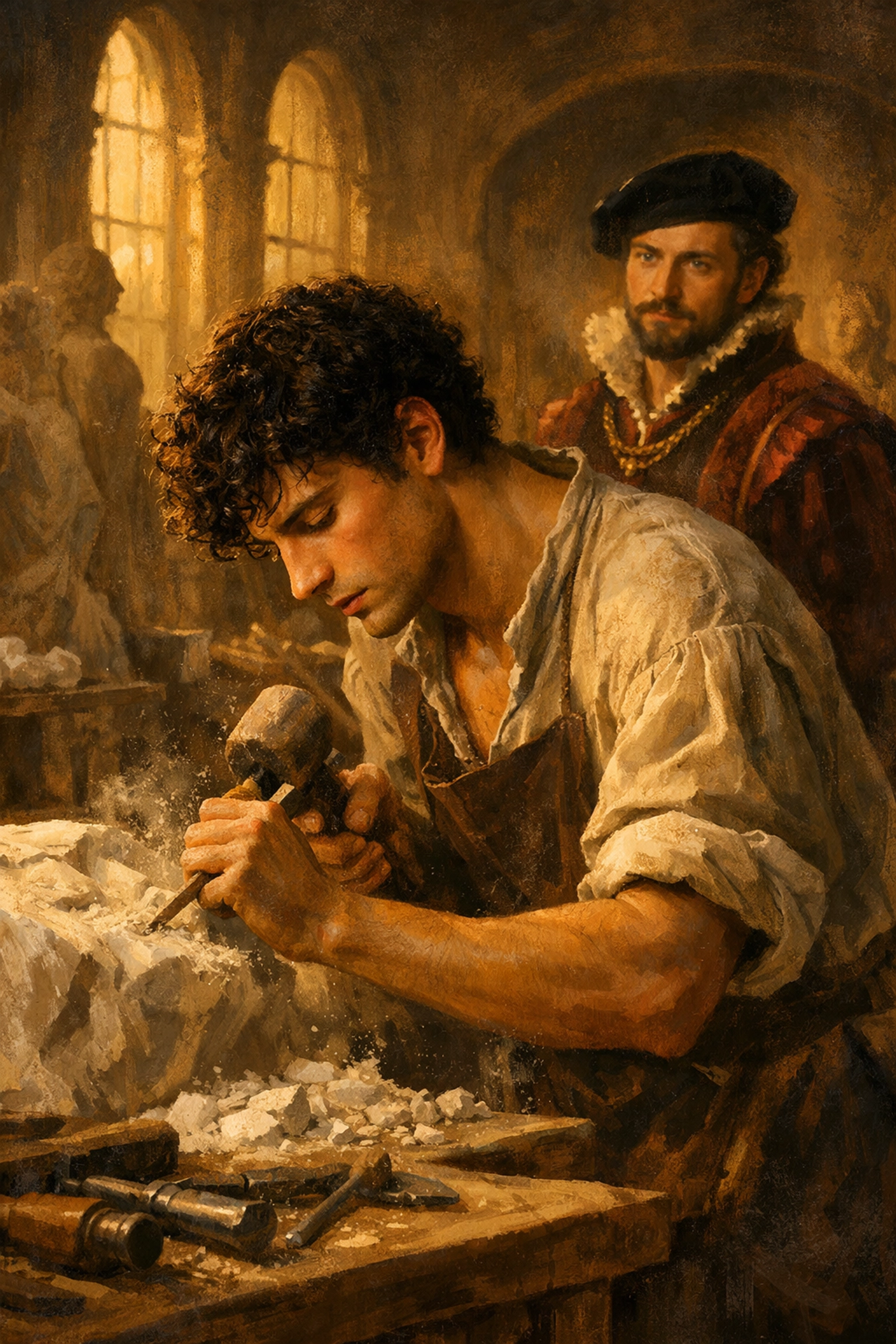
Alessandro first spotted Marco through the open doors of Andrea del Verrocchio's workshop on a sweltering summer afternoon. The young apprentice was hunched over a block of marble, chisel in hand, creating what would eventually become an angel's wing. Sweat dripped down Marco's temples, his worn linen shirt clinging to his lean frame as he worked with singular focus.
The nobleman had come to commission a statue for his family's chapel: a perfectly reasonable excuse to enter the workshop. What happened next wasn't reasonable at all. Alessandro found himself returning day after day, inventing reasons to check on the progress, to ask questions, to simply be in Marco's presence.
Marco noticed, of course. How could he not? Noblemen didn't typically spend hours watching apprentices work, asking about their techniques, their dreams, their lives. At first, Marco was terrified: afraid of losing his position, afraid of scandal, afraid of what these lingering glances might mean. But fear eventually gave way to something else entirely.
The Reality of Renaissance Romance
Let's be real about what life was like for gay men in Renaissance Florence. The city had a reputation: Florence was actually known throughout Europe for male-male relationships, so much so that "Florenzer" became German slang for a gay man. But that acceptance had serious limits, especially when it came to class boundaries.
The Florentine authorities operated the "Office of the Night" (Ufficiali di Notte), specifically designed to prosecute sodomy. Between 1432 and 1502, this office investigated around 17,000 men and boys. Let that number sink in. The punishment could range from public humiliation to death, though enforcement was wildly inconsistent depending on your social standing and connections.
For Alessandro, his wealth and family name offered a shield: not complete protection, but significant insulation. For Marco? He had nothing but his calloused hands and his talent. If caught, he'd face the full weight of the law while Alessandro might escape with a fine or exile.
The Secret Language of Marble
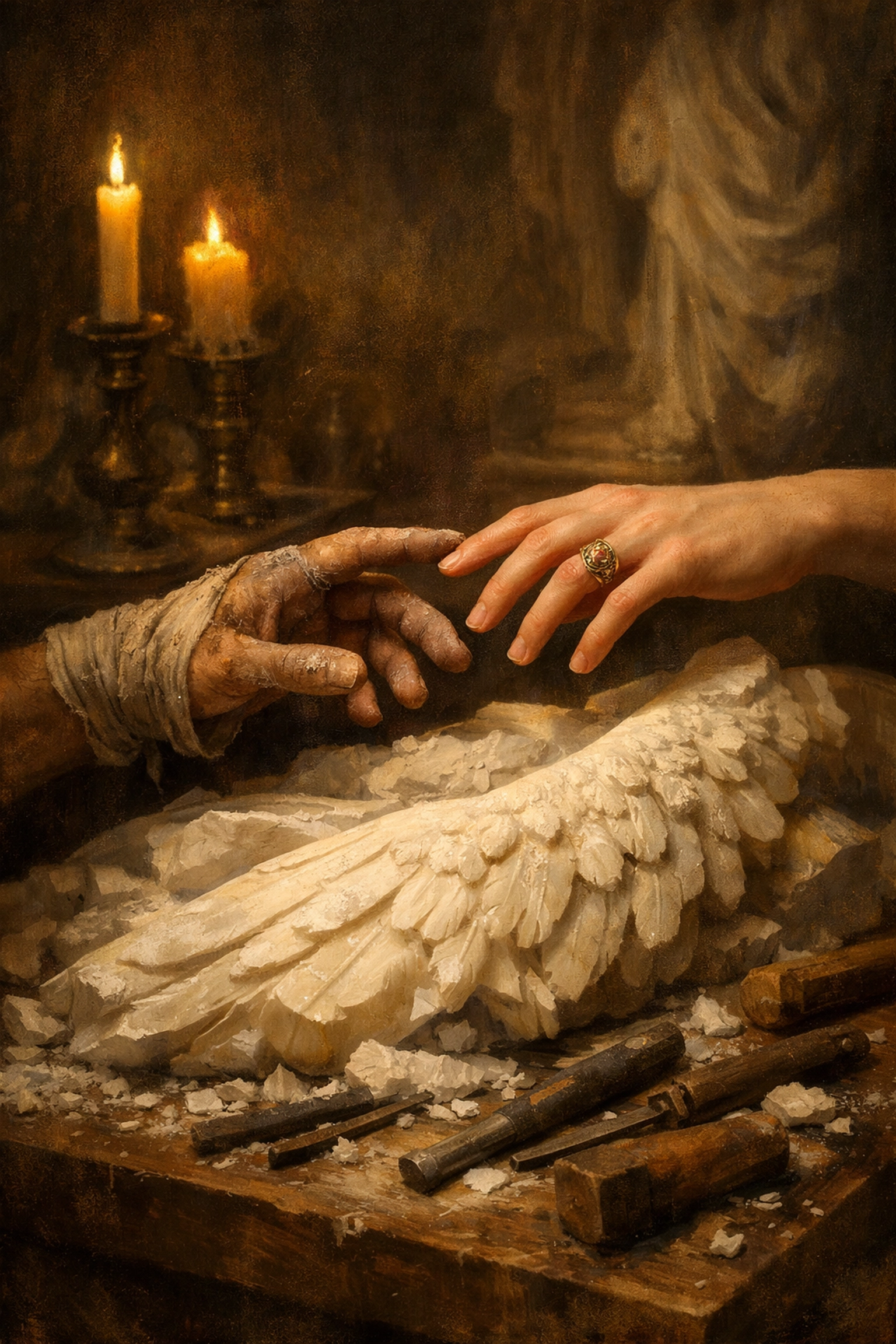
Their relationship developed slowly, carefully, like Marco's sculptures emerging from stone. They created a private language in the workshop. Alessandro would commission pieces that required Marco's specific skills, ensuring they'd have time together. Marco would carve symbols into his work: hidden meanings only Alessandro would understand.
The master sculptor, Verrocchio, was no fool. He'd seen this dance before in Florence's artistic circles. He looked the other way, perhaps understanding that some things were bigger than scandal, or perhaps simply grateful for the nobleman's generous commissions that kept his workshop thriving.
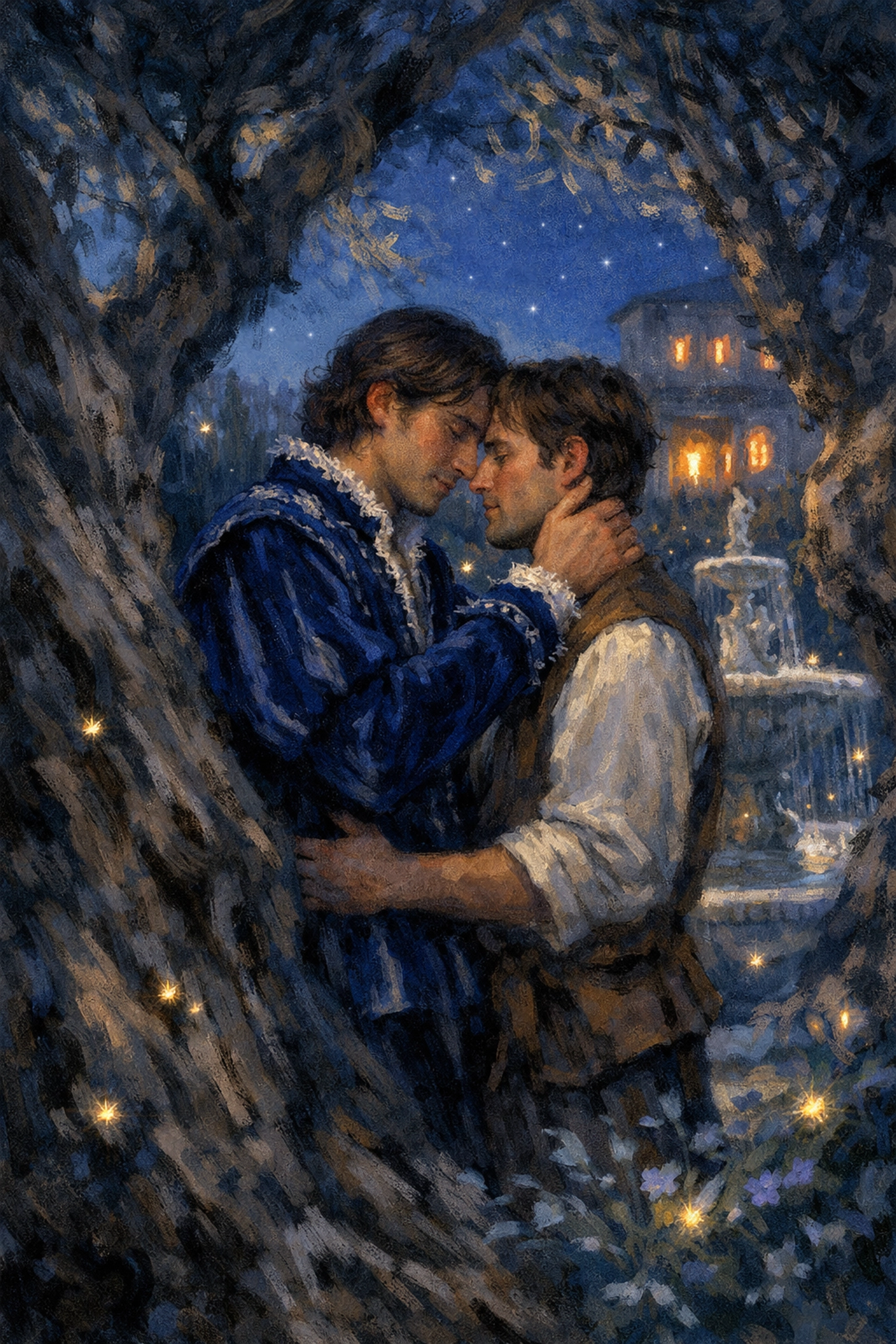
Their stolen moments were precious and few. A brush of hands when examining a piece. Whispered conversations in the corner of the workshop after other apprentices had left. Late-night meetings in Alessandro's palazzo garden, where ancient olive trees provided cover and the fountain's splash masked their voices.
The Weight of Different Worlds
The class divide wasn't just about money: it was about everything. Alessandro lived in a palazzo with frescoed ceilings and servants to dress him each morning. Marco slept in a cramped room he shared with three other apprentices, waking before dawn to begin his work.
Alessandro was educated in Latin, Greek, philosophy, and poetry. He could discuss Plato's Symposium and its celebration of male love with ease. Marco could barely read, his education coming through his hands and eyes rather than books.
When they were together, these differences created constant friction. Alessandro would suggest they attend a performance at the Medici court: impossible for a poor apprentice who'd be barred at the door. Marco would talk about his dreams of one day having his own workshop: dreams that seemed laughably small to a man who owned multiple properties.
"You don't understand," Marco said during one heated argument. "When you wake up, you choose which silk doublet to wear. When I wake up, I wonder if there'll be enough bread."
Alessandro tried. He really did. He offered Marco money, gifts, opportunities: all of which the proud apprentice refused. "I won't be kept like a pet bird in a golden cage," Marco insisted. "If we're together, it's as equals, or not at all."
But how could they ever be equals in Renaissance Florence?
The Art of Survival
They developed strategies for survival. Marco became extraordinarily skilled, his talent eventually earning him recognition that transcended his low birth. Alessandro used his influence to secure commissions for Marco, but carefully, discreetly, never obviously enough to raise eyebrows.
They learned to exist in the spaces between: neither fully together nor completely apart. Alessandro would host gatherings of artists and intellectuals where Marco could attend as an artisan rather than a companion. They'd exchange glances across the room, have brief conversations that appeared professional, then meet later in shadow.
The Renaissance had a concept called amicizia particolare: particular friendship. It was code, a way to describe intense bonds between men without explicitly naming them as sexual or romantic. Alessandro and Marco hid behind this term, their relationship explained away as patronage, mentorship, artistic collaboration.
The Price of Love
The truth is, their relationship survived because they were willing to pay its price. Marco worked twice as hard as other apprentices, knowing he couldn't afford even a whisper of scandal. Alessandro maintained a public façade, including entertaining proposals of marriage from prominent families while his heart belonged elsewhere.
They couldn't share a home. Couldn't be seen together too often. Couldn't touch in public. Couldn't claim each other openly. Every moment of genuine connection had to be stolen, hidden, justified through some acceptable social framework.
And yet, they persisted. Because sometimes love isn't about grand gestures or public declarations. Sometimes it's about the quiet determination to carve out space for each other in a world determined to keep you apart.
Legacy in Stone
Years later, art historians would debate the meaning behind certain sculptures from this period. They'd notice the way one particular angel seemed to gaze at a specific figure across a chapel. They'd wonder about the unusual intimacy in certain commissioned works, the tender expressions that seemed too personal for mere religious devotion.
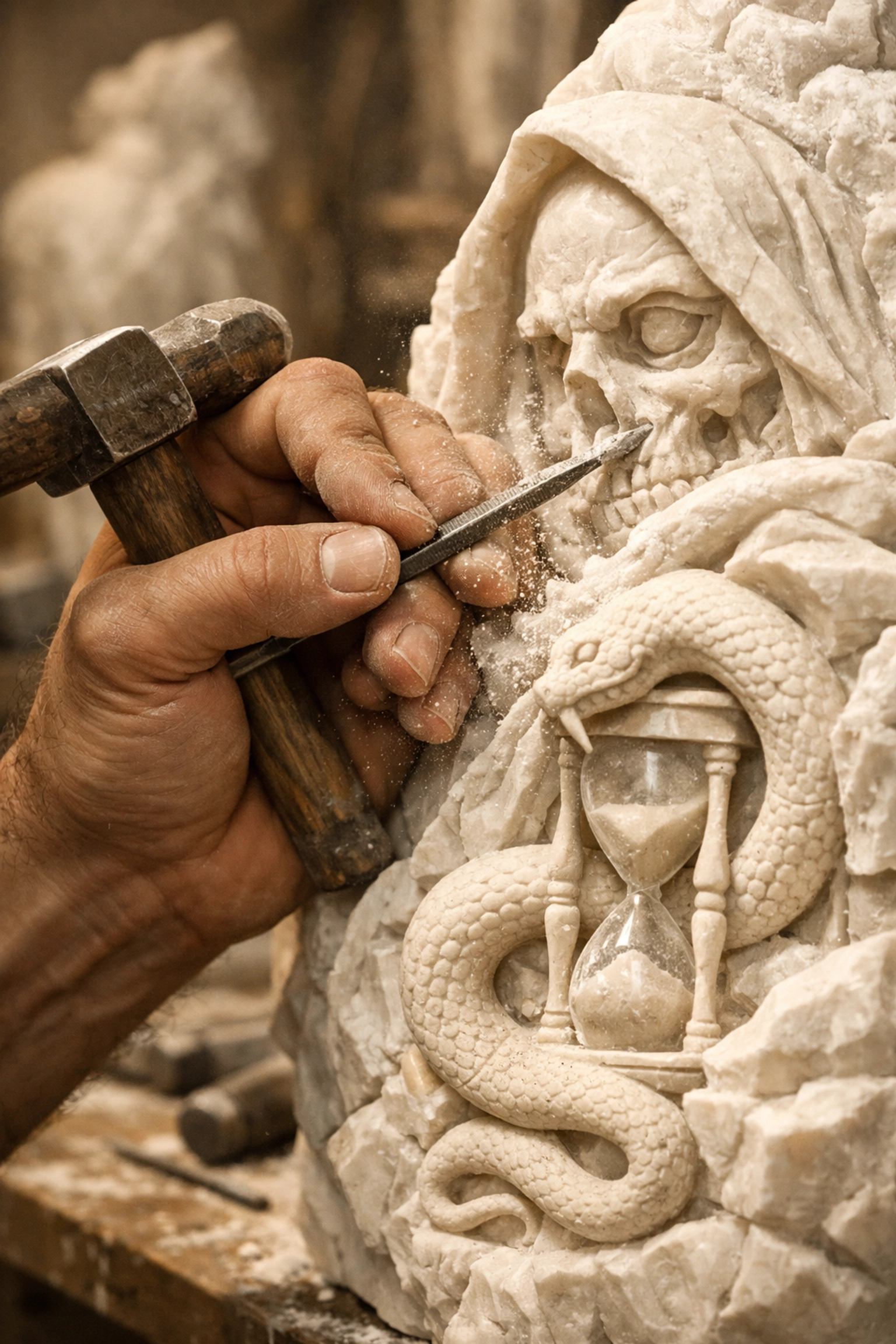
What they were seeing was love, translated into marble. Marco poured his feelings into every piece, creating art that would outlast prejudice, class systems, and even Florence itself. Alessandro ensured these works were preserved, protected, and celebrated: his own form of love letter to a man history would try to forget.
Their story reminds us that gay relationships across class divides have always existed, always struggled, and always found ways to endure. The challenges they faced: economic inequality, social prejudice, legal persecution, and the simple impossibility of building a normal life together: echo through centuries to relationships still navigating similar obstacles today.
Dive deeper into LGBTQ+ historical romance at Read with Pride, where we celebrate love stories that transcend time, class, and convention. Discover more MM romance books and gay historical fiction that brings hidden histories to light.
Follow us for more untold stories:
- Facebook: Read With Pride
- Instagram: @read.withpride
- X/Twitter: @Read_With_Pride
#MMRomance #GayHistoricalRomance #LGBTQFiction #ReadWithPride #GayRomanceBooks #QueerHistory #RenaissanceRomance #ClassDivideLove #MMHistoricalRomance #GayLoveStories #LGBTQEbooks #GayFiction #HistoricalMMRomance #QueerFiction #GayNovels

Leave a Reply
You must be logged in to post a comment.