

readwithpride.com
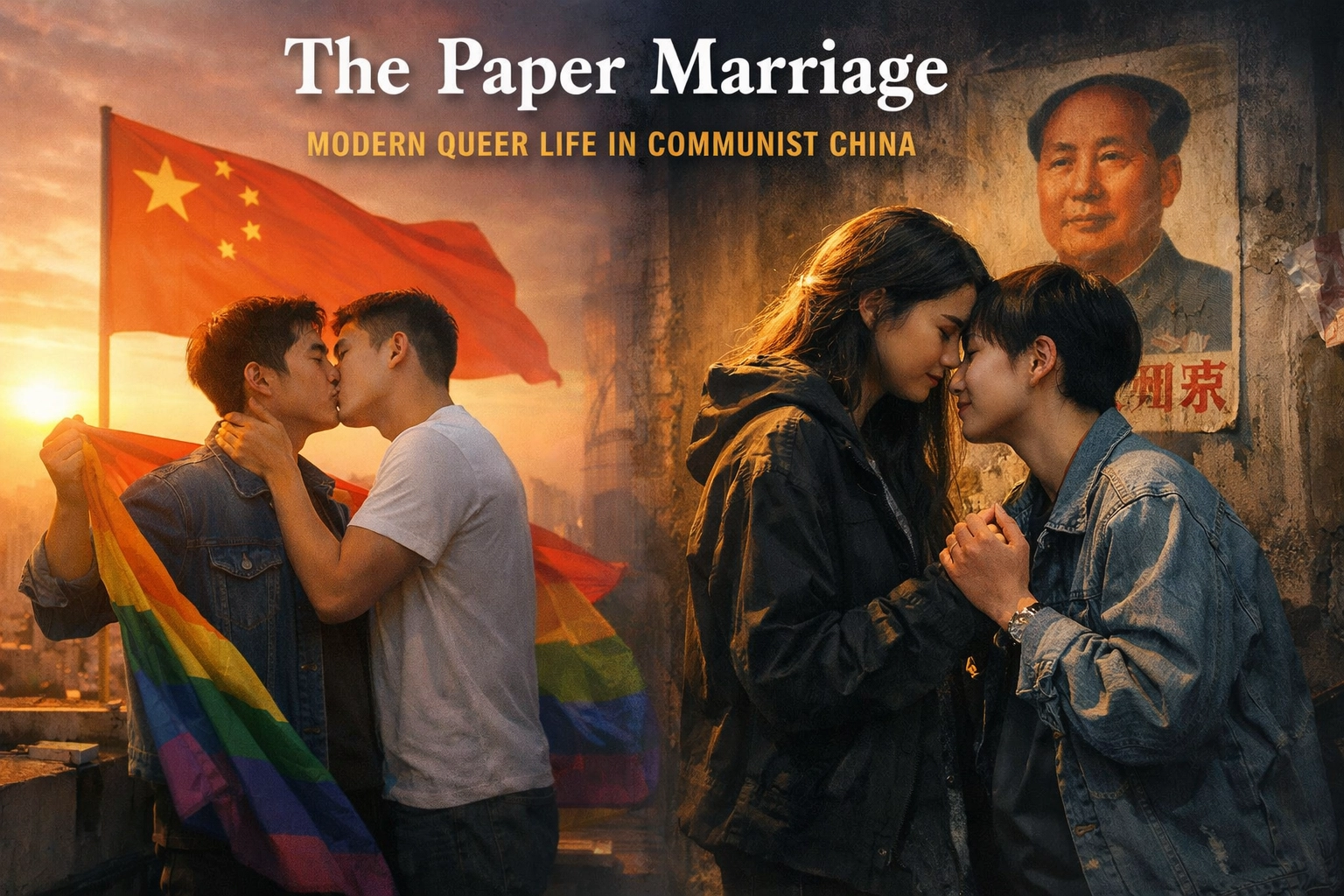
When your parents start asking about grandchildren for the third time this month, and your Communist Party supervisor mentions how "family values build a strong nation," sometimes love takes a backseat to survival. Welcome to the world of xinghun: China's modern solution to an ancient pressure.
The Marriage That Isn't
In contemporary China, millions of gay men and lesbians are entering into what they call xinghun, or "form marriages." It's exactly what it sounds like: marriages that exist in form only. A gay man marries a lesbian woman, both families exhale with relief, the Party approves, and behind closed doors, everyone goes on living their authentic lives.
It's not romance. It's a strategic alliance, a business arrangement wrapped in red silk and signed with government stamps. And for many queer Chinese people, it's the only way to exist without losing everything.
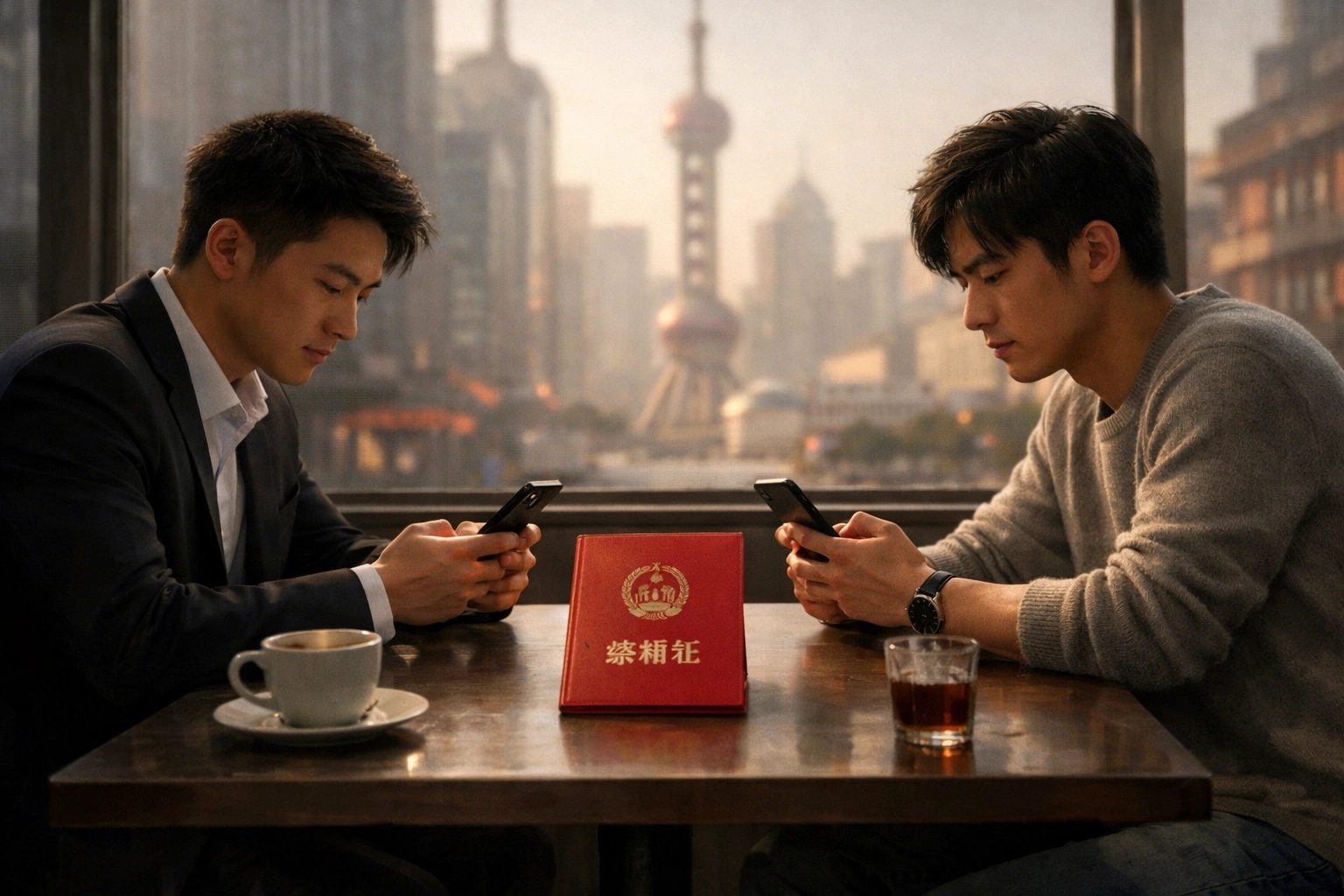
The phenomenon has become so widespread that online platforms and matchmaking services specifically cater to xinghun arrangements. Gay men and lesbians create detailed profiles listing their education, income, family background, and most importantly: their requirements for the arrangement. Does each partner get their own bedroom? Can they bring their actual partners home? Who handles which family obligations? What happens if one person wants to move to another city?
These aren't the conversations you find in MM romance books, but they're the reality for countless queer people navigating life under a government that officially recognizes neither same-sex relationships nor the concept of being LGBTQ+.
The Pressure Cooker
To understand xinghun, you need to understand the crushing weight of expectation in modern China. It's not just about pleasing grandma: though that's certainly part of it. In Chinese culture, filial piety runs deep. Marriage and producing offspring aren't considered personal choices; they're obligations to your family lineage, duties you owe to ancestors and descendants alike.
Add the Communist Party's involvement in nearly every aspect of life, and the stakes get even higher. Party membership: essential for career advancement in many fields: comes with expectations about "proper" family structure. Government jobs, housing allocations, even business licenses can depend on presenting the right image.
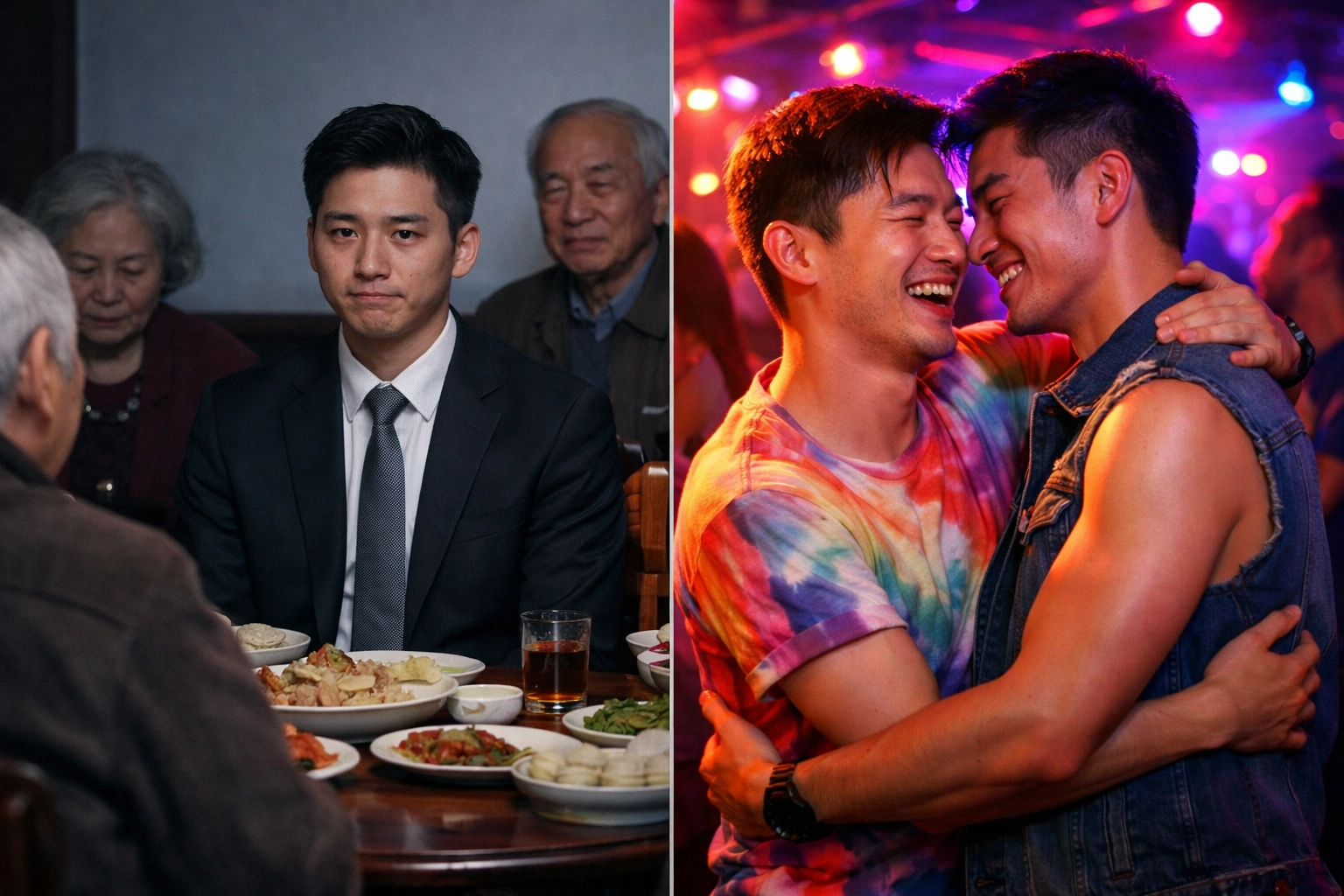
For gay men and lesbians, coming out isn't just risking disapproval. It's risking your career, your housing, your family's social standing, and your entire support network. When the choice is between authenticity and survival, it's not really a choice at all.
The one-child policy (in effect from 1979 to 2016) intensified this pressure exponentially. If you're the only child, you're the only chance your parents have for grandchildren, the only one who can carry on the family name, the only vessel for all their hopes and dreams. That's a lot of weight for anyone to carry, let alone someone trying to figure out how to be gay in a country where being gay doesn't officially exist.
The Negotiations
Creating a xinghun requires more careful planning than most actual romantic relationships. Prospective partners meet through specialized websites, LGBTQ+ community groups, or introductions from friends already in form marriages. The conversations are practical, sometimes brutally so.
Money matters get discussed upfront. Who pays for the wedding? How are living expenses divided? If there are children (through IVF, surrogacy, or traditional means), who covers those costs? Some arrangements involve shared bank accounts; others keep finances completely separate.
Living situations vary wildly. Some couples maintain completely separate residences, only appearing together for family gatherings. Others share an apartment with separate bedrooms, roommate-style. A few even buy homes with built-in "in-law suites" where each partner can host their actual romantic partner.
The question of children is often the most complicated. Some arrangements include an explicit agreement to have one child to satisfy family expectations. Others remain childless, with elaborate excuses about fertility issues or timing. For lesbians in xinghun arrangements, pregnancy through IVF or a willing donor can solve the grandchild problem while avoiding the intimacy issues. Gay men might arrange surrogacy or adoption, though both face significant legal hurdles in China.
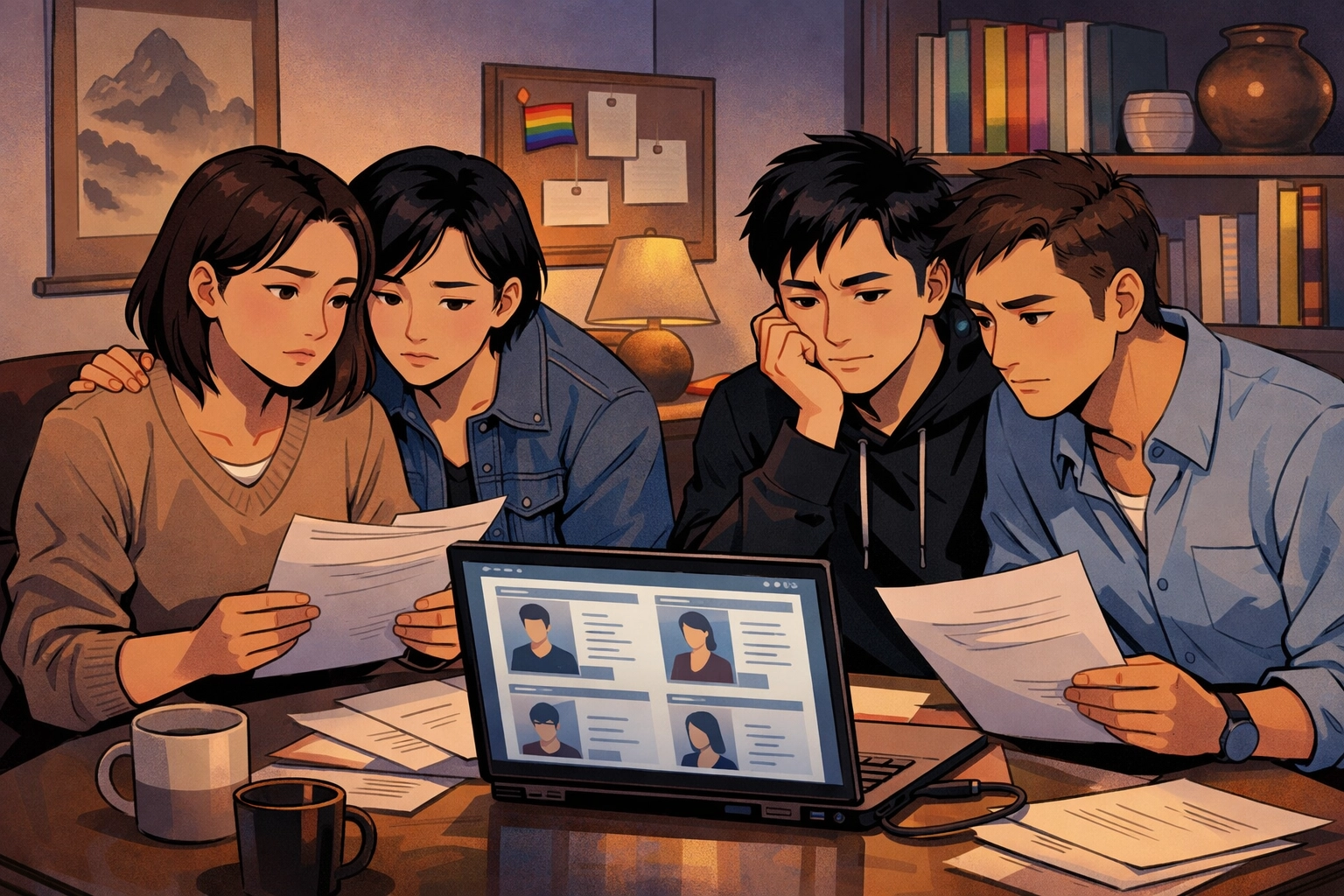
Then there's the question of what happens when real romance enters the picture. If your form spouse falls in love and wants to move in with their actual partner, does the arrangement end? What about property division? What if one person wants to maintain appearances but the other wants to come out? These are contracts without legal standing, held together only by mutual need and trust.
The Emotional Toll
Reading about xinghun arrangements might make them sound coldly transactional, but that misses the profound sadness at the heart of it all. These are people who've accepted they can't have what queer folks in other countries take for granted: the simple freedom to love openly.
Many young Chinese LGBTQ+ people describe feeling split in two. There's the person they present to family, colleagues, and society: heterosexual, conventional, dutiful. And there's the person they actually are, relegated to secret relationships, hidden dating apps, and bars tucked away in forgotten neighborhoods.
The mental health impact is significant. Depression and anxiety rates among LGBTQ+ people in China are substantially higher than the general population. The constant performance of being someone you're not, the lying to people you love, the hiding of your actual romantic partners: it all takes a toll that no amount of practical arrangement can alleviate.
For those at Read with Pride, we're used to celebrating gay love stories with happy endings. But part of honoring queer experiences means acknowledging the places where happy endings are harder to come by, where survival requires compromise, and where being yourself comes at a price too high for many to pay.
The Glimmers of Hope
Despite everything, queer culture in China persists and even flourishes in underground spaces. Shanghai, Beijing, and Guangzhou have vibrant: if carefully hidden: LGBTQ+ communities. Dating apps like Blued (created by a Chinese entrepreneur) have millions of users. Small bars and clubs operate in a legal gray area, hosting drag shows and queer parties that would have been unthinkable decades ago.
Some young Chinese LGBTQ+ people are pushing back against xinghun, choosing to remain single rather than enter fake marriages. They face enormous pressure, but they're creating new templates for what queer Chinese life can look like. Online, queer Chinese writers are producing their own M/M romance stories and gay fiction, even as official censorship tries to erase LGBTQ+ content.
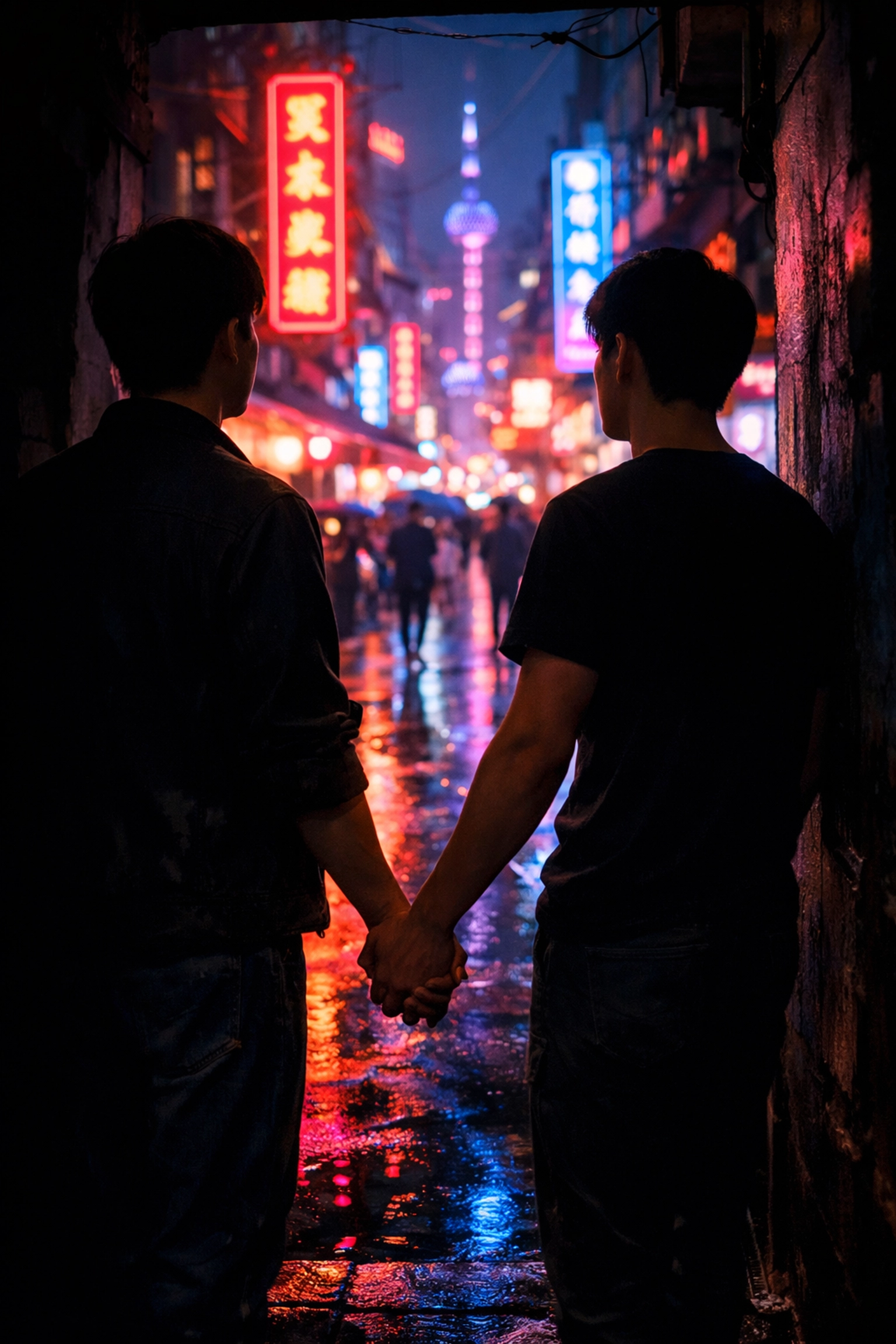
International LGBTQ+ literature, including MM romance books and queer fiction from publishers like Read with Pride, circulates through underground networks and translated websites. These stories offer windows into what life could be: relationships lived openly, love celebrated rather than hidden, identities embraced rather than suppressed.
Change in China happens slowly and never in straight lines. But every person who refuses the xinghun compromise, every couple who takes the risk of living openly, every queer story that gets told despite censorship: these are tiny acts of resistance that add up.
What It Means for the Rest of Us
For LGBTQ+ people living in countries with greater freedoms, xinghun arrangements can seem like a dystopian nightmare. And in many ways, they are. But they're also a reminder of the creativity and resilience of queer people everywhere. When society offers no good options, we create our own.
The next time you complain about your dating app matches or your complicated relationship status, maybe remember the people navigating parentally-approved roommate situations with strategic breeding agreements. It puts things in perspective.
And if you're looking for stories that celebrate the full spectrum of queer experiences: from the joyful to the complicated to the heartbreaking: check out the collection at Read with Pride. Because every queer story deserves to be told, and every queer person deserves to be seen.
Follow us for more LGBTQ+ stories and content:
- Facebook: Read with Pride
- Instagram: @read.withpride
- X/Twitter: @Read_With_Pride
#ReadWithPride #LGBTQBooks #QueerStories #GayRomance #MMRomance #QueerFiction #LGBTQHistory #GayChina #QueerAsia #LGBTQRights #GayFiction #MMBooks #QueerLiterature #PrideReading #LGBTQCommunity #GayLoveStories #2026Pride

Leave a Reply
You must be logged in to post a comment.