

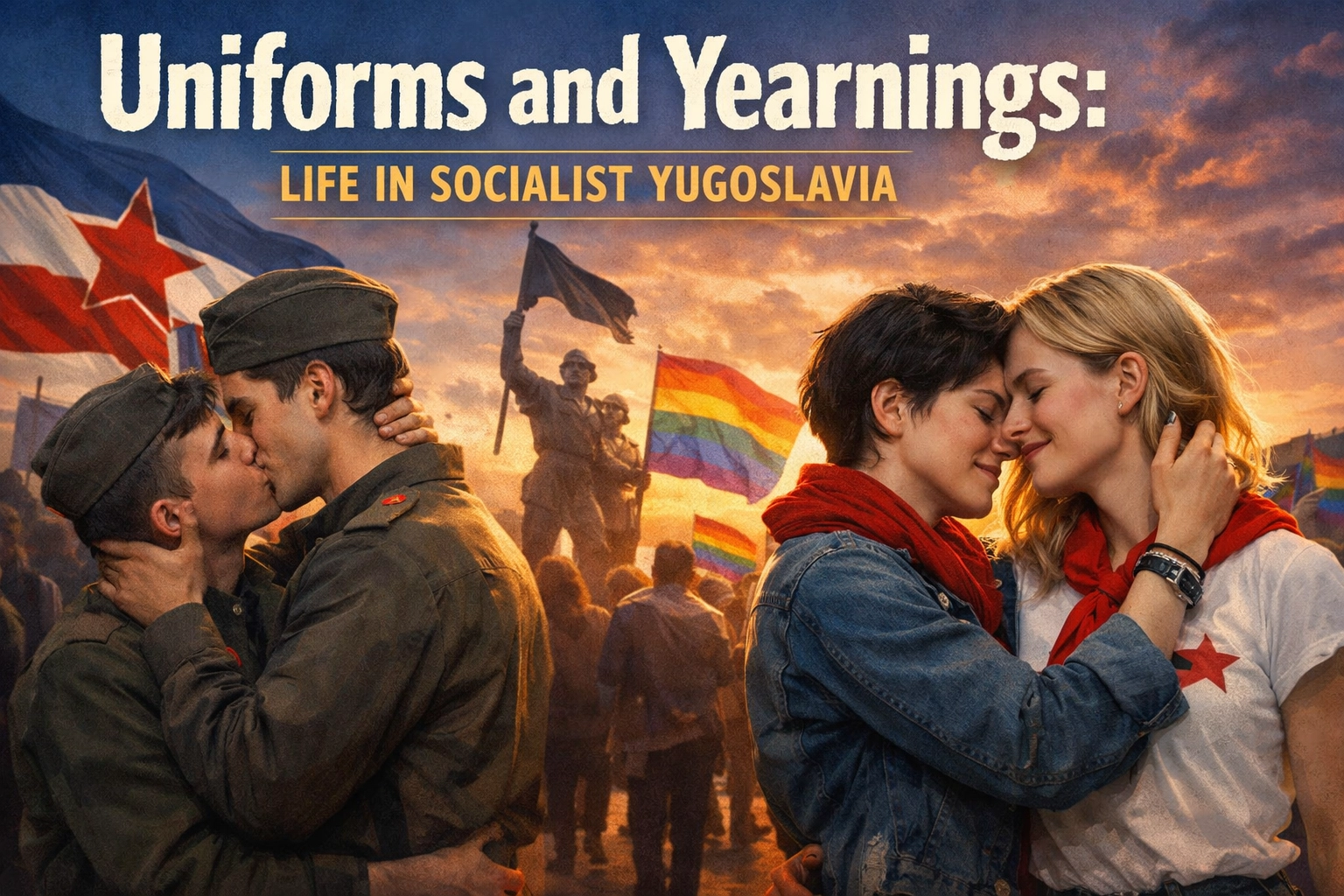
readwithpride.com
The barracks smelled like boot polish, cigarette smoke, and something else, something unspoken that hung in the air between the rows of identical beds. In Socialist Yugoslavia, every young man knew the call would come. Military service wasn't optional. It was your duty to the state, to brotherhood, to Tito's vision of unity. But for some of us, those two years in olive drab uniforms meant navigating an entirely different kind of survival.
Yugoslavia wasn't the Soviet Union. That's what everyone would tell you. We had our own path, our own brand of socialism. While gay men in Moscow faced prison camps and psychiatric "treatment," Yugoslavia operated in shades of gray. The laws existed, sure, but enforcement was… selective. Under Tito's rule, the unofficial policy seemed to be: don't ask, don't tell, and for god's sake, don't make it public.
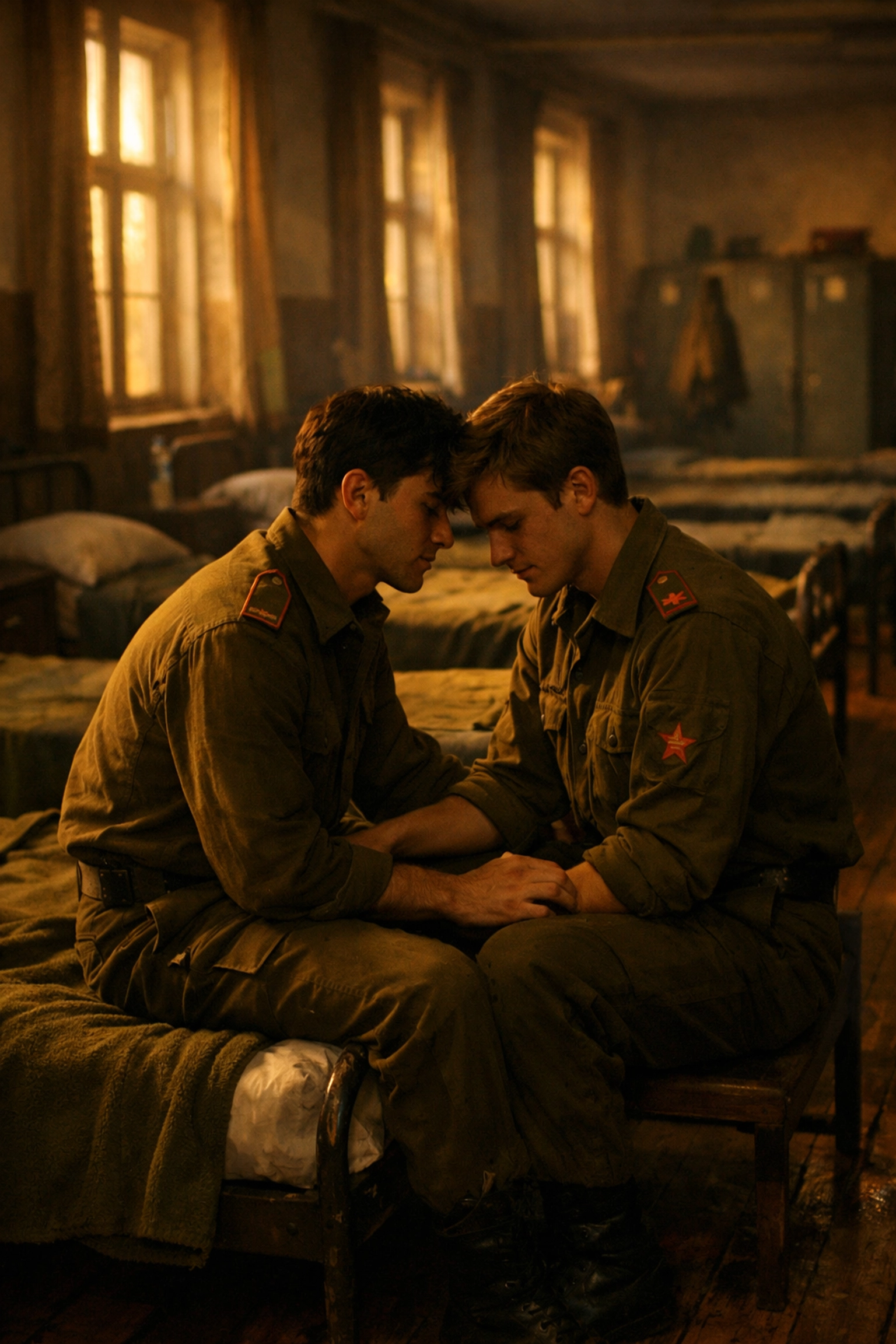
The Uniform as Armor and Prison
The M68 summer camouflage pattern became standard issue in 1968, printed on everything from sniper oversuits to body armor. By the time the M89 oak leaf pattern came around in the late 1980s, those uniforms had dressed generations of Yugoslav men. The light khaki M59 helmet sat on every recruit's head for twenty-six years straight.
But here's the thing about uniforms, they're supposed to make everyone the same. Strip away class, ethnicity, religion, and regional differences. In theory, a Serb from Belgrade and a Croat from Split became brothers under that fabric. The uniform created an illusion of equality, of sameness.
For someone like Marko, let's call him Marko, though that wasn't his real name, the uniform served a dual purpose. It made him invisible in exactly the way he needed to be. No one questioned why you weren't writing letters to a girlfriend back home when you were all too busy scrubbing floors, running drills, and learning to fieldstrip a rifle blindfolded.
Brotherhood With Boundaries
The Yugoslav People's Army cultivated intense bonds. Mandatory service created friendships that crossed every ethnic and religious line, connections that would last even after the country tore itself apart in the 1990s. You shared everything with your unit: fear, exhaustion, terrible food, worse jokes, and the occasional smuggled bottle of rakija.
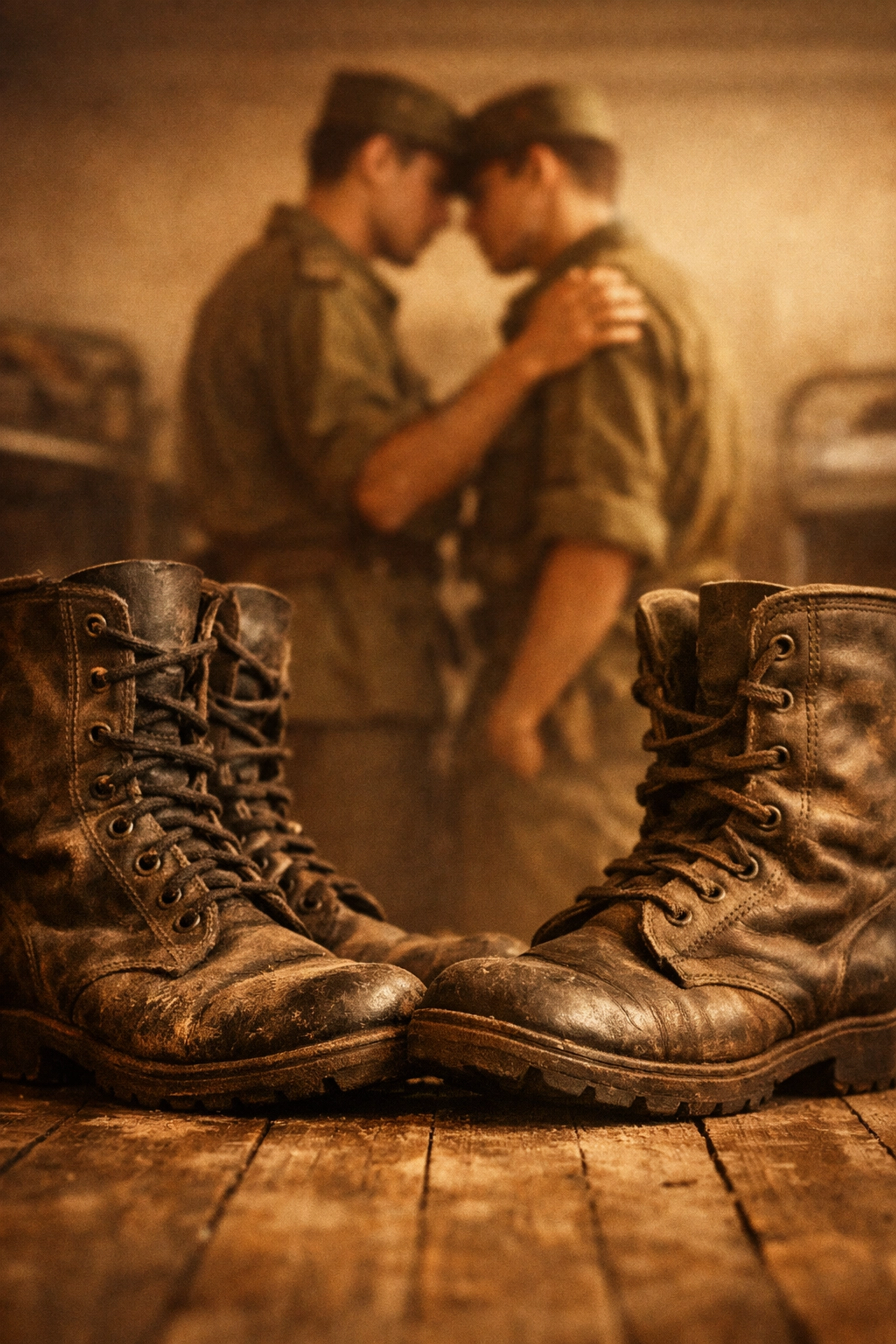
Marko told his story years later, when Yugoslavia was just a memory and he'd built a life elsewhere. He talked about his bunkmate, Damir, who came from a small town near the Adriatic coast. They became close in that way soldiers do, the kind of friendship forged through shared misery and mutual protection.
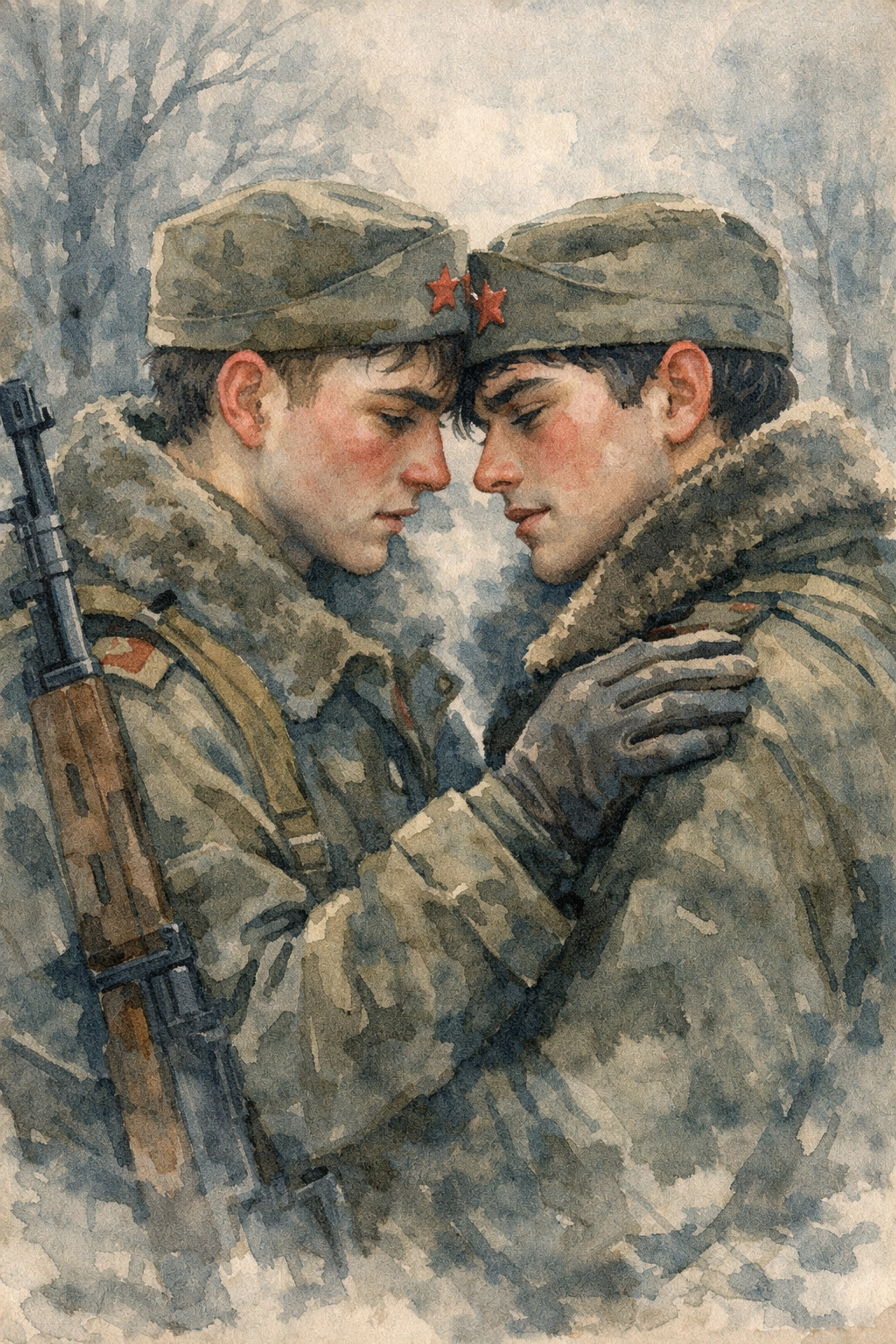
Late-night conversations in the barracks had a strange intimacy. In the darkness, with thirty other men breathing in rhythm around them, Marko and Damir would whisper about their dreams. Damir wanted to study engineering. Marko wanted… well, he couldn't say what he really wanted. Instead, he talked about traveling, about seeing the world beyond Yugoslavia's borders.
There were moments, god, there were moments, when Marko's heart would race at Damir's casual touch on his shoulder, at the way they'd press close during winter drills to share body heat. The M68 camouflage pattern couldn't hide the flush that crept up his neck when Damir smiled at him across the mess hall.
But Yugoslavia's relative tolerance had sharp limits. You could exist, but you couldn't be visible. You could have feelings, but you couldn't act on them. The space between "we won't hunt you down like the Soviets" and "you're welcome here as you are" was vast and treacherous.
The Code of Silence
Other men like him existed in the barracks, Marko knew it instinctively. You developed a sixth sense, a way of recognizing your own kind through the smallest signals. A lingering glance. The way someone's eyes would dart away when the conversation turned to women. The recruit who never joined the others when they went into town on leave.
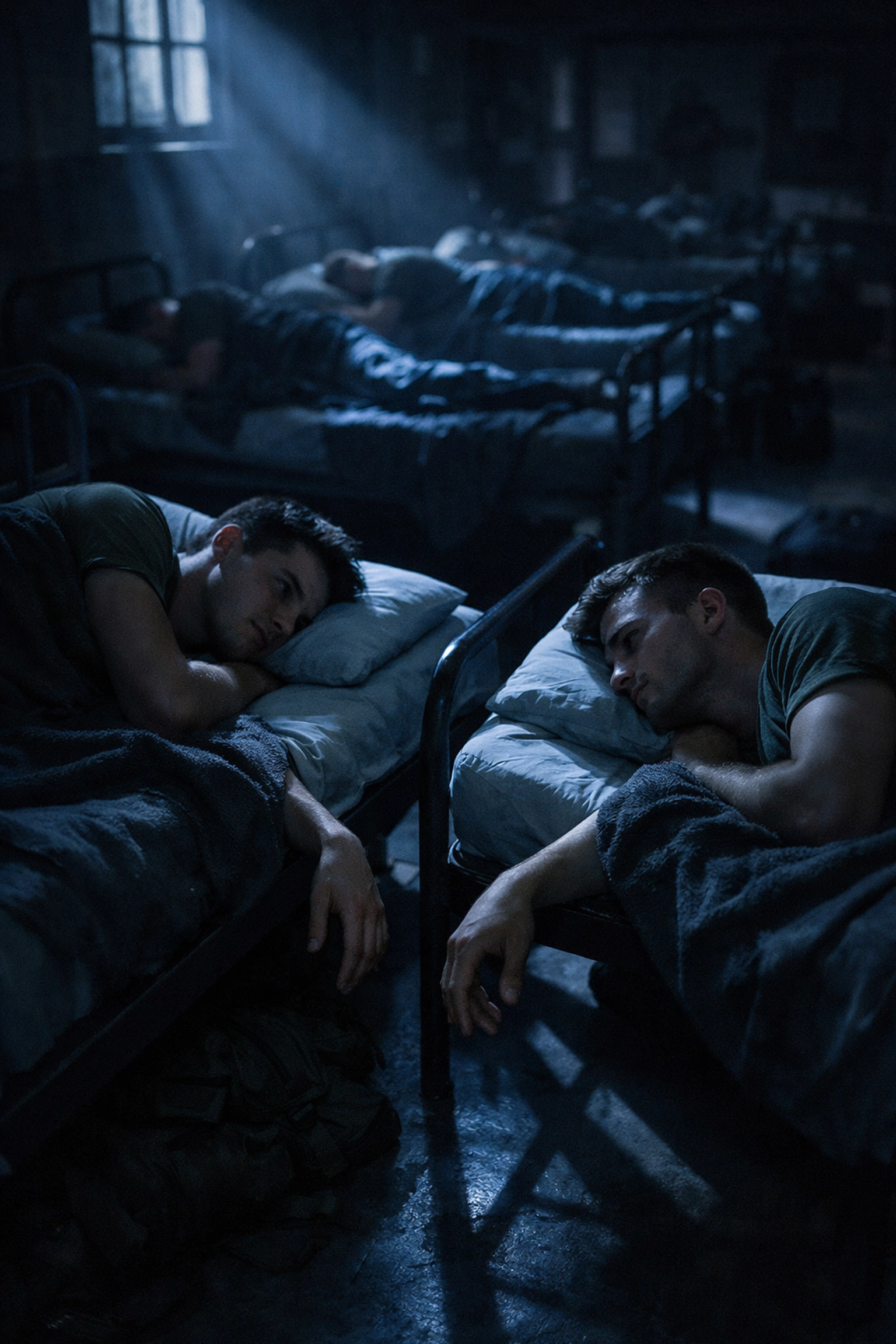
They never spoke about it. Not directly. The risk was too calculated, too real. Yugoslavia might not send you to a gulag, but a dishonorable discharge would follow you for life. Your family would know. Your hometown would know. In a culture that valued collective identity above individualism, being marked as different, as deviant, meant social death.
So Marko and the others like him became experts in code-switching. They learned to laugh at the right jokes, to talk about women in the abstract, to perform heterosexuality with the skill of trained actors. The uniform helped. When you looked like everyone else, moved like everyone else, it was easier to hide in plain sight.
Tito's Paradox
The thing about Yugoslavia under Tito was that it existed in contradiction. The state promoted "brotherhood and unity" across ethnic lines while maintaining authoritarian control. It positioned itself as non-aligned, neither Soviet nor Western, creating its own path. Citizens could travel more freely than those in the Eastern Bloc, access Western culture, even criticize the government, to a point.
For LGBTQ+ individuals, this translated into a peculiar kind of limbo. Homosexuality wasn't celebrated or even acknowledged, but it wasn't actively persecuted with the same fervor seen in Moscow or Bucharest. You could exist in the margins if you were careful, if you kept it private, if you never challenged the heteronormative façade.
The military embodied this paradox perfectly. Mandatory service brought men into close physical and emotional proximity. The state preached brotherhood and collective spirit. Yet any hint of actual romantic or sexual connection between men could destroy you.
After the Service
Marko finished his two years. So did Damir. They said goodbye at the train station, a handshake that lasted a moment too long, eyes holding questions neither could ask. Damir went home to his small coastal town. Marko heard later that he'd married, had children, built the life everyone expected.
For Marko, the years in uniform became a strange kind of refuge in memory. Yes, it had been difficult: exhausting and lonely and full of yearning he couldn't express. But it had also been the last time his life had clear structure, clear purpose. The last time he'd felt that kind of closeness to another person, even if it remained unspoken.
He eventually left Yugoslavia. By the time the country dissolved in blood and fire in the 1990s, Marko was building a new life in Western Europe where he could finally be himself. He joined LGBTQ+ organizations, marched in pride parades, found community and love.
But sometimes, late at night, he'd think about those barracks. The smell of boot polish. The weight of the M59 helmet. The sound of thirty men breathing in the darkness. And he'd remember Damir's smile, the warmth of a shoulder pressed against his during winter drills, and all the words that remained forever unsaid.
The Legacy
Yugoslavia's approach to homosexuality: that careful, calculated tolerance-through-silence: left a complex legacy. The country's collapse brought new nations with varying attitudes toward LGBTQ+ rights. Some progressed; others regressed. But for a generation of men who served in the Yugoslav People's Army, the memory of those uniform-clad years carries a particular weight.
The uniforms themselves: those M68 and M89 camouflage patterns: still show up at military surplus stores and in historical collections. They're artifacts now, physical remnants of a country that no longer exists. But for some, they represent something more: a time when identity had to be hidden beneath olive drab fabric, when love meant stolen glances and words forever swallowed.
Explore more LGBTQ+ stories and MM romance books that celebrate authentic queer experiences at Read with Pride.
Follow us for more untold LGBTQ+ stories:
- Facebook: Read with Pride
- Instagram: @read.withpride
- X/Twitter: @Read_With_Pride
#ReadWithPride #LGBTQHistory #GayHistory #QueerStories #YugoslaviaHistory #MilitaryHistory #GayRomance #MMRomance #LGBTQFiction #QueerLiterature #GayLoveStories #HistoricalLGBTQ #CommunismHistory #SocialistYugoslavia #HiddenHistory #GayBooks #QueerBooks #LGBTQReading #MMRomanceBooks #GayFiction

Leave a Reply
You must be logged in to post a comment.