

readwithpride.com
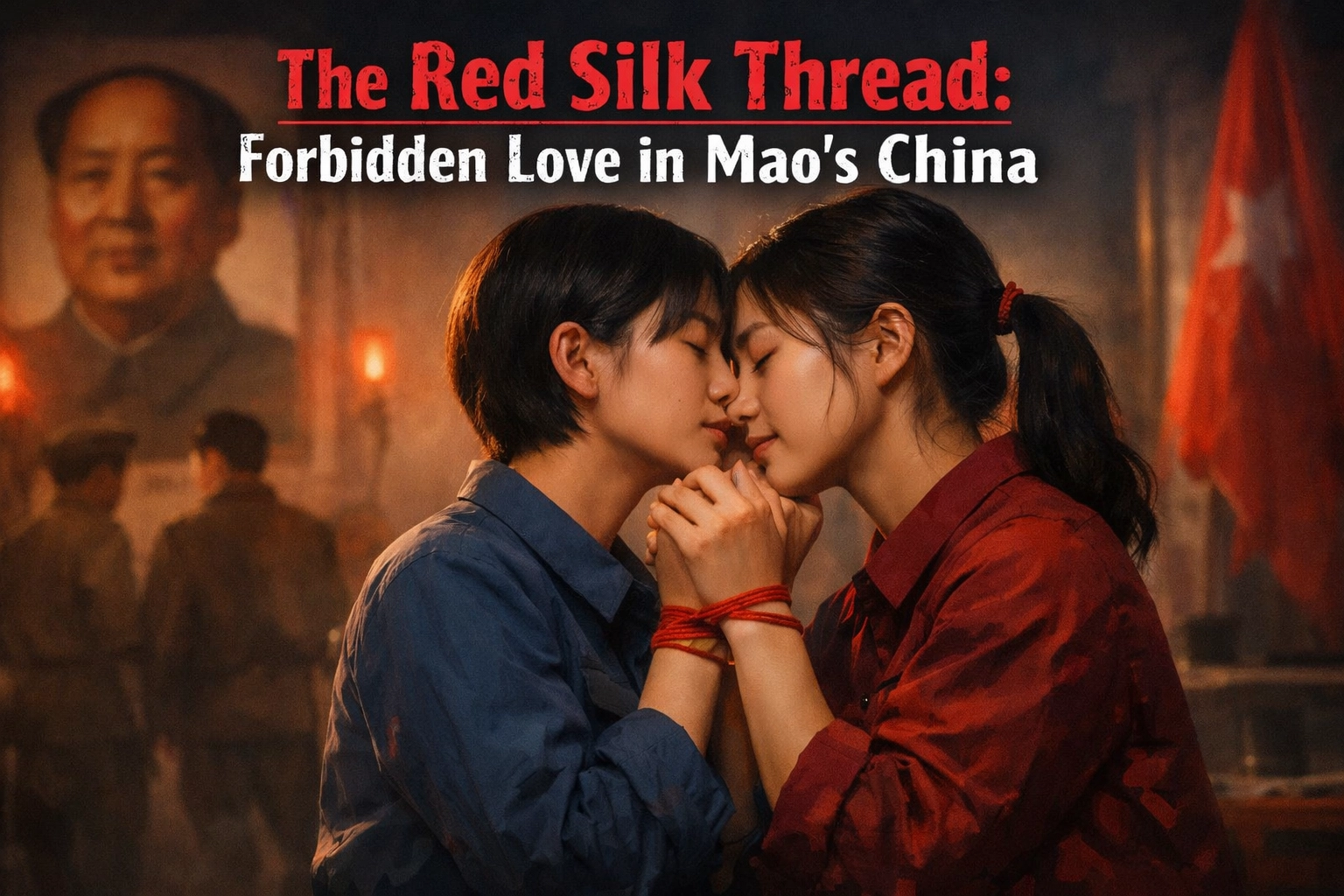
There's something deeply haunting about love that must hide in plain sight. In Mao's China, between 1966 and 1976, millions of people wore the same blue and gray uniforms, recited the same slogans, and marched in perfect synchronized lines. But beneath all that enforced sameness, hearts still beat out of rhythm. Some loved differently. Some loved dangerously.
This is a story about two factory workers who dared to find each other during one of history's most repressive regimes.
Before the Red Guards Came
It might surprise you to know that ancient China had a relatively complex relationship with same-sex love. The emperors of the Han Dynasty (206 BCE – 220 CE) were known for their male favorites. The term "passions of the cut sleeve" comes from Emperor Ai, who literally cut off his sleeve rather than wake his sleeping male lover. Same-sex relationships weren't celebrated exactly, but they existed in a kind of acknowledged gray zone, especially among scholars, actors, and the elite.
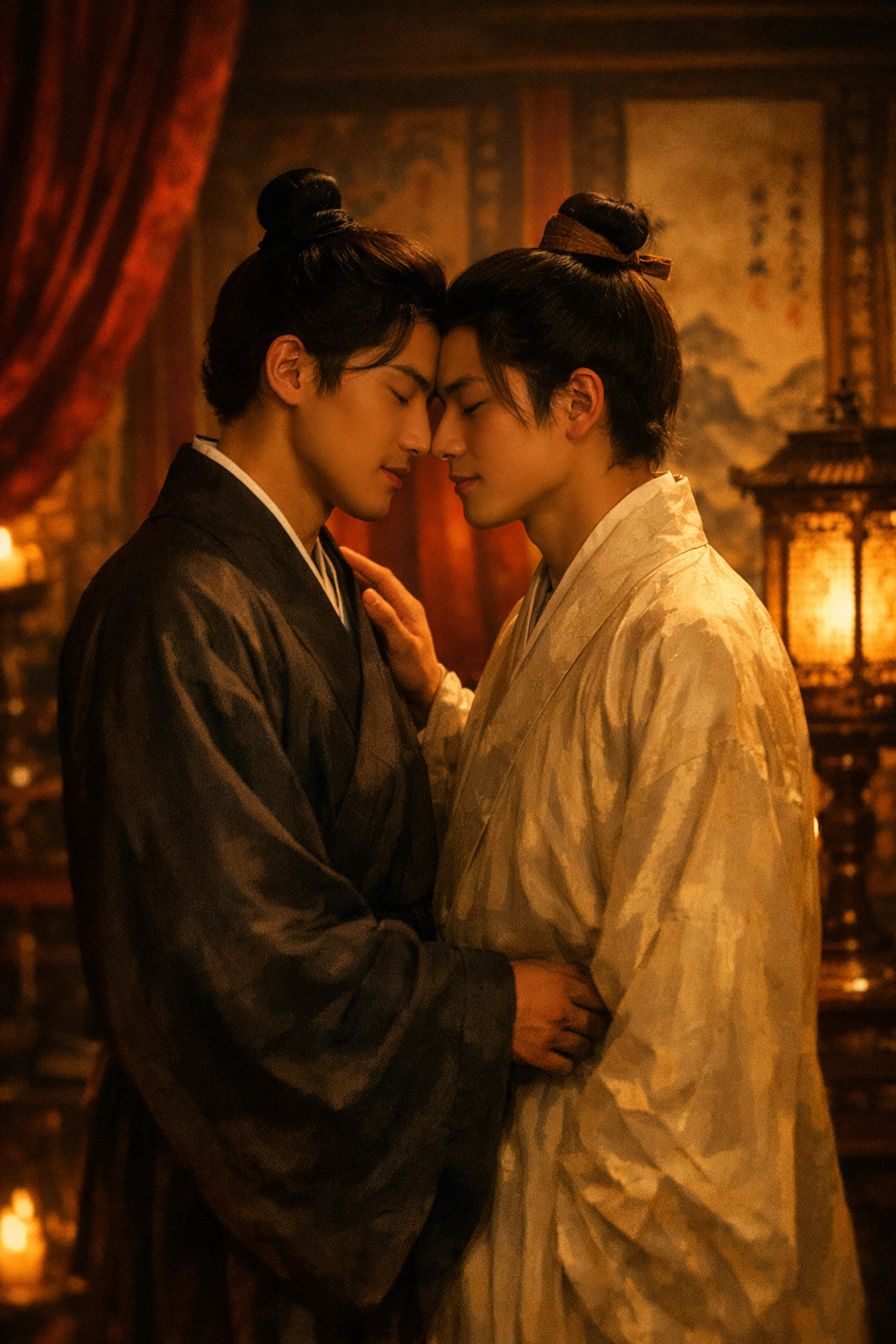
Fast forward to the early 20th century, and things hadn't changed much in everyday life. Yes, Confucian ideals emphasized marriage and family duty, but what happened behind closed doors wasn't always policed. China's cities had bathhouses, opera houses, and tearooms where men found connection. It wasn't paradise: far from it: but there was breathing room.
Then came the revolution.
The New China's "New Man"
When the Communist Party took power in 1949, Mao Zedong promised to build a new society. Part of that vision involved creating the "New Socialist Man": disciplined, productive, devoted to the collective, and absolutely heterosexual. Homosexuality was suddenly branded as a "bourgeois Western perversion," a symptom of capitalist decadence that had no place in the workers' paradise.
By the time the Cultural Revolution erupted in 1966, any deviation from the norm became counterrevolutionary. The Red Guards: mostly zealous teenagers: roamed the streets looking for "bad elements" to purge. Intellectuals, artists, religious people, and anyone suspected of "hooliganism" (the catch-all term that often meant homosexuality) were paraded through the streets, humiliated, beaten, or sent to labor camps for "re-education."
Being gay wasn't just frowned upon. It was dangerous.
Chen and Wei: A Love in Whispers
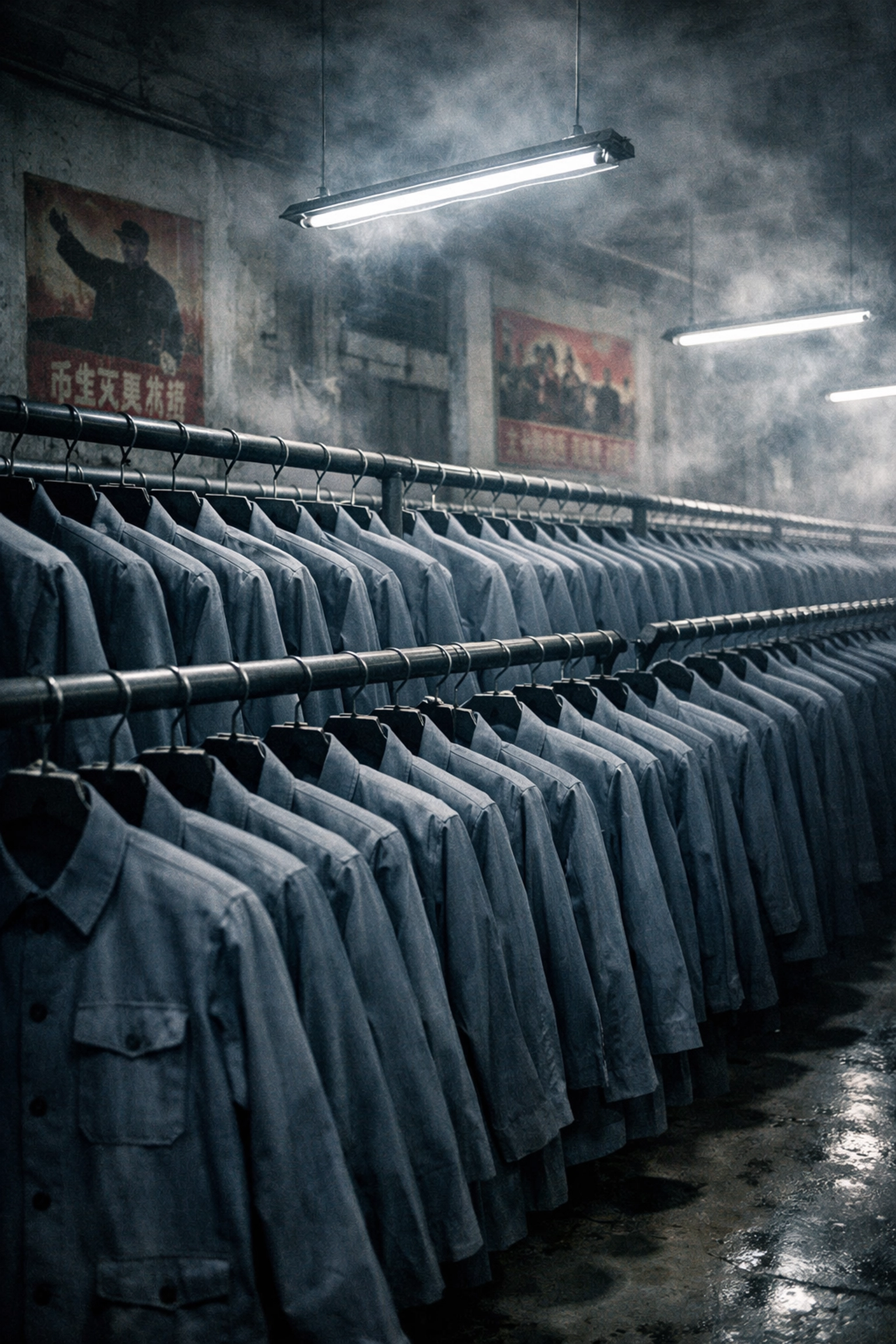
Chen worked on the factory floor of a textile mill in Guangzhou. Every morning at 5:30 AM, the loudspeakers blared revolutionary songs. By 6:00 AM, he was at his station, running fabric through massive machines that roared louder than his thoughts. The air was thick with cotton dust and collective purpose.
Wei worked three rows over, operating a different machine. They first noticed each other during a mandatory political study session: hundreds of workers crammed into the cafeteria, reading from the Little Red Book. Everyone's eyes were supposed to be on the text, but Chen caught Wei glancing his way. Not the usual vacant factory stare, but something warmer. Something that recognized him.
They couldn't speak openly. Not at the factory. Not in their shared dormitory where six men slept in bunk beds, where privacy was considered suspicious. Instead, they developed a language of small gestures. Chen would leave his water thermos on a specific corner of his workstation: Wei would know to take his lunch break at the same time. Wei would hum a certain folk song: Chen understood it meant "meet me after the evening propaganda session."
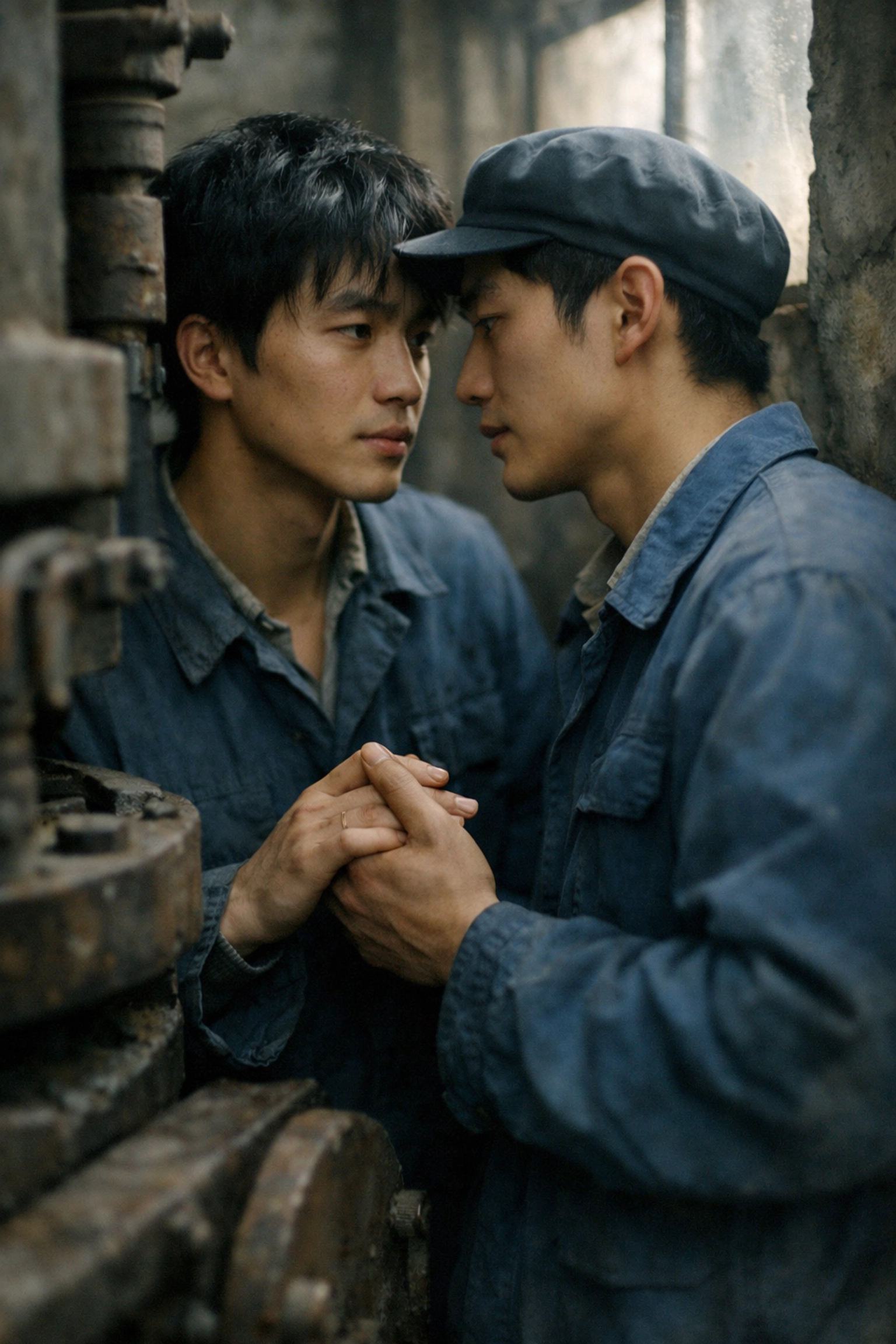
Their relationship existed in stolen minutes. Behind the storage building where spare parts rusted. In a forgotten corner of the Party library where no one ever looked for old agricultural reports. Once, during a mandatory countryside labor assignment, they managed two whole hours together, hidden in a abandoned barn, holding each other and trying not to think about what would happen if they were discovered.
The Red Silk Thread
Wei's grandmother had given him something before she died: a simple red silk thread, knotted at both ends. In Chinese tradition, the Red Thread of Fate connects two people destined to be together. "The thread may stretch or tangle," she'd told him, "but it will never break."
Wei kept it hidden in a crack in the factory wall, behind a loose brick. Sometimes, when the propaganda was especially loud, when the struggle sessions grew more violent, when another "hooligan" was arrested and disappeared, Wei would touch that brick and remember the thread was there. That some part of him couldn't be erased or re-educated.
Chen never knew about the thread. There were things too dangerous to share, even with the person you loved most.
The Price of Being Seen
In 1972, their unit leader: a man named Zhao who'd been passed over for Party promotion: started watching them. Maybe he noticed the synchronized lunch breaks. Maybe someone reported seeing them walking too close on the way to the night shift. Maybe he just needed to prove his revolutionary fervor by exposing enemies.
Zhao started asking questions. Where were you during the break? Who were you talking to? Why does your political study need improvement?
Chen and Wei stopped their signals. Stopped their glances. For three months, they didn't speak beyond what was required for work. Chen felt like he was suffocating. Every revolutionary song felt like mockery. Every collective chant felt like erasure.
But the suspicion didn't lift. One night, Zhao and two Red Guards searched the dormitory. They were looking for "bourgeois materials": Western books, religious items, anything that could be used as evidence. They found nothing in Chen's footlocker. But in Wei's…
Someone had planted a photograph. Two men, faces unclear, standing close. Too close. It didn't matter that it wasn't Wei. Didn't matter that it was obviously staged.
The Disappearing
Wei was taken for re-education the next morning. No trial. No process. Just gone. The factory loudspeakers announced he had been infected by "capitalist poison" and needed ideological correction. His name was removed from the work roster. His bunk was assigned to someone new by the end of the week.
Chen went through the motions. Worked his shifts. Attended his sessions. Recited his slogans. But part of him had disappeared too. He never found out what happened to Wei. Labor camp, probably. Prison, possibly. Dead, maybe. In those years, people vanished and no one dared ask questions.
Years later, after Mao died and the Cultural Revolution ended, Chen went back to the factory one last time before it was demolished. He found the loose brick in the wall. Behind it, wrapped carefully in oil paper, was a red silk thread, knotted at both ends.
Why These Stories Matter
Here at Read with Pride, we believe in telling the stories that history tried to silence. The gay romance novels and MM fiction we celebrate today exist because people like Chen and Wei loved anyway, even when it cost them everything. Their stories remind us that LGBTQ+ love isn't a Western invention or a modern trend: it's always existed, everywhere, even in the most oppressive circumstances.
The best gay books and queer fiction don't just entertain us. They connect us to this larger history. They remind us that our ability to read gay romance openly, to discuss MM romance books without fear, to follow LGBTQ+ content freely: these are freedoms people fought and suffered for.
If you're looking for more historical LGBTQ+ stories, check out our collection of gay historical romance and MM historical fiction. Every download, every read, every review is an act of remembrance.
Follow us for more untold stories:
#ReadWithPride #GayHistory #LGBTQFiction #MMRomance #GayRomanceBooks #QueerHistory #CulturalRevolution #GayLiterature #LGBTQBooks #HistoricalLGBTQ #GayFiction #MMHistoricalRomance #LGBTQRomance #GayNovels #QueerFiction #GayLoveStories #ReadwithPride #LGBTQReading #GayBookClub #2026GayBooks

Leave a Reply
You must be logged in to post a comment.