

readwithpride.com
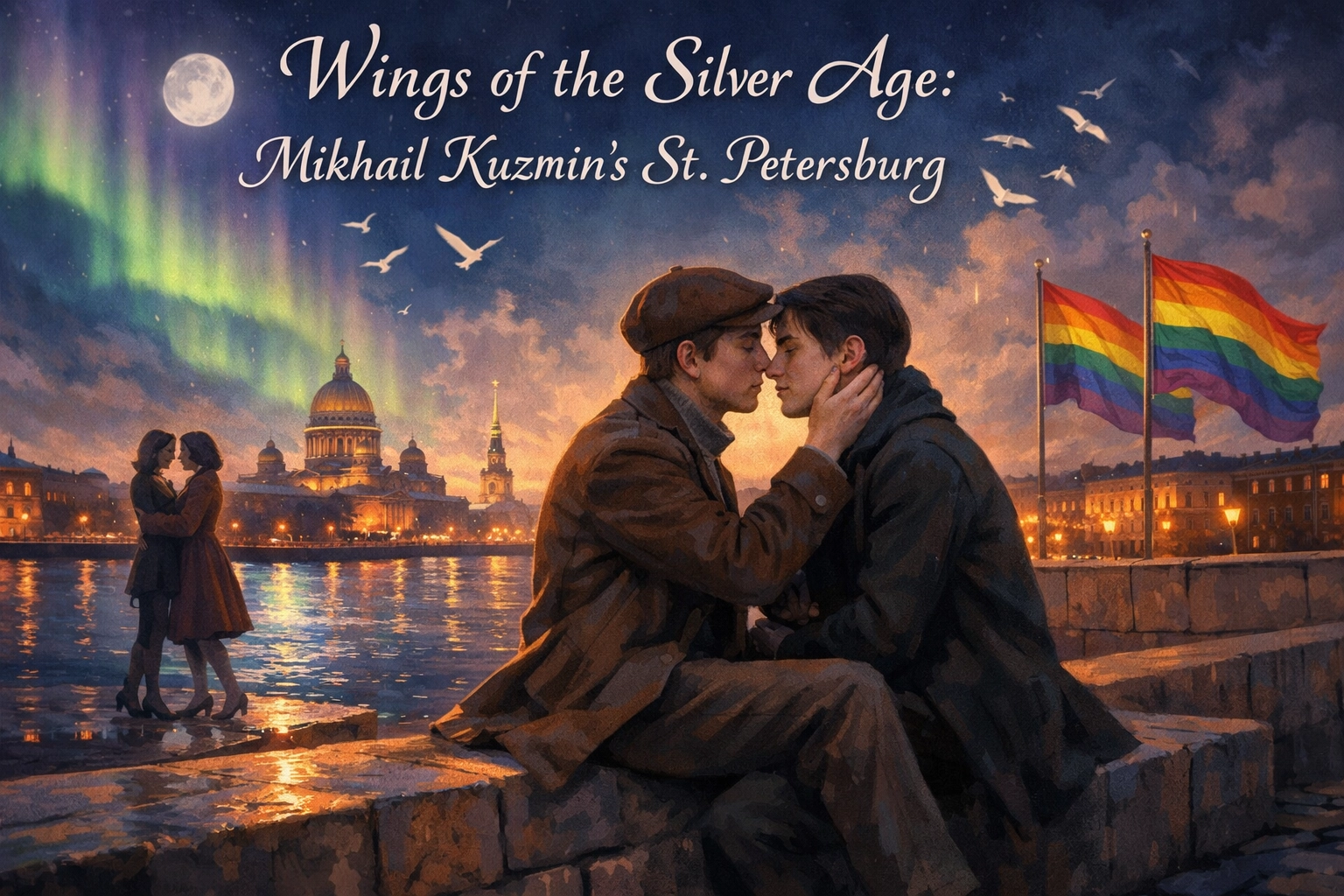
Picture St. Petersburg at the turn of the twentieth century, a city crackling with artistic rebellion, where poets argued over coffee until dawn and composers debated the future of Russian culture in smoke-filled cafés. Now imagine being the person brave enough to write Russia's first explicitly gay novel in 1906, during the reign of the Tsar. That person was Mikhail Kuzmin, and his story is one of artistic brilliance, defiant authenticity, and the kind of courage that changes literary history forever.
The Man Who Dared to Write Wings
Mikhail Kuzmin didn't just dip his toe into controversial waters: he dove in headfirst with his debut novel Wings, published in 1906. This wasn't some coded allegory or subtle subtext. This was the real deal: Russia's first novel with an explicitly homosexual theme, and it caused exactly the scandal you'd expect. Conservative critics clutched their pearls. The church was outraged. And yet, two large editions sold out almost immediately.
Why didn't Kuzmin end up in prison? Because his writing was simply too good to prosecute. The masterful prose style earned such critical acclaim that even the Tsar's regime couldn't justify censoring it. It's a bit like being so talented at your craft that your detractors have to grudgingly step aside. The novel tells the story of a young man's sexual and spiritual awakening, embracing same-sex love without shame or tragedy: revolutionary stuff for 1906.
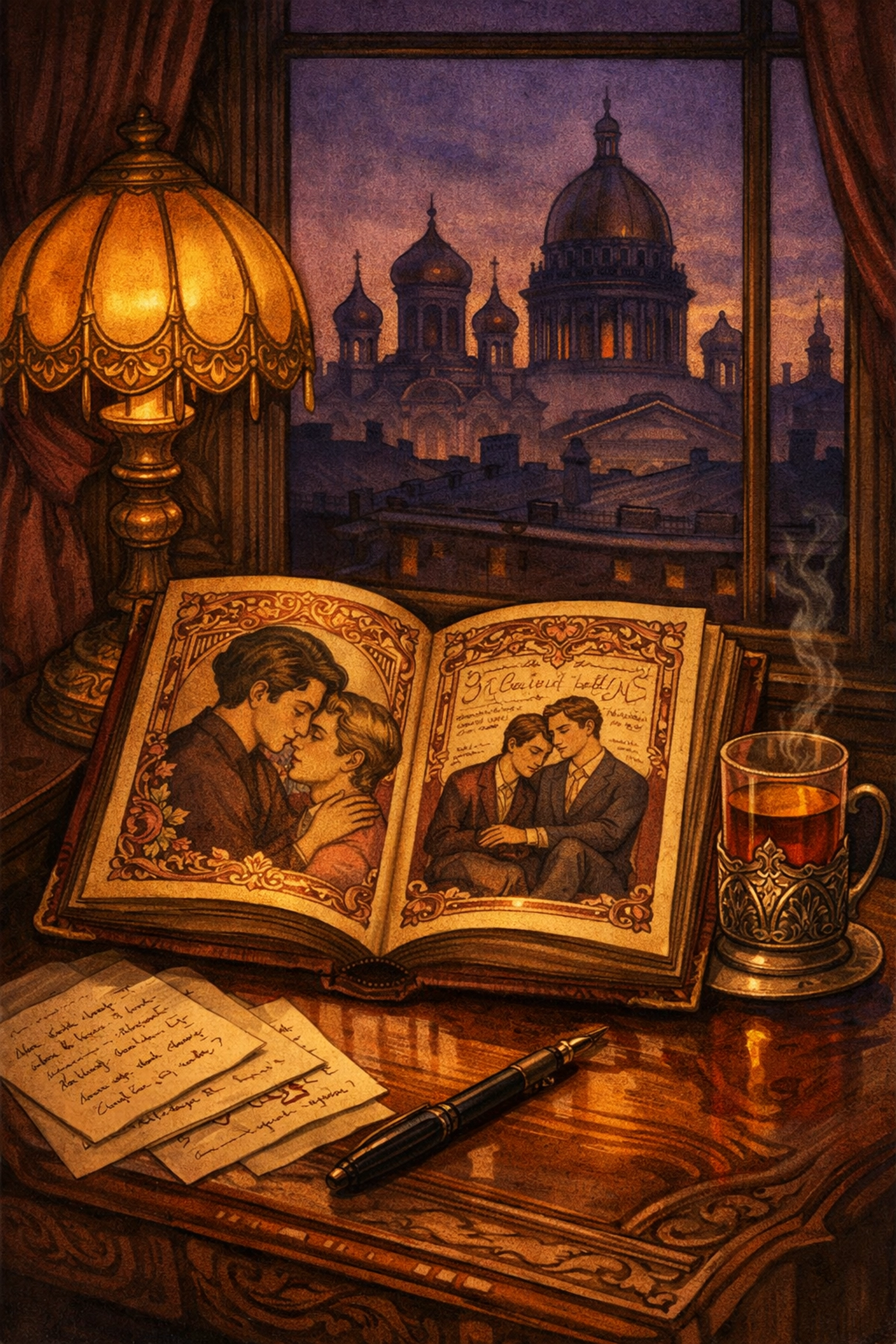
Kuzmin's breakthrough wasn't just about shock value. Wings represented something deeper: the possibility of gay love stories in LGBTQ+ fiction that ended in affirmation rather than tragedy. While other nations were still coding their queer narratives in euphemism and melancholy, Kuzmin was writing gay novels that celebrated desire and self-acceptance. It's the kind of literary courage that makes him a patron saint of Read with Pride over a century later.
The Renaissance Man of Russian Modernism
But here's where Kuzmin gets even more interesting: he wasn't just a novelist. This man was a walking encyclopedia of artistic talent. Poet, composer, playwright, critic, translator, and performer. He didn't just participate in Russian modernism; he helped shape nearly every aspect of it. Think of him as the queer Da Vinci of the Silver Age, equally comfortable setting words to music as he was translating foreign texts or penning essays that would influence entire literary movements.
Between 1911 and 1915, you could find Kuzmin holding court at the legendary Stray Dog café, one of St. Petersburg's most famous artistic haunts. Picture a basement venue packed with the who's who of Russian culture: poets, painters, revolutionaries, and dreamers all crammed together in the cigarette haze. Kuzmin performed there alongside virtually every important poet of the era, regardless of their political affiliations or artistic camps. He'd sit at the piano, accompanying himself while singing his own compositions, blending high art with cabaret flair.
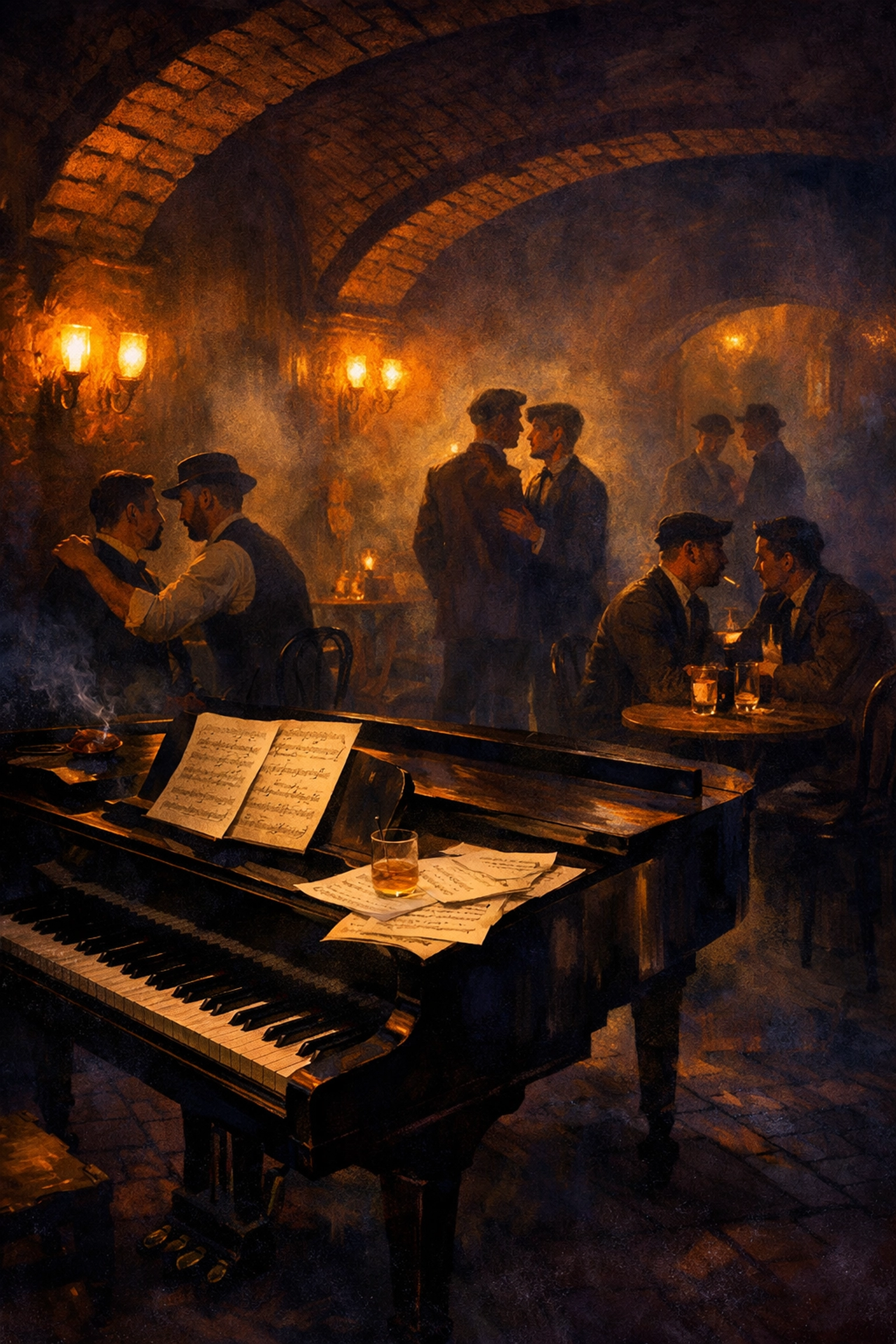
The Stray Dog wasn't just a café; it was the beating heart of St. Petersburg's cultural life, and Kuzmin was one of its most vital organs. While Symbolist poets debated mystical philosophies and Futurists plotted their artistic revolution, Kuzmin moved between all circles with an ease that speaks to both his talent and his unique position as Russia's first openly gay writer.
The Father of Acmeism
In 1910, Kuzmin published an essay titled "On Beautiful Clarity" that would reshape Russian poetry. While his Symbolist peers were lost in hazy mysticism and deliberately obscure imagery, Kuzmin argued for something radical: clarity. Precision. Poetry that said what it meant with elegant directness rather than impenetrable symbolism.
This essay became the philosophical foundation for Acmeism, a movement that included poets like Anna Akhmatova and Osip Mandelstam. Imagine having such influence that your casual essay launches an entire literary movement. Contemporaries like Aleksandr Blok, Vladimir Mayakovsky, Boris Pasternak, and Marina Tsvetaeva: names that tower over Russian literature: recognized Kuzmin as their equal. That's not just talent; that's genius.
What made Kuzmin's work so distinctive was its deceptive simplicity. He wrote with a colloquial, conversational voice that felt effortless, masking profound philosophical depth beneath an accessible surface. While other writers were showing off with complex structures and arcane references, Kuzmin was crafting gay love stories and queer fiction that anyone could understand but that revealed new layers with each reading.
Living Authentically in Imperial Russia
Let's be real: being openly gay in pre-Revolutionary Russia wasn't exactly a walk in the park. This was the land of the Tsars, where the Orthodox Church held enormous power and homosexuality was both illegal and condemned. Yet Kuzmin lived his truth with a boldness that feels radical even today. He didn't hide, didn't apologize, didn't code his desires in metaphor when writing for publication.
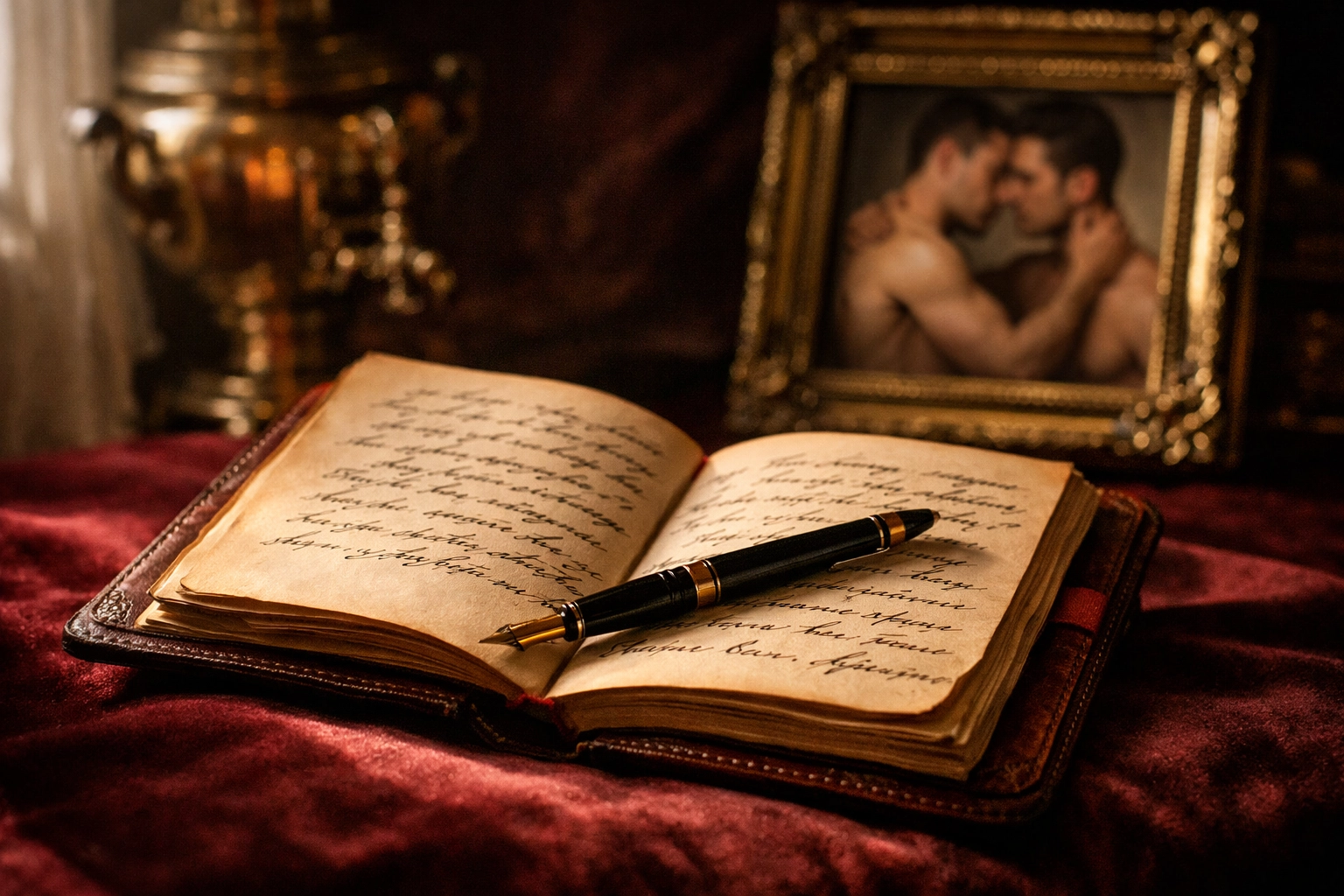
His personal diary, which he kept from 1905 to 1934, provides an intimate window into this life. These aren't just literary jottings: they're a detailed record of gay life in St. Petersburg across three decades of tremendous upheaval: the twilight of Imperial Russia, the chaos of revolution, and the early years of Soviet rule. Historians treasure these diaries because Kuzmin didn't just record his own experiences; he documented the entire cultural ecosystem around him, creating an invaluable archive of Russian modernism.
Think about what it meant to keep such a diary. Every entry was potentially dangerous evidence. Yet Kuzmin wrote it all down: his relationships, his artistic circles, his opinions on politics and art. It's the kind of brave documentation that allows us to understand LGBTQ+ history beyond the sanitized official records.
A Legacy Suppressed and Restored
After the Revolution, things got complicated. The Soviet regime initially had a somewhat ambiguous attitude toward homosexuality, but that tolerance didn't last. By the Stalin era, Kuzmin's work was effectively suppressed. His books disappeared from libraries. His name was erased from literary histories. For decades, one of Russia's greatest poets was made invisible, his contributions to gay literature and queer fiction deliberately forgotten.
But here's the thing about great art: it survives. Starting in the 1970s, scholars began the slow work of restoring Kuzmin's reputation. His works were republished. His diaries were studied. Today, he's recognized as one of Russia's greatest poets and a defining figure of the Silver Age, with Wings acknowledged as a pioneering work of gay romance that predates most Western LGBTQ+ fiction by decades.
Why Kuzmin Matters Today
Reading Kuzmin now, over a century after Wings shocked St. Petersburg, what strikes you is how modern he feels. His characters don't agonize over their sexuality in the tortured way that defined so much early queer fiction. They live, love, and seek beauty and truth. It's the kind of affirmative gay fiction that we at Read with Pride champion: stories where being LGBTQ+ isn't the problem to be solved but simply part of the human experience.
Kuzmin proved that MM romance and gay love stories could be artistically serious without being tragic. He showed that you could be openly queer and still be recognized as a major literary figure by your peers. He lived authentically in an era when that choice could cost you everything, and he did it with style, wit, and extraordinary talent.
For anyone exploring LGBTQ+ fiction or gay novels with historical depth, Kuzmin's work remains essential reading. Wings isn't just a historical curiosity: it's a genuinely moving story about self-discovery and acceptance that resonates across the decades. It reminds us that the fight for LGBTQ+ visibility and authentic representation in literature has deep roots, and that brave artists have always existed, even in the most repressive times.
So here's to Mikhail Kuzmin: composer, poet, novelist, and the man who gave Russian literature its wings. His St. Petersburg may be long gone, but his legacy soars on.
Discover more LGBTQ+ stories and history at readwithpride.com 🏳️🌈
Follow us for more queer history and MM romance recommendations:
📘 Facebook
🐦 Twitter/X
📸 Instagram
#ReadWithPride #MikhailKuzmin #LGBTQHistory #GayLiterature #QueerFiction #MMRomance #GayBooks #RussianSilverAge #LGBTQFiction #GayNovels #QueerHistory #GayRomanceBooks #LGBTQBooks #GayLoveStories #HistoricalLGBTQ #StPetersburg #Wings #GayRomance #QueerAuthors #LGBTQReading

Leave a Reply
You must be logged in to post a comment.