

readwithpride.com
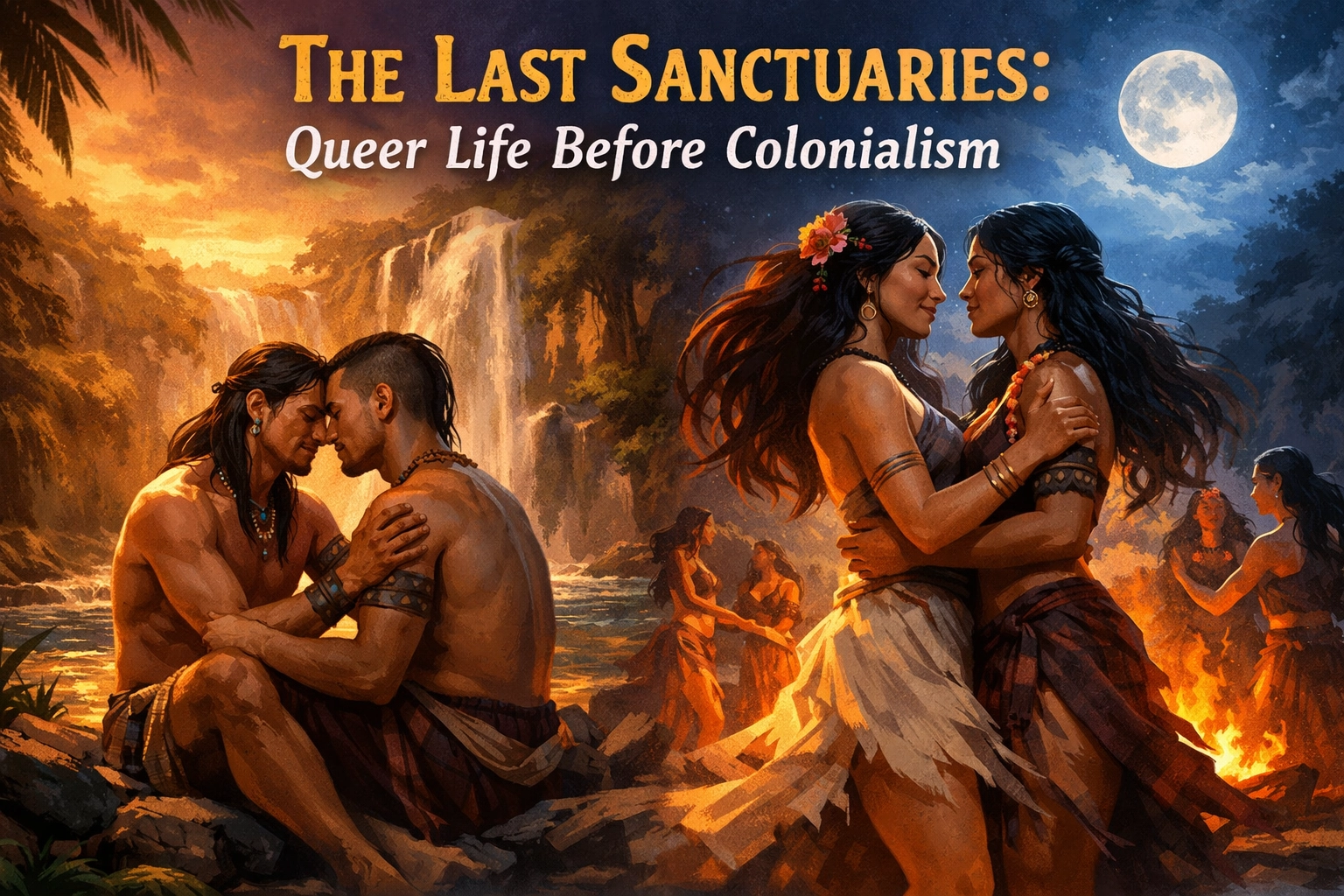
Before missionaries arrived with Bibles and shame, before colonial laws criminalized love, there were sanctuaries. Deep in the world's rainforests and remote woodlands, human societies flourished with radically different understandings of gender and sexuality: understandings that often celebrated rather than condemned queer lives.
These weren't utopias. But they were places where same-sex love, gender fluidity, and diverse expressions of identity existed without the weight of centuries of European colonial repression. And they hold lessons we're only beginning to reclaim.
The Green Cathedral: Amazonian Realities
The Amazon rainforest: vast, dense, and largely impenetrable to outsiders until recent centuries: sheltered hundreds of Indigenous communities, each with their own complex social structures. While documentation is frustratingly sparse (because colonizers weren't exactly prioritizing accurate anthropological records), the evidence we do have suggests fascinating diversity in how these societies understood gender and sexuality.
Some Amazonian tribes recognized multiple genders beyond the Western binary. Others had spiritual roles specifically occupied by people we might today recognize as queer or gender-diverse. The isolation provided by the forest canopy wasn't just physical: it created cultural space for these communities to develop their own frameworks for human relationships, free from the rigid categorizations that would later be imposed.
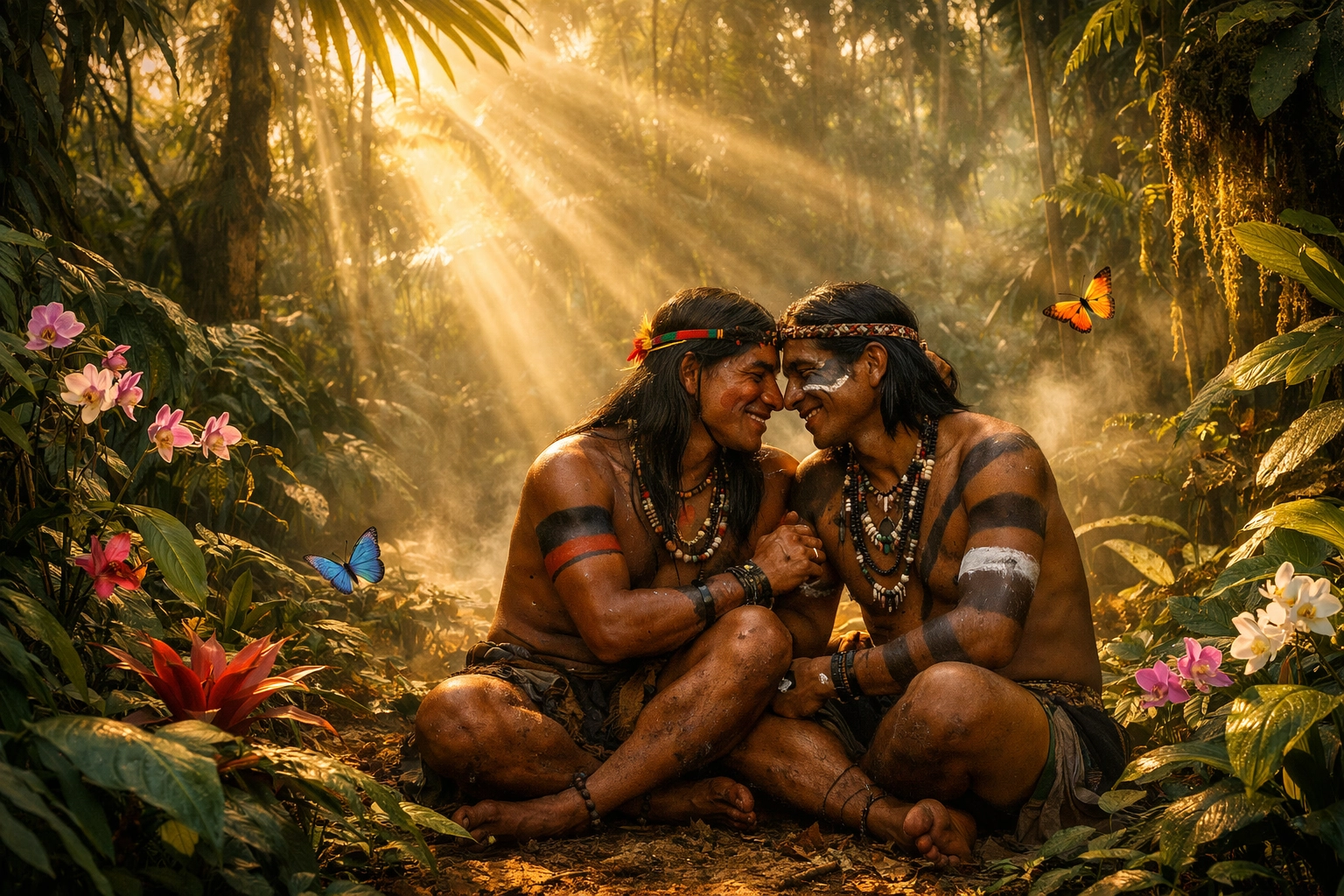
The tragedy, of course, is how much knowledge was deliberately destroyed. When colonizers did penetrate these sanctuaries, they brought diseases, violence, and a particularly virulent strain of sexual shame dressed up as civilization. Indigenous oral histories and traditional knowledge systems were systematically suppressed, leaving us with gaps we're still trying to fill.
Beyond the Amazon: Other Forest Sanctuaries
The Amazon wasn't alone. In the dense rainforests of Southeast Asia, Indigenous communities maintained their own traditions around gender and sexuality. The fa'afafine of Samoa, the hijra communities of South Asia, the Two-Spirit people of North America: these weren't modern inventions. They were ancient traditions that survived (sometimes barely) the colonial onslaught.
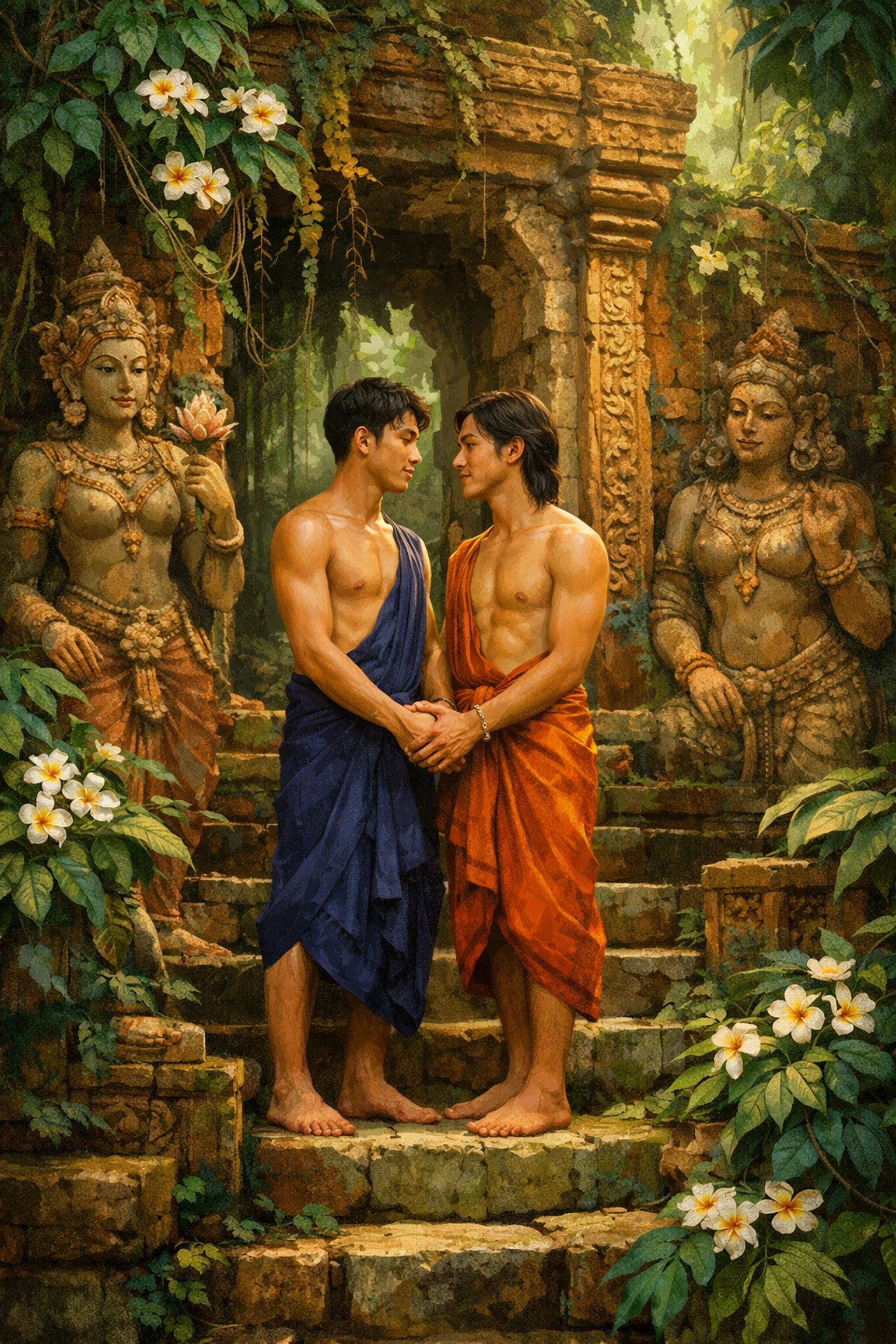
In pre-colonial India, the evidence is particularly striking. The Kama Sutra, written around the 2nd century CE, included an entire chapter on same-sex relationships and acknowledged trans and non-binary identities as natural parts of human diversity. The Kinnar (often called Hijra) have been recognized as a third gender since ancient times, with documented roles in royal courts and religious ceremonies.
This wasn't just tolerance: it was integration. Queer and gender-diverse people held meaningful social positions, participated fully in community life, and often occupied important spiritual roles. The forest communities of the Indian subcontinent, particularly those more isolated from urban centers, maintained these traditions longer than their city counterparts.
The Two-Spirit Legacy
Perhaps nowhere is the contrast between pre-colonial acceptance and colonial erasure more stark than in Indigenous North American communities. The term "Two-Spirit" is a modern pan-Indigenous phrase, but it points to traditions that existed across hundreds of distinct nations before European contact.
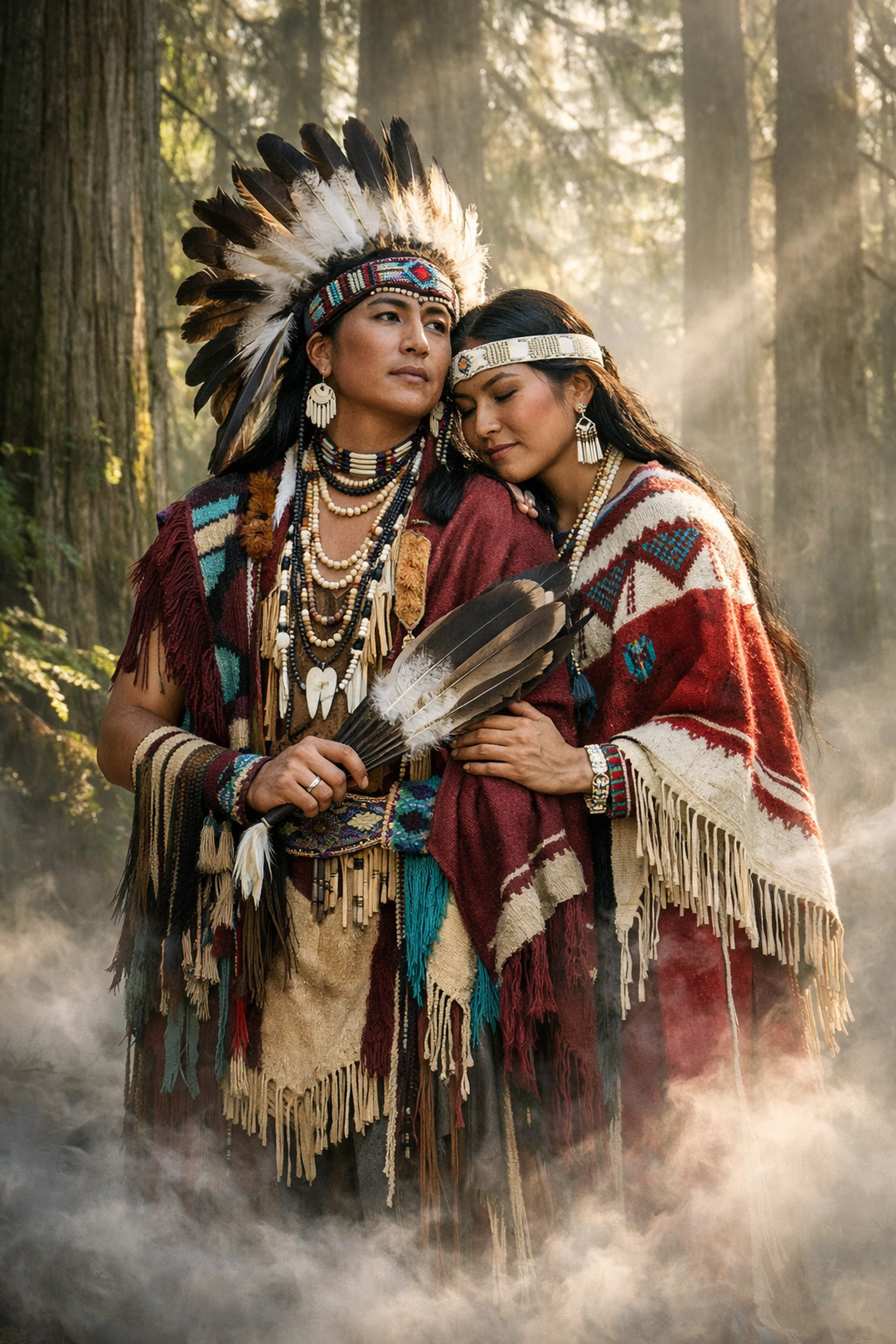
Two-Spirit people: those who embodied both masculine and feminine qualities, or who loved people of the same gender: were often considered gifted, not cursed. They served as mediators, healers, shamans, and visionaries. Their ability to move between gendered worlds was seen as powerful, not perverse.
The forest communities of the Pacific Northwest, the Great Lakes region, and beyond maintained intricate social systems where Two-Spirit people had clearly defined roles. They married, raised children (their own or adopted), and contributed to community life without the stigma that would later be imported from Europe.
When missionaries arrived, they were horrified. They used terms like "berdache" (a slur) and worked systematically to eliminate these traditions, often through violence. Boarding schools separated Indigenous children from their cultures, punishing any expression of gender diversity or same-sex affection. The isolation that had once protected these communities became a vulnerability as colonial forces expanded.
What the Forests Remembered
So what can we actually know about queer life in these pre-colonial sanctuaries? The truth is: more than colonizers wanted us to know, but less than we deserve.
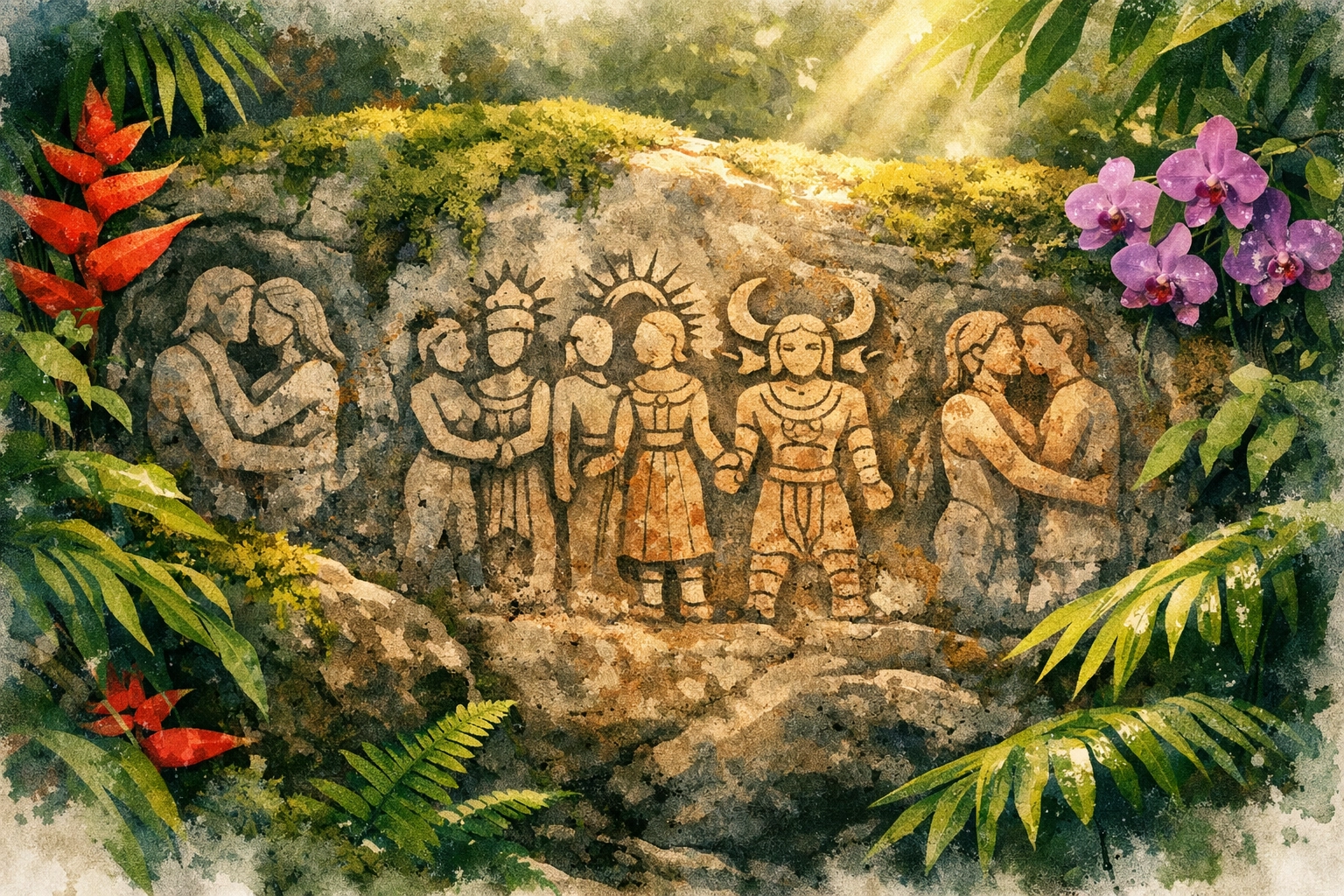
Archaeological evidence, when examined without colonial bias, reveals patterns. Same-sex burial practices in some cultures. Artifacts suggesting gender-diverse ceremonial roles. Artistic representations that don't fit neat heterosexual or binary gender categories.
Oral histories, preserved despite everything, carry these truths forward. Indigenous elders and knowledge-keepers have maintained traditions, often in secret, waiting for a time when it was safer to speak. As descendants reclaim these histories, we're learning that queer existence isn't a Western import: it's a human constant that colonialism tried to erase.
The forests themselves became archives. Traditional plant medicines, used in ceremonies that included gender-diverse participants. Sacred sites where same-sex couples could be recognized. Songs and stories passed down through generations, carrying coded messages about love that transcended colonial categories.
The Colonial Violence of "Civilization"
Let's be clear: what happened to these sanctuaries wasn't cultural evolution. It was cultural genocide, and queer people were specific targets.
British colonial rule in India introduced Section 377, criminalizing "unnatural" sexual acts: a law that stood until 2018. Christian missionaries across the Americas, Africa, and Asia brought shame-based sexual morality that had no precedent in many Indigenous traditions. Legal systems imposed binary gender categories where none had existed before.
The forest sanctuaries couldn't protect against guns, diseases, and legal systems designed to eradicate traditional ways of life. As colonial forces pushed deeper into remote regions, they brought their peculiar brand of sexual repression with them, rewriting entire cultural histories to erase evidence of queer acceptance.
This erasure was deliberate. Colonial administrators and missionaries knew that diverse gender and sexual expressions existed in the communities they sought to control. They wrote about it in their journals, often in disgusted terms. Then they set about destroying it, understanding that controlling sexuality and gender was central to their colonial project.
Reclaiming the Sanctuary
Today, as LGBTQ+ people worldwide fight for recognition and rights, there's profound power in understanding these pre-colonial realities. The idea that queerness is a "Western import" or "unnatural" crumbles when confronted with the actual historical record.
Indigenous LGBTQ+ activists and Two-Spirit organizers are doing crucial work reclaiming these histories, not as romanticized fantasies but as real traditions that deserve respect and revival. They're reconnecting with knowledge systems that their ancestors protected through centuries of oppression.
For the rest of us: especially white queer folks like many of us reading at Read with Pride: these histories offer both inspiration and responsibility. Inspiration because they prove queer existence is ancient and global. Responsibility because we must support Indigenous communities in reclaiming their traditions without appropriating them.
The Stories We're Rediscovering
This is where queer fiction and LGBTQ+ literature become more than entertainment: they become acts of historical recovery. When we read MM romance set in pre-colonial contexts, or explore gay historical romance that looks beyond Europe, we're participating in a kind of cultural archaeology.
The best gay novels and gay fiction don't just tell love stories: they imagine what was stolen and what might have been. They create space for understanding that queer love existed in contexts we've been taught to ignore.
At readwithpride.com, we're committed to amplifying these voices and stories. Because every MM romance book that centers Indigenous characters, every piece of queer fiction that interrogates colonial history, every gay love story that refuses European frameworks: these are all acts of reclamation.
Moving Forward
The last sanctuaries aren't really lost. They're being rebuilt, brick by careful brick, story by patient story. Indigenous communities are reviving traditions. Scholars are reexamining evidence without colonial blinders. Writers are imagining possibilities.
And we're all learning that the forest: metaphorical and literal: still holds secrets about human diversity that colonialism couldn't fully destroy.
The isolation that once protected these communities from colonial violence can't be recreated. But the knowledge they preserved? That can spread. That can flourish. That can remind us all that queerness isn't modern or Western; it's ancient and global, as natural as the forests themselves.
Follow our journey in uncovering queer history and celebrating diverse love stories:
Facebook: Read With Pride
Website: readwithpride.com
Twitter/X: @Read_With_Pride
Instagram: @read.withpride
#ReadWithPride #QueerHistory #MMRomance #LGBTQBooks #GayFiction #IndigenousLGBTQ #TwoSpirit #PreColonialHistory #QueerLiterature #GayRomanceBooks #LGBTQRomance #MMRomanceBooks #GayHistoricalRomance #QueerAuthors #DecolonizeQueerHistory #IndigenousHistory #GayBooks2026 #LGBTQEbooks #GayLoveStories #MMNovels

Leave a Reply
You must be logged in to post a comment.