

readwithpride.com
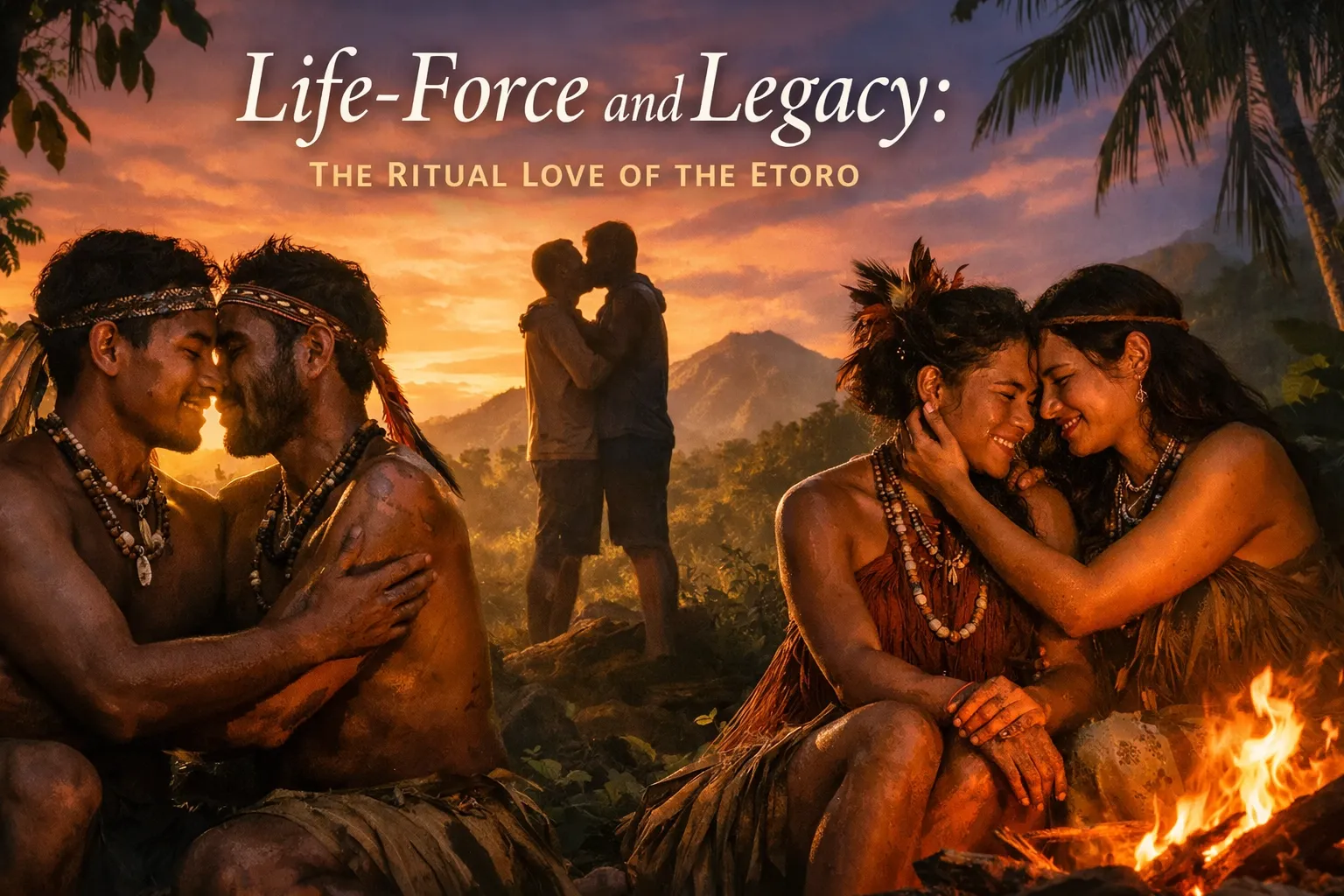
Deep in the mountains of Papua New Guinea, far from the reach of colonial influence for centuries, the Etoro people developed a worldview so radically different from Western thought that it challenges everything we think we know about gender, sexuality, and the meaning of masculinity itself.
This isn't just another "hidden civilization" story. This is about how one culture built an entire social structure around beliefs that would make most anthropologists do a double-take: and what their practices reveal about the extraordinary diversity of human sexual expression throughout history.
When Life Force Flows Between Men
The Etoro believe something that seems strange to outsiders but makes perfect sense within their cosmology: that life force itself resides in semen, and this vital energy must be deliberately transferred from one generation to the next for the community to survive and thrive.
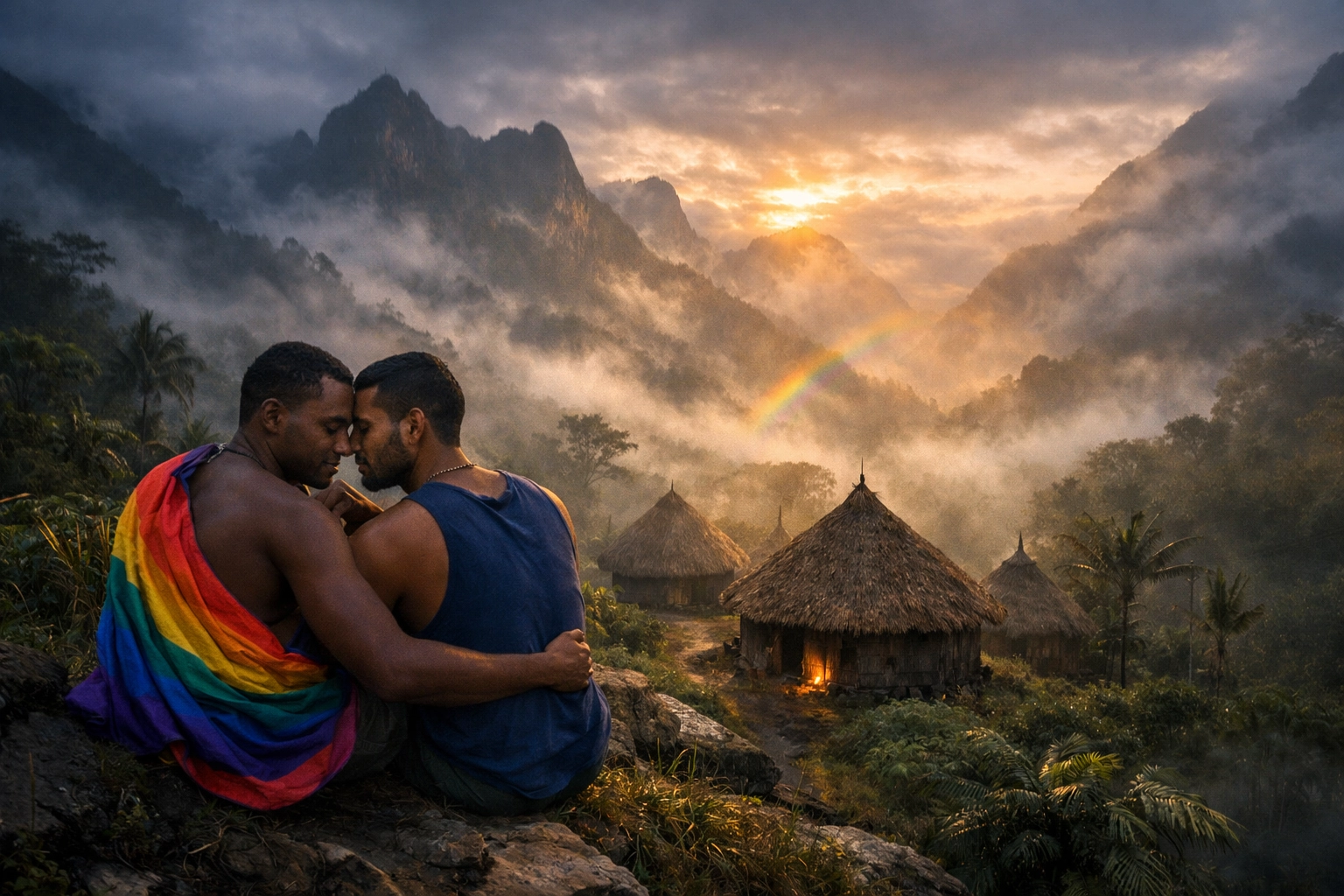
This wasn't metaphorical. This wasn't symbolic in the abstract sense we might talk about "passing the torch" or "mentorship." For the Etoro, the transfer of this life force was literal, physical, and absolutely essential to the continuation of their society.
Young males, beginning around age seven, would enter into a decade-long period of ritualized contact with elder men. This wasn't seen as sexual in the way Western cultures understand sexuality: it was understood as a fundamental rite of passage, as necessary for proper development as food or water. The belief held that without this transfer of vital energy from elders, boys simply could not grow into strong, capable men who could defend the tribe and maintain the community.
The Sacred and the Forbidden
What makes the Etoro fascinating isn't just their same-sex practices: it's the entire inverted value system they constructed around male energy and fertility.
Heterosexual intercourse? Highly restricted. The Etoro prohibited it for approximately 260 days out of the year. It was completely forbidden within the village itself and near cultivated gardens. They viewed heterosexual sex as potentially dangerous to the community's spiritual health, something that had to be carefully controlled and limited.
Meanwhile, the male-to-male transmission of life force was not just permitted: it was mandatory, sacred, and central to every aspect of their social organization.
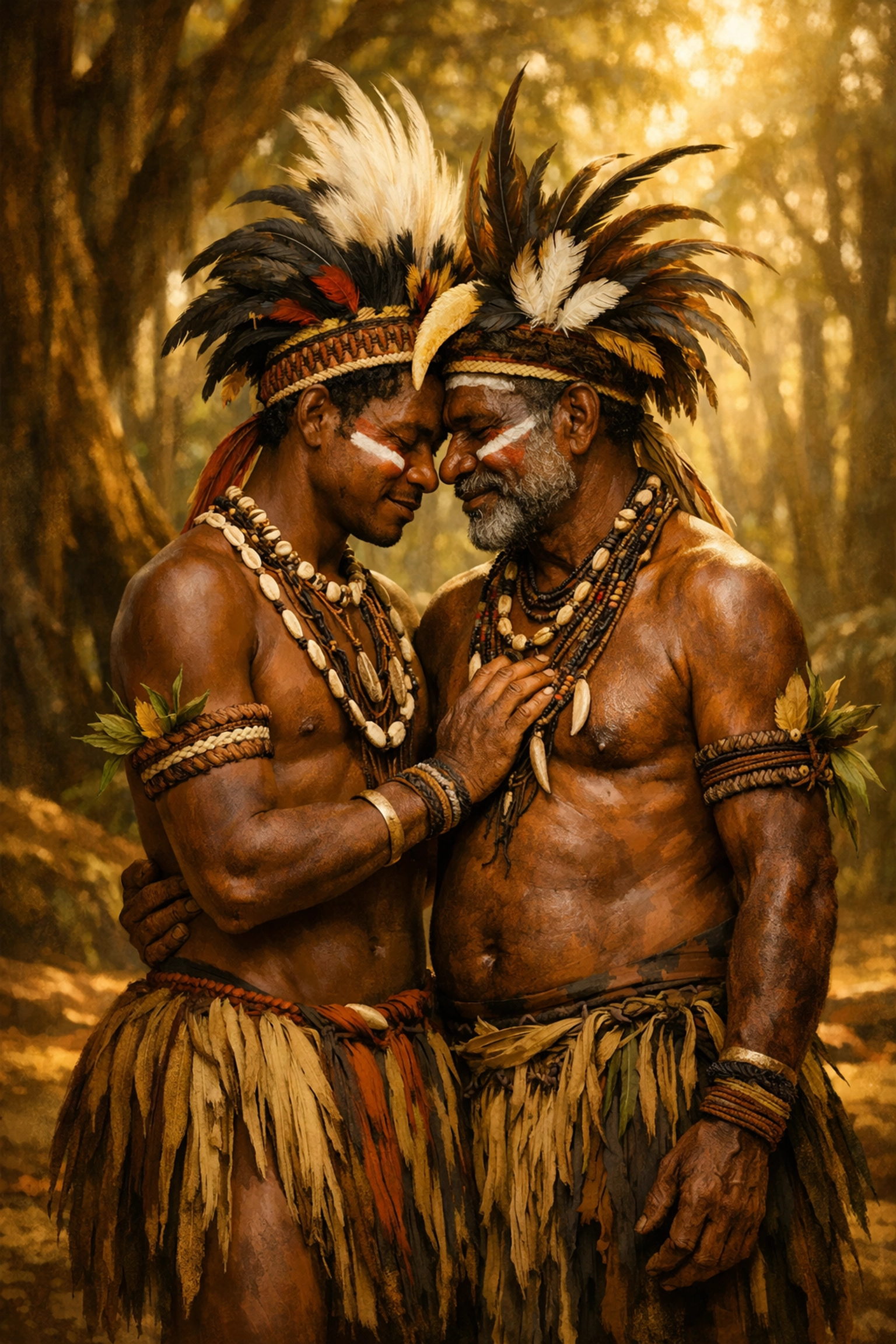
This complete reversal of what we might expect tells us something profound: sexual meaning isn't universal or innate. It's culturally constructed, and different societies can build radically different systems of meaning around the same human bodies and acts.
The Gender Hierarchy Problem
Before we get too romantic about the Etoro as some kind of pre-colonial queer paradise, we need to talk about the darker side of this belief system: the treatment of women.
In the Etoro worldview, women were positioned as fundamentally opposed to male vitality. If a woman didn't become pregnant, she could be accused of "stealing" the life force from men: of taking that precious vital energy for herself. Women could be labeled as witches and face serious consequences.
The annual ceremonies that marked boys' completion of their ten-year initiation? Exclusively male spaces. Dancing, singing, celebration: and women were shut out entirely.
This reminds us of an uncomfortable truth: cultures that embrace same-sex practices aren't automatically more egalitarian or just. The Etoro created a system that valued certain forms of male intimacy while simultaneously devaluing women and creating rigid hierarchies. It's a cautionary tale about not projecting our own progressive values onto cultures we want to claim as historical validation.
Partners, Bonds, and Social Webs
The Etoro initiation system wasn't just about individual transformation: it was about weaving together the entire social fabric of the community.
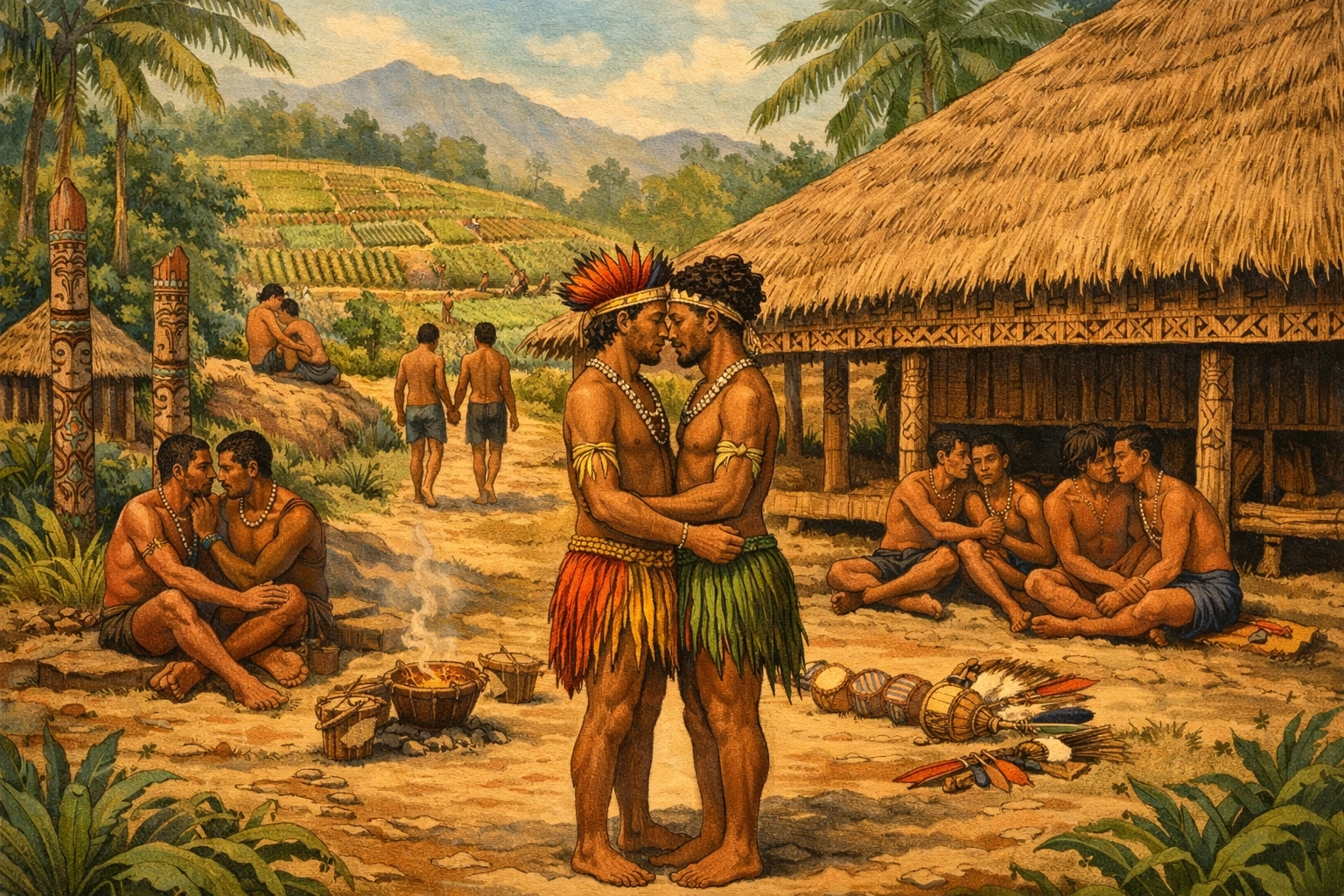
Boys were assigned partners to undergo the ritual process together, creating bonds that would last a lifetime. But here's where it gets even more complex: after completing their initiation, each young man was expected to marry a relative of his partner's family.
This created intricate webs of obligation and kinship that tied families together across generations. Your ritual partner's family became your in-laws. The intimate bonds formed during initiation translated into political alliances, economic cooperation, and mutual support systems that held the community together.
In this way, what outsiders might simplistically call "homosexual behavior" was actually the foundational glue of Etoro social organization: not despite the fact that it didn't lead to reproduction, but because it created social bonds that were separate from and complementary to reproductive relationships.
What the Etoro Tell Us About Ourselves
When Western anthropologists first encountered the Etoro in the mid-20th century, they faced a conceptual crisis. How do you classify a society where same-sex acts are not just tolerated but required? Where they're not "homosexual" in the Western sense at all, but rather a completely different category of human experience?
Some anthropologists tried to avoid the word "homosexual" entirely when describing Etoro practices, arguing that using Western sexual categories imposed alien meanings on indigenous experiences. Others pointed out that this kind of hand-wringing erases the reality of same-sex desire and practice, even when it exists in different cultural contexts.
The truth is probably somewhere in between. The Etoro weren't "gay" in the modern Western sense: they didn't have that identity category. But they did construct a society in which physical and emotional intimacy between men was central, required, and imbued with sacred meaning.
What reading about the Etoro on sites like Read with Pride reminds us is that human sexuality has always been more diverse, more complex, and more culturally variable than we often assume. The rigid categories we use today: gay, straight, bisexual: are recent inventions, products of specific historical moments in Western culture.
The Colonial Encounter and After
Like so many indigenous practices that didn't fit colonial Christian morality, Etoro initiation rituals came under intense pressure from missionaries and government officials as Papua New Guinea was colonized and eventually gained independence.
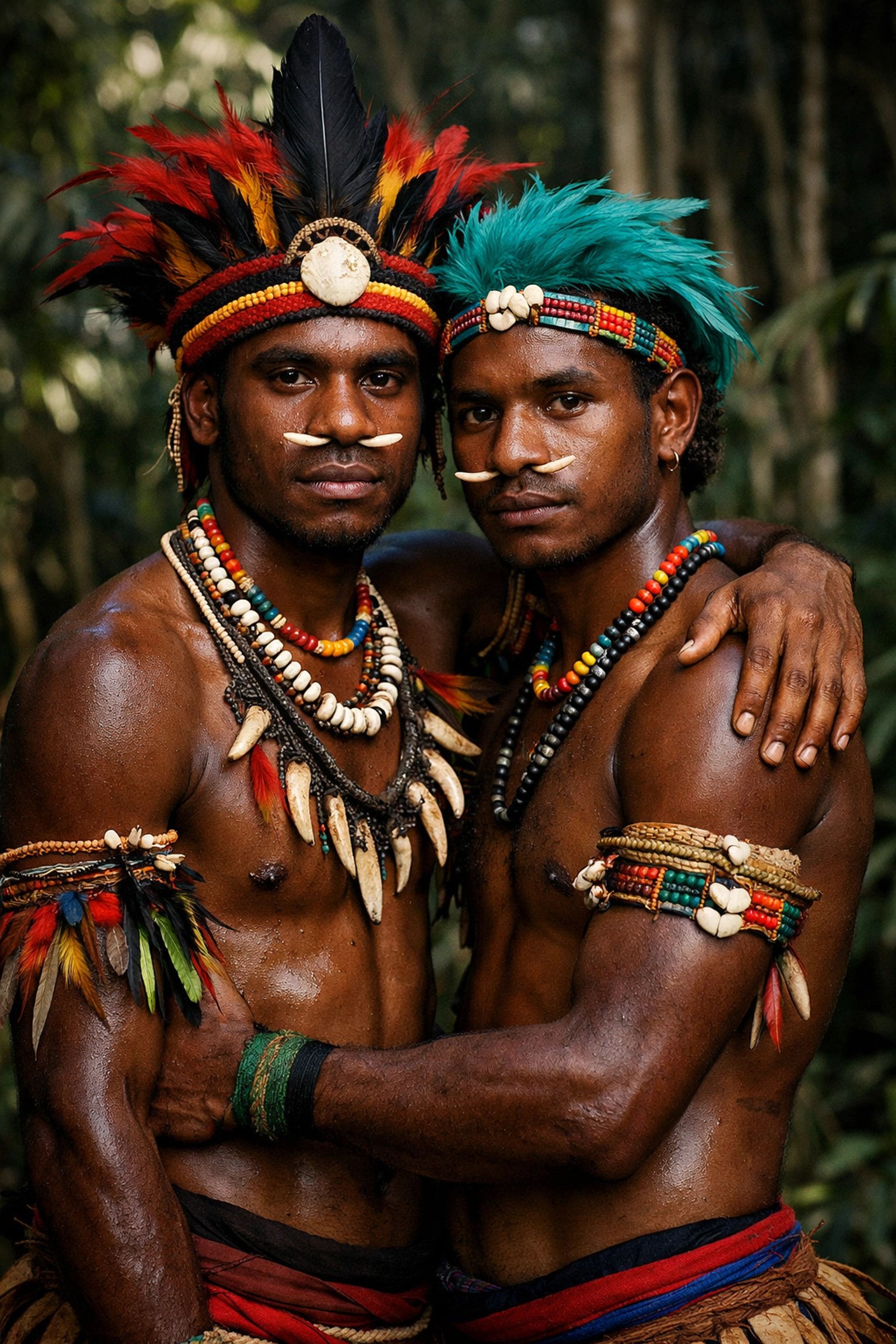
The Australian colonial administration officially banned many traditional practices, including those of the Etoro. Christian missionaries taught that the rituals were sinful and shameful. Young Etoro people increasingly left for cities, were educated in Western schools, and absorbed Western ideas about sexuality and gender.
By the late 20th century, anthropologists reported that the traditional initiation practices had largely disappeared or gone deeply underground. The belief system that once structured Etoro society was rapidly fading, replaced by a strange hybrid of traditional and Western values.
This cultural destruction wasn't neutral or inevitable: it was the result of deliberate policies aimed at "civilizing" indigenous peoples by forcing them to adopt Western Christian sexual norms. The loss of Etoro traditions is part of the larger genocide of indigenous knowledge systems that accompanied European colonialism.
Lessons for Today's Queer Community
So what does a small group of people in the Papua New Guinea highlands have to do with MM romance books or contemporary LGBTQ+ identity?
More than you might think.
The Etoro remind us that the story of queer history isn't just about secret gay bars in 1950s New York or Stonewall or Harvey Milk. It's also about the hundreds of cultures around the world that made space for same-sex desire, gender variance, and non-reproductive sexuality in ways that don't map neatly onto Western categories.
When we only tell Western-centric stories of LGBTQ+ history, we miss the extraordinary diversity of human sexual expression. We also inadvertently suggest that queerness is a modern Western invention: which plays right into the hands of those who claim that LGBTQ+ rights are "colonial impositions" on traditional societies.
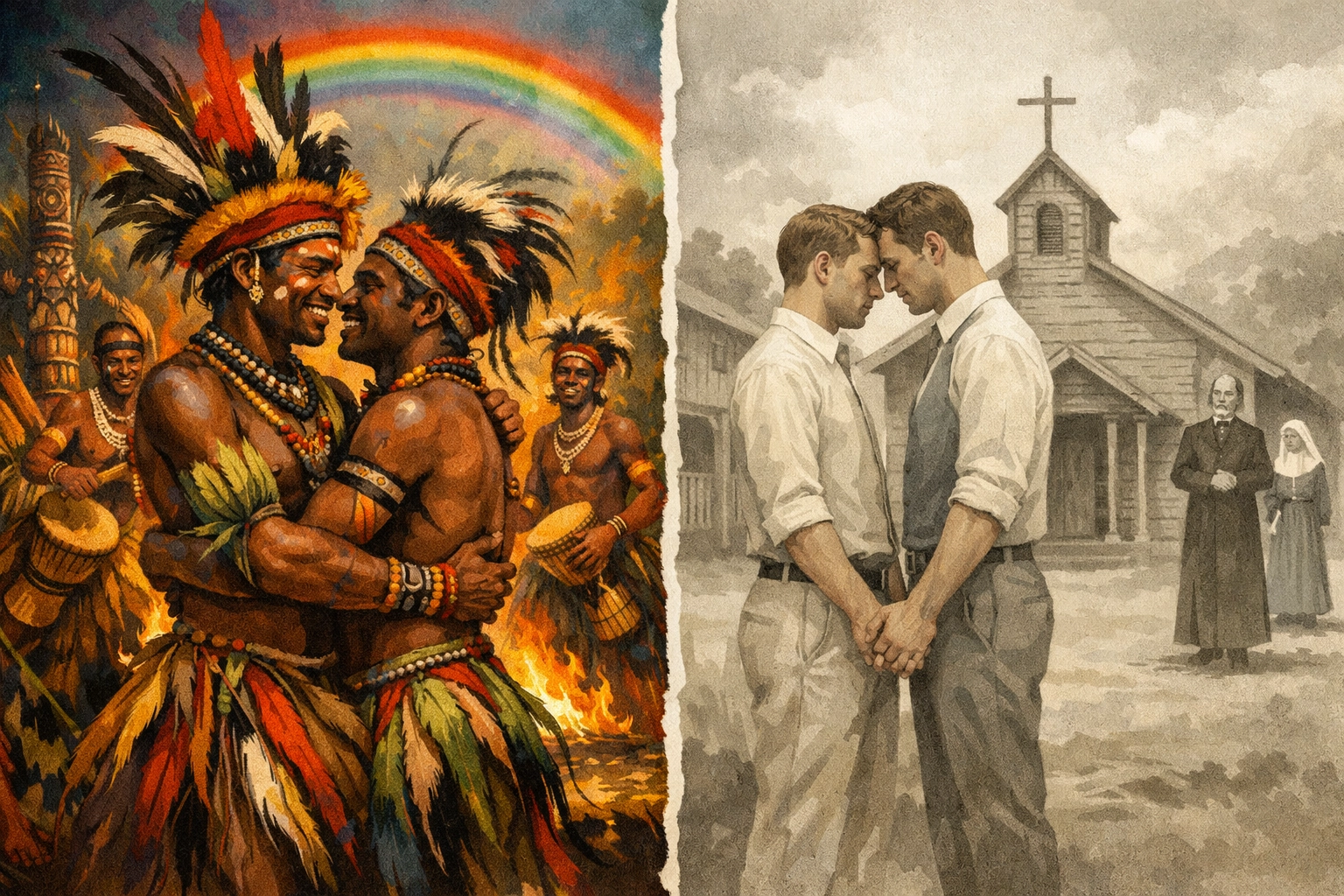
The reality is exactly the opposite. It was colonialism that imposed rigid, binary understandings of gender and sexuality on cultures that had their own complex systems. Indigenous practices like those of the Etoro were suppressed precisely because they didn't fit Christian European norms.
The Ethics of Representation
Writing about the Etoro in 2026 requires walking a careful line. We don't want to exoticize or romanticize indigenous practices as if they exist to validate Western queer identities. The Etoro don't exist to make gay romance readers feel better about ourselves.
At the same time, we can't erase the reality of what the Etoro believed and practiced just because it makes us uncomfortable or doesn't fit our categories. Their practices were real, culturally meaningful, and represent one of countless examples of human sexual diversity.
The best we can do is approach with humility, acknowledge the limits of our understanding, and resist the urge to either claim the Etoro as "just like us" or dismiss them as completely alien and Other.
The Bigger Picture
The Etoro are one small example in a much larger story. From the two-spirit people of various Native American nations to the sworn virgins of Albania, from the hijra of South Asia to the mahu of Hawaii, cultures around the world have created spaces for gender variance and same-sex desire that challenge simplistic narratives about "normal" human sexuality.
When you pick up your next MM romance novel from Read with Pride, remember that you're participating in a tradition of storytelling about love between men that goes back thousands of years and spans every continent. The forms change, the meanings shift, but the fundamental human capacity for same-sex love and desire has always been there.
The Etoro just gave it a particularly fascinating cultural expression: one that reminds us that human creativity in constructing meaning around sex, gender, and intimacy is essentially limitless.
Explore more hidden histories and untold stories from LGBTQ+ communities around the world at Read with Pride. Follow us on Facebook, Instagram, and X for daily content celebrating queer love, history, and literature.
#ReadWithPride #LGBTQHistory #QueerHistory #IndigenousCultures #MMRomance #GayHistory #QueerAnthropology #LGBTQBooks #GayRomanceBooks #QueerStories #HiddenHistory #MMRomanceBooks #GayLiterature #LGBTQCommunity #2026

Leave a Reply
You must be logged in to post a comment.