

readwithpride.com
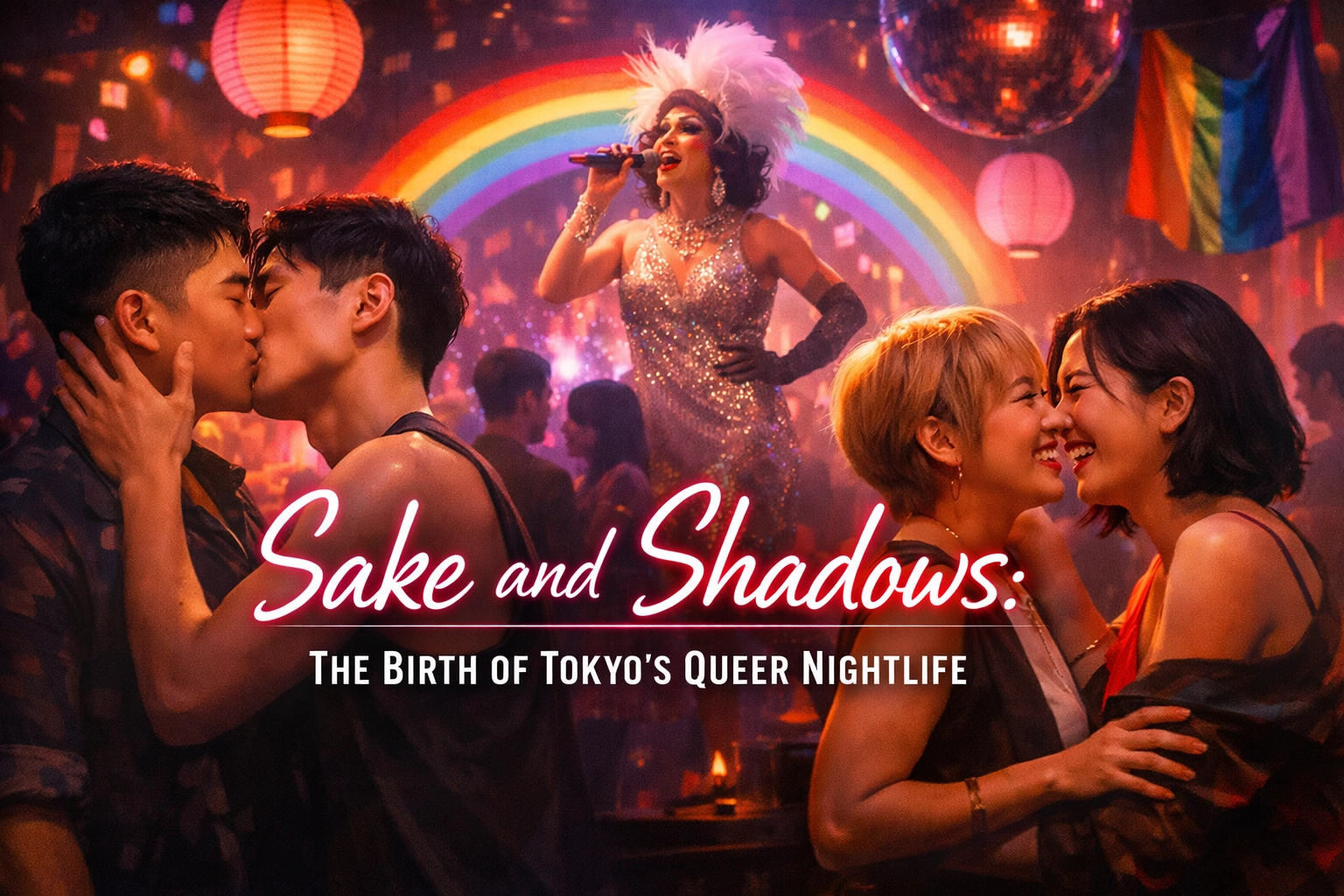
When we think about queer nightlife, we often picture disco balls, thumping bass, and packed dance floors. But in post-war Tokyo, the story unfolded differently: quieter, more intimate, and steeped in the ritual of shared sake cups and whispered conversations. This is the tale of how alcohol became the social lubricant that helped birth one of Asia's most vibrant LGBTQ+ communities, one tiny bar at a time.
The Secret Gardens of Asakusa
Long before Shinjuku Ni-chome became synonymous with Tokyo's gay scene, there was Asakusa. During the 1920s and 1930s, this entertainment district harbored a secret world of gay bars, saunas, and cruising spots tucked behind traditional facades. Imagine the courage it took to slip through a nondescript doorway, heart pounding, seeking connection in a society that demanded invisibility.
These early establishments weren't just about drinking: they were lifelines. In a culture where being openly queer could destroy your family's reputation and your livelihood, these spaces offered something precious: the freedom to breathe, to be seen, to exist without masks. Sake flowed freely, loosening tongues and lowering walls between strangers who shared an unspoken bond.
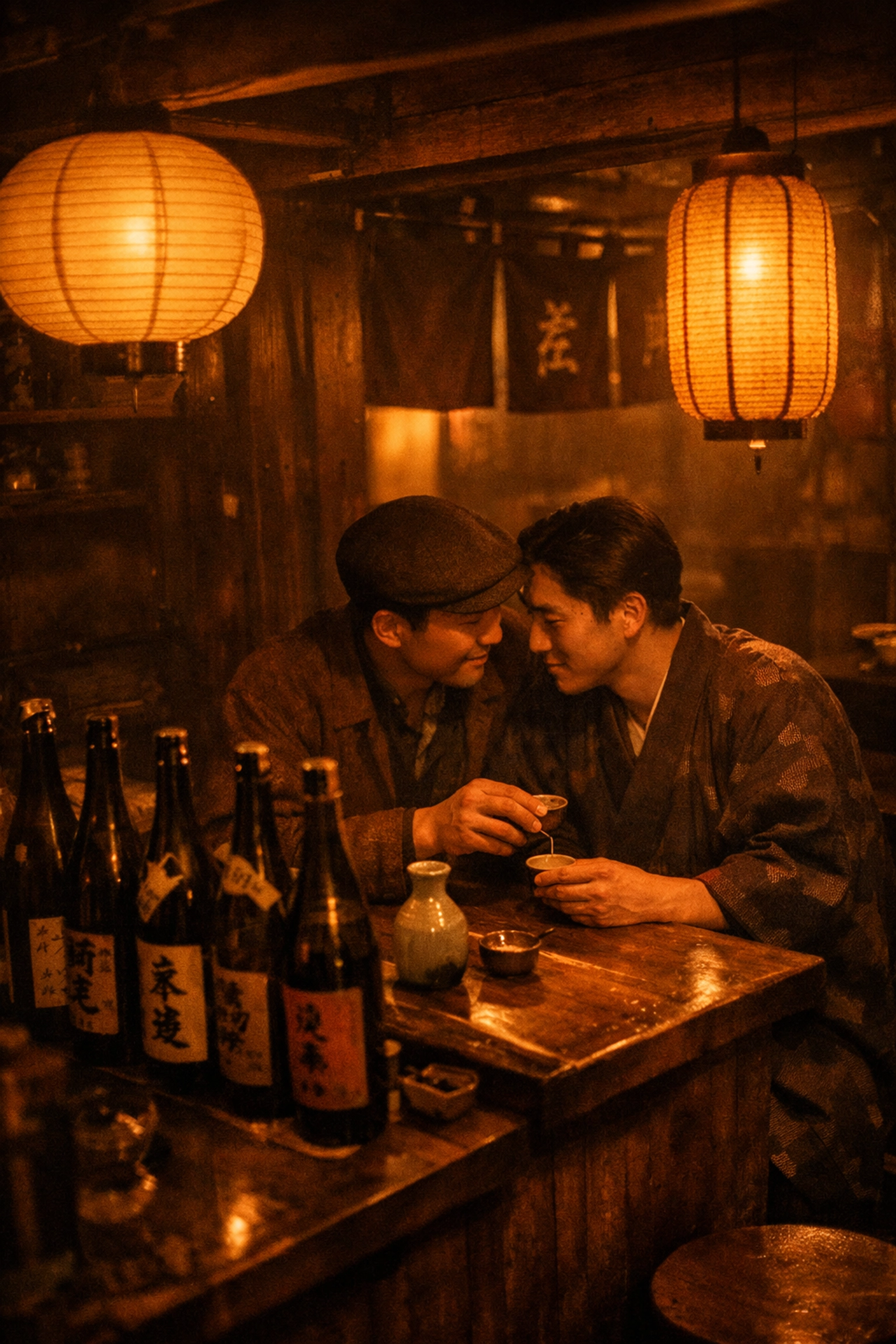
The intimacy of Japanese drinking culture: where sharing a bottle creates obligation and connection: proved perfectly suited for building underground communities. Pouring sake for another person wasn't just hospitality; it was an act of trust, a declaration that in this space, you were among friends.
Post-War Awakening and the Mama Culture
The devastation of World War II paradoxically created openings for Tokyo's queer community. As the city rebuilt itself from rubble, new spaces emerged in the chaos. The American occupation brought Western influences, but more importantly, it brought disruption to traditional social structures: and in that disruption, there was room to maneuver.
This era saw the evolution of the quintessentially Japanese gay bar: small, intimate spaces presided over by a "mama": usually a charismatic owner who served as social conductor, therapist, matchmaker, and fierce protector all rolled into one. Unlike Western gay clubs with their dance floors and anonymity, these bars seated maybe ten people at most, creating what felt more like a family living room than a nightclub.
The mama would pour your drink, remember your troubles from last week, introduce you to potential friends or lovers, and enforce an unspoken code of conduct that kept everyone safe. These weren't places you went to get drunk and forget: they were places you went to remember who you really were.

Alcohol served multiple functions in this ecosystem. Socially, drinking together legitimized gathering. In Japanese business and social culture, drinking was (and remains) an acceptable reason for men to spend intimate time together. Two salarymen could share a bottle and conversation late into the night without raising eyebrows: plausible deniability wrapped in tradition.
But beyond the social cover, alcohol also helped navigate the emotional complexity of living a double life. The ritual of drinking offered a transition zone between the straight world outside and the queer sanctuary within. That first sip marked the beginning of transformation, permission to let your guard down.
The Rise of Shinjuku Ni-chome
By the 1970s and 1980s, Tokyo's queer nightlife had found its permanent home in Shinjuku Ni-chome. This neighborhood became what some called a "gay village," though that term never quite captured the Japanese reality. Rather than one big community, Ni-chome was (and is) a constellation of tiny bars, each with its own mama, its own regulars, its own unwritten rules.
At its peak, over 100 establishments crowded into this small area: gay bars, lesbian bars, drag bars, karaoke bars, and everything in between. The sheer density created a kind of safety in numbers. You could be openly queer in Ni-chome because everyone around you was queer too. The neighborhood itself became a declaration.

The drinking culture in these spaces developed its own rituals and rhythms. Many bars operated on a "bottle keep" system: you'd buy a bottle of whisky, shochu, or sake that would be kept behind the bar with your name on it, guaranteeing you'd return. It created regulars, built loyalty, and fostered the kind of ongoing relationships that transformed customers into family.
Nights in Ni-chome followed a pattern. You'd start at your regular bar, where the mama knew your drink order and would catch you up on neighborhood gossip. After an hour or two, you might hop to another bar to meet new people, then perhaps another. The bar-hopping culture wasn't about getting wasted: it was about weaving connections across the community, one drink at a time.
The Double Edge of Tradition
But let's be real: alcohol culture in Japan's queer community wasn't all heartwarming connection and found family. The same drinking traditions that built community also carried darker shadows.
For many, alcohol became a coping mechanism for living in the closet. The pressure of maintaining a straight persona during the day while only accessing your authentic self at night, lubricated by alcohol, took its toll. Addiction issues ran through the community, though rarely discussed openly. The line between social drinking and self-medication could blur dangerously fast.
The bar culture also had exclusionary aspects. Many establishments, particularly in Ni-chome, maintained strict policies about who could enter: foreign tourists often faced rejection, as did transgender individuals, women in gay male spaces, and anyone who didn't fit narrow definitions of "gay" or "lesbian." The intimacy that made these spaces special could also make them insular and unwelcoming.
Money became a barrier too. Regular bar attendance wasn't cheap, especially with bottle keep systems and social expectations around buying drinks for others. Working-class queer people, students, and those without disposable income found themselves on the outside looking in, unable to access the community that supposedly existed for all LGBTQ+ people.
Beyond the Bottle
It's worth noting that while alcohol defined much of Tokyo's queer social scene, it wasn't the only story. Cruising spots in parks, public baths, and other non-alcoholic spaces provided alternatives, though these came with their own risks and limitations. The first Lesbian and Gay Parade in 1994 marked a shift toward more public, sober visibility.
Contemporary Tokyo has seen the emergence of alternative spaces that challenge the traditional bar culture. Coffee shops, bookstores, community centers, and outdoor events now offer ways to connect without requiring alcohol as the social adhesive. Clubs like Department H, founded in 1993, created space for kink and fetish communities, while newer venues like Waifu (2019) responded to the exclusionary practices of traditional bars by centering trans and non-binary folks.

Yet even as options diversify, the little bars of Ni-chome persist, mama-san still pouring drinks and creating sanctuary. For many Tokyo LGBTQ+ people, these spaces remain irreplaceable: not despite their quirks and limitations, but somehow because of them. They're imperfect, exclusionary, sometimes problematic, and yet they've saved countless lives simply by existing.
What We Can Learn
Tokyo's story reminds us that queer community formation looks different across cultures. While Western LGBTQ+ history often focuses on political activism and public pride, Tokyo's path centered on creating intimate, private spaces where authenticity could flourish away from public gaze.
The role of alcohol in this history is complicated: simultaneously liberating and limiting, community-building and exclusionary, medicinal and harmful. It's a reminder that our tools for survival under oppression are rarely clean or simple.
For readers exploring LGBTQ+ history and queer fiction at Read with Pride, understanding these diverse pathways matters. Not every liberation story looks like Stonewall. Sometimes revolution happens quietly, one sake cup at a time, in spaces small enough to hold only ten people but large enough to contain infinite possibilities.
The legacy of those post-war bars lives on: in the mamas still pouring drinks, in the regulars still returning to their favorite spots, and in every person who finds the courage to walk through an unmarked door seeking connection. That's worth raising a glass to.
Discover more compelling LGBTQ+ stories and MM romance books that explore queer history and community across cultures at readwithpride.com
Follow us: Facebook | Instagram | Twitter/X
#LGBTQHistory #QueerTokyo #GayJapan #MMRomance #ReadWithPride #QueerFiction #LGBTQBooks #GayRomanceBooks #QueerCommunity #LGBTQCulture #HistoricalLGBTQ #GayLiterature #QueerReading #ShinjukuNichome #TokyoNightlife #LGBTQJapan #GayBooks2026 #MMRomanceBooks #LGBTQReading #QueerHistory

Leave a Reply
You must be logged in to post a comment.