

readwithpride.com
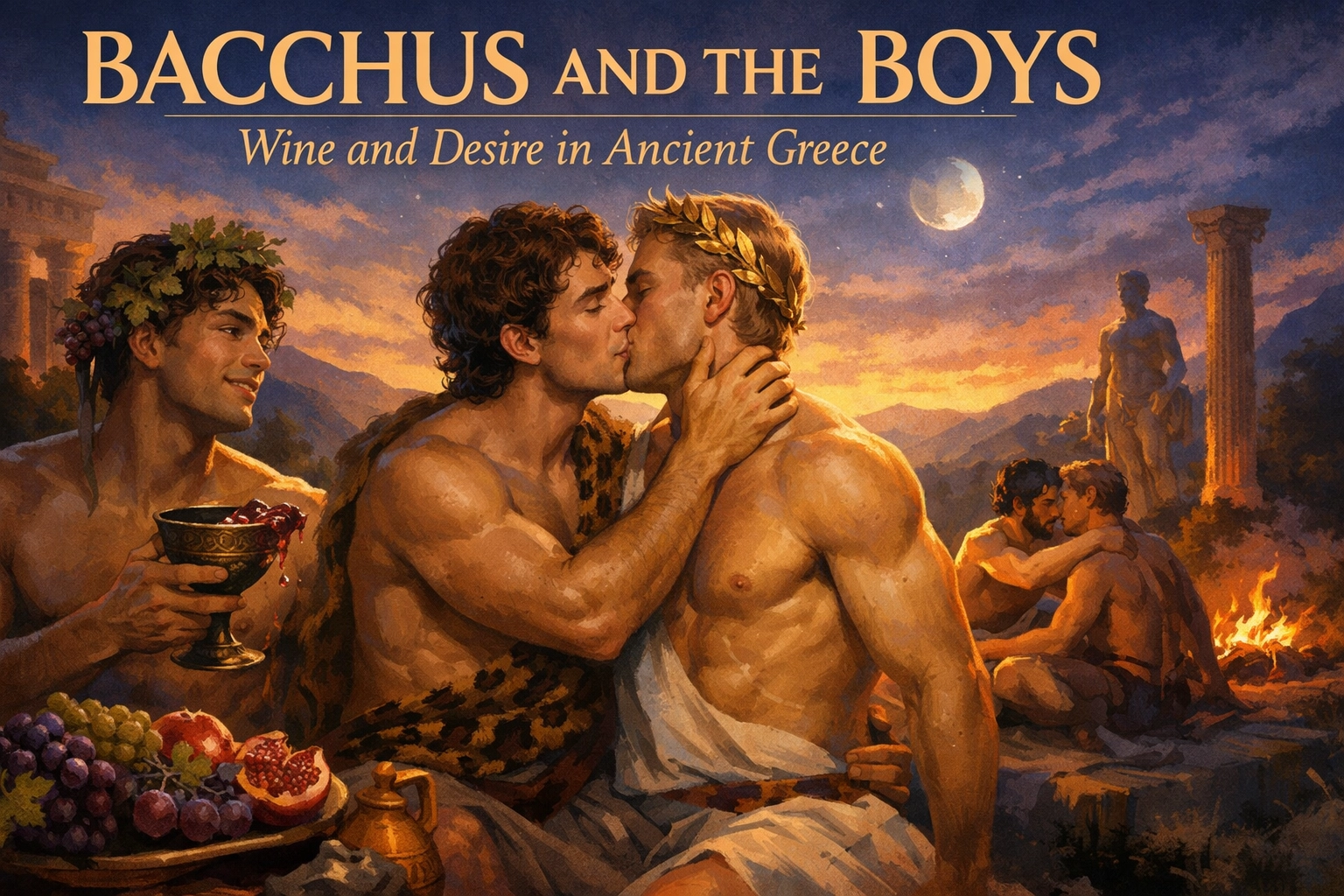
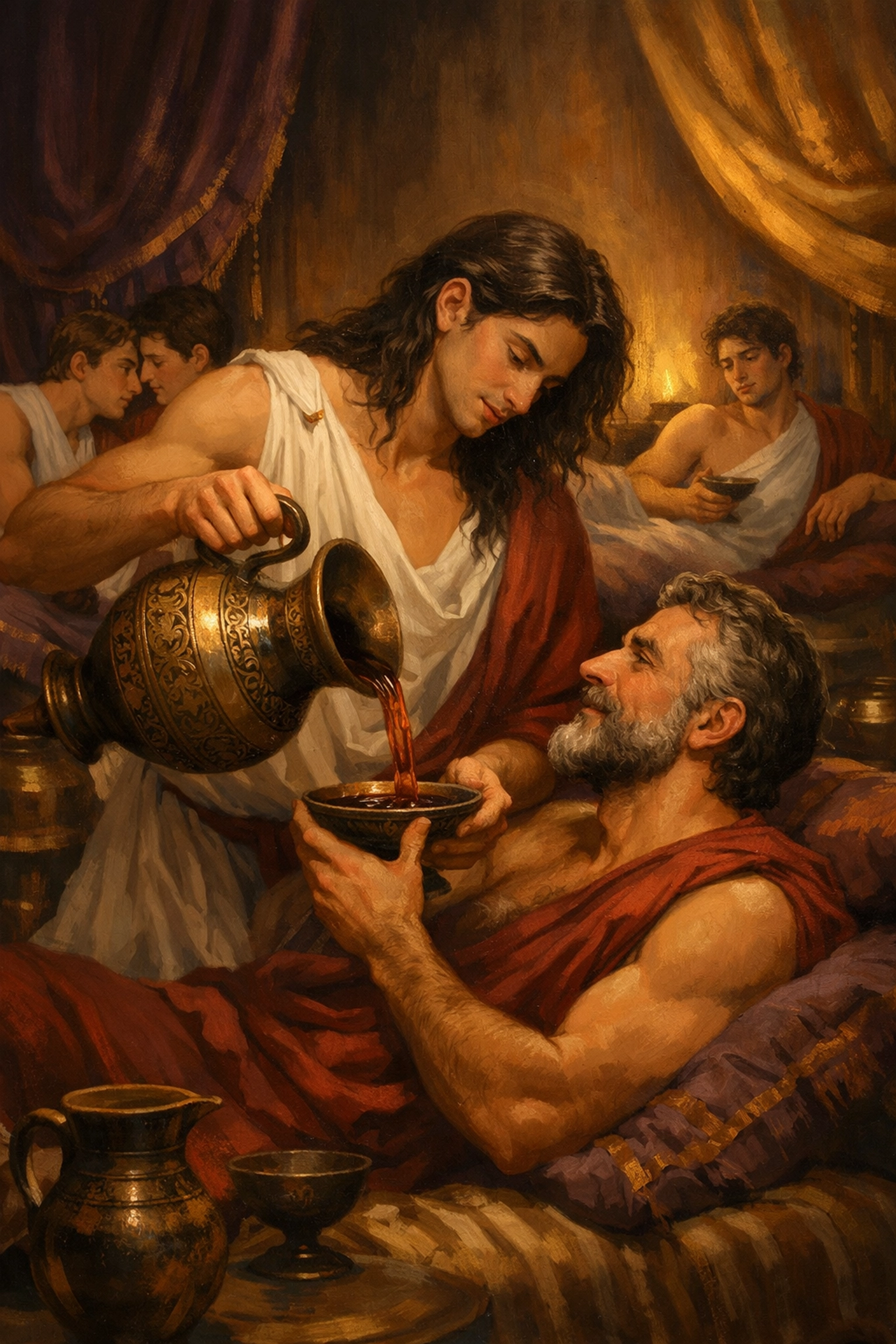
Picture this: It's Athens, around 400 BCE. The sun has set, and you're reclining on a cushioned couch in a dimly lit room. A young man pours wine into your cup, not straight, because that would be barbaric, but mixed with water in just the right proportion. Around you, other men recline, talking philosophy, reciting poetry, and yes, flirting shamelessly. Welcome to the symposium, ancient Greece's answer to the cocktail party, where wine flowed freely and desire knew few boundaries.
The Symposium: More Than Just a Dinner Party
The Greek symposium wasn't your average dinner party. After the meal ended (that was the deipnon), the real fun began. The symposium was exclusively male, sorry, ladies, and it was where Athens's elite gathered to drink, debate, and explore the full spectrum of human connection. These weren't wild frat parties (well, not always), but carefully orchestrated social rituals where wine served as both social lubricant and sacred offering.
The god presiding over these gatherings? Dionysus, whom the Romans would later call Bacchus. This wasn't the bearded, stern deity you might imagine. Dionysus was depicted as youthful and beautiful, sometimes effeminate, with long flowing hair and an almost androgynous appeal. He embodied the breaking down of boundaries, between male and female, human and divine, restraint and ecstasy.
Wine, the Great Equalizer
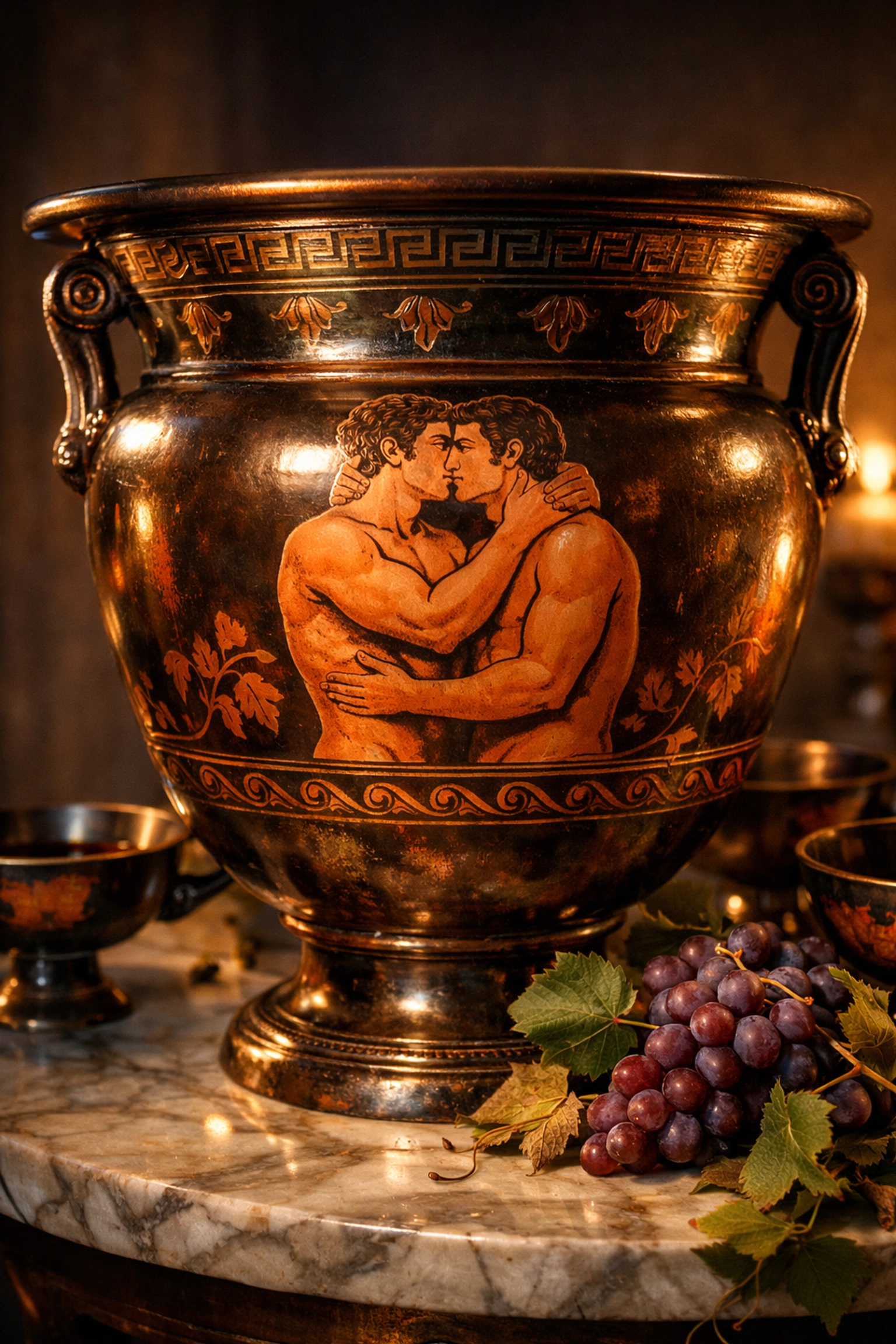
In ancient Greece, wine wasn't just a beverage, it was a cultural cornerstone. But they had rules. Drinking wine unmixed (akratos) was considered the mark of a barbarian. Instead, Greeks carefully mixed their wine with water in a large vessel called a krater, with ratios ranging from one part wine to three parts water, to equal measures for a stronger effect.
The symposiarch, or master of ceremonies, decided the wine-to-water ratio for the evening, essentially controlling how wild things would get. This person held enormous social power, they could keep things civilized or let them spiral into Dionysian chaos. And chaos, let's be honest, often won.
The symposium created a space where social hierarchies blurred. While Greek society was rigidly stratified, wine and the symposium's intimate setting allowed for interactions that would be impossible in the harsh light of day. Wealthy citizens reclined alongside philosophers, poets, and their younger companions, all united in the worship of Dionysus and the pursuit of pleasure.
The Erastes and Eromenos
Here's where things get interesting for our queer history. The symposium was a primary venue for pederastic relationships, specifically, the bond between an older man (erastes) and a younger one (eromenos). Before you bristle, let's be clear: we're looking at this through a historical lens, not endorsing anything that wouldn't fly in 2026.
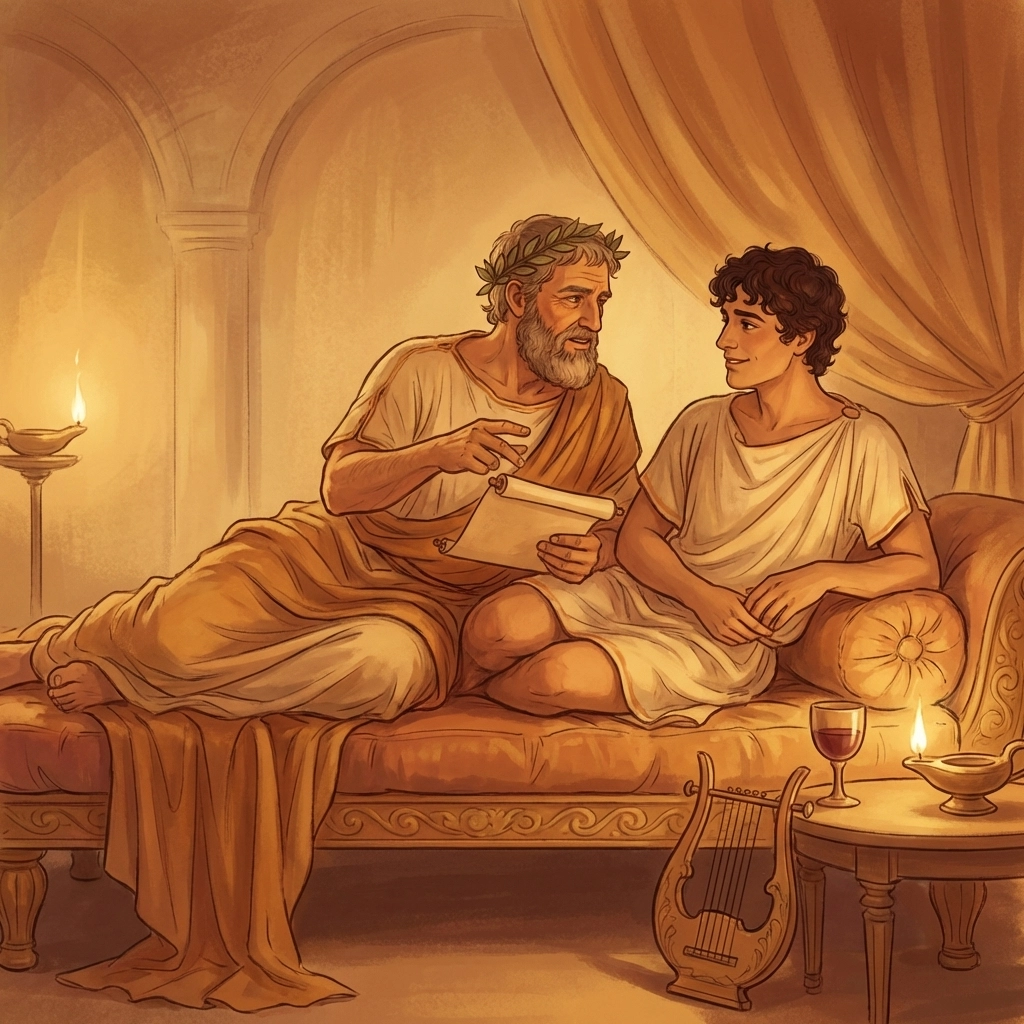
In ancient Athens, these relationships were socially sanctioned and even idealized. The older man was expected to be the pursuer, the mentor, the one who would guide the younger man through education, philosophy, and yes, physical pleasure. The younger man was typically in his late teens or early twenties, basically, young adults by ancient standards.
The symposium provided the perfect setting for these courtships. Wine loosened tongues and lowered inhibitions. Poetry was recited, much of it explicitly homoerotic. Plato's "Symposium," one of the most famous philosophical texts from this era, is literally a dialogue about love that takes place at one of these wine-soaked gatherings. Spoiler alert: much of the discussion centers on love between men.
Dionysian Ecstasy and Transgression
Dionysus wasn't just about wine, he represented ecstasy, transgression, and the dissolution of normal social rules. His worship was radical. While most Greek religion was about maintaining order, Dionysian ritual was about losing yourself entirely. His followers, the maenads and satyrs, were depicted in art as wild, dancing, and utterly free from conventional morality.
The god himself blurred gender lines. Ancient sources describe him as beautiful but effeminate, challenging the rigid masculinity expected of Greek men. In a society obsessed with being the active, dominant partner in any relationship, Dionysus represented something more fluid, more transgressive.
During symposia dedicated to Dionysus, this transgression became collective. Men who normally maintained strict social facades could let loose. The wine wasn't just alcohol, it was a sacrament that connected them to divine madness, to a state where desire could be expressed more freely.
The Kottabos and Other Games
Not everything at a symposium was heavy philosophy and profound desire. Greeks knew how to have fun. Enter kottabos, a drinking game where participants flicked wine dregs from their cups at a target, often dedicating their throw to the object of their affection. Imagine beer pong, but make it ancient and intensely romantic.
"This one's for Alcibiades," you might declare, before attempting to hit a balanced disc with your wine dregs. Success meant your beloved would return your feelings. Failure meant… well, probably just mockery from your fellow symposiasts and another cup of wine.
These games served a purpose beyond entertainment. They were socially acceptable ways to declare interest, to flirt publicly, and to test the waters of desire. In a culture where direct declaration might be seen as too forward, kottabos offered plausible deniability wrapped in ritual and play.
The Morning After
Not every symposium ended in philosophical enlightenment or romantic bliss. Greek pottery and literature are full of images showing the less glamorous side: men vomiting, passing out, or being carried home by slaves. The playwright Aristophanes regularly mocked symposiasts for their excess.
But even the hangovers were part of the culture. The symposium represented a release valve in a society with strict social codes. For a few hours, fueled by Dionysus's gift, men could express desires, form bonds, and experience intimacy that daylight society often forbade or constrained.
Why This Matters for Modern Queer History
Understanding ancient Greek symposia matters because it challenges the narrative that same-sex desire is a modern phenomenon or a deviation from historical norms. These weren't hidden, shameful affairs, they were central to elite Greek culture. Yes, they had different rules and structures than modern relationships, but the essential truth remains: desire between men has been celebrated, ritualized, and honored throughout history.
For those of us looking for gay historical romance or exploring queer stories across time, ancient Greece offers a treasure trove. It reminds us that wine, desire, and male bonding have been intertwined for millennia. The symposium was a space where philosophy and pleasure, wine and wisdom, all flowed together under Dionysus's watchful, knowing eye.
Raising a Glass to the Past
So next time you're at a party with a drink in hand, surrounded by friends and feeling that warm buzz of connection, think of those ancient symposiasts. They were doing the same thing over two millennia ago: using wine as a bridge between people, as a key to unlock deeper truths and desires.
The Greeks understood something we're still learning: that pleasure and philosophy aren't opposites, that desire and intellectualism can coexist, and that sometimes the best conversations happen when inhibitions are lowered and wine cups are full.
Here's to Bacchus and the boys: may we continue their tradition of mixing wine, wisdom, and a healthy appreciation for beauty in all its forms.
Looking for more queer historical stories and MM romance books that explore desire across time? Visit us at readwithpride.com for the best LGBTQ+ fiction and gay romance novels that celebrate our diverse history.
Follow us on social media:
- Facebook: facebook.com/profile.php?id=61586883027069
- Instagram: @read.withpride
- X/Twitter: @Read_With_Pride
#ReadWithPride #LGBTQHistory #AncientGreece #QueerHistory #GayRomance #MMRomance #HistoricalQueer #GreekHistory #DionysusWorship #QueerFiction #GayLiterature #LGBTQBooks #MMRomanceBooks #HistoricalGayRomance #QueerReading #GayBooks2026 #LGBTQReading #PrideReading #AuthenticQueerStories #GayHistoricalFiction

Leave a Reply
You must be logged in to post a comment.