

readwithpride.com
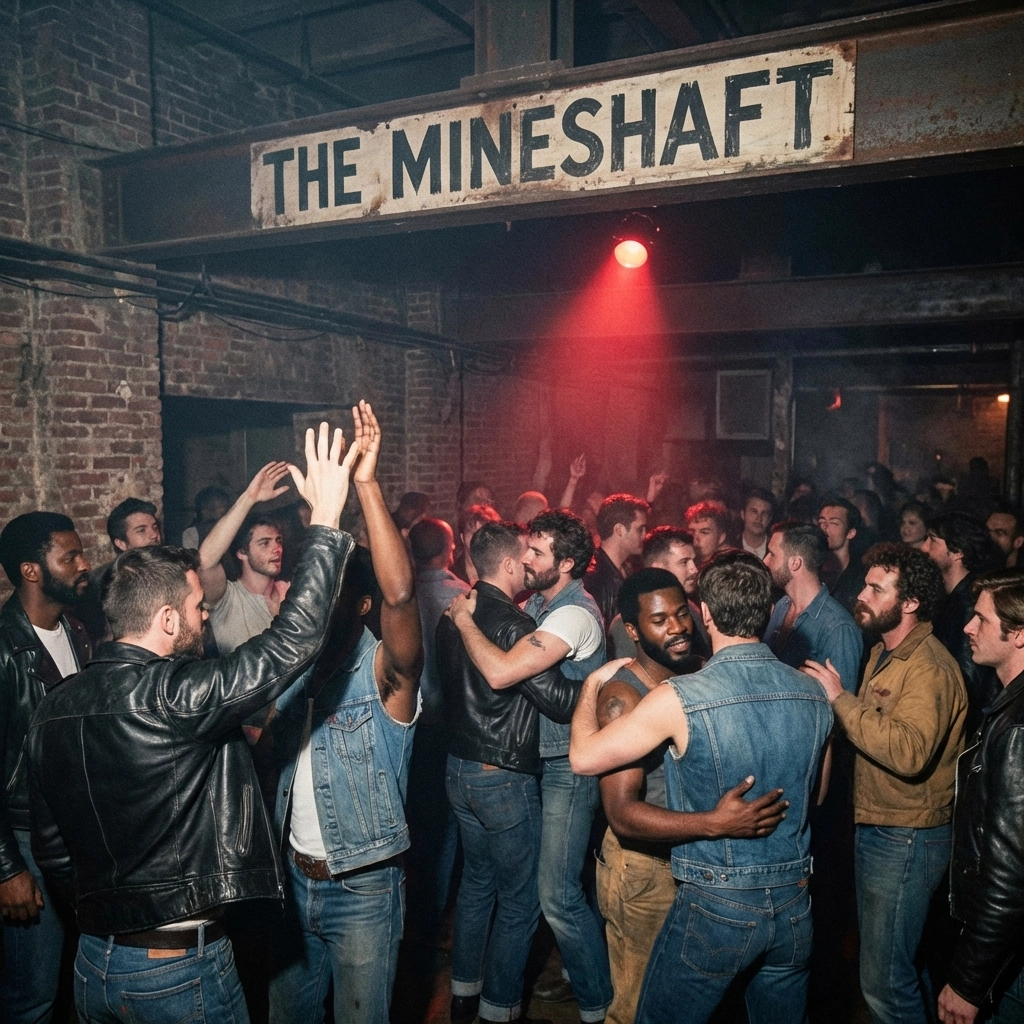
If you showed up at 835 Washington Street in Manhattan's Meatpacking District between 1976 and 1985 wearing a button-down shirt and khakis, you weren't getting in. Splash on some cologne? Forget about it. The Mineshaft wasn't just particular about who walked through its unmarked doors, it was downright militant about it. And that's exactly what made it legendary.
Welcome to a time when cruising bars weren't just about hooking up. They were about identity, liberation, and creating spaces where gay men could be exactly who they wanted to be, dress codes and all.
The Door Policy That Changed Everything
The Mineshaft opened its doors on October 8, 1976, and immediately established itself as the anti-establishment establishment. There was no neon sign, no rainbow flag, not even a discrete placard. If you knew, you knew. And if you didn't? Well, you probably wouldn't make it past the doorman anyway.
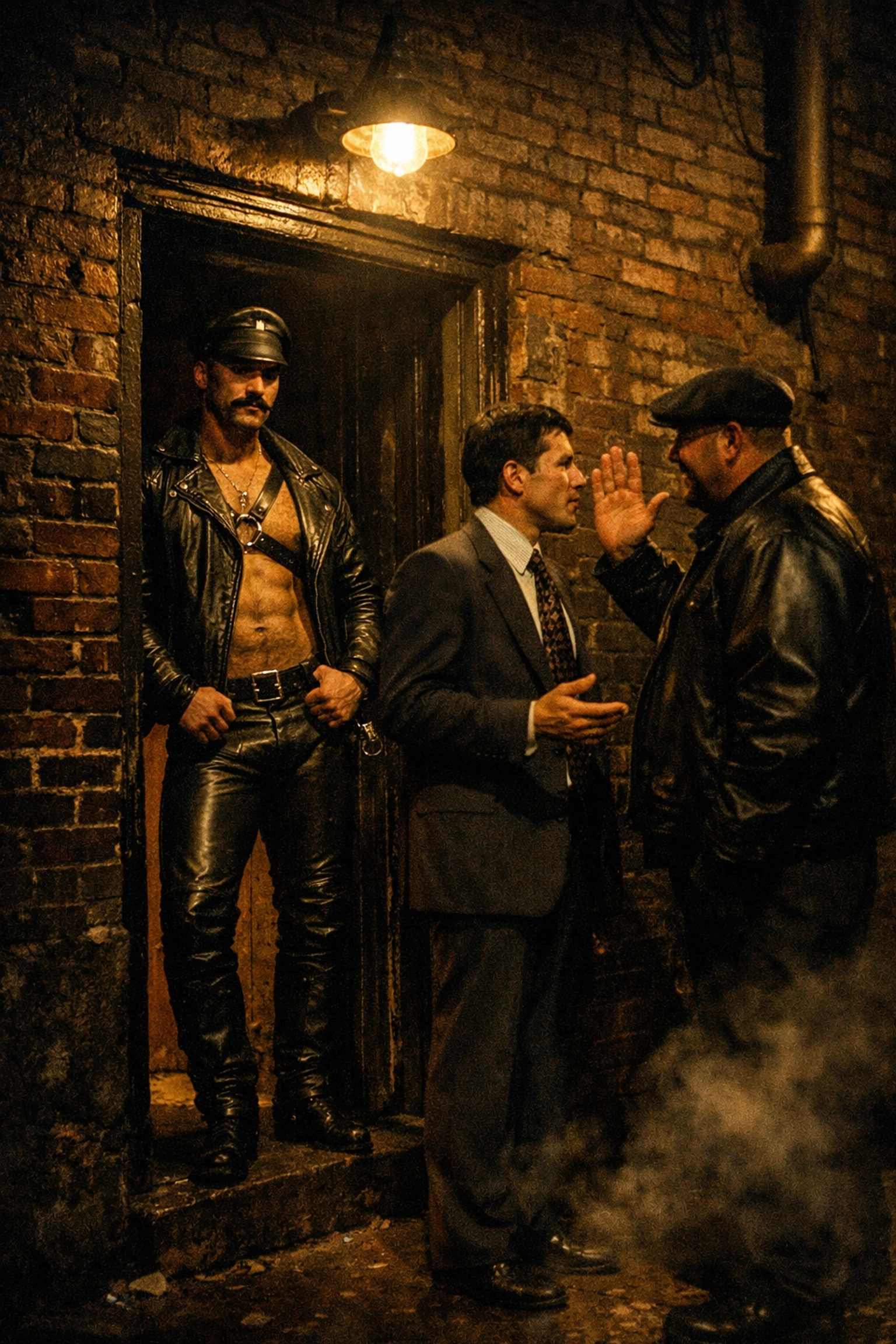
Manager Wally Wallace ran the place with an iron fist wrapped in leather. The rules were simple but strict: no cologne, no business attire, no preppie clothes. You could show up in full leather gear, jockstraps, harnesses, or, if the mood struck, pretty much nothing at all. The only legal requirement? Shoes. Because apparently, the New York City fire code drew the line at complete nudity from the ankles down.
The cologne ban wasn't arbitrary pickiness. Wallace wanted the club to maintain what he called a "natural, musky smell", the scent of bodies, sweat, and raw masculinity. In an era when gay men were constantly told to hide, sanitize, and make themselves palatable to straight society, the Mineshaft said: bring your authentic self, smell and all.
Originally, Wallace envisioned a strict leather-only dress code. But when he realized many of his younger patrons couldn't afford full leather outfits, those jackets, chaps, and harnesses didn't come cheap, he relaxed the rules. What mattered wasn't what you wore, but what you weren't wearing: anything that smacked of the corporate, straight world outside those walls.
Inside the Beast
Once you made it past the gauntlet of the door staff, you entered another dimension. The Mineshaft eventually expanded to multiple floors, accommodating up to 1,000 men on peak nights. And those men weren't there for polite conversation over appletinis.
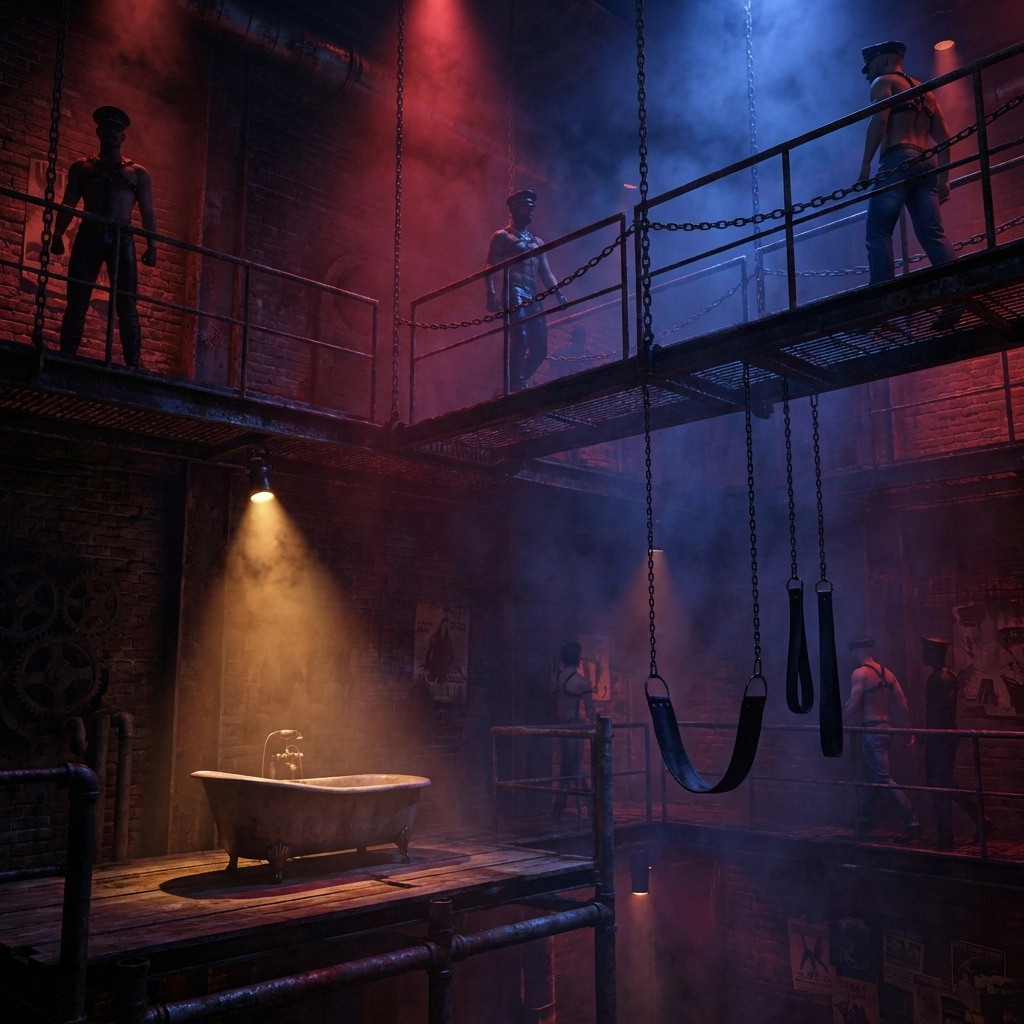
The layout was deliberately designed for exploration and adventure. There were areas styled like jail cells, the back of a truck, and dungeons that would make a medieval castle jealous. Slings hung from ceilings. Spotlighted bathtubs became stages for impromptu performances. A wall of glory holes offered anonymous encounters. The upper floor housed a bar area, though technically, no alcohol was sold to avoid certain legal complications, and a roof deck where you could catch your breath under the Manhattan stars.
Clothes check was standard. After all, when you're planning on not wearing much, you don't want to worry about where you left your keys.
The sexual liberation movement of the 1970s found its physical manifestation in spaces like the Mineshaft. This was pre-AIDS, pre-crackdown, pre-fear. As Wallace later recalled, "Before AIDS, there were a good four or five years when people were pretty wild and abandoned." It wasn't recklessness, it was freedom. For many gay men, especially those exploring BDSM and leather culture, the Mineshaft was one of the few places where they could be completely honest about their desires.
More Than Just Sex
Here's what often gets lost in the scandalous stories and shocked reactions: the Mineshaft was also a community center. The club hosted fundraisers, cultural events, and gatherings for leather groups. The annual "Criscomas Party" featured a bodypainting contest that became a beloved tradition. (Yes, that's Crisco, not Christmas: and if you're confused, let's just say vegetable shortening had multiple uses in the 1970s gay community.)
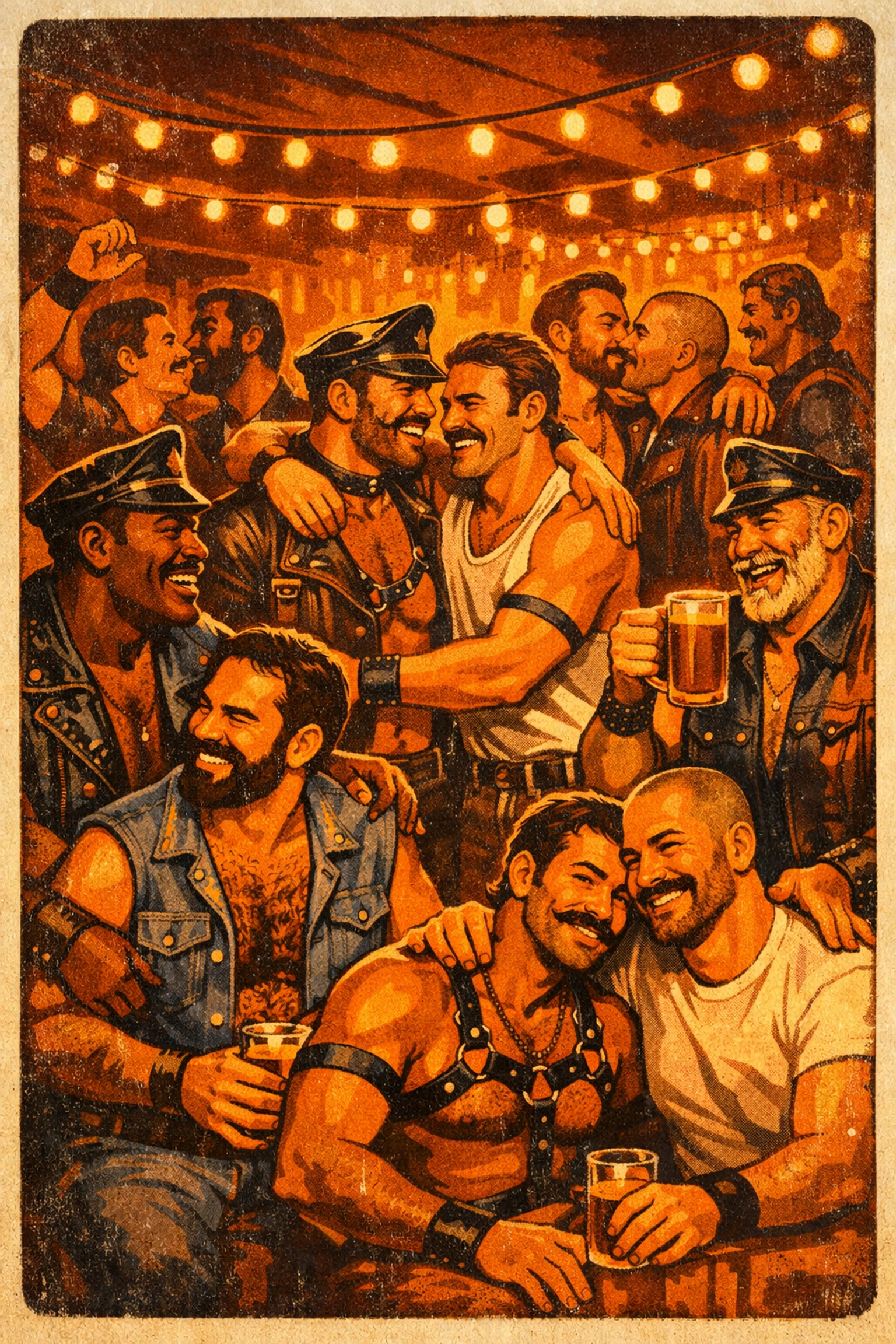
Well-known leather organizations made the Mineshaft their unofficial headquarters. It was where friendships formed, where mentors taught newcomers the ropes (sometimes literally), and where a whole subculture flourished. The leather community wasn't just about sex: it was about brotherhood, ritual, and creating chosen family in a world that often rejected biological ones.
The Mineshaft competed with other legendary spots like the Anvil and the Eagle, but it carved out its own niche by being uncompromising in its vision. While other bars tried to appeal to broader audiences, the Mineshaft said: we know exactly who we are, and if you're not into it, there's the door (that you won't get through anyway).
The Beginning of the End
The party couldn't last forever. By the early 1980s, whispers of a "gay cancer" were circulating through the community. Those whispers became screams. AIDS devastated the gay community, and the sexual liberation that defined places like the Mineshaft suddenly seemed dangerous, even deadly.
On November 7, 1985, the New York City Department of Health declared the Mineshaft a public nuisance and shut it down. It was the first gay establishment to close during the 1980s health crackdown. While tax problems also contributed to the closure, the timing was clear: an era was ending.
The closure of the Mineshaft represented more than just one bar shutting its doors. It symbolized the end of a certain kind of innocence, a certain kind of freedom that the gay community would never quite reclaim in the same way. The leather scene would continue, cruising would evolve, but that particular moment in time: when 1,000 men could gather in an unmarked building in the Meatpacking District and be completely, utterly free: that was gone.
The Legacy Lives On
Today, the Meatpacking District looks nothing like it did in the 1970s. High-end boutiques, trendy restaurants, and luxury hotels occupy the spaces where men once gathered in leather and denim. The building at 835 Washington Street has been renovated beyond recognition.
But the spirit of the Mineshaft: the insistence on authentic spaces, the celebration of sexual diversity, the understanding that sometimes the most radical thing you can do is refuse to make yourself palatable: that lives on in gay culture today. Every time a queer space enforces a dress code, every time we create our own rules instead of following society's, every time we prioritize community over commercialization, we're channeling a little bit of the Mineshaft's energy.
The strict door policy that once seemed exclusionary was actually protecting something precious: a space where gay men, particularly those interested in leather and BDSM, could be completely themselves without judgment or modification. In a world that constantly asked gay people to tone it down, cover it up, and make themselves smaller, the Mineshaft said: no suits allowed. Bring your whole self or don't come at all.
For those who experienced it, the Mineshaft remains a sacred memory: a time when the community created something wild, free, and uniquely their own. And for those of us who only know it through stories and histories, it's a reminder of what's possible when we refuse to compromise on creating the spaces we need.
The Mineshaft may be gone, but its influence on gay culture, MM romance, and LGBTQ+ storytelling continues. It's in the leather bars that still operate around the world, in the pride we take in our diverse desires, and in every story we tell about refusing to conform.
Looking for more LGBTQ+ stories and content? Explore our collection of gay romance books and MM fiction at readwithpride.com: where authentic queer narratives come alive.
Follow us on social media:
- Facebook: Read with Pride
- Instagram: @read.withpride
- X/Twitter: @Read_With_Pride
#ReadWithPride #LGBTQHistory #GayCulture #LeatherCulture #QueerHistory #NYCHistory #MineshaftBar #GayBars #CruisingCulture #1970sGayLife #LeatherCommunity #QueerSpaces #GayLiberation #MMRomance #GayRomanceBooks #LGBTQBooks #QueerFiction #GayFiction #AuthenticQueer #BDSMHistory #MeatpackingDistrict #GayNYC #LGBTQCommunity #QueerPride #GayPride #HistoricalLGBTQ

Leave a Reply
You must be logged in to post a comment.