

readwithpride.com
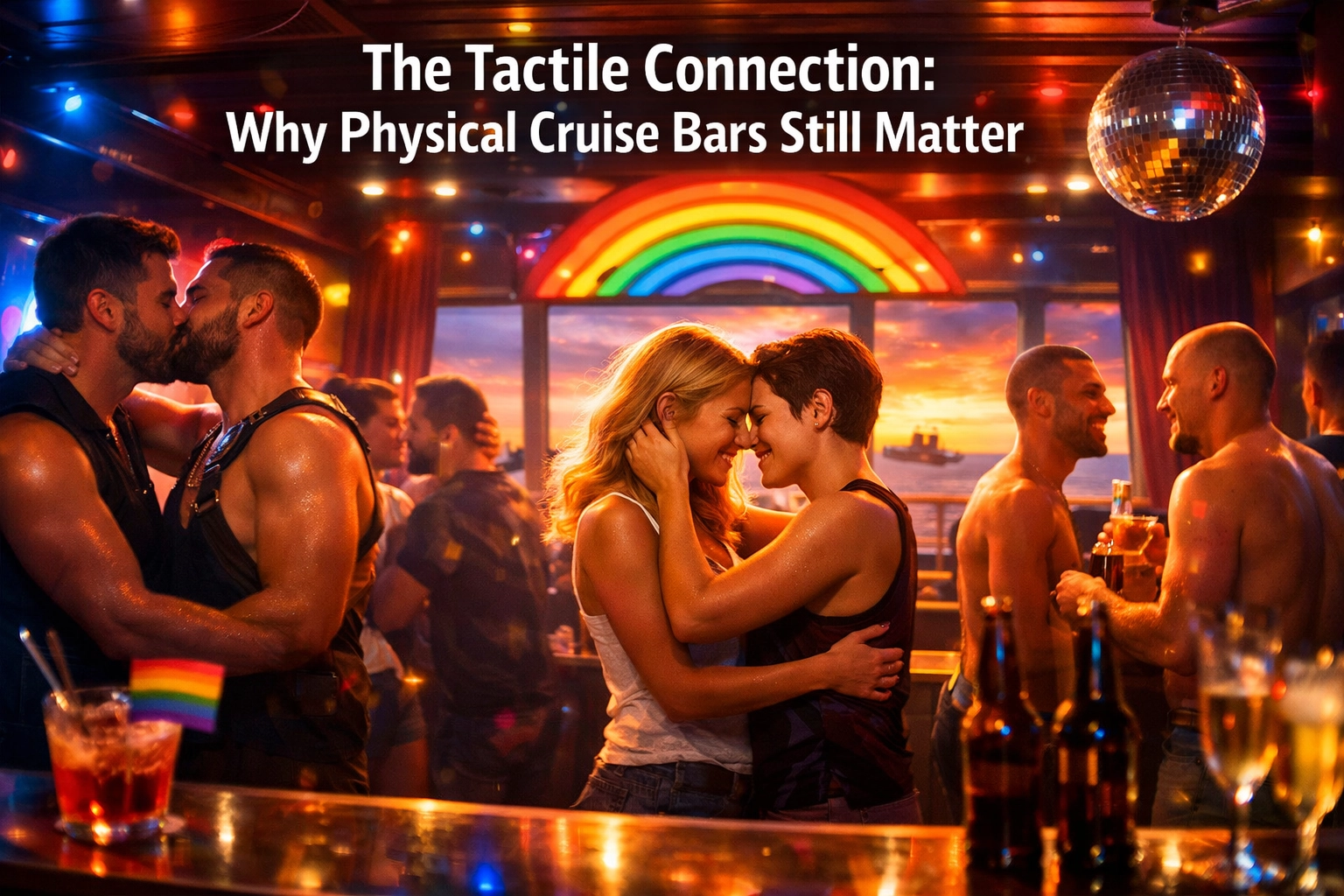
Let's be real, when you can swipe right from your sofa in your underwear at 2 AM, why would anyone put on jeans and venture into a dimly lit bar that smells like beer and cologne? It's a fair question in 2026, when apps like Grindr and Scruff have literally put connection at our fingertips. Yet cruise bars, those legendary spaces where gay men have gathered, cruised, and connected for decades, are not only surviving but thriving in cities across the globe. From San Francisco's legendary Powerhouse to Berlin's Lab.oratory, these physical spaces continue to draw crowds in an increasingly digital world.
The answer isn't nostalgia, though there's certainly some of that mixed in. It's something more primal, more human. It's about the things that happen when bodies share actual space, the electricity you can't photograph, the chemistry that doesn't translate to pixels, the connections that form when you can read someone's energy instead of just their profile stats.
The Digital Disconnect
Don't get me wrong, dating apps revolutionized gay life. They've saved lives, literally, by helping LGBTQ+ people find community in hostile environments. They've made hookups efficient and connections possible across distance. But somewhere between the convenience and the algorithms, we lost something essential: the art of the cruise, the subtle dance of eye contact across a crowded room, the thrill of not knowing what might happen next.
Apps give you everything upfront, stats, preferences, intentions spelled out in brutal clarity. "No fats, no fems, masc4masc only." You're rejected before you even exist to someone. In a cruise bar, you get to be a mystery. You get to be more than your height and HIV status. You get to be the way you laugh at the bartender's joke, the confidence in how you order your drink, the way you lean against the bar like you own the place.
History Written in Dim Lighting
Cruise bars have been cornerstones of gay culture since before Stonewall. In the 1950s and 60s, when being openly gay could cost you your job, your family, and your freedom, these bars were sanctuaries. They were the only places many men could be themselves, even if just for a few stolen hours. The Mineshaft in New York, The Black Cat in San Francisco, The Coleherne in London, these weren't just bars. They were libraries of lived experience, universities of queer culture, churches of self-acceptance.
Each generation added its own chapter. The 70s brought liberation and leather culture. The 80s and 90s, despite the AIDS crisis's devastation, saw these spaces become centers of care and activism. The 2000s witnessed their decline as the internet promised easier alternatives. But something interesting happened in the 2010s and 2020s, a resurgence. Younger gay men, raised on apps, started seeking out these physical spaces, hungry for something they couldn't quite name but definitely couldn't find on their phones.
What Screens Can't Capture
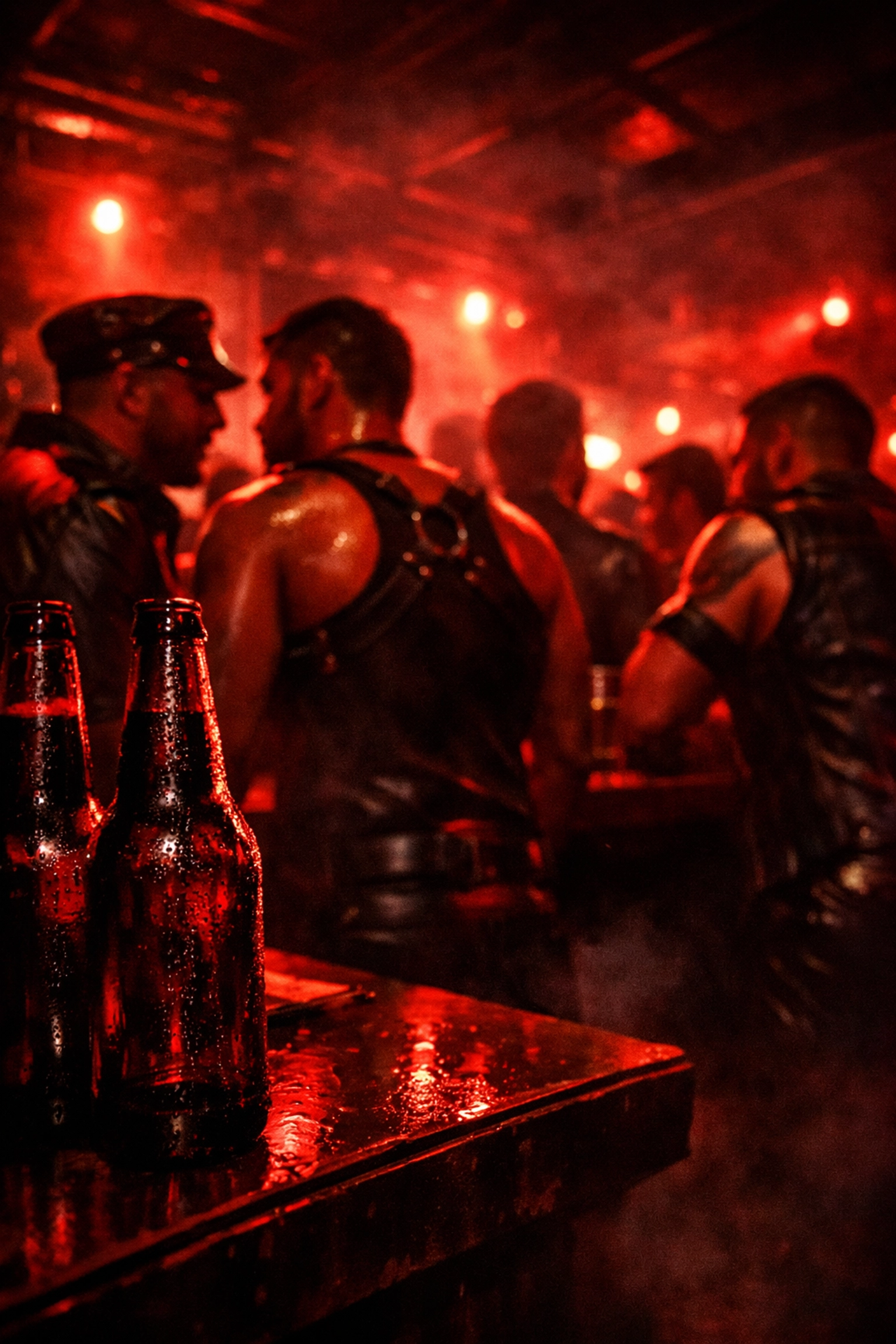
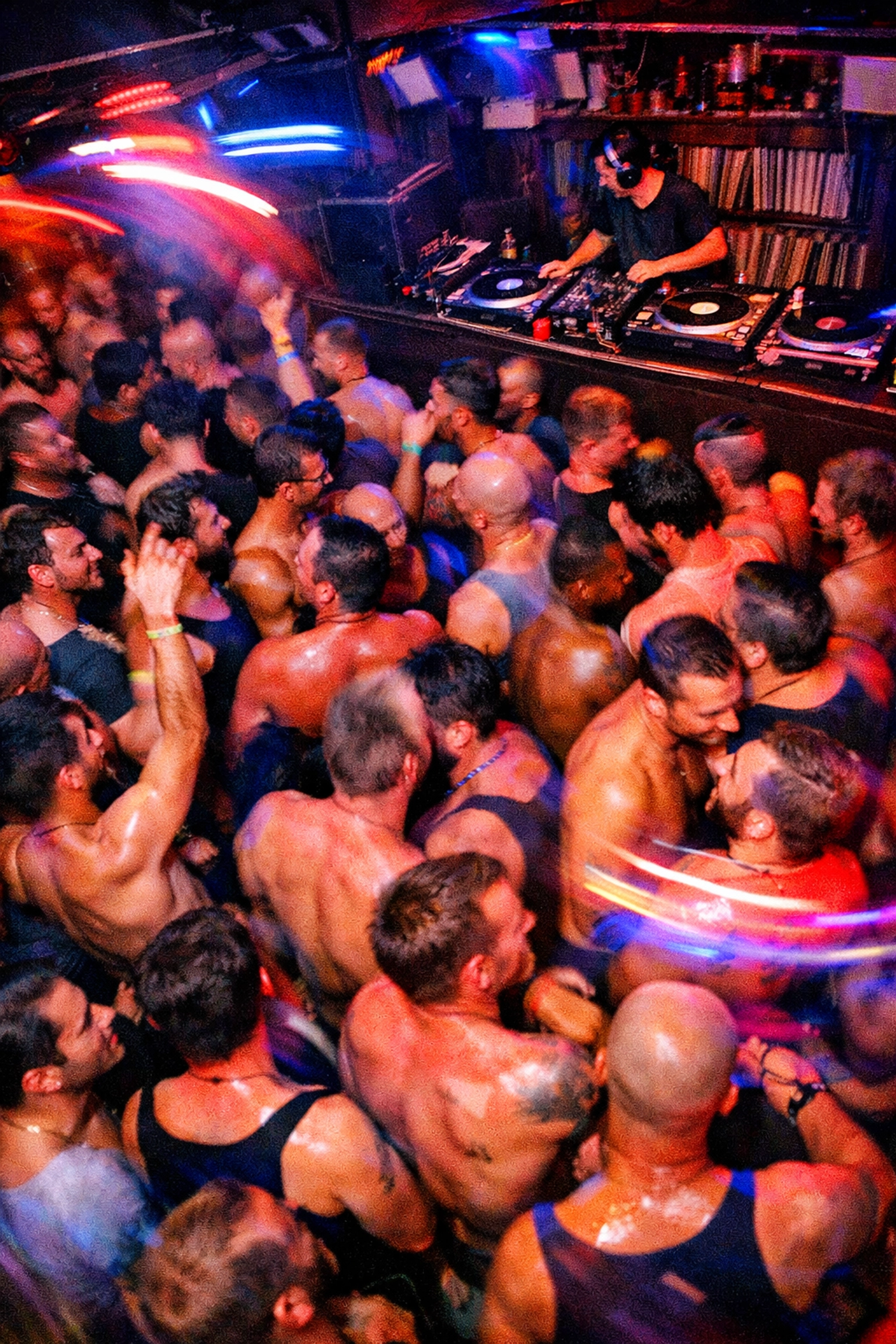
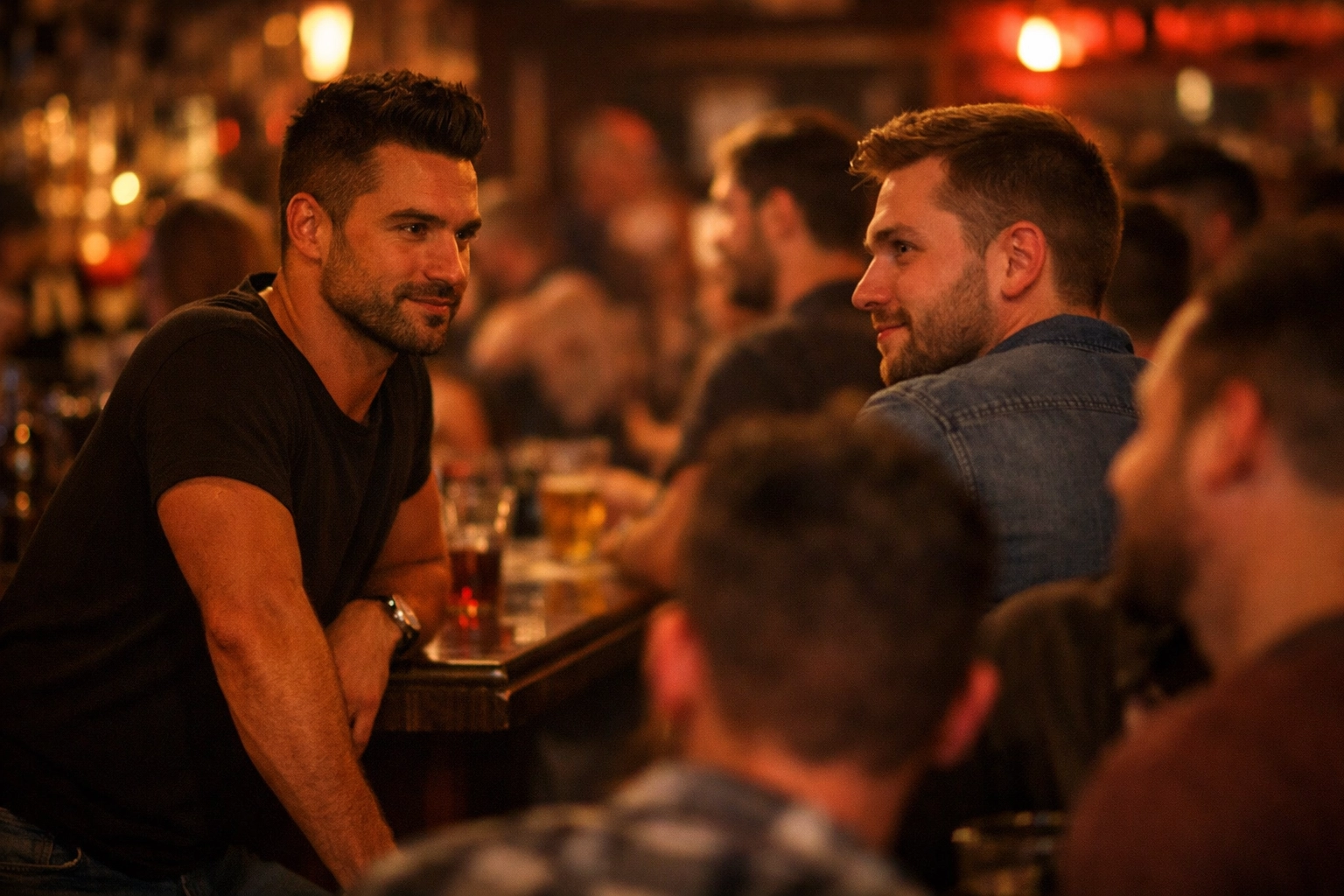
There's a sensory feast that happens in a good cruise bar that no app can replicate. The bass you feel in your chest before you hear it. The smell, that specific cocktail of sweat, leather, poppers, and possibility that hits you the moment you walk in. The way the red lights make everyone look like they've stepped out of a Tom of Finland drawing. The heat of packed bodies, the cool shock of spilled beer on your forearm, the sticky floor that makes every step deliberate.
Then there's the soundtrack, not just the music (though the DJ who knows exactly when to drop that Madonna track is worth their weight in gold), but the human soundtrack. Laughter cutting through the bass line. The murmur of conversation. That particular silence that falls when someone striking walks in and every head turns in perfect synchronization.
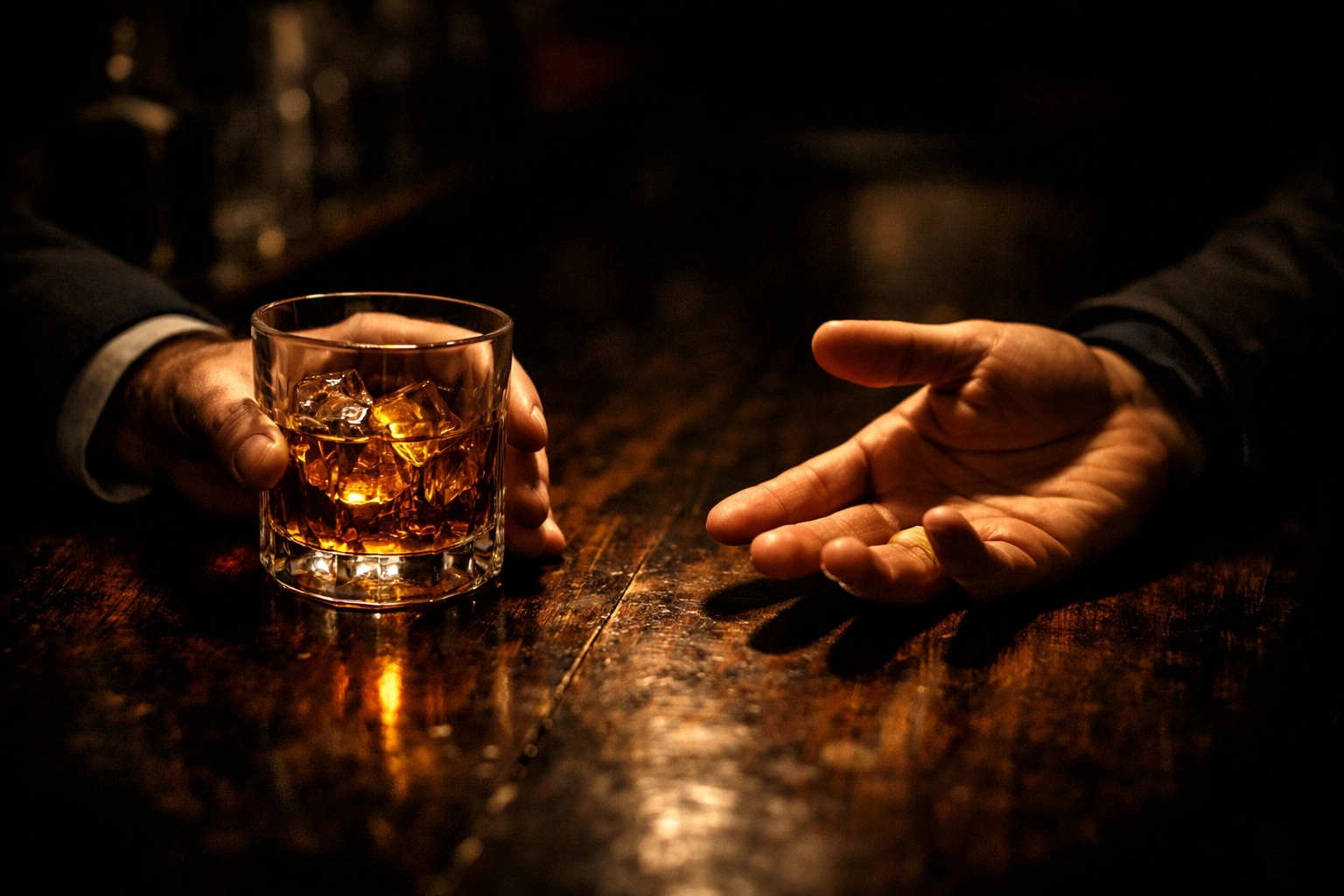
You learn to read a room in ways that translate to nowhere else in life. You develop radar. You can sense when someone's looking at you without seeing them. You know the difference between "I'm interested" eye contact and "sorry, wrong target" glances. You understand the architecture of the space, where the shy guys hover near the edges, where the confident ones claim territory at the bar, where things get really interesting in the darker corners.
Community Over Commodity
Here's what really sets cruise bars apart from their digital competitors: they build community, not customer bases. At The Eagle or The Stud or any of hundreds of others worldwide, you become a regular. The bartender knows your drink. You recognize faces. You nod to the guy you chatted with last week even though nothing happened, and that's okay. You're part of something bigger than a transaction.
These spaces create accidental community. You come for one reason (let's not pretend otherwise) but you stay for others. You make friends. You find your people. The leather daddy who gives you advice about coming out to your conservative parents. The drag queen who performs on Thursdays and makes you laugh until you can't breathe. The couple celebrating their anniversary who restore your faith that lasting love exists.
Apps optimize for efficiency. Bars optimize for humanity. Sometimes the best nights are the ones where nothing happens except you had great conversations and felt less alone. Try getting that from a grid of torsos.
Safety in Numbers and Space
There's also something to be said for the safety of physical spaces, paradoxical as that might sound. In a cruise bar, there are witnesses. There are friends nearby. There's a bartender who'll step in if things get uncomfortable. There are exit routes and public accountability. Meeting someone from an app means going somewhere private with a stranger whose only verification is a face pic that might be ten years old.
Cruise bars also create their own codes of conduct, enforced by the community itself. Respect is expected. Consent is visible, you can see when someone's not interested, when they're giving a clear "no thanks" signal. It's harder to be a creep when fifty other people can see you being a creep.
For many, especially those new to the scene, these spaces serve as gentle introductions to gay culture. You can observe before participating. You can nurse one drink all night and just soak in the atmosphere, figuring out who you are in this space, without the pressure of immediate interaction that apps demand.
Evolution, Not Extinction
The most successful cruise bars in 2026 aren't museum pieces desperately clinging to 1979. They've evolved. Many host events that bring in crowds: leather nights, underwear parties, bear gatherings, themed nights that celebrate specific subcultures within the gay community. They've become multi-purpose: bars, yes, but also event spaces, art galleries, performance venues, and political organizing hubs.
Some have made peace with technology, using apps to promote events or creating their own hashtags to build online buzz for offline experiences. The smart ones understand they're not competing with Grindr, they're offering something complementary. Use the app to chat, but meet at the bar. Start online, finish in person.
And let's not forget: cruise bars are where culture gets made and transmitted. Fashion trends are born there. Music gets discovered. The language we use, the slang, the codes, the references that define queer culture, incubates in these spaces. You can read about "chosen family" on Instagram, but you build it in places where you show up week after week, year after year.
The Touch That Matters
Ultimately, cruise bars survive because humans are tactile creatures. We need touch, presence, the chemical reactions that happen when we share oxygen with someone we desire. We need spaces where we can be fully embodied, where our sexuality isn't reduced to checkboxes and filters but expressed through the whole messy, beautiful, imperfect experience of being alive in a room with other queer people.
There's magic in the moment when you catch someone's eye across the bar and realize they're looking back. When you're dancing and someone presses against you and you press back. When you're at the urinal and the guy next to you glances over with a question in his eyes. When you step outside for air and strike up a conversation with a stranger that turns into something more.
These moments of connection, brief or extended, sexual or platonic, meaningful or fleeting, can't be programmed. They exist in the space between intention and chance, in the three-dimensional world where we have bodies and voices and presence.
Why We'll Always Need These Spaces
So yes, in 2026, you can absolutely find dates, hookups, and even love on apps. They're tools, and useful ones. But cruise bars offer something apps never will: the full human experience of desire, community, and connection. They remind us that we're more than profiles, that attraction is more complex than algorithms, that community requires showing up, literally, physically showing up.
As long as we're humans with bodies, with needs that go beyond the efficiently transactional, cruise bars will matter. They're not just relics of our past but necessary elements of our present and future. In an increasingly digital world, these analog spaces become more precious, not less.
Want to explore more stories about LGBTQ+ culture, history, and the spaces that shaped us? Visit Readwithpride.com for authentic gay fiction, MM romance books, and LGBTQ+ ebooks that celebrate our community in all its complexity.
Follow us on Facebook, Instagram, and X for more stories that matter.
#ReadWithPride #GayHistory #LGBTQCulture #CruiseBars #GayBars #QueerSpaces #MMRomance #GayFiction #LGBTQBooks #QueerCommunity #GayLife #LGBTQHistory #GayRomanceBooks #QueerFiction #GayLiterature #LGBTQReading #AuthenticStories #GayBooks2026 #QueerStories #CommunityMatters

Leave a Reply
You must be logged in to post a comment.