

readwithpride.com
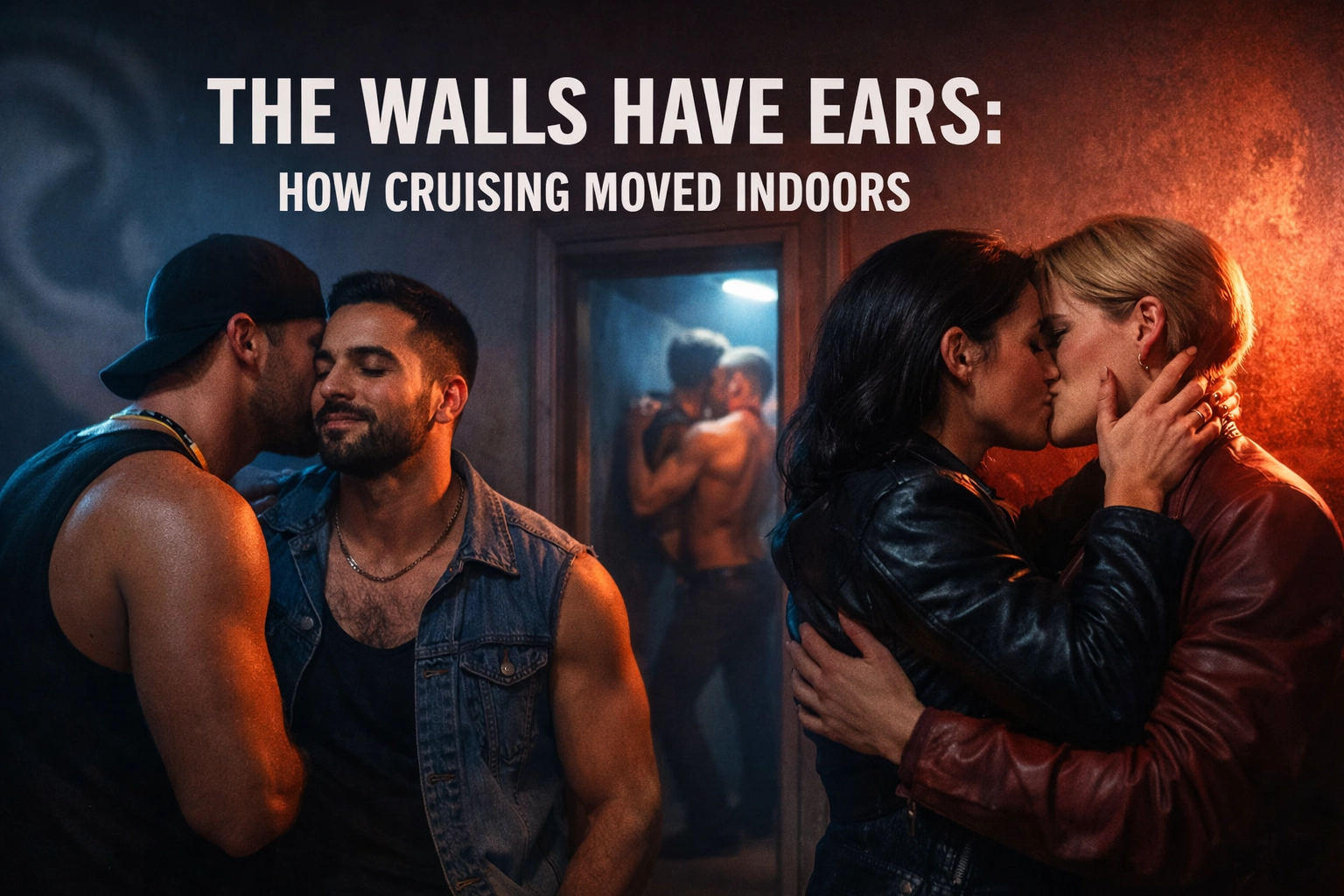
For decades, if you wanted to meet other men, you went outside. Parks after dark. Public restrooms. Railway stations. Bathhouses hidden in industrial districts. The shadows were your only cover, and danger was always just a footstep away. But somewhere in the mid-20th century, something revolutionary happened: the walls came up, the doors locked behind you, and cruising moved indoors.
Welcome to the birth of the gay cruise bar, where the walls didn't just have ears, they had your back.
The Before Times: Cruising Under Open Skies
Before the cruise bar became a thing, gay men had to get creative. Really creative. Public parks transformed after sunset into meeting grounds. London's Hampstead Heath, New York's Central Park Ramble, Berlin's Tiergarten, these weren't just green spaces. They were lifelines.
The problem? You were always one wrong look away from disaster. Police raids were common. Entrapment was a sport for some officers. Getting caught meant arrest, public humiliation, losing your job, your family, your entire life. And that's if you were lucky enough to avoid violence from gay-bashers who prowled the same spaces.
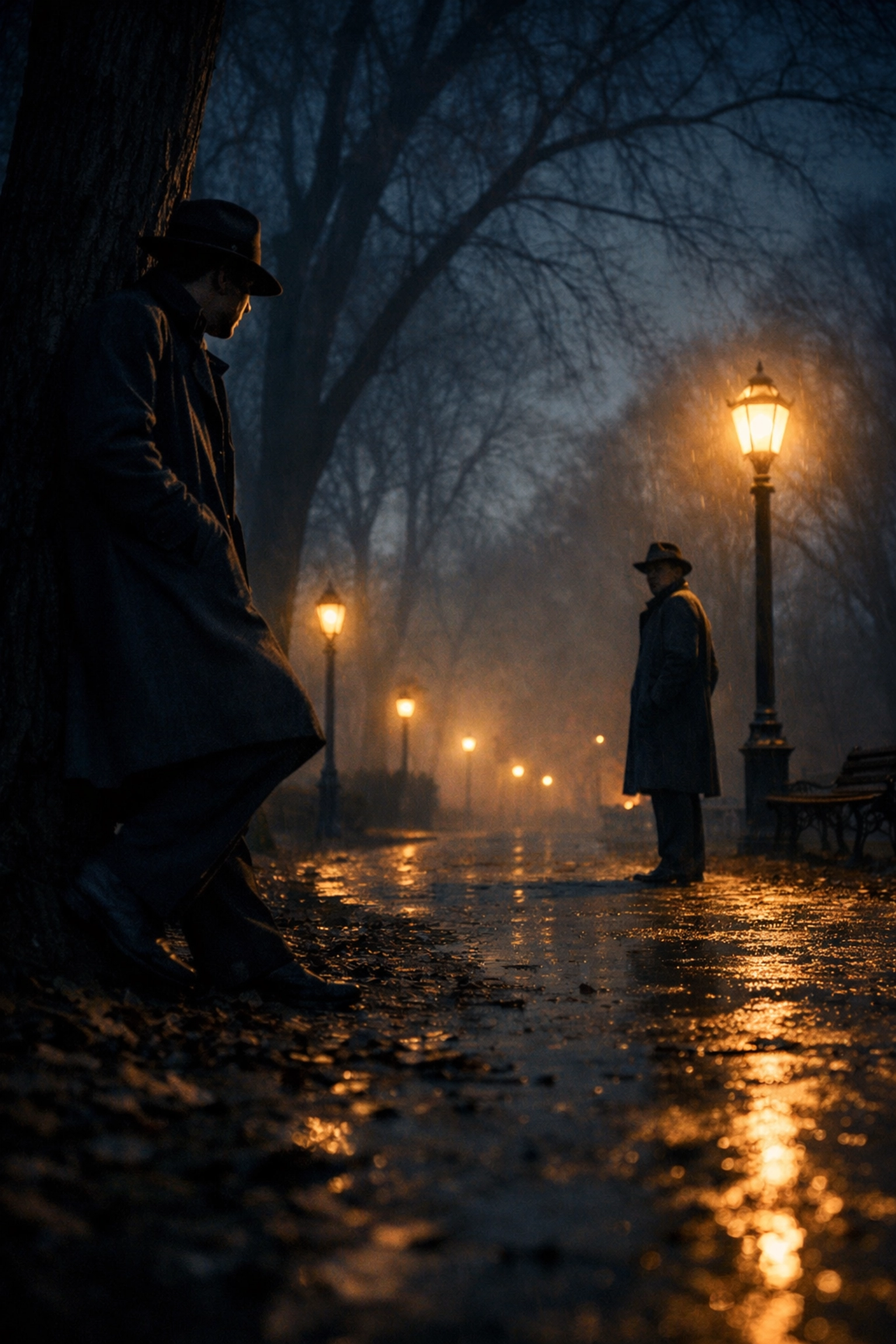
Public bathrooms, "tea rooms" in the coded language, offered slightly more privacy but carried the same risks. You developed a sixth sense: how to read a glance, how to position yourself, when to bolt. It was exhausting, dangerous, and isolating. The community existed, sure, but it was fragmented, hidden, always looking over its shoulder.
The Revolution: Four Walls and a Locked Door
Then came the shift. Starting in the late 1940s and accelerating through the 1950s and 60s, entrepreneurs (often queer themselves) started opening establishments that catered specifically to gay men looking for connection, the sexual kind. These weren't your typical gay bars with dancing and drinks. These were cruise bars, designed with one purpose: facilitating hookups in a controlled, relatively safe environment.
The concept was simple but revolutionary. Instead of risking arrest in a public park, you paid a cover charge and entered a private space. The bathhouses of earlier eras evolved. Dark rooms appeared. Mazes. Private cabins. Glory holes became architectural features rather than improvised accidents. The lighting was deliberately dim. The music, if any, was low and pulsing.
But most importantly: there was a door between you and the cops.
The Pioneers: Where the Walls Went Up
New York City was ground zero for much of this transformation. The Continental Baths opened in 1968 in the basement of the Ansonia Hotel and became legendary, not just as a cruise spot but as a cultural institution. Bette Midler got her start performing there, accompanied by Barry Manilow on piano. Yes, really. You could cruise, swim, listen to live music, and maybe grab a meal. It was a full ecosystem.
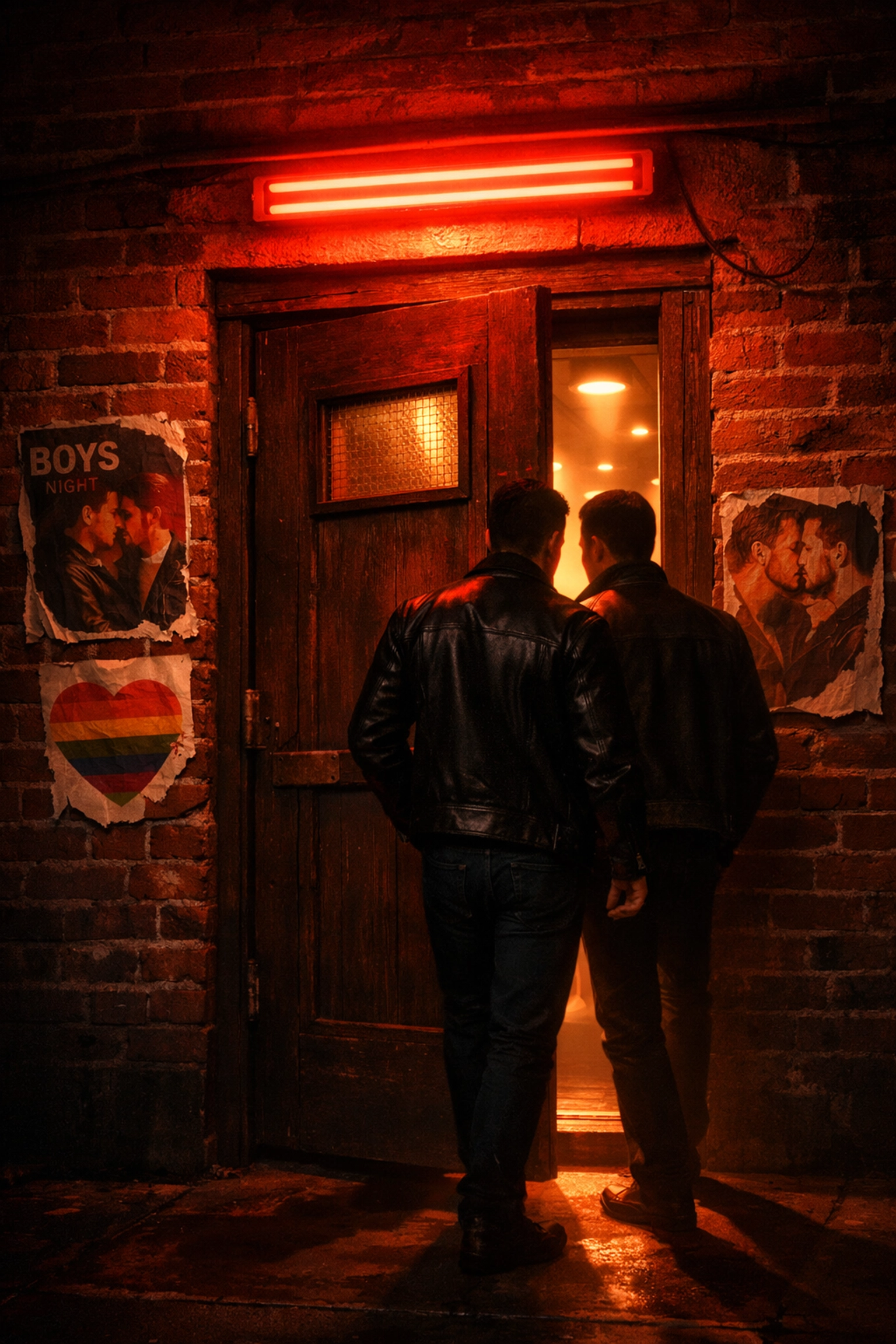
The Mineshaft, which opened in 1976 in the Meatpacking District, took things darker and more explicit. This wasn't a bathhouse pretending to be a health club. This was unabashedly sexual, with a strict dress code (leather, uniform, or nothing) and spaces designed for every kind of encounter you could imagine. It became internationally famous, or infamous, depending on who you asked.
San Francisco quickly followed suit. The Barracks, Bulldog Baths, and later the infamous Slot (which had actual slot machines alongside the… other slots) created a circuit of spaces where gay men could be explicitly, unapologetically sexual without fear.
London had its own scene developing slightly differently. Private clubs like the Coleherne in Earl's Court became known meeting grounds, though British law made explicit sex-on-premises venues trickier to maintain. Still, the backrooms existed, tucked away from prying eyes.
Amsterdam embraced the concept wholeheartedly. The city's liberal attitude meant cruise bars and gay saunas flourished earlier and more openly than almost anywhere else in Europe. The Thermos sauna, opening in the 1950s, became a template others would follow.
More Than Just Sex: The Culture That Walls Created
Here's what's easy to miss if you focus only on the sexual aspect: these indoor cruise spaces created something unexpected, community.
Yes, people came to hook up. But they also came because it was one of the few places you could be completely yourself. You didn't have to monitor your mannerisms, lower your voice, or lie about your weekend plans. The walls created safety, and safety created openness.
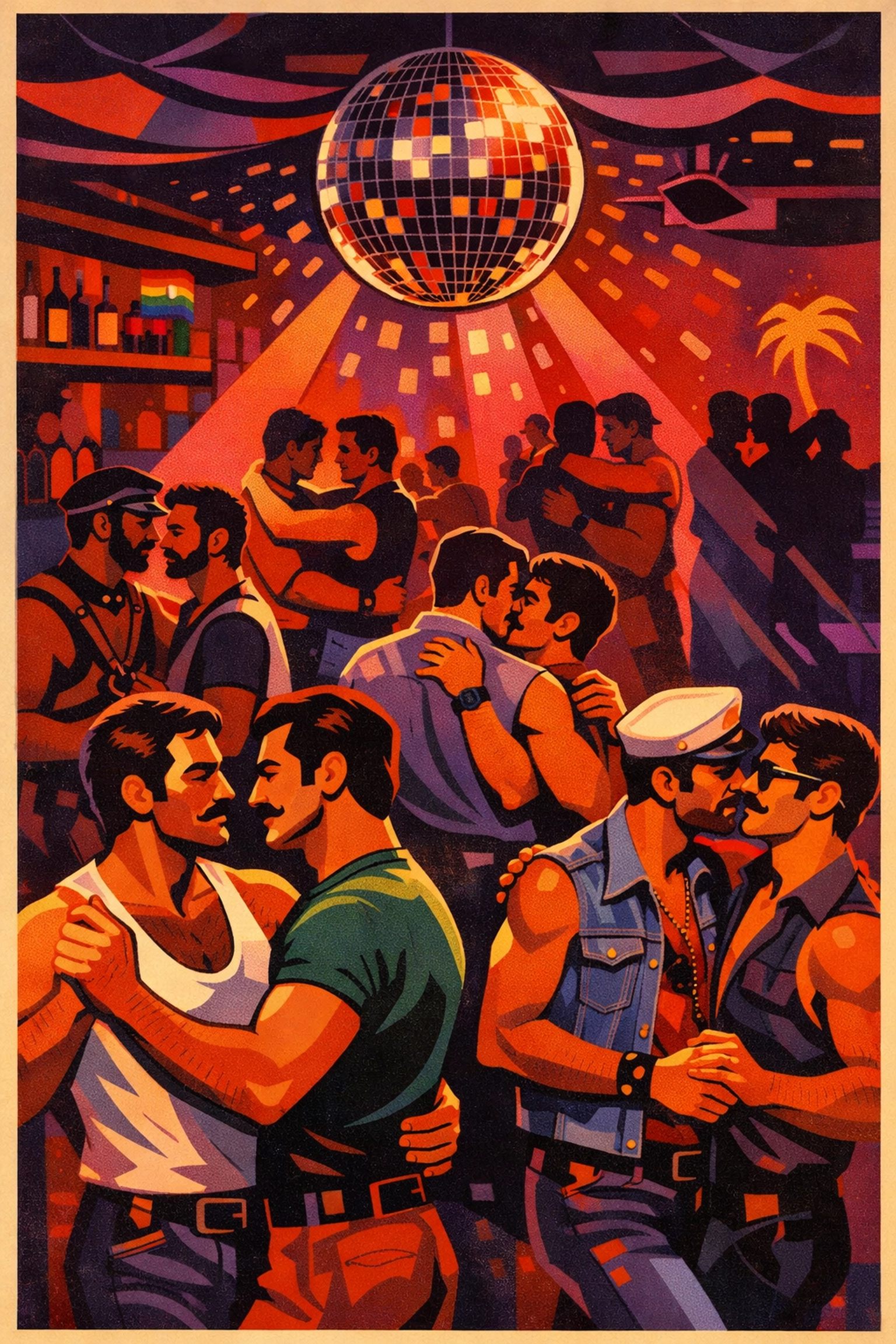
Friendships formed. Information was exchanged, about doctors who were discreet, lawyers who understood, apartments for rent in queer-friendly buildings. Before the internet, before apps, these physical spaces were the network. The bulletin boards in cruise bars advertised political meetings, support groups, theater productions. The revolution was being planned in the dimly lit corridors.
The staff at these establishments often became pillars of the community. Bartenders who knew your name and your drink. Door people who recognized faces and kept troublemakers out. These weren't just employees; they were gatekeepers and protectors.
The Dark Side: When Safety Was Relative
Let's be honest, these spaces weren't perfect. Drug use was common, particularly as the 70s progressed. The same anonymity that provided freedom also meant you couldn't always know who you were with or what you were getting into. Sexual health wasn't well understood, and STI transmission was a constant reality.
Then came AIDS.
The 1980s devastated the cruise bar scene. Establishments that had thrived for decades closed overnight, some by choice as owners died or became ill, others forced shut by panicked city governments. The spaces that remained became controversial even within the gay community. Were they vectors of disease? Or were they essential gathering points for education and harm reduction?
The Mineshaft closed in 1985 after a raid. The Continental Baths had already transformed into Plato's Retreat (a straight swingers club) before closing entirely. City after city saw their cruise bars vanish, leaving a generation of gay men mourning not just the loss of spaces, but the loss of a way of life.
The Evolution: From Backrooms to Apps
The cruise bar never completely disappeared. It evolved. Today's gay saunas and sex clubs exist worldwide, from the Slammer in London to Berlin's notorious Lab.oratory, from Bangkok's Babylon to Buenos Aires' Amerika. The concept endures because the need endures: spaces where gay men can be sexual without apology, where desire doesn't have to hide.
But the landscape has changed dramatically. Grindr, Scruff, Sniffies, and a dozen other apps now serve the function that parks and cruise bars once monopolized. You can cruise from your couch, arrange hookups with surgical precision, and never set foot in a darkroom.
Some say this is progress, safer, more efficient, more democratic. Others mourn the loss of physical community, the serendipity of the unexpected encounter, the skills you had to develop to navigate those spaces.
The truth is probably both. The apps liberated us from some dangers while creating new ones (catfishing, ghosting, the commodification of desire). The cruise bars that remain serve a different function now, not necessity, but choice. A deliberate opting-in to physical, anonymous sexuality that feels increasingly countercultural in our hyperconnected age.
The Legacy: What the Walls Taught Us
The transition from outdoor to indoor cruising represented more than just a change of venue. It was a step toward self-determination. Those locked doors said: we have the right to gather, the right to our desires, the right to spaces of our own.
Every MM romance novel that features a gay bar scene, every gay fiction narrative that includes a bathhouse, every piece of queer fiction that acknowledges the complexity of gay male sexuality, they're drawing on this history. The cruise bar era taught us that our sexuality doesn't have to be sanitized or apologized for, that creating space for desire is a political act.
The walls had ears, yes. But they also had eyes that looked out for us, hands that locked the door behind us, and foundations that held firm when the world outside wanted us to disappear.
Today, whether you're reading gay romance books on your couch, swiping through profiles on your phone, or stepping through the door of a modern cruise club, you're participating in a lineage. Those mid-century pioneers who built the first walls around our desires made all of this possible.
The walls may have ears, but first, they gave us shelter.
Discover more LGBTQ+ stories and history at readwithpride.com: your home for authentic gay romance novels, MM romance books, and queer fiction that celebrates our complex, beautiful community.
Follow us for daily LGBTQ+ content:
- Facebook: Read With Pride
- Instagram: @read.withpride
- X/Twitter: @Read_With_Pride
#ReadWithPride #GayHistory #CruisingHistory #LGBTQHistory #GayBars #QueerHistory #MMRomance #GayRomance #GayFiction #QueerFiction #LGBTQBooks #GayRomanceBooks #GayLiterature #LGBTQCommunity #GayCulture #QueerCulture #GayMenHistory #LGBTQPride #GayBooks #MMRomanceBooks #GayLoveStories #PrideHistory #QueerSpaces #GayNightlife #LGBTQNightlife

Leave a Reply
You must be logged in to post a comment.