

readwithpride.com
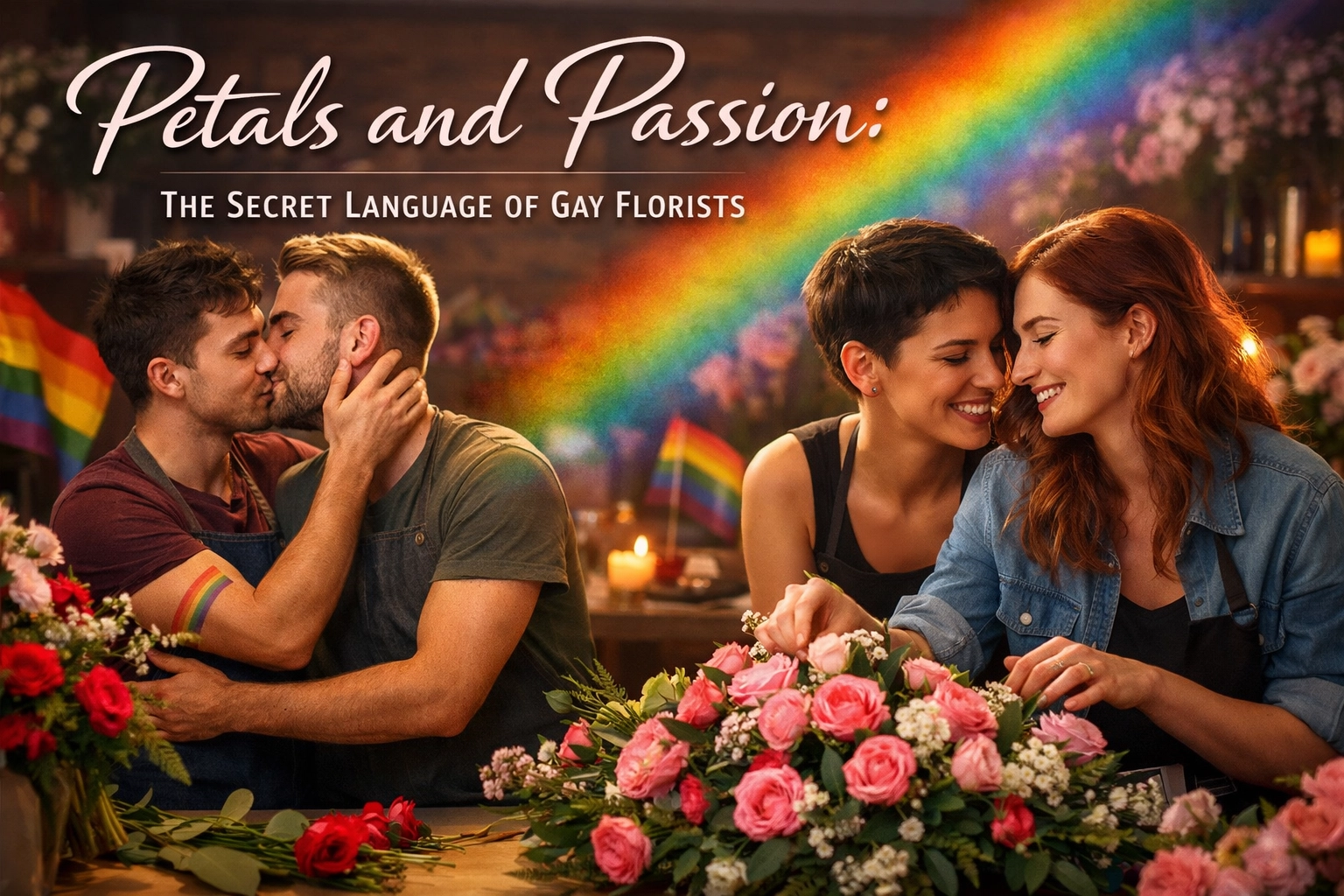
Long before rainbow flags flew proudly in city squares, there was another language of color and beauty that spoke volumes to those who knew how to listen. In the perfumed shadows of flower shops, behind counters laden with roses and orchids, gay florists created a world within a world, a profession that offered both camouflage and connection, discretion and desire.
The flower trade has always attracted those with an eye for beauty, an appreciation for the delicate, and a talent for arrangement. But for gay men throughout the 20th century, it became something more: a sanctuary where artistic expression was not just tolerated but expected, where sensitivity was an asset rather than a liability, and where the very nature of the work provided perfect cover for a life lived authentically, if quietly.
The Victorian Inheritance
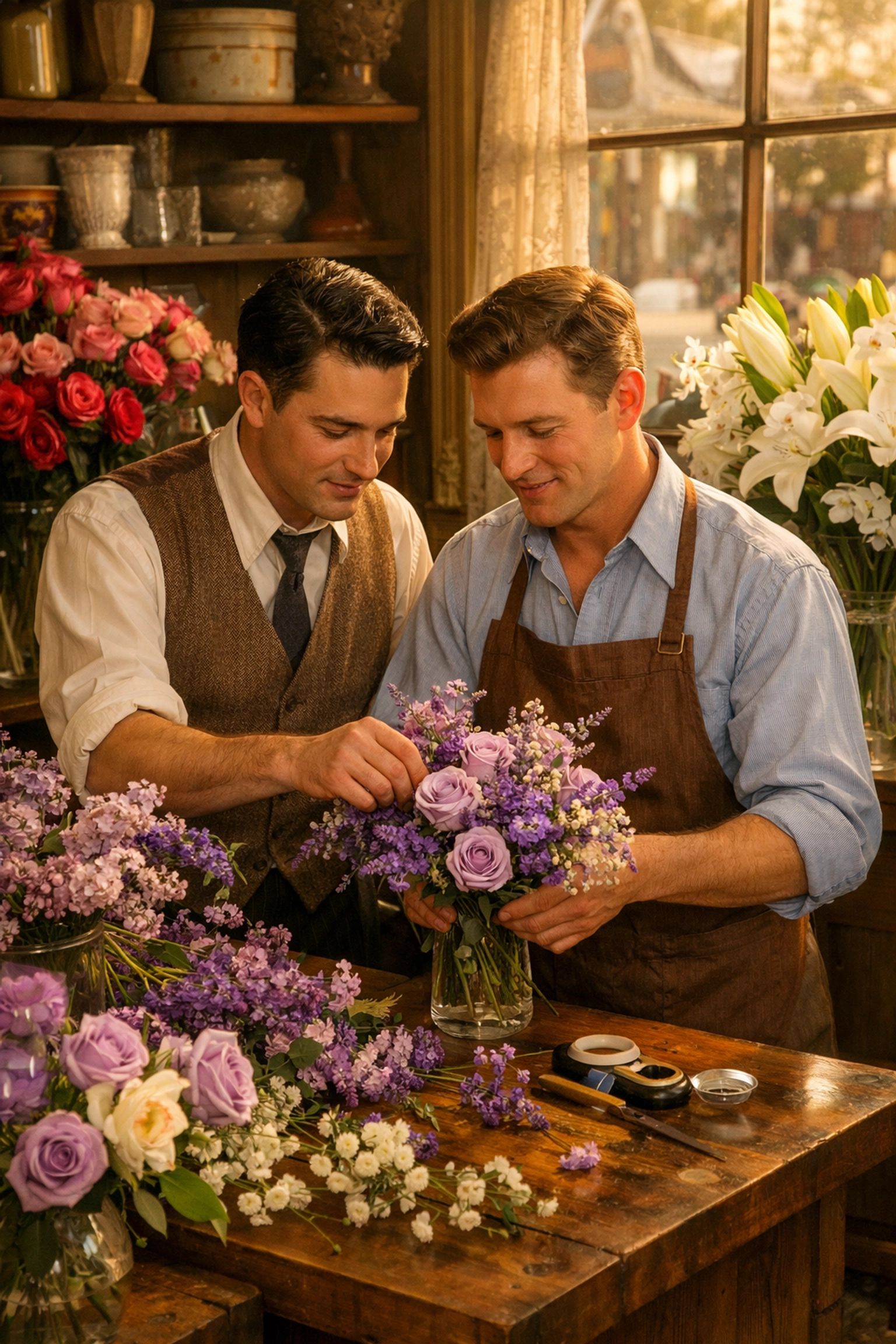
The connection between flowers and queer identity runs deeper than most realize. In the Victorian era, when explicit discussion of sexuality was taboo, flowers became messengers of forbidden feelings. The language of flowers, floriography, allowed people to communicate emotions that couldn't be spoken aloud. A purple hyacinth meant "please forgive me," while a yellow carnation whispered "disappointment."
But some botanists and artists went further. Nineteenth-century fascination with plant reproduction, particularly botanical hermaphroditism and cross-fertilization, provided a natural metaphor for those whose desires didn't fit conventional patterns. Artists like John Singer Sargent incorporated these botanical symbols into their work, using flowers as coded references to what Victorian society called "sexual inversion."
Gay florists inherited this rich tradition of botanical subterfuge. They understood instinctively that flowers could say what mouths couldn't, that an arrangement could convey recognition between kindred spirits, that certain blooms placed just so could signal availability or interest to those who knew the code.
A Respectable Cover
Throughout the early and mid-20th century, when homosexuality was criminalized in most Western countries, gay men needed professions that wouldn't raise eyebrows. The flower trade was perfect. It was artistic, yes, but also practical: someone had to arrange flowers for weddings, funerals, and society events. The work required good taste and an aesthetic eye, qualities that straight society grudgingly accepted in its "artistic types" even as it punished more explicit expressions of queerness.
Working as a florist allowed gay men to remain single without arousing suspicion. A dedicated artist, married to his craft: who could question that? The profession attracted enough straight men (particularly immigrant communities where flower-selling was a family trade) that a gay florist could blend in, especially if he maintained the proper discretion.
Serving the Rich and Powerful
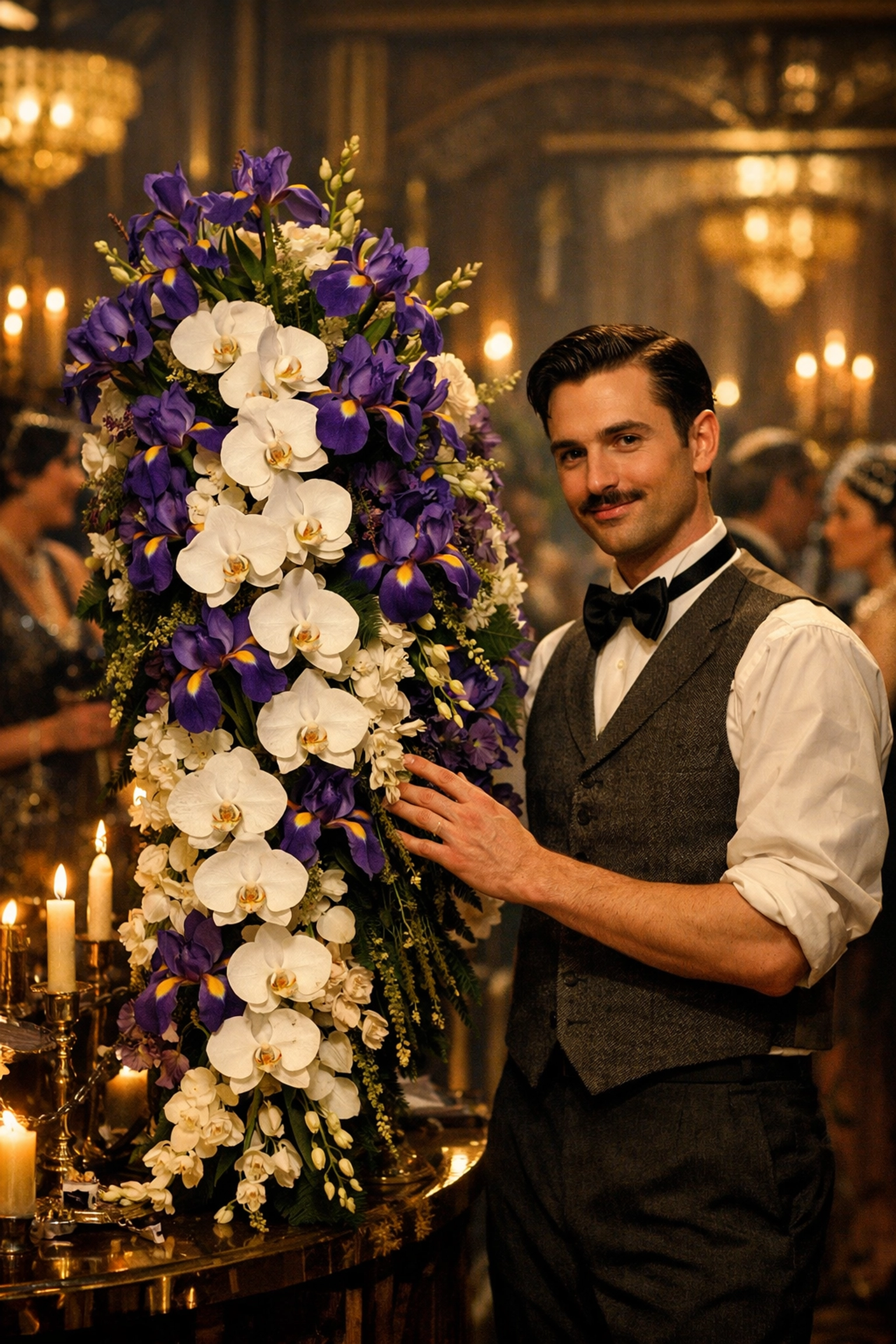
The most successful gay florists often found themselves catering to society's elite: old money families, celebrities, politicians. These wealthy clients sought out florists with impeccable taste, those who could create arrangements that spoke of refinement and sophistication. What they often didn't realize was that their florist might be gay, or that the social circle behind the flower shop's counter included some of the city's most fascinating queers.
This relationship between gay florists and rich clients created a peculiar dynamic. The florist entered the homes of the wealthy, saw their private spaces, arranged flowers for their most intimate occasions: weddings, anniversaries, funerals. They became trusted confidants, privy to family secrets and social intrigues. Some wealthy clients knew their florist was gay and didn't care; in private spaces, away from public judgment, they could be more accepting.
For gay florists serving this clientele, the work required charm, discretion, and an ability to read people. They learned to be invisible when necessary, to fade into the background while their creations took center stage. But they also learned to sparkle when the moment called for it, to be witty and entertaining, to make their wealthy patrons feel sophisticated for appreciating their talent.
The shop became a meeting place, too. Wealthy gay clients would commission elaborate arrangements, then linger to chat, knowing they were in safe company. Some of the era's most discreet gay romances began over consultations about centerpieces.
The Secret Signals
Like any underground community, gay florists developed their own codes and signals. An orchid worn just so could indicate availability. Certain color combinations spoke to those in the know: lavender had long been associated with queerness (hence "lavender marriage"), and florists used it cleverly. A splash of purple in an otherwise conventional arrangement, violets tucked unexpectedly into a bouquet: these were breadcrumbs for those who understood.
Shop locations mattered too. Florists often set up in neighborhoods where they felt safer, near other gay-friendly businesses. Their shops became unofficial safe spaces, places where a young gay man could stop in, ostensibly to buy flowers for his mother, but really to find connection and perhaps information about where to meet others like him.
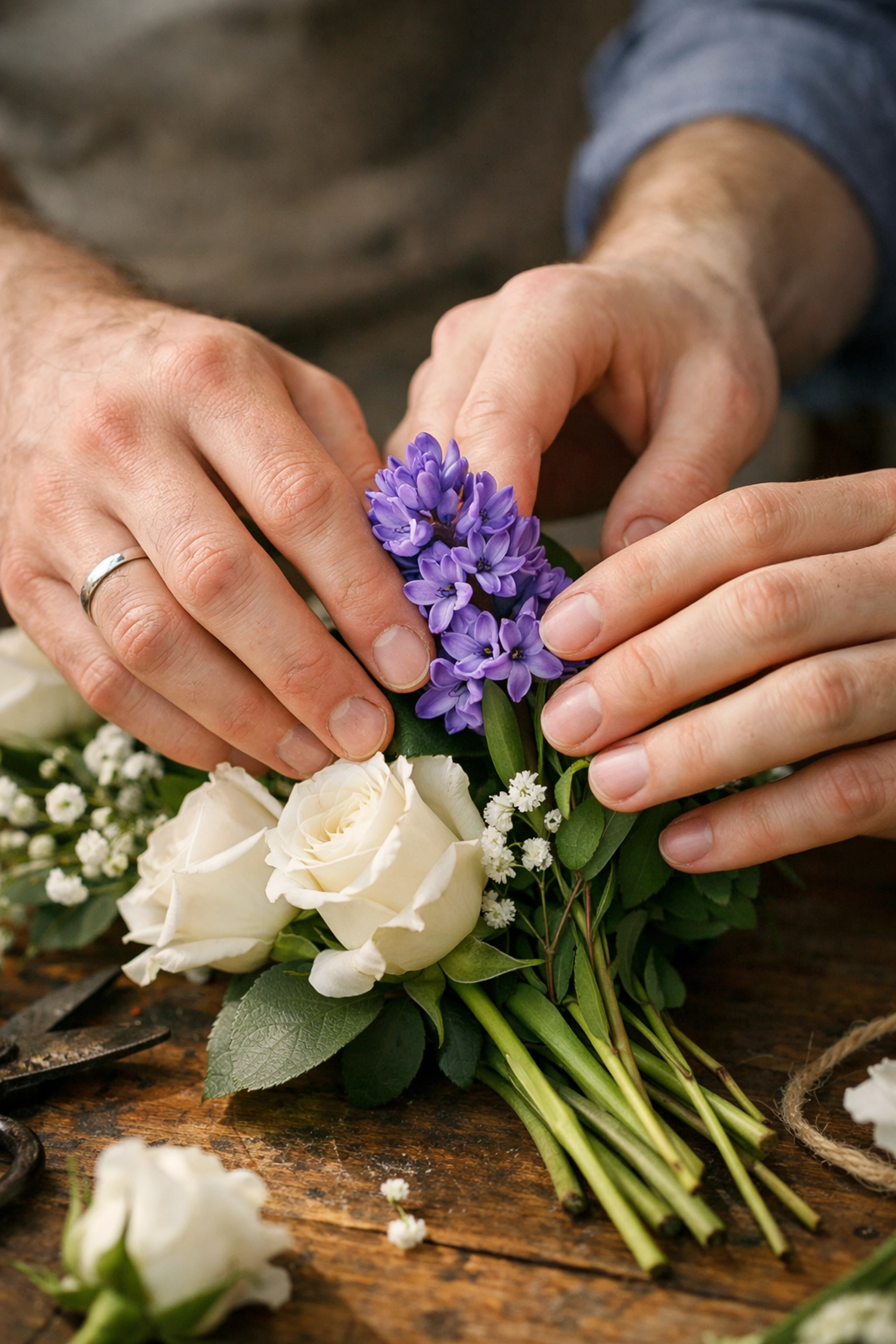
The tactile nature of the work: handling stems, arranging petals, the deliberate slowness required for delicate blooms: created opportunities for subtle flirtation. A hand brushing another while demonstrating how to care for a rare orchid, extended eye contact over a vase of roses, an invitation to return when "the next shipment of special lilies" arrived.
The Artistic License
Being a florist provided something precious: a socially acceptable outlet for gay men's creativity and aesthetic sensibility. In an era when expressing too much interest in beauty or fashion could mark a man as suspect, floristry gave permission. Of course the florist cared about color coordination and delicate arrangements: it was his job.
This artistic license extended beyond the shop. Gay florists could attend theater openings, gallery shows, and society events as professionals, rubbing shoulders with the cultural elite. They could be seen as sophisticates rather than degenerates, artists rather than criminals.
The community they built around this profession was real and sustaining. Florists knew other florists, and word traveled through the network. A gay man new to a city might be directed to a particular flower shop, told to "ask for arrangements with purple accents" as a way to identify himself. From there, introductions could be made, invitations extended to parties and gatherings that never made it into mainstream society pages.
The Modern Legacy
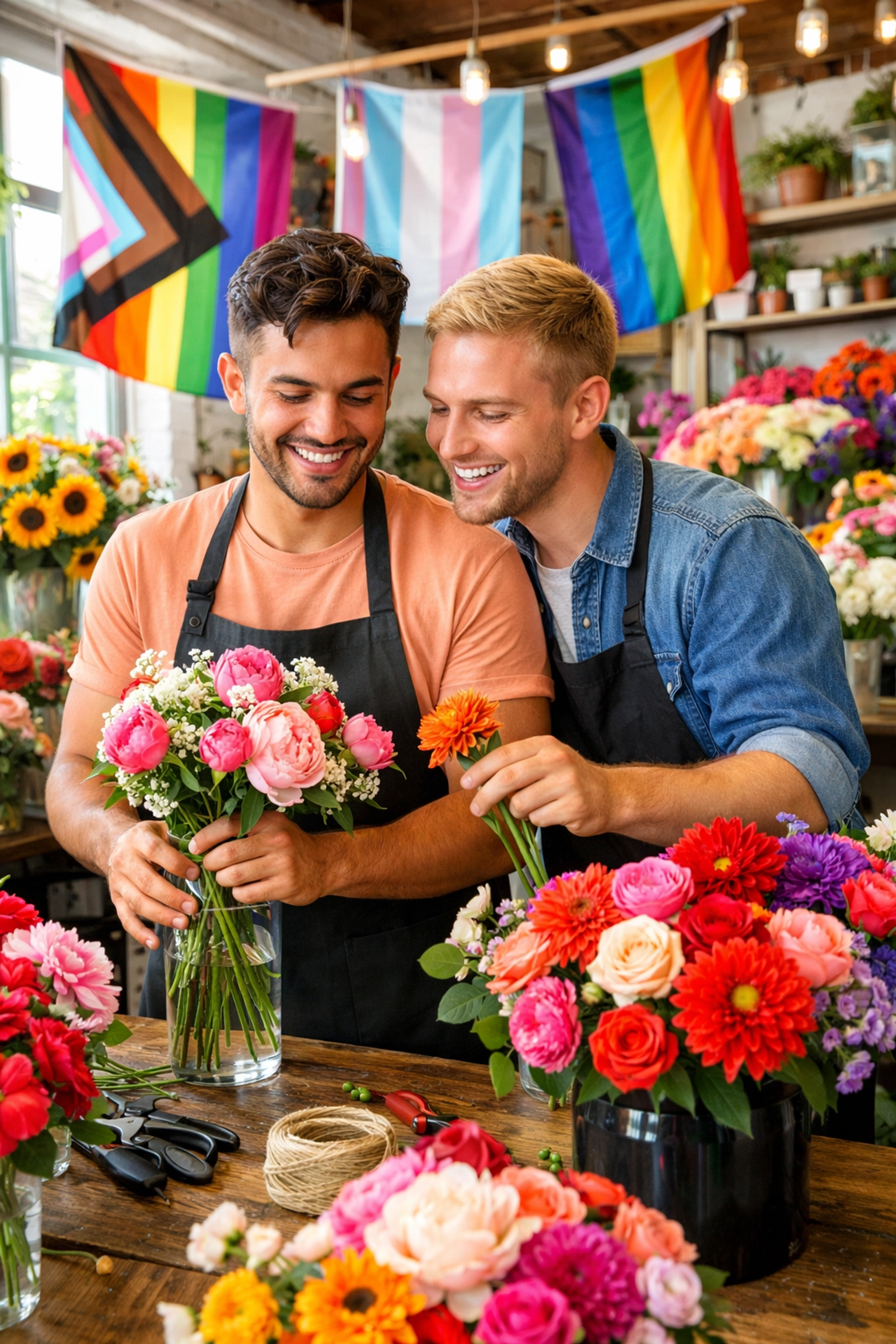
Today's world is different, thank goodness. The flower trade is no longer a necessary hiding place, though it remains a profession where LGBTQ+ people thrive. Modern queer florists like those running Petals and Pages: a combination bookshop and florist celebrating LGBTQ+ voices: carry forward the tradition while being openly, joyfully themselves.
But it's worth remembering and honoring those earlier generations of gay florists who created beauty under circumstances that demanded discretion. They built community in the margins, found love among the roses, and kept the tradition of botanical communication alive. Every arrangement was an act of courage, every shop a small sanctuary, every customer interaction a carefully calibrated performance of authenticity and concealment.
The stories live on: in archived photos of legendary florists, in oral histories of elder queers remembering the flower shops that served as informal community centers, in the continued popularity of flowers as gifts within LGBTQ+ culture. We still give flowers to communicate what words can't quite capture, still understand that beauty can be both shield and signal.
So next time you visit a florist, gay or straight, remember you're entering a space with a rich queer history. Those petals have stories to tell, if you know how to listen.
Discover more LGBTQ+ stories and history at readwithpride.com
Follow us for more authentic queer narratives:
- Facebook: Read With Pride
- Instagram: @read.withpride
- Twitter/X: @Read_With_Pride
#ReadWithPride #LGBTQHistory #QueerHistory #GayHistory #LGBTQCommunity #QueerCulture #GayFlorists #HiddenHistory #LGBTQStories #QueerArt #GayRomance #MMRomance #LGBTQFiction #QueerReading #GayLiterature #PrideReading #LGBTQBooks #AuthenticStories #QueerHeritage #GayLife #ReadwithPride2026

Leave a Reply
You must be logged in to post a comment.