

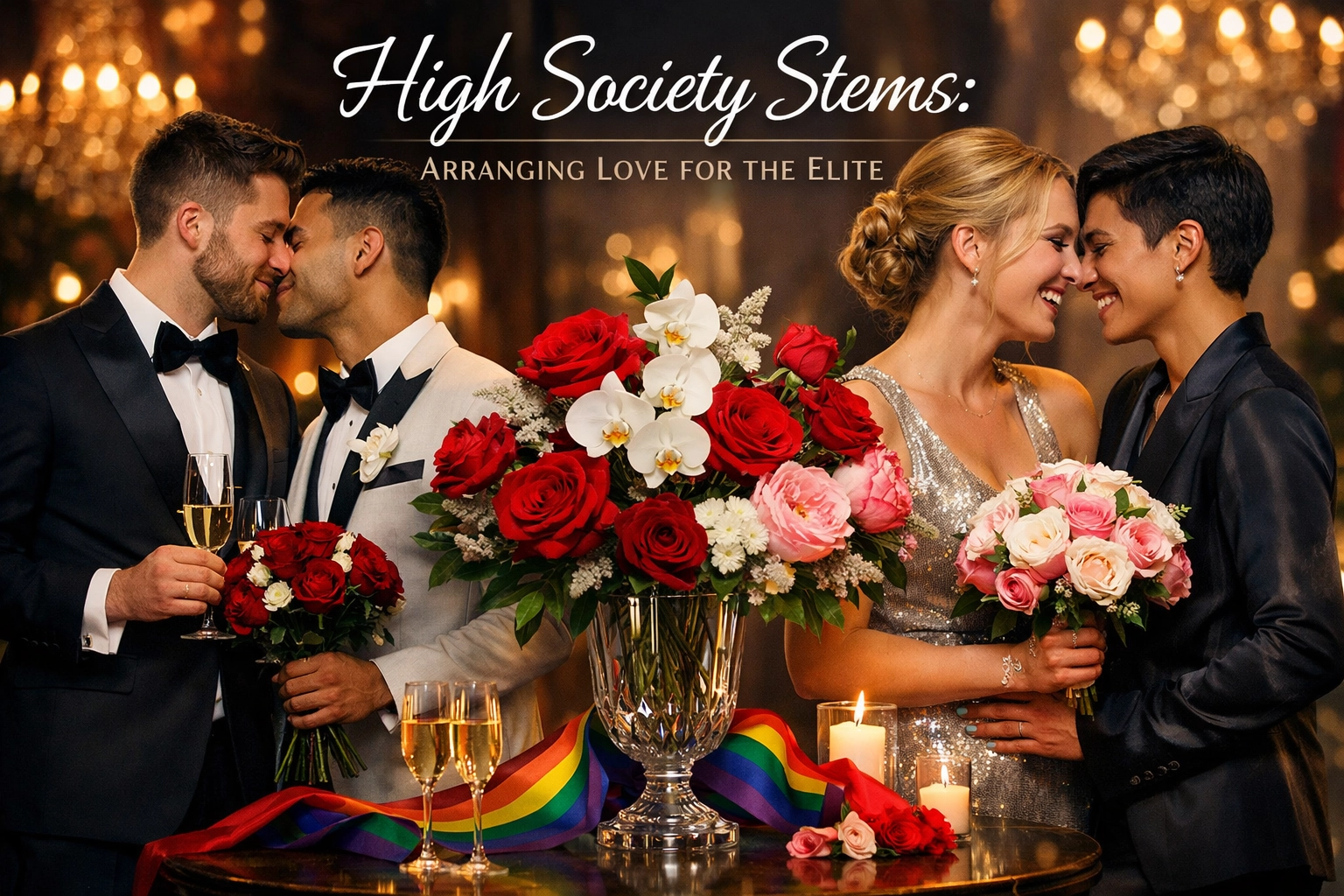
readwithpride.com
There's something deliciously ironic about the fact that some of society's most closeted affairs have been witnessed by the one person who sees everything but says nothing: the florist. And in the gilded world of Manhattan penthouses, London townhouses, and Paris apartments, gay florists have long held a peculiar privilege, trusted confidant, aesthetic genius, and keeper of secrets all wrapped into one perfectly arranged bouquet.
The world of high-society floristry isn't just about making things pretty. It's about understanding that Mrs. Vanderbilt's weekly orchid delivery isn't really about the orchids at all, it's about the young tennis instructor who "accidentally" arrives during the same two-hour window every Thursday. It's knowing which politicians order apology roses most frequently (and to which addresses), and which tech billionaire's assistant has standing instructions for "discreet delivery of two dozen red roses to the Plaza, room number to be texted day-of."
The Art of Being Indispensable
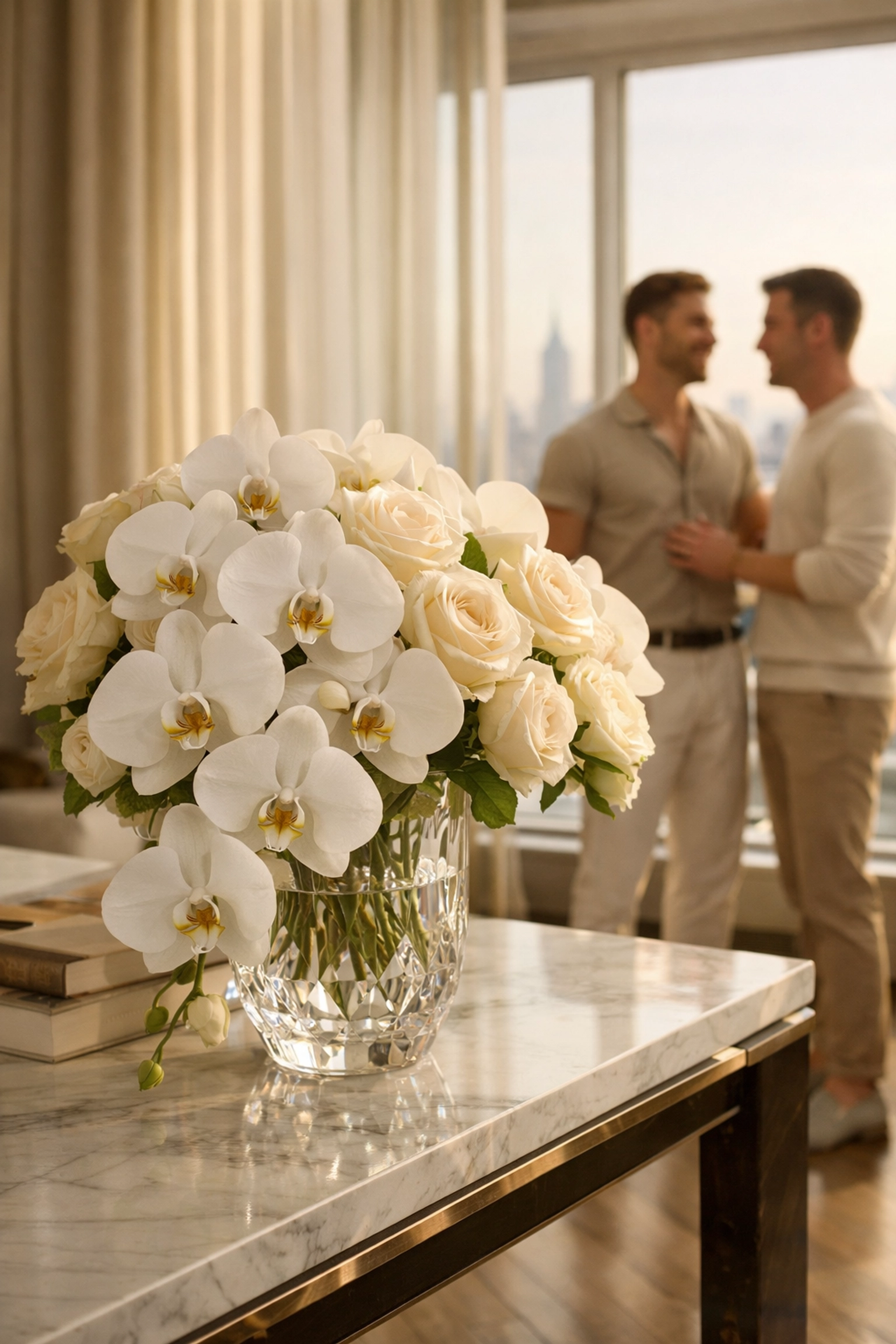
Gay florists navigating elite circles have always possessed a particular kind of social alchemy. We're welcomed into the most exclusive spaces, not quite staff, not quite friend, but something more valuable: the person who makes beauty happen while remaining beautifully invisible when discretion demands it.
In the 1920s and '30s, legendary florists like Constance Spry in London created elaborate arrangements for society weddings while maintaining salons where queer artists and writers could gather freely. The flower shop became a liminal space, respectable enough for the upper crust, bohemian enough for those living on society's margins. Gay men found employment and, crucially, a kind of protection in the role. After all, how threatening could someone be when they were there to make things beautiful?
Fast forward to today's contemporary scene, and the dynamic has shifted but not disappeared entirely. Elite florists for ultra-high-net-worth individuals occupy a fascinating position. You're trusted with keys to brownstones, alarm codes to estates, and the kind of access that would make a spy novelist jealous. When you're arranging 200 peonies for a "casual" dinner party with a $50,000 flower budget, you see how the other half, or rather, the other 0.01%, really lives.
Charm as Currency
There's a reason so many successful high-end florists are gay men who've mastered the art of charm without being threatening, of being memorable without being too present. It's a survival skill that became a superpower. Rich clients, particularly wealthy women, want someone who appreciates beauty, understands fashion, can gossip a bit, but won't compete for attention or pose any romantic complications.
Take Marco, a composite of several florists I've heard stories about, who handles arrangements for tech moguls in San Francisco. His specialty? Understanding that the CEO who orders minimalist ikebana-inspired arrangements for his office wants something entirely different for his lake house, where his boyfriend (not his wife) actually lives. Marco's genius isn't just in the flowers; it's in knowing which address requires which arrangement, and never, ever confusing the two.
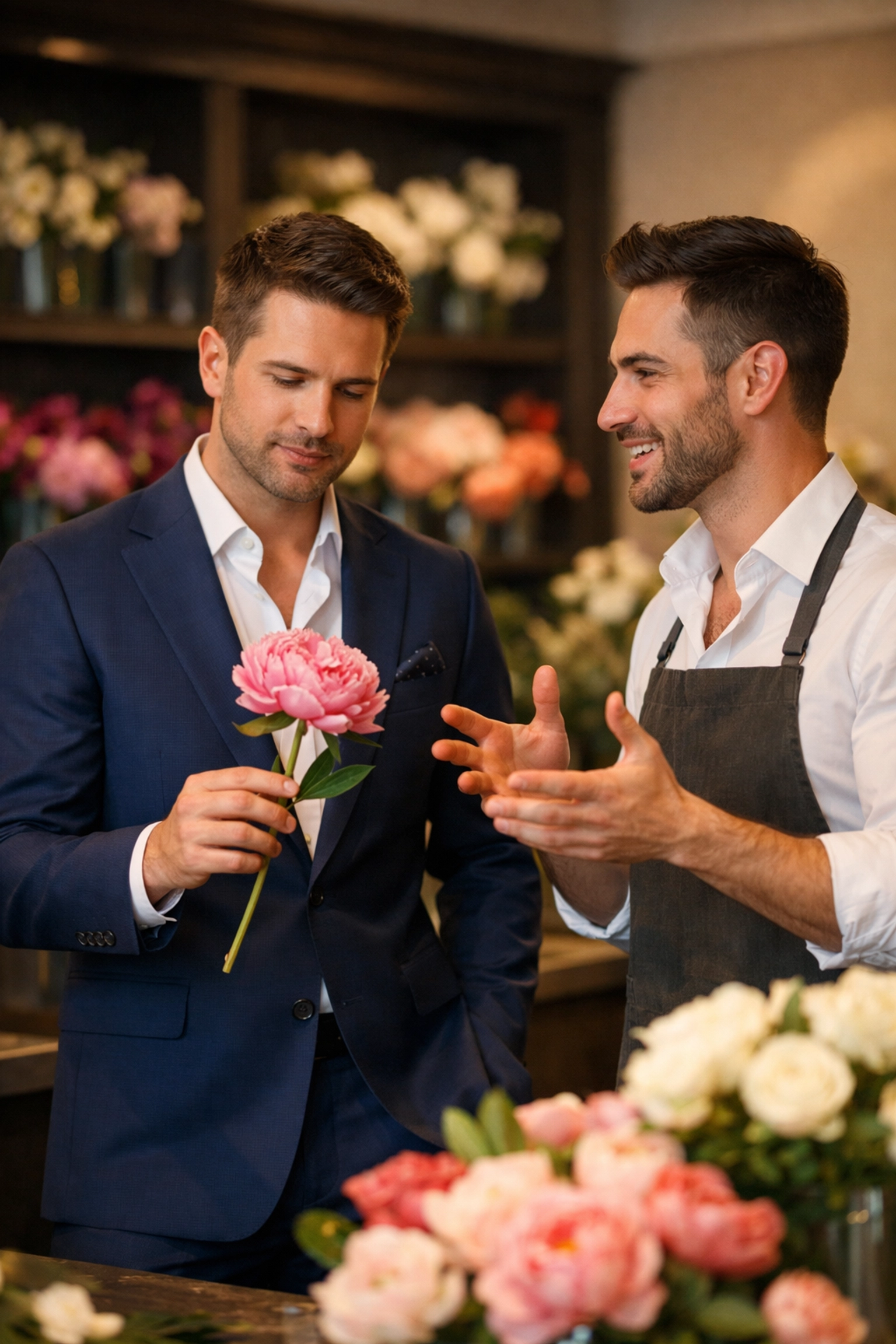
The charm extends beyond just client relations. There's a certain theater to the whole enterprise. You sweep into their marble foyer at 6 AM on the day of the event, your team carrying in exotic blooms flown in from Ecuador or Holland. You know exactly where Lady So-and-So likes her arrangements (dining room, never the entryway, "too obvious, darling"), and you remember that the ambassador is allergic to freesia but adores garden roses.
The Drama, Oh The Drama
If you think working in high-end floristry is all champagne and charm, let me disabuse you of that notion real quick. The drama is operatic. Bridezilla has nothing on a socialite whose charity gala is in six hours and the white orchids arrived cream-colored.
There's the time one florist watched a Fifth Avenue matron throw a crystal vase at her husband during an arrangement consultation. There's the tech billionaire who insisted his event flowers be "blockchain-inspired" (whatever that means). There's the Middle Eastern princess who required a full background check, NDA, and security clearance just to discuss centerpieces.
And then there are the messier human moments. The husband who orders roses for his wife every week like clockwork, until suddenly he doesn't, and you know something's shifted in their marriage before anyone else does. The client who breaks down crying while choosing flowers for their mother's funeral, and you become impromptu grief counselor. The young heir who confides he's gay while you're arranging his engagement party flowers, because you're the only safe person he can tell.
The Historical Thread
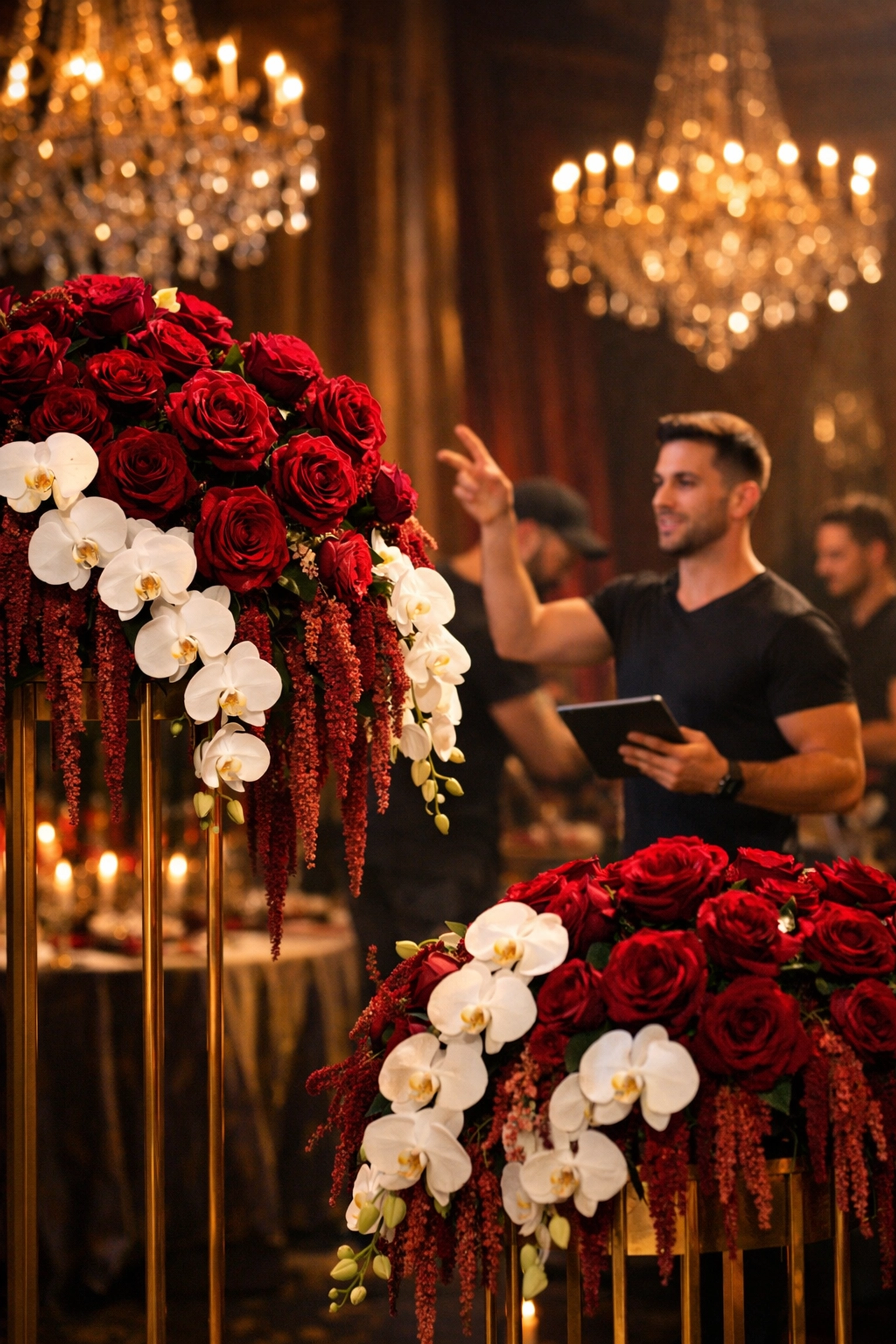
The connection between gay men and floristry runs deeper than contemporary stereotypes suggest. Historically, flowers were one of the few artistic professions where men who didn't fit conventional masculine molds could find acceptance, and employment. In Victorian England, the language of flowers (floriography) became a coded way to communicate forbidden sentiments. Gay men, already fluent in the art of coded communication, excelled in this world.
By the mid-20th century, florists like Kenneth Turner were arranging flowers for royalty while living openly gay lives (to the extent possible) in London. The flower shop provided economic independence and a certain social protection, you were valued for your artistry, giving you leverage that overtly political organizing might not.
Today's generation of queer florists working with elite clientele carry forward this legacy, though hopefully with less need for coded messages and more ability to live authentically. But the same principles apply: taste, discretion, creativity, and the ability to make magic happen under impossible deadlines.
The Modern Reality
Working as a florist for the ultra-wealthy today means navigating a world where a "simple" arrangement might cost more than most people's monthly rent. It means sourcing specific Juliet roses that cost $25 per stem, flying in rare orchids from Thailand, or recreating a bride's grandmother's wedding bouquet from a faded 1940s photograph.
But it also means building genuine relationships. Many gay florists working with high-net-worth clients report that their sexuality is either a non-issue or actually an asset, clients feel they can trust someone who understands what it's like to navigate complex social dynamics, who won't judge their quirks or peccadilloes, who brings creativity without ego.
The job requires equal parts artist, therapist, logistics coordinator, and diplomat. You're managing teams, negotiating with vendors, staying current on design trends, and somehow making the client feel like their vision (even when it's terrible) has been honored while actually creating something beautiful.
The Payoff
Why do it? Beyond the obvious appeal of working with unlimited budgets and extraordinary materials, there's something genuinely fulfilling about creating beauty, about being part of people's most significant moments. You arrange flowers for proposals, weddings, anniversaries, celebrations, and yes, sometimes breakups and funerals too.
For gay florists specifically, there's an added layer. You're visible proof that queer people belong everywhere, even in the most traditional, conservative, old-money spaces. Every estate you enter, every society event you design, every client who trusts you with their most important occasions, it's a small victory against the forces that once said we didn't belong in polite society at all.
Plus, the stories. Oh, the stories you'll collect working in this world could fill volumes. And perhaps someday, they will: though names changed and details obscured, naturally. A good florist never tells. But a great florist? They remember everything, tucked away like pressed flowers in the pages of memory, ready to bloom again when the time is right.
Whether you're into MM romance books featuring characters who work in creative fields or just fascinated by the hidden dynamics of high society, the world of elite floristry offers a unique window into how charm, creativity, and authenticity create unexpected opportunities. Read stories that celebrate LGBTQ+ professionals navigating glamorous worlds at readwithpride.com.
Follow Read With Pride:
Facebook | Instagram | X/Twitter
#ReadWithPride #LGBTQStories #GayHistory #QueerCreatives #MMRomance #GayRomanceBooks #LGBTQFiction #QueerNarratives #GayLiterature #PrideReading #LGBTQCommunity #QueerStories #GayBooks #AuthenticVoices #HighSociety #FloristLife #LGBTQProfessionals #GayRomance #MMBooks #ReadWithPride2026

Leave a Reply
You must be logged in to post a comment.