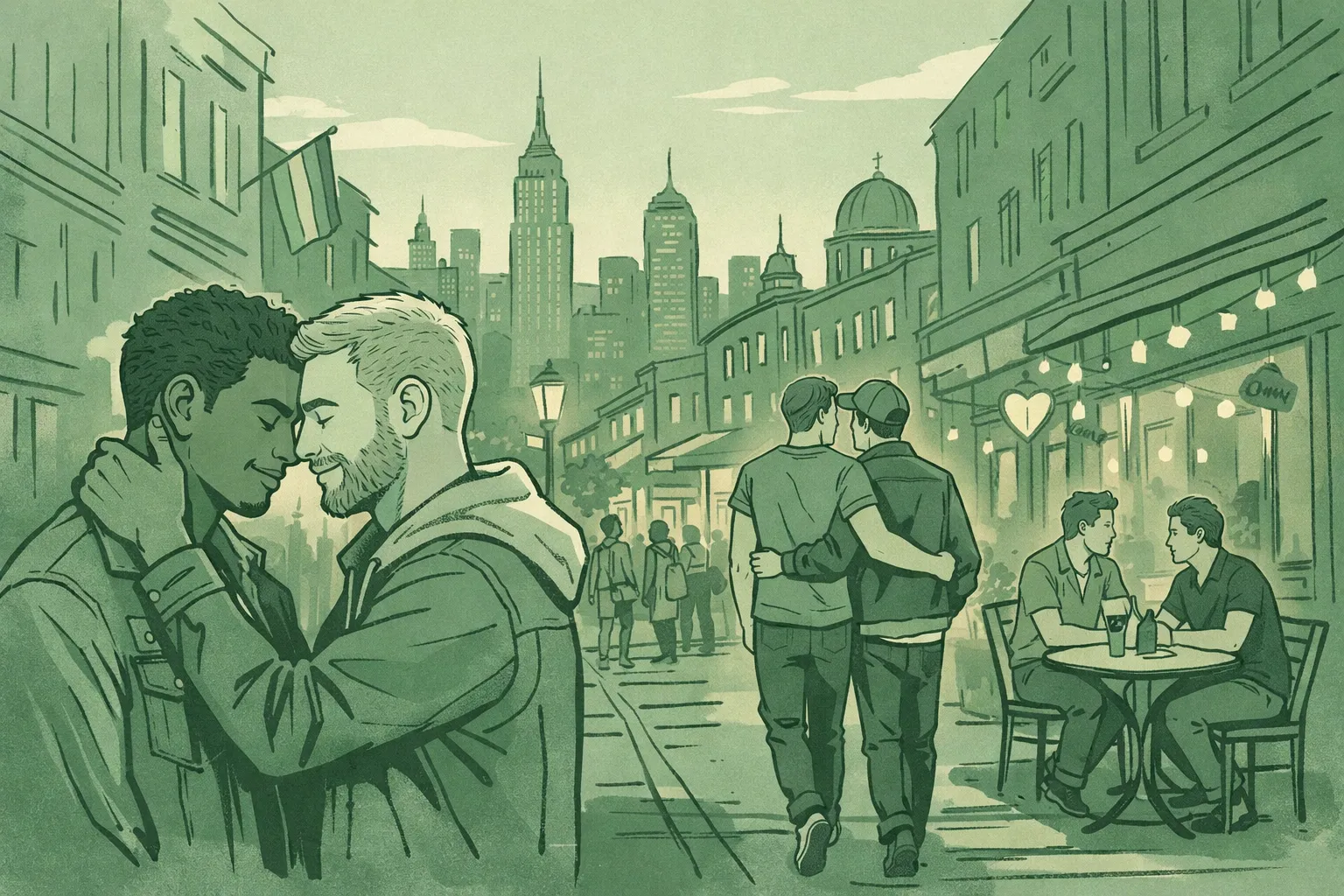
DISCOVER MM ROMANCE SET IN ICONIC QUEER NEIGHBORHOODS
EXPLORE NOW: Authentic gay fiction celebrating community, identity, and connection across global LGBTQ+ hubs. Shop MM romance at Read with Pride today.
Why Every Major City Needs Its 'Soho'
London's Soho was recently crowned the world's best LGBTQ+ neighborhood by Grindr's 2024 annual data: 16 million monthly users voted, and the verdict was clear. Soho isn't just bars and rainbow flags. It's infrastructure. It's survival. It's the blueprint every major city should follow.
From San Francisco's Castro to Madrid's Chueca, these central queer hubs provide what scattered safe spaces cannot: concentrated community power, visible representation, and physical safety in numbers. The 'Soho model' proves that visibility saves lives, creates economic opportunity, and preserves cultural memory.
READ STORIES INSPIRED BY THESE SPACES: The Berlin Companions captures the essence of European queer culture and connection. Browse the collection.
The Soho Model: History Meets Activism
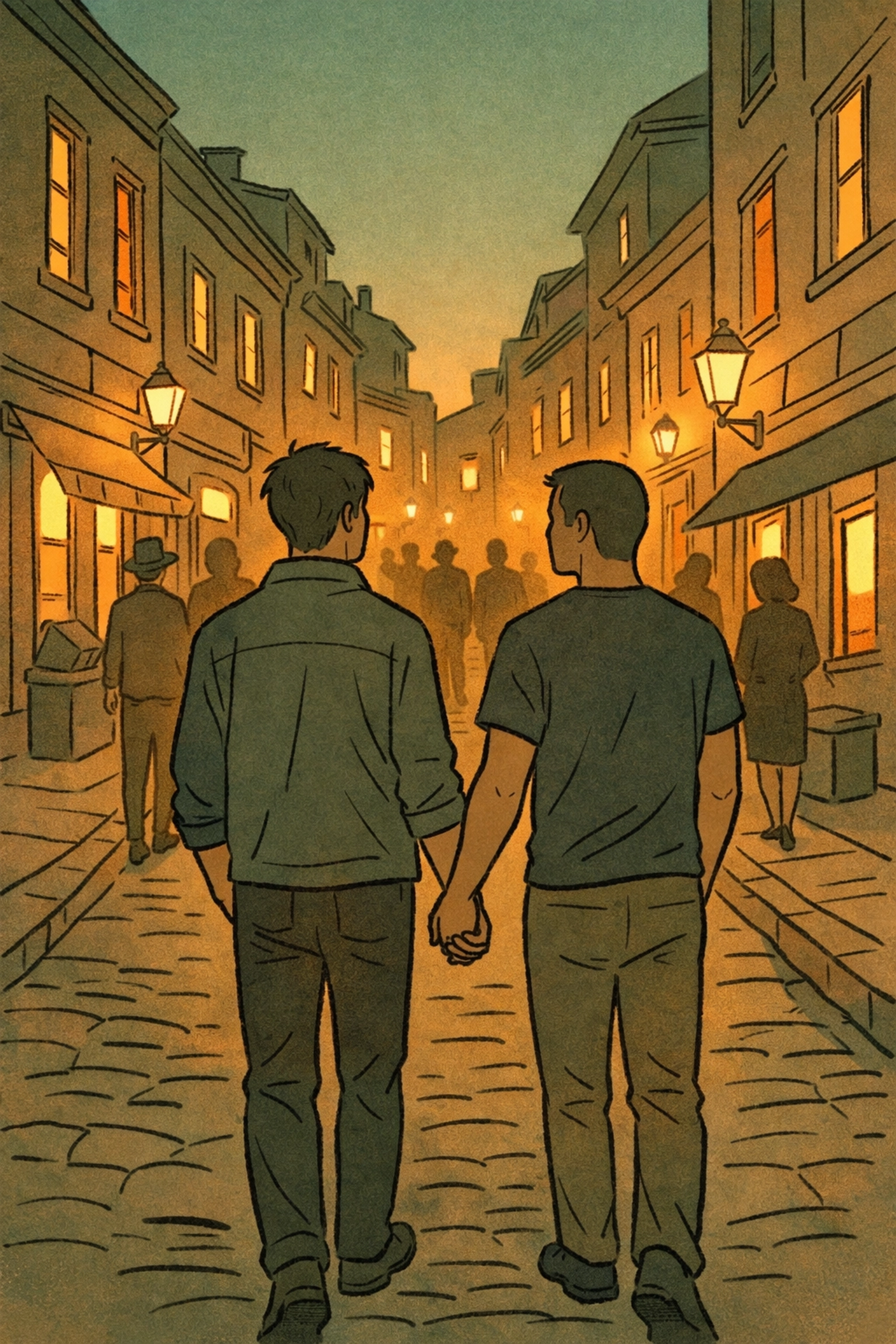
Soho emerged as a safe haven during the mid-20th century when LGBTQ+ rights were criminalized across the UK. While homosexuality was illegal until 1967, Soho's narrow streets and basement bars provided refuge. Men could meet, connect, and exist without constant fear of arrest. This wasn't accidental: it was necessity creating geography.
What made Soho work:
- Centralized location: Accessible by public transport, allowing discreet visits without owning a car or explaining destinations.
- Mixed-use density: Theaters, restaurants, and nightlife created cover. A man entering Soho could plausibly be there for a show, not seeking community.
- Established venues: G-A-Y Bar, Ku Bar, Balans Soho Society became more than entertainment: they're cultural institutions.
Old Compton Street remains the beating heart, buzzing with activity 24/7. The density matters. When you can walk from one queer space to another without crossing hostile territory, you create a microclimate of safety.
SIGN UP FOR 15% OFF YOUR FIRST PURCHASE: Join the Read with Pride newsletter and discover MM romance exploring community, identity, and chosen family. Subscribe now.
Global Parallels: The Soho Blueprint Worldwide
The 'Soho phenomenon' isn't uniquely British: it's been replicated across every continent with a major metropolitan center. These neighborhoods share core characteristics: central location, high density of LGBTQ+ businesses, historical significance, and ongoing cultural production.
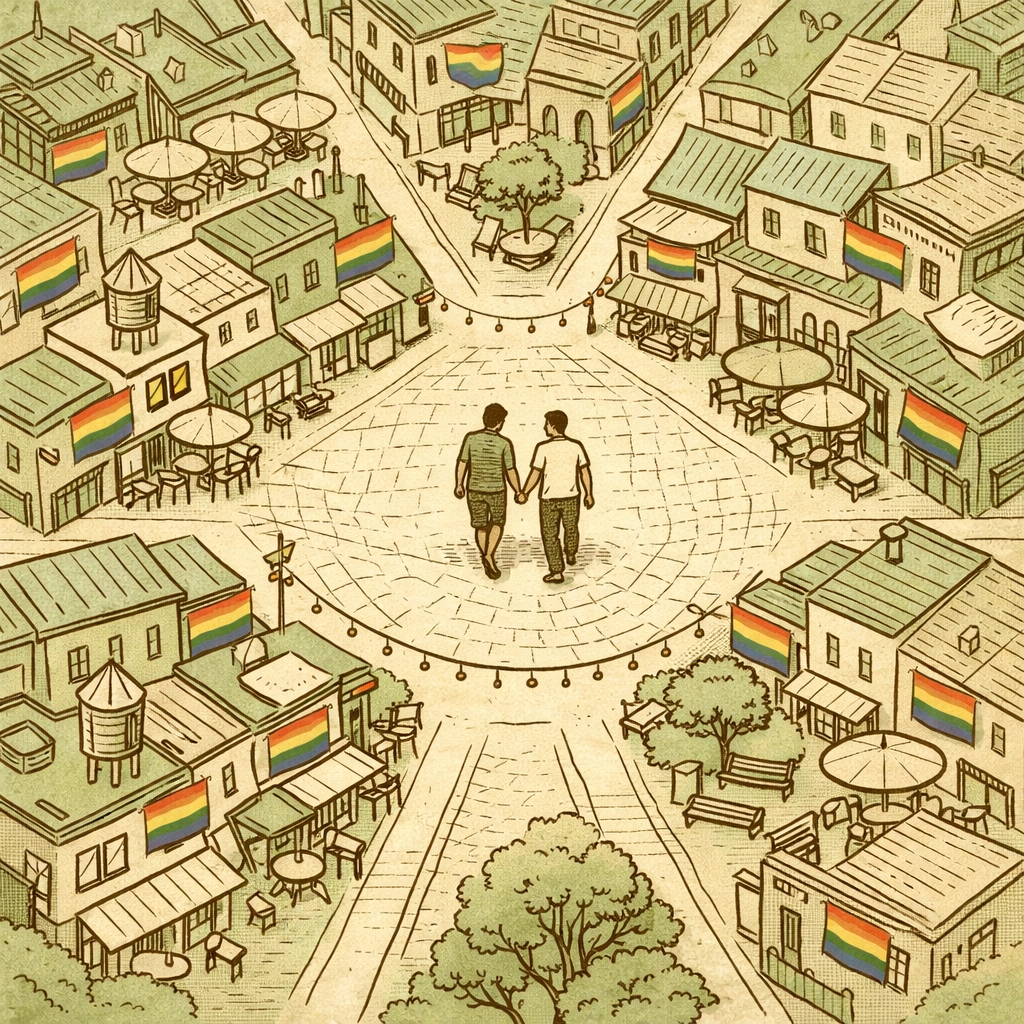
The Castro, San Francisco
America's first and most famous gay neighborhood. Harvey Milk's political base. Ground zero for AIDS activism. The Castro emerged in the 1960s when gay men fleeing conservative families and military discharges found cheap Victorian housing in a working-class district. By the 1970s, it was the global symbol of gay liberation.
Why it mattered: The Castro demonstrated political power through geography. Concentrated voting blocks elected openly gay officials decades before national acceptance.
Le Marais, Paris
The historic Jewish quarter became Paris's primary LGBTQ+ hub in the 1980s. Narrow medieval streets, small bars, and a tradition of welcoming outsiders made Le Marais ideal. Unlike Soho's nightlife focus, Le Marais blends daytime cafes with evening bars: a more integrated urban model.
Chueca, Madrid
Spain's late transition to democracy (1975) coincided with rapid LGBTQ+ neighborhood formation. Chueca transformed from a neglected central district to Europe's most vibrant gay neighborhood within two decades. The Spanish model emphasizes residential integration: queer people don't just visit Chueca, they live there.
WeHo (West Hollywood), Los Angeles
Incorporated as an independent city in 1984 specifically to preserve LGBTQ+ culture and political power. WeHo demonstrates the ultimate 'Soho model' success: governance, not just geography. The city council has maintained LGBTQ+ majority representation for four decades.
EXPLORE MM ROMANCE INSPIRED BY GLOBAL QUEER CULTURE: The Phoenix of Ludgate weaves historical LGBTQ+ themes with contemporary storytelling. Browse now.
Why These Spaces Are Non-Negotiable
The benefits of centralized LGBTQ+ neighborhoods extend beyond convenience. They create conditions impossible to replicate through dispersed safe spaces or digital communities.
Physical Safety Through Visibility
Queer-bashing decreases in neighborhoods with visible LGBTQ+ presence. When same-sex couples are the majority on a given street, harassment becomes socially unacceptable. The 'safety in numbers' principle isn't abstract: it's statistical. Hate crimes drop in and around established gay neighborhoods.
Economic Infrastructure
LGBTQ+ neighborhoods generate economic power. Gay bars employ queer people. LGBTQ+ bookstores stock queer authors. Restaurants and cafes with rainbow flags signal safe spaces for queer employees and customers. This creates economic mobility within the community.
SUPPORT QUEER AUTHORS: Every purchase at Read with Pride directly supports LGBTQ+ voices and stories. Shop MM romance now.
Cultural Production and Preservation
Where would we be without the Castro Theatre's queer film festivals? Without Soho's Royal Vauxhall Tavern preserving drag history? These neighborhoods don't just host culture: they produce it. Theaters, galleries, bookstores, and performance spaces cluster in gay neighborhoods because that's where the audience lives.
Intergenerational Connection
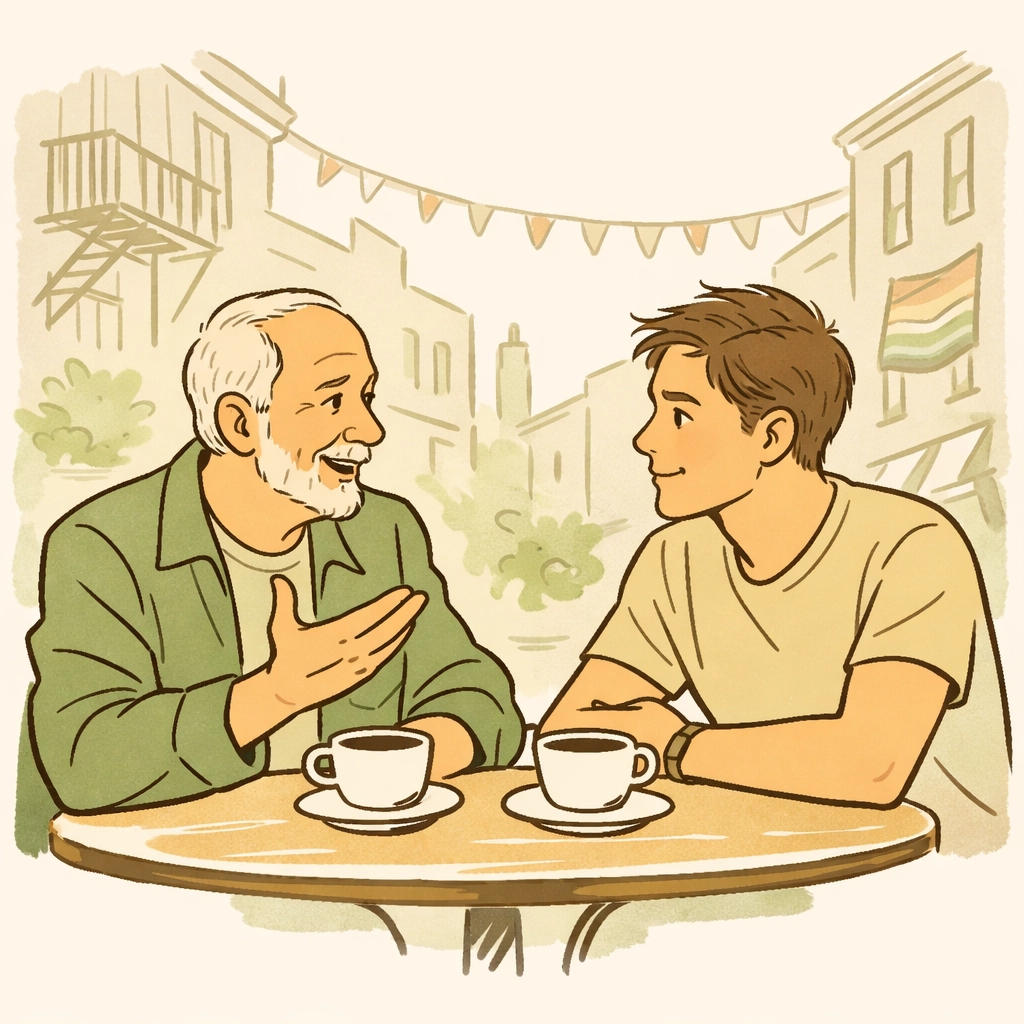
In dispersed communities, young queer people often lack access to elders. Gay neighborhoods create accidental mentorship. The 22-year-old at his first Pride meets the 68-year-old who survived the plague years. History transmits through physical proximity.
Modern Threats: Gentrification and Assimilation
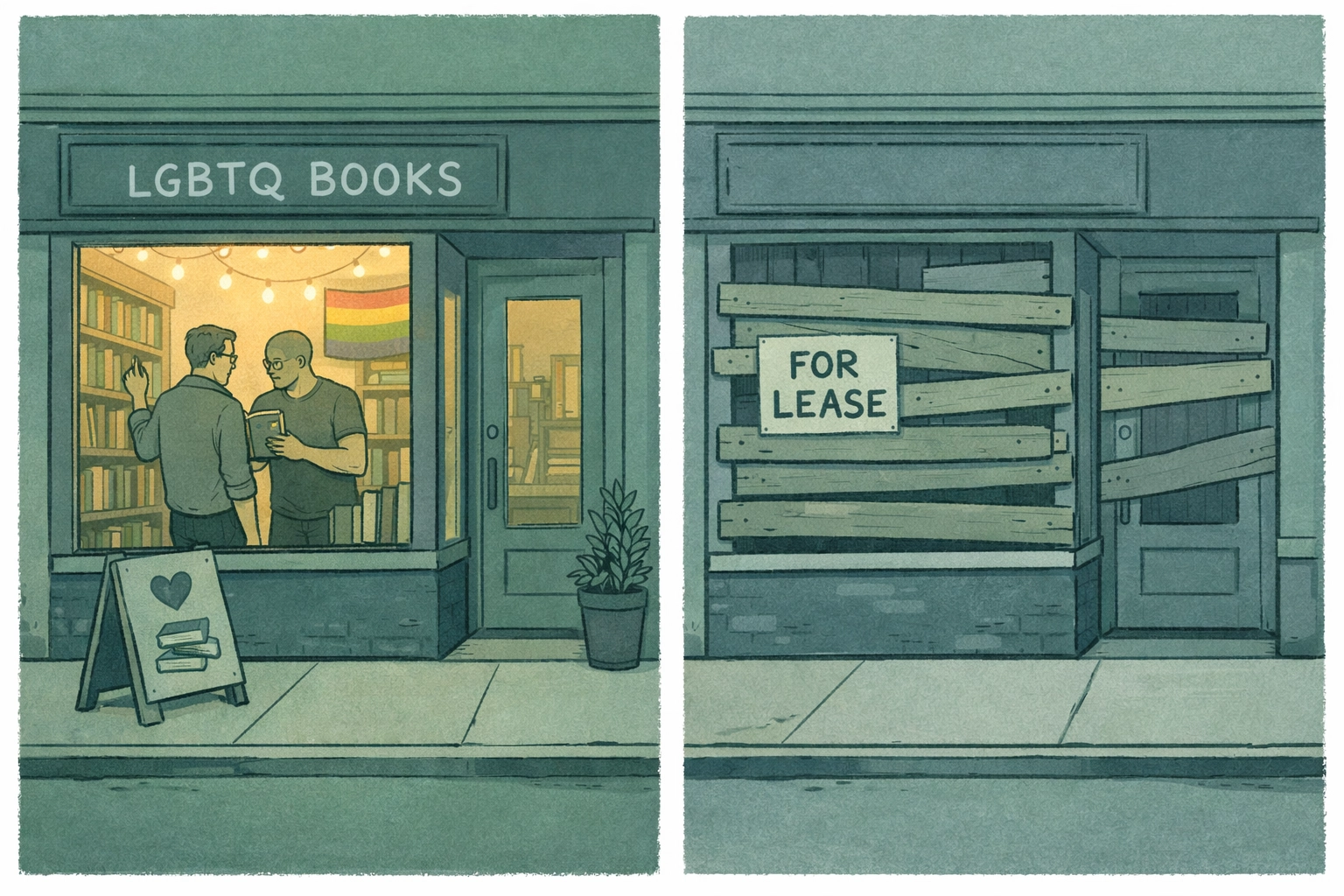
The search results emphasize ongoing challenges. Soho itself faces pressure from rising rents and heteronormative gentrification. Iconic venues close despite community resistance. San Francisco's Castro has seen similar displacement: long-term gay residents priced out by tech workers.
The paradox: LGBTQ+ neighborhoods become desirable because they're vibrant, safe, and culturally rich. Success attracts investment. Investment raises prices. Original residents and businesses are displaced. The neighborhood that created safety through concentration disperses.
Madrid's Chueca demonstrates a possible counter-model. By integrating residential LGBTQ+ populations rather than purely commercial spaces, Chueca has resisted some gentrification pressure. When gay people own homes rather than just patronize bars, the neighborhood retains queer character through economic downturns.
READ STORIES ABOUT COMMUNITY RESILIENCE: The Price of Desire explores power, vulnerability, and connection in contemporary gay life. Purchase now.
The Future of Queer Geography
Digital connection hasn't eliminated the need for physical space: it's intensified it. Grindr users voted Soho #1 precisely because apps can't replicate walking down Old Compton Street holding your boyfriend's hand. Virtual community matters, but it can't protect you from violence or provide employment or stage a protest.
Emerging models include:
- Micro-neighborhoods: Smaller concentrations in mid-sized cities without traditional gay districts.
- Queer cultural corridors: Linear developments along transit lines rather than centralized hubs.
- Mixed-use integration: Residential priority rather than pure commercial/nightlife focus.
The 'Soho phenomenon' will evolve, but the core need remains: visible, concentrated, accessible space where LGBTQ+ people control their own geography.
SHOP MM ROMANCE CELEBRATING QUEER COMMUNITY
Discover authentic gay fiction exploring identity, connection, and belonging across global LGBTQ+ experiences. Browse the Read with Pride collection now.
15% OFF FOR NEW SUBSCRIBERS: Join the newsletter and receive exclusive offers, new releases, and curated MM romance recommendations.
Follow Read with Pride on social media:
- Instagram: @dickfergusonwriter
- X/Twitter: @DickFergus94902
- Facebook: Dick Ferguson Writer
Visit: www.readwithpride.com | www.dickfergusonwriter.com
#ReadWithPride #LGBTQebooks #MMromance #GayRomance #QueerFiction #GayBooks #LGBTQfiction #MMromancebooks #GayLiterature #GayLoveStories #QueerCommunity #LGBTQhistory #GayNeighborhoods #SohoLondon #CastroSF #PrideReading #MMfiction #GayContemporaryRomance #LGBTQculture #ReadingWithPride

Leave a Reply
You must be logged in to post a comment.