

readwithpride.com
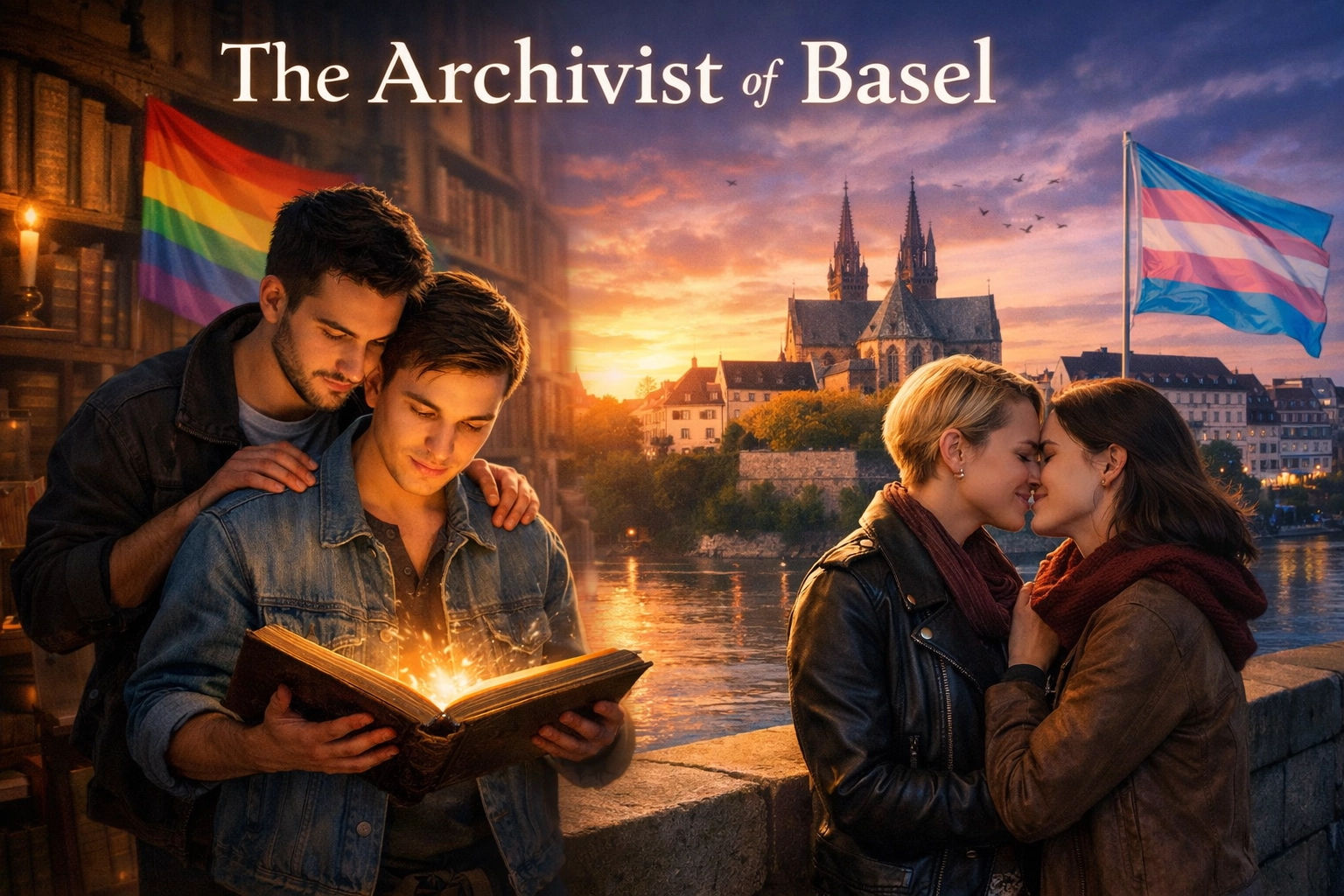
There's something undeniably romantic about discovering hidden history, dusty archives, forgotten letters, lives lived in secret finally brought to light. Now imagine that journey of discovery intertwining with your own love story, set against the backdrop of one of Europe's most quietly beautiful cities. That's exactly what you'll find in this compelling MM romance that proves the past and present aren't as separate as we think.
When History Becomes Personal
Meet Dr. Elias Zimmermann, a meticulous Swiss historian who's spent years cataloging Basel's official history while his own life remains carefully ordered and predictable. When he stumbles upon a cache of coded correspondence in the Basel University archives: letters exchanged between two men in the 1920s: his professional curiosity ignites into something more consuming. These aren't just historical documents; they're love letters, written in a time when such feelings had to be hidden behind careful language and secret symbols.
Enter Marco Bellini, an Italian restoration specialist brought in to preserve the fragile documents. Where Elias is reserved and methodical, Marco is warm, impulsive, and entirely too comfortable breaking through Elias's carefully constructed walls. As they work together to decode the letters and piece together the story of Basel's hidden queer history, the chemistry between them becomes impossible to ignore.

Basel's Secret Queer History
What makes this story particularly compelling is how it grounds itself in real historical context. Switzerland's relationship with LGBTQ+ rights has been complex: progressive in some ways, surprisingly conservative in others. While homosexuality was decriminalized in Switzerland in 1942, decades before many European neighbors, social acceptance lagged far behind legal tolerance.
Basel, as a cosmopolitan university city bordering both France and Germany, became a quiet refuge for queer intellectuals and artists throughout the 20th century. The city's archives: from the Swiss Economic Archives to the various university collections: hold countless stories that have never been fully explored. The coded language, the careful discretion, the networks of support that existed in shadows: all of this forms the backdrop for Elias's research and his growing understanding of how little has truly changed about the fear of being seen.
The novel beautifully parallels the 1920s correspondence with Elias's modern struggle. Despite living in a Switzerland that legalized same-sex marriage in 2022, he still carries internalized caution, still keeps parts of himself archived away. It's a nuanced look at how historical trauma echoes through generations, even as legal protections advance.
The Romance That Unfolds Between the Pages
This isn't your typical instalove MM romance (though we love those too). This is a slow burn that smolders between library stacks and late-night research sessions. Marco's patience with Elias's walls, his genuine interest in both the historian and the history he's uncovering, creates a romance that feels earned and authentic.
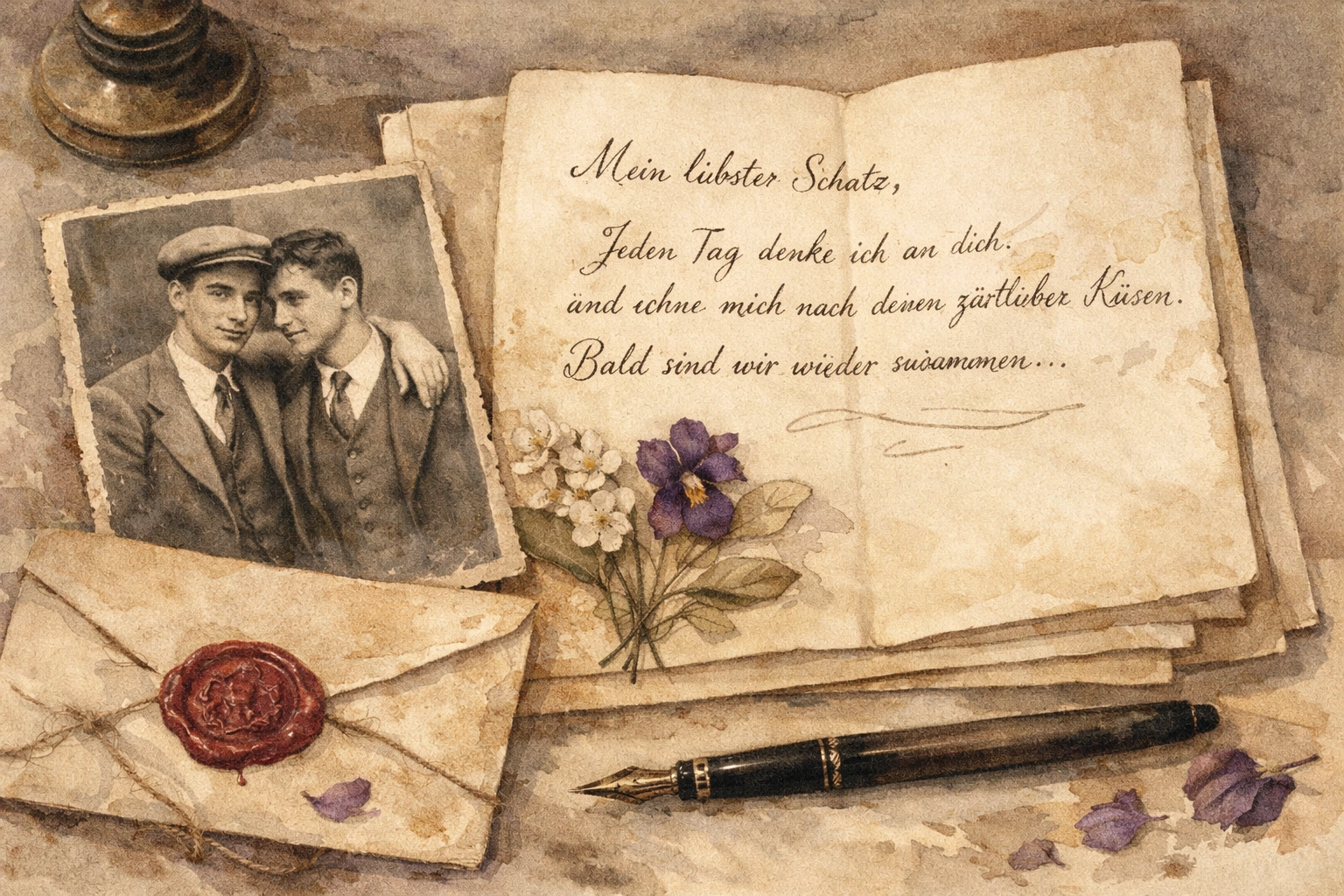
The dynamic between them crackles with tension: intellectual sparring over interpretation of documents, heated debates about preservation versus accessibility, and underneath it all, the growing awareness that they're writing their own love story while uncovering another's. Marco challenges Elias to see that being an archivist of the past doesn't mean he has to archive his own desires.
The supporting cast adds depth without overwhelming the central romance. Elias's colleague, a younger queer researcher who's openly gay in ways Elias never allowed himself to be, represents the generational shift in Swiss LGBTQ+ life. Marco's ex-boyfriend's unexpected appearance in Basel adds just enough conflict to test their budding relationship without veering into melodrama.
Why This Gay Romance Matters
In the world of MM romance books, we've seen plenty of stories set in glamorous capitals or exotic locations, but Basel offers something different: a quieter, more introspective backdrop that mirrors the internal journey of its protagonist. This isn't about coming out with explosive drama; it's about a man in his late thirties learning that he's allowed to want things, to be seen, to take up space.
The historical mystery provides more than just a plot device. It serves as a mirror and a warning: a reminder of what happens when love is forced into shadows, when history is deliberately erased or overlooked. Elias's work to bring these forgotten stories to light becomes inseparable from his willingness to write himself into the present narrative of queer Basel.

For readers who love gay romance that combines emotional depth with intellectual intrigue, this delivers on both fronts. It's a love letter to historians and archivists, to anyone who's ever felt more comfortable with the past than the present, and to the quiet courage it takes to let yourself be known.
The Modern Swiss Queer Experience
While the novel centers on Elias's journey, it also offers glimpses into contemporary LGBTQ+ life in Switzerland. Basel's Pride celebrations, the city's queer-friendly cafes and bars, the ongoing debates about LGBTQ+ education in schools: all of this grounds the story in recognizable reality. Switzerland might have marriage equality now, but like everywhere, the day-to-day experience of being queer varies wildly depending on your community, your family, your own internalized narratives.
The novel doesn't shy away from showing that legal progress doesn't automatically translate to emotional freedom. Elias's journey is as much about unpacking his own assumptions about what his life should look like as it is about falling in love. It's a nuanced portrayal that will resonate with anyone who's navigated the gap between external acceptance and internal permission.
Perfect For Readers Who Love…
If you're drawn to MM contemporary romance with substance, this is your next read. Fans of scholarly protagonists, workplace romance (archives count as workplaces!), and forced proximity will find plenty to love here. The slow burn rivals any historical romance, while the modern setting keeps things grounded and relatable.

It's also ideal for readers who appreciate gay fiction that engages with LGBTQ+ history: not in a heavy-handed way, but as an organic part of the story. The decoded letters reveal themselves gradually, paralleling Elias and Marco's relationship development in ways that feel both clever and emotionally resonant.
Final Thoughts
"The Archivist of Basel" proves that the best MM romance novels don't just make you feel; they make you think. They honor where we've been while celebrating where we are. They remind us that every love story is part of a longer history, and every act of courage: whether writing coded letters in the 1920s or opening your heart in 2026: matters.
This is gay romance that trusts its readers to appreciate nuance, that doesn't need explosive drama to create genuine tension, and that understands the profound intimacy of being truly seen by another person. It's a story about excavating the past while building a future, about the courage it takes to archive your fears and embrace your desires.
For more heartfelt MM romance books and LGBTQ+ fiction that celebrates our community's stories, explore the full collection at readwithpride.com. Because every love story: past, present, and future: deserves to be read with pride.
Follow Read With Pride:
- Facebook: Read With Pride
- Instagram: @read.withpride
- X/Twitter: @Read_With_Pride
#MMRomance #GayRomance #LGBTQBooks #ReadWithPride #SwissRomance #HistoricalMystery #GayFiction #QueerBooks #MMContemporary #SlowBurnRomance #LGBTQFiction #GayLoveStories #2026MMRomance #QueerHistory #BaselRomance #ArchivesAndLove #MMBooks #GayRomanceBooks #LGBTQReads #PrideReading

Leave a Reply
You must be logged in to post a comment.