

readwithpride.com
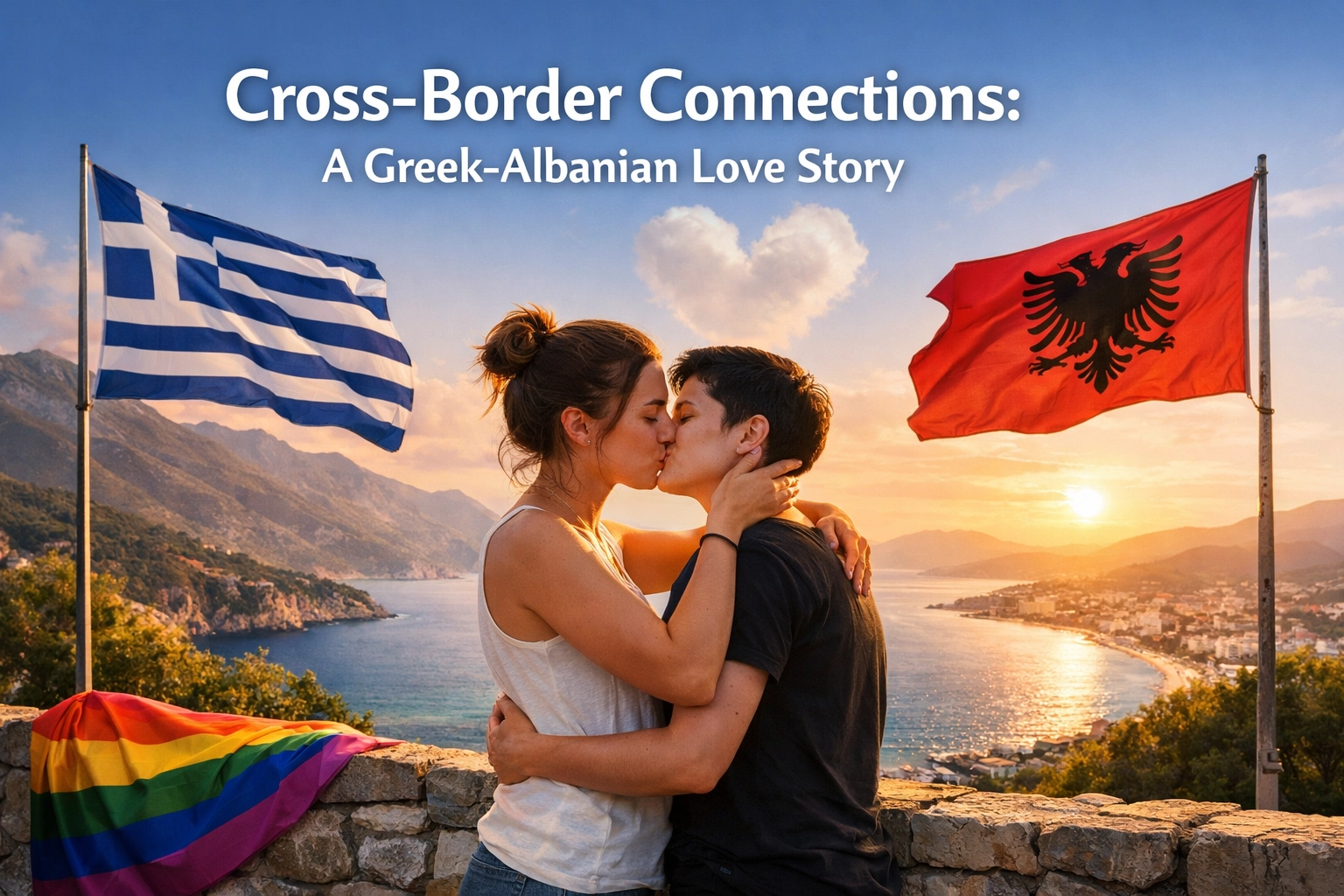
There's something achingly romantic about forbidden borders and the hearts that dare to cross them. When it comes to Greek and Albanian love stories, we're talking about two nations with complicated histories, shifting politics, and LGBTQ+ communities that have walked dramatically different paths toward acceptance. Yet somehow, in the spaces between old grudges and new possibilities, love finds a way.
Let's dive into what it really means to be queer in Greece and Albania, both today and throughout history, and why cross-border MM romance between these two cultures offers some of the most compelling storytelling you'll find in contemporary gay fiction.
The Historical Landscape: Hidden Lives in the Balkans
For centuries, both Greece and Albania operated under the kind of silence that felt like suffocation. While Greece had its ancient myths of same-sex love (hello, Achilles and Patroclus), the modern Greek experience was far less poetic. Under Ottoman rule and later through periods of military dictatorship, LGBTQ+ Greeks learned to hide in plain sight, meeting in coded spaces, using careful language, living double lives that would make any gay thriller plot seem tame.
Albania? Even more complicated. Under Enver Hoxha's communist regime (1944-1985), homosexuality wasn't just illegal, it was treated as a Western contamination, a betrayal of revolutionary values. People disappeared for less. The country sealed itself off from the world, creating one of the most isolated societies in Europe. Being gay in Albania during this time meant existing in the deepest closet imaginable, where even whispers could destroy lives.
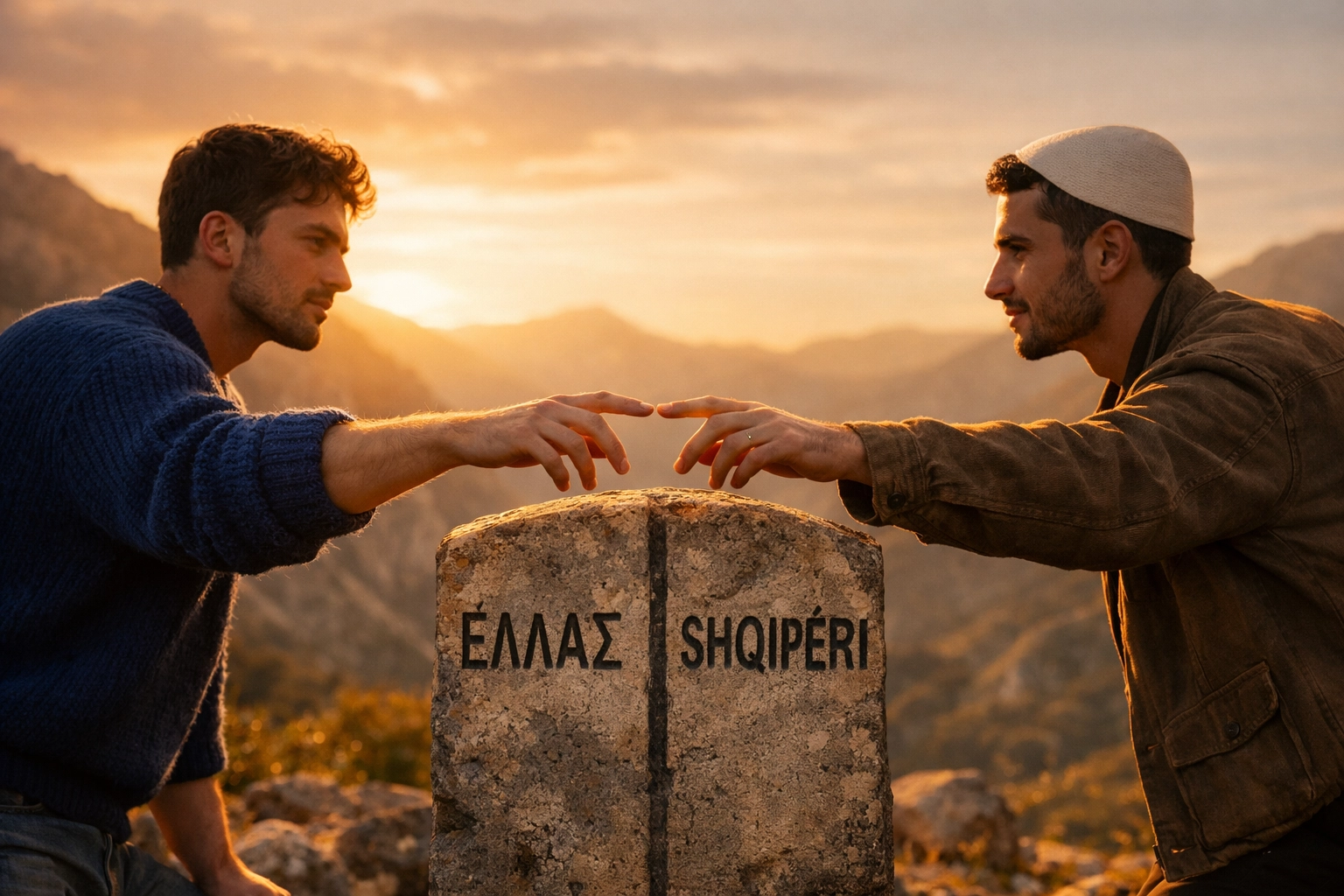
But here's where it gets interesting: despite the repression, queer people still found each other. They always do. In Athens' Gazi district, in Thessaloniki's hidden bars, in the cafes of Tirana where men held eye contact just a second too long, love persisted, even when it had to wear a mask.
Modern Greece: From Gazi to the Islands
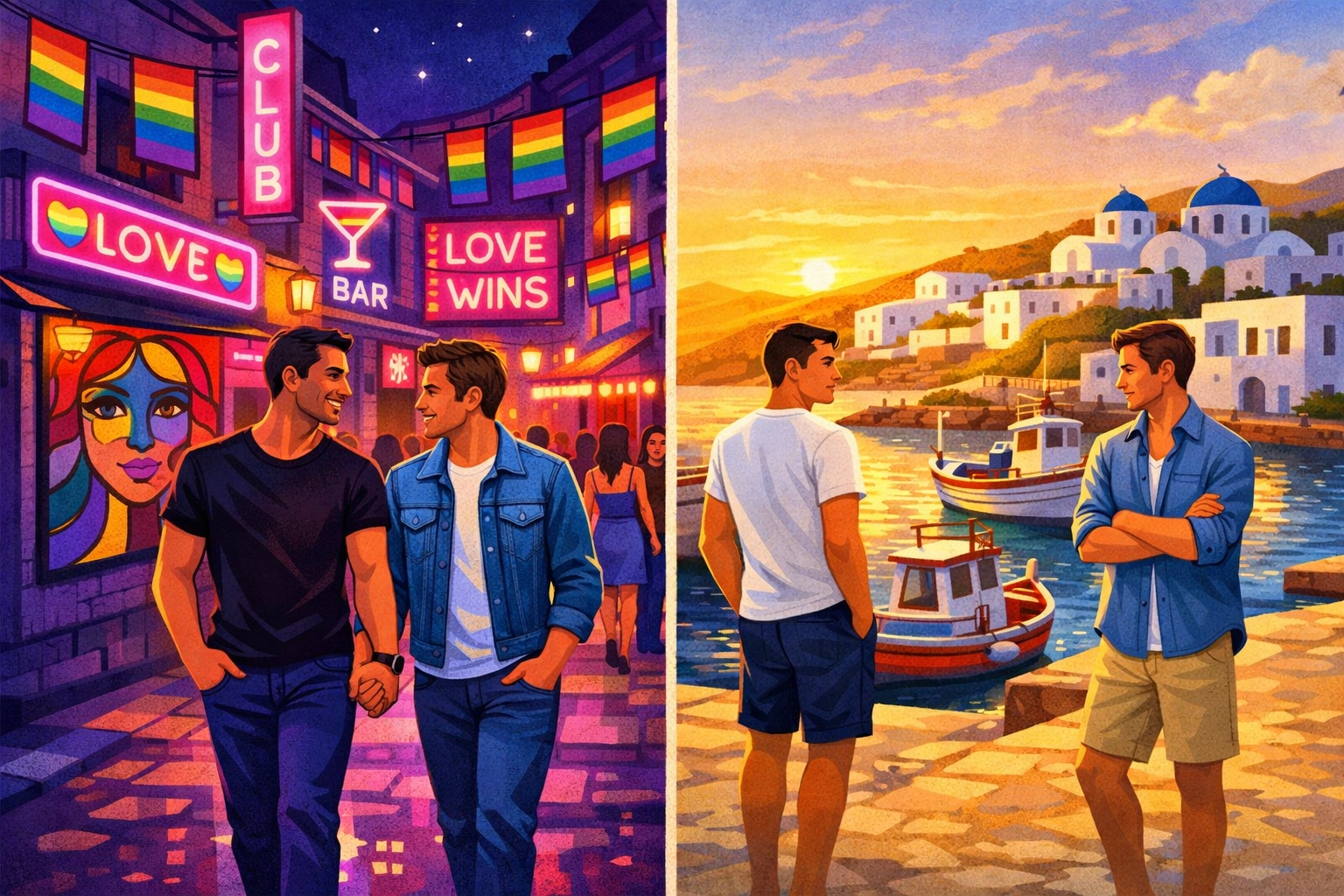
Fast forward to 2026, and Greece has become one of the more progressive countries in the Balkans for LGBTQ+ rights. Same-sex civil unions became legal in 2015, and marriage equality followed in 2024. Athens Pride draws thousands every year, and neighborhoods like Gazi have transformed into vibrant queer hubs where rainbow flags fly without shame.
The urban Greek gay experience today means being able to hold your partner's hand while walking to dinner in Monastiraki, dancing until dawn at Sodade or Noiz, and actually seeing yourself reflected in media and culture. Greek LGBTQ+ activists have fought hard for visibility, and it shows.
But, and this is crucial for anyone writing or reading authentic gay romance, rural Greece is a different story. Head to the smaller islands or mountain villages, and you'll find communities where tradition runs deep and change moves slowly. Coming out in a village where everyone knows your family, where the local priest holds serious social power? That takes courage that city dwellers might not fully understand.
This urban-rural divide creates incredible tension for gay romance novels. Imagine a love story between an openly gay Athenian artist and a closeted fisherman from Crete. The push and pull, the code-switching, the weight of family expectations versus personal freedom, it's storytelling gold.
Albania Today: Rapid Change, Lingering Shadows
Albania decriminalized homosexuality in 1995, but legal rights and social acceptance are two very different things. While Tirana has seen its first Pride marches and a slowly growing LGBTQ+ community, Albania remains one of the most challenging places to be openly queer in Europe.
Family honor culture runs deep. In traditional Albanian society, the family unit is everything, and bringing "shame" upon it can result in total rejection. Many young LGBTQ+ Albanians flee to Greece, Italy, or further west, seeking safety and acceptance they can't find at home.
Yet there's a generational shift happening. Young Albanians who grew up with internet access, Western media, and connection to broader European culture are questioning old norms. Activists are organizing, slowly building community in Tirana's hipper cafes and online spaces. Progress is slow, frustratingly so, but it's happening.
For MM romance writers, this creates powerful narrative possibilities. A character returning to Albania after years abroad, trying to reconcile who they've become with where they came from. Secret relationships in Tirana where every public interaction feels loaded with risk. The desperate hope of young lovers planning their escape to a more accepting country.
The Cross-Border Dynamic: Why Greek-Albanian Romance Hits Different
Now here's where it gets really good. The relationship between Greece and Albania is… complicated. Historical tensions over borders, minority populations, and national identity have created friction that still exists today. Greek nationalist sentiment can view Albanians negatively, while Albanian nationalism sometimes positions Greece as the historic oppressor.
Enter two men, one Greek, one Albanian, who fall in love despite (or perhaps because of) everything their countries represent to each other.
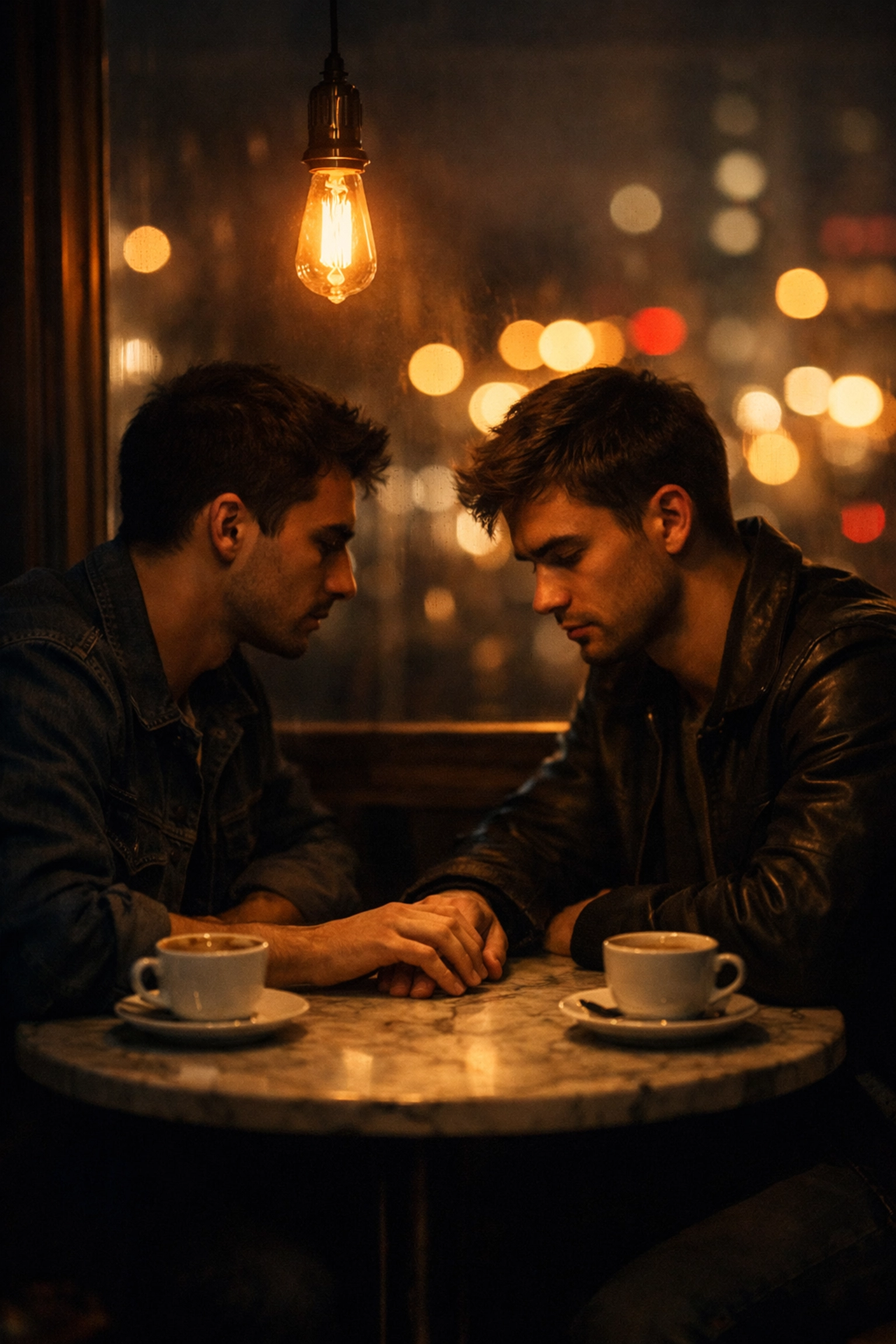
This is the enemies-to-lovers trope on a geopolitical scale. The Greek boyfriend's family who makes dismissive comments about Albanians at dinner. The Albanian partner who's heard nothing but anti-Greek rhetoric from relatives back home. The code-switching required when visiting each other's countries. The language barriers, the cultural misunderstandings, the moments when national identity and personal love collide.
But it's also about finding common ground. Both cultures value family deeply (even when that creates its own tensions). Both have rich traditions of hospitality, passionate communication styles, and food that brings people together. Mediterranean culture creates a shared backdrop of late-night dinners, strong coffee, and the kind of emotional expressiveness that makes for beautifully dramatic gay love stories.
Finding Each Other: Where Cross-Border Romance Begins
So where do a Greek and Albanian man actually meet and fall in love? The answer varies wildly depending on generation and circumstance.
For older generations, it might have been through migration patterns, Albanian men coming to Greece for work, living in the shadows of Athens or working on construction sites, forming connections in underground gay spaces where nationality mattered less than shared experience.
Today? It could be on dating apps where borders exist only as filters. At Thessaloniki's universities where Albanian students come for education. In the club scene of Athens where young people from across the Balkans mix freely. Through LGBTQ+ activism networks that cross borders. Or in that most modern of meet-cutes: matching on Grindr while on opposite sides of the Greek-Albanian border.
The contemporary MM romance of it all is that love now operates in multiple dimensions, digital and physical, local and transnational, rooted in tradition while reaching for something new.
What This Means for Readers and Writers
If you're diving into Read with Pride looking for stories that reflect authentic queer experiences, Greek-Albanian narratives offer something special. They combine the sunshine and history of Mediterranean settings with real cultural tension and the kind of obstacles that make you root for characters to overcome everything standing between them.
These are gay romance books that explore identity on multiple levels, sexual, national, cultural, linguistic. They're about what it means to choose love when everything around you says it should be impossible. They're about building bridges between communities that have been taught to see each other as other.
And for writers, this cross-border dynamic offers endless possibilities: forced proximity when they're stuck together during a border closure, forbidden romance when families forbid the relationship, slow burn as they navigate language and cultural barriers, hurt/comfort as they help each other heal from family rejection, and found family as they create new definitions of home together.
The Stories We Need
As of February 2026, we're seeing more LGBTQ+ fiction that treats Balkan queer experiences with the nuance they deserve. Not every Greek character needs to be living their best life in Mykonos, and not every Albanian character needs to be a tragic closet case. The spectrum of experience is vast, and the most compelling MM novels embrace that complexity.
We need stories of activist partners fighting together for rights in both countries. Rural love stories where men build quiet lives away from cities' judgment. Historical fiction exploring the hidden queer communities that existed even during the darkest times. And yes, plenty of steamy, hopeful, boundary-crossing romance where love wins against the odds.
Because at the end of the day, that's what gay love stories do best: they remind us that borders are human constructs, but love is a human necessity. When a Greek man and an Albanian man look at each other and see not a national stereotype but a person worth knowing, worth loving, worth fighting for: that's when the real magic happens.
Looking for more cross-cultural MM romance and diverse LGBTQ+ stories? Check out our full collection at ReadWithPride.com and join our community on Instagram, Facebook, and X for daily recommendations.
#MMRomance #GayRomance #LGBTQFiction #CrossBorderLove #GreekAlbanianRomance #ReadWithPride #QueerRomance #GayRomanceBooks #InternationalRomance #BalkanLGBTQ #ContemporaryGayRomance #MMRomanceBooks2026 #AuthenticQueerStories #EnemiesToLovers #ForbiddenRomance #LGBTQBooks #GayLoveStories #QueerFiction

Leave a Reply
You must be logged in to post a comment.