

readwithpride.com
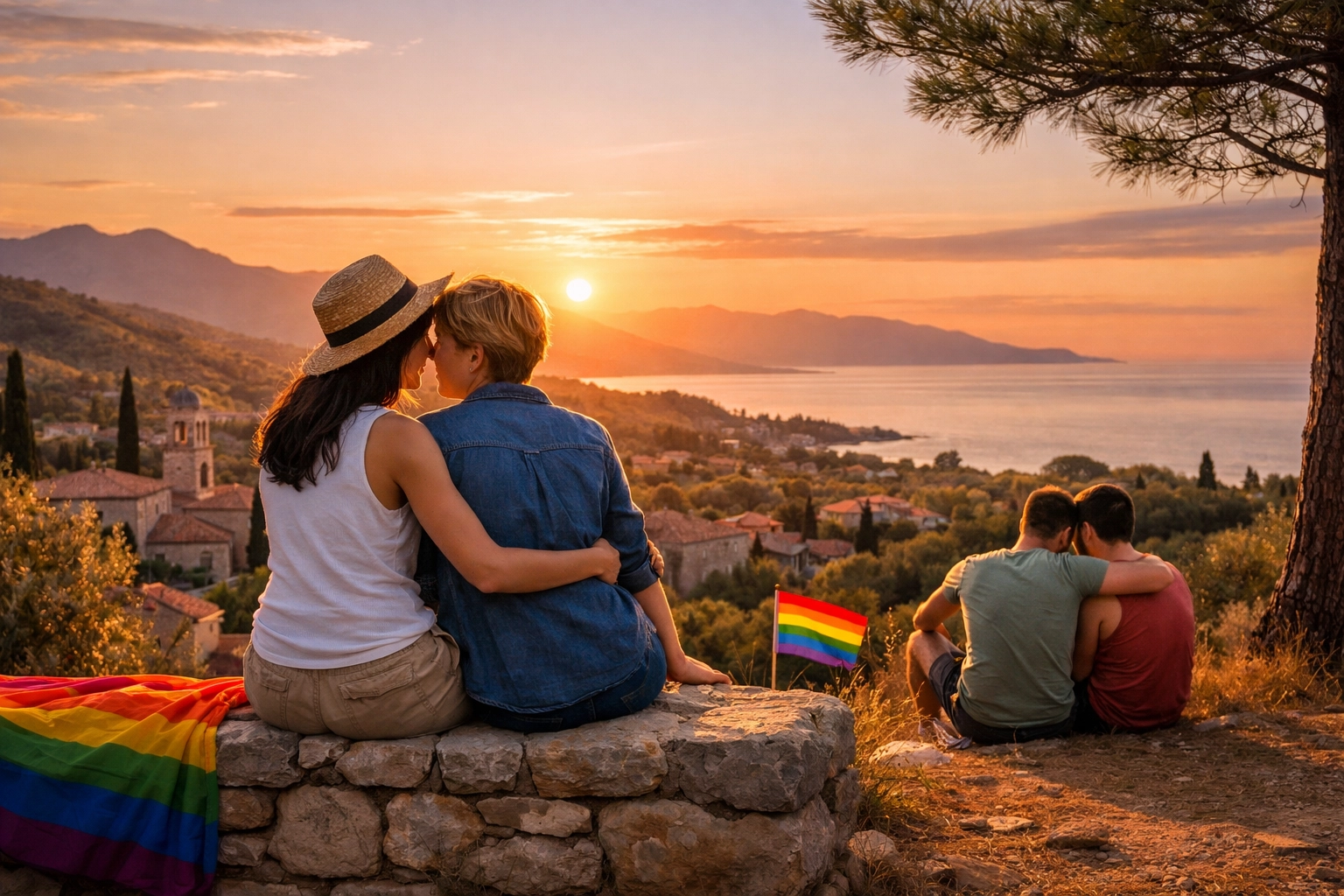
There's something about the Greek countryside that makes time move differently. Not slower exactly, just… softer around the edges. In the Peloponnese, where pine-covered mountains give way to olive groves and ancient stone villages cling to hillsides like they've grown there naturally, love stories unfold in the spaces between what's said and what's understood.
Let's talk about what it actually means to be queer in rural Greece today, and how far we've come from the shadows of yesterday.
The Village That Learned to See
Modern Greece, especially Athens and Thessaloniki, has made significant strides in LGBTQ+ rights. Same-sex marriage became legal in 2024, a landmark moment that sent ripples across the entire country. But here's the thing about progress: it doesn't arrive everywhere at once, and sometimes the most profound changes happen in the smallest places.
Rural Peloponnese isn't Mykonos. There are no rainbow flags flying from tavernas, no openly queer-owned guesthouses advertising in travel guides. But there's something else happening, something quieter and maybe more sustainable. Young people are returning from the cities, bringing with them new perspectives and refusing to hide. Older residents are realizing that the man who's been running the family olive press for three generations is happier now that his partner has moved in from Tirana.
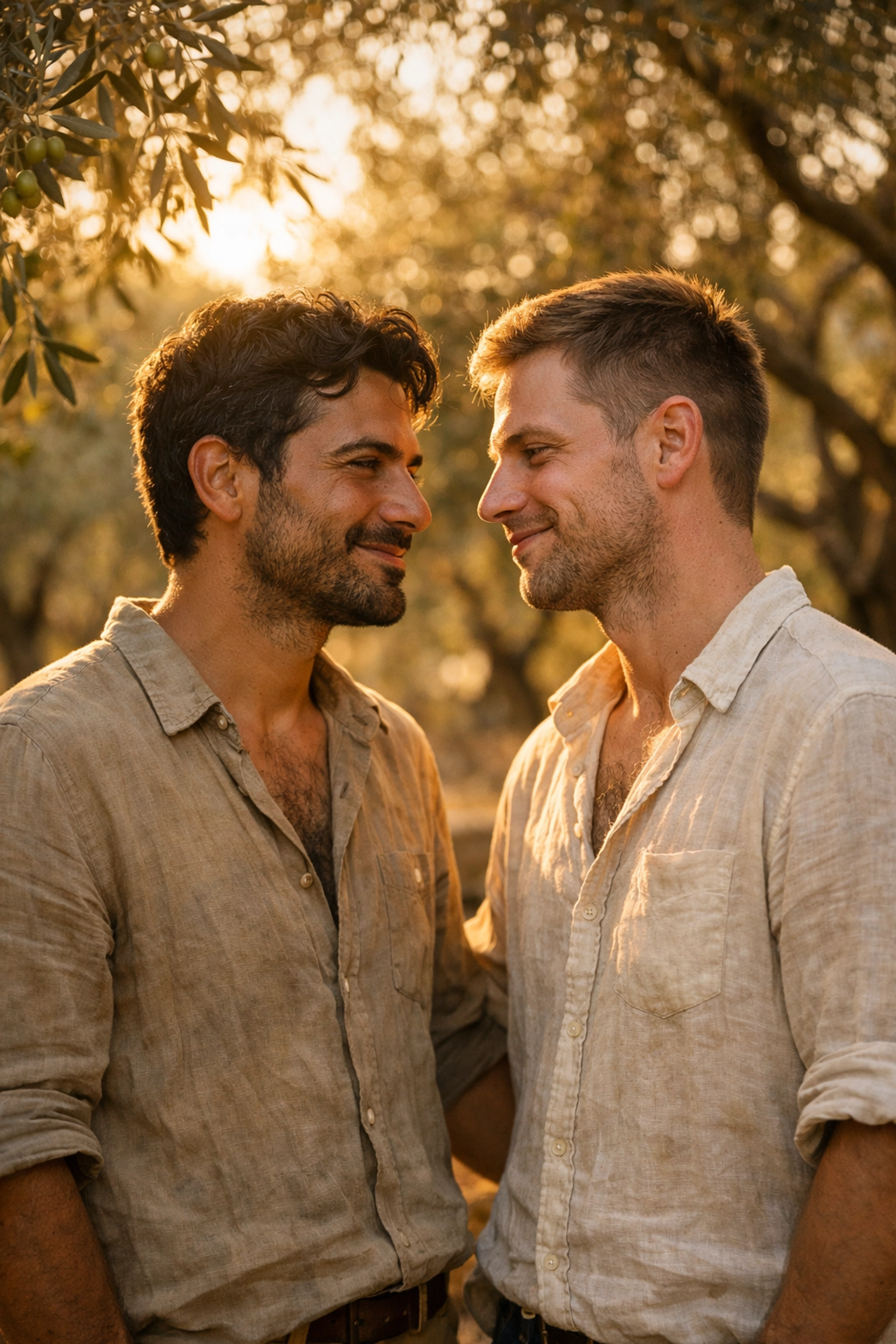
Because yes, let's talk about Albania. The borders between Greece and Albania have always been more porous than the maps suggest: economically, culturally, and romantically. Albanian workers have been coming to Greece for decades, and Greek tourists have been discovering Albania's stunning coastline and mountains. And where people meet, they fall in love, regardless of what their governments think about it.
Then and Now: A Timeline Written in Whispers
Historical records of queer life in rural Greece are sparse, but absence of evidence isn't evidence of absence. Ancient Greece celebrated same-sex love openly, but by the 20th century, under both Ottoman influence and later conservative Greek nationalism, LGBTQ+ people learned to exist in coded language and careful glances.
In the 1950s through the 1980s, rural queer Greeks faced a choice: migrate to Athens or construct elaborate facades. Many married, had children, and carried their truth like a stone in their pocket: heavy, smooth from constant handling, never quite forgotten. Some found each other anyway, in the corners of festivals, during long harvest seasons when men worked side by side for weeks.
The 1990s brought satellite television and slowly, incrementally, awareness. The 2000s brought the internet. And suddenly, a young man in a mountain village could see that he wasn't alone, that there was language for what he felt, that there was a future beyond pretending.
The Olive Grove Conversations
Today's rural Greek gay experience is defined by negotiation. Between tradition and authenticity. Between family expectations and personal truth. Between the desire to preserve a way of life and the need to live honestly within it.
Picture this: Two men in their thirties, one Greek, one Albanian, running a small agricultural tourism business in Arcadia. They grow organic vegetables, make their own wine, host guests in restored stone cottages. To the village, they're business partners. Everyone knows, of course: this is rural Greece, where privacy is a myth and everyone's business is everyone's business: but the language used is careful. "They live together." "They're very close." "Modern ways."
Their guests, often queer travelers from Northern Europe or Australia, arrive expecting either complete acceptance or hostile conservatism. They find neither. What they find is complicated human reality: the grandmother who won't acknowledge the relationship but bakes them her best honey cakes every Easter. The cousin who insists on introducing them as "my favorite people" but never quite says "couple." The neighbor who casually mentions over coffee that his own nephew is "that way" too, in Berlin, and isn't it nice these boys stayed?
Cross-Border Love in a Nationalist Era
The Greece-Albania dynamic adds another layer of complexity to rural queer relationships. Despite EU progress, both countries carry nationalist narratives that paint the other as different, sometimes threatening. For queer couples crossing this border, literally or figuratively: there's an extra burden of proof.
Albanian men in Greece face stereotyping and economic prejudice. Gay Albanian men face double invisibility. When a Greek man from a traditional village falls for an Albanian worker, they're not just navigating queerness: they're navigating decades of political tension, economic disparity, and cultural assumptions.
But here's what's beautiful: love doesn't care about geopolitics. In farmhouses and mountain retreats across the Peloponnese, mixed couples are building lives that would have been unimaginable thirty years ago. They're learning each other's languages, blending cuisines, creating hybrid traditions that honor both heritages.
The MM Romance of Real Life
This is what draws us to gay romance books set in places like this: because the best MM romance novels capture these real tensions and real tenderness. The slow burn of two people learning to trust. The forced proximity of rural life where everyone knows everyone. The enemies-to-lovers arc when cultural prejudices give way to actual human connection.
At Readwithpride.com, we celebrate stories that reflect authentic queer experiences, including those rooted in specific cultural contexts. The Greek and Albanian gay experience: with its layers of history, tradition, and contemporary struggle: offers rich material for MM contemporary romance that feels grounded in reality.
Pine Trees and Possibility
The Peloponnese, with its pine forests and ancient ruins, its traditional villages and emerging progressive attitudes, represents something important: the possibility of being both rooted and free. You can honor where you come from while being honest about who you are. You can love your grandmother's traditions and your Albanian boyfriend. You can tend olive groves your family has worked for generations while building a future that previous generations couldn't imagine.
This isn't the sanitized, rainbow-filtered version of queer life. It's messier. There are still closets, still compromises, still moments of loneliness or frustration. But there's also unprecedented possibility. Young queer Greeks in rural areas today have options their parents and grandparents never dreamed of.
The Literature We Need
Stories matter. The MM fiction and gay romance novels we read shape our understanding of what's possible. When we read about queer love in rural settings: not urban gay meccas but actual countryside with its complications and constraints: we validate the experiences of people living those realities.
The best LGBTQ+ fiction doesn't just show us idealized versions of queer life. It shows us the negotiations, the small victories, the ways love persists even in imperfect circumstances. It shows us Greek men and Albanian men building something together against the backdrop of pine-covered mountains. It shows us that "rural" doesn't have to mean "closeted" and that tradition can evolve.
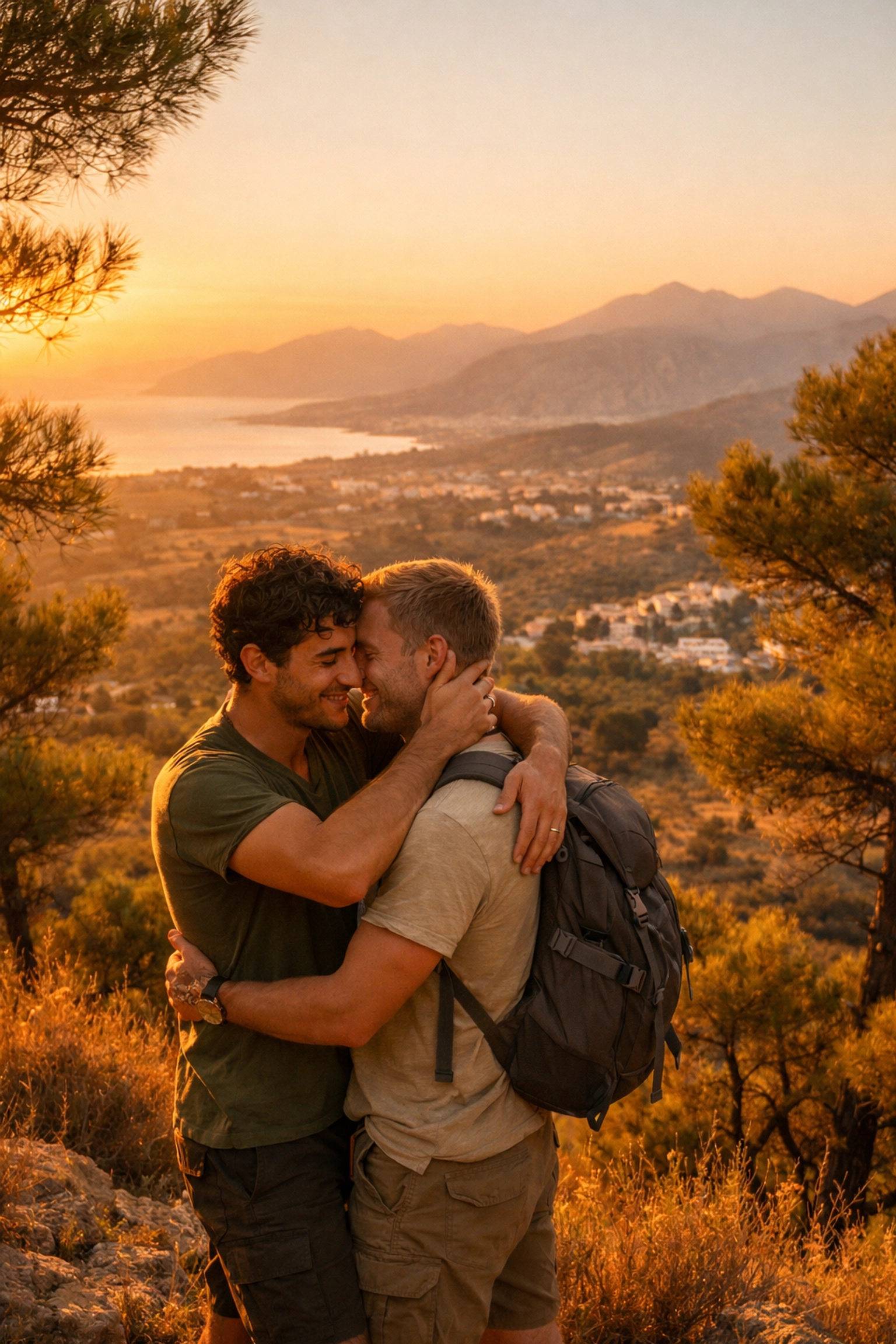
At Read with Pride, we're committed to amplifying these diverse queer stories: the ones that don't fit neatly into tropes, the ones that reflect real geographical and cultural contexts, the ones that remind us that gay love stories are happening everywhere, not just in the places that make it easy.
Looking Forward
The Peloponnese is changing. Greece is changing. Albania is changing. The young queer people in these places are writing their own stories, building their own futures, refusing to choose between authenticity and belonging.
That's the romance we need more of: not fantasy escapes, but deeply grounded stories that acknowledge complexity while celebrating connection. Stories about men who smell like pine sap and olive oil, who speak multiple languages, who bridge cultures and borders with their love.
Because at the end of the day, that's what the best MM romance books do: they show us ourselves, in all our complicated, beautiful, striving humanity.
Discover more LGBTQ+ stories and gay romance novels at Readwithpride.com
Follow us for more diverse queer fiction:
📘 Facebook
🐦 Twitter/X
📸 Instagram
#MMRomance #GayRomance #LGBTQBooks #GreekLove #RuralRomance #ContemporaryMMRomance #QueerFiction #ReadWithPride #GayRomanceBooks #MMLoveStories #LGBTQ2026 #AuthenticQueerStories #CrossBorderLove #MediterraneanRomance #SlowBurnRomance

Leave a Reply
You must be logged in to post a comment.