

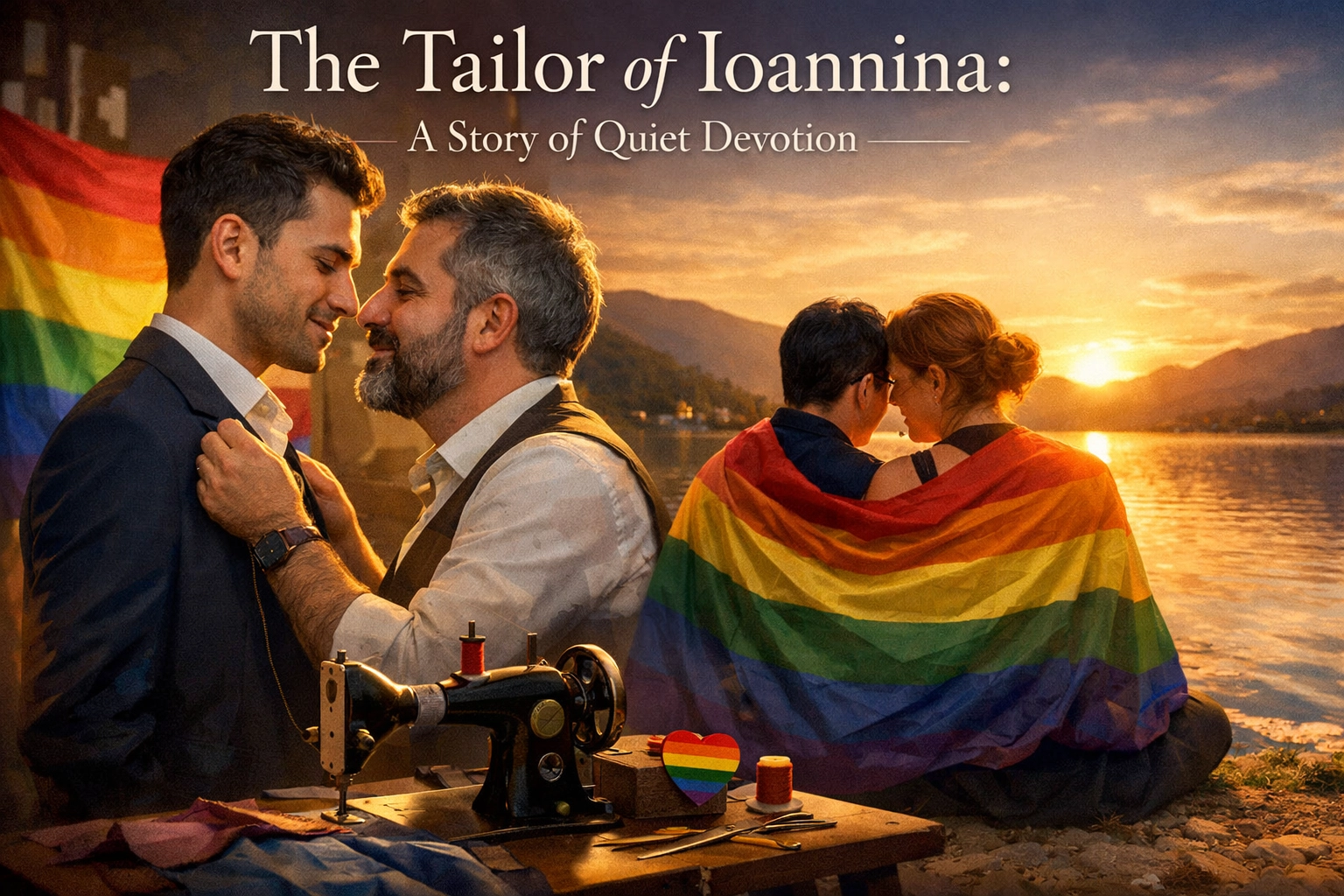
readwithpride.com
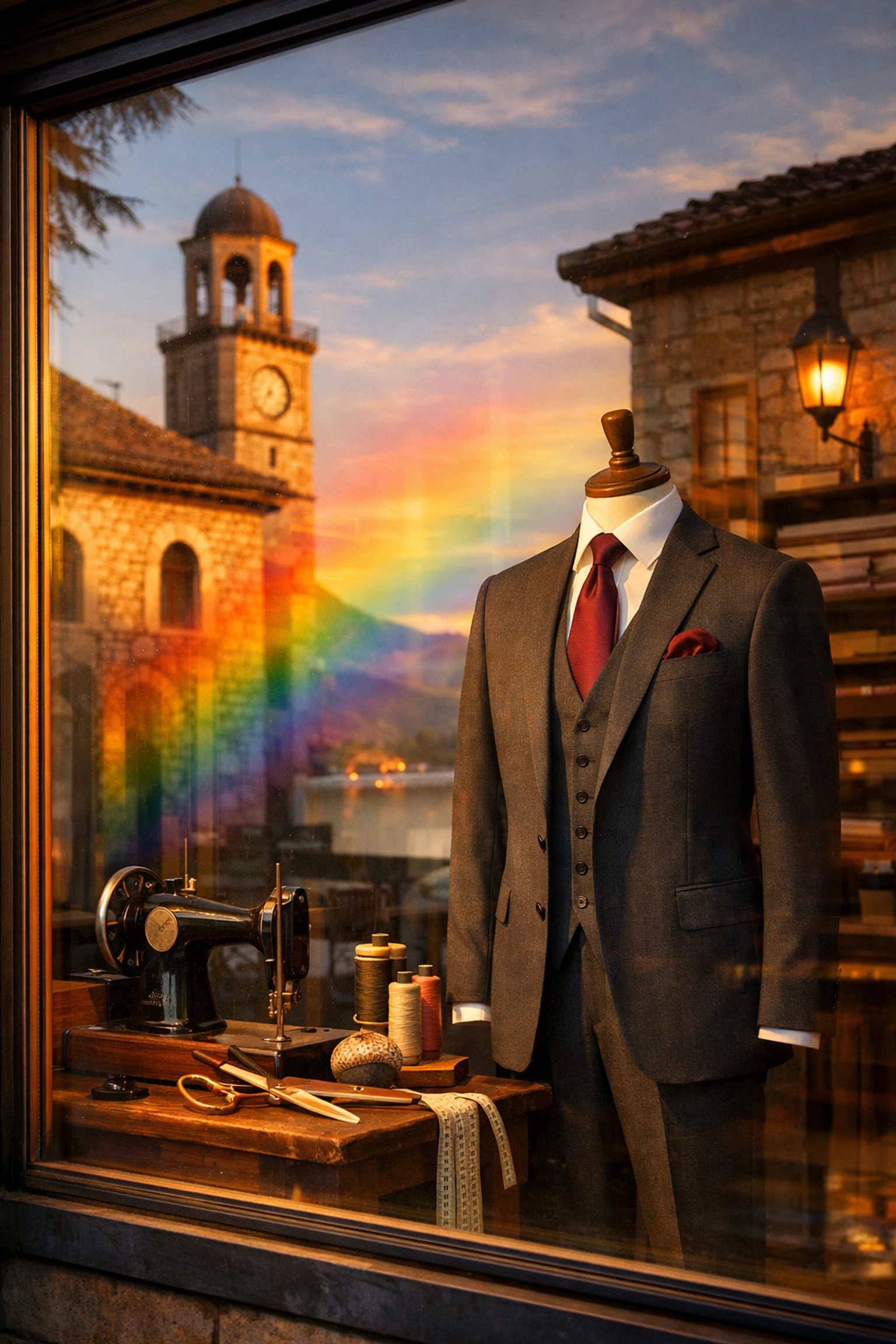
There's something about the old quarters of Ioannina that feels like stepping into a different era. The narrow cobblestone streets wind through the kastro, the old fortress, where artisans have plied their trades for centuries. Among them, tucked between a silversmith and a coffee house that's been serving the same bitter brew since the Ottoman days, sits a tailor's shop that holds more secrets than the worn Persian rug draped across its threshold.
This is a story about Yannis, a man whose hands could transform fabric into art, but whose heart remained carefully hidden beneath layers of propriety and fear.
The Weight of Thread and Silence
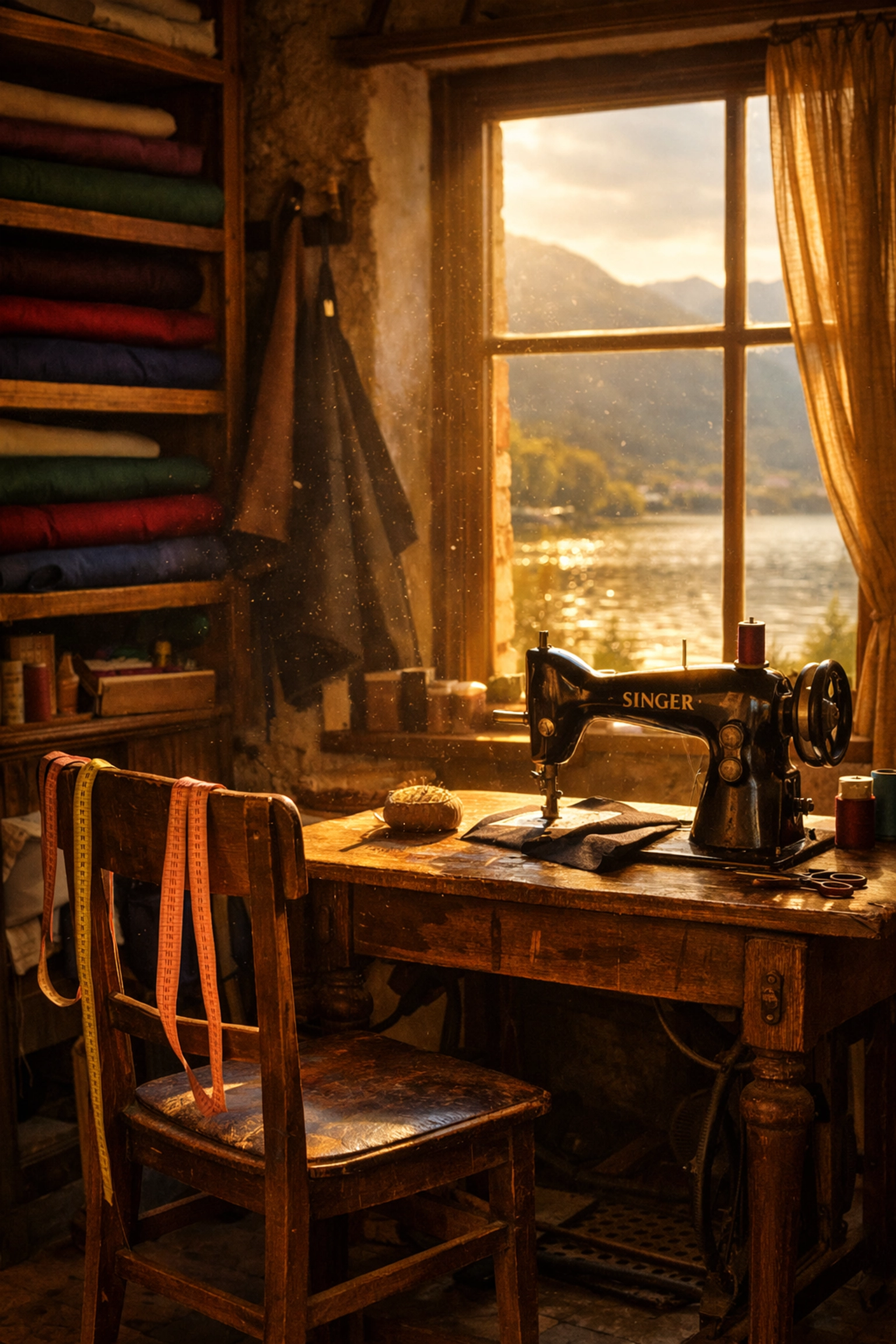
In the 1970s, Greece was a country caught between tradition and transformation. The military junta had just fallen, democracy was taking its shaky first steps, and in places like Ioannina, far from the cosmopolitan buzz of Athens or the tourist havens of the islands, old ways died hard.
Yannis learned his craft from his father, who learned it from his father before him. The shop on Averof Street had been in the family for three generations. By day, he measured inseams and adjusted cuffs for the city's merchants, doctors, and politicians. By night, he sat at his window overlooking Lake Pamvotida and wondered what it might feel like to live without the constant weight of pretense.
The thing about being a tailor is that you spend your days in intimate proximity with people's bodies. You measure their shoulders, their waists, the length of their arms. You kneel at their feet to pin hems. It's a profession that requires both distance and closeness, a metaphor Yannis understood all too well.
When Albania Knocked
Everything changed the day Arben walked through his door.
The young Albanian had crossed the border illegally, like thousands of others after the fall of communism in 1991. He had little money, no papers, and hands that trembled slightly when Yannis asked him to hold the bolt of wool fabric they were examining.
"I need work," Arben said in halting Greek. "I can learn. I'm good with my hands."
Yannis should have said no. Hiring an undocumented worker could mean fines, maybe worse. But something in Arben's dark eyes: a mixture of desperation and pride: made him pause. Or maybe it was the way the afternoon light caught the angles of the younger man's face.
"Can you thread a needle?" Yannis asked.
"I can learn anything," Arben replied.
The Language of Careful Glances
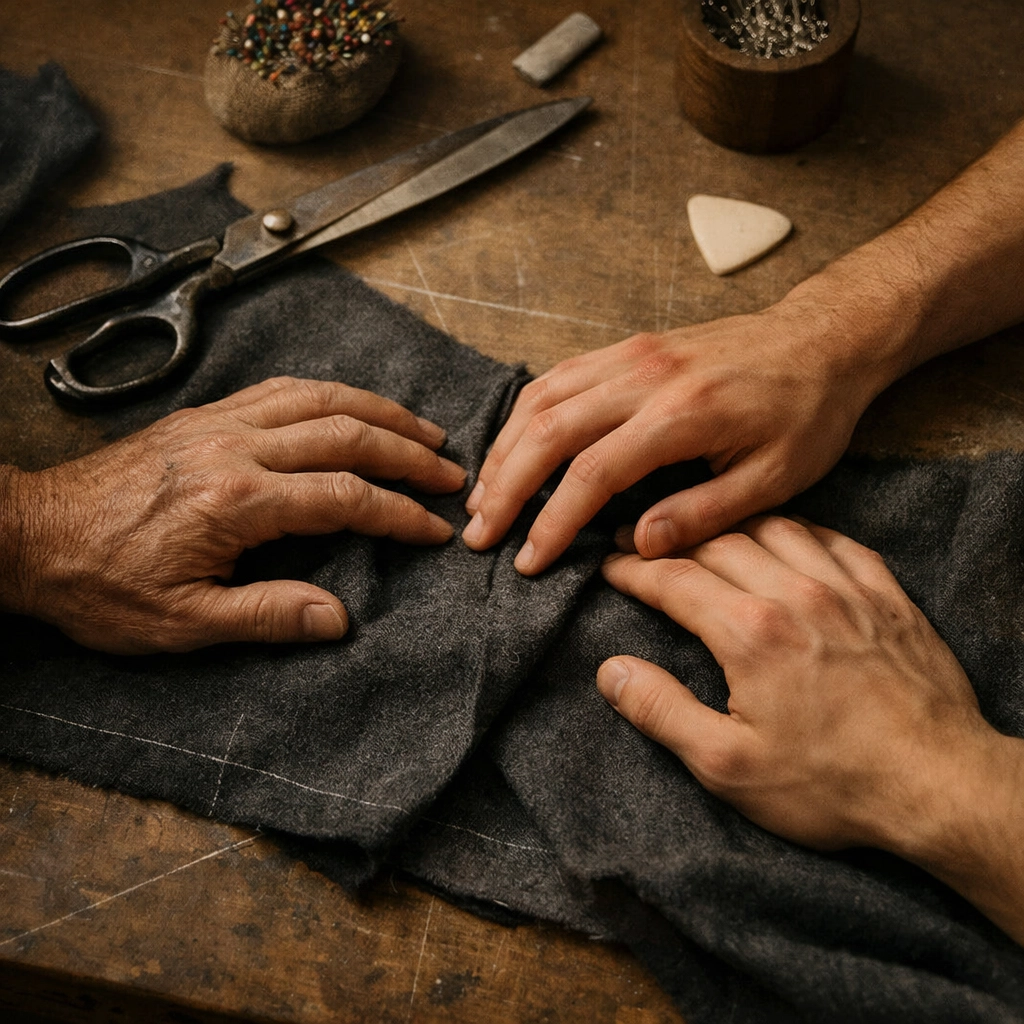
What followed was a slow burn of the kind that makes for the best MM romance books. Not the dramatic declarations or grand gestures, but the quiet accumulation of moments: fingers brushing as they passed scissors, the comfortable silence of two people working side by side, shared meals of bread and olives eaten over the cutting table.
In the workshop, they developed their own language. A nod meant "hand me the chalk." A raised eyebrow indicated "this customer is going to be difficult." A small smile over morning coffee translated to "I'm glad you're here."
Greece in the '90s wasn't Albania under Hoxha, but it wasn't exactly a beacon of LGBTQ+ acceptance either. Article 347 had been repealed in 1951, making homosexuality technically legal, but that legal status meant little in the face of social stigma, Orthodox Church teachings, and the rigid expectations of provincial life. Men like Yannis had learned to hide in plain sight, to channel desire into work, to build lives of quiet resignation.
But Arben was different. He'd grown up in a country where even whispering about such things could destroy a family. Where the word "gay" didn't exist in everyday conversation because the very concept was denied. Yet somehow, impossibly, he looked at Yannis with eyes that held no pretense.
The Pattern of Devotion
Gay romance novels often focus on the dramatic moments: the first kiss, the coming out, the happy ending. But real love, especially the kind that blooms in hostile soil, is made of smaller acts. It's Arben staying late to help finish a wedding suit, refusing payment. It's Yannis teaching him the difference between a French seam and a flat-felled seam with infinite patience. It's the way they began walking home together along the lake path, their shoulders sometimes touching, neither pulling away.
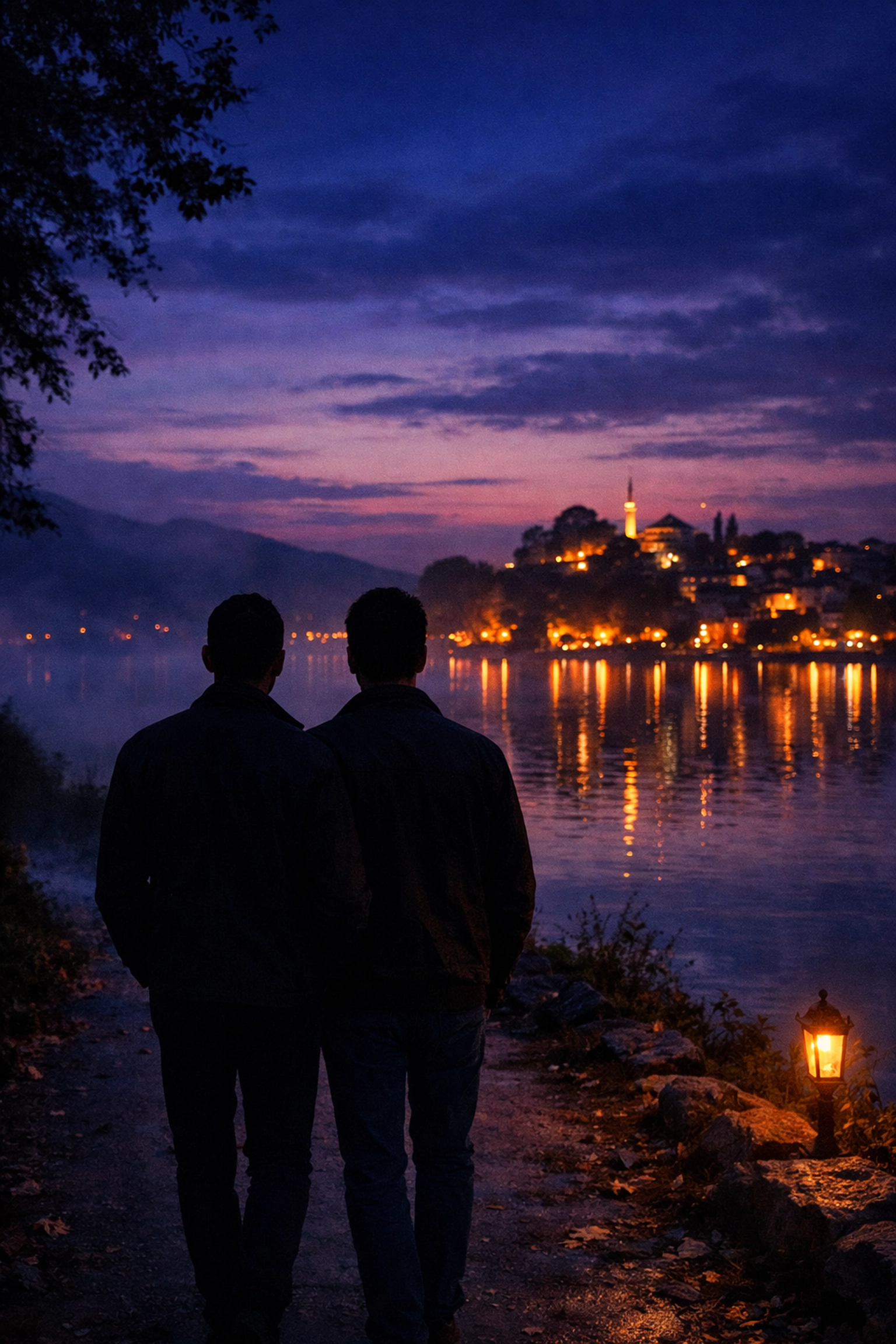
It's the evening Yannis found Arben crying in the back room, homesick for a place he could never return to, and simply held him until the tears stopped. No words. Just the solid comfort of another body, another heart beating in sync.
In a shop full of measurements and precision, what grew between them defied quantification.
Cross-Border Hearts
The beauty of stories set in the Balkans: whether they're queer fiction or any other kind: is that borders here have always been fluid things. Greek and Albanian, Orthodox and Muslim, urban and rural: these distinctions matter enormously and not at all, depending on the day.
Yannis's grandmother had been from Northern Epirus, what's now southern Albania. Arben's great-uncle had fought alongside Greeks in World War II. Their families had probably known each other once, before politics drew lines through the middle of shared history.
"My mother used to say," Arben told him one evening, "that the heart doesn't care about borders."
"Your mother sounds wise," Yannis replied.
"She would hate this," Arben said quietly. "Us."
"Mine too," Yannis admitted.
They sat with that truth between them, neither trying to minimize it or pretend it didn't matter. It did matter. And yet, here they were.
The Changing Stitch
Fast forward to today, and Greece has transformed. Same-sex marriage became legal in 2024: making it the first Orthodox Christian country to do so. Athens boasts a vibrant gay scene, Pride celebrations draw thousands, and young people in Thessaloniki hold hands in public without thinking twice.
But in places like Ioannina, change comes slower. The old tailor's shop is still there, though now it's run by Yannis's nephew, who knows nothing of his uncle's story beyond the fact that he was "a good craftsman who never married."
Albania, too, has evolved. While homosexuality was decriminalized in 1995, and anti-discrimination laws exist on paper, the reality remains complex. LGBTQ+ Albanians navigate a landscape where legal rights and social acceptance don't always align, where family honor can still trump individual happiness.
The gay love stories that matter most aren't always the ones that end with weddings and happily-ever-afters. Sometimes they're the ones about two men who found each other across borders and barriers, who built a life in the shadows because that was the only space the world allowed them, and who loved each other with quiet devotion until the end.
What This Story Teaches Us
If you're exploring LGBTQ+ fiction that goes beyond the standard contemporary romance, stories like this one: rooted in real historical and cultural contexts: offer something profound. They remind us that our community's history isn't just Pride parades and Stonewall. It's also the countless unnamed people who lived and loved in societies that denied their very existence.
The Greek and Albanian gay experience, both historically and today, reflects this tension between visibility and invisibility, between the cosmopolitan centers where queer life flourishes and the provinces where it still hides. It's about cross-border romances that carry the weight of centuries of conflict and cooperation. It's about the particular courage required to love when everything around you says you shouldn't.
For readers looking for MM romance books that offer more than just escapism, stories set in these contexts provide both the emotional satisfaction of romance and the intellectual engagement of real-world complexity. They're the bridge between entertainment and education, between fantasy and lived experience.
Finding These Stories
At readwithpride.com, we believe every queer love story deserves to be told: from the grand historical epics to the quiet contemporary tales of people navigating cultural boundaries. Whether you're drawn to gay historical romance set in the Byzantine Empire or modern stories about cross-border lovers in the Balkans, there's a whole world of LGBTQ+ ebooks waiting to transport you.
The tailor of Ioannina never got his parade. His love story wasn't celebrated or even acknowledged. But it was real, and it mattered, and it's part of the fabric of our shared queer history.
Sometimes the most revolutionary act is simply refusing to disappear.
Explore more diverse gay romance stories from across Europe and beyond. Follow us on Instagram, Facebook, and X for daily recommendations and new releases.
#MMRomance #GayRomanceBooks #LGBTQFiction #QueerFiction #GayLoveStories #GreekLGBTQ #BalkanRomance #HistoricalGayRomance #ReadWithPride #GayBooks #LGBTQEbooks #QueerLiterature #CrossBorderRomance #GayHistoricalFiction #MMRomanceBooks2026

Leave a Reply
You must be logged in to post a comment.