

readwithpride.com
When Art Meets Commerce (and Sparks Fly)
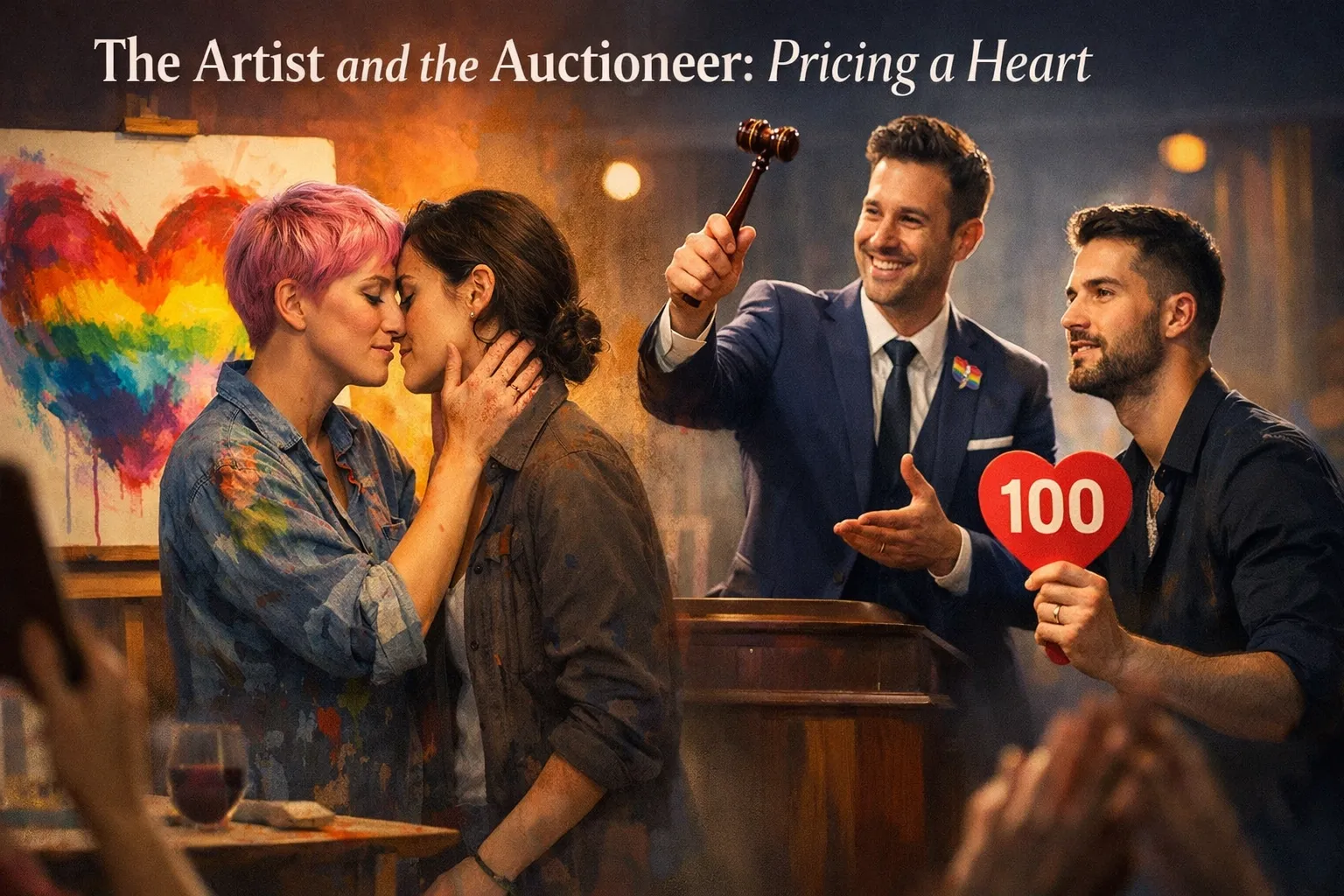
There's something deliciously tension-filled about the moment when someone tries to put a price tag on your soul. And for artists, that's essentially what happens every time their work goes under the hammer. Now imagine the person wielding that gavel is someone who makes your heart race for entirely different reasons. Welcome to one of MM romance's most compelling dynamics: the rich-poor divide, where passion meets pragmatism and two worlds collide in the most beautiful disaster possible.
The artist and the auctioneer. The creator and the commodifier. One sees beauty in the brushstroke, the other sees numbers on a balance sheet. It's a setup ripe for conflict, chemistry, and the kind of slow-burn tension that makes the best gay romance novels absolutely unputdownable.
The Setup: Two Worlds on a Collision Course
Picture this: Marcus has been painting in a cramped studio apartment for five years, living on ramen and stubbornness. His canvases are his children, each one a piece of his heart rendered in oils and acrylics. He pours everything into his work, his joy, his pain, his queerness, his truth. Art isn't just what he does; it's who he is.

Enter Julian, a high-powered auctioneer at one of London's most prestigious auction houses. Custom suits, Michelin-star lunches, a penthouse overlooking the Thames. He's spent a decade learning to assess art with clinical precision, provenance, condition, market trends, comparable sales. He can predict within a thousand pounds what any piece will fetch, and he's rarely wrong. Emotion doesn't enter the equation. Can't afford to, not in this business.
Their first meeting? Marcus is forced to consign three paintings, his favorites, naturally, because his landlord has had enough of "exposure" as payment. Julian takes one look at the canvases and sees… potential. Not the raw emotion Marcus poured into them, but market potential. "We'll start the bidding at £800 each. Should go for around £1,200 if we're lucky."
Marcus hears Julian reducing months of work, sleepless nights, and pieces of his soul to numbers. Julian sees a talented but naive artist who doesn't understand how the market works. Both of them are right. Both of them are missing something crucial.
The Rich-Poor MM Romance Trope at Its Finest
This is where the rich and poor MM romance trope really shines. It's not just about the money, though let's be real, the money creates some fantastic tension. It's about fundamentally different worldviews colliding, forcing both characters to question everything they thought they knew.
Julian's wealth isn't just his bank balance. It's his armor. He's built walls of designer fabrics and professional detachment because letting himself feel too much, care too much, means vulnerability. In the cutthroat world of high-end art sales, vulnerability gets you eaten alive.
Marcus's poverty isn't just his empty wallet. It's his freedom. He's never had to compromise his vision for a paycheck (okay, except for that truly regrettable pet portrait phase). His struggle has kept his art honest, raw, authentic. But it's also left him isolated, exhausted, one emergency away from losing everything.
When these two worlds collide in MM romance books, magic happens. And by magic, I mean conflict, miscommunication, charged silences, and the kind of stolen glances that could melt steel.
The Auction as Metaphor
Here's where it gets really interesting. Because in any relationship, aren't we all essentially asking: "What am I worth to you?"

When Julian places Marcus's paintings in his first major auction, Marcus has to watch strangers assess, critique, and ultimately price his heart. The bidding starts low. Marcus's stomach sinks. Then Julian starts his pitch, and the man transforms. Gone is the cool professional. Julian speaks about the work with genuine passion, drawing connections Marcus himself hadn't seen, telling the story behind each piece with an intimacy that makes Marcus wonder: has Julian been paying attention all along?
The price climbs. £1,500. £2,000. £3,500. With each bid, Marcus feels validated and violated in equal measure. This is what he wanted, recognition, success, but watching his private pain become public commodity makes him want to flee the room.
Julian catches his eye across the crowded auction house. There's something in that look, understanding, maybe, or an apology. Or perhaps it's the first crack in those carefully constructed walls.
The hammer falls at £4,200. Marcus should be elated. Instead, he feels empty. Because he's just learned something terrifying: Julian can sell his art, but Marcus has no idea how to price what he's starting to feel for the man holding the gavel.
The Class Divide (And Why It Matters)
The beauty of this gay romance setup is how it forces both characters to confront their prejudices. Marcus assumes Julian is shallow, that anyone who can afford £300 shoes must be emotionally bankrupt. Julian assumes Marcus is impractical, that anyone who chooses art over financial security must be naive.
They're both wrong, of course. And watching them figure that out? That's the good stuff.
Julian's wealth comes with its own poverty, of genuine connection, of creative expression, of living for something beyond the next deal. Marcus's financial struggles come with their own richness, of community, of artistic integrity, of knowing exactly who he is and what matters.
The question isn't whether Julian will rescue Marcus with his money (please, we're better than that in 2026). The question is whether they can build something together that honors both their values. Can Marcus accept success without selling his soul? Can Julian open his heart without losing his mind?
When the Personal Becomes Priceless
The turning point comes when Julian does something unthinkable: he pulls one of Marcus's paintings from an auction. Not because it won't sell (it would, easily), but because he's finally seen what Marcus sees: the raw, aching vulnerability in every brushstroke. And Julian realizes he can't bear to watch strangers bid on this particular piece of Marcus's heart.
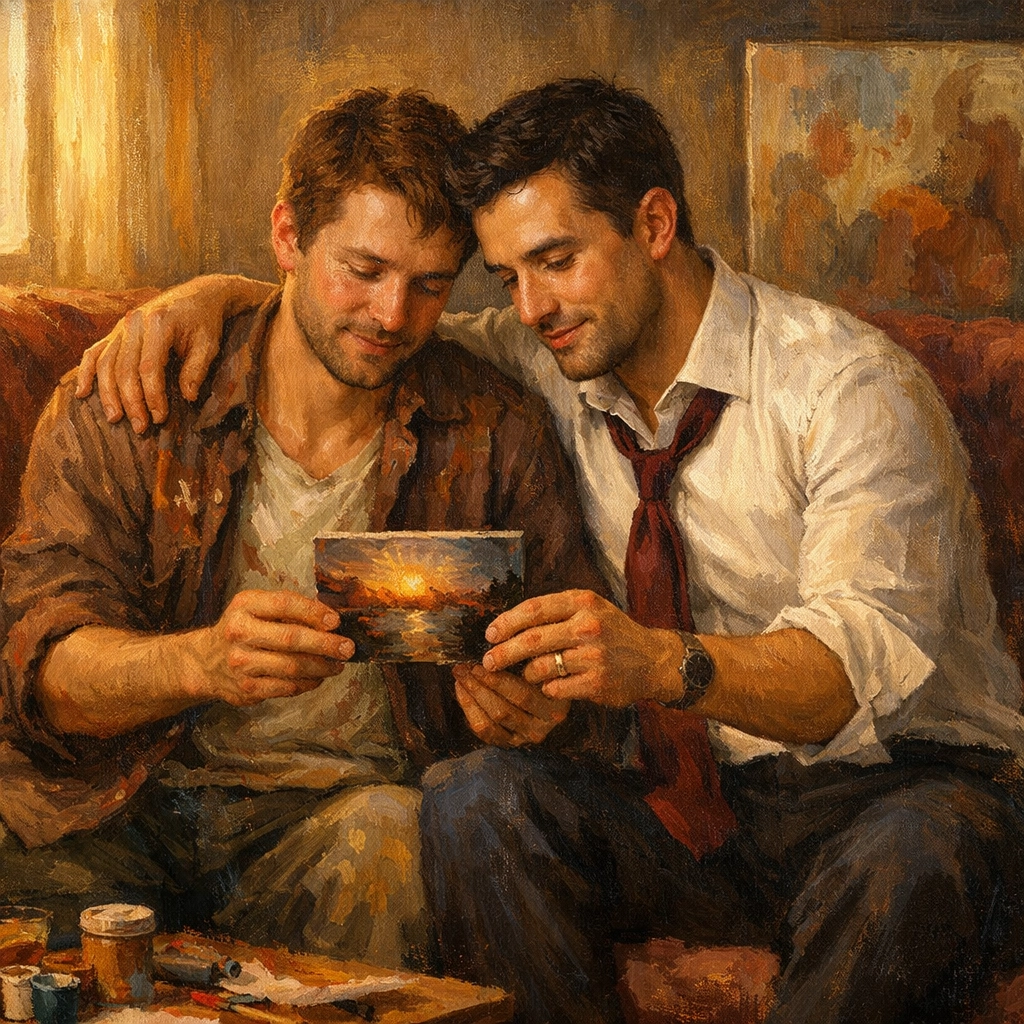
"Some things," Julian tells him, voice rough with emotion he's spent years suppressing, "shouldn't have a price tag."
Marcus stares at him. "But that's your whole job. Putting prices on things."
"Not anymore." Julian loosens his tie: he always loosens his tie when he's about to say something true. "Not when it comes to you. I'm done trying to calculate what you're worth to me in pounds and pence. Because the number doesn't exist."
It's messy and imperfect and they still have a thousand practical issues to work out. Julian's colleagues think he's lost his mind. Marcus's artist friends worry he's selling out. Neither of them knows exactly how to bridge the gap between their worlds.
But they're trying. And in the best MM romance tradition, that's what matters.
Why We Love This Trope
The rich-poor dynamic in gay fiction works because it's never really about the money. It's about vulnerability, value, and what we're willing to risk for love. It's about two people from different worlds choosing to build a third world together: one that honors both their truths.
For every reader who's ever felt undervalued, Marcus's journey resonates. For everyone who's hidden behind success and status, Julian's walls feel familiar. And watching them find each other? That's the emotional payoff that makes this trope timeless.
At Readwithpride.com, we're all about stories that dig into the messy, complicated, beautiful reality of queer love in all its forms. Whether it's a struggling artist and a wealthy auctioneer or any other variation on the rich-poor theme, these stories remind us that the heart doesn't calculate net worth before falling.
The Bottom Line
In the end, Marcus's paintings do sell: for prices that let him keep his studio and even upgrade to a place with actual heating. Julian doesn't quit his job, but he does start a foundation supporting emerging queer artists. They don't solve all their differences overnight, because real love isn't a fairy tale.
But they do learn something vital: some things appreciate in value the longer you hold onto them. And some people are worth more than any auction house could ever assess.
Their love story isn't about Marcus being "saved" by Julian's money or Julian being "enlightened" by Marcus's art. It's about two men recognizing that what they can build together is more valuable than anything either possessed alone.
And really, isn't that what the best MM romance books have always been about?
Craving more stories that explore love across class divides? Follow us on Instagram, X, and Facebook for daily recommendations, author spotlights, and the best new releases in gay romance.
#MMRomance #GayRomance #ReadWithPride #RichPoorRomance #LGBTQBooks #QueerFiction #GayFiction #MMBooks #ClassDivideRomance #ContemporaryMMRomance #LoveStories #GayLoveStories #2026Books #MMRomanceBooks #GayRomanceBooks #LGBTQReads #QueerLove #AuthenticLove #MMContemporary

Leave a Reply
You must be logged in to post a comment.