

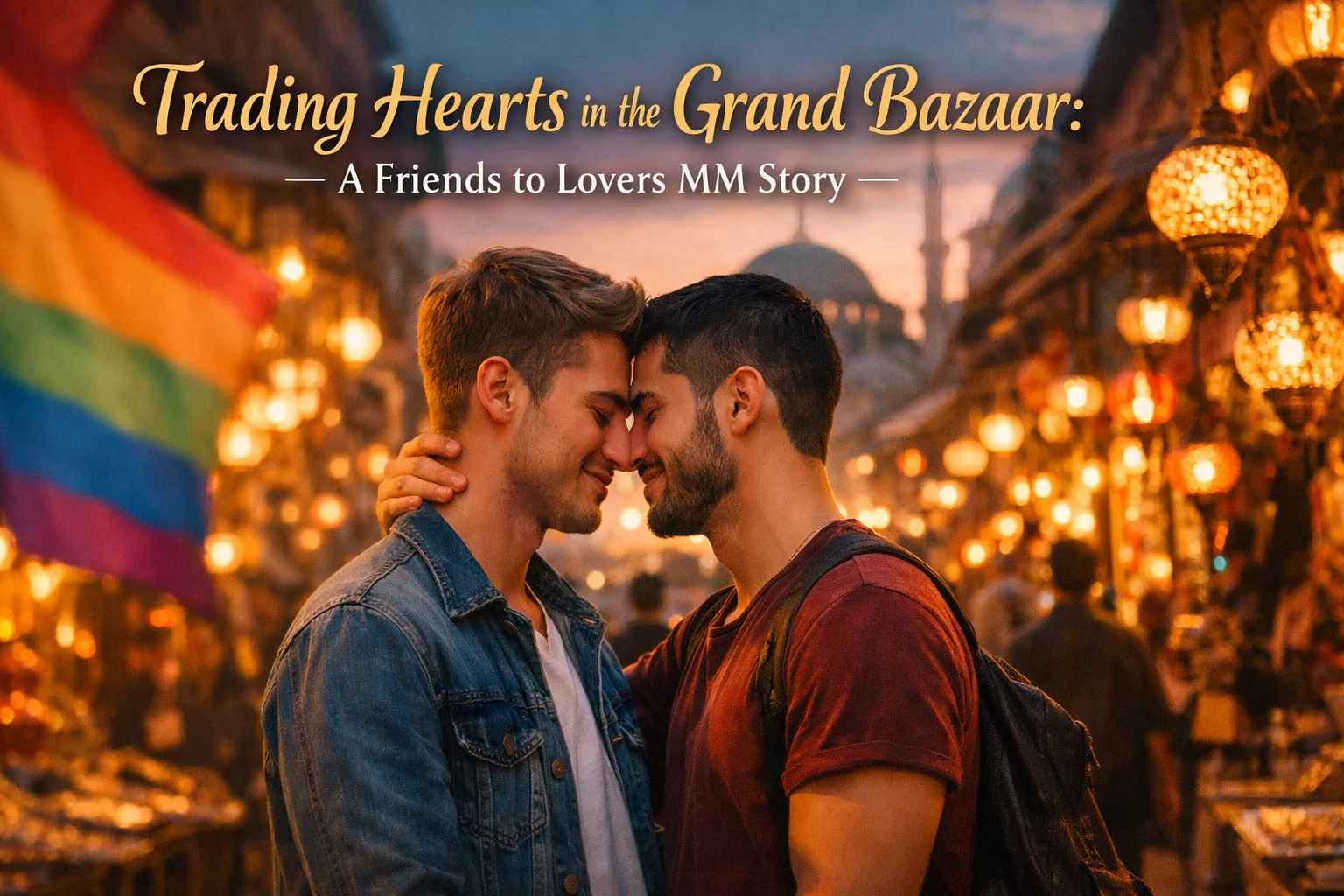
readwithpride.com
There's something undeniably magical about friends to lovers MM romance stories. That slow-burn tension, the stolen glances that suddenly mean something more, the moment when everything shifts, it's chef's kiss perfection. Now imagine all that delicious emotional complexity set against the vibrant, chaotic backdrop of the Ottoman Empire's Grand Bazaar. Yeah, we're going there.
The Grand Bazaar: Where Friendship Meets Destiny
The Grand Bazaar wasn't just a marketplace: it was the beating heart of Constantinople, a labyrinth of silk, spices, secrets, and second chances. Picture this: narrow covered streets teeming with merchants hawking their wares, the scent of cardamom and rose water hanging in the air, the kaleidoscope of carpets and textiles creating a feast for the eyes.
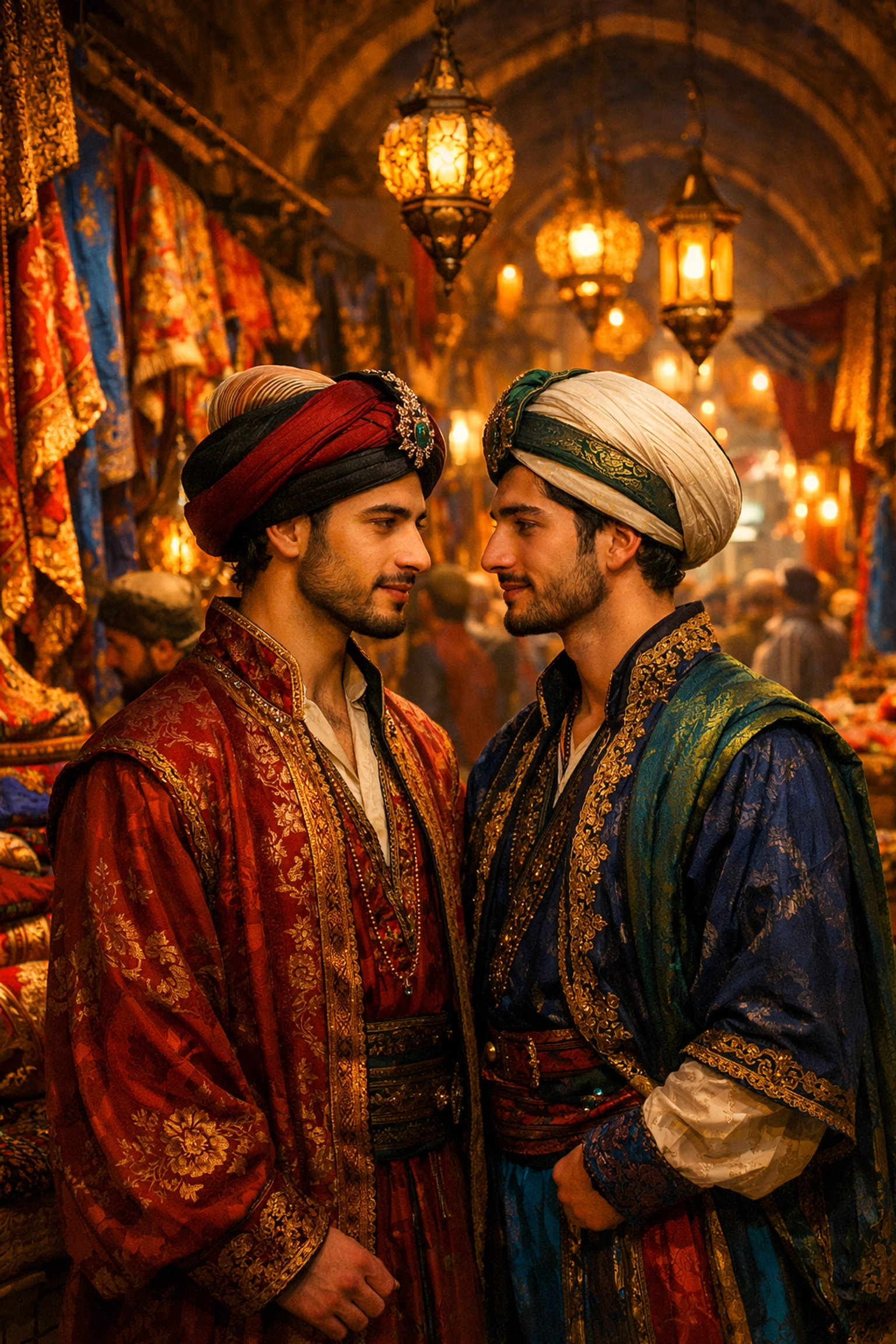
It's the perfect setting for two friends whose relationship is about to get a whole lot more complicated. Maybe they're rival carpet merchants who've known each other since childhood. Perhaps one's a spice trader and the other's a calligrapher working in the nearby mosque. The Grand Bazaar brings them together daily, their stalls side by side, their banter as familiar as breathing: until one day, it's not just friendly anymore.
Why Friends to Lovers Hits Different in Historical Settings
Here's the thing about historical MM romance novels: the stakes are inherently higher. In the Ottoman Empire, same-sex relationships existed in a complex social landscape. While there was more fluidity than many Western societies of the time, discretion was still key. This creates the perfect pressure cooker for a friends-to-lovers story.
When you've known someone for years, when they're your closest confidant in a world where you can't fully be yourself, that bond runs deep. The friendship isn't just convenient: it's survival. It's safety. And when romantic feelings start creeping in? The risk of losing that one person who truly sees you becomes almost unbearable.
That's the emotional goldmine that makes friends to lovers work so beautifully in historical contexts. The characters aren't just risking rejection: they're risking their entire support system, their safety net in an often unforgiving world.
The Ottoman Empire's Hidden Queer History
Let's talk about something that doesn't get enough attention: the Ottoman Empire's surprisingly complex relationship with same-sex love. While it's important not to romanticize or oversimplify history, Ottoman literature and poetry contain numerous homoerotic themes. The concept of "mahbub" (beloved) was often used in poetry to describe relationships between men.
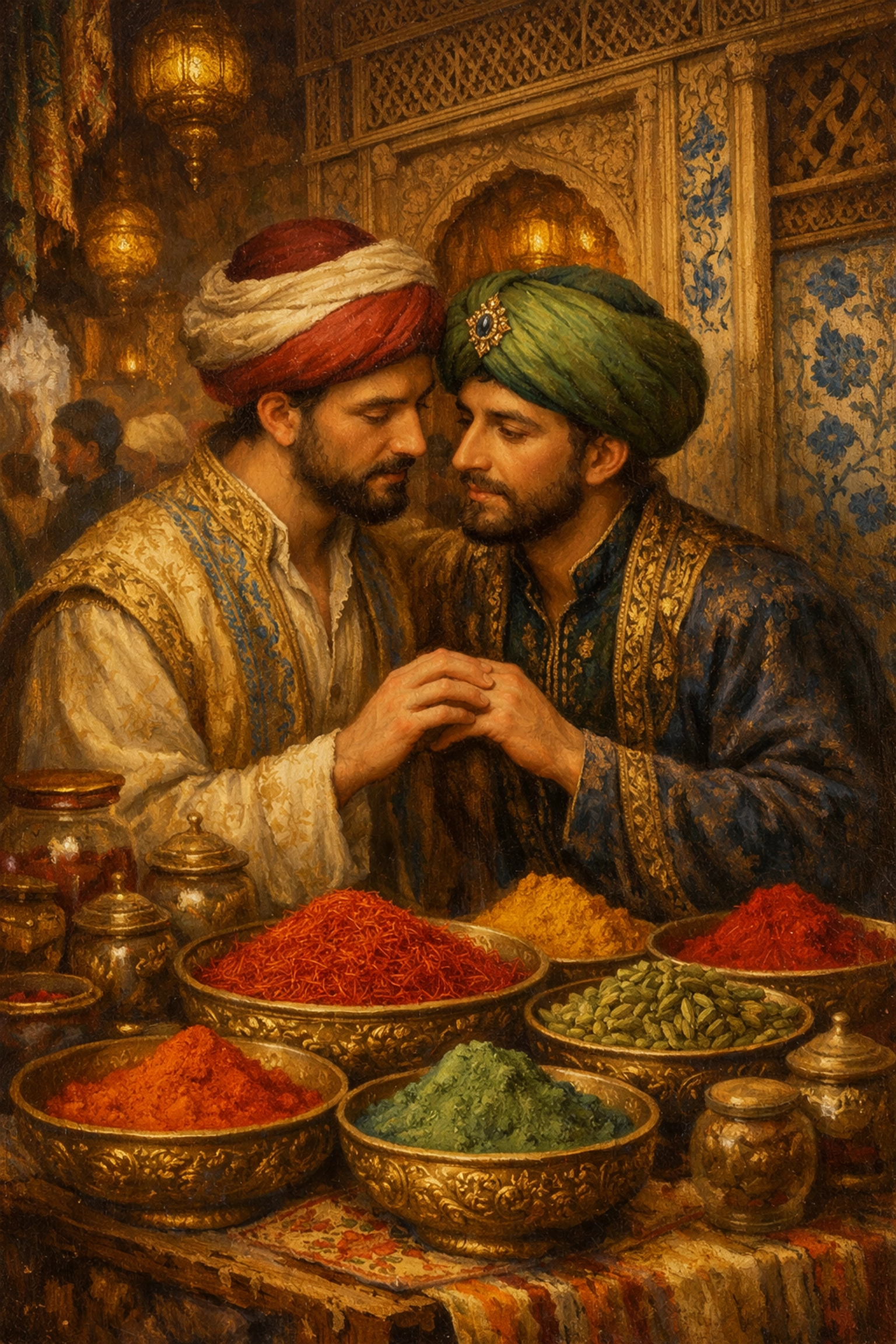
The Grand Bazaar, with its mix of cultures, religions, and peoples from across the empire, would have been a place where different social norms collided and coexisted. Among the merchants, artisans, and traders, there would have been space: however small, however carefully guarded: for relationships that defied conventional boundaries.
This historical nuance adds layers to our friends-to-lovers narrative. Our characters aren't navigating a world that's simply hostile or simply accepting. They're moving through shades of gray, reading social cues, finding their community in whispered conversations and knowing glances across crowded market stalls.
The Slow Burn That Sets Your Heart Racing
What makes friends to lovers MM romance stories so addictive is that delicious slow burn. With enemies to lovers, the sexual tension is immediate and obvious. But with friends to lovers? It creeps up on you: and on the characters.
Imagine our merchants at the Grand Bazaar. They've shared tea countless times, helped each other when business was slow, celebrated each other's successes. They know each other's families, dreams, fears. Then one morning, one of them reaches across to brush a thread from the other's beard, and their hands linger just a fraction too long. The air changes. Everything changes.
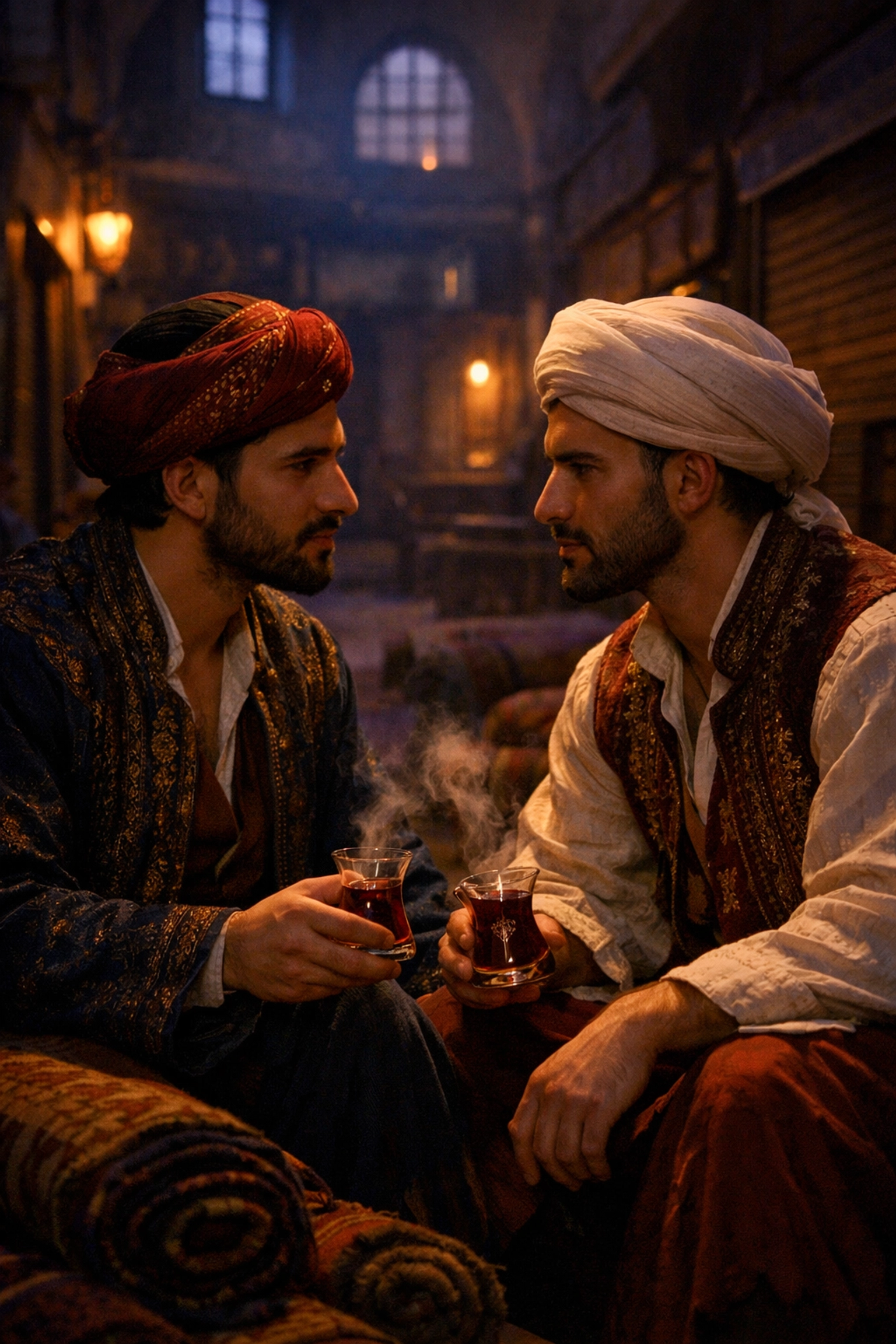
The beauty of this trope is in those small moments that add up: the way one character starts noticing how the other's eyes crinkle when he laughs. The jealousy that flares when a customer flirts a bit too enthusiastically. The realization that you've memorized the pattern of someone's footsteps, that you can identify their knock among hundreds of shoppers passing by.
Why Readers Can't Get Enough
Let's be real: we're all searching for MM romance books that hit us right in the feels while giving us that swoon-worthy romance we crave. Friends to lovers delivers on both fronts. There's an inherent authenticity to this trope because the relationship is built on a foundation of genuine connection, not just physical attraction.
In a historical setting like the Ottoman Empire, this foundation becomes even more crucial. Our characters can't just swipe right on a dating app or hit up a gay bar. Their friendship is the courtship. Every shared meal, every late-night conversation in the deserted bazaar after the stalls close, every moment of vulnerability: that's them falling in love, even if they don't realize it yet.
And when that first kiss finally happens? When hands that have gripped each other in friendship suddenly grip with desire? When lips that have smiled at each other for years finally meet? That payoff is everything.
The Cultural Richness That Elevates the Romance
Setting a story in the Ottoman Empire's Grand Bazaar isn't just about exotic backdrops (though let's be honest, the visuals are stunning). It's about immersing readers in a world that challenges their assumptions about history and queerness.
The Grand Bazaar was a crossroads of civilizations: where Persian, Arab, Greek, Armenian, and Turkish cultures mingled. This diversity creates rich storytelling opportunities. Maybe one character is from a family of Persian carpet weavers while the other descends from Greek goldsmiths. Their friendship itself bridges worlds, and their romance becomes even more transgressive and beautiful.
The historical details matter too: the Janissary patrols that might threaten their safety, the hammams where men gathered in steam and intimacy, the coffeehouses where poets recited verses of forbidden love in coded language. These elements transform historical MM romance novels from simple love stories into immersive experiences that educate while they entertain.
Finding Your Next Historical MM Romance
If you're craving more stories that blend historical settings with authentic queer narratives, you're in luck. The world of gay romance books has expanded beautifully in recent years, with authors crafting nuanced, well-researched historical romances that don't shy away from the complexities of the past while celebrating LGBTQ+ love.
Friends to lovers remains one of the most beloved tropes for a reason: it speaks to our desire for love that's built on mutual respect, understanding, and genuine affection. When you add the richness of settings like the Ottoman Empire's Grand Bazaar, you get stories that transport us while making us feel deeply, beautifully seen.
So whether you're already a devotee of MM romance or just discovering the genre, stories like these remind us that queer love has always existed, in every time period, in every corner of the world. Sometimes it flourished in palaces, sometimes in marketplaces, sometimes in the quiet moments between two friends who suddenly realized they'd been falling in love all along.
Because at its heart, that's what friends to lovers is all about: the revelation that the person who's been by your side all along is exactly where they're supposed to be: not just beside you, but with you, in all the ways that matter.
Ready to explore more captivating MM romance stories? Visit readwithpride.com for our complete collection of LGBTQ+ fiction that celebrates love in all its forms.
Connect with us:
📘 Facebook
🐦 Twitter/X
📸 Instagram
#MMRomance #FriendsToLovers #HistoricalRomance #OttomanEmpire #GayRomance #LGBTQBooks #ReadWithPride #MMRomanceBooks #QueerFiction #GayHistoricalRomance #SlowBurn #MMBooks #GayLoveStories #2026Books #HistoricalMMRomance #GrandBazaar #QueerHistory #GayFiction #LGBTQRomance #MMNovels

Leave a Reply
You must be logged in to post a comment.