

readwithpride.com
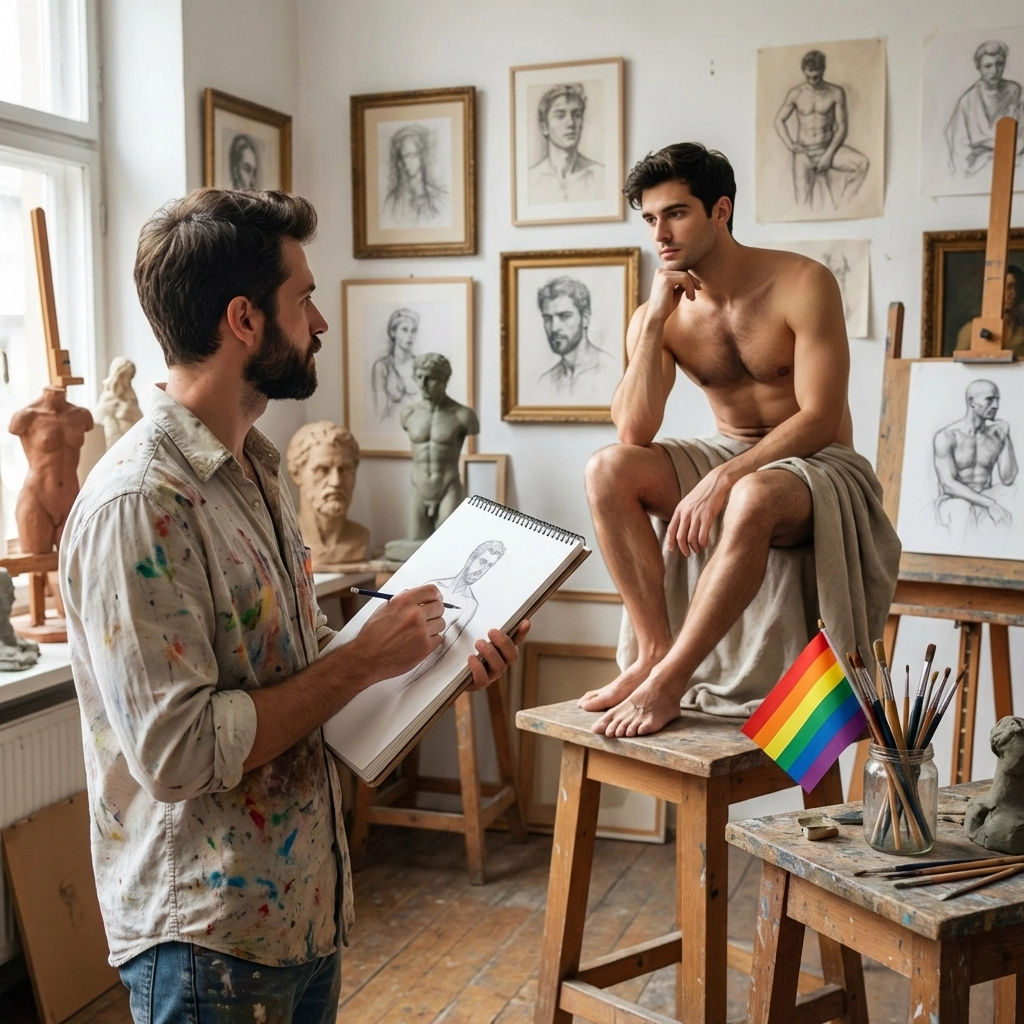
Let’s be real for a second: walking into a hushed gallery and coming face-to-face with a massive, meticulously rendered male nude is an experience. It’s not just about the anatomy (though, let’s appreciate the craftsmanship, shall we?); it’s about the energy, the history, and the way that single image speaks to the queer soul. At Read with Pride, we spend a lot of time talking about the written word: our favorite MM romance books and the latest gay romance novels: but the visual art world has been telling our stories long before the first printing press ever cranked out a spicy paperback.
The male nude in art is a battlefield of identity. It has been used to represent gods, heroes, and martyrs, but for the LGBTQ+ community, it has also been a tool for rebellion, a mirror for desire, and a way to claim space in a world that often preferred us to stay in the shadows. Whether it’s a marble statue in a university hallway or a provocative photograph in a modern exhibition, the "pose" carries a weight that every queer person recognizes.
From Mythology to the Mirror: A Brief History of the Hunk
Back in the day: we’re talking 17th to 19th-century Europe: the male nude was the absolute gold standard of art education. If you wanted to be a "serious" artist, you had to master the male form. But here’s the kicker: it wasn't supposed to be sexy. At least, not officially.
Institutions like the Royal Academy used male models because they were cheaper and easier to find than female ones, but they kept things "proper" by wrapping the art in the safety of mythology. If a guy was naked, he had to be Achilles, David, or Saint Sebastian (everyone’s favorite queer icon, let’s be honest). By calling it "history painting," the authorities could ignore the obvious eroticism.
But we weren’t fooled. Even back then, artists and viewers were finding ways to inject queer desire into these "safe" spaces. Popes were busy ordering fig leaves to cover up the genitals of Vatican statues, and Queen Victoria famously had a fig leaf made for a replica of Michelangelo’s David because it was just a bit too… much.
The Radical Turn: Reclaiming the Body
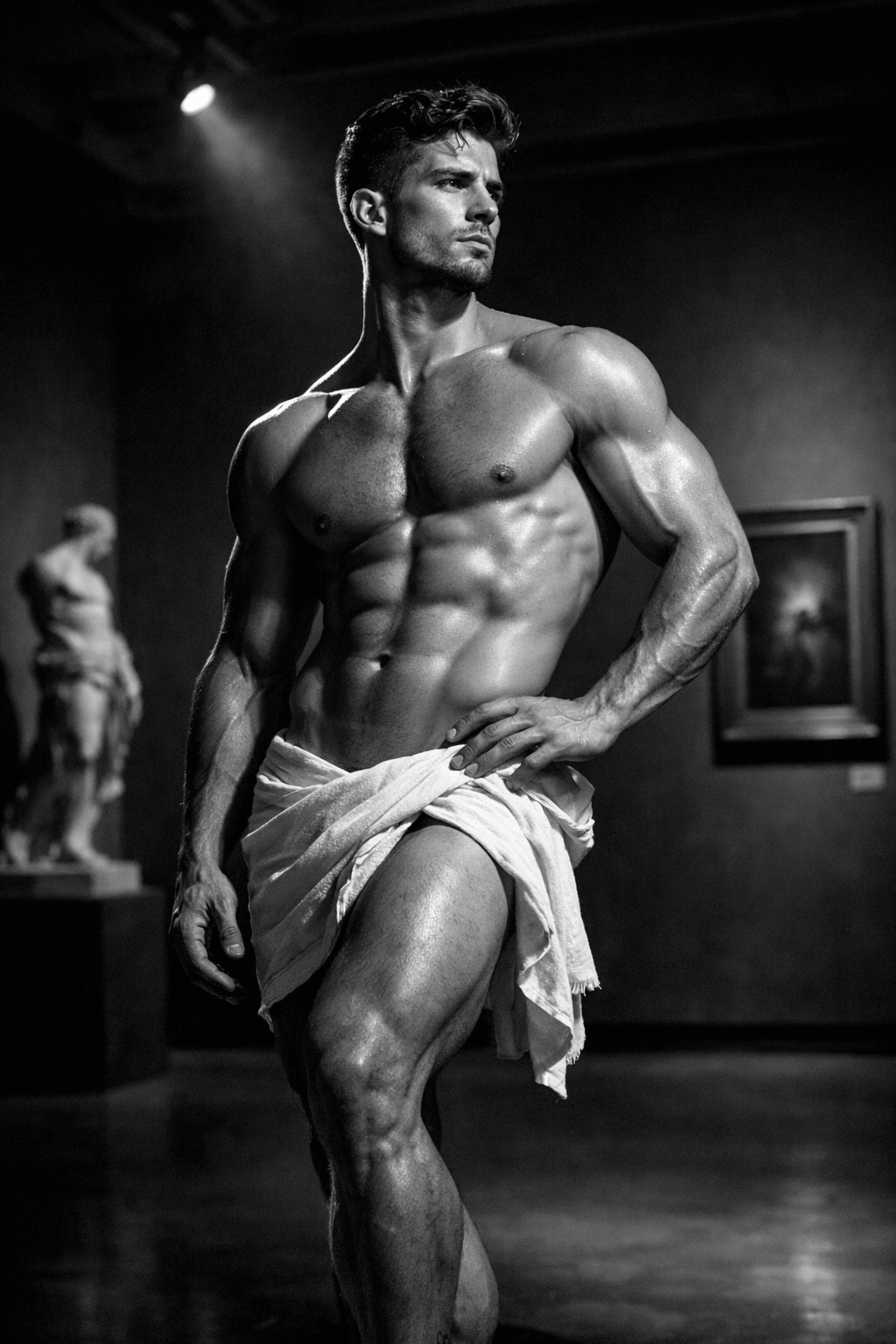
As we moved into the 20th century, the "heroic" pose started to crumble, and something much more authentic took its place. Artists like Egon Schiele stopped painting gods and started painting themselves. They weren't interested in perfection; they were interested in the raw, sometimes ugly, always honest reality of being human.
For the gay community, this was a revolution. We stopped being side characters in someone else’s myth and started being the subjects of our own art. Photographers like Baron Wilhelm von Gloeden and Fred Holland Day began to use the male nude to explore Greek ideals through a distinctly queer lens. They paved the way for the titans of the 70s and 80s: think Robert Mapplethorpe and Andy Warhol: who blew the doors off what was considered "acceptable" in a gallery.
In these works, the pose changed. It wasn't just about strength; it was about vulnerability. It was about the gaze: who is looking at whom? When a gay artist captures a naked male body, the power dynamic shifts. It’s an act of love, an act of defiance, and an act of visibility that mirrors the emotional depth we look for in gay literature and MM novels.
Strength vs. Vulnerability: What the Pose Tells Us
When you’re wandering through a museum or an exhibition in 2026, you’ll notice that the way a body is positioned tells a whole story without a single word. In the art world, we call this the "language of the body."
- The Heroic Stance: Shoulders back, chest out, weight on one leg (the classic contrapposto). This is the pose of the protector, the leader, the "alpha." In gay fiction, this is often the guy who has it all together: the CEO or the knight: until he meets that one person who cracks his shell.
- The Slumped Figure: Head down, limbs relaxed, often seated or lying down. This represents vulnerability and surrender. It’s a pose that says, "I am seen." It’s the raw honesty of a slow burn MM romance where the characters finally let their guards down.
- The Defiant Gaze: Looking directly at the viewer. This is a challenge to the "straight" gaze. It says, "I am here, I am queer, and I am not hiding." It’s the energy we bring to our Read with Pride community.
Nudism in Art: More Than Just "Naked Guys"
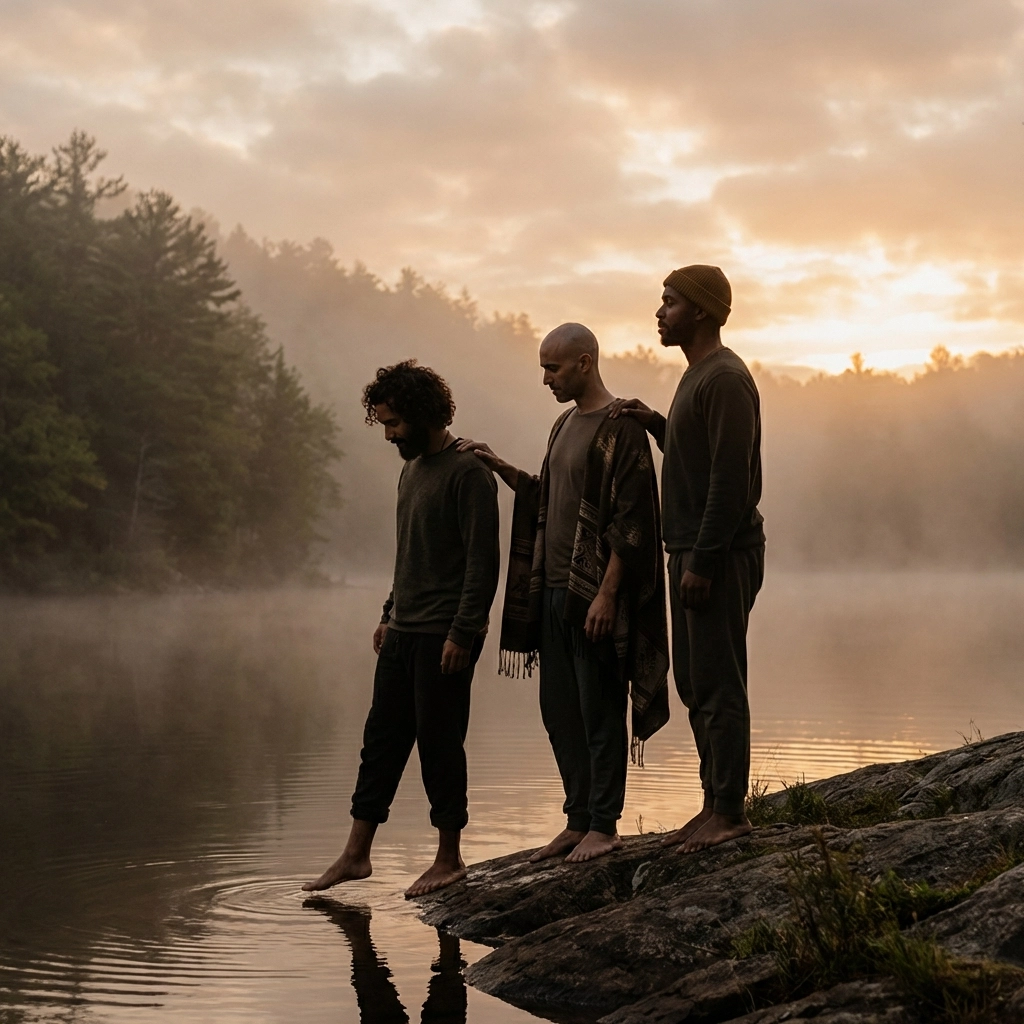
There’s a difference between "nudity" and "nudism" in art. While nudity is often about the individual body, nudism in art frequently explores the body in nature or in groups. This is where we see the intersection of community and identity.
Exhibitions that focus on male nudism often highlight the liberation of the body from societal clothes and labels. It’s about returning to a natural state where we aren't defined by our jobs, our status, or our "outness," but simply by our existence. This theme of "returning to self" is a huge trope in gay contemporary romance, especially those "finding yourself" stories we all love to binge-read on a rainy Sunday.
Why Art in Universities and Museums Matters
You might wonder why it’s so important to have "naked art" in public institutions like universities. It’s because these are the places where the next generation of thinkers, writers, and artists are formed. When a queer student sees a celebrated, beautiful, or even a challenging depiction of a gay male nude in their university gallery, it validates their existence. It says that our bodies are worthy of being studied, admired, and preserved.
It’s the same reason we curate such a wide variety of LGBTQ+ ebooks at Read with Pride. Representation isn't just a buzzword; it’s a lifeline. Whether it’s gay fantasy romance or a gay psychological thriller, seeing yourself reflected in culture: visually or through text: changes how you move through the world.
The Connection to the Page: From Canvas to Kindle
If you’re a fan of MM romance books, you’ve probably noticed how much cover art matters. A good cover often uses these same artistic principles of the "pose" to tell you exactly what kind of story you’re getting.
- Is it a close-up of a tensed torso? Expect some steamy MM romance.
- Is it two men standing apart, looking at a landscape? You’re likely in for an emotional MM book or a gay historical romance.
Art and literature are two sides of the same coin. They both aim to capture the "queer experience" in all its messy, beautiful glory. The same tension you feel looking at a Mapplethorpe photograph is the tension we aim to provide in our top LGBTQ+ books.
Looking Ahead: Gay Art in 2026
As we move through 2026, the world of gay male art is more diverse than ever. We’re seeing more bodies of color, more trans and non-binary bodies, and more artists challenging the "Adonis" ideal that dominated the past. The "Power of the Pose" is now the power of every pose.
At Read with Pride, we’re committed to supporting that evolution. Whether you’re here to find your next gay book recommendation or you’re looking to dive into the history of queer fiction, we’re your home base.
Check out our latest releases or head over to our FAQ if you’re a writer looking to get your own work out there. The world needs more of our stories: and more of our art.
Stay authentic, stay proud, and keep reading.
#GayArt #MaleNude #QueerHistory #ReadWithPride #MMRomance #LGBTQArt #GayLiterature #QueerIdentity #2026GayBooks #GayRomanceNovels
Follow us for more queer content:

Leave a Reply
You must be logged in to post a comment.