

readwithpride.com
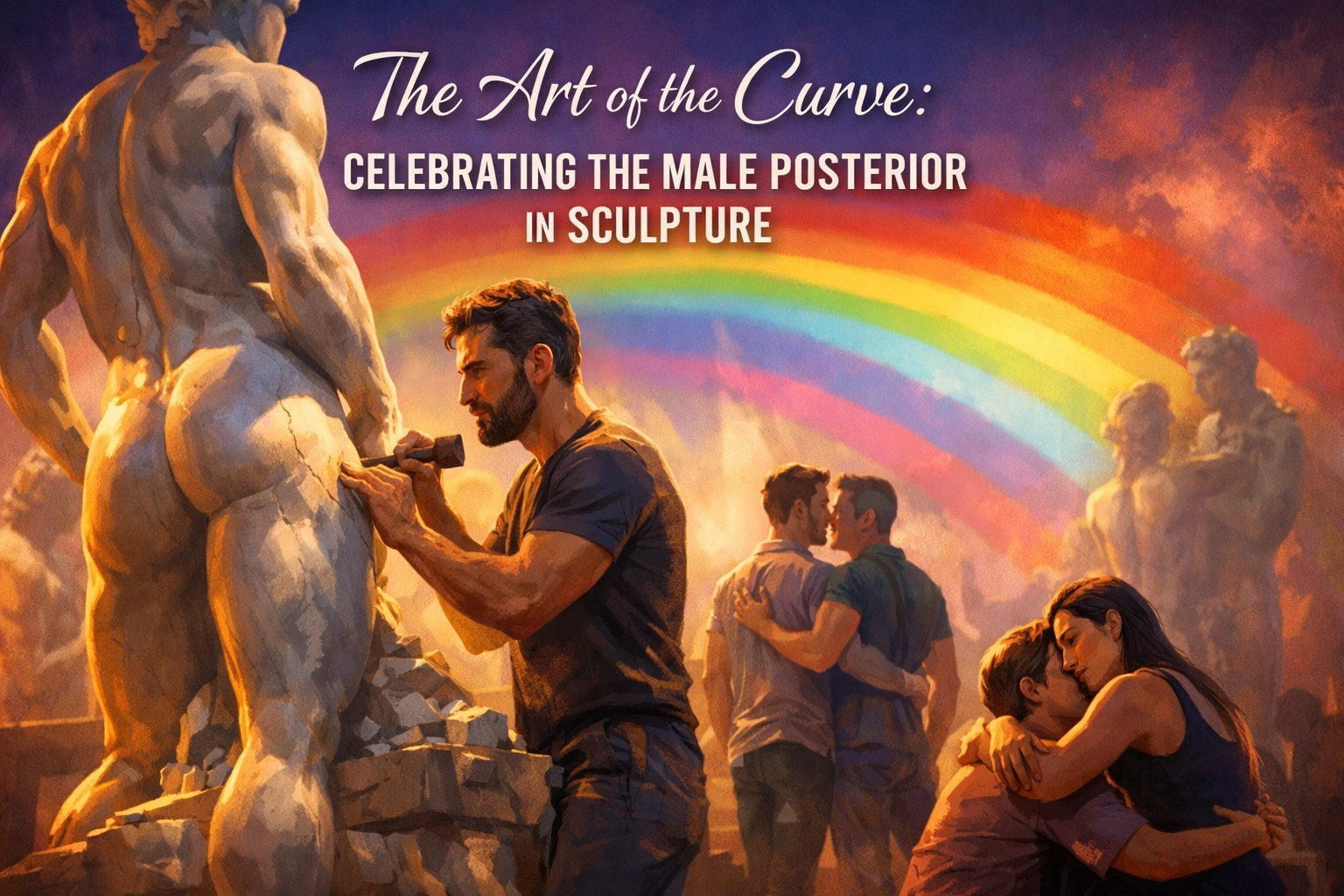
Let’s be honest: when we walk through a museum, we aren’t just looking at the brushstrokes on a canvas or the historical significance of a limestone tablet. If there’s a marble statue of a handsome man in the center of the room, most of us are doing a full 360-degree lap. Why? Because art history has a long, storied, and frankly impressive obsession with the male posterior.
At Read with Pride, we celebrate all forms of queer expression, from the steamier pages of MM romance books to the high-brow halls of the Uffizi Gallery. Today, we’re putting down the gay novels for a moment to appreciate a different kind of "prose", the lines, curves, and sheer sculptural perfection of the male backside. Whether it’s the rugged musculature of a Greek warrior or the soft, supple grace of a Renaissance youth, the "bum" has been the focal point of artistic genius for centuries.
The Hellenistic Hustle: Muscular Realism
If you want to talk about the gold standard of the male form, you have to start with the Greeks. But specifically, we’re looking at the Hellenistic period (around 323–31 B.C.). This was the era where sculptors stopped making stiff, upright figures and started getting detailed.
We’re talking veins, tendons, and yes, incredibly defined glutes. Hellenistic artists moved away from the "perfectly balanced" look of earlier eras to embrace pathos: emotional and physical intensity. When you look at a bronze or marble statue from this period, you can see the tension in the muscles. These weren’t just bodies; they were displays of power and athleticism.
For the modern fan of gay fiction or MM contemporary stories, there’s something deeply familiar about this aesthetic. It’s that "gym-honed" look that many of our favorite book covers aim for. The Greeks understood that the curve of a lower back meeting the firm line of a posterior wasn't just anatomy; it was a testament to human capability.
The Renaissance: A Tale of Two Davids
Fast forward a few centuries to the Renaissance, where the "gay gaze" arguably became a driving force in Western art. Here, we see a fascinating split in how the male posterior was celebrated, primarily through the two most famous "Davids" in history: Donatello’s and Michelangelo’s.
Donatello’s David: The Soft Curve
Donatello’s bronze David (created in the early 1400s) is a masterpiece of queer subtext: or maybe just text. Unlike the hulking warriors of the past, this David is slender, youthful, and arguably "twink-adjacent."
When you view this statue from behind, the aesthetic is entirely different from the hyper-muscular Greek ideal. As research suggests, Donatello’s David features a posterior that is soft, voluptuous, and lacks the "typical tightness" of traditional male sculpture. It’s a celebration of the feminine qualities within the male form. It’s sensual, provocatively posed with one hand on a hip, and reflects a deliberate choice to find beauty in softness rather than just strength. It’s the kind of aesthetic you’d find in a tender, slow burn MM romance where the focus is on the delicate intimacy of the body.
Michelangelo’s David: The Pinnacle of Strength
Then, of course, there’s Michelangelo. If Donatello was about the curve, Michelangelo was about the definition. His David is the ultimate "jock." Every muscle is taut, every line is calculated to show a body at its peak. The posterior here is firm, athletic, and legendary.
Michelangelo spent years studying anatomy (sometimes through questionable means, like dissecting cadavers), and it shows. He knew exactly how a gluteal muscle should flex when a man shifts his weight. For many, this David remains the ultimate representation of male beauty: a blend of raw power and artistic grace that continues to inspire gay romance authors and artists in 2026.
Why the Posterior Matters in Art
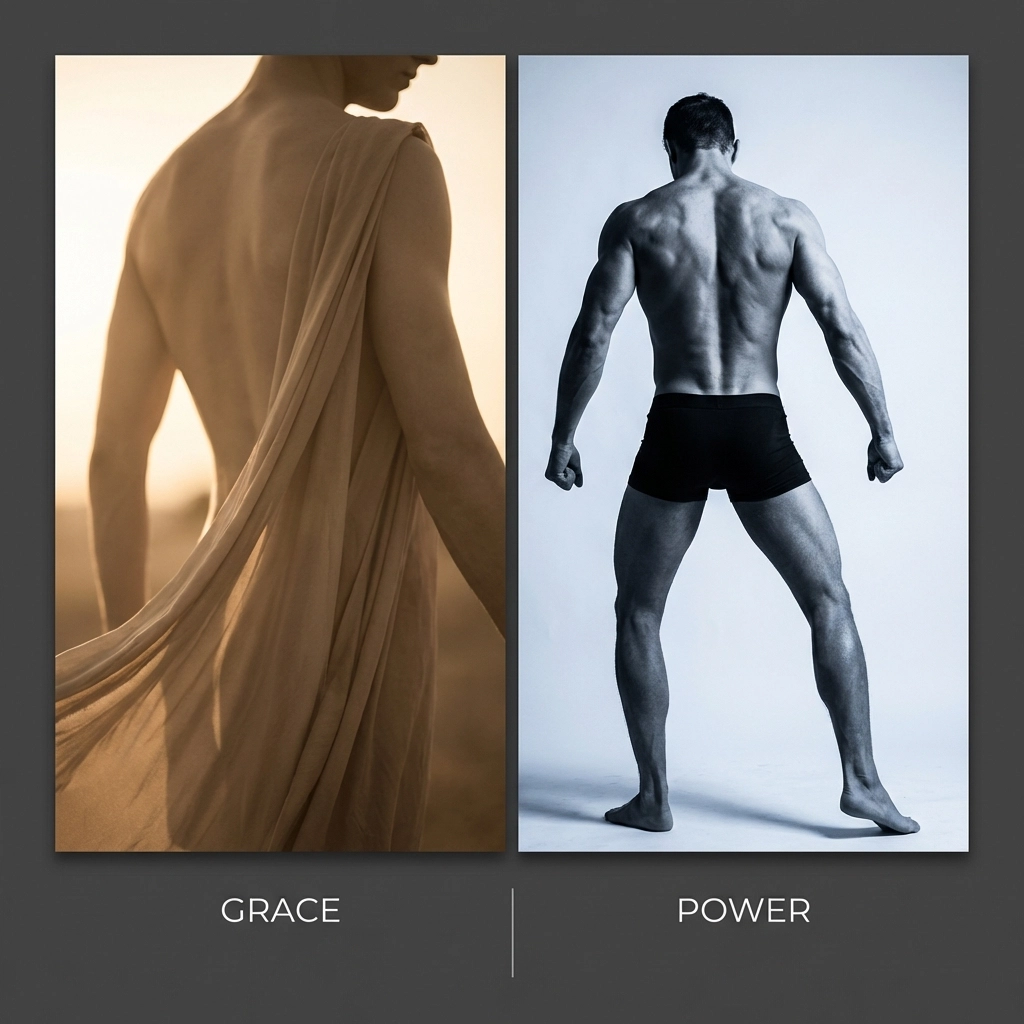
You might ask: why the obsession with the bum? In art theory, the posterior represents the "hidden" side of the human experience. While the face conveys emotion through expression, the back and the buttocks convey emotion through posture.
A slumped shoulder and a relaxed lower half suggest vulnerability. A tensed, muscular backside suggests a man ready for action: a trope we see constantly in gay adventure romance or gay thriller novels. The curve of the male body provides a continuous line that artists use to lead the eye around the sculpture. It is the literal foundation of the torso, the bridge between the power of the legs and the grace of the spine.
Modern Interpretations: From Marble to Photography
In 2026, the celebration of the naked male body has moved beyond the museum and into the digital and academic spheres. University exhibitions and modern galleries are reclaiming "nudism in art" as a way to deconstruct the male gaze and celebrate body positivity within the LGBTQ+ community.
Modern sculptors and photographers are looking beyond the "perfect" David. They are capturing bums of all shapes and sizes, celebrating the "lines of the naked body" in ways that are inclusive and authentic. This shift mirrors what we see in the popular gay books of today: a move toward diverse representation. Whether it’s a gay psychological thriller featuring a rugged lead or a heartfelt gay fiction piece about a bear finding love, our art is catching up to our reality.

Bringing the Aesthetic Home: Art and Literature
At Readwithpride.com, we believe that the appreciation of the male form is a vital part of queer culture. Just as a sculptor carves beauty out of stone, a writer carves a "gay love story" out of words. When we read a steamy MM romance, our imagination acts as the sculptor, visualizing the curves, the muscles, and the "lines" described on the page.
If you’re a fan of the classical aesthetic, you might enjoy our collection of gay historical romance. These stories often lean into the timeless appreciation of beauty and the struggle to express it in eras gone by. Or, if you prefer the rugged, "action-hero" physique, check out our action-adventure romance section for heroes who would give Michelangelo’s David a run for his money.
Conclusion: The Eternal Curve
The male posterior has been a focal point of art for over two thousand years, and it isn’t going anywhere. From the sun-drenched stadiums of ancient Greece to the high-tech galleries of 2026, the "art of the curve" remains a symbol of perfection, desire, and human identity.
Next time you find yourself in a museum: or just scrolling through the latest MM romance books on your Kindle: take a moment to appreciate the artistry. The human body is a masterpiece, and every curve tells a story.
Want more queer culture, art, and book recommendations?
- Follow us on Facebook
- Join the conversation on X (Twitter)
- See the beauty on Instagram
- Browse our latest LGBTQ+ eBooks and gay novels
Stay proud, stay curious, and keep reading.
#GayArt #MaleNude #ArtHistory #LGBTQCulture #MMRomance #ReadWithPride #MaleForm #Sculpture #GayLiterature #BodyPositivity2026

Leave a Reply
You must be logged in to post a comment.