

readwithpride.com
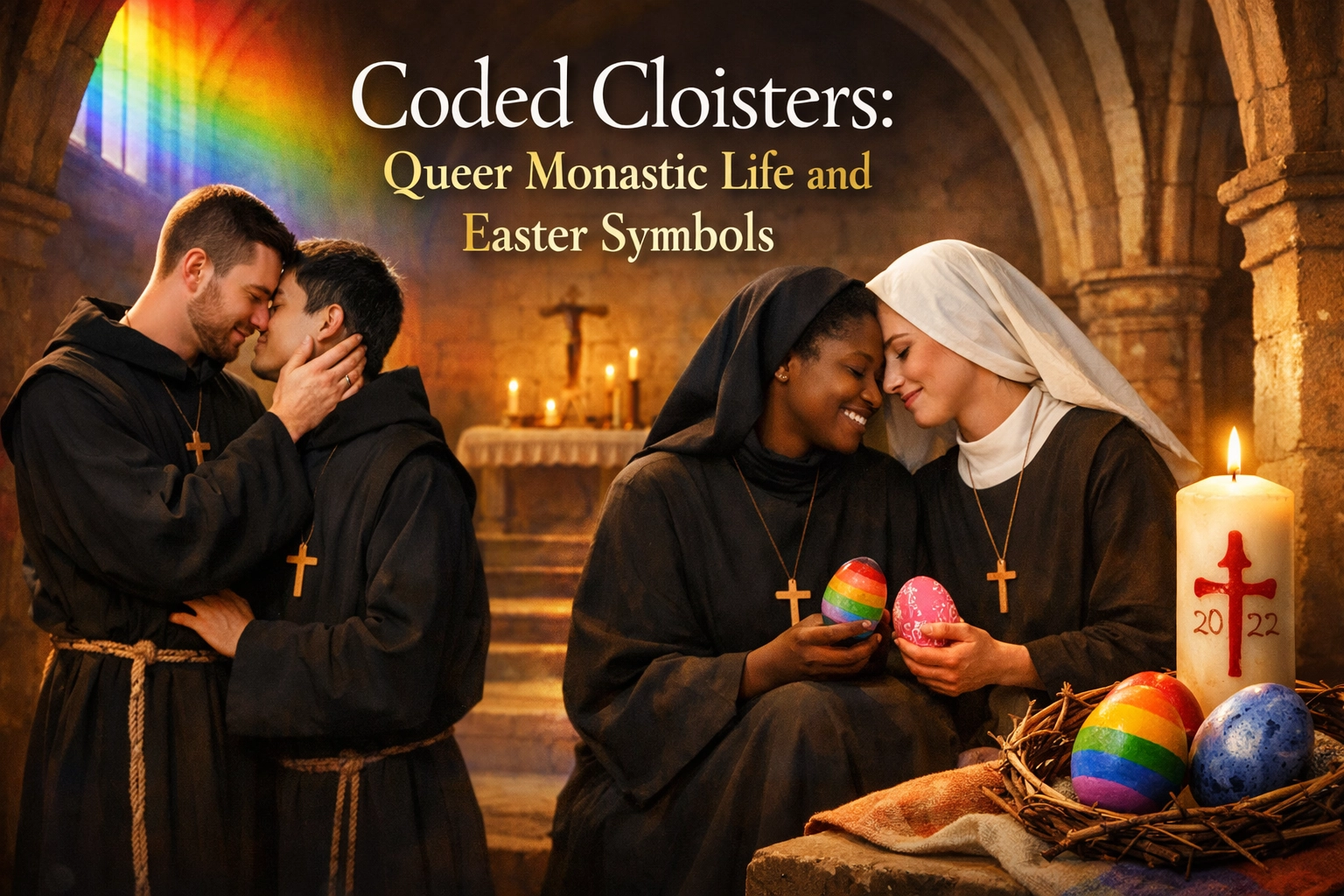
When we think of the medieval monastery, we often conjure images of austere silence, stone cold floors, and a complete lack of "extracurricular" activities. But if you’ve spent any time diving into the world of MM historical romance or queer history, you know that where there is a group of men living in close quarters, sharing their deepest spiritual and emotional lives, there is a story waiting to be told.
As we approach the Easter season in 2026, it’s the perfect time to look back at the "Coded Cloisters." For many queer men in the Middle Ages, the monastery wasn't a prison of celibacy; it was a sanctuary. It was a place where "spiritual friendship" could blossom into something profound, and where the symbols of the Resurrection offered a unique language for transformation and rebirth.
The Monastery as a Queer Sanctuary
Let’s be real: for a young man in the 12th century who wasn’t interested in the feudal expectations of marriage and land-grubbing, the Church offered a pretty sweet deal. You got an education, a roof over your head, and a community of brothers. Historians like John Boswell have long argued that monasteries served as a primary refuge for those who didn't fit the era's heterosexual norms.
In these spaces, the vow of chastity wasn't just a restriction; it was a leveler. If everyone is sworn to celibacy, your lack of a wife doesn't make you the "odd one out": it makes you a dedicated servant of God. Within this framework, queer monastics developed a culture of "monastic homosexuality." This wasn't necessarily about the physical acts that would get you in trouble with the Inquisition, but about the formation of intense, primary emotional bonds.
St. Aelred of Rievaulx: The Patron Saint of "Besties"
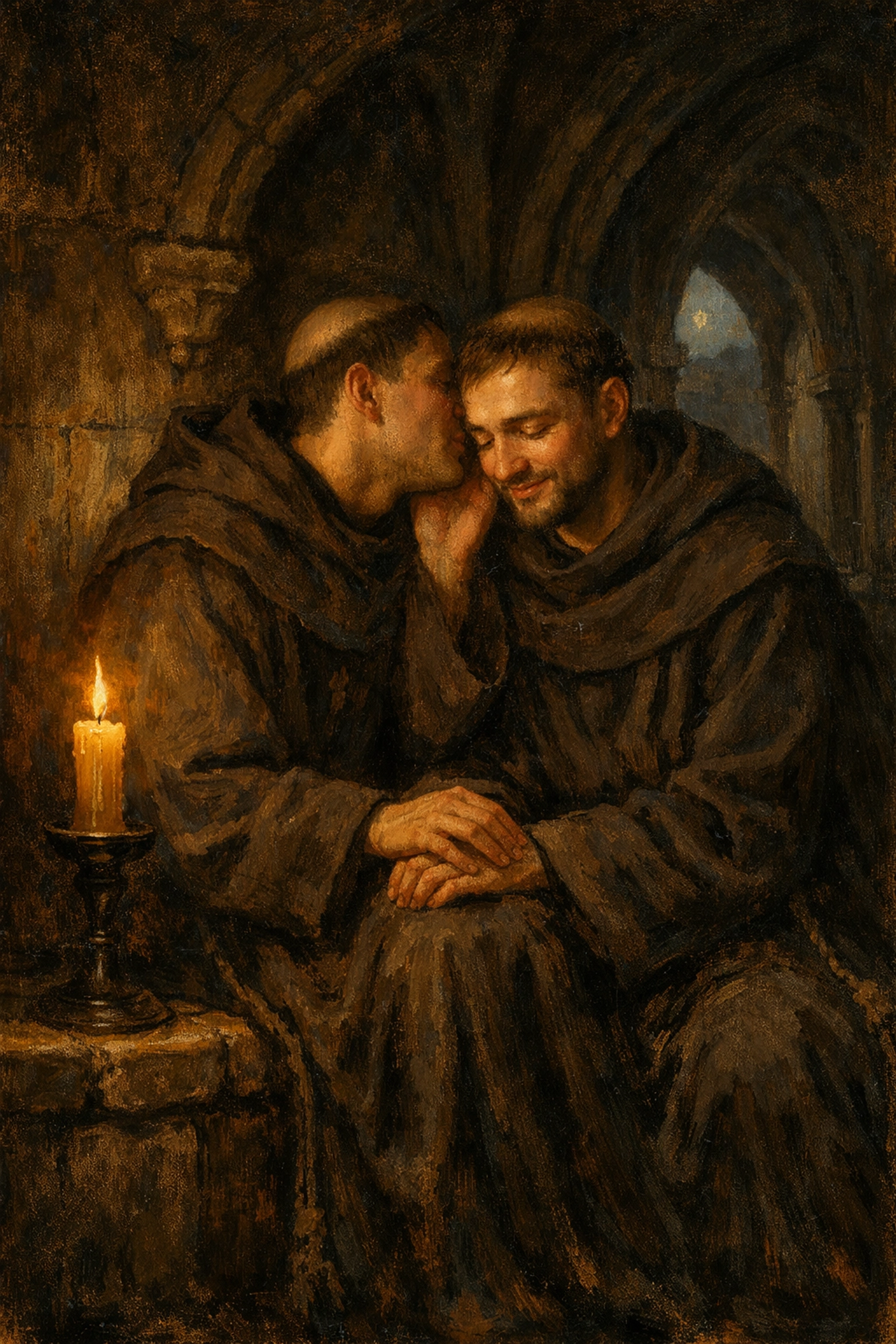
You can’t talk about queer monastic life without mentioning Aelred of Rievaulx. His 12th-century treatise Spiritual Friendship reads like the ultimate blueprint for a slow burn MM romance. Aelred argued that "God is friendship" and that the love between two men was a direct path to the Divine.
During the Easter season, Aelred’s monks would have been reflecting on the ultimate sacrifice and the "new life" promised by the Resurrection. For Aelred, that new life was found in the eyes of a brother. He wrote about the physical and emotional longing for his friends with a vulnerability that would make any modern gay romance author weep.
Easter Symbols and Coded Meanings
Easter is the pinnacle of the Christian calendar, full of symbols that, through a queer lens, take on a whole new layer of meaning. While the "official" Church line was one thing, the way a monk might interpret these symbols during a long Easter Vigil was quite another.
1. The Phoenix: The Ultimate Transformation
In medieval bestiaries, the Phoenix was a common symbol for Christ’s resurrection. However, for a monk living a "double life," or for individuals like Saint Marinos: a transmasculine figure who lived as a monk: the Phoenix represented the power of self-invention. The idea that one could go into the fire and emerge as their true, spiritual self resonated deeply with those whose external lives didn't match their internal truths.
2. The Mandrake and the Pelican
The Pelican, believed to wound its own breast to feed its young with blood, was a symbol of Christ’s sacrifice. In the intimacy of the cloister, this kind of extreme, body-focused devotion often blurred the lines between the spiritual and the carnal. Monks often used highly eroticized language to describe their relationship with the "Body of Christ," a practice that allowed them to express desire in a way that was socially and religiously sanctioned.
3. The Kiss of Peace
Easter Sunday liturgies often included the "Kiss of Peace." In a modern context, it’s a quick handshake, but in a medieval monastery, it was a ritualized moment of physical contact. For brothers who shared a "spiritual friendship," this was a moment of public, sanctified intimacy. It was a coded gesture that said, I see you, I love you, and today, that love is holy.
The Transmasculine Monk: St. Marinos
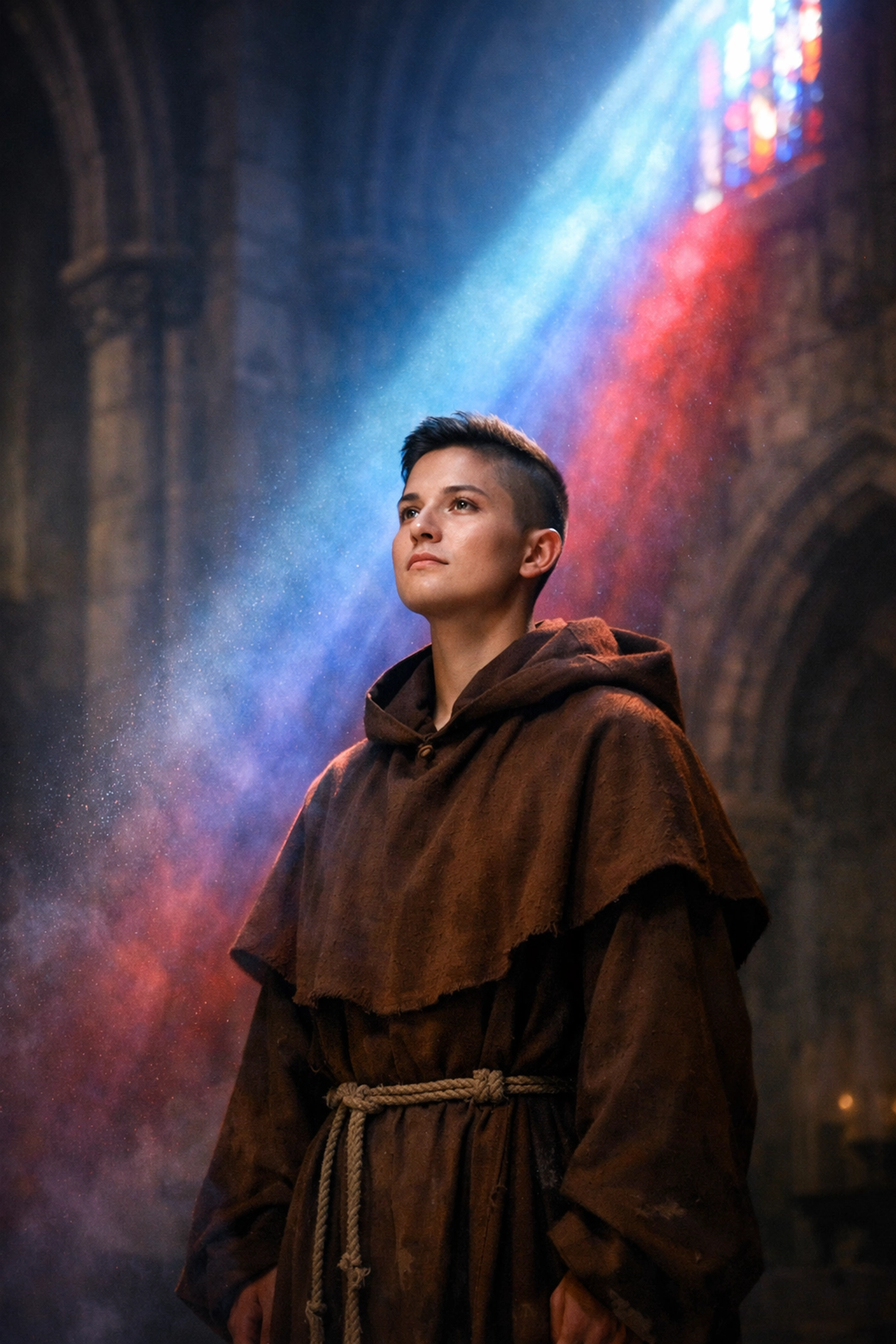
One of the most fascinating aspects of queer monastic history is the presence of individuals assigned female at birth who lived, worked, and died as monks. Saint Marinos is perhaps the most famous. Marinos entered a monastery with his father and lived his entire life as a man. Even when accused of fathering a child (a physical impossibility), Marinos accepted the penance rather than reveal his biological sex.
During Easter, the story of Marinos reminds us that the "Coded Cloister" wasn't just for gay men: it was a space where gender could be as fluid as the grace they prayed for. For Marinos, the Resurrection wasn't just about Christ; it was about the daily resurrection of his own identity in a world that didn't have the words to describe him.
Why We Need These Stories in 2026
At Read with Pride, we believe that knowing our history is vital. Whether you’re looking for gay historical romance that hits those specific medieval tropes or you're doing deep-dive research into queer theology, these stories matter.
Modern MM romance books often draw on these themes of "forbidden love" and "sacred bonds." There is something inherently romantic about the "forced proximity" of a monastery: sharing meals, chores, and prayers in a world where your only privacy is the silence of your own mind.
If you're looking for your next read that captures this vibe, check out our blog-category-sitemap or browse through the latest releases. From gay fantasy romance set in cathedral cities to steamy MM romance featuring brooding monks, the "Coded Cloister" trope is alive and well in 2026.
Modern Easter: A Queer Resurrection
Today, many LGBTQ+ people have a complicated relationship with Easter and the Church. But looking back at the queer monastics of the past allows us to reclaim these symbols. Easter is about coming out of the tomb. It’s about the light breaking through the darkness. For every monk who found love in a cold cell, and for every trans saint who found home in a brotherhood, Easter was a celebration of survival.
This year, as we celebrate with our chosen families, let’s remember the brothers who came before us. They whispered their secrets in Latin and coded their love in the margins of illuminated manuscripts. They were the original Read with Pride community, finding beauty and belonging in the most unlikely of places.

Join the Conversation
Do you have a favorite gay historical romance set in a monastery? Or maybe you’ve discovered a piece of queer history that changed how you view the past? We want to hear about it!
Stay connected with us for more deep dives into queer history, book recommendations, and all things LGBTQ+ literature.
- Check out our store: Dick Ferguson Writer
- Follow us on Facebook: Read with Pride Facebook
- Catch us on X: @Read_With_Pride
- Instagram vibes: @read.withpride
Whether you're looking for the best MM romance books of 2026 or just a place to feel seen, you're always welcome here.
#ReadWithPride #QueerHistory #MMRomance #GayFiction #Easter2026 #QueerMonastics #HistoricalRomance #LGBTQBooks #GayAuthors #MonasticLife #SpiritualFriendship

Leave a Reply
You must be logged in to post a comment.