

readwithpride.com
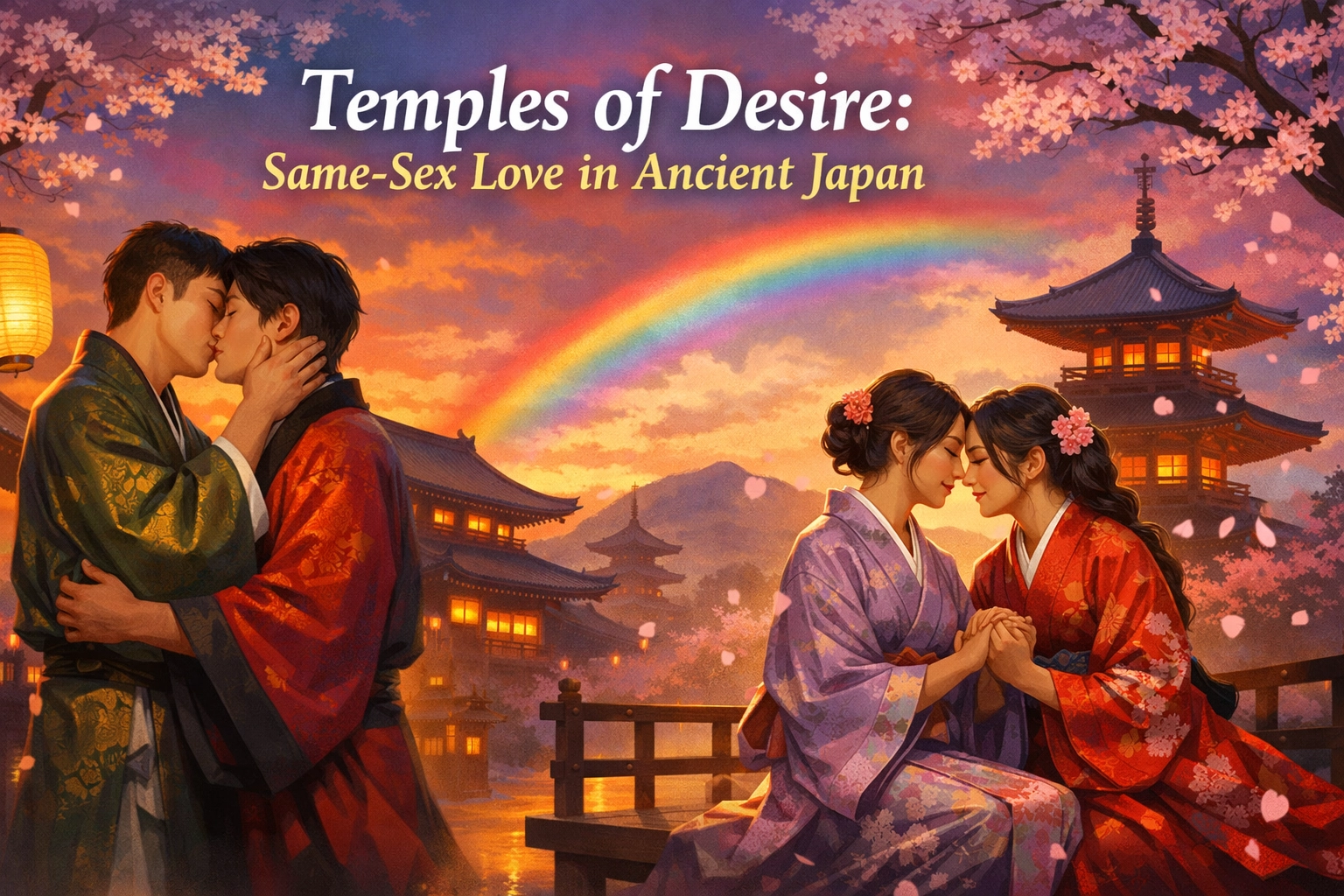
If you’ve ever spent an afternoon lost in the pages of a gay historical romance, you know there’s something uniquely magnetic about forbidden glances in ancient hallways and the heavy weight of tradition clashing with personal desire. But what if I told you that in ancient Japan, these stories weren’t just the stuff of fiction? In the quiet, incense-filled halls of Buddhist temples during the Heian period (794–1185) and beyond, male-male love wasn't just a secret: it was a structured, spiritual, and widely accepted part of life.
At Read with Pride, we’re obsessed with the roots of our stories. Understanding where we come from helps us appreciate the MM romance books we devour today. So, let’s take a deep dive into the world of Nanshoku, the "Way of the Youth," and the fascinating power dynamics of Japan’s ancient monastic life.
The Birth of Nanshoku: More Than Just "Bro-mance"
In the West, we’re often taught a history of repression when it comes to LGBTQ+ life, especially within religious institutions. But ancient Japan had a totally different vibe. The term Nanshoku (男色), literally translating to "male colors" or "male-male love," emerged as a sophisticated cultural practice.
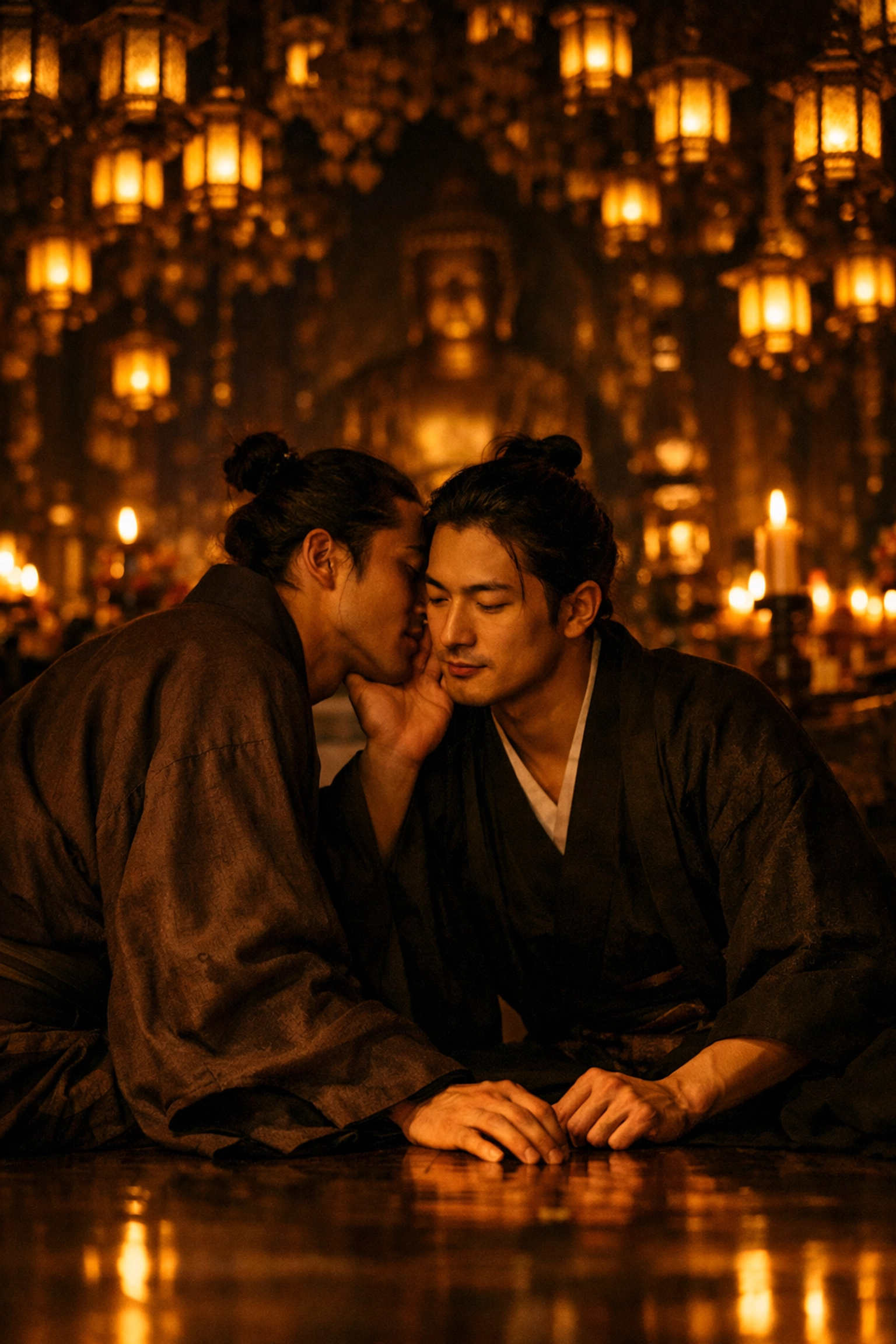
While the rest of the world was often wrestling with "sin," Japanese Buddhist monasteries were fostering relationships that combined mentorship, spiritual growth, and physical intimacy. This wasn't a back-alley affair; it was an institutionalized practice. For fans of gay novels that feature complex power dynamics and age-gap tropes, the history of Nanshoku is the ultimate blueprint.
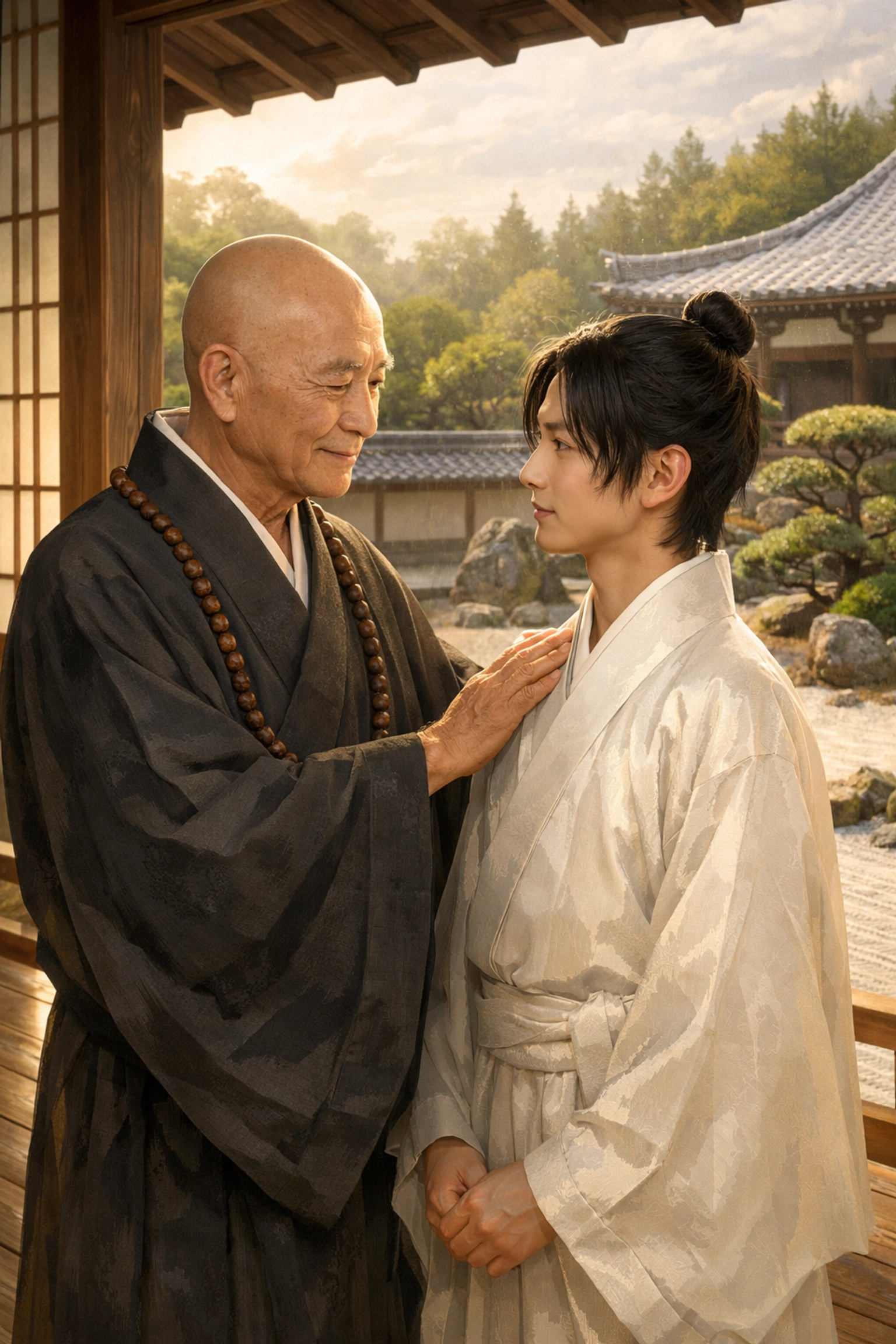
The Dynamics: Nenja and Chigo
The structure of these relationships was very specific. It usually involved two roles:
- The Nenja: An older monk or priest (the "admirer" or "lover"). He was the active partner and served as a mentor to the younger man.
- The Chigo: A younger acolyte or page (often an adolescent). The chigo was the receptive partner, and his beauty was often celebrated in poetry and art.
This wasn't just about sex. It was a formal relationship expected to evolve into a lifelong bond of friendship and loyalty once the chigo reached adulthood. If you love a good slow burn MM romance where the emotional stakes are just as high as the physical ones, the Nenja/Chigo dynamic offers a wealth of inspiration. It’s about protection, education, and a shared spiritual journey.
Why the Temples? Buddhism and the Acceptance of Desire
You might wonder why a place dedicated to spiritual purity would be the epicenter of gay love stories. To understand this, we have to look at how Shintoism and Buddhism viewed the human body.
Unlike many Western religions, Shintoism generally viewed sex as a natural phenomenon to be enjoyed. It didn't have a strict moral code condemning homosexuality. In fact, several Shinto deities, like Hachiman and Tenjin, were eventually seen as guardian deities of Nanshoku.
Buddhism brought its own unique perspective. While it promoted abstinence for the sake of reaching enlightenment, it also acknowledged that sexual desire was a normal part of being human. Interestingly, because some Buddhist sects viewed women as "distractions" or "treacherous" to the spiritual path, same-sex relationships between men were often seen as a "cleaner" or more socially acceptable outlet for desire.
For authors of gay historical romance, this creates a fascinating setting: a world where the conflict isn't necessarily "is this wrong?" but rather "how do we balance our devotion to the temple with our devotion to each other?" It’s a goldmine for the emotional MM books we love to stock at Read with Pride.
From Temples to the Battlefield: The Samurai Connection
The traditions started in the temples didn't stay there. As the centuries rolled on, the Nanshoku model spread to the secular world, most notably among the samurai class. This evolved into Wakashudo (The Way of the Young Boy), a code of conduct for male-male relationships within the warrior caste.
In the world of gay fiction, the "warrior-monk" or "protective knight" tropes are massive. Seeing their historical roots in Japan: where a samurai would pledge his life and loyalty to his partner: adds a layer of authenticity to the MM historical romance genre. These were men who fought together, lived together, and loved each other with a fierce, disciplined intensity.
Why These Stories Matter in 2026
You might be browsing for the best MM romance of 2026 and wondering why a history lesson on ancient Japan matters. It matters because our history is richer and more diverse than we are often told. When we write or read queer fiction, we are participating in a tradition that spans millennia.
At Read with Pride, we believe in the power of representation: not just in contemporary settings, but throughout history. Whether it’s a gay fantasy romance set in a reimagined Edo period or a gritty gay thriller with historical roots, these stories remind us that we have always existed, always loved, and always found ways to build our own "temples of desire."
Finding Your Next Great Read
If this trip through history has you craving some high-stakes, historically-inspired romance, you’re in the right place. We specialize in LGBTQ+ ebooks that push boundaries and celebrate the full spectrum of our community.
- Love a bit of angst? Look for stories that explore the "forbidden" nature of temple life.
- Into power dynamics? The mentor/student (Nenja/Chigo) trope is a classic for a reason.
- Want something epic? Check out our gay adventure romance section for stories that take you from the monastery to the battlefield.
Check out our latest releases to find your next obsession.
The Aesthetic of Nanshoku: Poetry and Art
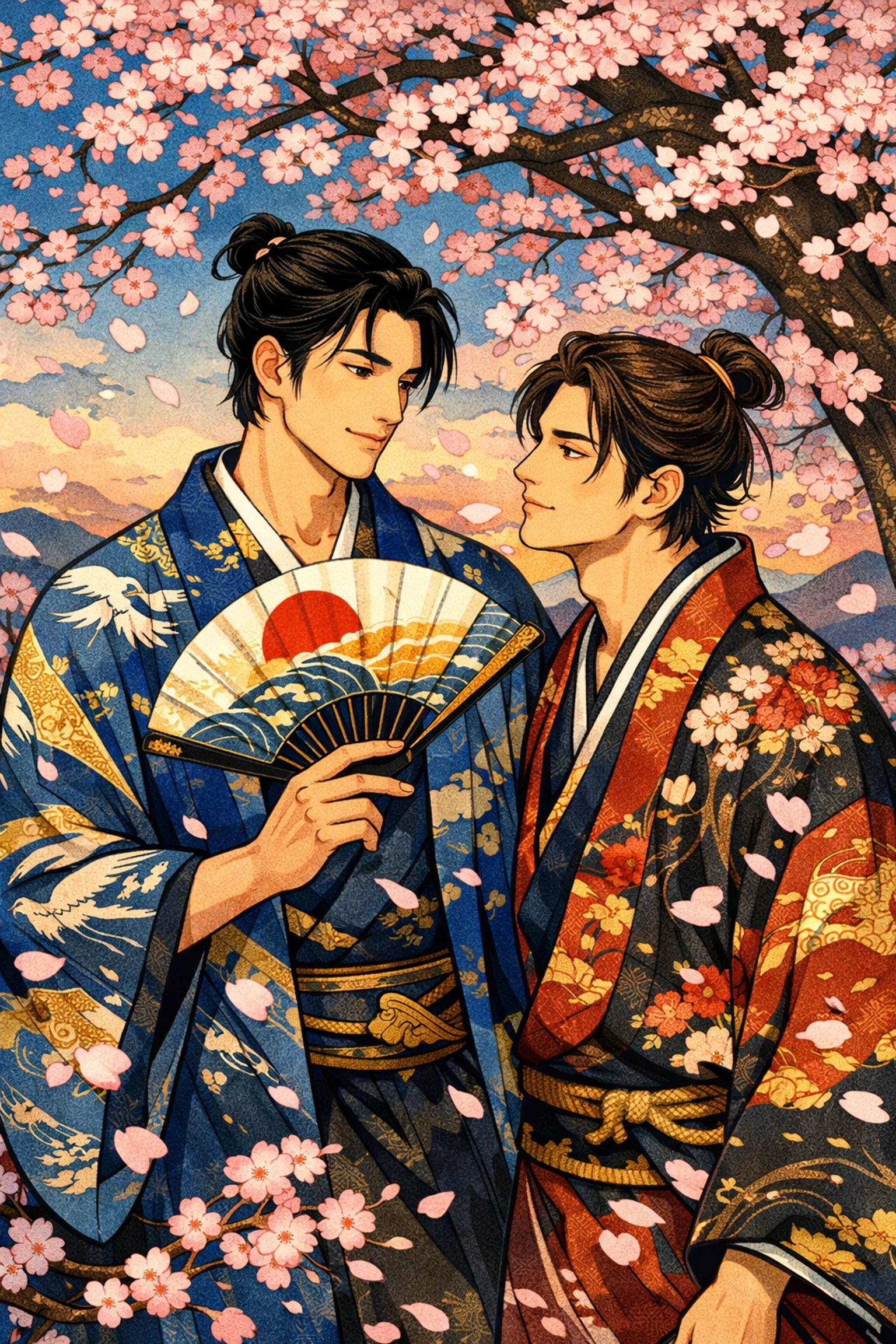
One of the most beautiful aspects of this period was how these relationships were documented. It wasn't hidden in the shadows; it was celebrated in Ukiyo-e (woodblock prints) and delicate poetry. Monks would write verses to their chigo, comparing their beauty to cherry blossoms: breath-taking but fleeting.
This focus on beauty and the ephemeral nature of life is a staple in gay literature. It’s that "hurt-comfort" feeling we look for in MM novels: the knowledge that while a moment is beautiful, it might be gone tomorrow, making it all the more precious.
Connecting with the Community
We aren't just a publisher; we're a community of readers and writers who love M/M books. History like this reminds us that our stories aren't a "trend": they are a legacy.
If you're an author working on a gay historical romance set in Japan or anywhere else, we want to hear from you! At Read with Pride, we’ve built a platform specifically designed to keep the profits in the hands of the creators while getting these vital stories to the readers who need them.
Join the Conversation
Stay updated with the latest in LGBTQ+ fiction and historical deep dives by following us on social media. We’re always sharing gay book recommendations and chatting about our favorite tropes.
- Facebook: Follow us here
- Twitter/X: Join the thread
- Instagram: See the aesthetics
Final Thoughts: The Eternal Flame of Desire
The temples of ancient Japan might be silent now, but the stories of the men who lived and loved within them still echo. They remind us that desire is a powerful, spiritual force that transcends culture and time. When you pick up a steamy MM romance or a heartfelt gay fiction novel today, you’re carrying a piece of that history with you.
So, here’s to the monks, the warriors, and the dreamers. Here’s to finding pride in our past and passion in our future.
Ready for your next adventure? Head over to the Read with Pride store and find a story that speaks to your soul. Whether it's gay contemporary romance or a dive into the ancient past, we've got the stories that celebrate who we are.
#ReadWithPride #MMRomance #GayHistory #Nanshoku #QueerFiction #LGBTQBooks #GayRomanceNovels #2026GayBooks #MMHistoricalRomance
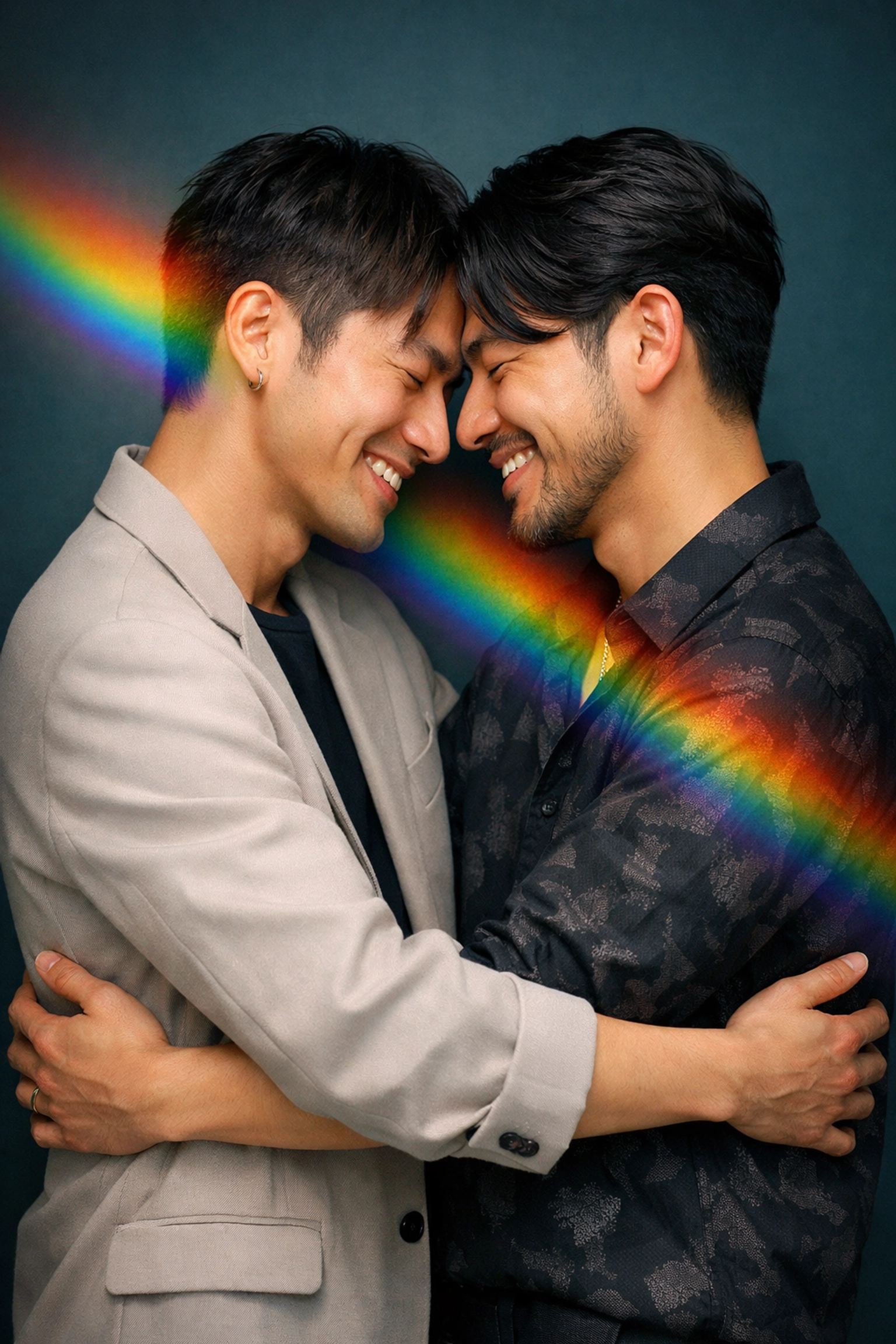
Looking for more? Explore our sitemaps to discover a world of gay love stories and top LGBTQ+ books.

Leave a Reply
You must be logged in to post a comment.