

readwithpride.com
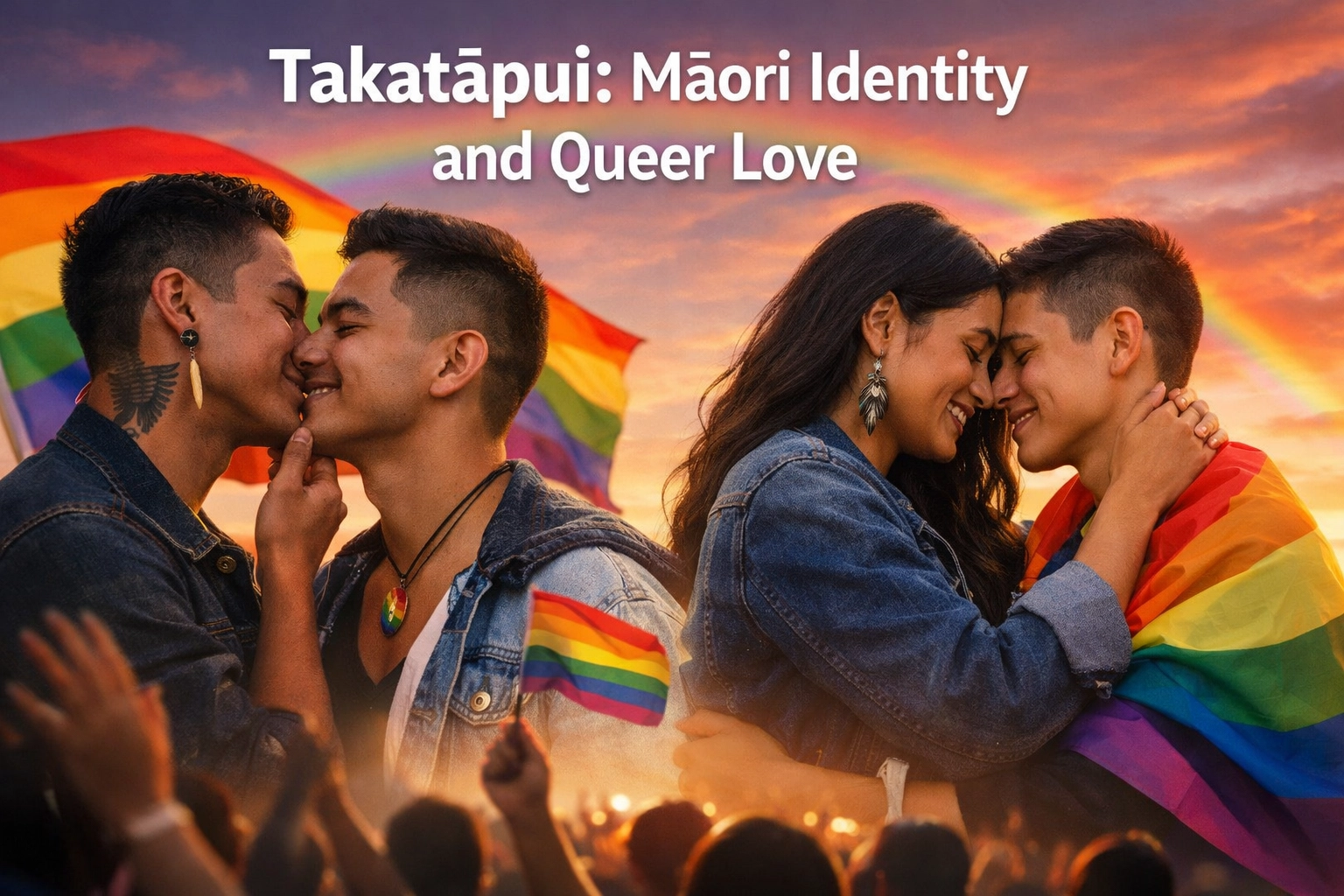
When we think about the landscape of LGBTQ+ fiction, we often find ourselves stuck in a very Western, very urban perspective. We think of the Stonewall Inn, the bright lights of London’s Soho, or the sprawling pride parades of San Francisco. But if you look toward the horizon: specifically toward the rolling green hills and rugged coastlines of Aotearoa (New Zealand): you’ll find a story of identity that is older, deeper, and far more complex than a simple rainbow flag.
Welcome to the world of the Takatāpui.
At Read with Pride, we’re obsessed with stories that don’t just offer a "gay version" of a straight trope, but instead offer a window into a completely different way of being. In 2026, the demand for authentic indigenous queer literature is skyrocketing. Readers are moving away from surface-level representation and looking for stories where culture, spirituality, and sexuality are woven together like a masterfully crafted flax cloak.
Today, we’re diving into the heart of Māori identity and what it means to be Takatāpui in both history and the modern MM romance world.
What Does "Takatāpui" Actually Mean?
If you try to translate "Takatāpui" simply as "gay" or "queer," you’re missing about 90% of the magic. The word itself is an ancient one. It first appeared in written records as early as 1844 in a Māori dictionary compiled by missionary William Williams. Back then, it was defined as "an intimate companion of the same sex."
But here’s the kicker: for many Māori, being Takatāpui isn’t just about who you want to take to bed. It’s about whakapapa (genealogy). It’s about who your ancestors were, where your land is, and how your identity as a Māori person is inseparable from your identity as a queer person.
In Western culture, we often feel like we have to choose a "primary" identity. Are you a man first? Gay first? A writer first? In the world of Takatāpui, those things are one and the same. You aren’t a Māori person who happens to be gay; you are Takatāpui. It’s a holistic way of existing that challenges the boxes the colonial world tried to put us in.
A History Hidden in Plain Sight
One of the biggest myths of colonization was that "homosexuality" was a sin brought to "enlighten" indigenous peoples: or conversely, that it never existed in "traditional" societies. Both are completely false.
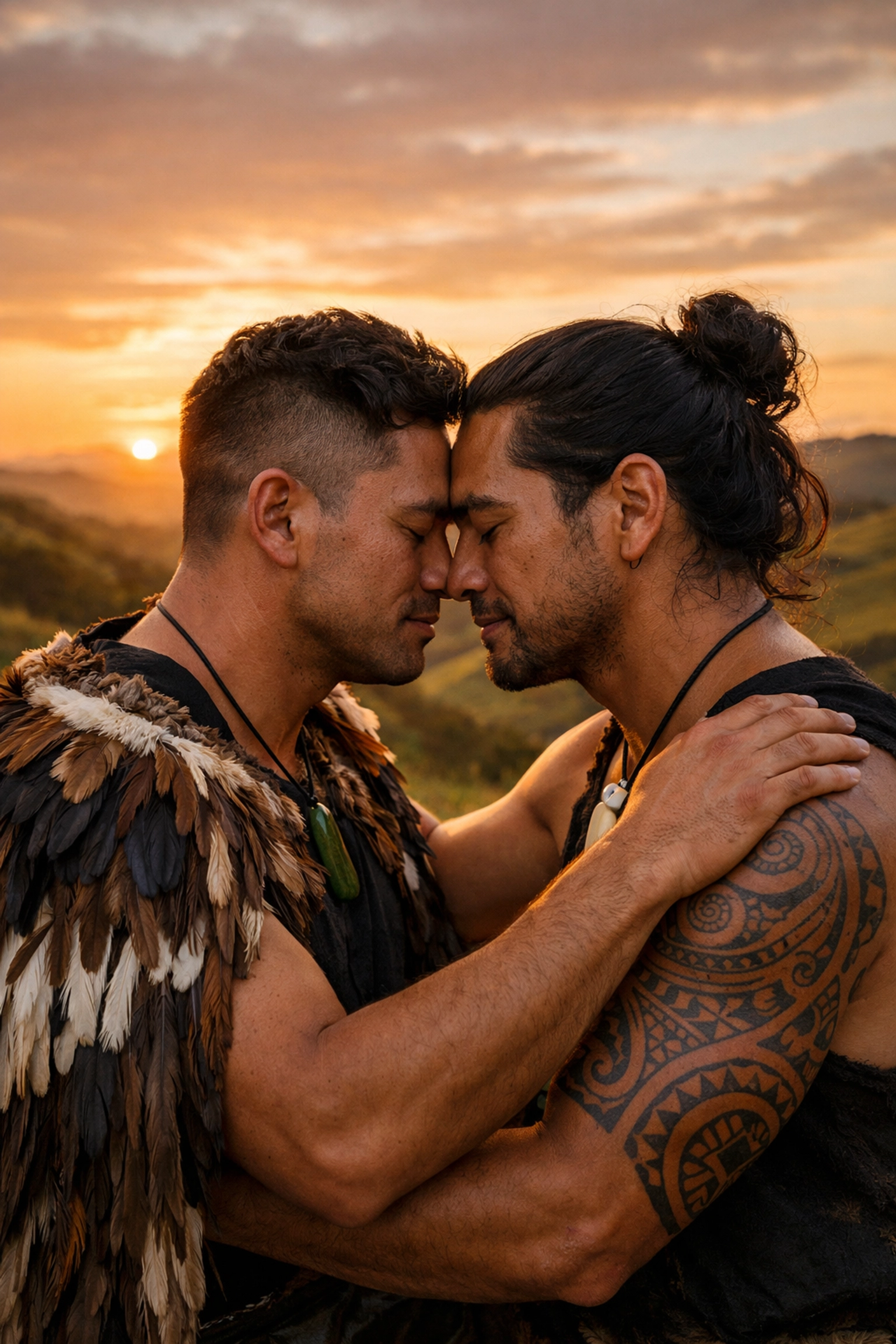
Before European ships ever touched the shores of New Zealand, Māori society had a much more fluid understanding of gender and sexuality. There was no "closet" because there was no shame. Traditional oral histories tell of figures like Hinemoa and Tūtānekai. While often presented as a heterosexual love story today, early accounts and deeper cultural readings suggest intimate same-sex companionships were acknowledged and respected by the community.
Pre-colonial Māori didn’t have the rigid, Victorian hang-ups about "masculinity" that we see in a lot of gay historical romance. A warrior’s mana (prestige/spiritual power) wasn’t diminished by his love for another man; in many ways, deep bonds between companions only strengthened the tribe.
Then came the missionaries. Along with new technology and trade, they brought a very specific, very narrow view of morality. They worked hard to erase the concept of Takatāpui, replacing it with shame and silence. But you can’t kill a spirit that is rooted in the land.
The Reclamation: From Silence to Sovereignty
Fast forward to the late 20th century. While the rest of the world was fighting for basic legal rights, Māori queer folk were doing something even more radical: they were reaching back into their history.
In the 1980s, the term Takatāpui was reclaimed. It became a banner of resistance. By choosing this word over "gay" or "lesbian," Māori people were saying, "We refuse to let you colonize our desires."
This reclamation is why Read with Pride is so passionate about supporting queer authors who explore these intersections. It’s not just about a gay love story; it’s about a homecoming. When a Takatāpui character appears in a new gay release in 2026, they carry the weight of their ancestors with them. That adds a layer of "emotional MM books" that you just can’t get from a standard billionaire romance.
Takatāpui in Modern Literature and MM Romance
So, how does this translate to the books we love to read?
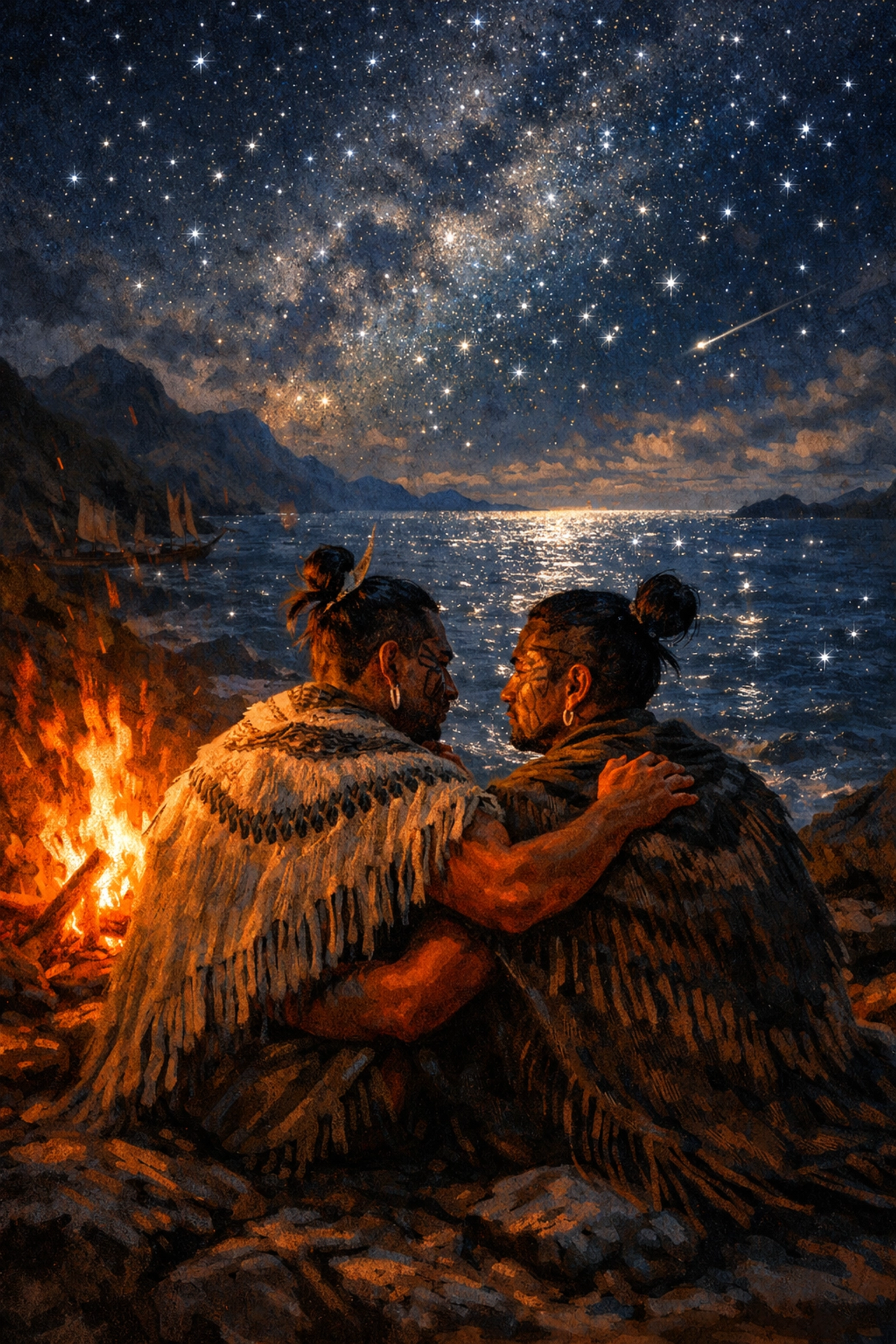
In the world of MM romance books, we’ve seen a massive shift toward "genre-bending" and cultural authenticity. We’ve moved past the "coming out" story being the only narrative for queer characters. Now, we want to see Takatāpui characters in gay fantasy romance, gay contemporary romance, and even gay psychological thrillers.
Authentic representation means acknowledging the specific challenges Takatāpui face: like the "double minority" effect of dealing with both racism and homophobia: while also celebrating the unique joy of their culture.
If you're a writer looking to include Māori characters in your queer fiction, it’s vital to avoid the common pitfalls. We’ve actually written a guide on this: 7 Mistakes You’re Making with LGBTQ+ Character Development. When it comes to indigenous identities, the "research" phase shouldn't just be a Google search: it should be an exercise in respect and empathy.
Why It Matters for Readers
Why should someone in New York or London care about Takatāpui stories? Because these stories challenge our assumptions about what "gay life" looks like.
When you read an award-winning gay fiction piece centered on a Māori protagonist, you’re learning about:
- Whānau (Family): How the community, not just the individual, experiences queer identity.
- The Land: How the connection to Aotearoa shapes a character's soul.
- Spirituality: How ancient beliefs interact with modern life.
These aren't just popular gay books; they are cultural touchstones. They provide a blueprint for how we can all integrate our pasts with our presents.
The Future of Queer Publishing at Read with Pride
As a publisher dedicated to LGBTQ+ Content & Publishing, our mission is to ensure that the "Pride" in Read with Pride is global. We are constantly looking for MM authors who aren't afraid to dive into these rich, cultural waters.
The year 2026 is going to be a breakout year for M/M books that feature indigenous voices. We’re seeing more "slow burn" romances where the tension isn't just about "will they/won't they," but about how two people from different cultural backgrounds navigate their shared future.
If you’re looking for your next obsession, we highly recommend looking into gay romance series that feature diverse characters from the Pacific. The depth of the gay romantic fiction coming out of New Zealand and Australia right now is staggering. It’s witty, it’s authentic, and it’s unapologetically queer.

Join the Conversation
The story of the Takatāpui is still being written. Every time a new gay novel hits the shelves featuring a Māori character who is proud, complex, and loved, we take another step toward undoing the erasure of the past.
At Readwithpride.com, we believe that every voice deserves to be heard. Whether you’re looking for steamy MM romance, heartfelt gay fiction, or a gay adventure romance set in the bush of the South Island, we’ve got you covered.
Ready to dive deeper? Check out our latest collections:
- Explore our sitemaps for a full list of our diverse titles.
- Check out the latest MM romance books in our store.
- Read more about why genre-bending is the future of MM romance.
Don't forget to follow our journey on social media! We’re constantly sharing gay book recommendations and behind-the-scenes looks at our upcoming 2026 gay books.
🔗 Follow us here:
Let’s keep reading, keep learning, and above all, let's keep reading with pride. 🌈🇳🇿
#Takatāpui #MāoriPride #QueerLiterature #ReadWithPride #MMRomance #LGBTQBooks #GayFiction2026 #IndigenousPride #GayRomanceNovels #AotearoaQueer

Leave a Reply
You must be logged in to post a comment.