

readwithpride.com
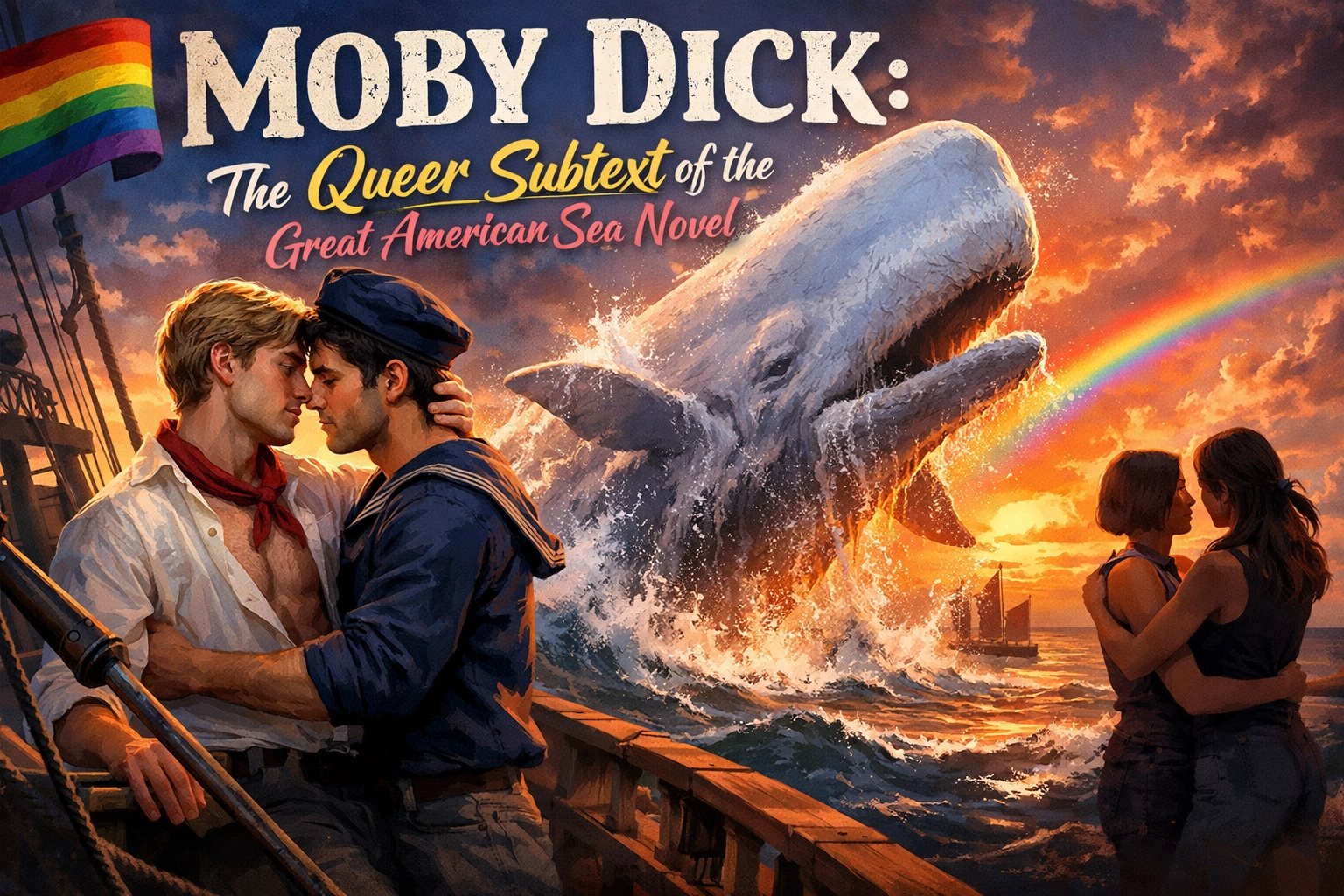
When someone mentions Moby Dick, your brain probably goes straight to a giant white whale, a grumpy guy named Ahab with a peg leg, and a whole lot of nautical jargon that you probably skimmed through in high school. It’s the "Great American Novel," the ultimate "man versus nature" epic. But here at Read with Pride, we’re looking at it through a slightly different lens.
If you strip away the blubber and the harpoons, Moby Dick isn't just a story about a whale. It’s one of the most significant pieces of queer fiction in history. Long before the explosion of modern MM romance books, Herman Melville was out here writing about "bosom friends" sharing beds and men "squeezing" together in ways that would make a contemporary romance author blush.
Let’s dive into the deep blue sea and uncover the homoerotic heart of the Pequod.
The Original "Bed-Sharing" Trope
Every fan of MM romance knows the "there was only one bed" trope. It’s a classic for a reason. Well, Herman Melville basically invented the literary version of this in 1851.
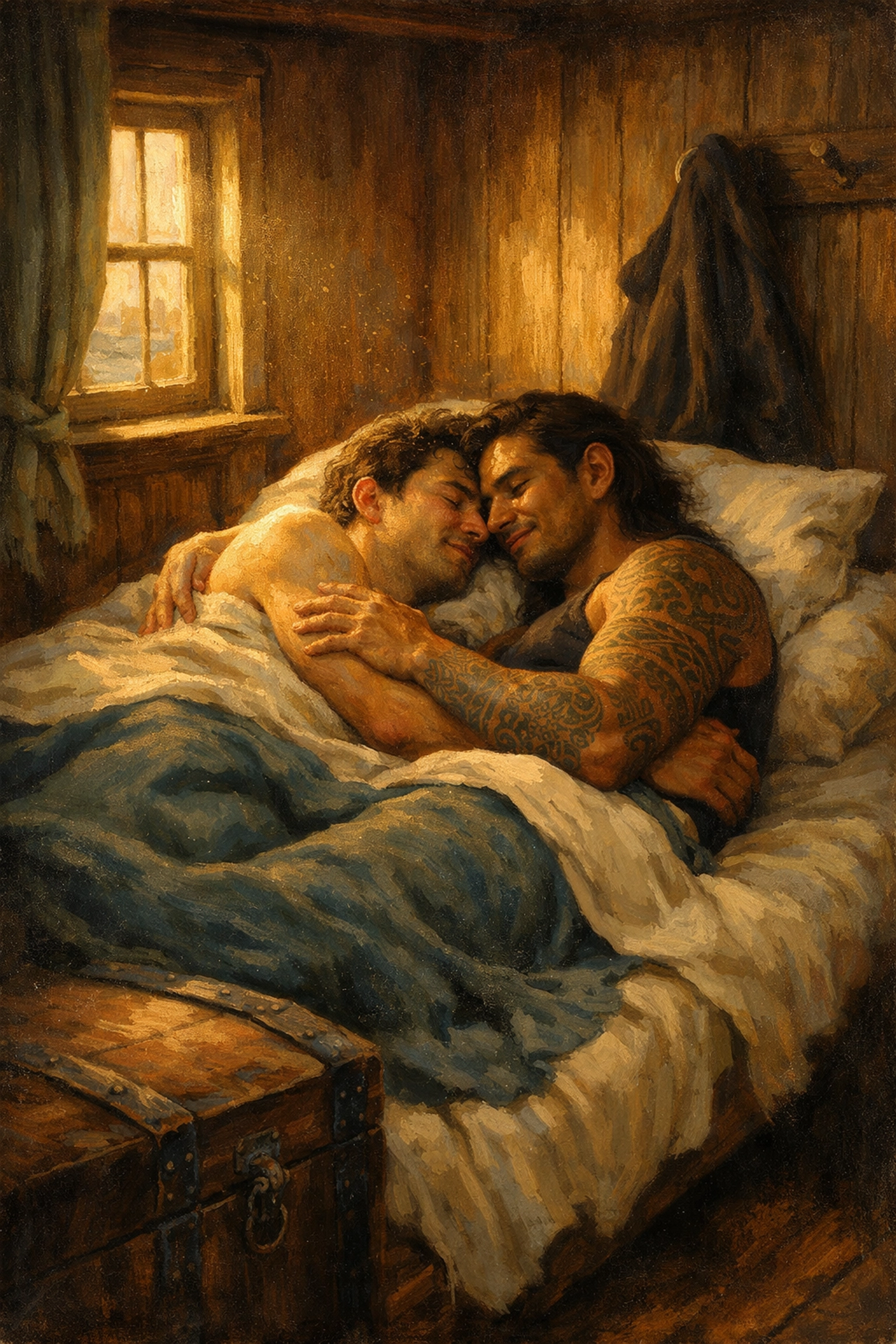
When our narrator, Ishmael, arrives at the Spouter-Inn, he’s told he has to share a room, and a bed, with a "cannibal" harpooner named Queequeg. Initially, Ishmael is terrified, but that fear quickly turns into a fascination that borders on the domestic. By the next morning, Ishmael wakes up to find Queequeg’s arm thrown over him in "the most loving and affectionate manner."
He doesn’t jump out of bed in a panic. Instead, he lies there, reflecting on how cozy it feels. He even goes so far as to say, "You had almost thought I had been his wife."
The "Marriage" of Ishmael and Queequeg
It doesn’t stop at one night of accidental cuddling. Ishmael and Queequeg develop a bond that is explicitly described as a marriage. After spending a day together, Queequeg tells Ishmael that they are now "married", a term used in his culture to signify a lifelong, inseparable bond.
Ishmael’s reaction? He’s totally into it. He writes, "In our heart's honeymoon, lay Queequeg and I, a cosy, loving pair." This isn’t just a casual friendship. This is the emotional core of the novel. While Ahab is busy obsessing over a whale, Ishmael is finding salvation in the arms of another man. This transition from a lonely, suicidal wanderer to a man who feels "reconciled" to the world happens because of his love for Queequeg. If you're looking for a gay love story that transcends time, this is it.
The All-Male World of the Pequod
The world of 19th-century whaling was, by definition, an all-male environment. For years at a time, men lived, worked, and slept in cramped quarters with zero female presence. This created a unique social structure where traditional gender roles were blurred, and intimacy between men was often the only form of emotional connection available.
Melville leans heavily into this "all-male" energy. The Pequod is a microcosm of masculinity, but it’s not just the toxic, aggressive kind represented by Ahab. There’s a softness and a communal sensuality that pops up in the weirdest places.
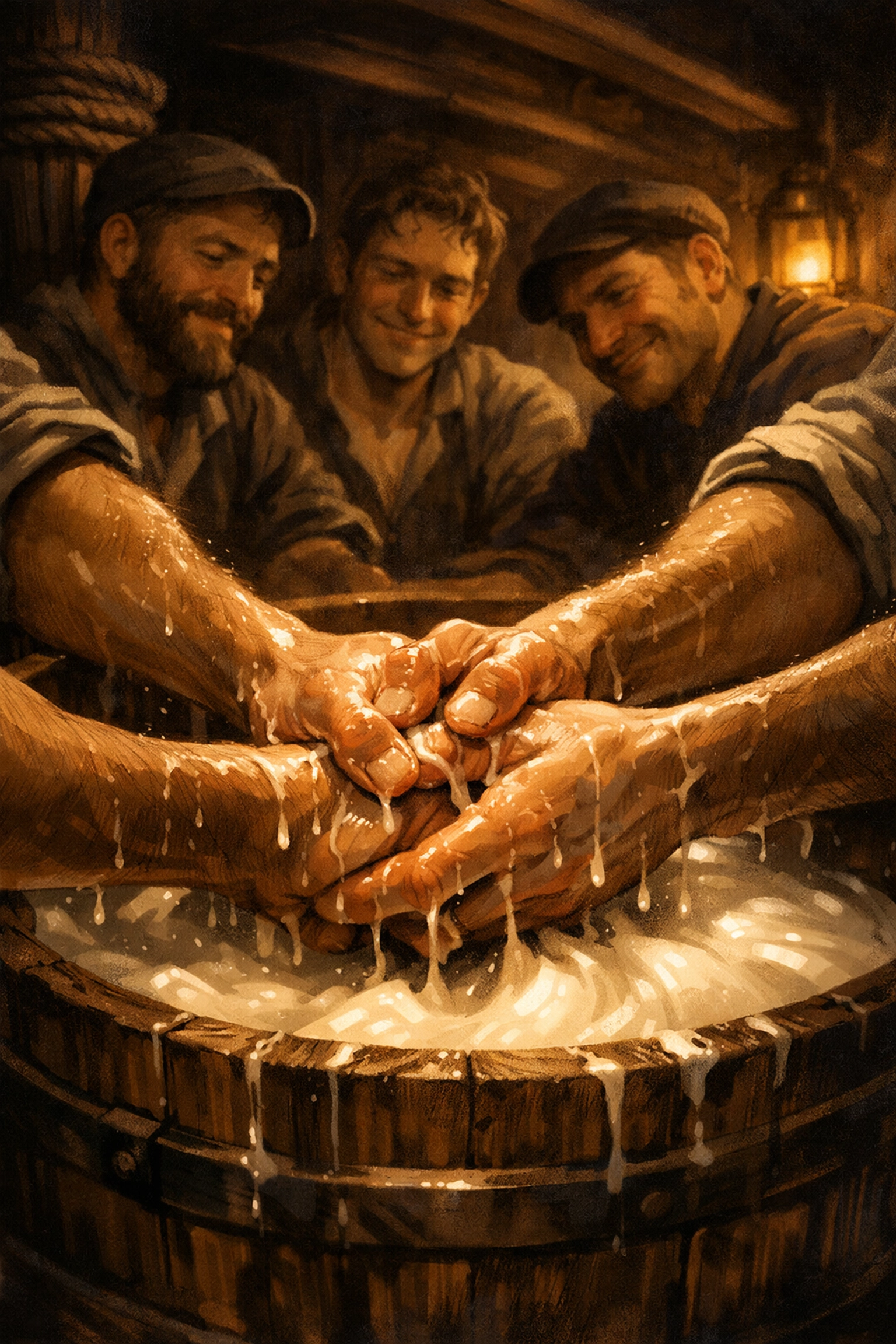
Take the infamous "A Squeeze of the Hand" chapter. The sailors are tasked with squeezing lumps of whale spermaceti (oil) back into liquid form. Ishmael describes the experience in terms that are… well, let’s just say they are very "Read with Pride" friendly.
"Squeeze! squeeze! squeeze! all the morning long; I squeezed that sperm till I myself almost melted into it; I squeezed that sperm till a strange sort of insanity came over me; and I found myself unwittingly squeezing my co-laborers' hands in it."
Ishmael goes on to talk about how he felt an "abounding, affectionate, friendly, loving feeling" for his fellow sailors. In a modern MM contemporary novel, this would be the point where everyone realizes they’re in love. In 1851, it was a radical depiction of male intimacy and shared tactile pleasure.
Why the Subtext Matters Today
You might ask, "Why does it have to be gay? Can’t they just be friends?"
Sure, they could be. But when you look at the language Melville uses: words like "honeymoon," "bridegroom," and "loving pair": it’s clear he was reaching for something deeper than just "bros at sea." In the 19th century, there weren't the same labels we have today. The word "homosexual" hadn't even been coined yet. Men often expressed deep romantic affection for one another in ways that were socially acceptable as "romantic friendships," but Melville’s descriptions push far beyond the standard platonic boundaries of his time.
For modern readers of gay literature and MM romance books, reclaiming Moby Dick is an act of acknowledging our history. Our stories didn't just start in the 1960s with the Pride movement. We have always been here, woven into the fabric of the "classics."
The Racialized Power Dynamic
It's also important to acknowledge that this "marriage" isn't without its complexities. Queequeg is a person of color, a "noble savage" archetype that was common in literature of that era. Ishmael’s whiteness gives him a level of narrative power and social mobility that Queequeg doesn't have.
However, Ishmael’s willingness to "wed" himself to Queequeg: to share his pipe, his bed, and his soul: was a radical rejection of the racist norms of the mid-1800s. Their relationship is a bridge between different worlds, built on mutual respect and physical affection.
Beyond the Whale: Finding Queer Joy in the Classics
While the book ends in tragedy (spoiler alert: the whale wins), the relationship between Ishmael and Queequeg remains a beacon of light. It’s a reminder that even in the most rugged, hyper-masculine settings, queer love and intimacy find a way to thrive.
If you’re a fan of gay historical romance or MM historical romance, Moby Dick is essentially the grandfather of the genre. It captures that sense of longing, the "us against the world" mentality, and the transformative power of finding your person in the most unlikely of places.
At Readwithpride.com, we believe that every story deserves to be seen in its full, authentic colors. Whether you’re looking for popular gay books of 2026 gay books or diving back into the classics, there’s always more to discover beneath the surface.

Want More Queer Literature?
If you loved the vibes of Ishmael and Queequeg, you might want to check out some modern takes on the seafaring trope. From gay adventure romance to steamy MM romance set on the high seas, the legacy of the Pequod lives on in our digital library.
Explore our latest releases and find your next favorite read:
- Publishing with Pride: The Platform for Our Stories
- Check out our full Blog Category Sitemap
- Support Queer Authors at our Store
Let’s keep reclaiming the classics and celebrating the stories that make us who we are.
#MobyDick #QueerLiterature #MMRomance #GayHistory #ReadWithPride #LGBTQBooks #GayRomanceNovels #IshmaelAndQueequeg #ClassicLiterature #QueerSubtext
Follow us for more queer bookish content:
Facebook | Twitter/X | Instagram

Leave a Reply
You must be logged in to post a comment.