

readwithpride.com
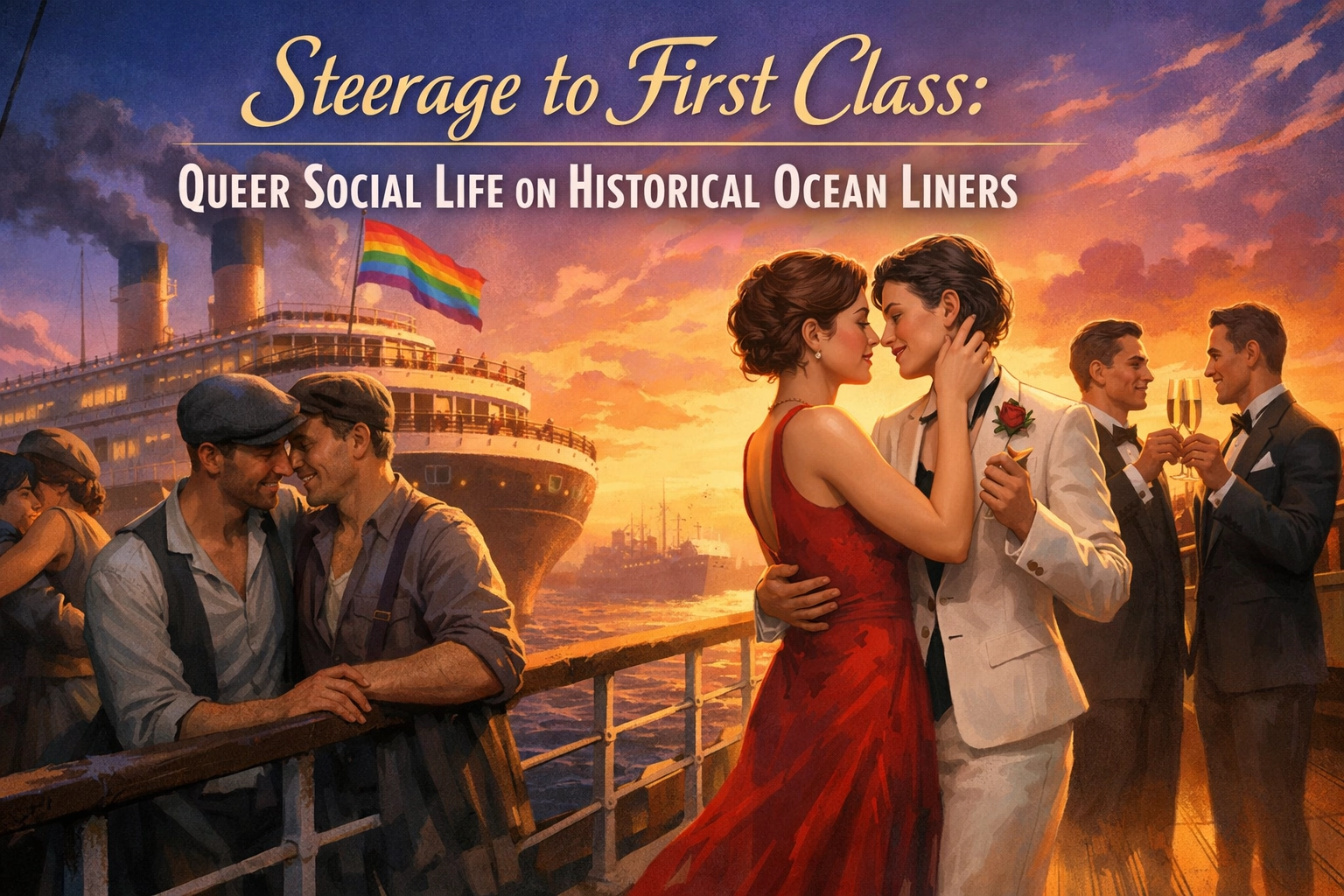
Ah, the golden age of travel. We’re talking massive smokestacks, the salt spray of the North Atlantic, and the kind of high-society drama that makes Downton Abbey look like a quiet tea party. But while history books love to obsess over the size of the Titanic’s propellers or the art deco mirrors on the Queen Mary, there’s a much juicier story shimmering beneath the surface.
For many queer men and women in the early to mid-20th century, life on land was a series of masks and hushed whispers. But once the gangplank was raised and the coastline faded into a gray smudge, the rules changed. The ocean wasn’t just a barrier between New York and London; it was a "heterotopic" space: a fancy term for a place where the normal social order gets tossed overboard.
At Read with Pride, we’re obsessed with the stories that history tried to tuck away in the cargo hold. Whether you’re a fan of gay historical romance or you’re looking for the best MM romance books of 2026 that capture that vintage vibe, understanding the real-life queer culture of ocean liners is like finding a hidden treasure map.
The Original "Queer Heaven": The Crew Below Deck
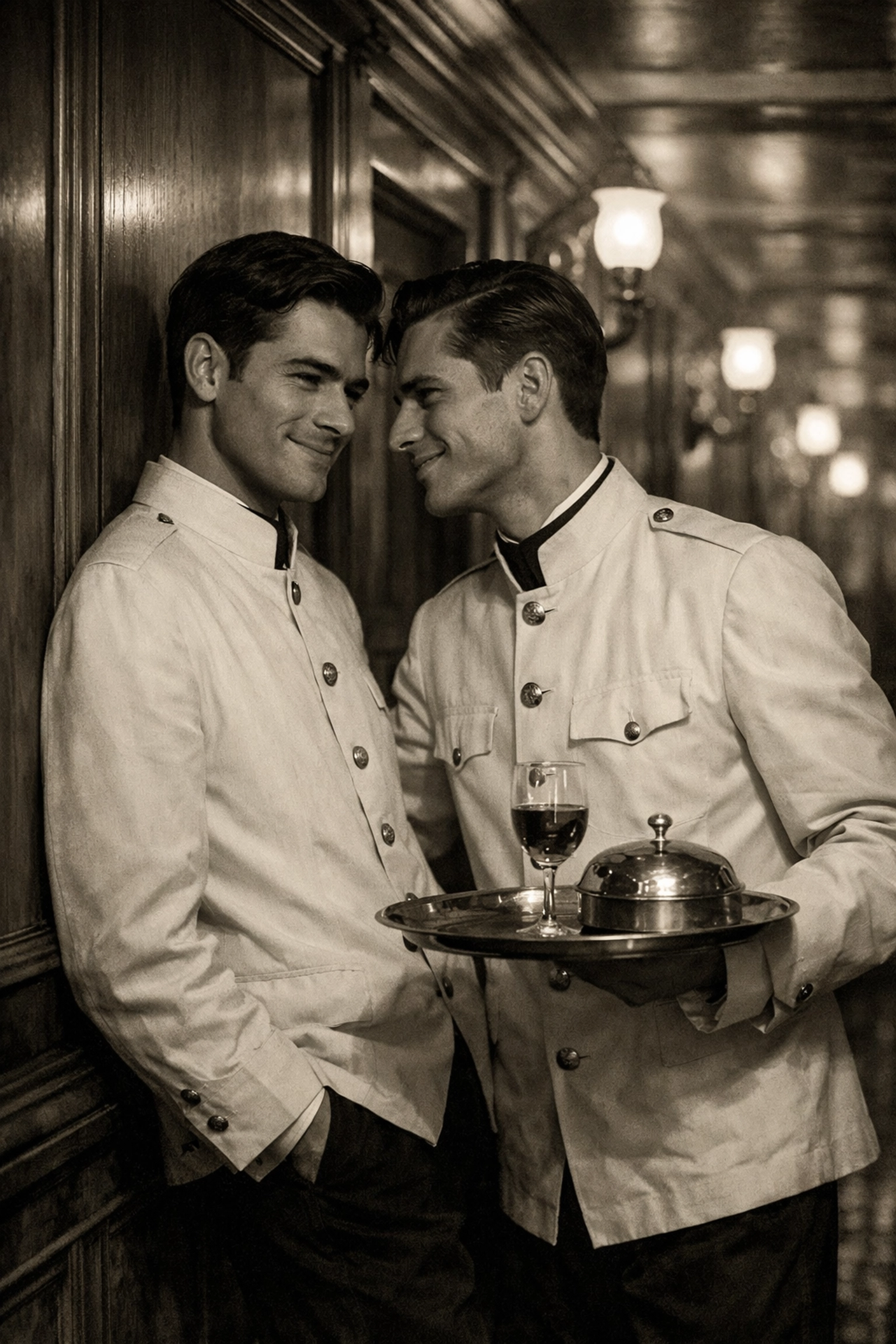
If you were a gay man in 1912 looking for a career that didn't involve a "wife and 2.5 kids" expectation, the Merchant Navy was calling your name. It’s estimated that on ships like the Titanic, as many as two out of every six men on the crew were gay.
Why? Because the sea offered a unique kind of freedom. Positions like stewards, waiters, and entertainers allowed for a certain level of "dandyism" that would have been mocked in a factory or a coal mine. A steward could be fastidious about his appearance, have impeccable manners, and live a life surrounded by other men without anyone batting an eye. It was the ultimate "bachelor" loophole.
By the mid-20th century, some estimates suggest that gay men made up 30% to 50% of the crew on major liners. On some particularly "fabulous" voyages, that number supposedly hit 90%. These men weren't just hiding in the shadows; they were the lifeblood of the ship’s social scene. They had their own bars, their own cliques, and: most importantly: their own language.
Speaking in Code: The Magic of Polari
Imagine sitting in a cramped crew bar deep in the hull of the Queen Mary. You’re surrounded by guys in sharp uniforms, and they’re speaking a language that sounds like English but feels like a secret code. That was Polari.
Polari was a linguistic cocktail of Italian, Romani, thieves' cant, and slang. It allowed queer sailors to talk about their lives, their lovers, and the passengers right in front of "strades" (straight people) without being outed.
- "Check out the bona bijou on that omi!" (Look at the nice clothes on that man!)
- "He’s got a gorgeous face (lallie) but watch out for the police (shush-if-you-please)."
This wasn't just about being sneaky; it was about building a community. In an era where being yourself could land you in prison, having a shared language was a lifeline. It’s the kind of detail that adds so much depth to MM romance books set in this era. If you’re looking for a deep dive into historical queer culture, check out our blog sitemap for more deep dives into LGBTQ+ history.
Clandestine Encounters: From Steerage to First Class
While the crew had their own thriving subculture, the passengers were also getting in on the action. The design of these massive ships: with their winding corridors, secluded decks, and private cabins: was practically built for secret liaisons.
Sir Roger Casement, a famous (and controversial) figure of the time, kept "Black Diaries" that detailed his queer hookups aboard ships. He noted that many passengers were more than willing to look the other way, provided things stayed discreet.
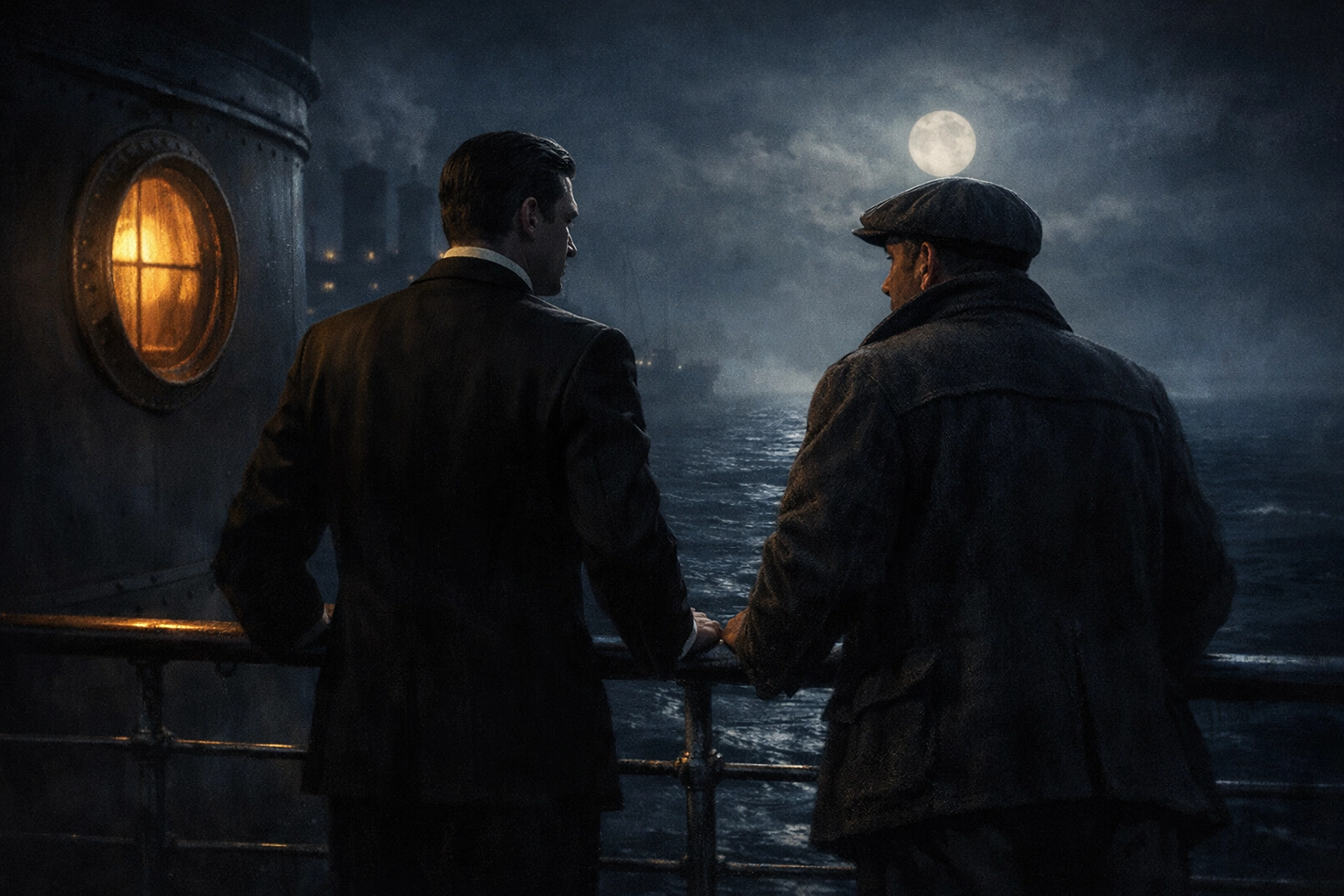
The class divide added a layer of forbidden fruit to the mix. You might have a wealthy First Class passenger venturing down toward the engine rooms or the stewards' quarters, or a "Steerage" traveler finding a moment of connection in a dark corner of the promenade deck. These "cross-class" romances are a staple of gay romance novels, but they were very much a reality on the high seas. The temporary nature of the voyage meant that for seven days, you could be whoever you wanted to be, with whoever you wanted to be with.
Drag Queens of the Atlantic
As we moved into the 1940s and 50s, the queer culture on ships like the Queen Mary became even more overt: at least for the crew. The ship's crew bars became legendary for their drag performances.
Since there were no women allowed in the crew quarters, the men took on the roles themselves. But this wasn't just "playing a part" for a skit. These were full-blown, high-glamour drag shows that rivaled anything you’d see in a modern club. Sailors would use whatever they could find: curtains, tablecloths, mops: to create elaborate gowns.
It was a time of "camp" at sea. These performances were a way to blow off steam, but they were also a radical act of self-expression. In a world that demanded rigid masculinity, these men were literally sailing across the ocean in heels and sequins. For those who love gay love stories with a bit of theatrical flair, this era is a goldmine of inspiration.
The Port of Call: Southampton and Beyond
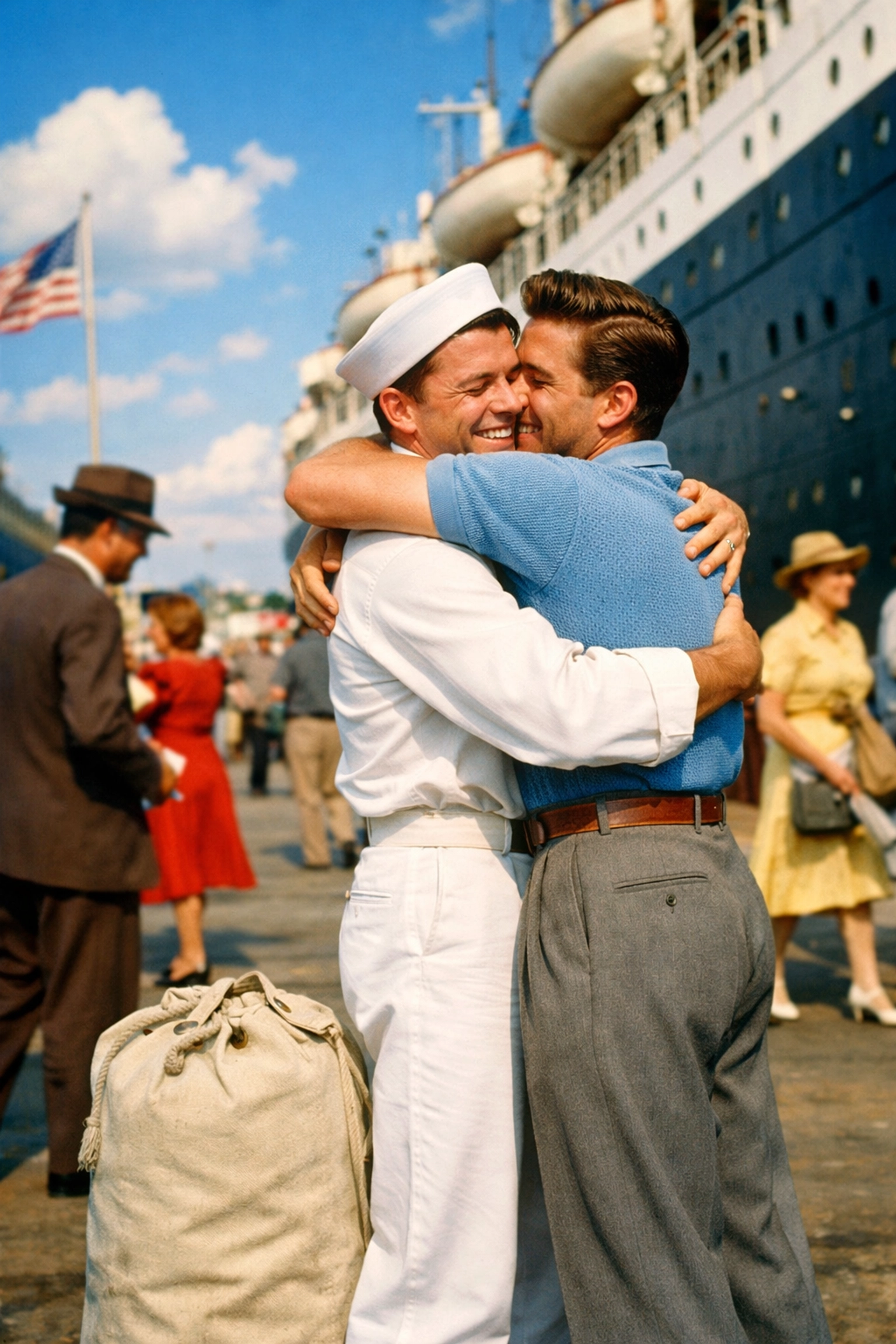
Life wasn't just happening on the water. Ports like Southampton became hubs for the queer maritime community. Many gay stewards kept "sea wives" (long-term male partners) in port, or they had a network of friends and lovers in every city from Marseille to New York.
This global network meant that queer culture was being shared and spread across oceans long before the internet. A slang word used in London could end up in a Sydney gay bar six weeks later, all thanks to the men working the liners.
Why We Still Love These Stories in 2026
Why are we still talking about this in 2026? Because these stories remind us that we have always been here. We weren't just "roommates" or "confirmed bachelors"; we were explorers, workers, and lovers who carved out spaces of joy in a world that wasn't ready for us.
At Readwithpride.com, we believe in celebrating this resilience. Our collection of LGBTQ+ ebooks includes everything from steamy MM romance to heartfelt gay fiction that honors this history. If you're looking for your next great read, browse our product sitemap or check out the latest from Dick Ferguson, an author who knows how to weave history and heart together perfectly.
The ocean liners of the past may be retired or sitting as museum pieces, but the spirits of the men and women who found love and community on their decks live on in the stories we tell today.
Ready to find your next favorite read?
- Check out our FAQ for info on our latest releases.
- Follow us on Facebook and Instagram for daily book recs.
- Join the conversation on Twitter/X.
Let’s keep these stories sailing. 🚢🏳️🌈
#ReadWithPride #MMRomanceBooks #GayHistory #QueerTravel #HistoricalRomance #LGBTQFiction #2026GayBooks #GayRomanceNovels #OceanLinerHistory #Polari #GayLiterature

1 thought on “Steerage to First Class: Queer Social Life on Historical Ocean Liners”
-
Pingback: 7 Mistakes You’re Making with Your Queer Education Strategy (and How to Fix Them) - readwithpride.com The best LGBTQ+ e-books
Leave a Reply
You must be logged in to post a comment.