

readwithpride.com
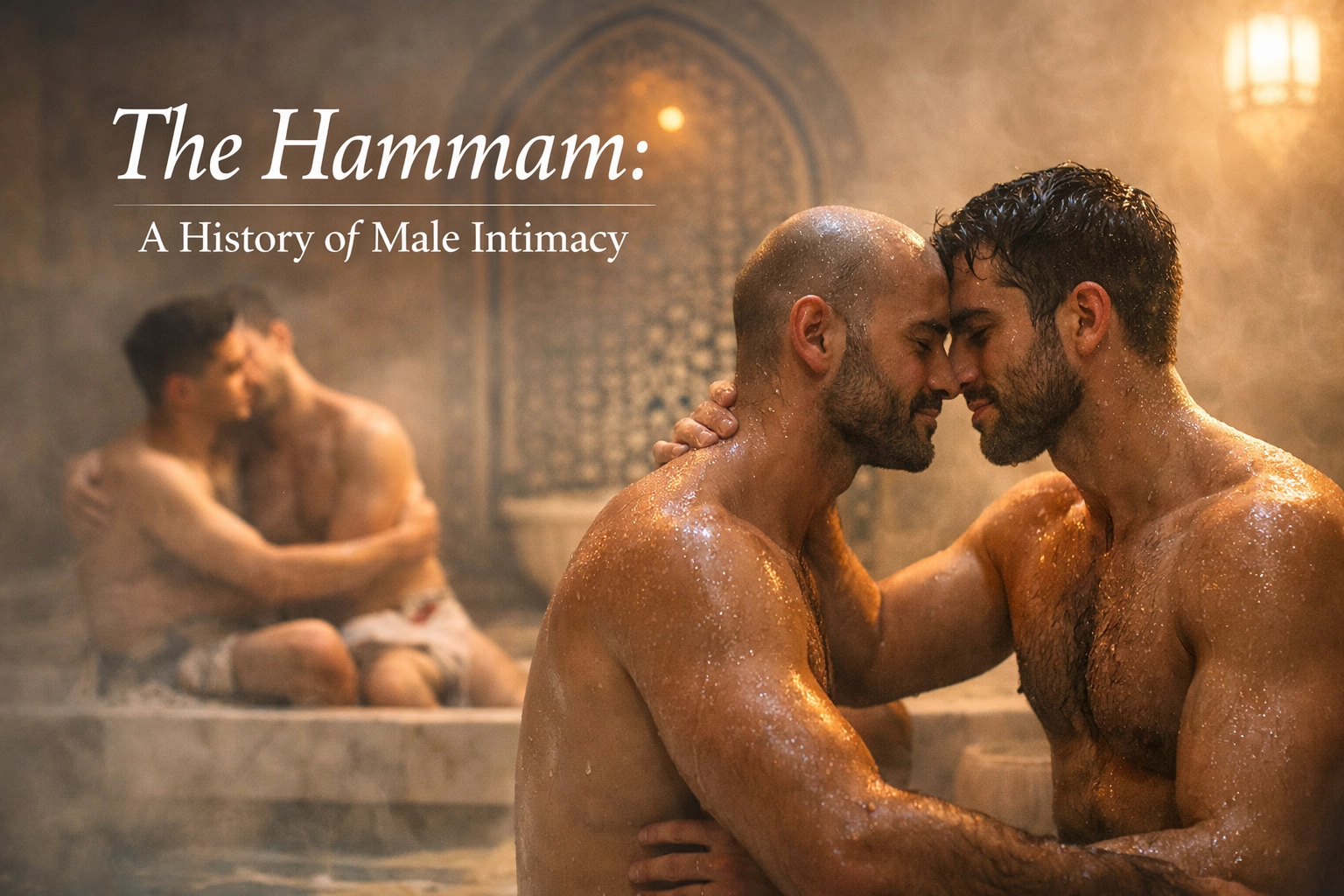
When we talk about queer history, we often look to the "usual suspects": San Francisco in the 70s, London in the 90s, or Berlin in the 20s. But if we pull back the curtain on the Middle East and the Ottoman Empire, we find a rich, steamy, and deeply communal history of male intimacy that has existed for centuries. At the heart of this world sits the hammam.
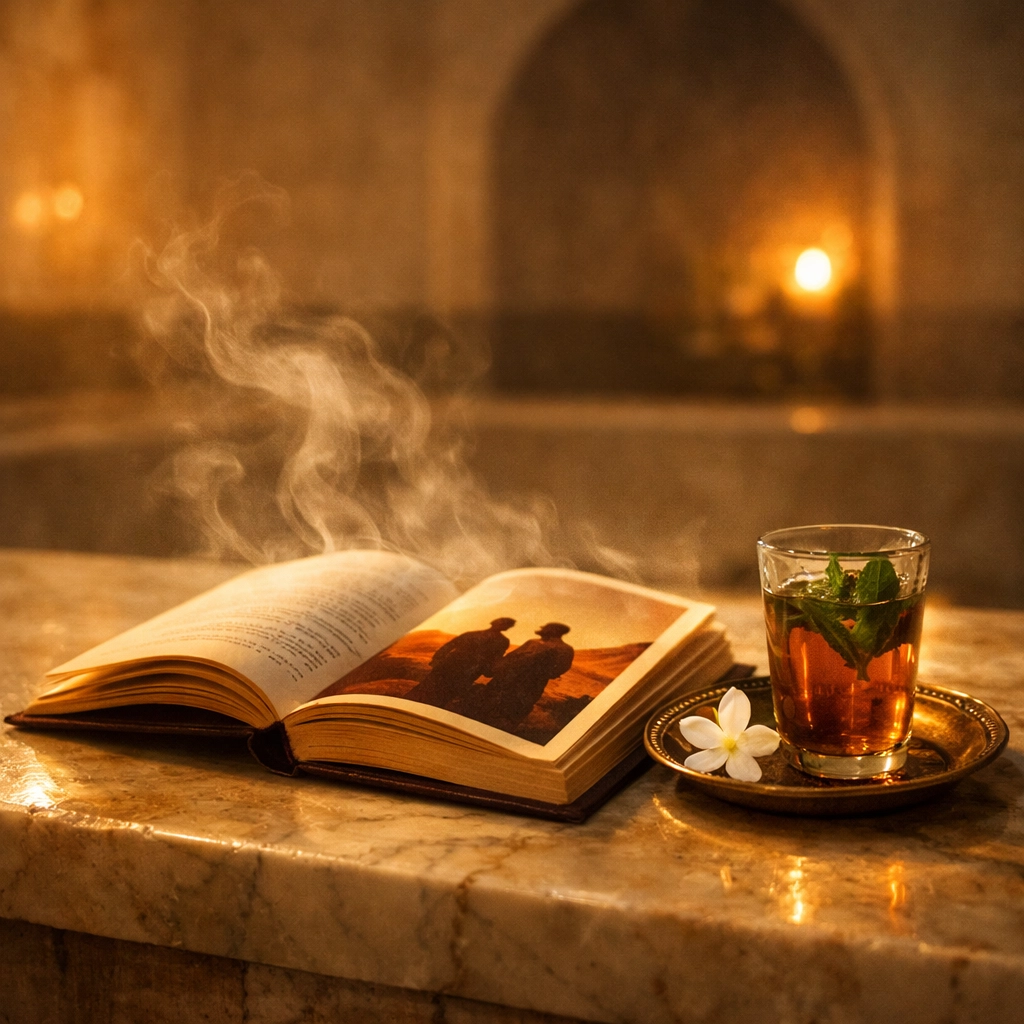
The hammam, or Turkish bath, wasn't just a place to get clean. It was a social sanctuary, a grooming palace, and a space where the rigid boundaries of public life blurred into the heat and steam of male bonding. For those of us who love a good gay historical romance or a trope-heavy MM romance, the hammam is the ultimate setting for "forced proximity" and "slow burn" narratives.
Let’s dive into the history of these spaces and how they shaped male intimacy across the Arab world, from Damascus to Baghdad and beyond.
The Birth of the Steam: From Rome to the Umayyads
The story of the hammam doesn’t start in a vacuum. It’s a beautiful evolution of Roman and Byzantine bathhouse traditions adapted by Islamic societies. The first recorded hammam was built in Damascus in the 7th century, and by the Umayyad period (661–750 CE), archaeological evidence shows these structures popping up in cities like Fustat, Egypt, and Basra, Iraq.
In a world where private plumbing was a luxury for the ultra-elite, the hammam became a democratic necessity. But it quickly morphed into something more. It became a hub of male social discourse. Imagine thousands of hammams in 10th-century Baghdad: each one a center for news, gossip, and the kind of relaxation that allowed men to lower their guards (and their robes).
More Than a Bath: The Social Fabric of the Hammam
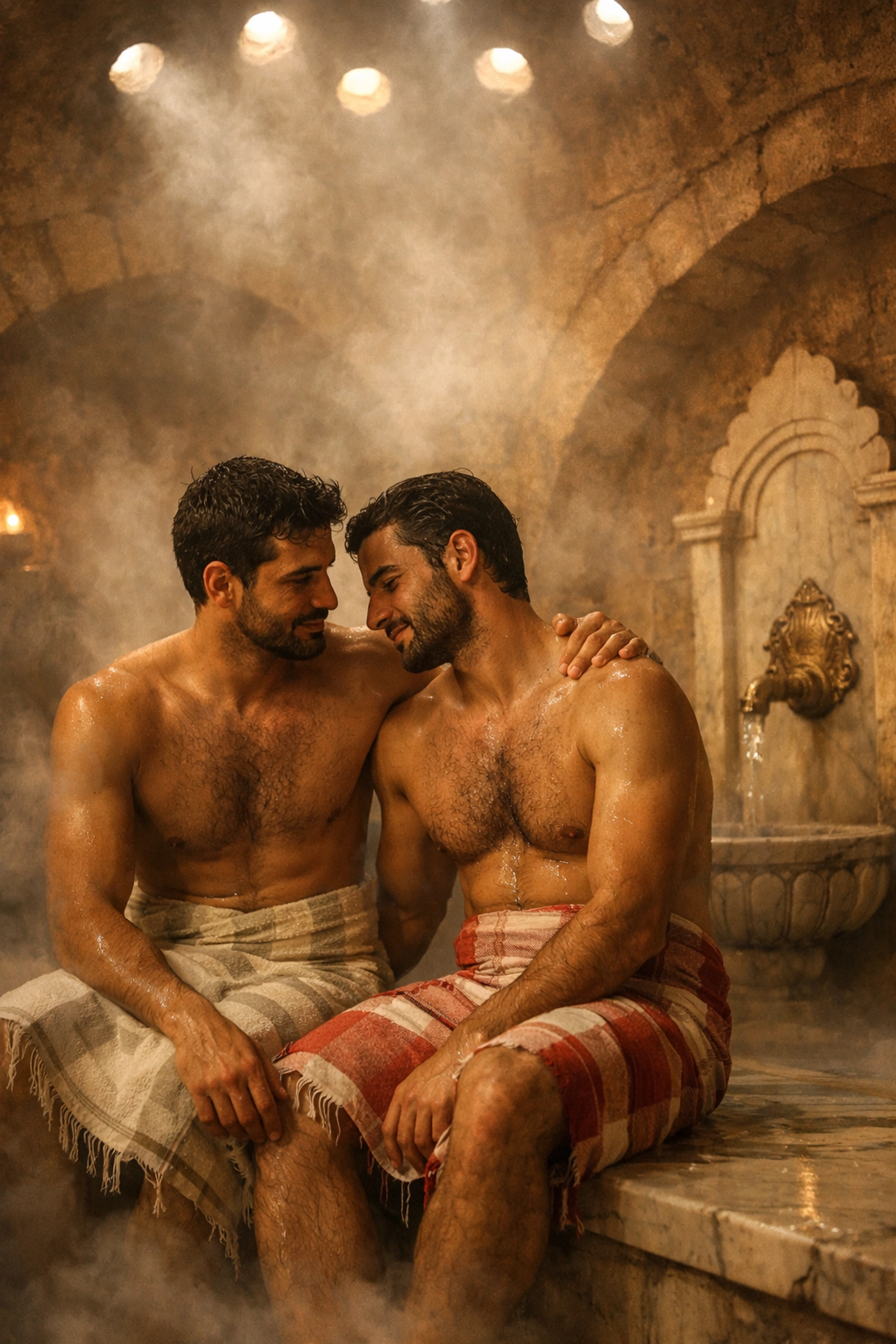
In the context of Arab and Turkish cultures, the hammam was: and in many places, still is: a multi-functional domain. You didn't just walk in, wash, and leave. You spent hours there.
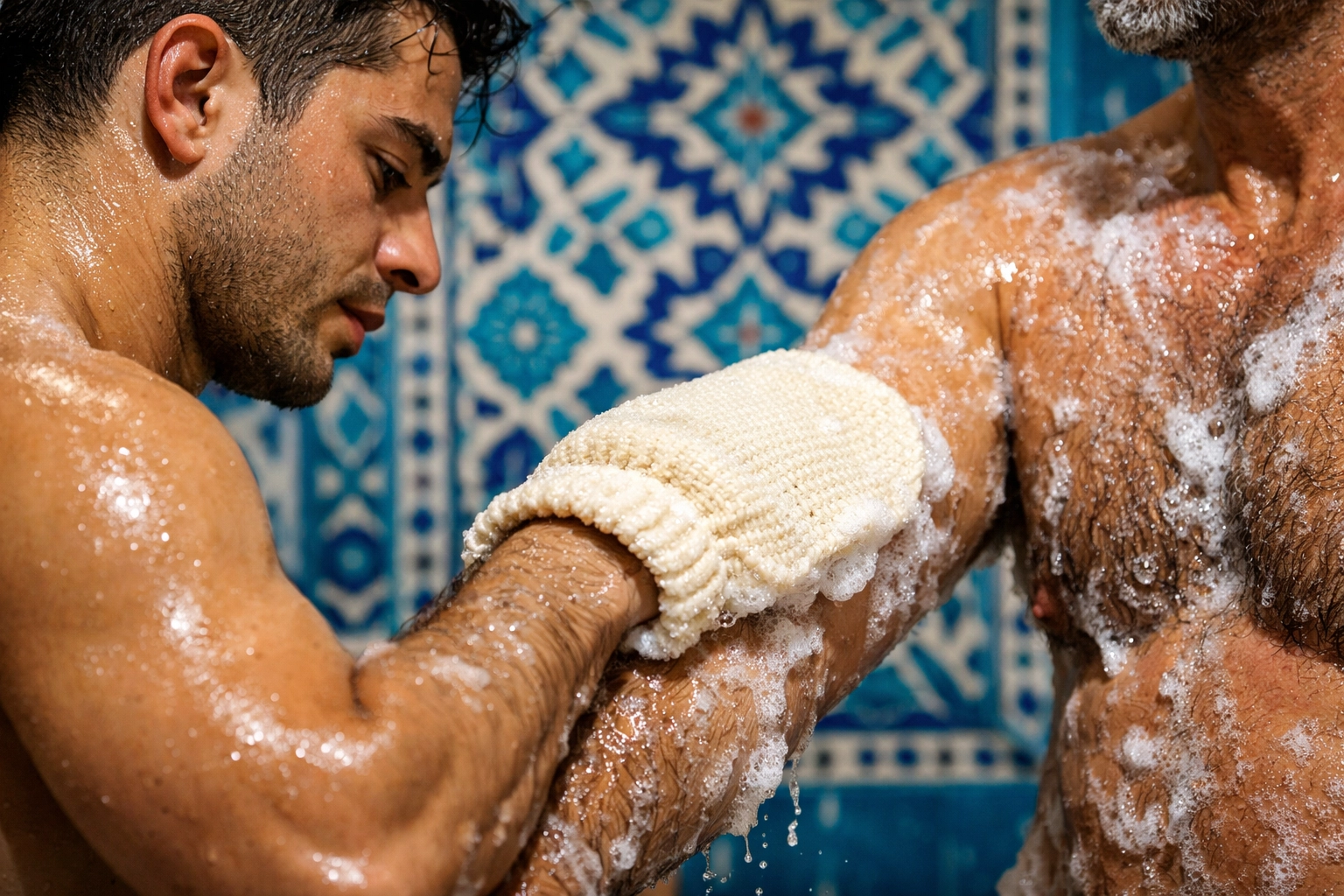
Within these marble walls, barbers worked their magic, scrubbing feet and providing intricate hair and body care. These "tellaks" (bath attendants) were often young men who became central figures in the social hierarchy of the bathhouse. The services went beyond simple hygiene; there were facial treatments with rare plants and oils, special banquets, and an atmosphere of rejuvenation that encouraged men to experience leisure together.
For the LGBTQ+ community, looking back at these spaces offers a glimpse into a time when male-to-male physical touch: scrubbing, massaging, grooming: was normalized and celebrated as a form of community care. This wasn't "gay" in the modern identity sense, but it was undeniably intimate. It created a "third space" where the pressures of the outside world: the politics of 16th-century Istanbul or 9th-century Cordoba: didn't quite reach.
The Ottoman Apex and the Architecture of Intimacy
The hammam reached its cultural and architectural peak during the Ottoman era. After the conquest of Constantinople in 1454, Sultan Mehmed II commissioned the first grand hammams of Istanbul. Later, during the reign of Suleiman the Magnificent, the legendary architect Mimar Sinan designed baths that were nothing short of marble masterpieces.
With their massive domes, intricate mosaics, and heated marble slabs (the göbektaşı), these spaces were designed to be sensory. The lighting was dimmed by small glass "elephant eyes" in the domes, creating a dreamlike, private atmosphere.
For writers and readers of MM romance books, this era is a goldmine. The contrast between the cold, hard marble and the warm, soft steam provides a backdrop that is naturally cinematic. If you’re looking for best MM romance inspiration, look no further than the historical "tellaks" and their clients, a relationship dynamic that often hummed with unspoken tension and social complexity.
Navigating Modernity: Gay Life in the Middle East Today
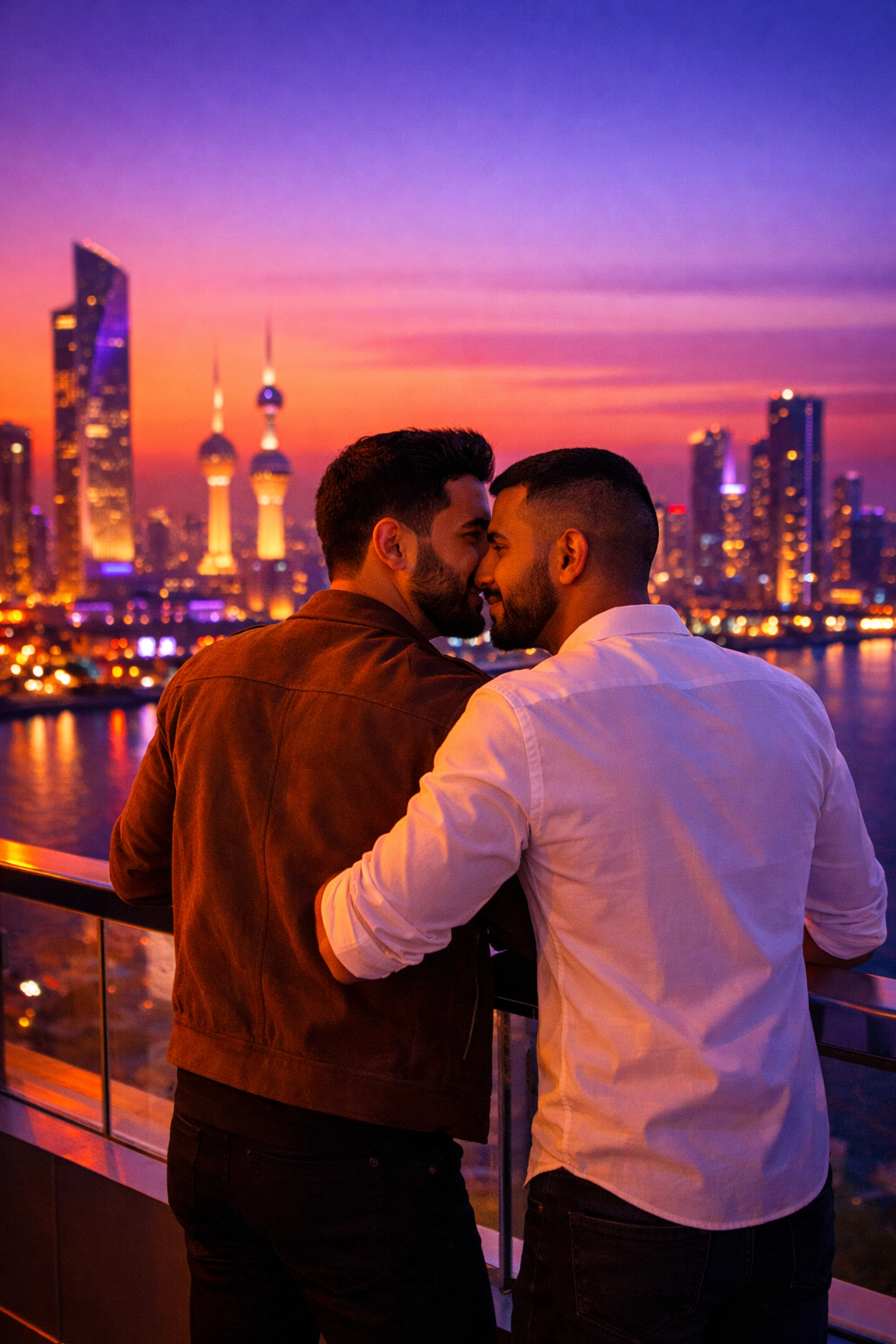
Fast forward to 2026, and the landscape for gay life in the Middle East: from Kuwait and Iran to Iraq and Israel: is a complex tapestry of struggle, resilience, and hidden subcultures. While the historical hammam offered a space for intimacy, modern legal frameworks in many of these countries have made public expressions of queer identity dangerous.
- Kuwait and Iraq: Here, queer life often exists in private "diwaniyas" or through digital apps, though the ghost of the hammam’s social structure remains in how men congregate in specific urban spaces.
- Iran: A place of intense contradiction, where the state recognizes trans identity (under specific conditions) but criminalizes same-sex acts. Yet, the history of Persian poetry is steeped in male-to-male love, much like the hammam culture of its neighbors.
- Israel: Often seen as the regional outlier with a visible LGBTQ+ scene in Tel Aviv, yet the tension between modern secular pride and deep-rooted religious history remains a focal point for queer activists.
Despite the challenges, the spirit of the hammam: the need for a safe, male-centric space for connection: persists. Many modern gay men in the region look to these historical precedents as proof that "queerness" isn't a "Western import," but something deeply rooted in the soil of the Arab and Persian worlds.
Why the Hammam belongs in your Gay Fiction TBR
If you’re a fan of gay historical romance or MM contemporary stories, the hammam is a trope-ready setting.
- Forced Proximity: There is nowhere to run in a steam room. Characters are forced to confront one another, stripped of their social armor (and their clothes).
- Sensory Overload: The smell of eucalyptus, the sound of water echoing off marble, the feeling of heat: it makes for incredibly "steamy" (literally!) writing.
- Class Dynamics: Historical hammams often brought together men of different social standings, providing the perfect "forbidden love" or "sun and moon" dynamic.
At Readwithpride.com, we believe in celebrating these diverse histories. Our collection of LGBTQ+ ebooks often explores these intersections of culture, history, and romance. Whether you’re looking for popular gay books that take you to the bustling streets of ancient Baghdad or modern-day stories of resilience in the Middle East, there is a wealth of literature waiting to be discovered.
The Legacy of the Bathhouse
The hammam reminds us that intimacy among men has always had its own rituals, its own spaces, and its own language. It challenges the Western-centric view of queer history and invites us to explore a world where the "masculine" and the "intimate" were not mutually exclusive.
As we move through 2026, reclaiming these historical spaces through queer fiction and academic study is a radical act of visibility. It tells the world that we have always been here: in the steam, under the domes, and in the heart of our communities.
For more deep dives into queer history and the best gay romance novels of the year, stay tuned to our blog at readwithpride.com/index.php/category/lgbtq-blogs-and-articles.
Explore More at Read with Pride:
- Browse our latest releases: readwithpride.com/product-sitemap1.xml
- Check out our FAQ for writers: readwithpride.com/index.php/faq
- Follow our journey on social media:
#ReadWithPride #MMRomance #GayHistory #HammamHistory #QueerMiddleEast #GayFiction2026 #LGBTQBooks #HistoricalGayRomance #GayLiterature
Looking for your next great read? Visit Readwithpride.com for the best in LGBTQ+ fiction and non-fiction.

Leave a Reply
You must be logged in to post a comment.