

readwithpride.com
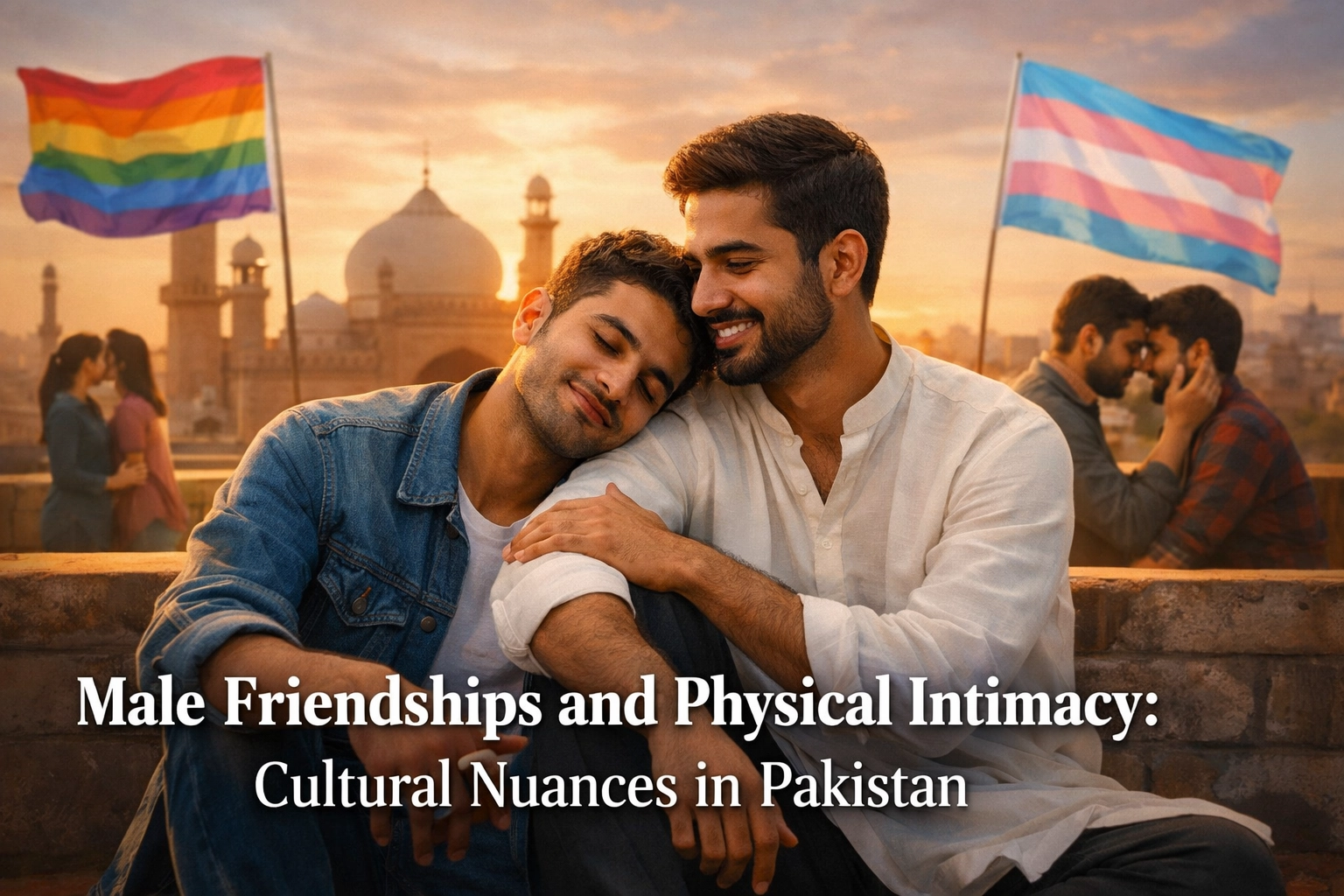
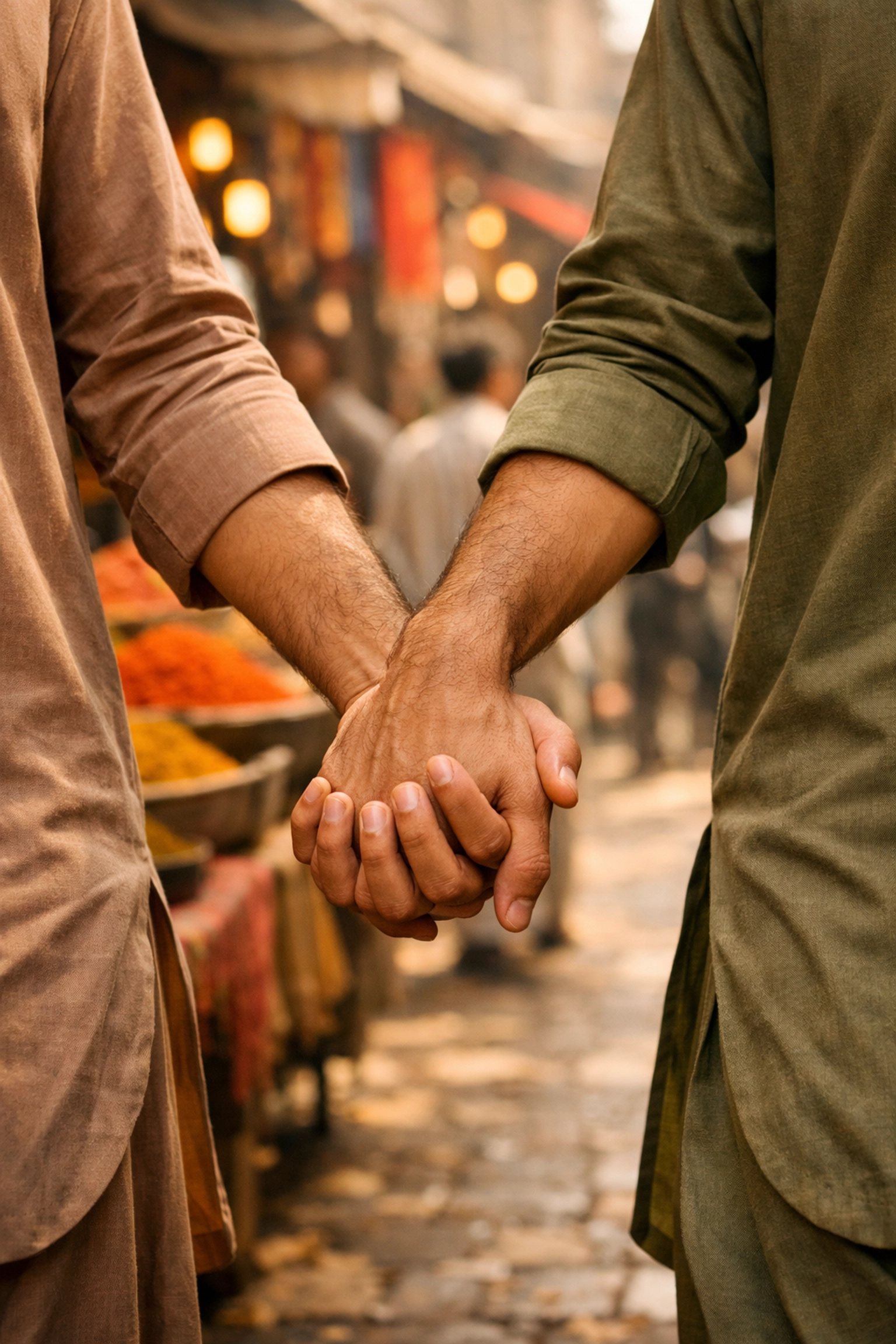
When we talk about queer life and gay romance in a Western context, we usually have a very specific set of visual cues. We look for the "spark," the direct eye contact, and the specific way two people hold space together. But if you’ve ever walked through the bustling streets of Lahore or the markets of Karachi, you might have seen something that would make a Western observer do a double-take: men walking hand-in-hand, arms draped over shoulders, or sitting so close their knees are practically fused.
In the West, these are often seen as loud, proud declarations of "we are a couple." In Pakistan, however, the cultural grammar of touch is entirely different. At Read with Pride, we’re obsessed with how culture shapes the way we love and tell stories. Today, we’re diving into the fascinating, often misunderstood world of male intimacy in Pakistan: a place where the lines between "best friend" and "lover" are frequently blurred, often by design.
The Hand-Holding Paradox
If you’re a fan of MM romance books, you know that the first time the leads hold hands is usually a massive "slow burn" payoff. It’s a moment of vulnerability. But in Pakistan, male physical touch is a standard expression of platonic brotherhood. It’s a culture that is gender-segregated in many social spheres, which ironically creates a space where male-to-male physical affection is not only accepted but expected.
However, there’s a catch. While holding hands is "safe" because it’s viewed as platonic, it also provides a perfect "hiding in plain sight" mechanism for men who actually are in romantic or sexual relationships. This "Hand-Holding Paradox" means that queer intimacy can exist in public spaces precisely because the society refuses to acknowledge the possibility of it being "gay."
"Just Friends": What the Data Tells Us
Research into sexual health and behavior in urban Pakistan reveals a complex reality that challenges Western labels. In a significant survey of 2,400 men in urban centers, the findings were eye-opening. A massive 65% of men who reported having non-marital sexual encounters identified their partners as "friends."
These weren't necessarily people identifying as "gay" or "bisexual." In many cases, these men see themselves as straight men who happen to engage in sexual acts with their male friends. The "friend" label is a sanctuary. It’s a way to maintain social standing and adhere to traditional family expectations while finding intimacy where they can.
For writers of queer fiction and gay novels, this presents a unique challenge and opportunity. How do you write a character who loves men but rejects the label "gay" because it feels like a foreign, Western import? This is where the nuance of LGBTQ+ fiction truly shines: exploring the identity beyond the vocabulary we’re used to.
The Western Label vs. Local Identity
At Read with Pride, we often discuss the importance of authentic LGBTQ+ character development. One of the biggest mistakes a writer can make is "parachuting" Western queer identity into a South Asian setting without acknowledging the local context.
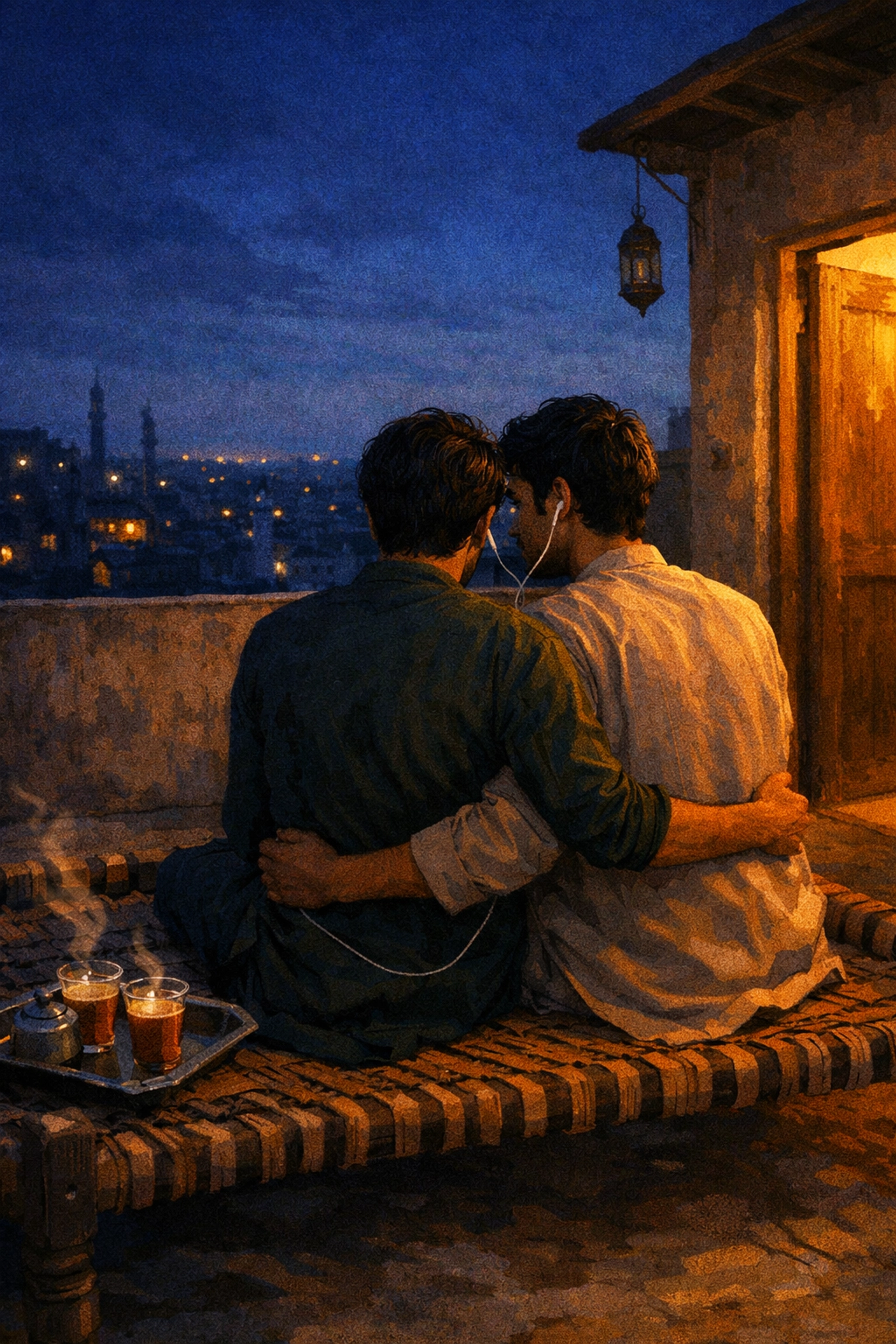
In Pakistan, the term "gay" carries a heavy weight. It’s often associated with Westernization or a specific political identity. Many men who love men prefer local terms or simply no term at all. They navigate a world governed by sharafat (respectability) and family honor. Their intimacy is lived in the "in-between" spaces: the late-night drives, the shared rooftop tea sessions, and the "friendships" that last a lifetime but never involve a wedding.
If you’re looking for MM romance that captures this kind of intensity, check out some of the new gay releases on our site that focus on international settings and diverse experiences.
The Digital Sanctuary and the Urban Shift
As we move through 2026, the landscape is shifting. While the legal framework in Pakistan remains conservative and based on colonial-era laws, the digital world has blown the doors off the "closet." Apps have allowed men to find each other with a level of precision that didn't exist twenty years ago.
In cities like Islamabad and Lahore, a more "visible" queer culture is emerging, albeit mostly behind closed doors or in private parties. There is a growing generation of queer authors and activists who are reclaiming their space. They are fighting the "taboo" by existing loudly, even if they have to be strategic about where and how they do it.
For readers of gay contemporary romance, seeing this evolution is vital. It reminds us that "pride" doesn't always look like a parade; sometimes, it looks like a coded message in a WhatsApp group or a quiet moment of solidarity in a crowded café.
Representing Pakistani Intimacy in MM Romance
Why does this matter for the MM romance books we read and write? Because representation is about more than just checking a box; it’s about capturing the soul of a culture.
When writing Pakistani characters:
- The Stakes are Different: Coming out isn't just about personal honesty; it’s often about family survival and community standing.
- Touch is Nuanced: Remember the "hand-holding" mentioned earlier. A Pakistani character might be more physically affectionate with his "straight" friends than a Western man is with his boyfriend.
- The Language of Love: It’s often found in poetry, shared meals, and long-term loyalty rather than grand public gestures.
If you're interested in stories that push boundaries, you might enjoy our look into genre-bending MM romance, which often features these complex, cross-cultural narratives.
The Role of Literature in Bridging the Gap
At Readwithpride.com, we believe that gay literature is a bridge. By reading stories from and about the Pakistani queer experience, we break down the "us vs. them" mentality. We begin to understand that while the labels might differ, the desire for connection, the fear of rejection, and the heat of a "slow burn" romance are universal.
Whether it’s a gay historical romance set during the Mughal Empire (where male beauty was celebrated in poetry) or a gay thriller set in modern-day Karachi, the stories are there, waiting to be told.

Final Thoughts
Male friendship and intimacy in Pakistan is a beautiful, complex, and often heartbreaking tapestry. It challenges our Western definitions of "gay" and forces us to look closer at the ways humans find love under pressure. It’s about the "yaar" who is more than a friend, the brother who is a soulmate, and the silence that speaks volumes.
If you’re a fan of M/M books that offer more than just a standard trope, we encourage you to seek out diverse voices that reflect these global realities. Our store and sitemaps are great places to start your journey into a wider world of queer storytelling.
Stay authentic, stay curious, and keep reading with pride.
Want more? Follow us on our journey to highlight the best in LGBTQ+ publishing:
- Website: readwithpride.com
- Facebook: Read with Pride Official
- X (Twitter): @Read_With_Pride
- Instagram: @read.withpride
Keywords: Read with pride, MM romance books, gay fiction, queer authors, 2026 gay books, Pakistani LGBTQ+, gay romance novels, gay book recommendations, MM contemporary, LGBTQ+ ebooks.
#ReadWithPride #MMRomance #LGBTQCulture #Pakistan #QueerLiterature #GayBooks2026 #Masculinity #GlobalQueerVoices

Leave a Reply
You must be logged in to post a comment.