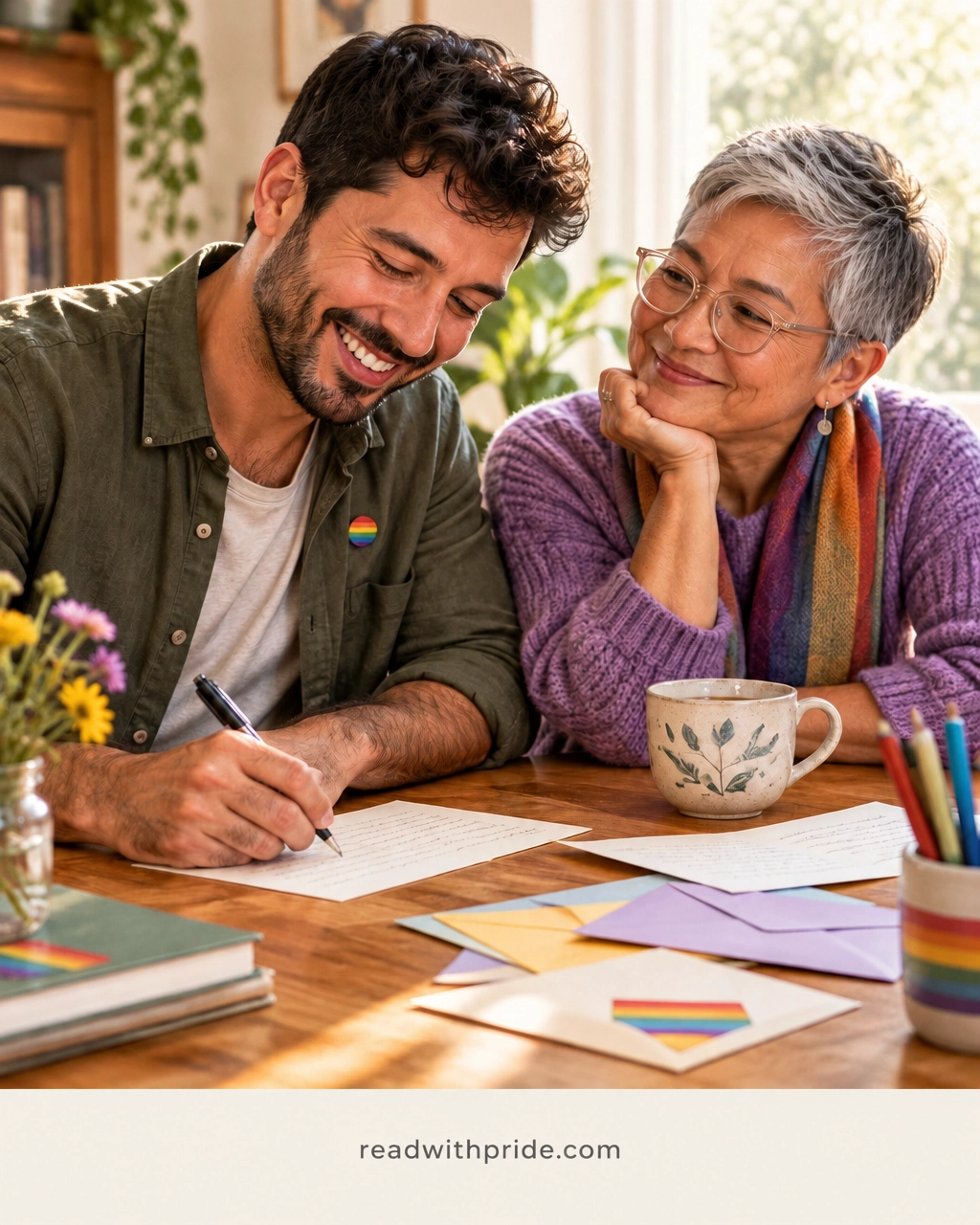
There’s something quietly radical about a handwritten letter: someone took time, found a stamp, and chose to send a little piece of their day to you. No typing bubble. No algorithm. Just ink, paper, and the suspense of checking the post.
A queer letter-writing circle turns that small pleasure into community building. Meet up to write side by side, swap prompts, or pair members as pen pals. It’s one of those queer hobbies that works for people who love a lively group and people who’d rather connect one thoughtful sentence at a time.
And yes, the mail has excellent romance-novel potential. Pen pals to lovers? A slow burn measured in postmarks? Forced proximity via the mailroom? MM romance tropes practically write themselves. In real life, though, a pen-pal club can be about friendship, sharing stories, and feeling less alone, not romance unless everyone involved wants that.

Start small: a table, a few pens, a reason to meet
You don’t need a grand launch, matching stationery, or a committee with suspiciously good handwriting. Invite a few people to meet at a library, community centre, café, or someone’s living room. If getting across town is hard, try a video call or a shared online space where members can write offline together.
To find people, post in a local LGBTQ+ group, ask a community centre or Pride organisation to share the invite, or mention it at a queer book club. Keep the invitation clear: who it’s for, where and how often you’ll meet, and whether people can drop in without committing to every session. A monthly meetup is plenty to begin with.
If you want to connect across generations, look for established programs rather than sharing private addresses with strangers. ElderPride’s Proud Pals describes an intergenerational pen-pal program, while the American LGBTQ+ Museum’s OLYL program focuses on letter-writing between lesbians and sapphics. Check each program’s current details and guidelines before signing up.

What do you write when “Dear pen pal” feels like a lot?
Start with something small. Describe the weather where you are, a song you can’t stop replaying, what you’re reading, or the best thing you ate this week. Ask a gentle question, too: What’s a place that makes you feel at home? What hobby would you try if time and money weren’t issues?
You can make prompt cards together: “Tell me about a tiny joy,” “What did you wish you’d known at 18?” or “Describe your ideal low-key Sunday.” Members can share chosen-family memories, coming out stories, or everyday moments, but nobody owes the group their hardest story. Make passing on a prompt completely fine.
For a playful future-themed round, invite everyone to write a postcard from 2026. One oddly specific prompt could be “C Section 2026”, though no one has to explain their search history.
Keep it accessible, low-cost, and kind
A letter club should open doors, not add a new expense or accessibility hurdle.
- Use what you have. Recycled paper, scrap envelopes, and ordinary pens are perfectly good. Meet somewhere free, or rotate hosts.
- Offer more than handwriting. Typed or dictated letters, email, and large-print prompts can make participation easier. Ask members privately what format works for them.
- Don’t require a reply. Especially in elder pen-pal exchanges, let participants know whether replies are expected. No one should feel guilty for taking time, or stopping.
- Set friendly boundaries. Agree on privacy, respectful language, and what happens if someone wants to pause or leave. For elder connections, use a program with clear guidance rather than exchanging home addresses in a public group chat.
- Make the first session easy. Bring a few prompts, explain the plan, and let people write, or simply chat. There’s no handwriting exam.

A little mail can make a big difference
A letter-writing circle can be a gentle way to meet people, make room for intergenerational stories, or build a friendship that unfolds one envelope at a time. It might even inspire your next read: Read with Pride curates MM romance books, gay romance novels, and more queer fiction for readers who love queer love stories. Explore gay fiction, LGBTQ+ novels, and LGBTQ+ fiction 2026, including heartfelt stories about identity, connection, and coming out.
Ready to find your people? Explore Read with Pride, follow Instagram and Facebook, then invite a few queer friends to start a letter-writing circle. All you need is a pen, a prompt, and someone who’d be glad to hear from you.
#QueerHobbies #CommunityBuilding #QueerJoy #LGBTQCommunity #ReadWithPride #MMRomanceBooks #QueerLoveStories

Leave a Reply
You must be logged in to post a comment.