

readwithpride.com
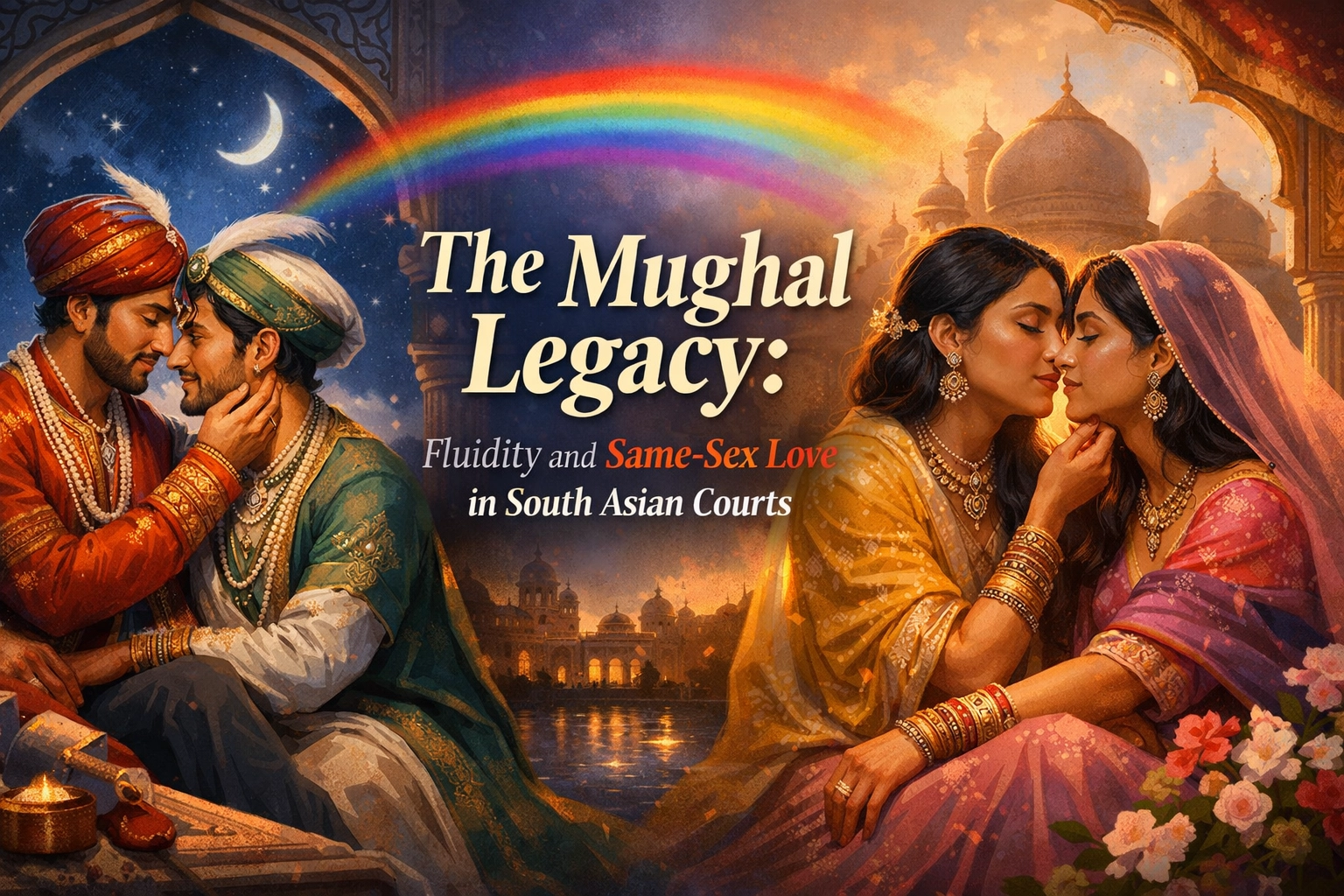
If you grew up reading standard history textbooks, you probably have a very specific image of the Mughal Empire: stoic emperors, grand marble tombs, and endless battles for territory. But if you dig just a little deeper into the actual diaries, poetry, and art of the era, a much more colorful: and frankly, much more queer: picture emerges.
At Read with Pride, we’re obsessed with the stories that history tried to overwrite. When we look at the history of what is now Pakistan and Northern India, we find a world where gender was fluid, same-sex love was celebrated in verse, and the "binary" was more of a suggestion than a rule. Forget the Victorian-era shame that was imported later; the Mughal courts were a hotspot for what we’d now call gay historical romance.
Babur: The Emperor Who Caught Feelings in the Bazaar
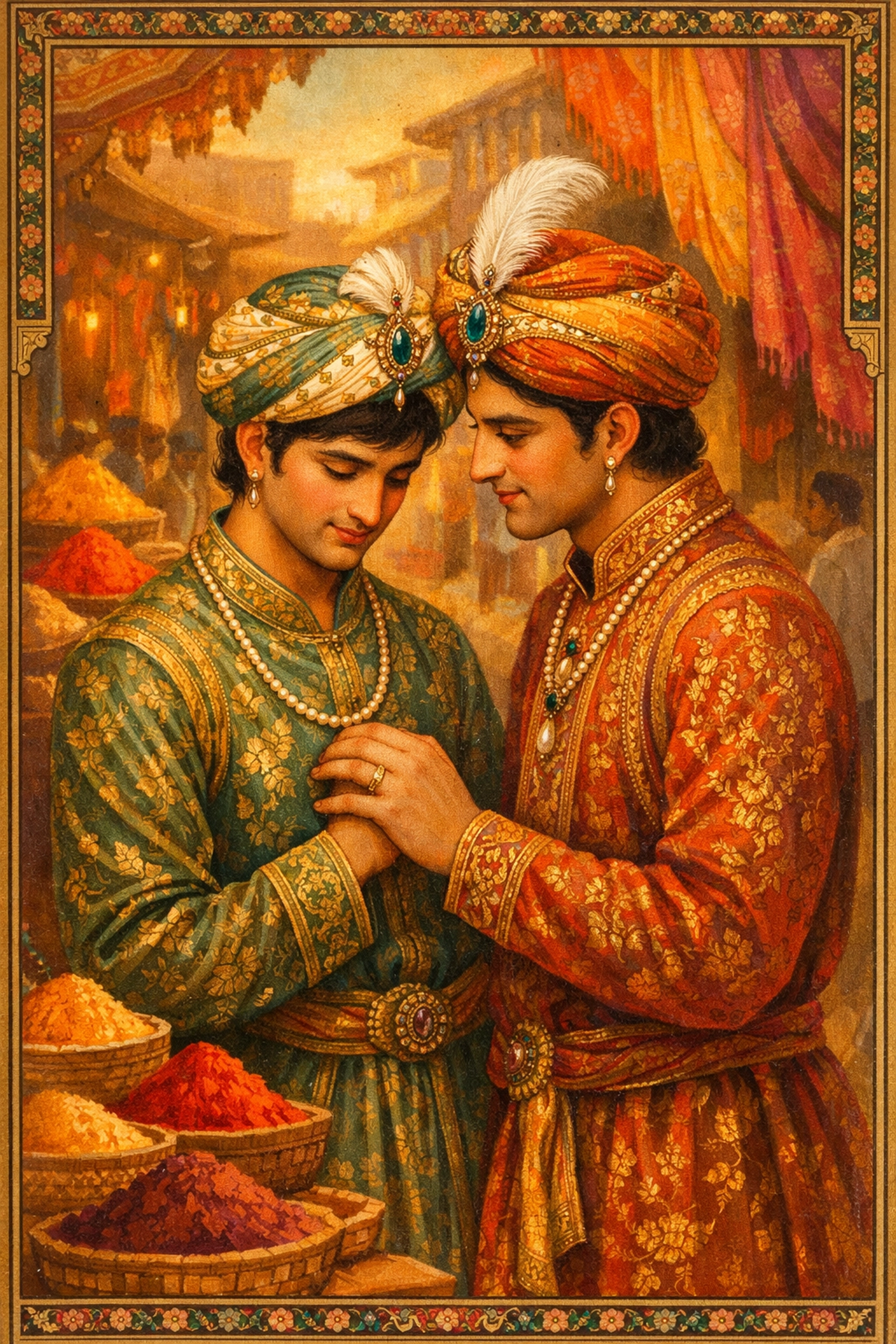
Let’s start at the very beginning with the man who founded the empire: Zahir-ud-din Muhammad Babur. In his autobiography, the Baburnama, he doesn’t just talk about conquering Kabul. He gets incredibly vulnerable about his first big crush.
Around 1500, in the Andijan bazaar, Babur laid eyes on a boy named Baburi. He didn't hide his feelings in a locked drawer; he wrote them down for history to see. He described being so "bashful" and "distracted" that he couldn't even look the boy in the eye. He even wrote Persian couplets about his infatuation. Imagine the "slow burn" and "instant attraction" tropes we love in MM romance books today: the founder of the Mughal Empire was living it.
Babur’s openness sets a tone for the era. This wasn't a "scandal" that ended his career; it was simply a part of his human experience. It makes you wonder how many gay love stories from that era were lost simply because they weren't written by emperors.
The "Mundane" Nature of Same-Sex Love
By the 18th century, the court culture in Delhi and across the region had leaned even further into this fluidity. Dargah Quli Khan, a nobleman, wrote the Muraqqa-e-Delhi, which is essentially a 1730s version of a "What’s Hot in the City" guide.
He wrote about the public bazaars where handsome young men danced and created "great excitement." What’s fascinating is how he describes it: it’s mundane. It wasn't some dark, underground secret. In the Indo-Islamic society of the time, attraction to beauty: regardless of gender: was often seen as a gateway to understanding divine beauty.
In our world of queer fiction, we often look for "safe spaces." For the Mughal elite, the entire court was a sanctuary where MM historical romance wasn't just fiction; it was the social reality.
The Khwajasaras: Power Beyond the Binary
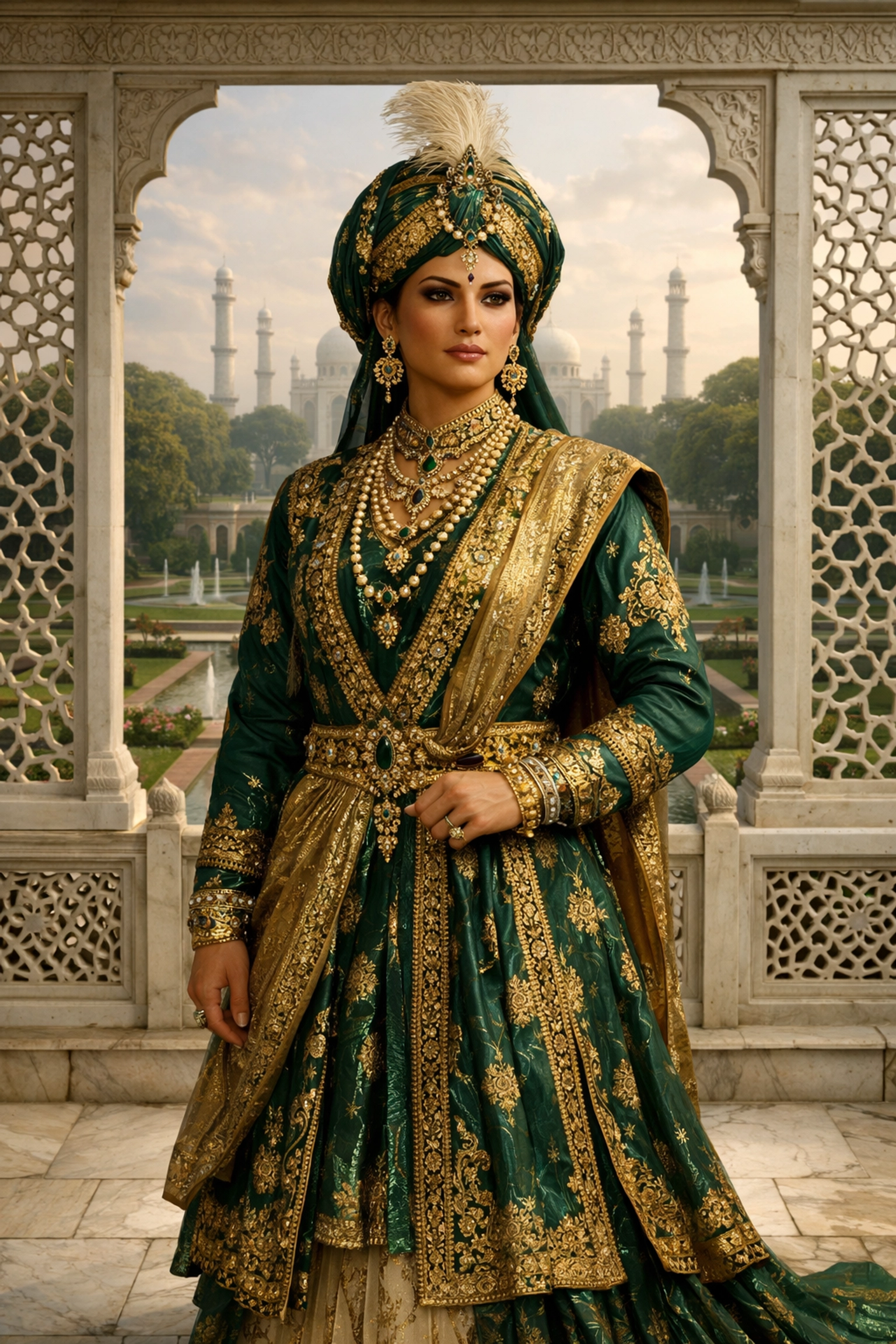
You can't talk about Mughal history without talking about the khwajasaras. Often translated as "eunuchs," this group included what we might now identify as trans, non-binary, or intersex individuals. Far from being marginalized, they were some of the most powerful people in the empire.
They managed the royal households, acted as advisors, and were even involved in building major religious establishments. They had a social standing that would be hard to imagine in many parts of the world today. Their presence proves that gender fluidity wasn't just accepted: it was integrated into the very structure of the state. If you’re looking for gay fantasy romance that features powerful, non-conforming leads, Mughal history is a goldmine of inspiration.
Intimacy Behind the Zenana Walls
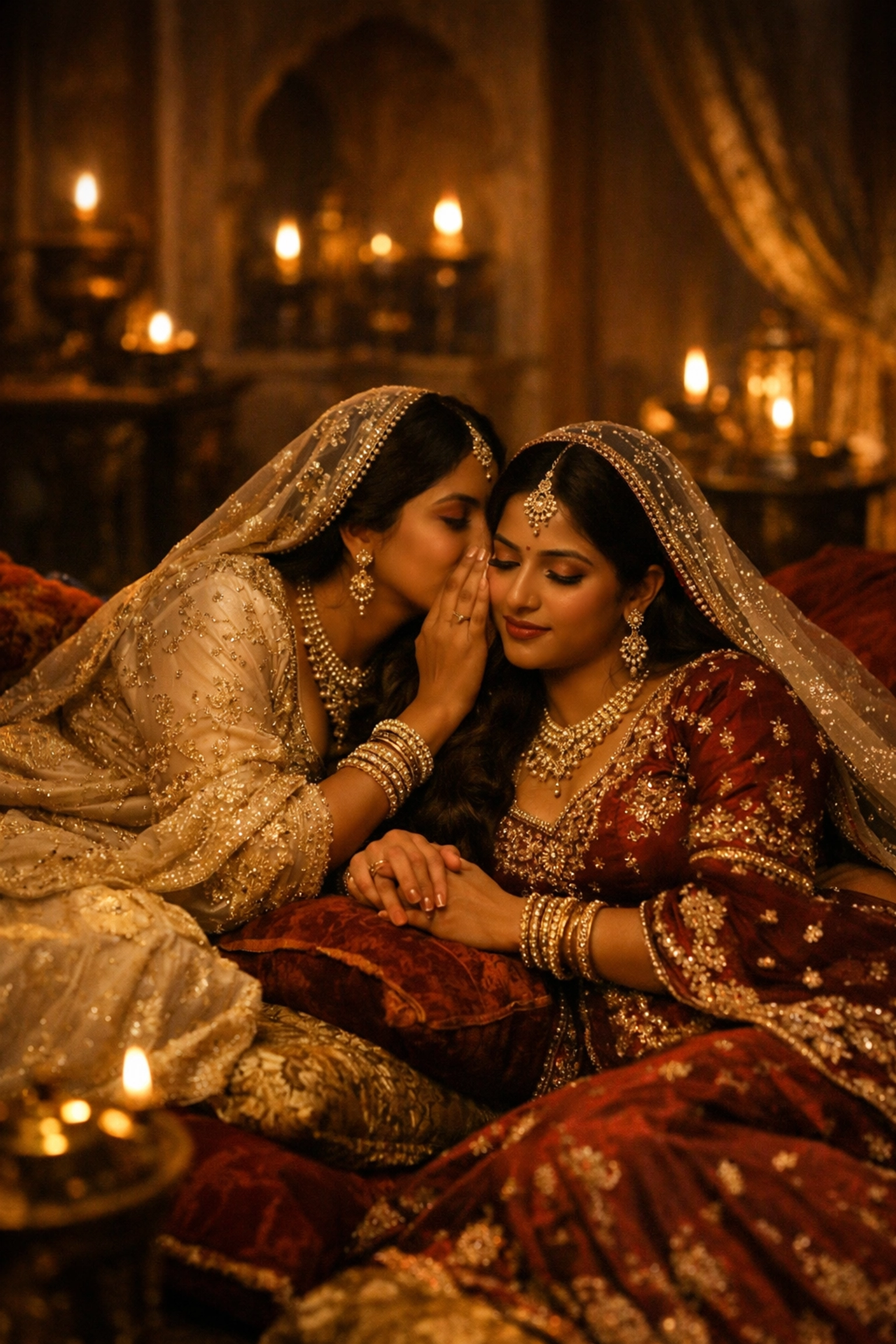
While the men were writing poetry in the bazaars, what was happening in the women's quarters (the Zenana)? While history is often more silent on women's lives, Mughal miniature paintings tell a different story. These artworks frequently depicted erotic and tender scenes between women.
One famous account involves Jahanara Begum, the daughter of Shah Jahan. When one of her slave girls was caught in a fire, Jahanara reportedly rushed into the flames to save her, suffering severe burns herself. The level of devotion described in contemporary accounts suggests a bond that went far beyond "just friends." It’s the kind of high-stakes, emotional depth we look for in the best MM romance and queer literature today.
Rekhti: The Poetry of Queer Desire
In the late Mughal period, specifically in cities like Lucknow, a form of poetry called Rekhti became popular. This was poetry written by men, often using a female voice, that explicitly talked about female-female desire and domestic intimacy. It was cheeky, witty, and incredibly "authentic" to the underground vibes of the time.
This era was a peak for gay fiction and queer expression. People were playing with gender roles and exploring the nuances of attraction in a way that feels very "2026."
The Modern Rupture: What Changed?
So, how did we get from "Emperors writing love poems to boys" to the legal struggles we see in South Asia today? The short answer: Colonialism.
The British didn't just bring tea and railways; they brought Victorian morality and a very rigid, Christian-inflected legal system. In 1860, they introduced Section 377 of the Indian Penal Code, which criminalized "carnal intercourse against the order of nature." This single law effectively erased centuries of South Asian sexual fluidity and replaced it with a culture of shame and surveillance.
The vibrant, fluid world of the Mughals was labeled "primitive" or "sinful" by colonial administrators. For the LGBTQ+ community in Pakistan and India today, reclaiming this history isn't just an academic exercise: it’s an act of resistance. It’s a way of saying, "We haven't just arrived; we’ve always been here, and we used to run the place."
Reclaiming the Narrative in 2026
At Readwithpride.com, we believe that stories have the power to heal that historical rift. Whether it’s through MM historical romance set in the 1700s or modern gay romance novels that explore the lives of queer South Asians today, we are filling in the blanks left by the censors.
The "Mughal Legacy" isn't just about the Taj Mahal; it’s about the freedom to love and the courage to be fluid. As we look at the new gay releases of 2026, we see more authors than ever drawing inspiration from these rich, complex histories.
If you're a fan of tropes like "enemies to lovers" or "forced proximity," you’ll find plenty of that in the political maneuvering of the Mughal courts. Our gay book club is always looking for stories that challenge the status quo, and nothing does that better than a history that refuses to be straight-jacketed.
Explore More Queer History and Fiction:
- Top LGBTQ+ books for your collection
- Gay contemporary romance with global perspectives
- Heartfelt gay fiction that bridges the past and present
The Mughal Empire might be gone, but its spirit of fluidity lives on every time we pick up a queer novel and see ourselves reflected in the pages. Let’s keep reading, keep writing, and keep being proud of where we came from.

Stay Connected with Read with Pride:
- Follow us on Facebook
- Check out our latest updates on X (Twitter)
- See our favorites on Instagram
#MughalHistory #QueerHistory #MMRomance #GayHistoricalRomance #ReadWithPride #SouthAsianQueer #LGBTHistory #GayBooks2026 #HistoricalFluidity #MMFiction

Leave a Reply
You must be logged in to post a comment.