

readwithpride.com
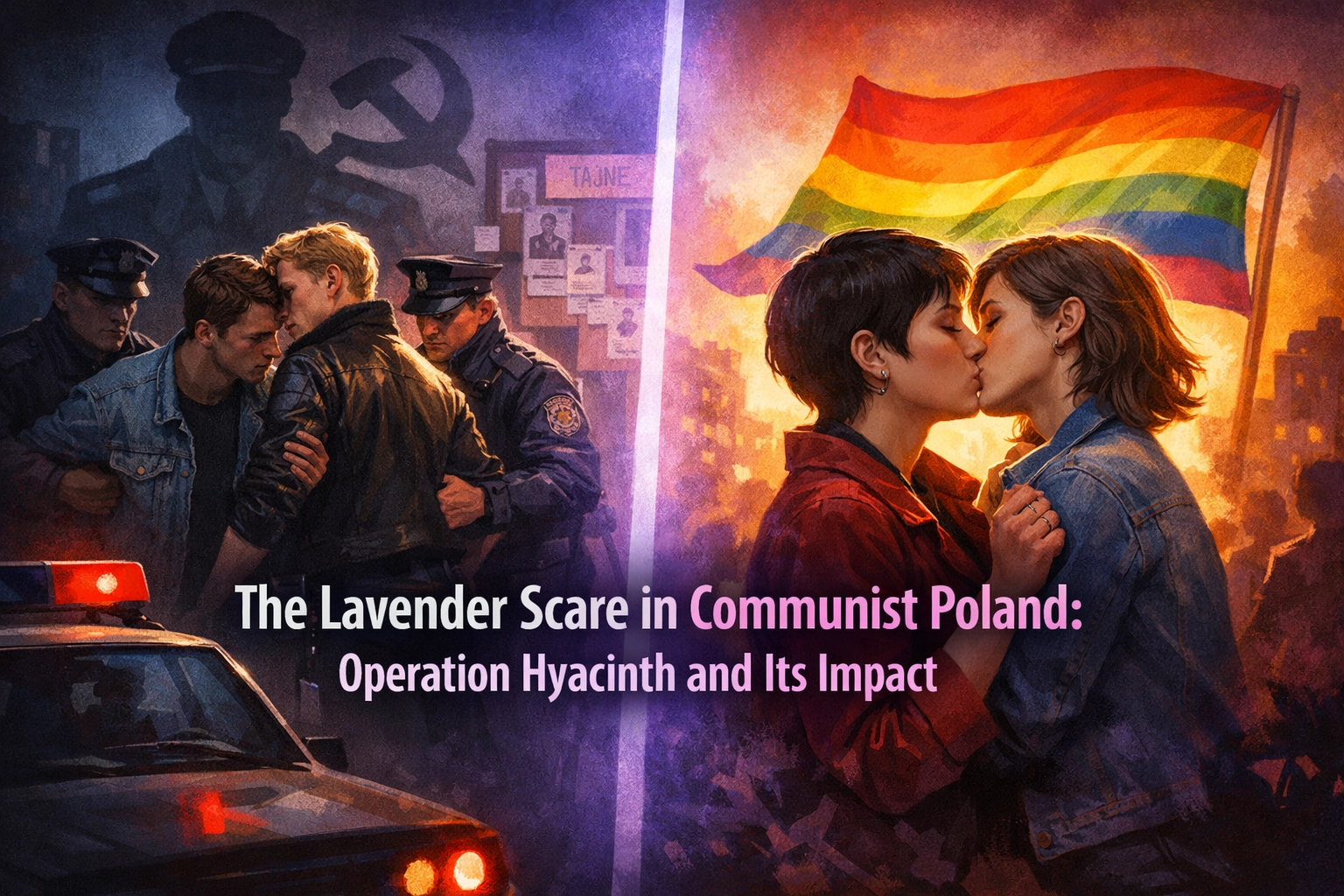
History has a funny way of trying to bury its messiest chapters, but here at Read with Pride, we’re all about digging them up: especially when those chapters involve our community standing tall against the odds. If you thought "The Lavender Scare" was just a 1950s American phenomenon, grab a coffee and settle in. Today, we’re taking a deep dive into a darker, more recent piece of queer history: Operation Hyacinth in 1980s Communist Poland.
While we often celebrate the swoon-worthy moments in gay historical romance, it’s vital to remember the real-life stakes our ancestors faced. Operation Hyacinth wasn’t just a police action; it was a state-sponsored hunt that changed the course of Polish LGBTQ+ history forever.
The Cold November of 1985
Imagine it’s November 15, 1985. The air in Warsaw is biting, and the political climate is even colder. Under the orders of General Czesław Kiszczak, the Polish police (the Milicja Obywatelska) launched a massive, coordinated strike. Their targets? Gay men.
The goal was simple but terrifying: create a national database of every "homosexual" in the country. They raided universities, private apartments, and known meeting spots like cafés and parks. By the time the three waves of the operation ended in 1987, the Communist authorities had compiled files on approximately 11,000 individuals.
The Infamous "Pink Files"
If you’re a fan of a gay thriller or a high-stakes spy novel, the mechanics of Operation Hyacinth might sound like fiction. Sadly, they were all too real. Those detained were forced to sign a document known as the Karta homoseksualisty (the Homosexual Card).
These weren’t just simple ID forms. The police recorded intimate details of the men's private lives, their "preferences," and, most dangerously, the names of their friends and lovers. This resulted in the "Pink Files" (Różowe kartoteki).
The interrogations were brutal. Men were often picked up from their workplaces or homes, bringing instant shame and fear of outing. The police used these files for one primary purpose: blackmail. In a regime obsessed with rooting out anti-communist dissent, having "dirt" on citizens was the ultimate currency. If you were a gay man in the 80s, the state could threaten to out you to your family or boss unless you agreed to become an informant.
The Excuses vs. The Reality
The government’s public justification was a classic "think of the children" maneuver. They claimed they were:
- Combatting the spread of the newly discovered HIV virus.
- Breaking up "homosexual criminal gangs."
- Fighting prostitution.
But let’s be real: if they cared about HIV, they would have funded healthcare, not handcuffs. The real motive was social control. By targeting a marginalized group, the state could intimidate the emerging LGBTQ+ activist movement and pressure individuals to spy on the political opposition.
It’s the kind of heavy, emotional backstory that makes for the most heartfelt gay fiction. Writing these characters requires a deep understanding of the trauma that state-sponsored homophobia leaves behind. (If you’re a writer tackling these themes, check out our guide on 7 mistakes you’re making with LGBTQ+ character development).

How the Oppression Backfired
Here’s the plot twist: the Communist party tried to crush the community, but they ended up galvanizing it instead.
Before Operation Hyacinth, the gay "scene" in Poland was largely underground and fractured. There was no real sense of a political movement. But after the raids, the "why me?" turned into "why us?"
The fear and anger led to the birth of the Warsaw Gay Movement (WRH), the first of its kind in Poland. Activists like Waldemar Zboralski began organizing, realizing that if the state was going to treat them as a collective threat, they might as well become a collective force for change. In a weird, twisted way, Operation Hyacinth was Poland’s Stonewall. It forced people out of the shadows because the shadows were no longer safe.
Operation Hyacinth in Modern Memory
Even in 2026, the legacy of these files haunts Polish politics. For decades, the government denied the operation ever happened. It wasn't until the 2000s that the truth really started to surface.
The most chilling part? The "Pink Files" themselves have largely vanished. Some believe they were destroyed; others fear they are still tucked away in some forgotten archive, waiting to be used as political leverage. This "lost history" is a recurring theme in many popular gay books that explore the intersection of queer identity and authoritarianism.

Why We Still Talk About This at Read with Pride
You might be wondering why a publisher of MM romance books and LGBTQ+ fiction is diving so deep into 1980s Polish police tactics. It’s because our stories don’t exist in a vacuum. Every steamy MM romance or gay adventure romance we read today is built on the resilience of those who came before us.
When we read a gay historical romance set in the Eastern Bloc, we aren't just looking for a "happily ever after": we're looking for a "happily despite everything." Knowing about Operation Hyacinth gives us a profound respect for the characters who dared to love when the state had a file on their heart.
If you’re looking for stories that capture that spirit of resilience, we’ve got plenty of recommendations. From MM historical romance that explores forbidden love in dangerous times to contemporary gay novels dealing with the echoes of the past, the shelves at Readwithpride.com are always stocked with authentic queer voices.

The Resilience of the Rainbow
The story of Operation Hyacinth is a reminder that even in the face of mass surveillance and systemic persecution, the queer spirit doesn't just survive: it adapts. The men who were interrogated in 1985 paved the way for the vibrant, fighting LGBTQ+ community in Poland today.
As we look forward to the new gay releases of 2026, let’s take a moment to honor those who kept their pride even when it was being filed away in a pink folder.
Want to stay updated on more queer history, book recs, and the latest from the world of LGBTQ+ ebooks? Follow us on our socials and join the conversation.
Stay proud, stay informed, and keep reading.
Connect with us:
- Facebook: Read with Pride
- Twitter/X: @Read_With_Pride
- Instagram: @read.withpride
- Browse our store: Readwithpride.com
#OperationHyacinth #QueerHistory #LGBTQBooks #MMRomance #GayHistoricalRomance #ReadWithPride #PolishHistory #LGBTQFiction #GayLiterature #2026Books #PinkFiles

Leave a Reply
You must be logged in to post a comment.