
readwithpride.com
When we think about the Balkans, Eastern Europe, or the Baltic states, the mainstream media often serves up a bleak narrative of "traditional values" and tough political landscapes for our community. But here at Read with Pride, we know that if you dig just a little bit deeper into the soil of history, you’ll find that these regions have been vibrantly, beautifully, and sometimes complicatedly queer since the dawn of time.
Forget the idea that LGBTQ+ identity is a "Western import." From the mountains of Albania to the medieval courts of Serbia and the bustling ports of the Baltic, queer stories are woven into the very fabric of the culture. Whether it’s ritualized same-sex unions or gender-variant warriors, the history of the Balkans and beyond is a goldmine for anyone who loves gay historical romance or deep, authentic gay literature.
The Sacred Bond: "Brotherhood" in the Medieval Balkans
Long before the modern concept of "gay" existed, the Balkans had a formal, liturgically recognized way for two men (or two women) to commit their lives to one another. It was called adelphopoiesis (Greek) or pobratimstvo (Serbian), often translated as "brother-making" or "spiritual brotherhood."
While some historians try to write these off as just "really good friendships," the records suggest something much more profound. These unions were often blessed by the church with specific rituals that looked remarkably like marriage ceremonies. Partners lived together, shared property, and were buried in the same graves.
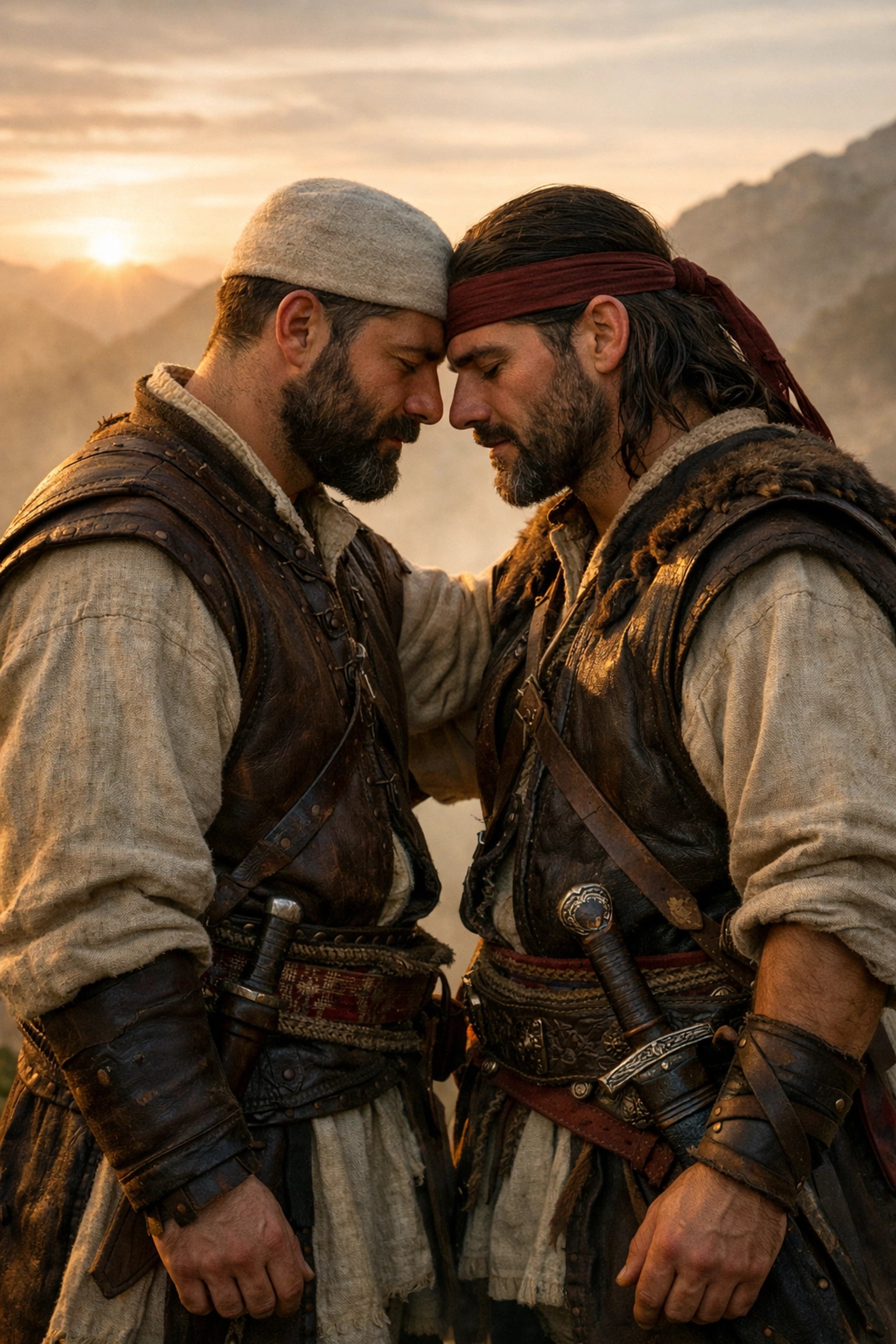
Imagine a MM historical romance set in the Serbian tribes, where two warriors swear a blood oath not just for battle, but for life. This wasn't some underground secret; it was a respected social status. These men were often seen as pillars of their communities, participating in uprisings and leading their people. It turns out that the "warrior and his companion" trope is actually historical fact in this part of the world.
Ottoman Tolerance: A Golden Age of Fluidity?
One of the most surprising twists in Balkan history is the role of the Ottoman Empire. While Western Europe was busy inventing new ways to persecute "sodomites," the Ottoman-controlled Balkans were often a haven of relative sexual freedom.
Historians have noted that the Ottomans generally didn't care much about the personal romantic lives of their subjects as long as taxes were paid. This led to a culture where male intimacy: especially in the context of bathhouses and poetry: was openly discussed and even celebrated. It’s why figures like Lord Byron fled the stifling homophobia of England to find "relief" in the East.
In these historical spaces, the lines between friendship, mentorship, and romance were gloriously blurred. For fans of gay romance novels who love a "forbidden love in a sprawling empire" vibe, the Ottoman Balkans offer a rich, authentic backdrop that beats any fictional world-building.
The Burrnesha: The Sworn Virgins of Albania
Moving into the realm of gender non-conformity, we find the Burrnesha or "Sworn Virgins." In the highly patriarchal societies of Northern Albania, Kosovo, and Montenegro, a person assigned female at birth could take a vow of chastity and live their life entirely as a man.
They dressed as men, carried weapons, led households, and sat in the assemblies of elders. While the "vow of chastity" was a central part of the legal social contract, the lived experience of the Burrnesha was one of significant gender autonomy. They were socially recognized as men in every sense of the word.
In 2026, as we explore more nuanced LGBTQ+ fiction and trans-coded historical narratives, the Burrnesha stand as a testament to the fact that people have been navigating the complexities of the gender binary for centuries. It wasn't about "becoming" a man in a modern surgical sense; it was about the social and spiritual right to exist outside of womanhood.
The Great Erasure: How the West Brought Homophobia
So, what happened? Why is the region often viewed as conservative today? The irony is that homophobia was largely a "Western import" during the 19th and early 20th centuries.
As Balkan countries like Serbia and Bulgaria sought independence and looked to align themselves with "civilized" powers like Britain and France, they began to adopt Western legal codes. This meant adopting Western prejudices. Traditional rituals like pobratimstvo were suddenly viewed as "Oriental backwardness" or "immoral."
The vibrant, fluid sexualities of the past were replaced by clinical, pathologized definitions of "homosexuality." This erasure is a tragedy, but it’s also a call to action for creators of gay fiction. We are reclaiming these stories, one MM romance book at a time.
Poland, the Baltics, and Ukraine: The Modern Frontline
While the Balkans have their ancient folklore, our friends in Poland, the Baltic states (Estonia, Latvia, Lithuania), and Ukraine are writing a new chapter of queer history right now.
Poland’s Resilience
Poland has had a rough ride lately with the rise of "LGBT-free zones," but the resistance has been legendary. From the "Rainbow Halo" activists to the massive Pride marches in Warsaw, the queer community in Poland is one of the most organized and fierce in Europe. This tension: tradition vs. progress: makes for incredible gay thriller or gay psychological thriller material.
Estonia Leads the Way
In the Baltics, Estonia has become a shining light by being the first former Soviet-occupied country to legalize same-sex marriage. It’s a huge win for the region and a sign that the tide is turning. Lithuania and Latvia are following close behind, with vibrant queer art scenes that are finally getting the recognition they deserve.
Ukraine: Pride in the Face of War
Perhaps most moving is the situation in Ukraine. Since the full-scale invasion in 2022, the LGBTQ+ community has been on the front lines, both in the military and in humanitarian aid. The fight for survival has accelerated the fight for rights, with more Ukrainians realizing that "European values" must include equality for all. We’re seeing a surge in gay contemporary romance and memoirs coming out of Ukraine that are raw, emotional, and profoundly hopeful.
Why This Matters for Readers in 2026
At Readwithpride.com, we believe that knowing our history makes our fiction stronger. When you read an MM fantasy set in a world inspired by the Balkans, or a gay adventure romance set in the Baltic woods, you aren’t just reading a story: you’re connecting with a lineage.
The tropes we love: enemies to lovers, forced proximity, and slow burn: all have roots in these historical realities. Imagine a MM romance between two "Sworn Brothers" who realize their bond is more than spiritual, or a gay spy romance set in the shifting borders of 19th-century Poland. The history is already there; we’re just here to help you find the books that tell it best.
Whether you’re looking for the best MM romance books of 2026 or want to dive into award-winning gay fiction, understanding the queer history of the Balkans and Eastern Europe adds a layer of depth that you won't find anywhere else.

Discover Your Next Favorite Story
Are you ready to dive into the rich world of Eastern European and Balkan queer narratives? Whether it's the high-stakes drama of the modern day or the lush, atmospheric settings of the past, there is a story waiting for you.
Check out our latest recommendations for new gay releases and gay romance series that take you off the beaten path and into the heart of history.
Explore more on Read with Pride:
- Browse our MM Historical Romance Collection
- Check out Popular Gay Books from Queer Authors
- Follow the journey of Dick Ferguson, one of our featured writers
Stay proud, stay curious, and keep reading.
#LGBTQHistory #BalkanQueer #MMRomance #GayBooks2026 #ReadWithPride #QueerFolklore #GayHistoricalRomance #UkrainePride #PolishLGBTQ
Follow us for more queer bookish content:

Leave a Reply
You must be logged in to post a comment.