

readwithpride.com
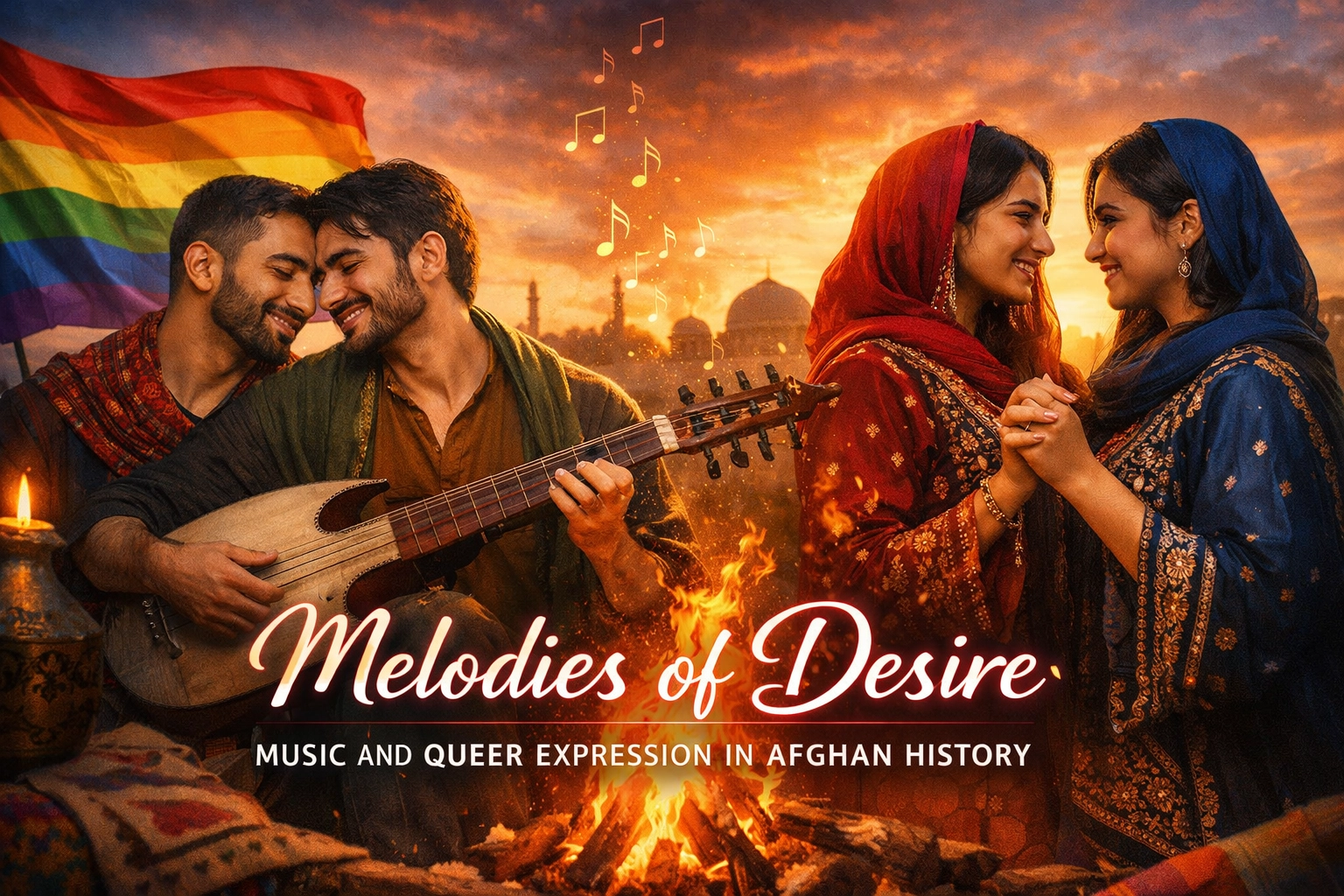
When we talk about queer history, the conversation often drifts toward the cobblestone streets of Victorian London or the neon-soaked piers of 1970s New York. But at Read with pride, we know that the rainbow has always stretched across the globe: even in places where the current political climate tries to paint over it in monochrome. Today, we’re taking a deep dive into a corner of history that is as beautiful as it is misunderstood: the intersection of music, gender, and desire in Afghanistan.
Forget the headlines for a second and journey back through the centuries. Imagine the scent of green tea and woodsmoke in a crowded samovar (tea house), where the air vibrates not just with the pluck of a rubab, but with a form of expression that defied modern Western labels. This is the story of how Afghan folk music became a sanctuary for queer desire.
The Art of the Bachah: Beyond the Dance
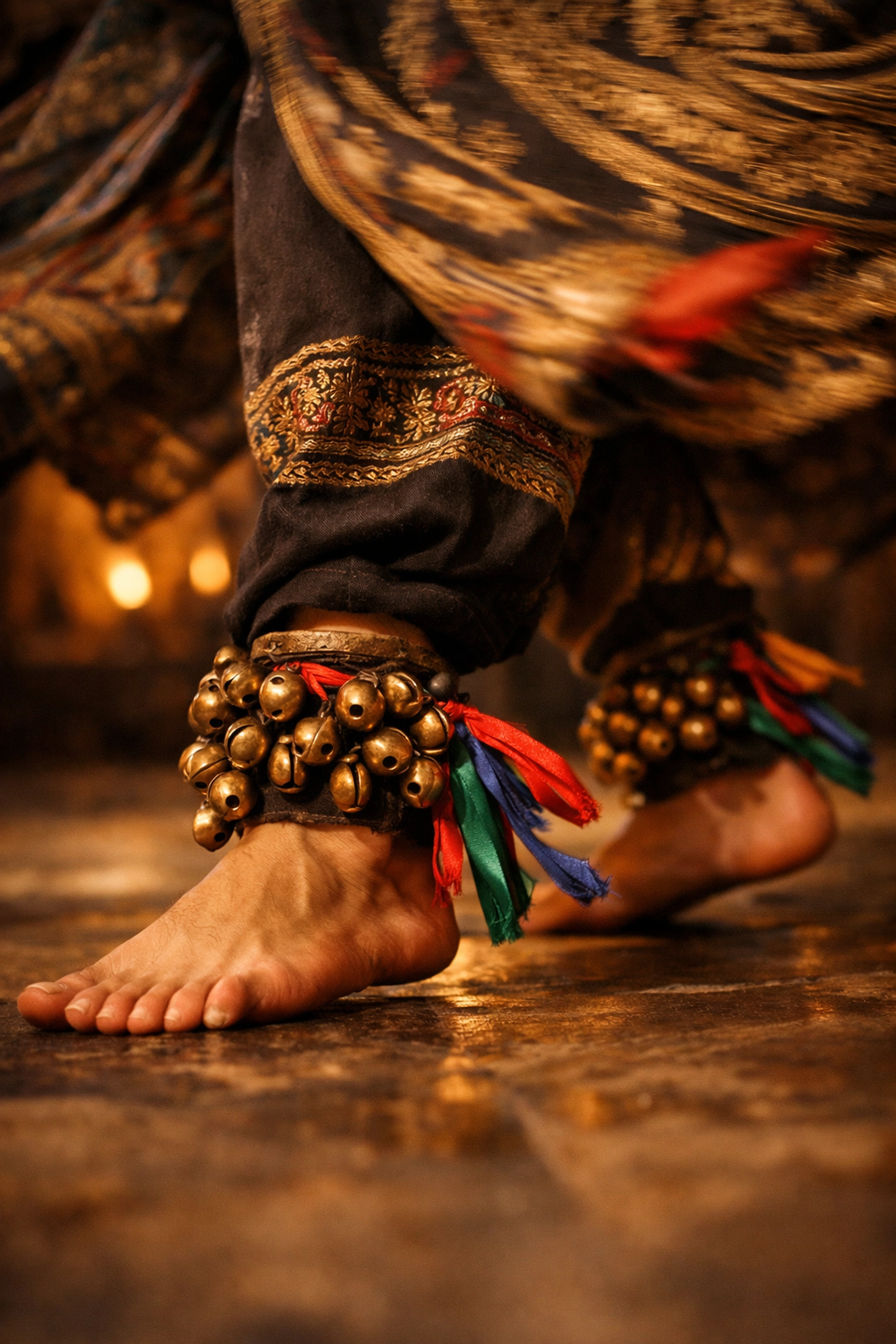
For nearly two centuries, the entertainment heart of Afghanistan didn't beat to the rhythm of female pop stars, but to the bells of the bachah-bāzi. In a society where the public sphere was strictly male, young men: known as bachah: stepped into a complex role that was equal parts dancer, singer, and object of profound aesthetic devotion.
These weren't just "dancing boys" in the way a modern tabloid might describe them. In the eyes of their audiences, they were the embodiment of a "soft masculinity." They wore bells on their ankles, performed intricate choreography, and sang lyrics that were often steeped in homoerotic longing. For many musicians and patrons, the bachah was a muse. Historical accounts tell us of deep romantic attachments forming between master musicians and their apprentices, relationships that were celebrated in the songs they composed together.
This tradition flourished because it filled a cultural gap. Since women were often restricted to domestic spaces, the bachah became the center of the aesthetic world. They were the stars of palaces and public squares alike. If you’re a fan of gay historical romance, this era provides a rich, albeit complex, tapestry of stories that challenge the binary of "masculine" and "feminine."
Lyrics That Linger: Homoeroticism in Afghan Verse
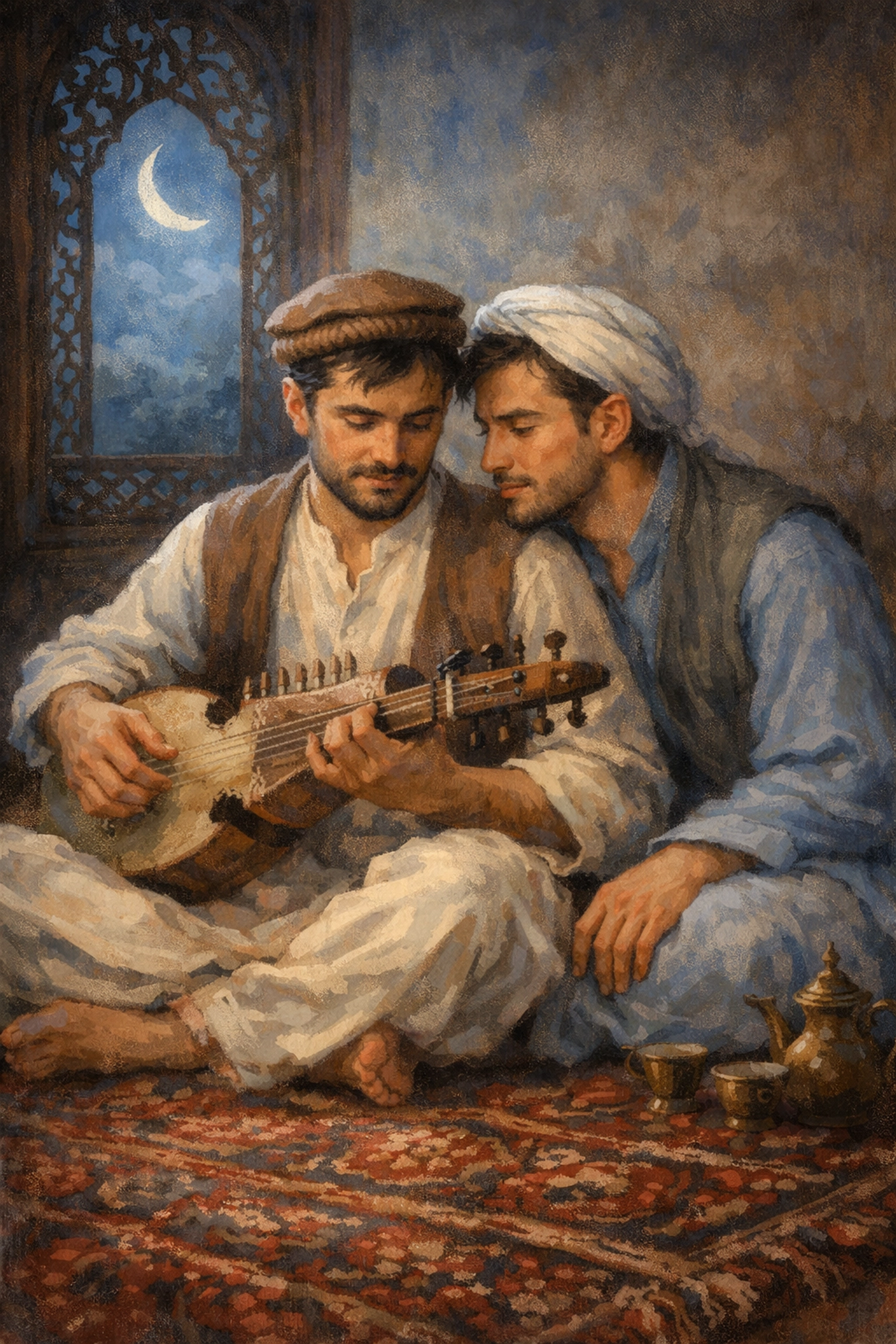
If you look at the soul of Afghan folk music, you’ll find that the lyrics are rarely as straightforward as they seem. Much like the MM romance books we love today, these songs often use metaphor and yearning to tell a story that might be too dangerous to speak plainly.
In classical Persian and Pashto poetry: the backbone of Afghan music: the "beloved" is often gender-neutral or explicitly male. Musicians would sing of the down on a young man’s cheek, comparing it to the first sprouts of spring, or the "moon-like" face of a beautiful boy. These weren't just abstract poems; they were the Top 40 hits of their time.
This tradition of male-to-male desire wasn't seen as a Western import or a "lifestyle choice." It was woven into the very fabric of how people understood beauty. When a singer performed these verses, he was participating in a centuries-old lineage of queer expression. It’s the kind of gay literature that doesn't just sit on a shelf: it lives in the vibrations of a string.
The Great Disruption: When the Music Stopped
So, what happened? Why does the modern image of Afghanistan seem so at odds with this history of fluid desire? The shift began in earnest during the anti-Soviet war of the 1980s. As conflict tore through the country, a new, rigid form of "military masculinity" began to take hold. The "soft masculinity" of the dancer and the poet was suddenly viewed as a threat to the hardened image of the warrior.
The rise of extremist ideologies further pushed these traditions into the shadows. What was once a public celebration of beauty became a clandestine act. By the time the Taliban first took power, and again in 2021, the music literally stopped. Dancing was banned, and LGBTQ+ individuals: including trans women who had found a niche in the professional performance world: faced (and continue to face) extreme persecution.
At Readwithpride.com, we believe that remembering this history is an act of resistance. When we read gay fiction or explore top LGBTQ+ books, we are reclaiming the right to exist in every culture and every century.
Resilience in the 2026 Landscape
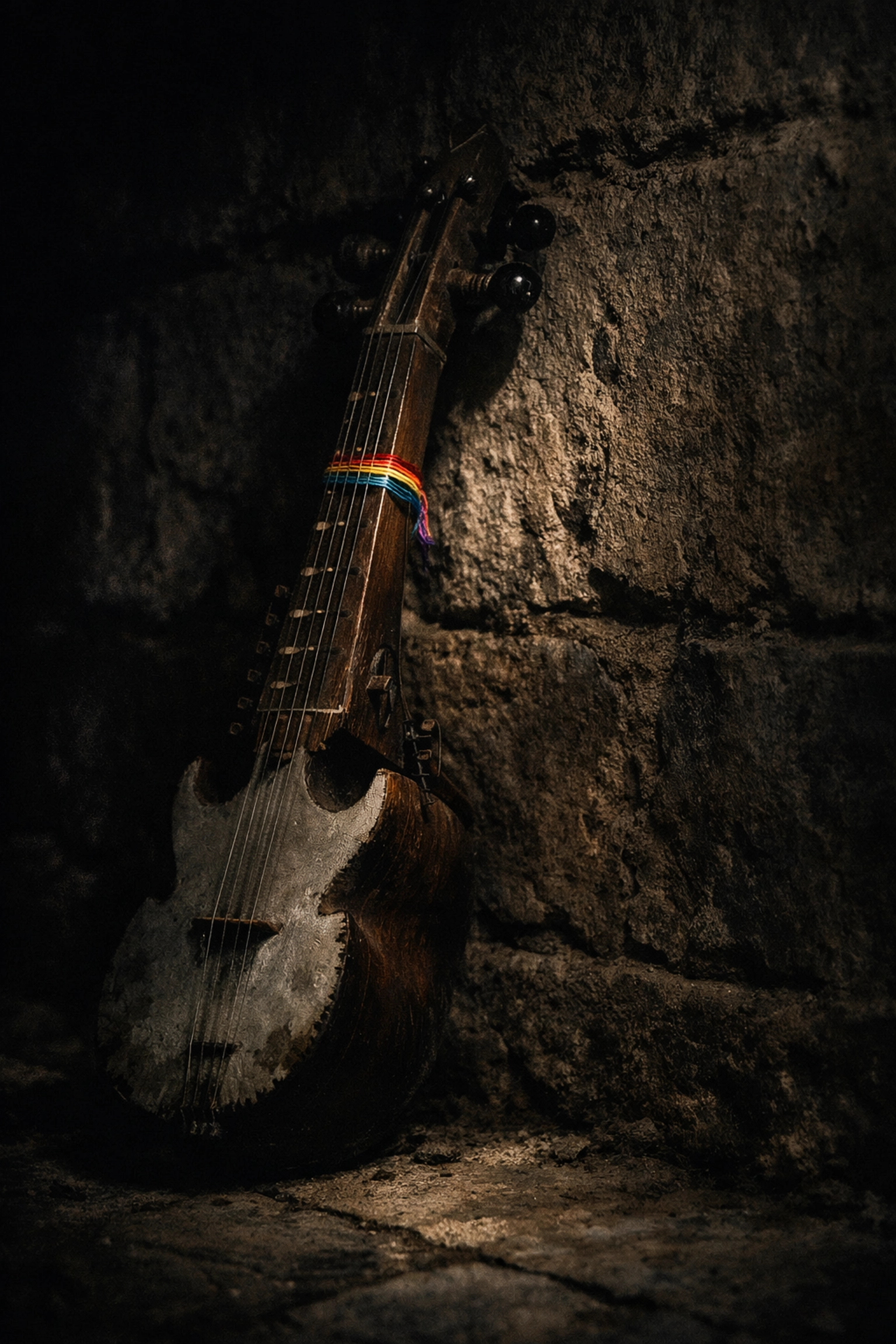
Even in 2026, the melodies haven't been completely silenced. In the diaspora and through underground networks, Afghan artists continue to blend traditional sounds with modern queer identities. We’re seeing a rise in new gay releases from Afghan authors and musicians living in exile, using their art to bridge the gap between their heritage and their truth.
This resilience is why we do what we do. Whether you’re looking for a steamy MM romance set in a reimagined silk road or a heartfelt gay fiction piece about contemporary displacement, these stories matter. They remind us that queer joy isn't a modern invention; it’s an ancient song that we’re still learning the lyrics to.
Why This History Matters for Readers Today
You might be wondering: "Penny, why are we talking about 18th-century tea houses on a site that sells LGBTQ+ Kindle books?"
The answer is simple: representation isn't just about seeing ourselves in the future; it’s about finding our ancestors in the past. When you pick up a gay historical romance, you’re engaging with the idea that our community has always been here, creating art and falling in love under the most difficult circumstances.
Understanding the "Melodies of Desire" in Afghan history helps us debunk the myth that being queer is a "Western phenomenon." It gives us a broader, more authentic view of the world. It reminds us that the struggle for the right to dance, to sing, and to love is a global one.
Exploring More Queer Narratives
If this deep dive into Afghan history has sparked your interest, there’s a whole world of gay novels and queer authors waiting for you on our site. From MM contemporary stories set in Kabul to gay fantasy romance that draws on Eastern folklore, the possibilities are endless.
Check out our curated lists for some inspiration:
- Best MM romance books of 2026
- Top 10 Gay Historical Romances Across Cultures
- Heartfelt Gay Fiction: Stories of Resilience
We’re constantly updating our sitemaps and blog categories to bring you the best in gay book recommendations. Whether you're a fan of enemies to lovers MM romance or a slow burn that takes chapters to ignite, we’ve got you covered.
Join the Conversation
The history of Afghan queer expression is a reminder that even when the music is forced underground, the rhythm remains. We want to hear from you! Have you read any gay literature that explores these themes? What are your favorite MM romance books that feature diverse cultural backgrounds?
Drop a comment below or join our vibrant community on social media. We’re all about celebrating gay love stories in all their forms.
- Follow us on Facebook: Read with Pride
- Catch us on X: @Read_With_Pride
- See the beauty on Instagram: @read.withpride
For more incredible stories and the latest 2026 gay books, keep your eyes on Readwithpride.com. We’re more than just a publisher; we’re a home for every story that dares to be told.
Stay authentic, stay proud, and keep reading!
#ReadWithPride #LGBTQHistory #AfghanCulture #MMRomance #GayBooks2026 #QueerLiterature #GayHistoricalRomance #MusicAndDesire #MMFiction #GayLoveStories #ReadWithPride2026
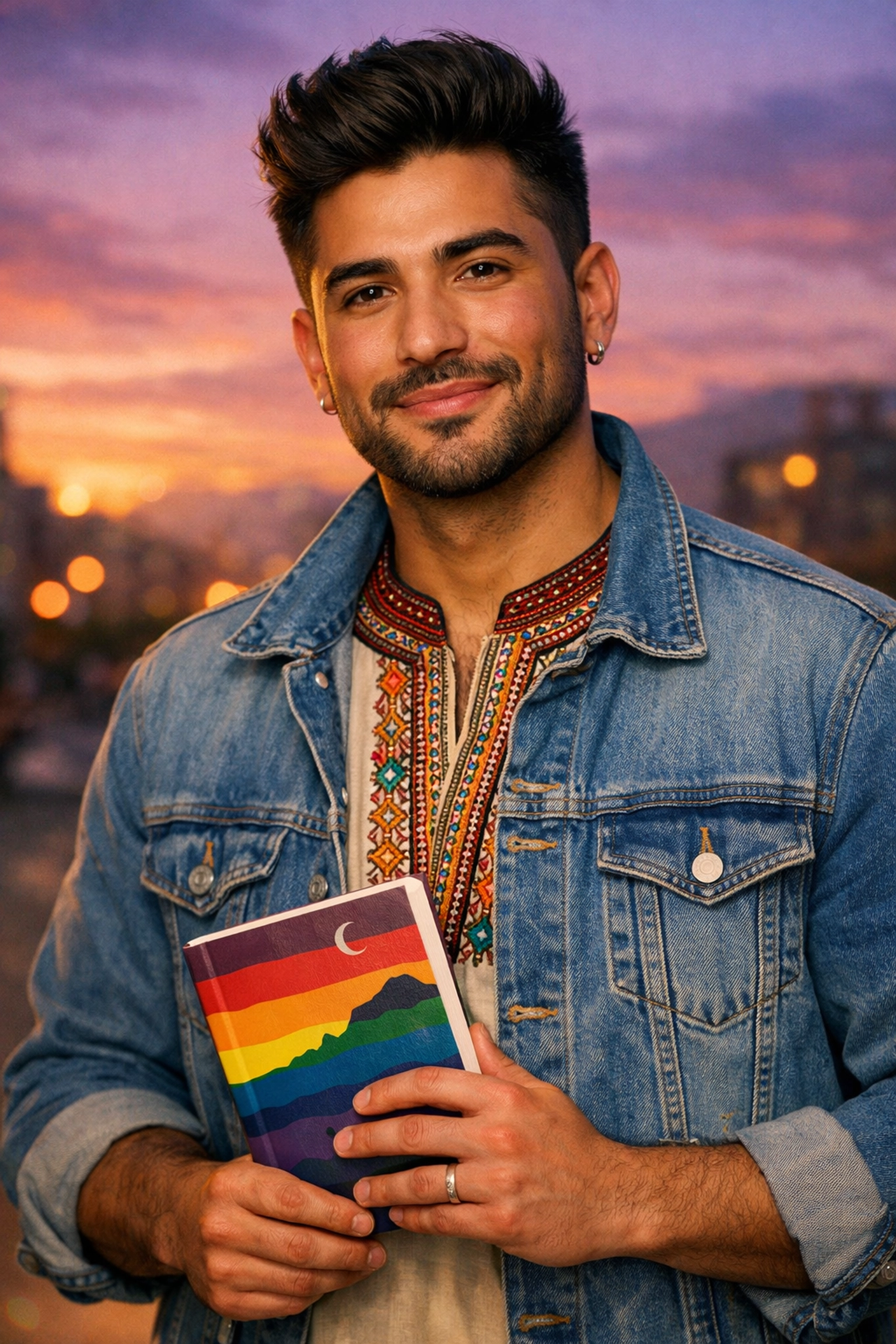
Looking for your next great read? Explore our product sitemap or visit our store for the latest in MM historical romance and gay thriller novels.

Leave a Reply
You must be logged in to post a comment.