

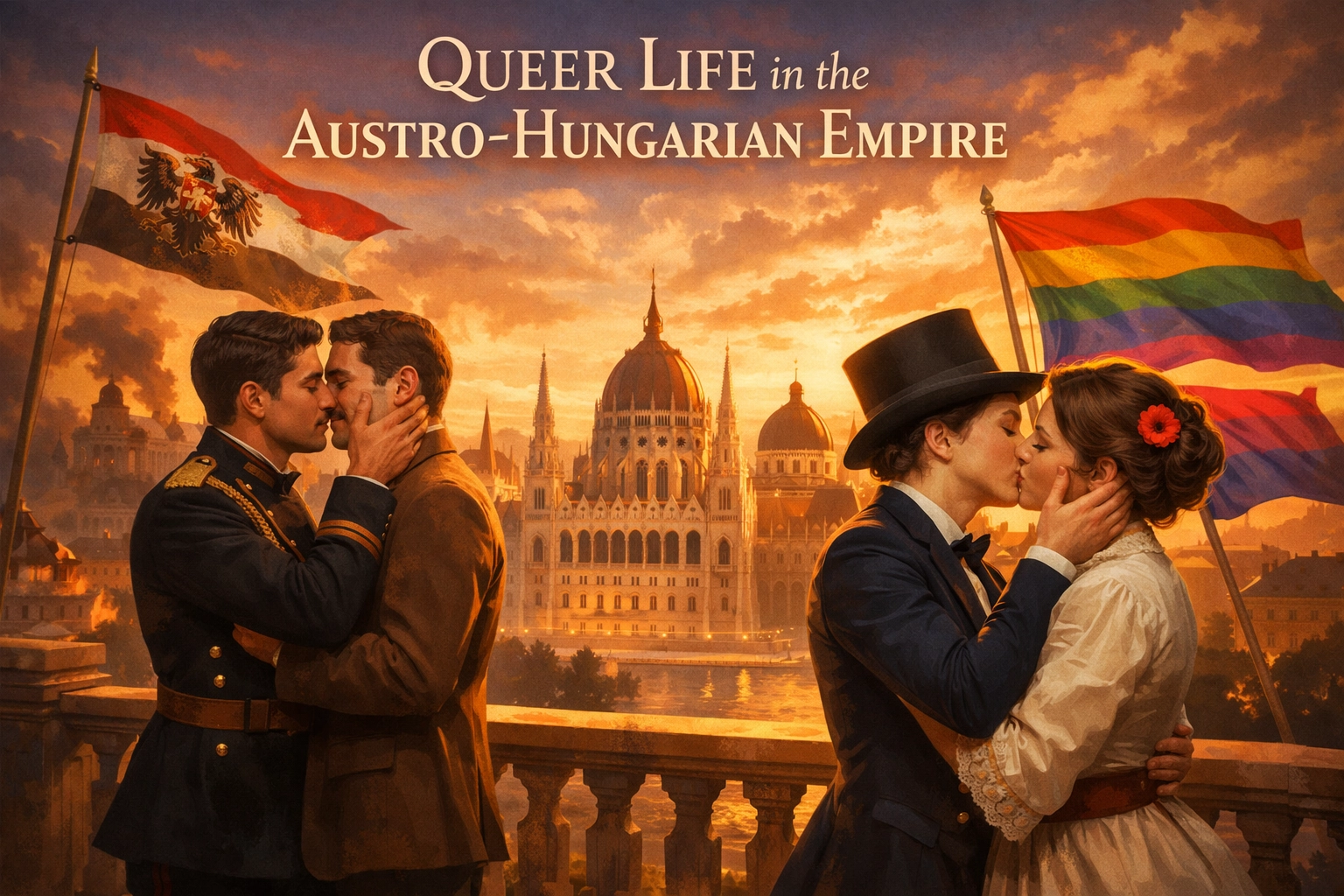
readwithpride.com
When we think of the Austro-Hungarian Empire, we usually picture sweeping ballrooms, elaborate military uniforms, and the stern, mustachioed face of Emperor Franz Joseph. It was a world of rigid etiquette and strict Catholic morals. But if you peer behind the velvet curtains of the Ringstraße or into the steam-filled bathhouses of Vienna, you’ll find a vibrant, complicated, and surprisingly resilient queer subculture.
For fans of historical MM romance novels, this era is a literal goldmine. It has everything: high-stakes drama, class tension, forbidden glances across a crowded opera house, and a secret language of love that survived despite the law. At Read with Pride, we’re obsessed with unearthing these stories: both the real history and the gay romance novels they inspire.
The Law vs. The Reality
Let’s get the heavy stuff out of the way first. Legally speaking, being queer in the Austro-Hungarian Empire was no walk in the Prater. The penal code of 1852 was particularly harsh, criminalizing "unnatural fornication" between members of the same sex. Interestingly, unlike many other European powers of the time, the Habsburgs didn’t just target men; the law applied to women as well. Punishments included "heavy prison" sentences, often ranging from six months to five years.
However, the Empire was a massive, multi-ethnic sprawl. What was enforced strictly in a rural Tirolean village might be overlooked in the cosmopolitan chaos of Vienna, Prague, or Budapest. In these urban centers, a "don't ask, don't tell" culture emerged among the elite, while the working class found sanctuary in specific taverns and parks. This tension between public morality and private desire is exactly why MM historical romance set in this period is so addictive. The stakes weren’t just social: they were legal.
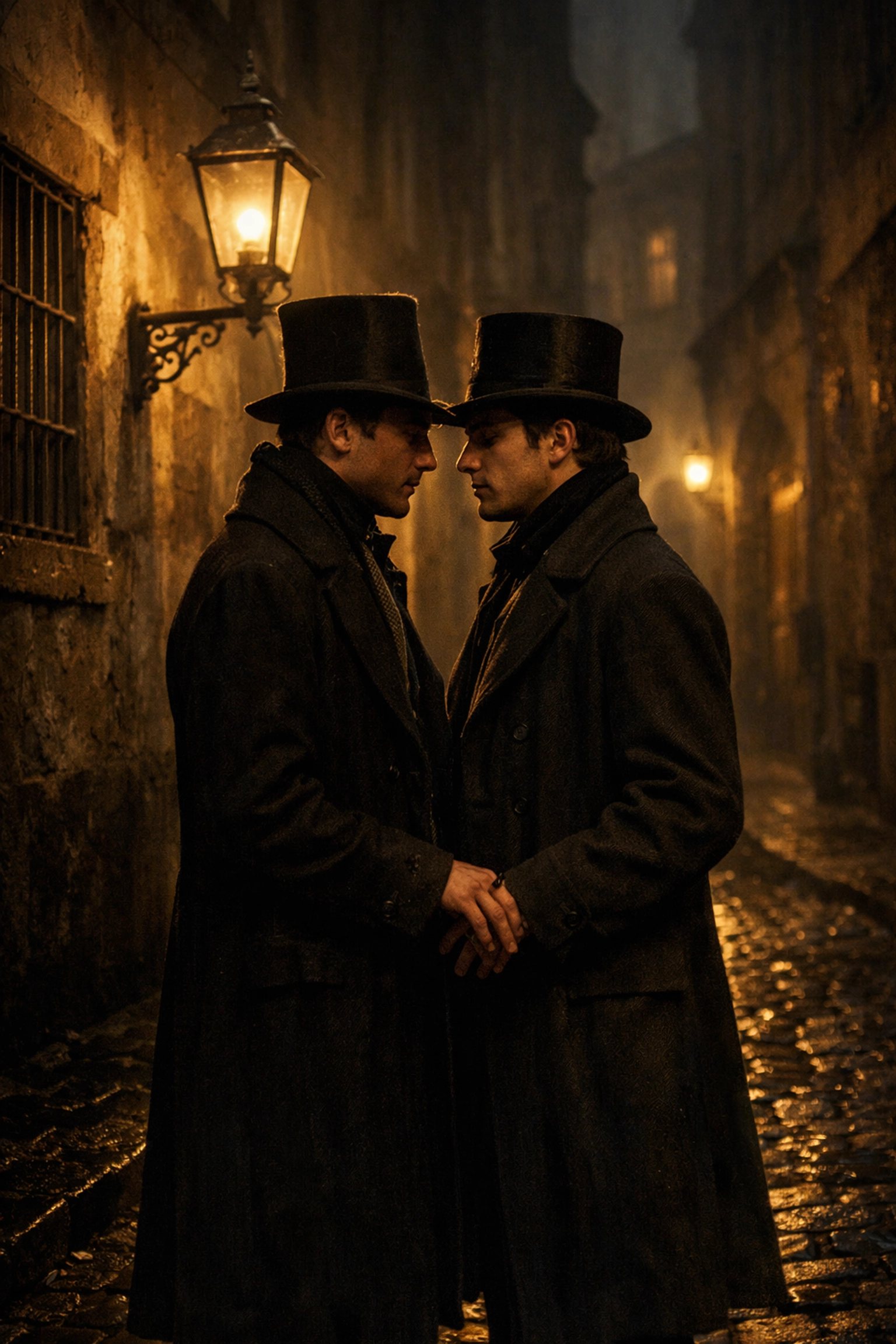
Vienna: The Glittering, Gay Capital
Vienna at the turn of the century was the beating heart of European culture. It was the city of Freud, Klimt, and Mahler. It was also a city where queer life thrived in the shadows of its grand architecture.
For the wealthy and the well-connected, queer life revolved around the city’s opulent bathhouses. The Centralbad (now the Kaiserbründl) was the most famous. Imagine a palace of marble and tile where the strict hierarchies of Viennese society dissolved in the steam. It was here that aristocrats rubbed shoulders with soldiers and artists.
If you’re looking for popular gay books that capture this vibe, you’ll often find characters navigating these semi-public spaces. There’s something inherently cinematic about a clandestine meeting in a candlelit bathhouse while the secret police lurk just outside the heavy oak doors. It’s the ultimate "forced proximity" trope, but with a historical twist.
The Archduke Who Lived Out Loud
You can’t talk about queer Austro-Hungary without mentioning Archduke Ludwig Viktor, affectionately known to the Viennese public as "Luziwuzi." The younger brother of Emperor Franz Joseph, Ludwig Viktor was the ultimate royal rebel. He had zero interest in military glory or a traditional marriage. Instead, he was famous for his love of art, his legendary parties, and his very public penchant for men.
Luziwuzi didn't just hide in the shadows. He was often seen at the Centralbad, and legend has it he once got into a physical altercation (some say a slap was involved) after making a move on an officer who didn't return his affections. The Emperor eventually grew tired of the scandals and exiled his brother to Salzburg, but Ludwig Viktor remained a beloved figure in the queer imagination: a man who lived as authentically as possible within the confines of an imperial cage.
For readers of MM romance books, Ludwig Viktor is the ultimate blueprint for the "rebellious royal" trope. His life reminds us that even in the most restrictive times, there were those who refused to be silenced.
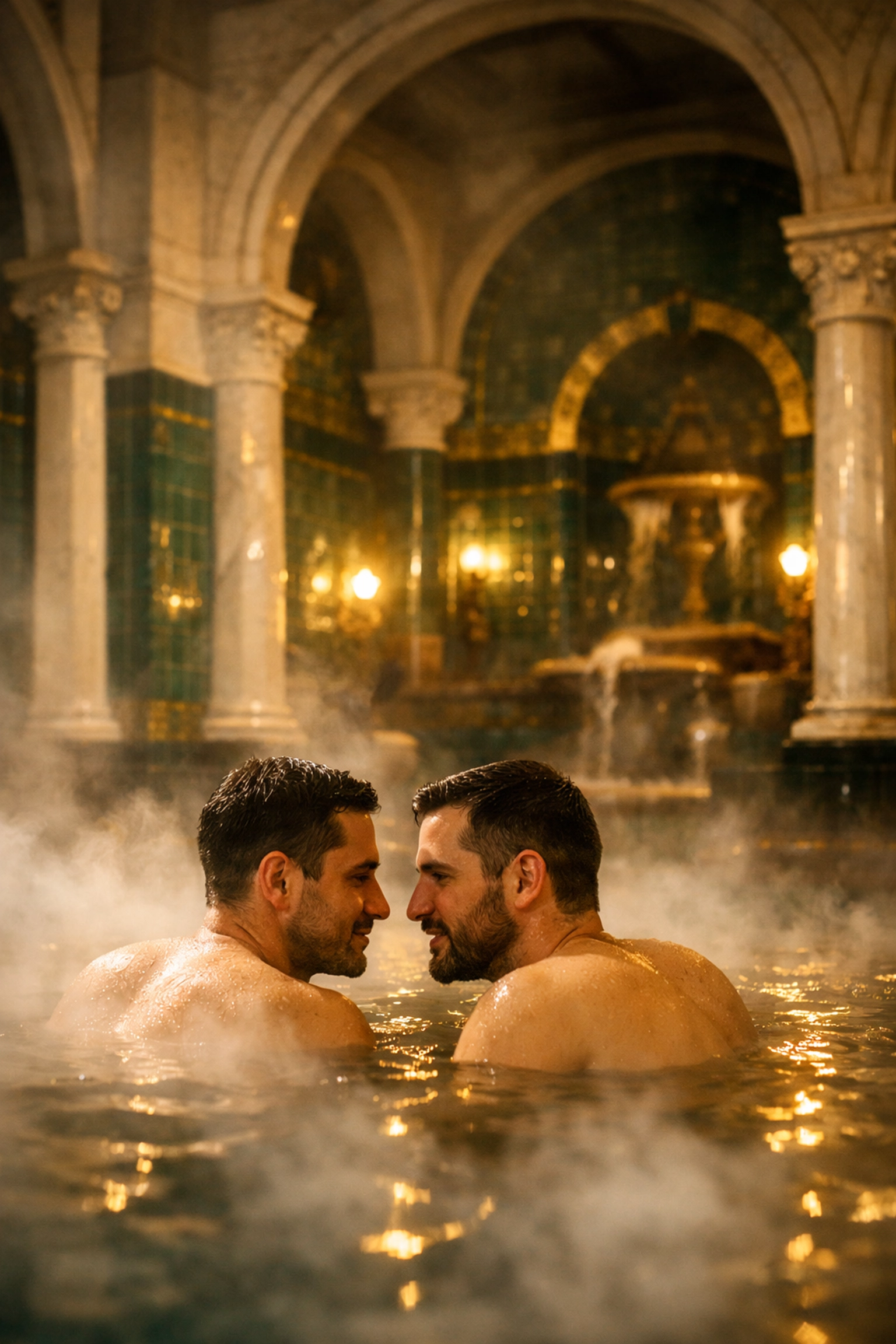
Beyond Vienna: Budapest and Prague
While Vienna was the center of the Empire, Budapest and Prague had their own distinct queer flavors.
Budapest was known for its slightly more liberal atmosphere compared to the stuffy Viennese court. By the late 19th century, the city had developed a network of cafés and bars where "men who loved men" could congregate. Research shows that queer life was an integral part of Hungarian history as far back as 1873. These spots were discreet, sure, but they were there.
Prague, with its bohemian spirit and gothic alleyways, offered a different kind of sanctuary. The city's intellectual circles were often more tolerant of "eccentricities." It’s a setting that perfectly suits a gay psychological thriller or a dark, atmospheric gay fantasy romance.
Why We Love Historical MM Romance
Why do we keep coming back to the Austro-Hungarian Empire in our LGBTQ+ fiction? It’s because the era represents a crossroads. It was the end of the old world and the birth of the new. It was a time when identity as we know it today was starting to form.
Authors writing MM romance books in 2026 are finding new ways to explore this era. We’re seeing more diverse stories that move beyond the aristocracy to show how working-class queer people, trans individuals, and people of color navigated the Empire. Whether it’s an "enemies to lovers MM romance" between two rival diplomats in Budapest or a "slow burn" story involving a struggling artist in Prague, the emotional core remains the same: the search for love and belonging in a world that says you shouldn't exist.
At Readwithpride.com, we believe that reclaiming this history is vital. When you read a gay historical romance, you’re not just escaping into a story; you’re honoring the real people who lived, loved, and resisted in the past.
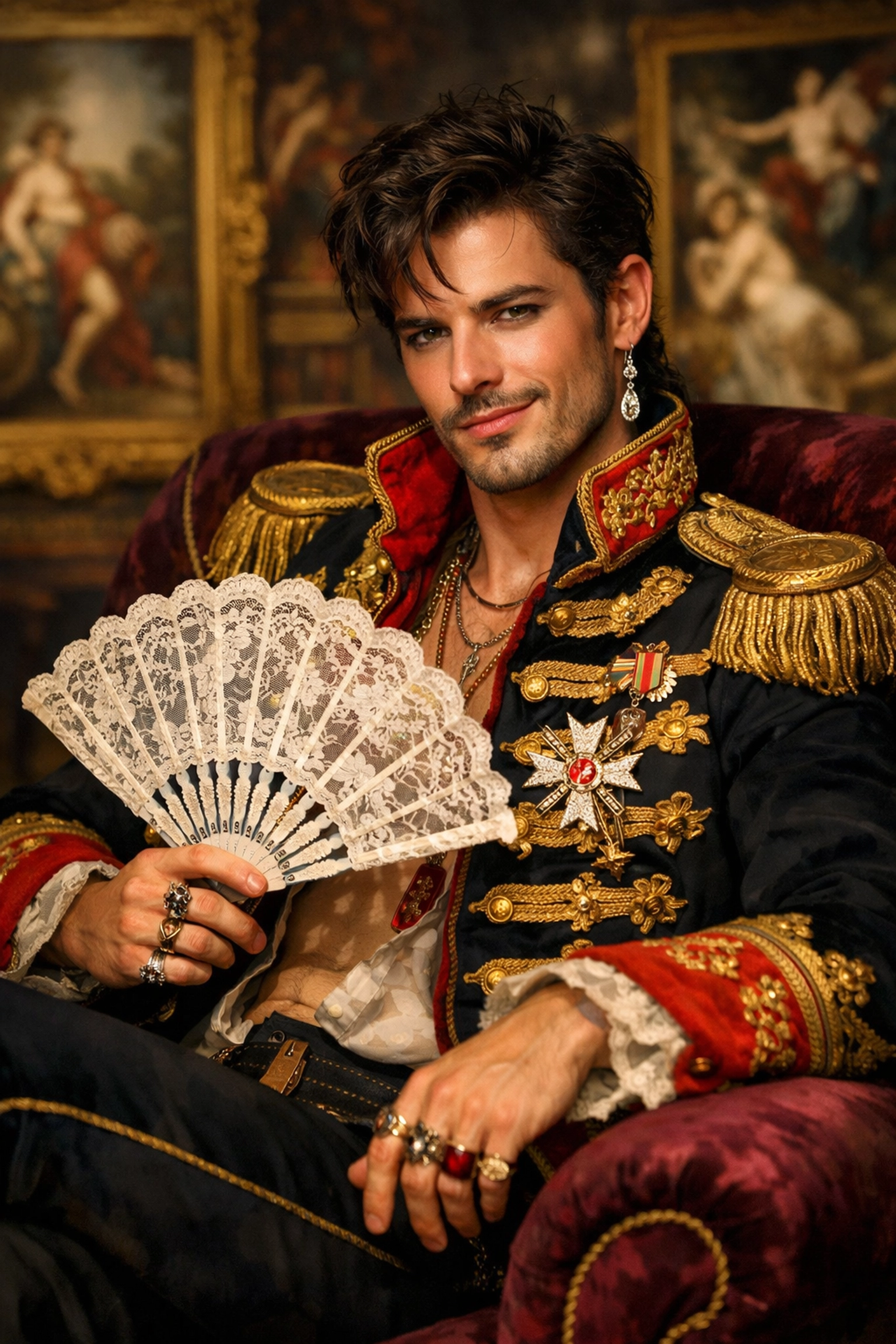
Finding Your Next Great Read
If this dive into the Habsburg Empire has you craving some high-stakes historical drama, we’ve got you covered. The world of gay literature is expanding every day, with new releases that bring the past to life with authentic, queer-centered narratives.
Whether you’re looking for steamy MM romance, heartfelt gay fiction, or award-winning gay fiction, there’s a story waiting for you. The Austro-Hungarian Empire might be gone, but the spirit of the people who inhabited it lives on in the pages of our favorite MM novels.
Check out our store for some of the best MM romance titles, or browse our FAQ if you're looking for recommendations on where to start your journey into queer history.
Join the Community
History is better when we share it. Follow us on our social channels to stay updated on the latest 2026 gay books, author interviews, and deep dives into the queer past. We’re building a space where everyone can Read with Pride.
- Facebook: Read with Pride
- Instagram: @read.withpride
- X (Twitter): @Read_With_Pride
The Austro-Hungarian Empire was a place of immense beauty and immense struggle. By looking back at the queer lives lived within its borders, we find the roots of our own resilience. So, grab a coffee (Viennese style, with plenty of cream), pick up a gay romance novel, and let yourself get lost in the past.
#QueerHistory #MMRomance #HistoricalFiction #ReadWithPride #LGBTQBooks #GayRomanceNovels #HabsburgEmpire #Luziwuzi #MMHistoricalRomance #GayLiterature #QueerBooks2026
Interested in more? Explore our sitemaps for a deep dive into our archives:
Blog Category Sitemap | Product Sitemap | Author Sitemap

Leave a Reply
You must be logged in to post a comment.