

readwithpride.com
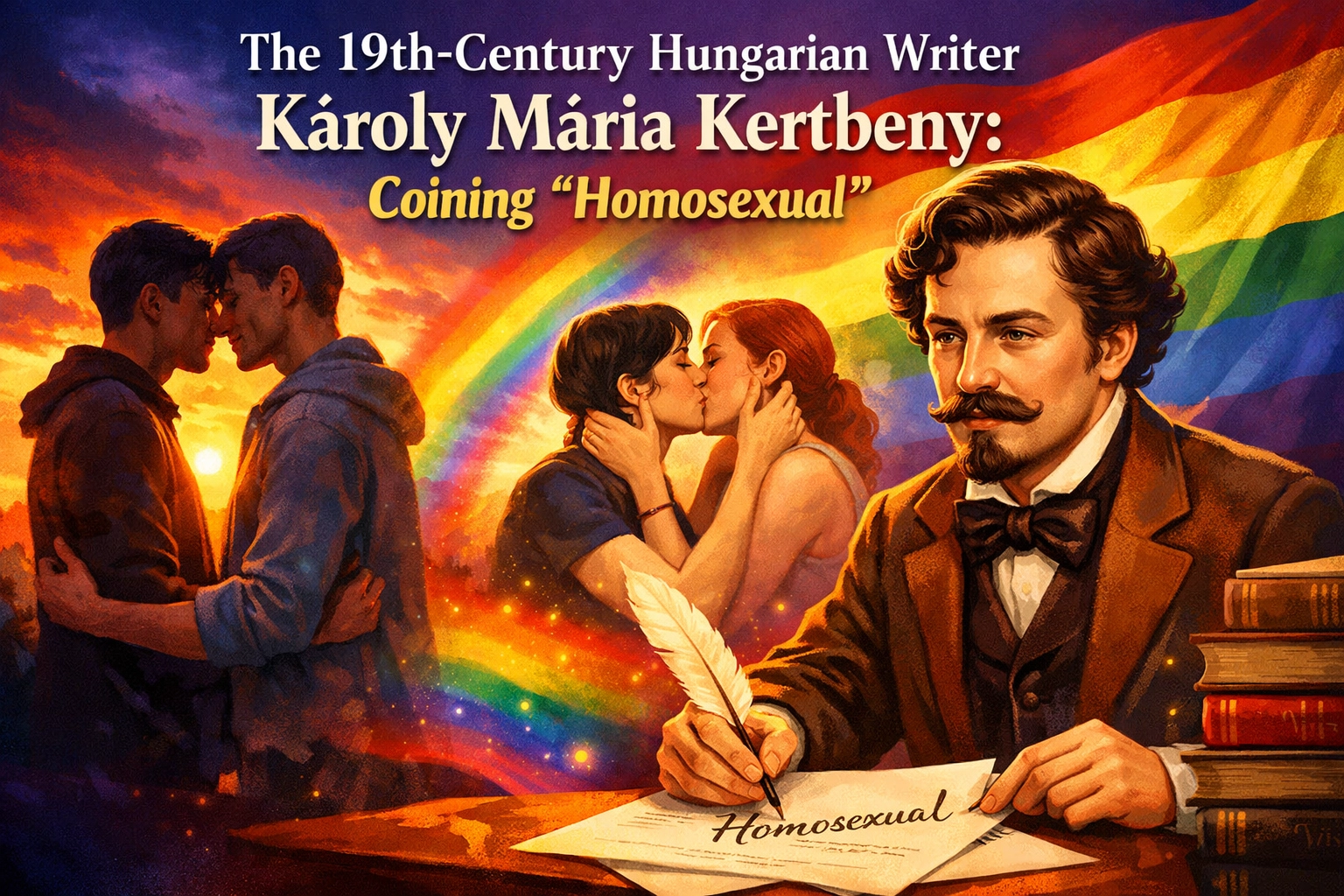
Ever stop to think about where the words we use to describe ourselves actually come from? We use terms like "homosexual" and "heterosexual" so casually today that they feel like they’ve been etched into the fabric of human language since the dawn of time. But here’s a plot twist for your next trivia night: those words didn't exist until 1868. And the man behind them? A dashing, slightly chaotic, and deeply dedicated Hungarian writer named Károly Mária Kertbeny.
At Read with Pride, we’re obsessed with the history of queer identity because it informs the stories we love today. Whether you’re diving into a bisexual awakening mm romance for adults or exploring the latest gay historical romance, the language we use to navigate these narratives started with a man who just wanted the law to leave his friends alone.
Who Was Károly Mária Kertbeny?
Born Karl Maria Benkert in Vienna in 1824, our protagonist was a bit of a shapeshifter. In 1848, amidst a wave of Hungarian nationalism, he decided to "Magyarize" his name, becoming Károly Mária Kertbeny. He wasn't just a linguist; he was a journalist, a memoirist, and a translator who rubbed elbows with literary giants like Karl Marx and Hans Christian Andersen.
Kertbeny lived a life that reads like a gay adventure romance. He traveled extensively, lived in Berlin, and spent his days advocating for human rights. But his biggest contribution to the world wasn't his poetry or his translations of Hungarian classics: it was a letter he wrote in 1868.
The Letter That Changed Everything
In the mid-19th century, the legal and social landscape for queer people was, frankly, terrifying. In Prussia (which would soon become the core of the German Empire), "Paragraph 143" criminalized "unnatural fornication." The terminology of the time was either clinical and cold or downright insulting, often using words like "pederast" to lump all same-sex attraction into one predatory category.
Kertbeny wasn't having it. In a letter to fellow activist Karl Heinrich Ulrichs on May 6, 1868, Kertbeny used the terms Homosexualität and Heterosexualität for the first time.
Think about that for a second. Before Kertbeny, there wasn't a scientific, non-judgmental way to describe being straight either! By coining both terms, he leveled the playing field. He reframed human sexuality as a spectrum of natural leanings rather than a choice between "normal" and "sinful." It was a radical act of linguistic rebellion.
Advocacy Through Anonymity
Kertbeny wasn't just playing with words; he was fighting for lives. In 1869, he published two anonymous pamphlets arguing against Paragraph 143. He argued that same-sex attraction was congenital: something people were born with: and therefore, it was fundamentally unjust to punish it.
This idea is the backbone of so much queer fiction and MM contemporary literature we read today. The struggle to be seen as "born this way" started in the dimly lit offices of 19th-century Berlin. Kertbeny believed that if he could provide a "scientific" name for these feelings, the law would have to treat them as a medical or biological reality rather than a criminal one.
While he didn't live to see the decriminalization he fought for, his words took on a life of their own. By the time the 20th century rolled around, "homosexual" had become the standard term in psychology and sociology, eventually making its way into the mainstream.
From History to the Page: Why This Matters for Readers
Why are we talking about a 19th-century Hungarian writer on a site dedicated to LGBTQ+ ebooks? Because identity is at the heart of every story we publish. When you pick up an MM romance featuring a bisexual awakening, you're participating in a conversation that Kertbeny started.
In many of our popular gay books, characters struggle to find the words for what they're feeling. They move from confusion to clarity, much like the world moved from the vague shadows of the 1800s into the defined identities of the modern era. Kertbeny’s life: full of travel, secret pamphlets, and intellectual bravery: is the perfect inspiration for gay historical romance or even a gay spy romance.
Imagine a protagonist in 1869, a writer like Kertbeny, falling for a Prussian officer while secretly drafting the very documents that would argue for their right to exist. That’s a five-star MM historical romance waiting to happen!

The Literary Connections: Andersen and the Brothers Grimm
Kertbeny was a man of letters. He translated the works of Sándor Petőfi and was friends with Hans Christian Andersen (who many scholars believe was queer himself). This connection to the world of fairy tales and high literature is significant. It reminds us that queer people have always been the keepers of culture, even when they had to hide their true selves.
At Readwithpride.com, we honor that legacy by supporting queer authors and MM authors who are telling the stories that Kertbeny could only hint at in his pamphlets. From gay fantasy romance to gay psychological thrillers, the breadth of LGBTQ+ fiction available today is a testament to the doors opened by early advocates.
Finding Your Identity in 2026 Gay Books
If you’re looking for stories that echo the resilience and intellectual spirit of pioneers like Kertbeny, our store is packed with new gay releases for 2026. We specialize in MM romance books that don't just offer a "Happily Ever After," but also explore the deep, authentic journey of self-discovery.
Whether it's a slow burn, enemies to lovers MM romance, or a complex bisexual awakening mm romance for adults, we believe every reader deserves to see themselves reflected in high-quality literature.
Recommended Categories:
- 20th Century Historical Romance: Dive into the eras that followed Kertbeny's linguistic revolution.
- Action & Adventure: For those who like their romance with a side of high stakes.
- Dick Ferguson Writer: Explore some of our top-tier gay fiction.
The Legacy of Károly Mária Kertbeny
Kertbeny died in Budapest in 1882, largely unknown for his most lasting contribution. It wasn't until much later that historians realized he was the one who gifted us the vocabulary of our lives.
He was a man who understood that words have power. By naming the "unnameable," he took the first step toward liberation. Today, we don't just use his words; we expand upon them. We celebrate LGBTQ+ pride, we write steamy MM romance, and we build communities where being "homosexual" (or any other label on the spectrum) is a point of pride, not a legal defense.
So, the next time you settle in with one of the best MM romance novels of 2026, spare a thought for Károly Mária Kertbeny. He was the writer who gave us the words to tell our stories.

Ready to find your next great read?
Check out our full catalog of LGBTQ+ eBooks and join our community of readers who believe in the power of authentic stories.
Follow us for more queer history and book recs:
#ReadWithPride #MMRomance #QueerHistory #LGBTQBooks #GayRomanceNovels #BisexualAwakening #GayHistoricalRomance #MMFiction #GayAuthors #2026GayBooks #Kertbeny #GayLiterature #GayLoveStories #Readwithpride.com
For more deep dives into the history behind your favorite tropes, check out our LGBTQ+ Blogs and Articles.

Leave a Reply
You must be logged in to post a comment.