

readwithpride.com
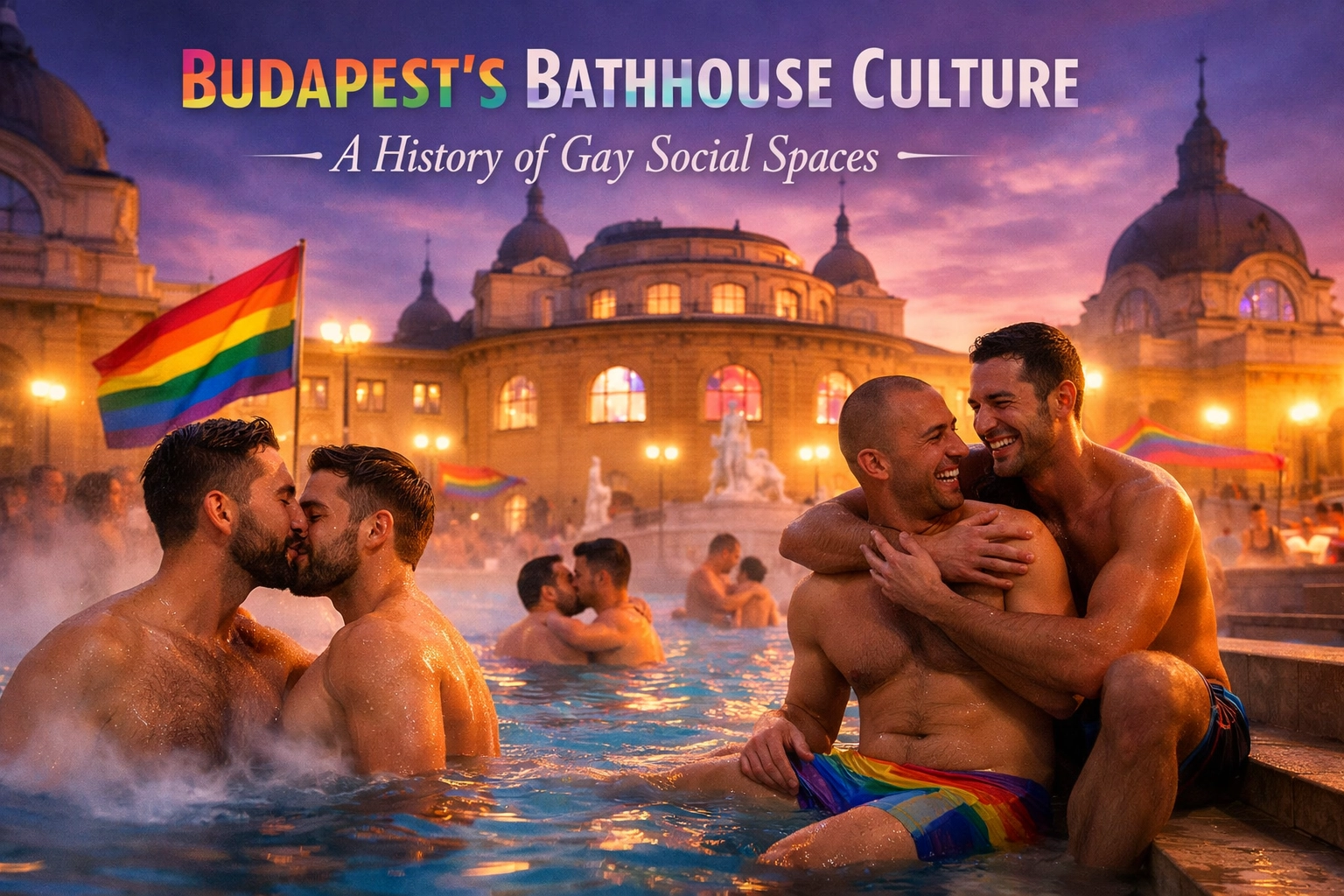
If you’ve ever wandered the cobblestone streets of Budapest, you know the city has a certain mood. It’s grand, it’s slightly moody, and it’s literally steaming. Known as the "City of Spas," Budapest sits on a bubbling cauldron of over 100 thermal springs. But while the brochures talk about medicinal minerals and Neo-Baroque architecture, there’s a deeper, steamier history hidden beneath the surface. For the LGBTQ+ community, these bathhouses weren't just about soaking away a hangover; they were vital, clandestine hubs of connection, survival, and romance long before the first Pride flag ever flew over the Danube.
At Read with Pride, we’re obsessed with the stories that don’t always make the history books, the ones that feel like they stepped right out of a high-stakes gay historical romance. So, grab your towel and let’s dive into the history of Budapest’s bathhouses and their legendary role as gay social spaces.
From Ottoman Roots to Queer Sanctuaries
The story starts way back. While the Romans first tapped into the springs, it was the Ottoman occupation in the 15th and 16th centuries that gave us the iconic dome-and-pool vibe we see today. Places like the Rudas Bath and Király Bath are stunning remnants of this era. The Rudas, with its "Bath with Green Columns" (rebuilt around 1566), provided a dim, atmospheric setting that felt worlds away from the prying eyes of the street.
In these spaces, the social hierarchy of the outside world began to dissolve. In the steam, everyone looks the same. For centuries, bathhouses were strictly gender-segregated. While this was rooted in traditional modesty, it inadvertently created a "men-only" sanctuary. For a gay man in the 18th or 19th century, the bathhouse was one of the few places where being surrounded by other men was not only normal but encouraged.
It was a milestone in a young man’s life when he stopped going to the baths with his mother and started going with his father. But for many, it became an even bigger milestone when they realized the baths offered a secret language of glances and gestures that hinted at a world of gay fiction brought to life.

The 20th Century: Steam, Shadows, and Survival
As we moved into the 1900s, the role of the bathhouse as a clandestine meeting spot intensified. During the turbulent years of the early 20th century and through the Cold War era, being openly queer in Hungary was, to put it mildly, a massive risk. But the baths offered a "hygienic" cover. You weren't "meeting a man"; you were "taking the waters" for your rheumatism.
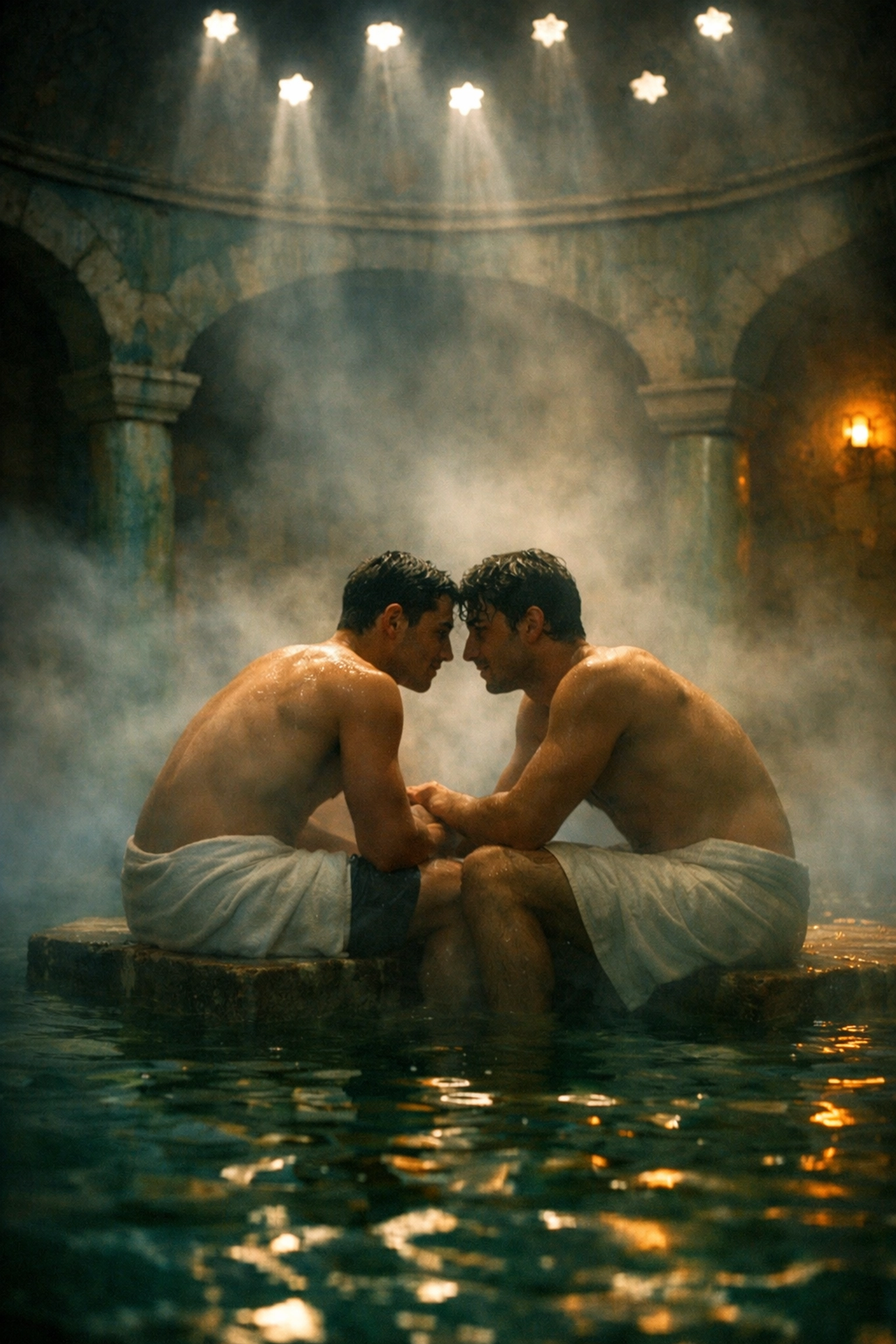
During the Soviet era, Budapest’s bathhouses became legendary in the global underground queer scene. Even as the state monitored public squares and cafes, the thick mist of the thermal pools provided a natural veil. It was the ultimate forced proximity trope. You’re in a small, heated pool with a stranger; the steam is rising, the lighting is low, and the rest of the world is locked outside. It’s no wonder that so many MM romance books find inspiration in these settings, the tension is practically built into the architecture.
The Unspoken Language of the Bathhouse
In these historic spaces, communication had to be silent. A specific way of holding a towel, a lingering gaze across the octagonal pool, or a shared bench in the sauna, these were the codes. It wasn’t just about hookups; it was about finding a community when the law said you didn't exist. These bathhouses were the original "gay social media," long before we had apps or even LGBTQ+ fiction sections in bookstores.
The Modern Shift: From Secrets to Saunas
As Hungary transitioned out of the communist era, the landscape for the community began to change. While the historic baths like Rudas and Gellért still carry that old-world charm (and yes, they still have their "cruising" reputations among locals and tourists alike), the scene has also evolved into dedicated spaces.
Today, Budapest boasts a thriving modern gay sauna culture. Magnum Sauna, recognized as the first official gay sauna in Hungary, broke the mold by providing a space that was explicitly and unapologetically for gay men. Then you have Sauna 69, which offers a more modern, high-energy social vibe. These places are the descendants of the clandestine steam rooms of the past, but they operate with a level of visibility that the men of the 1950s could only dream of.
If you’re looking to explore this world through a literary lens, the vibe of these spaces: the mix of history, danger, and desire: is a staple in MM contemporary and gay romance novels. Whether it’s a slow burn romance between two guys meeting at a historic spa or a steamy MM romance set in the heart of modern-day Budapest, the city remains a powerhouse of inspiration for queer authors.
Why These Spaces Matter for Queer Literature
At Readwithpride.com, we believe that understanding our history helps us appreciate the best MM romance books of 2026. When you read a gay historical romance, you’re not just reading a story; you’re honoring the real men who had to find love in the shadows of the Rudas or the Király.
The bathhouse culture of Budapest is a testament to resilience. It shows that even in the most restrictive times, the human heart (and libido!) finds a way to connect. This is why gay literature and MM romance are so vital: they document these secret histories and give them the happy endings they deserve.
Whether you’re into gay fantasy romance, gay thrillers, or a heartfelt gay fiction story, there’s something about the "hidden world" aspect of Budapest that resonates with the queer experience. It’s about finding your people in a world that isn’t always looking out for you.
Exploring Budapest Today
If you’re planning a trip to Budapest in 2026, the bathhouses are a must-visit.
- Rudas Bath: Go for the history and the incredible rooftop pool that overlooks the Danube.
- Király Bath: Currently undergoing renovations, but historically one of the most authentic Ottoman-style spots.
- Magnum & Sauna 69: If you want a modern, dedicated LGBTQ+ space where you don’t have to worry about "clandestine" codes.
While you're traveling, don't forget to load up your Kindle with some new gay releases. There’s nothing quite like soaking in a 400-year-old thermal pool and then heading back to your hotel to read a top LGBTQ+ book or a steamy MM romance.
Join the Community
Love talking about queer history and the books that bring it to life? Join the Read with Pride book club! We’re constantly diving into gay book recommendations, from award-winning gay fiction to the latest MM romance series.
Check out our store for the latest LGBTQ+ ebooks and discover why we are the go-to destination for gay romance books.
Stay connected with us:
- Follow us on Facebook
- Catch our updates on X (Twitter)
- See the aesthetic on Instagram
For more deep dives into queer culture and history, browse our blog-category-sitemap1.xml or check out our latest posts.
Budapest is a city of layers, and its gay history is one of the most fascinating layers of all. From the Ottoman steam to the modern sauna, it’s a story of finding heat in the cold and light in the shadows.
Happy reading, and stay proud!
#Budapest #GayHistory #MMRomance #LGBTQTravel #ReadWithPride #GayFiction #QueerCulture #2026GayBooks #MMRomanceBooks #GaySpas

Leave a Reply
You must be logged in to post a comment.