

readwithpride.com
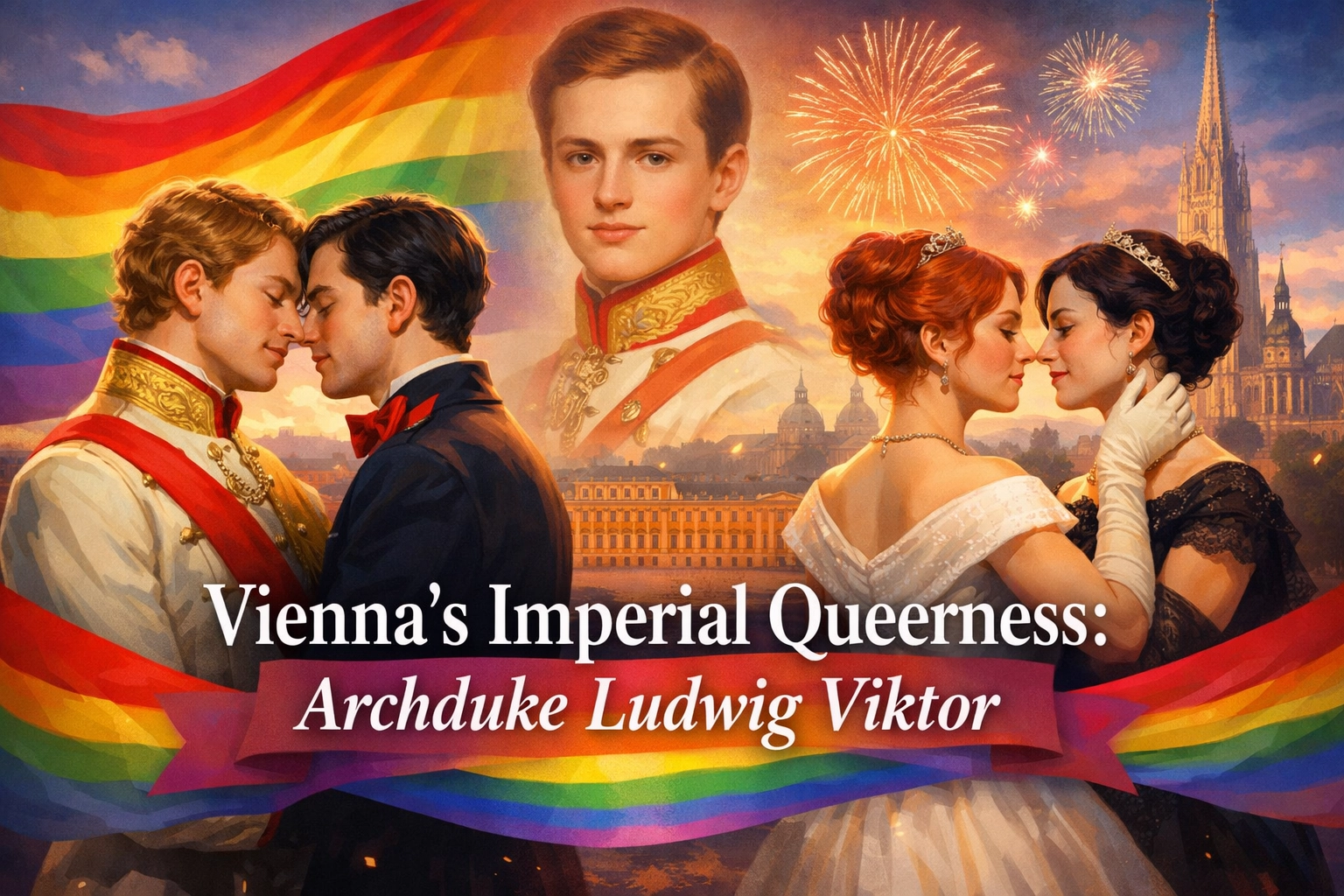
When we think of the Habsburg Empire, we usually picture stiff collars, military parades, and the tragic, corseted beauty of Empress Sisi. It was a world of rigid protocol and Roman Catholic piety. But tucked away in the shadows of the Hofburg Palace was a man who lived his life with a level of flamboyance that would make a modern drag queen do a double-take.
Meet Archduke Ludwig Viktor, the youngest brother of Emperor Franz Joseph I. Known affectionately (and sometimes derisively) as "Luziwuzi," he was the black sheep of the imperial family, not because he was incompetent or cruel, but because he was unapologetically himself in a time when being "himself" was technically a crime. At Read with Pride, we love unearthing these historical gems because they remind us that queer joy and queer scandals have always been part of the human story, even in the heart of the most conservative empires.
The Baby of the House of Habsburg
Born in 1842, Ludwig Viktor was the youngest of four brothers. His eldest brother, Franz Joseph, became the Emperor; Maximilian became the ill-fated Emperor of Mexico; and Karl Ludwig was the father of Archduke Franz Ferdinand (whose assassination sparked WWI). While his brothers were being groomed for leadership and military glory, Ludwig Viktor was left to his own devices.
From a young age, it was clear that he wasn't interested in the typical masculine pursuits of the Austrian court. While his brothers were hunting stags and reviewing troops, Luziwuzi was developing a keen eye for art, interior design, and, most importantly, socializing. He was witty, sharp-tongued, and possessed a theatrical flair that both entertained and irritated the imperial court.
In the world of MM historical romance, we often see the "spare" prince trope, the younger brother who doesn't have the weight of the crown and is therefore free to pursue more… colorful interests. Ludwig Viktor lived that trope to the fullest.
A Royal "No" to Marriage
Every royal’s primary job is to marry well and produce heirs. Ludwig Viktor, however, had zero interest in the ladies. His brother, the Emperor, tried repeatedly to marry him off. There were talks of him marrying Duchess Sophie Charlotte in Bavaria (Sisi’s sister) or even the daughter of the Emperor of Brazil.
Ludwig Viktor’s response? A resounding "No, thank you."
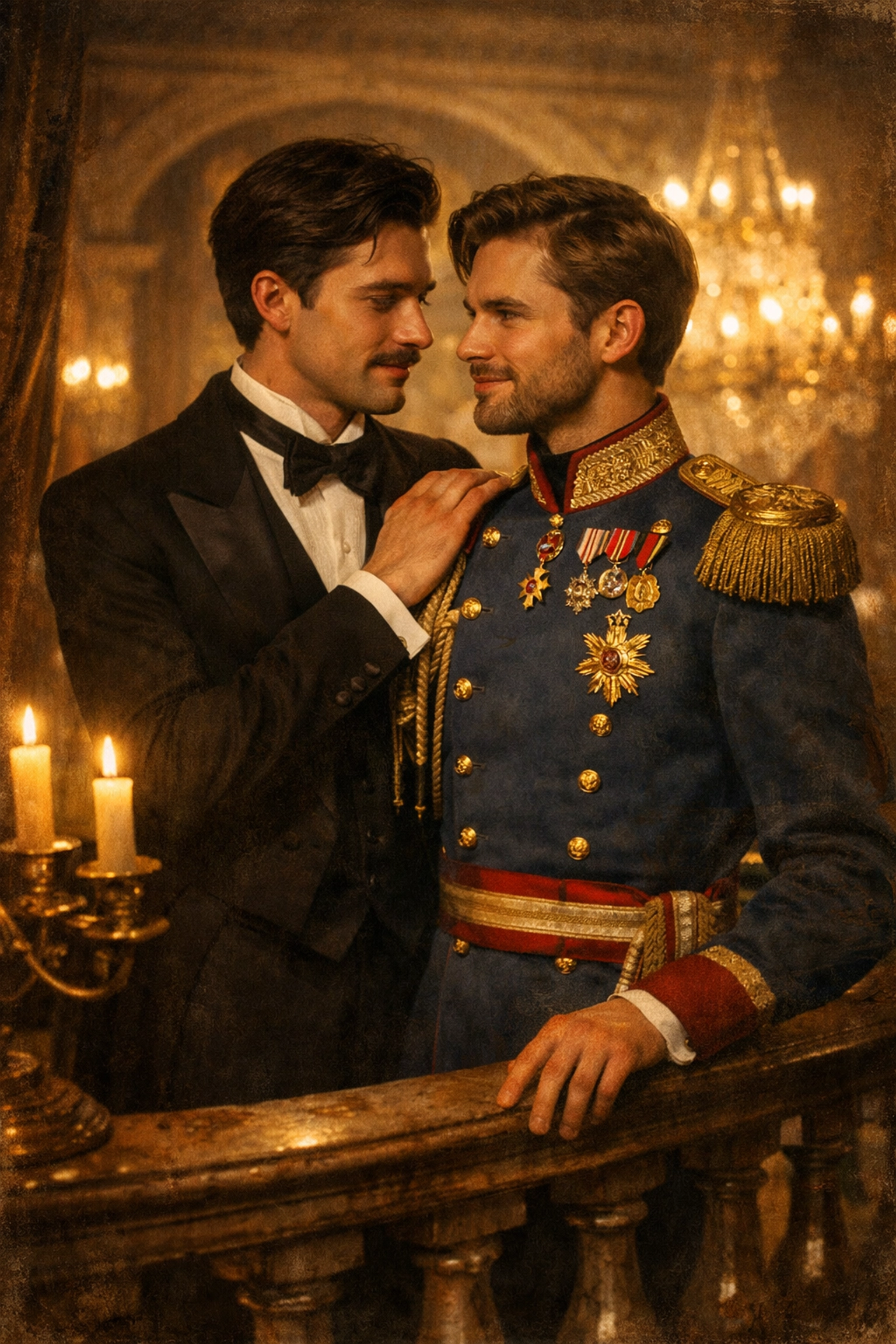
Instead of a wife, he chose a life of cultural patronage and philanthropy. He became a major figure in the Viennese art scene, commissioning the stunning Palais Erzherzog Ludwig Viktor on Vienna’s Schwarzenbergplatz. Designed by Heinrich Ferstel, the palace was a masterpiece of the Neo-Renaissance style, and it became the headquarters for his legendary social life. If you’re a fan of gay historical romance, you can just imagine the candlelit ballrooms and secret glances shared behind heavy velvet curtains.
The Legend of Luziwuzi
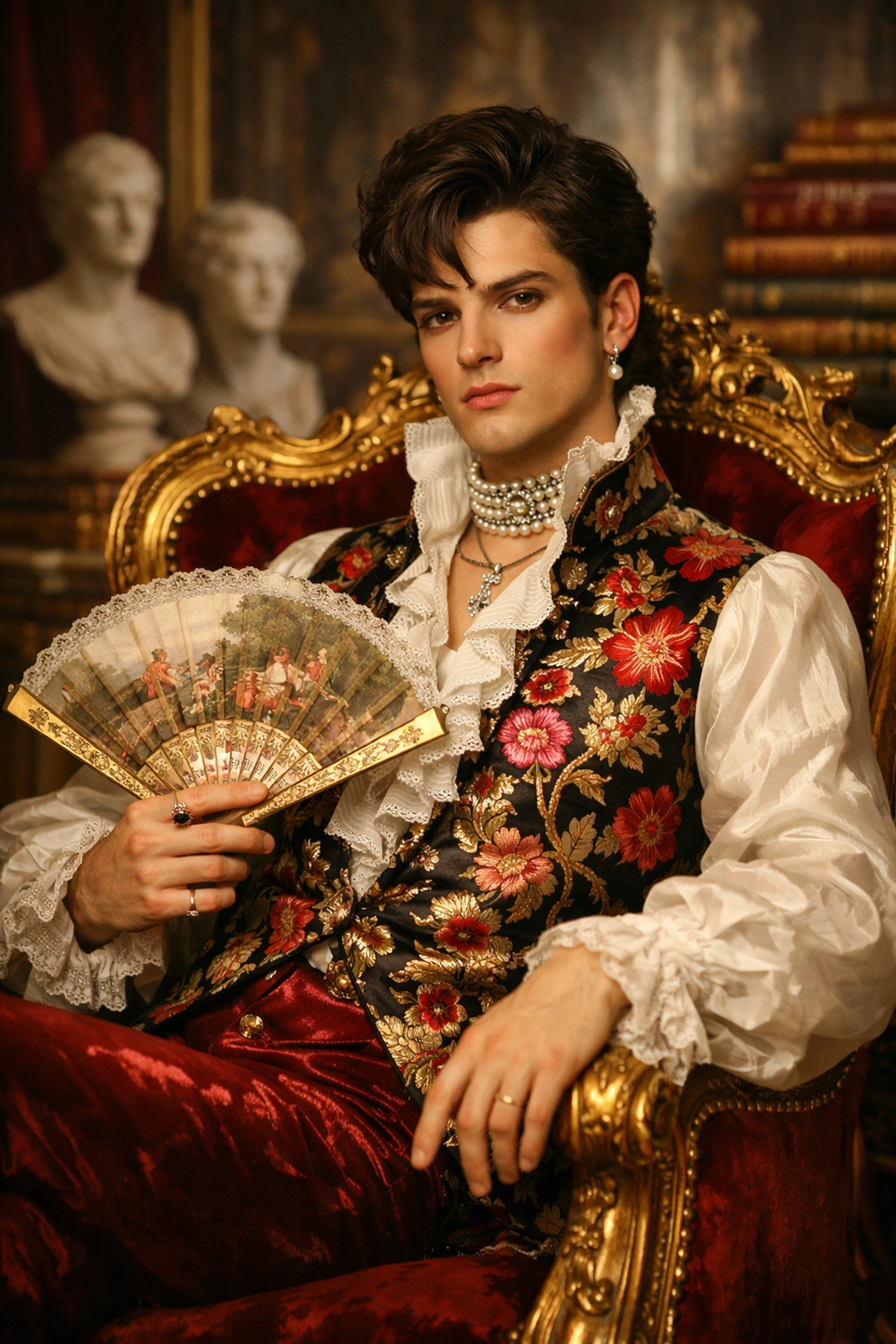
In the salons of Vienna, Ludwig Viktor was a star. He was known for his "homophile soirées," exclusive gatherings where the city’s queer elite could gather away from the prying eyes of the general public. But Luziwuzi wasn’t exactly subtle. He was known to enjoy cross-dressing, often appearing in women’s clothing at private parties, much to the chagrin of his very traditional brother.
The Emperor, Franz Joseph, was famously stoic and duty-bound. He reportedly viewed his youngest brother’s lifestyle with a mix of bafflement and "don't ask, don't tell" tolerance: provided it didn't cause a public scandal. But as any reader of gay fiction knows, a scandal is always just around the corner when you’re living a double life in high society.
Ludwig Viktor’s sharp tongue earned him a reputation as a gossip. He knew everyone’s secrets and wasn't afraid to use them. This made him a dangerous person to cross, but it also meant that when his luck finally ran out, there were plenty of people ready to watch him fall.
The Central Bathhouse Scandal
The year was 1906, and the setting was the Zentralbad (Central Bathhouse) in Vienna. It was one of the grandest bathing facilities in the city, a place where men of all classes went to relax. It was also a well-known meeting spot for men seeking the company of other men.
According to the historical accounts that have survived, Ludwig Viktor made a very public and very unwanted sexual advance toward a young man at the baths. The man, reportedly an officer or a commoner depending on which version of the gossip you believe, did the unthinkable: he punched the Archduke in the face.
In a moment of imperial entitlement gone wrong, Ludwig Viktor tried to have the man arrested. This forced the incident out of the shadows and into the light of the imperial court. When the news reached Emperor Franz Joseph, he was beyond furious. The "tacit tolerance" had reached its limit. The Emperor is famously quoted as saying, "Give him a soldier for a maid so he won't get into trouble!" (though the phrasing varies in different historical texts).
The scandal was too much for the House of Habsburg to ignore. Ludwig Viktor was stripped of his military rank, resigned from his charitable patronages, and was effectively banished from Vienna.
Exile in Salzburg: A Quiet End
Luziwuzi was sent to Schloss Klessheim, a beautiful palace near Salzburg. For a man who lived for the buzz of the Viennese social scene, this was a death sentence of sorts. He went from being the life of the party to an outcast in a gilded cage.
However, even in exile, Ludwig Viktor didn't completely wither away. He continued his philanthropic work in Salzburg, becoming a well-known figure in the local community. He was eventually allowed a bit more freedom, and he lived out his days surrounded by his art collection and his memories.
He died in 1919, shortly after the fall of the Austro-Hungarian Empire. In a strange twist of fate, he outlived many of his more "respectable" brothers, surviving long enough to see the world he knew crumble into the modern era.
Why We Still Talk About Him in 2026
At Readwithpride.com, we believe that history isn't just a list of dates; it's a collection of lives lived. Ludwig Viktor is a fascinating figure because he represents the tension between individual identity and societal expectation. He wasn't a perfect hero, but he was a man who refused to hide who he was, even when the stakes were imperial.
His story is a perfect inspiration for gay historical romance and MM romance books. It has all the elements: high-stakes royalty, secret subcultures, a dramatic fall from grace, and the enduring resilience of the queer spirit. Whether you are looking for popular gay books or new gay releases, stories like Ludwig Viktor’s remind us that we have always been here.
If you’re looking to dive deeper into stories of queer history or find your next favorite M/M books, check out our curated lists and author spotlights. We’re dedicated to bringing you the best in LGBTQ+ fiction and gay literature.
Explore More with Read with Pride:
- Discover our latest gay romance novels at our Store.
- Check out our Sitemap for a full list of our queer history deep dives.
- Follow our journey on social media for daily updates on the best MM romance and gay books 2026:
Ludwig Viktor might have been banished from the court, but he will never be banished from our history. He reminds us to live loudly, love who we want, and: if necessary: make enough noise that they can never forget we existed.
#ReadWithPride #GayHistory #ArchdukeLudwigViktor #MMRomance #LGBTQFiction #QueerHistory #ViennaHistory #GayBooks2026 #HistoricalRomance #Luziwuzi

Leave a Reply
You must be logged in to post a comment.