

readwithpride.com
Liverpool, sailors, and the quiet art of finding your people
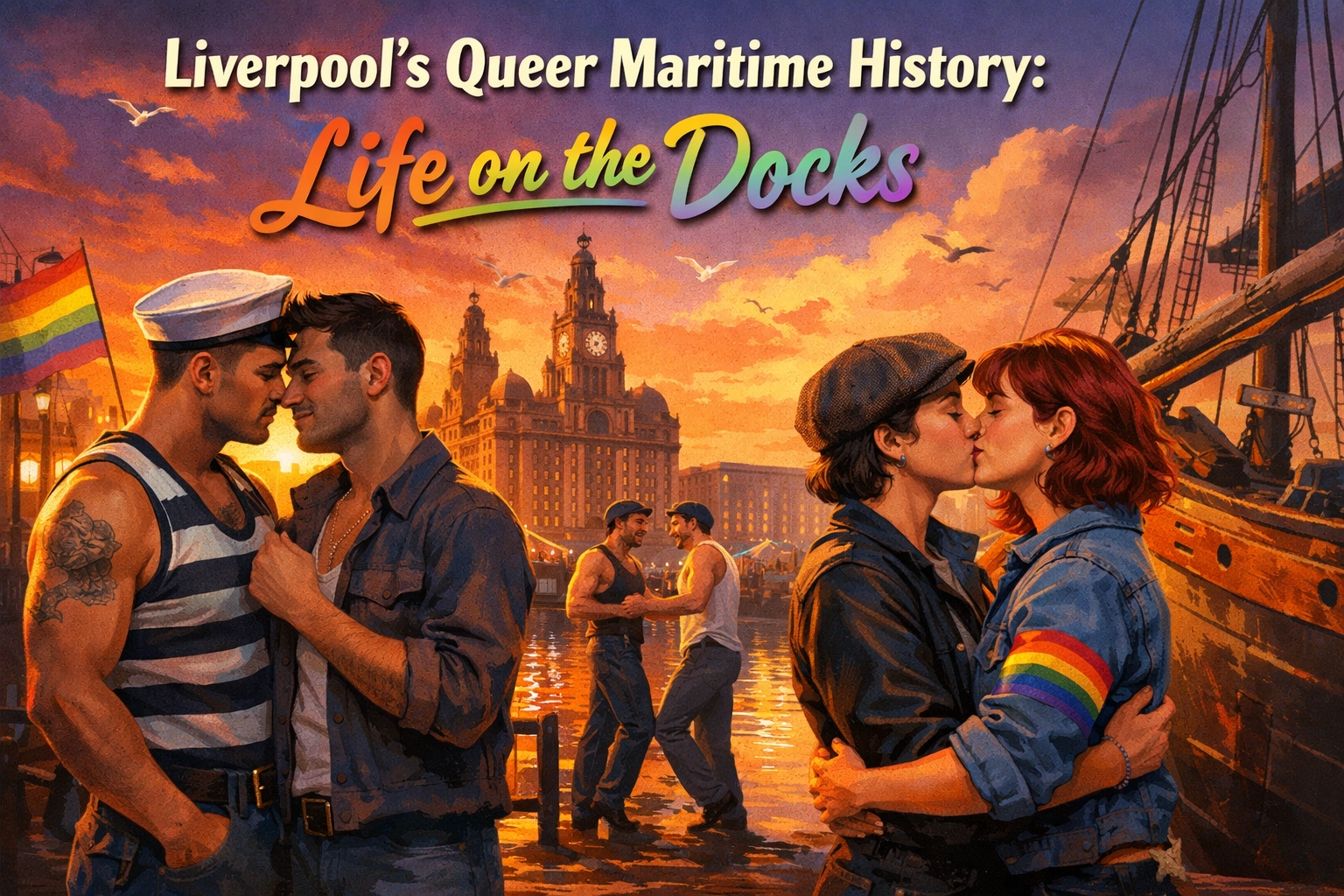
Liverpool has always been a city with one foot on land and the other on a gangway. For centuries, the docks pulled in sailors, stewards, stokers, officers, entertainers, migrants, and anyone else chasing a wage, a fresh start, or a little anonymity. And if you’ve ever wondered how queer life took shape in a place built on movement, ships arriving, ships leaving, crews rotating, stories swapping, Liverpool’s waterfront is a pretty perfect case study.
Because maritime life did something interesting for LGBTQ+ people: it created pockets of freedom inside a strict, macho world. At sea, people relied on each other to survive. On shore, they relied on each other to feel human.
This post is about that tension, how queer subculture could thrive in the gaps between rules, and why Liverpool’s docklands still echo in today’s queer fiction, especially MM romance books and gay romance novels that lean into uniforms, secrets, shore leave, and all the delicious forced-proximity possibilities.
The waterfront as a queer “in-between” space
Ports are liminal by design. You’re not fully “home,” not fully “away,” not fully “visible,” not fully “hidden.” That in-between-ness is exactly where queer life often had to live, especially before legal reforms and broader social acceptance.
Historically, queerness in Britain wasn’t just socially risky; it was legally dangerous. While England and Wales partially decriminalised male homosexuality in 1967 (with major limitations and stigma that didn’t magically vanish), the decades before and after were still shaped by fear, discretion, and coded community.
The docks offered three things that mattered:
- Anonymity: strangers passing through, new faces every week, fewer nosy neighbours.
- Density: lots of men living and working close together, boarding houses, mess rooms, ship bunks, pubs.
- A culture of “don’t ask, don’t tell”: not progressive, exactly, but sometimes more practical than moralising.
And practicality can look a lot like breathing room.
“Hello Sailor”: queerness at sea wasn’t a myth
If you’ve ever rolled your eyes at the cliché “sailors are secretly all gay,” Liverpool’s real history is more nuanced, and, honestly, more compelling.
Recent museum interpretation in the UK has highlighted LGBTQ+ lives in the Merchant and Royal Navy, including how “camp men on 20th century passenger ships found a queer haven.” That phrase matters because it acknowledges something queer people have been saying forever: sometimes the safest place isn’t the most “respectable” one, it’s the one where people mind their business and get on with the job.
Documented accounts from Merchant Navy workers in the 1970s and early 1980s describe greater acceptance at sea than on shore, framed as a “live and let live” culture. Not perfect. Not universally safe. But often more breathable than land-based workplaces where gossip could wreck your life.
And then there’s the language.
Polari: the code that made recognition possible
Seafaring queer culture intersected with wider British queer subculture through Polari, a coded slang used by some gay men (especially in theatre, service work, and entertainment) to communicate and suss each other out without being obvious. In a ship environment, where privacy is scarce and hierarchy is strict, being able to signal “you’re safe with me” is huge.
Polari wasn’t universal, and it wasn’t only “a sailor thing.” But ports like Liverpool, stuffed with theatre circuits, sailors, stewards, and visitors, were exactly the kind of crossroads where it could travel.
On the docks: hard work, soft connections
Dock work was punishing: heavy loads, cold mornings, danger everywhere. But ports also created intense camaraderie, and camaraderie has always been a complicated cousin of attraction.
Queer dockside life wasn’t usually about openly holding hands down the Pier Head. It was about:
- friendships that ran deeper than the labels available
- quiet flirtations in noisy pubs
- shared rooms and shared secrets
- letters written from sea to shore (and sometimes to someone else’s shore)
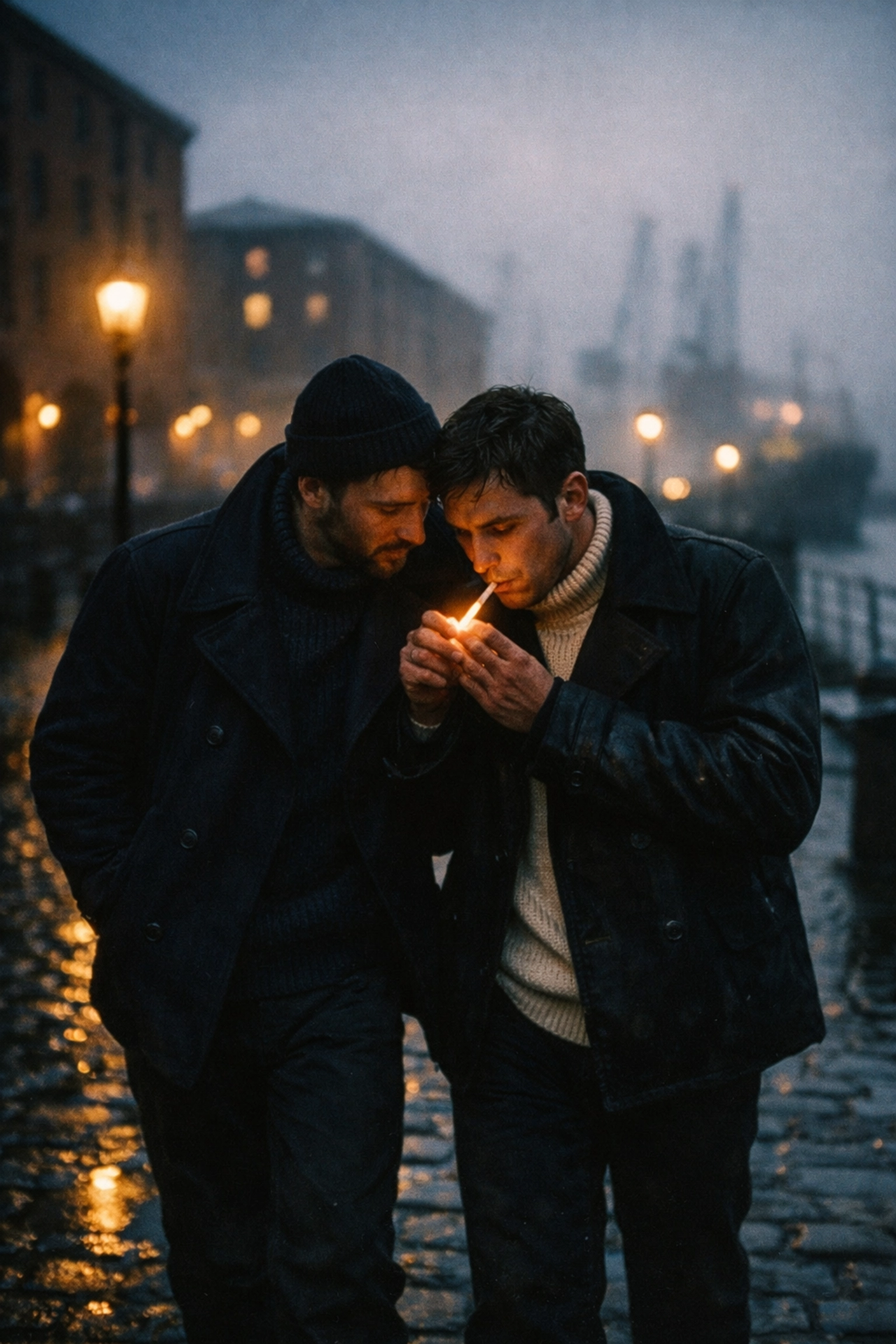
And because so many sailors lived in temporary arrangements, lodging houses, cheap rooms, crew quarters, relationships could be passionate and short-lived, or slow-burn and stretched across continents. That “we only have tonight” energy? The docks practically invented it.
Liverpool’s maritime institutions and why visibility matters
Liverpool’s waterfront is packed with official history, museums, monuments, restored docks, and queer people have often been left out of “official” storytelling. That’s been changing. Interpretive work in maritime museums has begun to name LGBTQ+ lives and make them legible: not as scandal, not as punchline, but as part of the workforce and the culture.
One idea that comes up repeatedly in LGBTQ+ maritime history is simple and powerful: visibility matters. When queer seafarers can point to predecessors, people who existed, worked, loved, and navigated the same risks, it reframes “you don’t belong here” into “you were always here.”
And for readers? Visibility also matters in fiction. Because when you pick up a book with a sailor hero who’s allowed depth, tenderness, fear, and desire, you’re not just reading escapism. You’re reading a correction.
If you’re in a browsing mood, start at readwithpride.com and follow the rabbit holes into LGBTQ+ ebooks and queer fiction that actually treats queer lives as real lives.
Why the docks make perfect MM romance (and yes, we mean spicy)
Let’s talk craft for a second: because the Liverpool docklands are basically an MM romance trope machine.
Maritime settings naturally produce:
- Forced proximity: cabins, bunks, long voyages, limited privacy.
- Class difference: officer vs deckhand; steward vs passenger; dock boss vs casual labourer.
- Hidden identity / secrecy: not for drama’s sake, but because it was historically true.
- Second chance romance: “I thought I’d never see you again after Buenos Aires.”
- Slow burn: months at sea, feelings building under routine and risk.
- Enemies to lovers MM romance potential: rival crews, conflicting duties, resentments turning into respect.
And the tone can swing from sweet to scorching without breaking realism. Because people living under pressure often want comfort. And sometimes comfort comes with hands on waist and mouths on neck. Historically plausible? Absolutely. Human? Always.
That’s why readers searching for historical MM romance novels keep gravitating toward sailors, docks, and port cities: the stakes are built in. The tenderness feels earned. The spice feels like a rebellion.
A quick timeline: UK & Ireland context that shaped dockside queer life
Liverpool doesn’t exist in a vacuum. Seafarers moved between England, Wales, Scotland, Northern Ireland, the Republic of Ireland, and beyond: often experiencing totally different social climates depending on where they docked.
Here’s the broad-strokes context that shaped what was possible:
- Pre-1967 (England & Wales): male homosexuality criminalised; high risk of prosecution and blackmail.
- 1967 onward: partial decriminalisation in England & Wales (still restricted and stigmatised).
- Scotland: decriminalisation came later (1980).
- Northern Ireland: later again (1982).
- Republic of Ireland: decriminalisation in 1993.
Even after legal changes, workplace culture lagged. So a sailor might feel safer being himself on a ship with a pragmatic crew than in a hometown pub where everyone knew his mum.
This is also why port cities can feel queerer than their surrounding regions: they’re trained by the world. They have to be.
The romance tropes Liverpool does best (steal these for your TBR)
If you’re hunting for spicy MM romance recommendations with a historical edge, Liverpool’s dockside vibe pairs beautifully with these niches and long-tail searches:
1) Forced proximity at sea (cabinmates, shared bunks)
Two men, one tiny cabin, three months of storms, and exactly zero space to pretend nothing’s happening.
2) Working-class tenderness (dockhand x ship’s cook)
Food is love. Grease under nails. Softness where you least expect it.
3) Officer x deckhand (power dynamics done thoughtfully)
The uniform hits, sure: but the real heat is the stolen moments and the mutual respect.
4) Shore leave fling that turns into “write to me”
A night in Liverpool that refuses to stay a night.
5) Second chance romance: “we met in port years ago”
Older, wiser, still haunted by the one that got away: until he walks into the same pub.
6) Enemies to lovers MM romance: rival crews
Competitive, petty, a little violent… and then suddenly protective.
These tropes aren’t just fun: they echo real constraints: limited privacy, rigid roles, and the emotional whiplash of separation.
Reading dockside history through a modern lens (without flattening it)
It’s tempting to romanticise the past: the brave sailor, the secret love, the noble suffering. But queer history deserves better than a highlight reel of tragedy or a fantasy of constant acceptance.
A more honest way to read Liverpool’s queer maritime story is to hold two truths at once:
- There was danger: legal risk, blackmail, violence, loss of livelihood.
- There was also joy: chosen family, private language, mutual care, sex, love, laughter.
Queer people didn’t just survive ports; they shaped them. They helped build the culture that made Liverpool what it is: outward-looking, defiant, a little bit chaotic, and allergic to being told what to be.
That’s exactly the energy we love in queer fiction: and why Read with pride isn’t just a slogan, it’s a way of moving through the world.
Want more queer history + MM romance vibes?
If you’re building a TBR around maritime settings, dockside tension, and historically grounded queer love stories, keep exploring at readwithpride.com. It’s a solid home base for LGBTQ+ ebooks, gay romance novels, and MM romance books that don’t treat queer lives like a subplot.
You can also browse categories via the site map if you’re in full “hyperfocus reader mode”:
- https://readwithpride.com/blog-category-sitemap1.xml
- https://readwithpride.com/blog_post-sitemap1.xml
And if you want daily-ish updates and community chatter, follow along here:
- Facebook: https://www.facebook.com/profile.php?id=61586883027069
- X: https://x.com/Read_With_Pride
- Instagram: https://www.instagram.com/read.withpride/
Hashtags
#ReadWithPride #Readwithpride #MMRomanceBooks #GayRomanceNovels #GayHistoricalRomance #MMHistoricalRomance #QueerHistory #LiverpoolHistory #MaritimeHistory #LGBTQEbooks #QueerFiction #SpicyMMRomanceRecommendations #ForcedProximity #SlowBurnMMRomance #EnemiesToLoversMMRomance #BestMMRomanceBooksOf2026

Leave a Reply
You must be logged in to post a comment.