

readwithpride.com
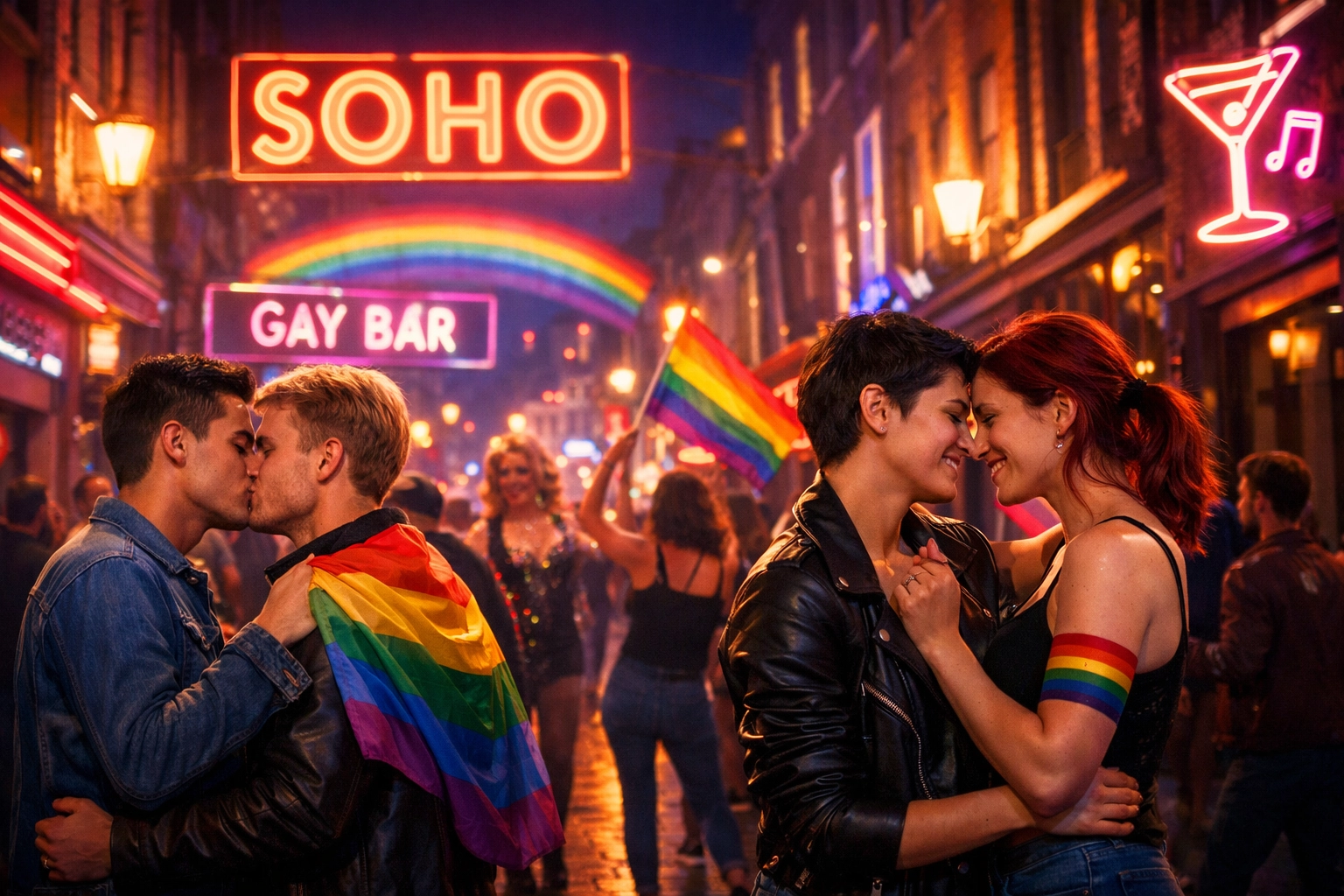
Soho isn’t just a postcode you wander into for noodles at midnight or a last-minute theatre ticket. For generations, it’s been London’s most recognisable queer landmark, a place where LGBTQ+ people found each other when doing so could cost you your job, your freedom, or your safety. Today it’s a nightlife magnet, a cultural shorthand, and (let’s be honest) a ridiculously good setting for MM romance books, especially if you love that “found family in the city” vibe.
This is the secret history of Soho: the coded meeting places, the raids, the rebirth, the resilience, and why it still shapes the way we write (and read) gay romance novels in 2026.
Why Soho became the queer neighbourhood (and why it stayed that way)
Soho sits right in central London, close to theatres, restaurants, late-night work, and people passing through. Historically, that mix mattered. Areas with entertainment, cheap rooms, and a constant flow of outsiders tend to become places where rules blur, where you can be a little less “proper,” and a lot more yourself.
That doesn’t mean it was ever easy. For centuries, queer life in Soho existed in tension: visibility vs. danger, community vs. surveillance, joy vs. punishment. The reason Soho became iconic isn’t because it was safe. It’s because people kept showing up anyway.
If you’re into queer fiction or gay literature, that push-pull is basically narrative gold: secrecy, risk, coded desire, sudden tenderness in a hostile world. It’s why Soho keeps reappearing, on the page and in our collective imagination.
The early underground: molly houses, code words, and risk (1600s–1800s)
By the 1600s and 1700s, Soho had a reputation for men seeking men. Not in a cute rom-com way. In a “keep your voice down and watch the door” way.
In the 1720s, molly houses emerged as some of the first organised queer spaces in and around Soho, private rooms and taverns where men met, danced, flirted, and sometimes performed exaggerated femininity. They were community hubs and targets. Police raids and public shaming were constant threats, and prosecution could ruin lives.
This is the part of history that reads like a dark, slow-burn MM historical romance: stolen looks, secret knocks, a chosen family held together by shared risk. If you’ve ever loved the “only safe with you” trope, you can trace a line right back to these early spaces.
And it’s worth saying plainly: queer London existed long before modern labels. People found each other anyway, because loneliness is powerful, but so is the need to belong.
Oscar Wilde, scandal, and Soho in the public eye (1890s)
In 1895, the trials of Oscar Wilde (and the public obsession surrounding them) dragged queer life into mainstream headlines. Wilde’s connection to Soho became part of the story: dinners, restaurants, whispers, mundane details turned into “evidence.”
Soho’s role here is important. It wasn’t only a place where queer people met; it was a place that the wider society already suspected. That suspicion shaped policing, press coverage, and fear.
From a storytelling perspective, this is where the classic public scandal / private longing dynamic thrives. In MM romance novels, it’s the moment where one character’s carefully constructed life starts cracking, because desire is not convenient, and neither is love.
The “first gay bar” energy: performance, nightlife, and coded freedom (early 1900s)
In 1912, The Cave of the Golden Calf opened on Heddon Street as an avant garde performance club, often described as the first “gay bar” in the modern sense. Performance mattered: music, art, drag-adjacent flamboyance, people gathering under the cover of nightlife.
In queer history, art and nightlife aren’t just “fun extras.” They’re survival tools. If you can’t openly say who you are, you sing it. You dance it. You wear it in a way only the right people understand.
If you write or read MM romance books, Soho’s early performance spaces are basically a blueprint for:
- found family around the bar staff and regulars
- hidden identity (or “double life”) arcs
- first time in a queer space scenes (hello, emotional MM books)
- that delicious moment when the music hits and someone finally exhales
Between glamour and crackdown: interwar Soho (1920s–1930s)
By the 1920s, places like the Trocadero Long Bar were known for homosexual liaisons. But with notoriety came scrutiny. Publications exposed “bogus hotels” and painted Soho as a moral infection. Police surveillance increased, and undercover raids targeted spaces where queer people danced together or got too close.
One documented raid in 1934 describes people dancing and couples being affectionate, details that sound almost ordinary now, but were used then as justification for shutdowns and arrests. The message was clear: you can exist, but not like that, and not where anyone can see.
This era is a reminder that queer visibility is never just a vibe; it’s a political condition. And it’s why Soho’s history matters for today’s readers of gay romance novels: love stories don’t float above society. They wrestle with it.
Post-war drift, then a big comeback (1940s–1980s)
After World War II, discrimination pushed many LGBTQ+ people into deeper secrecy, and Soho’s queer significance fluctuated as the area changed. By the 1970s, Soho’s broader decline affected everything, venues, safety, community cohesion.
Then the late 1970s and 1980s brought a shift toward visibility:
- Queer events expanded in major clubs
- Heaven opened in 1979, signalling a new scale of nightlife and community
- Council crackdowns on parts of Soho’s sex industry inadvertently freed up venues for gay bars and clubs
- New or transformed spaces appeared, creating a dense cluster of LGBTQ+ life
This is where “Soho” becomes not just history, but an identity: a place you go to be surrounded by your people. It’s the setting for so many first kisses, first dances, first I’m not alone moments.
And yes, this is also where a ton of MM contemporary romance energy lives. City lights. Loud music. The comfort of anonymity. The thrill of being seen.
The 1990s: pride, community, and a brutal reminder of why we protect our spaces
By the 1990s, Soho was firmly established as the centre of queer life in London. Festivals and street energy grew. In 1993, artist Derek Jarman symbolically renamed Old Compton Street “Queer Street” for Valentine’s Day, an act that captured the mood: defiant, witty, proud.
Then came the 1999 bombing of the Admiral Duncan pub, which killed three people and injured many more. It was a targeted act of homophobic violence, and it marked Soho as more than nightlife. It became a symbol of LGBTQ+ resilience and collective grief.
If you’ve ever read a gay love story where community pulls together after trauma, this is the real-world backbone of that trope. Queer spaces are not just “where we party.” They are where we mourn, organise, protect each other, and keep going.
Soho now: iconic, evolving, and under pressure
Soho in 2026 is still a queer landmark, but it’s also dealing with the realities of gentrification and redevelopment. Historic buildings and venues have disappeared. Rents rise, footprints shrink, and queer spaces often get treated like “optional culture” instead of living history.
At the same time, London’s LGBTQ+ community has expanded beyond Soho, into neighbourhoods like Vauxhall, Brixton, Clapham, Stoke Newington, and more. That spread is good (more space, more representation), but it also means Soho’s role has shifted from “only hub” to “symbolic heart.”
Soho remains a place where:
- tourists come looking for “the gay area”
- locals argue (lovingly) about what counts as “real Soho”
- queer people still find each other on a random Tuesday
- history is visible in the street names, the venue lore, the regulars who remember what used to be there
And honestly? That mix, nostalgia plus change, is exactly what makes it such a strong setting for queer fiction.
What Soho gives MM romance writers (and why readers keep eating it up)
If you’re here for best MM romance books 2026 lists, this section is for you, because Soho isn’t just a location. It’s a trope machine.
1) “First queer space” / awakening vibes
Soho is perfect for stories where one character is new to the scene: overwhelmed, curious, a bit terrified, and then, relieved.
Trope match: bisexual awakening, first time at a gay bar, hurt/comfort.
2) Found family that feels real
Bar staff, drag performers, door staff who clock your nerves and quietly check you’re okay, Soho is built for found family arcs.
Trope match: found family, community care, soft protector.
3) Forced proximity in the city (yes, it works)
Think tiny flats, shared houses, cramped staff rooms, late-night tube rides.
Trope match: forced proximity, only one bed (in a questionable Soho hotel, obviously).
4) Enemies-to-lovers with actual stakes
Soho’s history makes conflict feel grounded: fear of being outed, class tension, press scrutiny, workplace risk.
Trope match: enemies to lovers MM romance, rivals, identity vs. career.
5) The perfect backdrop for gay workplace romance ebooks
Soho is work. Hospitality, theatre, nightlife, media, fashion, sex shops, bookshops, cafés, jobs that run on late shifts and chemistry.
A bartender and a theatre tech. Two chefs in competing kitchens. A manager and a new hire trying not to make it messy.
Trope match: gay workplace romance ebooks, boss/employee (ethical version), coworkers, slow burn.
If you want more LGBTQ+ ebooks and gay romance novels that hit these vibes, browse readwithpride.com for curated queer reads and new releases.
A quick “Soho walk” for romance readers (spots that feel like scenes)
You don’t need a full itinerary, just a few anchors that help you feel the setting:
- Old Compton Street: the emotional main character of queer Soho. Even when venues change, the street energy remains.
- Heddon Street: echoes of early performance culture and nightlife experimentation.
- Theatreland edges: perfect for backstage romance and post-show confessions.
- Back streets and late-night cafés: where the soft scenes live, the ones that turn lust into love.
Writers: if you want to ground a scene, write what your character can hear (bass through walls), smell (rain + cigarette smoke + fried food), and feel (that hyper-awareness of being watched, then the relief of not being alone).
Reading Soho: how to find your next MM romance mood
Soho-inspired stories tend to cluster into a few “reader cravings.” If you’re building a TBR (or writing your own), try searching by mood:
- Historical secrecy: MM historical romance with coded meetings and danger
- Club-night tenderness: MM contemporary where vulnerability happens at 2 a.m.
- Workplace heat: gay workplace romance ebooks with high stakes and higher tension
- Community resilience: romances that treat queer spaces as characters, not just backdrops
For more gay books, MM romance books, and LGBTQ+ fiction curated with actual care, start at readwithpride.com.
Links + socials (come say hi)
- Home: https://readwithpride.com
- X: https://x.com/Read_With_Pride
- Instagram: https://www.instagram.com/read.withpride/
- Facebook: https://www.facebook.com/profile.php?id=61586883027069
Hashtags
#ReadWithPride #MMRomanceBooks #GayRomanceNovels #SohoLondon #QueerHistory #LGBTQEbooks #QueerFiction #GayBooks #MMContemporary #GayWorkplaceRomanceEbooks #EnemiesToLovers #ForcedProximity #BestMMRomanceBooks2026

Leave a Reply
You must be logged in to post a comment.